


What Are LA’s Hottest Startups of 2021? We Asked Top VCs to Rank Them
Despite — or in many cases because of — the raging pandemic, 2020 was a great year for many tech startups. It turned out to be an ideal time to be in the video game business, developing a streaming ecommerce platform for Gen Z, or helping restaurants with their online ordering.
But which companies in Southern California had the best year? That is highly subjective of course. But in an attempt to highlight who's hot, we asked dozens of the region's top VCs to weigh in.
We wanted to know what companies they wish they would have invested in if they could go back and do it all over again.
Startups were ranked by how many votes each received. In the case of a tie, companies were listed in order of capital raised. The list illustrates how rapidly things move in startup land. One of the hottest startups had not even started when 2020 began. A number doubled or even 16x'd their valuation in the span of a few short months.
To divvy things up, we delineated between companies that have raised Series A funding or later and younger pre-seed or seed startups.
Not surprisingly, many of the hottest companies have been big beneficiaries of the stay-at-home economy.
PopShop Live, a red-hot QVC for Gen Z headquartered out of a WeWork on San Vicente Boulevard, got the most votes. Interestingly, the streaming ecommerce platform barely made it onto the Series A list because it raised its Series A only last month. Top Sand Hill Road firms Andreessen Horowitz and Lightspeed Venture Partners reportedly competed ferociously for who would lead the round but lost out to Benchmark, which was an early investor in eBay and Uber. The round valued PopShop Live at $100 million, way up from the $6 million valuation it raised at only five months prior.
Scopely, now one of the most valuable tech companies in Los Angeles, was also a top vote getter.
The Culver City mobile gaming unicorn raised $340 million in Series E funding in October at a $3.3 billion valuation, which nearly doubled the company's $1.7 billion post-money valuation from March. It is no coincidence that that was the same month stay-at-home orders began as Scopely has benefited from bored consumers staying on their couch and playing ScrabbleGo or Marvel Strike Force.
The company's success is especially welcome news to seed investors Greycroft, The Chernin Group and TenOneTen ventures, who got in at a $40 million post valuation in 2012. Upfront Ventures, BAM Ventures and M13 joined the 2018 Series C at a $710 post-money valuation.
Softbank-backed Ordermark, which flew more under the radar, also topped the list. The company's online ordering platform became a necessity for restaurants forced to close their dining rooms during the pandemic and raised $120 million in Series C funding in October.
On the seed side, two very different startups stood out. There was Pipe, which enables companies with recurring revenues to tap into their deferred cash flows with an instant cash advance, and Clash App, Inc., a TikTok alternative launched by a former employee of the social network in August.
We will have the list of Southern California's top seed startups out tomorrow.
Hottest

PopShop Live ($100 million)
The live-streaming shopping channel created by Danielle Lin reportedly found itself in the middle of a venture capital bidding war this year. Benchmark eventually won out leading a Series A round, vaulting the app at a $100 million valuation. The Los Angeles-based platform has been likened to QVC for Gen Z and it's part of a new wave of ecommerce that has found broader appeal during the pandemic. Google, Amazon and YouTube have launched live shopping features and other venture-backed startups like Los Angeles-based NTWRK have popped up.
Boiling

Scopely ($3.3 billion)
One of the most valuable Southern California tech startups with a $3.3 billion valuation, the Culver City mobile game unicorn has benefitted from a booming gaming market that has flourished in this stay-at-home economy. Scopely offers free mobile games and its roster includes "Marvel Strike Force," "Star Trek Fleet Command" and "Yahtzee with Buddies." In October the company raised a $340 million Series E round backed by Wellington Management, NewView Capital and TSG Consumer Partners, among others fueling speculation that it was on its road to an IPO. Co-CEO Walter Driver has said that he doesn't have immediate plans to go public.

Ordermark ($70 million)
The coronavirus has forced the closure of many dining rooms, making Ordermark all the more sought after by restaurants needing a way to handle online orders. Co-founder and CEO Alex Canter started the business in 2017, which recently rang in more than $1 billion in sales. Ordermark secured $120 million in Series C funding by Softbank Vision Fund 2 in October that it will use to bring more restaurants online. The company's Nextbite, a virtual restaurant business that allows kitchens to add delivery-only brands such as HotBox from rapper Wiz Khalifa to their existing space through Ordermark, is also gaining traction.
Simmering

Cameo ($300 million)
Cameo, which launched three years ago, had its breakout year in 2020 as C-list celebrities like Brian Baumgartner banked over a million dollars from creating customized videos for fans. In the sincerest form of flattery, Facebook is reportedly launching a feature that sounds a lot like Cameo. Even though the company is still technically headquartered in Chicago, we included Cameo because CEO Steven Galanis and much of the senior team moved to L.A. during the pandemic and say they plan to continue running the company from here for the foreseeable future.
Mothership ($64 million)
Co-founded by CEO Aaron Peck, Mothership provides freight forwarding services intended to streamline the shipping experience. The company's tracking technologies connect shippers with nearby truck drivers to speed up the delivery process. It raised $16 million in Series A venture funding last year, driving the platform to a $48 million pre-money valuation.

Nacelle ($6.7 million)
Founded in 2019, Nacelle's ecommerce platform helps retailers improve conversion rates and decrease loading speeds for their sites. The software integrates with Shopify and other services, offering payment platforms and analytics integration, among dozens of services. Nacelle raised about $4.8 million earlier this year with angel investors that included Shopify's Jamie Sutton, Klaviyo CEO Andrew Bialecki and Attentive CEO Brian Long.
Boulevard ($30 million)
Matt Danna and Sean Stavropoulos came up with Boulevard when an impatient Stavropoulos was frustrated wasting hours to book a hair appointment. Their four-year-old salon booking and payment service is now used by some of Los Angeles' best-known hairdressers. Last month, the two secured a $27 million Series B round co-led by Index Ventures and Toba Capital. Other investors include VMG Partners, Bonfire Ventures, Ludlow Ventures and BoxGroup.

CloudKitchens ($5.3 billion)
Uber co-founder Travis Kalanick CloudKitchens rents out commissary space to prepare food for delivery. And as the pandemic has fueled at-home delivery, the company has been gobbling up real estate. The commissaries operate akin to WeWork for the culinary world and allow drivers to easily park and pick-up orders as the delivery market has soared during pandemic. Last year, it raised $400 million from Saudi Arabia's colossal sovereign wealth fund.
GOAT ($1.5 billion)
Founded by college buddies five years ago, GOAT tapped into the massive sneaker resale market with a platform that "authenticates" shoes. The Culver City-based company has since expanded into apparel and accessories and states that it has 20 million members. Last year, Foot Locker sunk a $100 million minority investment into 1661 Inc., better known as Goat. And this fall it landed another $100 million Series E round bankrolled by Dan Sundeheim's D1 Capital Partners.

Savage X Fenty
The lingerie company co-founded by pop singer Rihanna in 2018 is noted for its inclusivity of body shapes and sizes. It has raised over $70 million, but The New York Times' DealBook newsletter recently reported that it's been on the hunt for $100 million in funds to expand into active wear. The company generates about $150 million in revenue, but is not yet profitable, according to the report. It became the focus of a consumer watchdog investigation after being accused of "deceptive marketing" for a monthly membership program.
Warming Up
FabFitFun ($930 million)
The lifestyle company provides customized personal subscription box services every three months with full size products. Started in 2010 by Daniel Broukhim, Michael Broukhim, Sam Teller and Katie Rosen Kitchens, it now boasts more than one million members. Last year, the company raised $80 million in a Series A round led by Kleiner Perkins last year and appears to be preparing for an eventual IPO as it slims down costs and refocuses on its high value products.
Dave ($1 billion)
Launched in 2016, the finance management tool helps consumers to avoid overdrafts, provides paycheck advances and assists in budgeting. Last year, it began to roll out a digital bank account that was so popular that two million users signed up for a spot on the waitlist. The company, run by co-founder Jason Wilk, has raised $186 million in venture capital and counts billionaire Mark Cuban as an early investor and board member. Other backers include Playa Vista-based Chernin Group.

Sure ($59 million)
SURE offers multiple technology products to major insurance brands — its platform can host everything from renter's insurance to covering baggage, so customers never have to leave an agency's website. It also offers its platform to ecommerce marketplaces, embedding third-party insurance protections for customers to purchase all on the same webpage. Founded in 2014, the Santa Monica-based startup last raised an $8 million Series A round led by IA Capital in 2017.
Zest AI ($90 million)
Founded in 2009 by former Google CIO Douglas Merrill and ex-Sears executive Shawn Budde, Zest AI provides AI-powered credit underwriting. It helps banks and other lenders identify borrowers looking beyond traditional credit scores. It claims to improve approval rates while decreasing chargeoffs. The company uses models that aim to make the lending more transparent and less biased. This fall the company raised $15 million from Insight Partners, MicroVentures and other undisclosed investors, putting its pre-money valuation at $75 million, according to PItchbook.

PlayVS
Santa Monica-based PlayVS provides the technological and organizational infrastructure for high school esports leagues. The pandemic has helped the company further raise its profile as traditional sports teams have been benched. Founded in early 2018, PlayVS employs 46 people and has raised over $100 million. In addition to partnering with key educational institutions, it also has partnerships with major game publishers such as Riot and Epic Games.
Tapcart ($40 million)
A SaaS platform helps Shopify brands create mobile shopping apps. The marketing software saw shopping activity jump 50% over 90 days as the pandemic walloped traditional retailers. Founded by Eric Netsch and Sina Mobasser, the company raised a $10 million Series A round led by SignalFire, bringing the total raise to $15 million.

Papaya ($31.8 million)
Papaya lets customers pay any bill from their mobile devices just by taking a picture of it. The mobile app touts the app's ease-of-use as a way to cut down on inbound bill calls and increase customer payments. Founded by Patrick Kann and Jason Metzler, the company has raised $25 million, most recently a S10 million round of convertible debt financing from Fika Ventures, Idealab and F-Prime Capital Partners.
Floqast ($250 million)
FloQast is a management software that integrates enterprise resource planning software with checklists and Excel to manage bookkeeping. The cloud-based software company claims its system helps close the books up to three days faster. It is used by accounting departments at Lyft, Twilio, Zoom and The Golden State Warriors. In January, it raised $40 million in Series C funding led by Norwest Venture Partners to bring the total raise to $92.8 million.

Brainbase ($26.5 million)
The company's rights management platform expedites licensing payments and tracks partnership and sponsorship agreements. It counts BuzzFeed, the Vincent Van Gogh Museum and Sanrio (of Hello Kitty and friends fame) among its clients. In May it announced $8 million in Series A financing led by Bessemer Venture Partners and Nosara Capital, bringing the total raised to $12 million.

OpenPath ($28 million)
The Los Angeles-based company provides a touchless entry system that uses individuals cell phones to help with identification instead of a key card. The company offers a subscription for the cloud-enabled software that allows companies to help implement safety measures and it said demand has grown amid the pandemic. Founded by James Segil and Alex Kazerani the company raised $36 million led by Greycroft earlier this year, bringing its total funding to $63 million.

FightCamp ($2.5 million)
FightCamp is an interactive home workout system that turns your space into a boxing ring with a free standing bag, boxing gloves and punch trackers. The company is riding the wave of at-home fitness offerings including Peloton, Mirror and Zwift that have taken off during the pandemic as gyms closed. The company has raised $4.3 million to date.

Numerade
The Santa Monica-based company provides video and interactive content for education in math, science, economics and standardized test prep. Founded in 2018 by Nhon Ma and Alex Lee, who previously founded Tutorcast, an online tutoring service, the company gathers post-graduate educated instructors to create video lessons for online learning.

Our Place ($32.5 million)
The creator of a pan with a cult following on social media, this Los Angeles-based startup designs and retails cookware and dinnerware. Founded by Amir Tehrani, Zach Rosner and Shiza Shahid, the company completed its Series A funding earlier this year, bringing its total raised to date to $10 million.

Tala ($560 million)
For customers that have no formal credit or banking history, this company's application promises more financial access, choice and control. It gathers data to create a credit score that can be used to instantly underwrite and disburse loans ranging from $10 to $500. Co-founded by Shivani Siroya and Jonathan Blackwell, Tala has raised $217.2 million to date. Its investors include PayPal Ventures, Lowercase Capital and Data Collective.

ServiceTitan ($2.25 billion)
Founded in 2007 by chief executive Ara Mahdessian and president Vahe Kuzoyan, ServiceTitan operates software that helps residential home contractors grow their businesses. It provides businesses tools like customer relationship management and accounting integration to streamline operations. The company closed a $73.82 million Series E funding round from undisclosed investors earlier this year.
100 Thieves ($160 million)
Founded in 2017 by former professional "Call of Duty" player Matthew Haag, 100 Thieves manages esports competitions in major titles including "Counter Strike Global Offensive" and "League of Legends." The company also produces apparel and merchandise, opening a physical store and training ground called the "Cash App Compound" in collaboration with Fortnite earlier this year. The company has raised $60 million to date, from investors including Salesforce CEO Marc Benioff and Aubrey Graham, better known as the rapper Drake.

Emotive ($16.5 million)
This AI-powered customer service platform automates text conversations between customers and businesses to increase sales. Emotive uses their sales team to verify questions, distinguishing it from other bot-driven marketing services, according to the company. The company was founded in 2018 by Brian Zatulove and Zachary Wise, who serve as the chief executive and the chief operating officer, respectively. It has raised $6.65 million to date, from Floodgate Fund and TenOneTen Ventures.

Everytable ($33 million)
Created by former hedge fund trader Sam Polk, the Los Angeles-based startup wants to be a healthy fast food chain. It prices its healthy pre-packaged meals around $5 in underserved communities while costing more in other neighborhoods with the goal of reducing so-called food deserts in low-income neighborhoods. It also offers a subscription delivery service. The company recently closed a $16 million Series B round led by Creadev along with Kaiser Permanente Ventures.
Lead art by Candice Navi.
From Your Site Articles
- Los Angeles' Tech and Startup Scene is Growing. - dot.LA ›
- The dot.LA/ Pitchbook Top 50 LA Startups for 2020 Q2 - dot.LA ›
- dot.LA/Pitchbook 50 Hottest Los Angeles Companies - dot.LA ›
- Venture Capitalist Invested $69 Billion into Startups in Q1 - dot.LA ›
- Is NextBite Creating or Solving Problems for Restaurants? - dot.LA ›
- Top LA Angel Investors 2021: McInerney, Rascoff and Lee - dot.LA ›
- LA Startup Jobs Site Interchange.LA Re-Launches - dot.LA ›
- Thankful Raises $12 Million To Boost Customer Service - dot.LA ›
- Young LA Startups Saw Their Valuations Surge in 2021 - dot.LA ›
- VCs Are Flush, But Funding Mostly Male-Led Startups - dot.LA ›
- Largest Raises in Los Angeles in 2021 - dot.LA ›
- Los Anegeles’ Hottest Startups of 2022 - dot.LA ›
- LA Is The Third-Largest Startup Ecosystem in the U.S. - dot.LA ›
- Here Are LA’s Hottest Startups for 2023 - dot.LA ›
Related Articles Around the Web
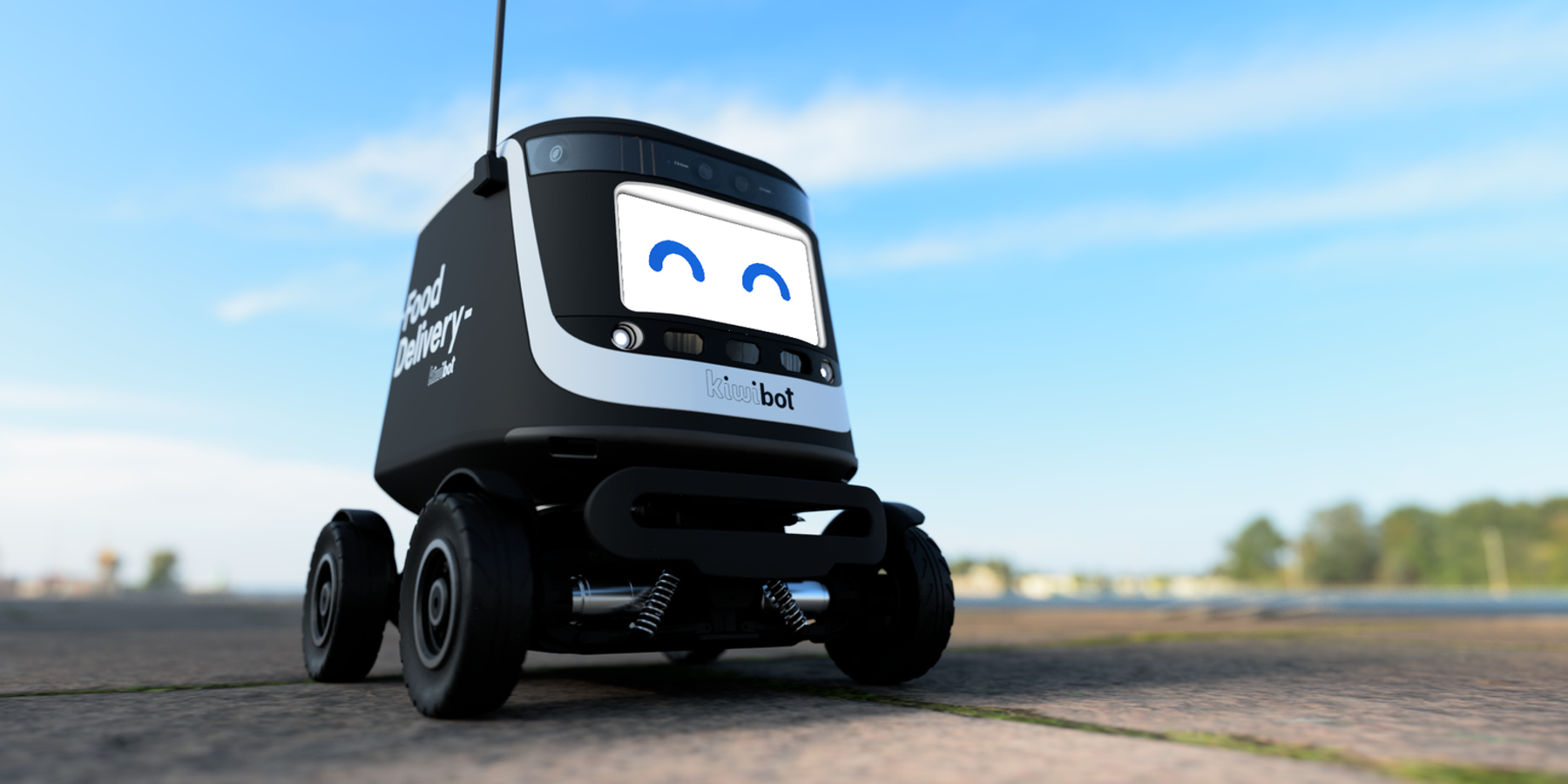
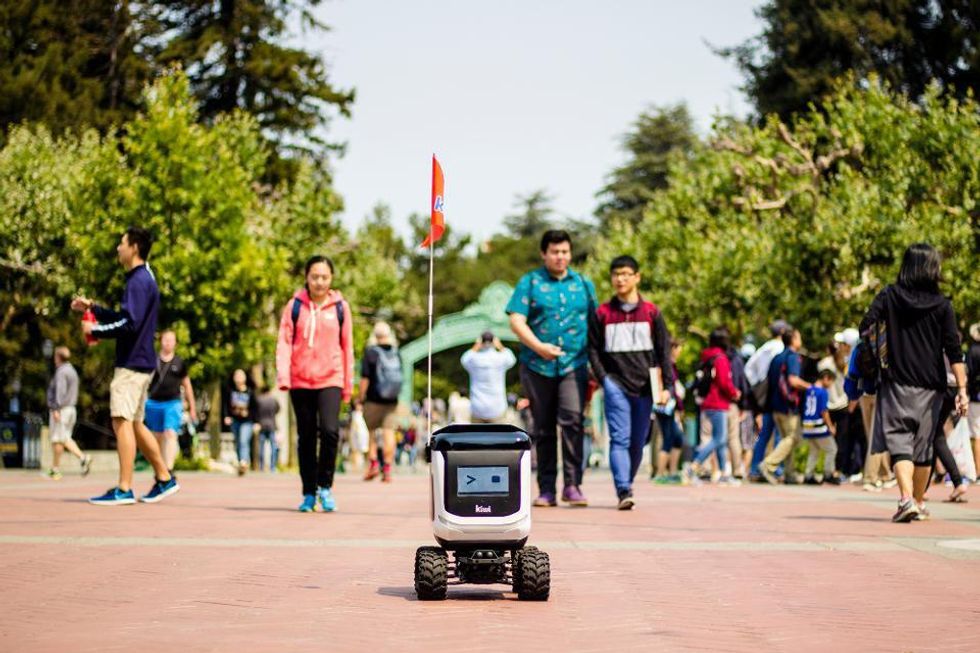
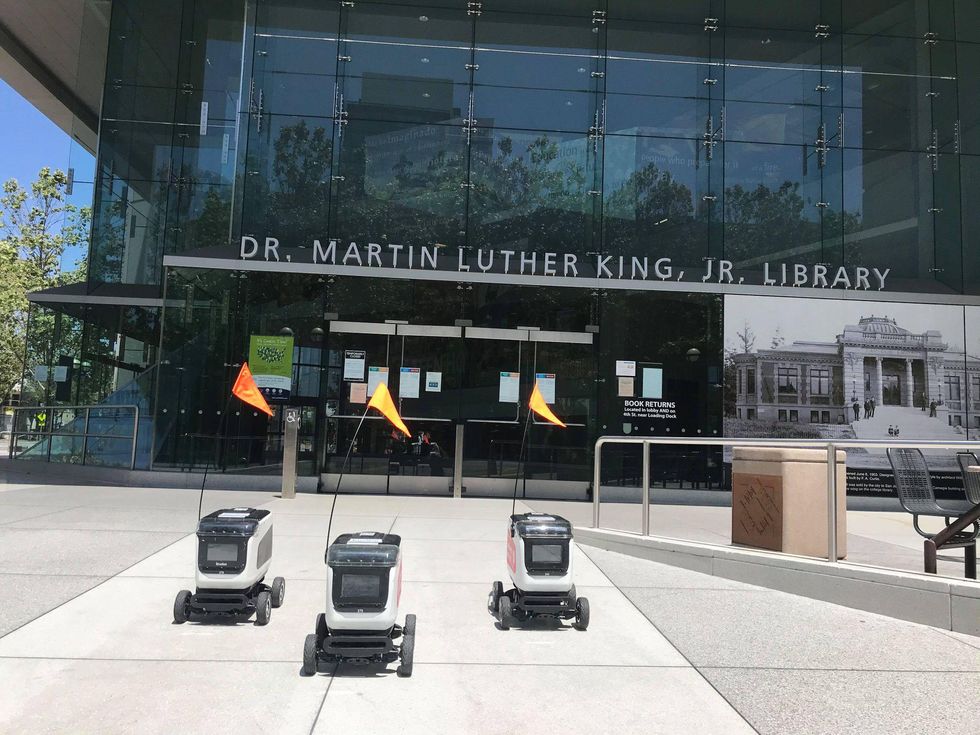
Kiwibot has quietly been testing its robots – specially designed to look cute and non-threatening – for the past few weeks in the Valley, as well as more recently at a major university campus the company won't yet name. If all goes well, Kiwibot will begin offering delivery to students through as early as next month before expanding to Santa Monica and other parts of the city after that.
"L.A. is going to be our most important city this year," Chavez said. "In the first five months of the year we plan to employ 100 robots here in the city, and we expect that by the end of the year we're going to have around 400 robots deployed."
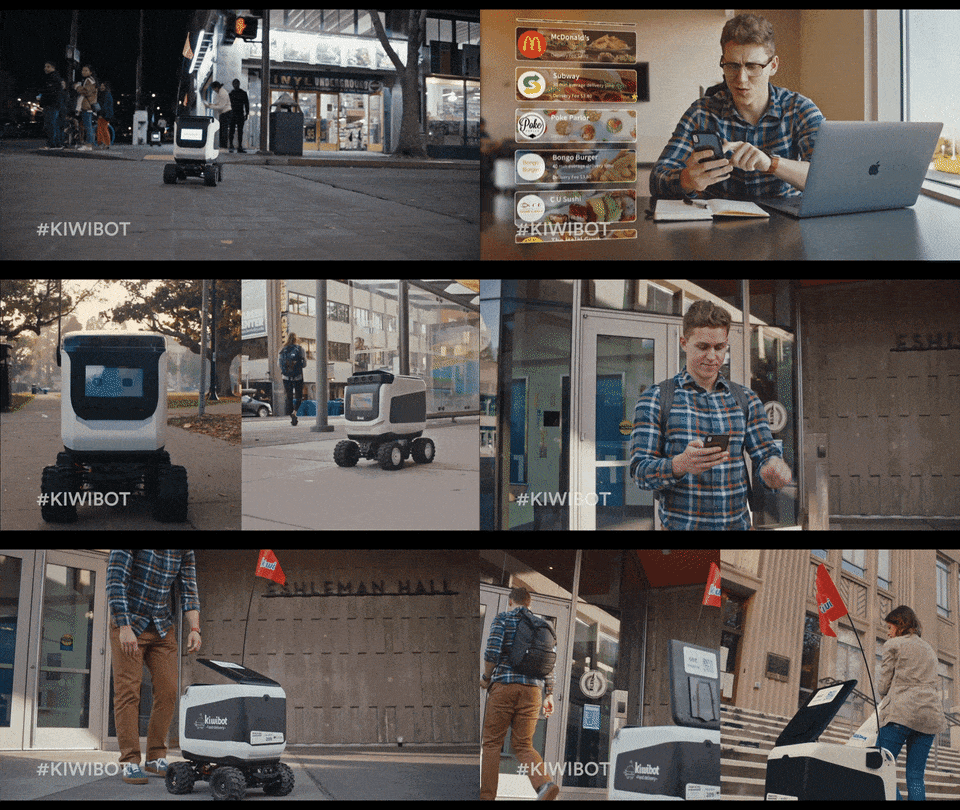
Postmates, which is now owned by Uber, has been testing a handful of delivery robots in West Hollywood since April. While those are accompanied by a human chaperone, the Kiwibot robots set out on their own, though operators take over remotely for more complex tasks like crossing the street.
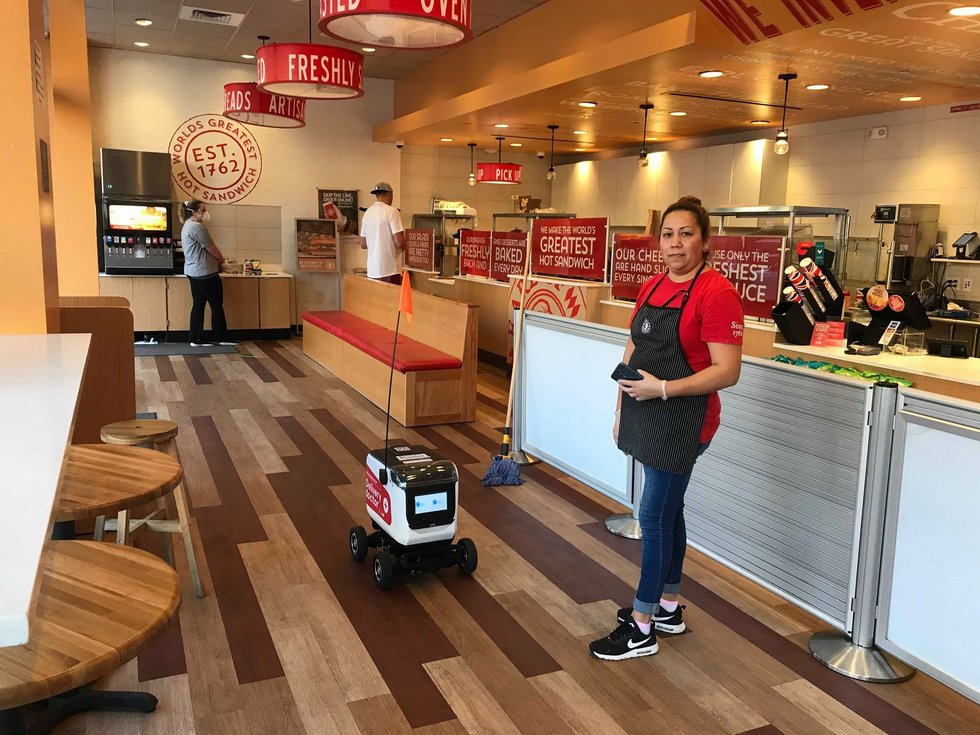
Kiwibot has already made over 120,000 deliveries since 2017 during rollouts at University of California, Berkeley, University of Denver, and San Jose, where it partnered with Shopify and Ordermark. But L.A., with its vast geographic footprint, is a whole new degree of difficulty.
"It's a great challenge for us," said Chavez.
Kiwibot chose L.A. because the city already has a high adoption of food delivery, it is home to potential partners like ChowNow and Ordermark, and the city has been a willing collaborator through its Urban Movement Labs (UML), mostly by sharing data on city streets and sidewalks.
"We trust L.A. to be the best new market for us because the food delivery habit is already there, and we feel backed to scale in an organized and socially responsible and sustainable manner," said David Rodriguez, Kiwibot's head of business.
After a confrontational approach between cities and ridesharing and e-scooter companies, Lilly Shoup, UML's interim executive director, says L.A. is trying to be more collaborative with delivery robots.
"I think we've learned that it's important for city transportation agencies to get ahead of new technology before they appear on city streets," Shoup said. "It's important to understand their business models and proactively develop policies."
UML is also working on a pilot to deliver goods via drone by 2022 and in both instances Shoup says the technology can help reduce pollution and congestion since most deliveries now are made via cars.
"It's really exciting to think about new ways to reduce the environmental impact of delivery," Shoup said.
Robots substantially bring down the cost of delivery, which could help restaurants that operate on thin margins during even the best of times and have been devastated this year. But it will also mean fewer delivery jobs, most of which have been preserved as contract work in California with the recently passed Proposition 22.
Restaurants typically pay between 15% to 30% on orders placed with delivery services like Postmates or Grubhub and drivers are hardly getting rich. In fact, they often make less than minimum wage.
Kiwibot charges fees of a couple dollars on each order – which can be absorbed by the restaurant or passed onto customers. The company says its cost per delivery is now $2.98 but as it scales and the technology improves it can shave the cost down to $1.23 by the end of 2022.
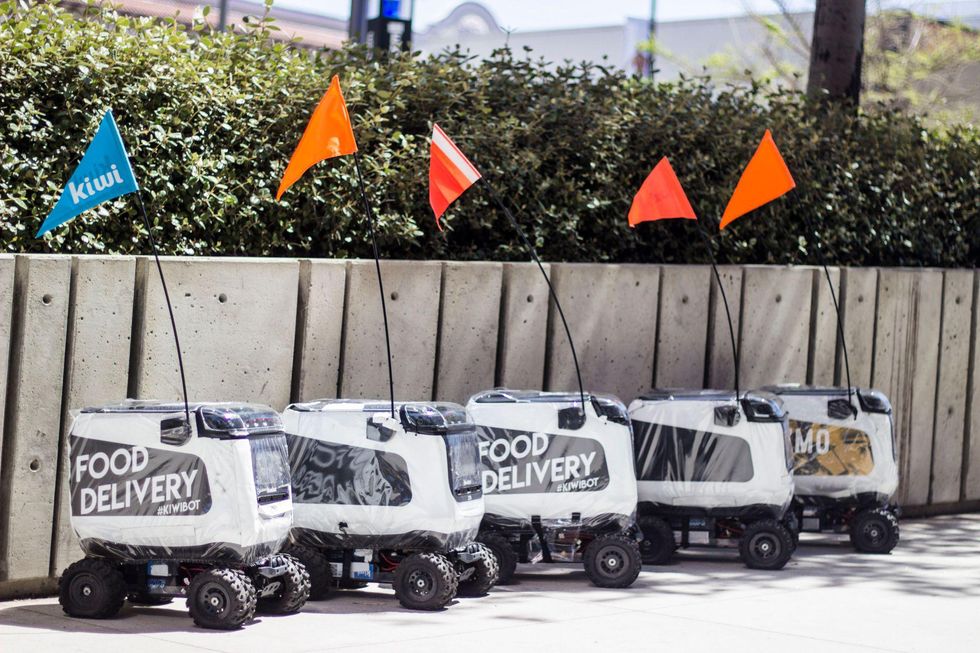
Right now, Kiwibot robots – which cost between $2,500 and $4,000 each – can only operate in a 1.5 mile radius but the company's next generation can go eight miles and is large enough to fit a 12-inch pizza.
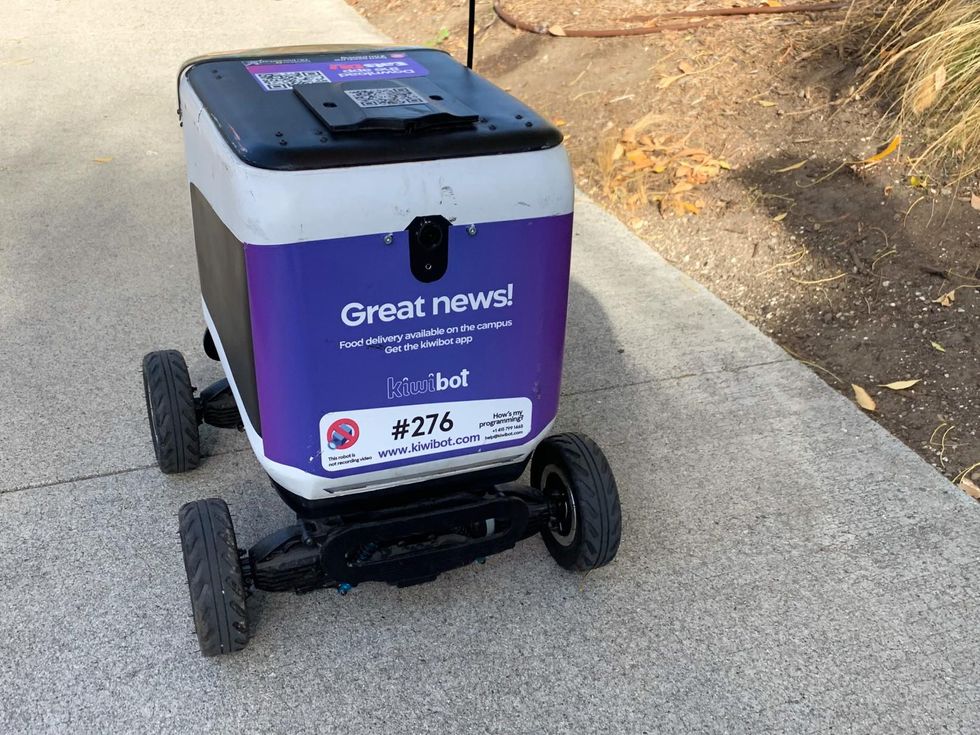
Photo by Ben Bergman
Will the Public Accept Robots?
Even when the technology is ready, Kiwibot has what may be a tougher obstacle to overcome – public acceptance. Public safety commissioners in West Hollywood raised concerns about Postmates' robots and even in tech-friendly San Francisco, a city lawmaker, worried they might run into pedestrians, tried to ban them.
Kiwibot warns potential investors on its crowdfunding page: "Delivery bots have proved controversial in some regulatory environments with some cities, like San Francisco, putting out laws that make it difficult for us to deploy. If this became widespread we would have trouble going to market."
Chavez says he spends a great deal of time thinking about how he can get the public to be comfortable with robots.
"There is a sector of people that are concerned about robots and I think that it is very important to listen to them and to get their feedback on everything. but robots are going to happen," Chavez said.
The robot also has a sign affixed to the back to clarify that it is not recording any video, something that was added after homeless people in San Jose feared they were being spied on.
There is a "black box," which records in case of an emergency, but none of the devices have been stolen — so far.
Even though local regulations can allow for robots to go as fast as 10 mph, Chavez has found a speed of 6 mph makes people feel safer.
There are also important visual considerations. Kiwibot's robots look nothing like the hulking devices conjured up in sci-fi movies like "Transformers" or "The Terminator." They are more like a plastic cooler on wheels with lights on the front that resemble a smiling face.
"The new version is even more cute," said Chavez. "It's like a squirrel on a rock."
Taking a page from nature, the design is deliberately playful and small.
"When you see an animal and it is bigger than the width of your shoulders you feel threatened," Chavez said. "So we have made sure that the robot is never going to be wider [than you] so that people don't feel threatened."
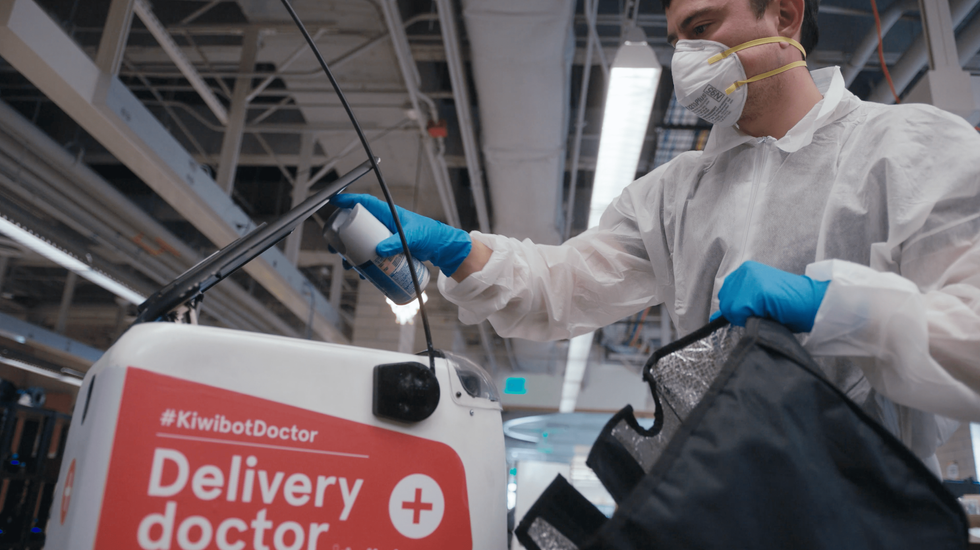
Coronavirus has also been helpful, helping accelerate the adoption not only of delivery but also of robots – who you don't have to worry about coughing on you.
Competition with Bigger Robot Deliveries
Kiwibot, which is based in San Jose, has raised more than half $1 million from more than 650 investors in its latest crowdfunding campaign, to bring its fundraising total to over $3 million.
That pales in comparison to not only Uber but also much larger rivals Starship, a robot food delivery service launched in 2014 by two Skype co-founders that plans to rollout deliver to 100 universities by next summer and Nuro – an autonomous vehicle startup founded by two ex-Google engineers valued at $4 billion. The company received regulatory approval last week to operate on city streets in the Bay Area.
But with global autonomous last-mile delivery projected to grow from $11.16 billion next year to $76 billion by 2030, Kiwibot sees room for multiple competitors.
"In L.A. right now we are talking with multiple partners, very big companies," said Chavez.
"Everything is moving very fast," he added, as his robot inched along the sidewalk, heading back to the lab to continue more testing.
From Your Site Articles
- Amazon unveils its own smart grocery cart, in new effort to automate ... ›
- CVS and UPS Are Teaming Up For Drone Deliveries to Retirees ... ›
- Los Angeles Wants Drone Delivery by 2023 - dot.LA ›
- At UCLA, Robots Are Delivering Groceries, Pizza and Coffee - dot.LA ›
- BloomNation Florist Platform Launches Dig-In, Swigg - dot.LA ›
- Delivery Robots Comes to Santa Monica - dot.LA ›
- LA Restaurant Owners Are Taking on the Delivery App Empire - dot.LA ›
- Cartwheel Raises $1M To Take on Food Delivery Apps - dot.LA ›
- El Pollo Loco Launches a Backyard Drone Delivery Program - dot.LA ›
- On The Go LA Aims to Boost Local Food Truck Vendors - dot.LA ›
- Los Angeles Sets Rules for Delivery Robots On City Sidewalks - dot.LA ›
- Coco Joins LA's Delivery Robot Race - dot.LA ›
- Graze Unveils an Autonomous Electric Lawn Mower - dot.LA ›
- A Timeline of Robotaxis, Autonomous Vehicles in Los Angeles - dot.LA ›
- A Timeline of Robotaxis, Autonomous Vehicles in Los Angeles - dot.LA ›
- Wage Growth Outpaced Inflation In Los Angeles - dot.LA ›
Related Articles Around the Web
https://twitter.com/thebenbergman
ben@dot.la