

Illustration by Ian Hurley
What Are LA’s Hottest Startups of 2022? See Who VCs Picked in dot.LA’s Annual Survey
In Los Angeles—like the startup environment at large—venture funding and valuations skyrocketed in 2021, even as the coronavirus pandemic continued to surge and supply chain issues rattled the economy. The result was a startup ecosystem that continued to build on its momentum, with no shortage of companies raising private capital at billion-dollar-plus unicorn valuations.
In order to gauge the local startup scene and who’s leading the proverbial pack, we asked more than 30 leading L.A.-based investors for their take on the hottest firms in the region. They responded with more than two dozen venture-backed companies; three startups, in particular, rose above the rest as repeat nominees, while we've organized the rest by their amount of capital raised as of January, according to data from PitchBook. (We also asked VCs not to pick any of their own portfolio companies, and vetted the list to ensure they stuck to that rule.)
Without further ado, here are the 26 L.A. startups that VCs have their eyes on in 2022.
1. Whatnot ($225.4 million raised)
Whatnot was the name most often on the minds of L.A. venture investors—understandably, given its prolific fundraising year. Whatnot raised some $220 million across three separate funding rounds in 2021, on the way to a $1.5 billion valuation.
The Marina del Rey-based livestream shopping platform was founded by former GOAT product manager Logan Head and ex-Googler Grant LaFontaine. The startup made its name by providing a live auction platform for buying and selling collectables like rare Pokémon cards, and has since expanded into sports memorabilia, sneakers and apparel.
2. Boulevard ($40.3 million raised)
Boulevard’s backers include Santa Monica-based early-stage VC firm Bonfire Ventures, which focuses on B2B software startups. The Downtown-based company fits nicely within that thesis; Boulevard builds booking and payment software for salons and spas. The firm has worked with prominent brands such as Toni & Guy and HeyDay.

3. GOAT ($492.7 million)
GOAT launched in 2015 as a marketplace to help sneakerheads authenticate used Air Jordans and other collectible shoes. It has since grown at a prolific rate, expanding into apparel and accessories and exceeding $2 billion in merchandise sales in 2020. The startup sealed a $195 million funding round last summer that more than doubled its valuation, to $3.7 billion.
The Best of the Rest
VideoAmp ($578.6 raised)
Nielsen competitor VideoAmp gathers data on who's watching what across streaming services, traditional TV and social apps like YouTube. The company positions itself as an alternative to so-called "legacy" systems like Nielsen, which it says are "fragmented, riddled with complexity and inaccurate." In addition to venture funding, its total funding figure includes more than $165 million in debt financing.
Mythical Games ($269.4 million raised)
Seizing on the NFT craze, Mythical Games is building a platform that powers the growing realm of “play-to-earn games.” Backed by NBA legend Michael Jordan and Andreessen Horowitz, the Sherman Oaks-based startup’s partners include game publishers Abstraction, Creative Mobile and CCG Lab.
FloQast ($202 million raised)
FloQast founder Michael Whitmire says he got a “no” from more than 100 investors in the process of raising a seed round. Today, the accounting software company is considered a unicorn.

Nacelle ($70.8 million raised)
Nacelle produces docuseries, books, comedy albums and podcasts. The media company’s efforts include the Netflix travel series “Down To Earth with Zac Efron.”
Wave ($66 million raised)
A platform for virtual concerts, Wave has hosted performances by artists including Justin Bieber, Tinashe and The Weeknd. The company says it has raised $66 million to date from the likes of Warner Music and Tencent.
Papaya ($65.2 million raised)
Sherman Oaks-based Papaya looks to make it easier to pay “any” bill—from hospital bills to parking tickets—via its mobile app.
LeaseLock ($63.2 million raised)
Based in Marina del Rey, LeaseLock says it’s on a mission to eliminate security deposits for apartment renters.
Emotive ($58.1 million raised)
Emotive sells text message-focused marketing tools to ecommerce firms like underwear brand Parade and men's grooming company Beardbrand.
Dray Alliance ($55 million raised)
Based in Long Beach, Dray says its mission is to “modernize the logistics and trucking industry.” Its partners include Danish shipping company Maersk and toy maker Mattel.

Coco ($43 million raised)
Coco makes small pink robots on wheels (you may have seen them around town) that deliver food via a remote pilot. Its investors include Y Combinator and Silicon Valley Bank.
HiveWatch ($25 million raised)
HiveWatch develops physical security software. Its investors include former Twitter executive Dick Costollo and NBA star Steph Curry’s Penny Jar Capital.

Popshop ($24.5 million raised)
Whatnot competitor Popshop is betting that live-shopping is the future of ecommerce. The West Hollywood-based firm focuses on collectables such as trading cards and anime merchandise.

First Resonance ($19.4 million raised)
Founded by former SpaceX engineer Karan Talati, First Resonance runs a software platform for makers of electric cars and aerospace technology. Its clients include Santa Cruz-based air taxi company Joby Aviation and Alameda-based rocket company Astra.
Open Raven ($19 million raised)
Founded by Crowdstrike and Microsoft alums, Open Raven aims to protect user data. The cybersecurity firm’s investors include Kleiner Perkins and Upfront Ventures.
Fourthwall ($17 million raised)
When an actor faces the camera and speaks directly to the audience, it’s known as “breaking the fourth wall.” Named after the trope, Venice-based Fourthwall offers a website builder that’s designed for content creators.
The Non Fungible Token Company ($15 million raised)
The Non Fungible Token Company creates NFTs for musicians under the name Unblocked. Its investors include Jay Z’s Marcy Venture Partners and Shawn Mendez.
Safe Health Systems ($15 million raised)
Backed by Mayo Clinic Ventures, Safe Health develops telehealth software and offers tools for enterprises to launch their own health care apps.

Intro ($11.6 million raised)
Intro’s app lets you book video calls with experts—from celebrity stylists, to astrologists, to investors.

DASH Systems ($8.5 million raised)
With the tagline “Land the package, not the plane,” DASH Systems is a Hawthorne-based shipping company that builds hardware and software for automated airdrops.

Ettitude ($3.5 million raised)
With a focus on sustainability, Ettitude is a direct-to-consumer brand that sells bedding, bathroom textiles and sleepwear.

Afterparty ($3 million raised)
Along similar lines as Unblocked, Afterparty creates NFTs for artists and content creators such as Clay Perry and Tropix.

Heart to Heart ($0.75 million raised)
Heart to Heart is an audio-focused dating app that “lets you listen to the story behind the pictures in a profile.” Precursor Ventures led the pre-seed funding round.

Frigg (undisclosed)
Frigg makes hair and beauty products that contain cannabinoids such as CBD. The Valley Village-based company raised an undisclosed seed round in August.
From Your Site Articles
- The Early-Stage Startups in LA Set to Take Off in 2021 - dot.LA ›
- Los Angeles Startups Closed a Record Number of Deals in Q3 - dot.LA ›
- dot.LA's Map of Startups in Los Angeles - dot.LA ›
- The Hottest LA Startups of 2020 - dot.LA ›
- Los Angeles Cleantech Incubator Launches Green Loan Fund - dot.LA ›
- dot.LA's Guide on L.A. Flight Startups Overair, Archer Aviation - dot.LA ›
- Here Are LA’s Hottest Startups for 2023 - dot.LA ›
- Nobody Studios Plans to Build 100 Startups in Five Years - dot.LA ›
- From GameTree to Sota — Ukrainian Founders Call LA Home - dot.LA ›
Related Articles Around the Web
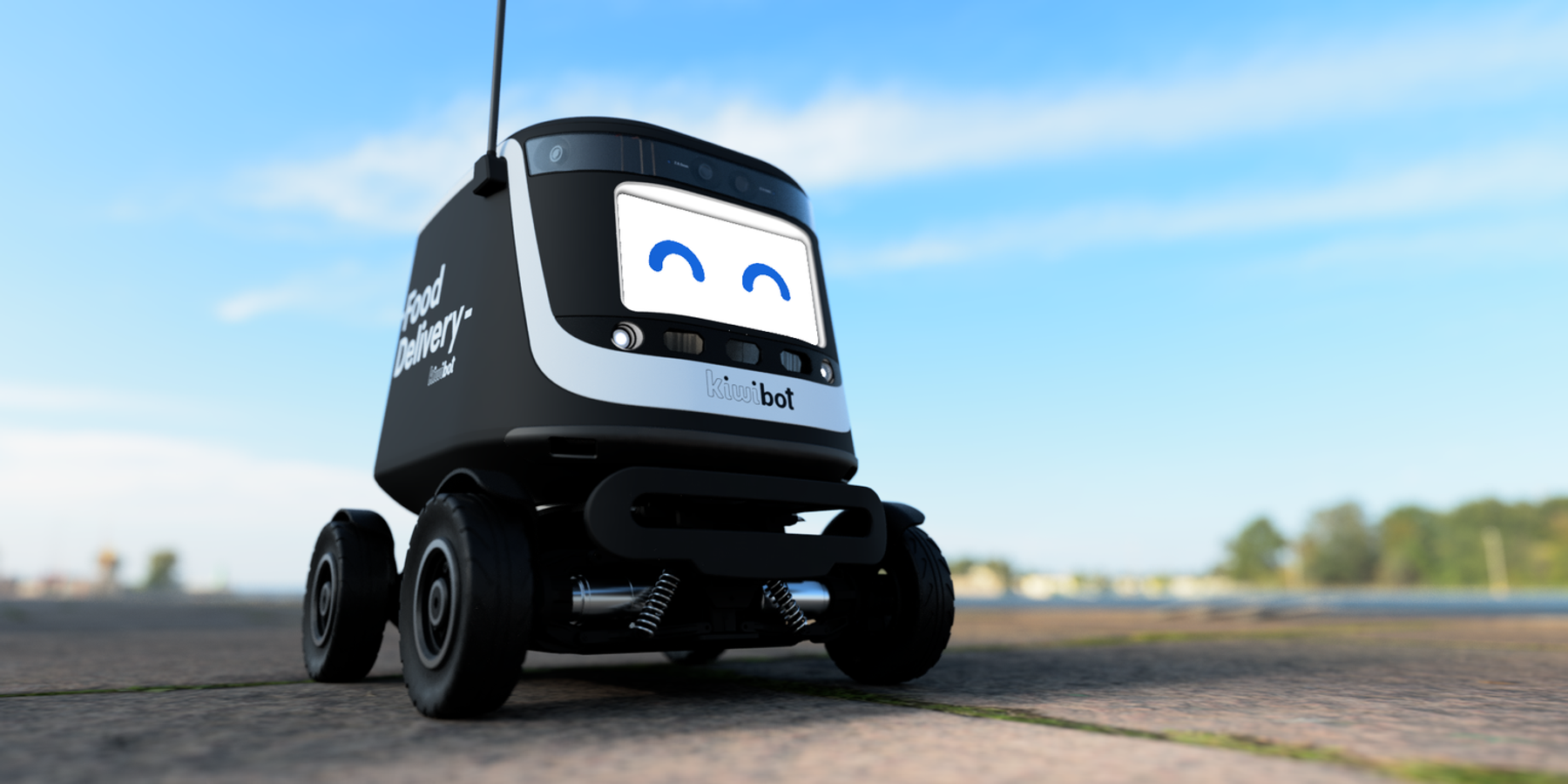
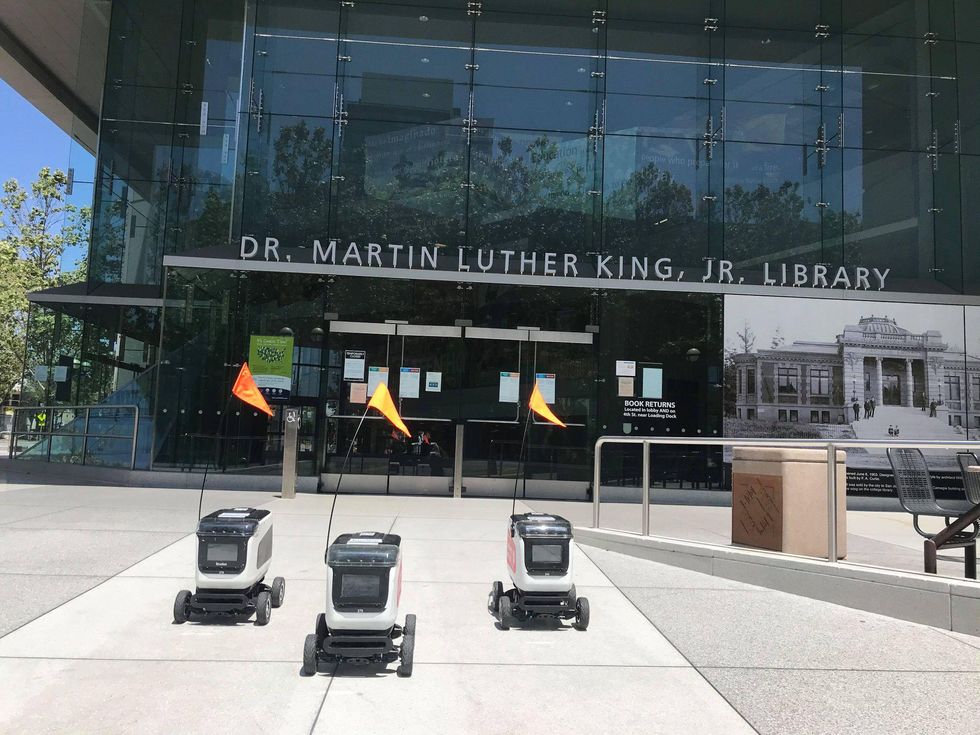
Kiwibot has quietly been testing its robots – specially designed to look cute and non-threatening – for the past few weeks in the Valley, as well as more recently at a major university campus the company won't yet name. If all goes well, Kiwibot will begin offering delivery to students through as early as next month before expanding to Santa Monica and other parts of the city after that.
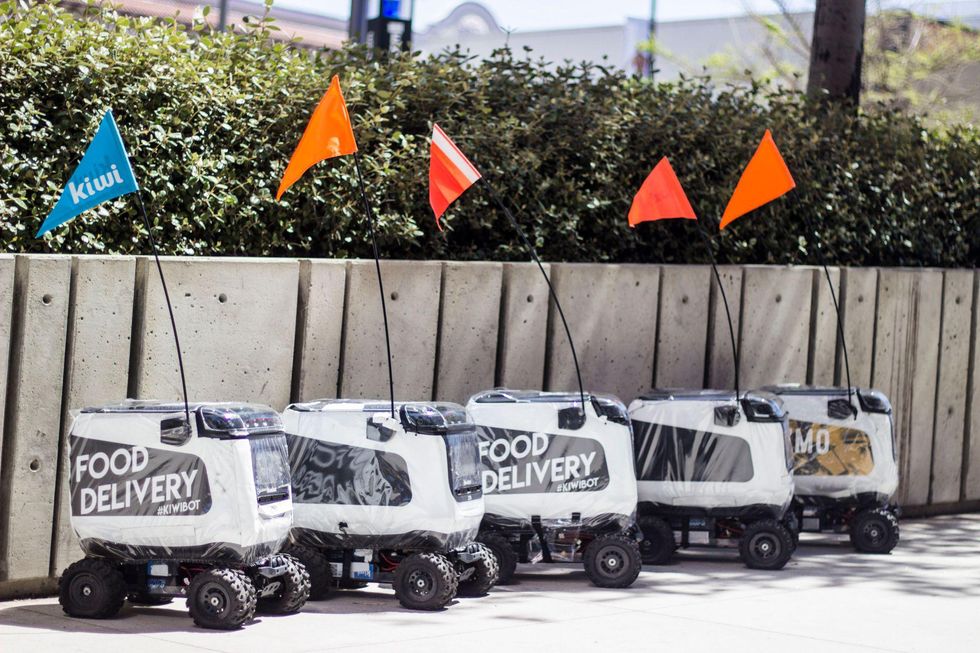
"L.A. is going to be our most important city this year," Chavez said. "In the first five months of the year we plan to employ 100 robots here in the city, and we expect that by the end of the year we're going to have around 400 robots deployed."
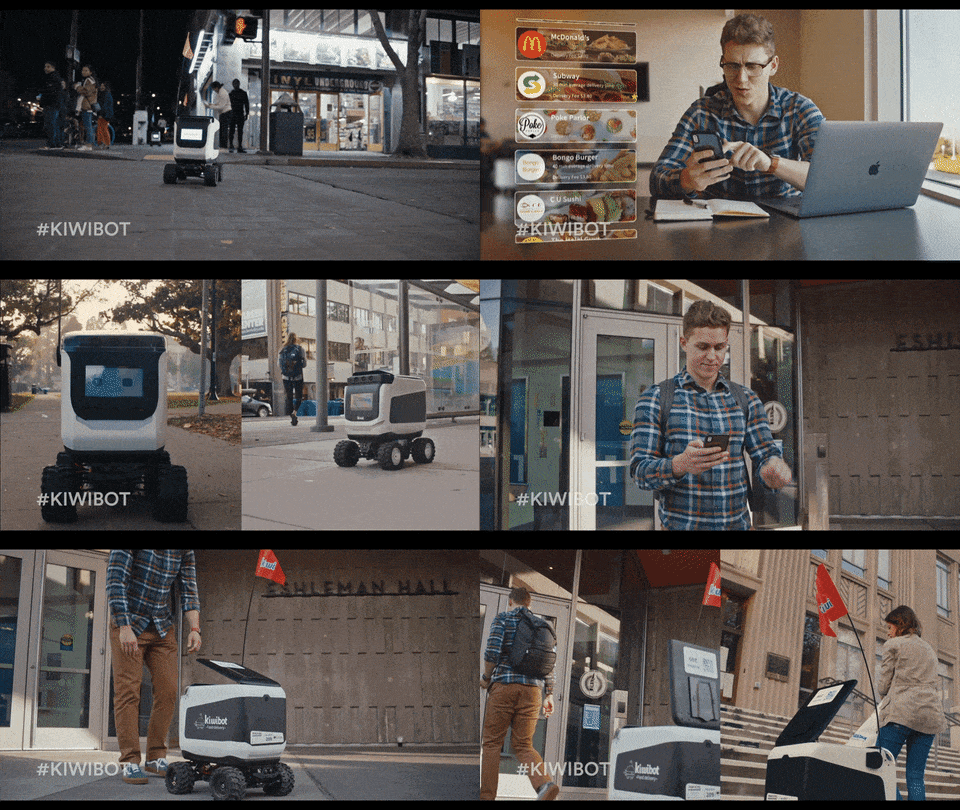
Postmates, which is now owned by Uber, has been testing a handful of delivery robots in West Hollywood since April. While those are accompanied by a human chaperone, the Kiwibot robots set out on their own, though operators take over remotely for more complex tasks like crossing the street.
Kiwibot has already made over 120,000 deliveries since 2017 during rollouts at University of California, Berkeley, University of Denver, and San Jose, where it partnered with Shopify and Ordermark. But L.A., with its vast geographic footprint, is a whole new degree of difficulty.
"It's a great challenge for us," said Chavez.
Kiwibot chose L.A. because the city already has a high adoption of food delivery, it is home to potential partners like ChowNow and Ordermark, and the city has been a willing collaborator through its Urban Movement Labs (UML), mostly by sharing data on city streets and sidewalks.
"We trust L.A. to be the best new market for us because the food delivery habit is already there, and we feel backed to scale in an organized and socially responsible and sustainable manner," said David Rodriguez, Kiwibot's head of business.
After a confrontational approach between cities and ridesharing and e-scooter companies, Lilly Shoup, UML's interim executive director, says L.A. is trying to be more collaborative with delivery robots.
"I think we've learned that it's important for city transportation agencies to get ahead of new technology before they appear on city streets," Shoup said. "It's important to understand their business models and proactively develop policies."
UML is also working on a pilot to deliver goods via drone by 2022 and in both instances Shoup says the technology can help reduce pollution and congestion since most deliveries now are made via cars.
"It's really exciting to think about new ways to reduce the environmental impact of delivery," Shoup said.
Robots substantially bring down the cost of delivery, which could help restaurants that operate on thin margins during even the best of times and have been devastated this year. But it will also mean fewer delivery jobs, most of which have been preserved as contract work in California with the recently passed Proposition 22.
Restaurants typically pay between 15% to 30% on orders placed with delivery services like Postmates or Grubhub and drivers are hardly getting rich. In fact, they often make less than minimum wage.
Kiwibot charges fees of a couple dollars on each order – which can be absorbed by the restaurant or passed onto customers. The company says its cost per delivery is now $2.98 but as it scales and the technology improves it can shave the cost down to $1.23 by the end of 2022.
Right now, Kiwibot robots – which cost between $2,500 and $4,000 each – can only operate in a 1.5 mile radius but the company's next generation can go eight miles and is large enough to fit a 12-inch pizza.
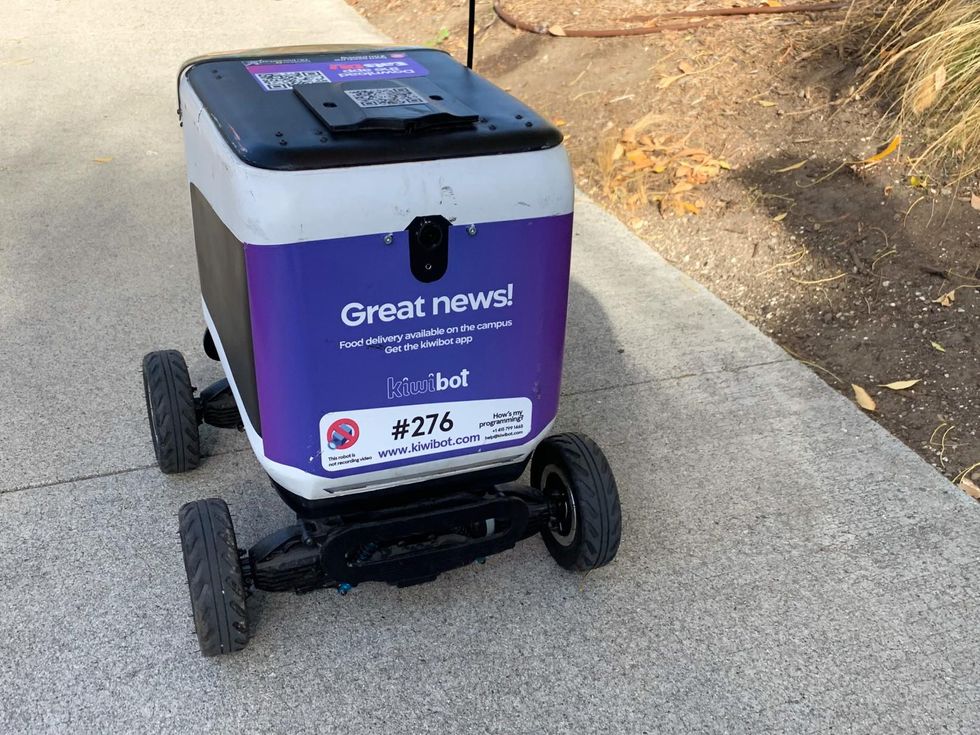
Photo by Ben Bergman
Will the Public Accept Robots?
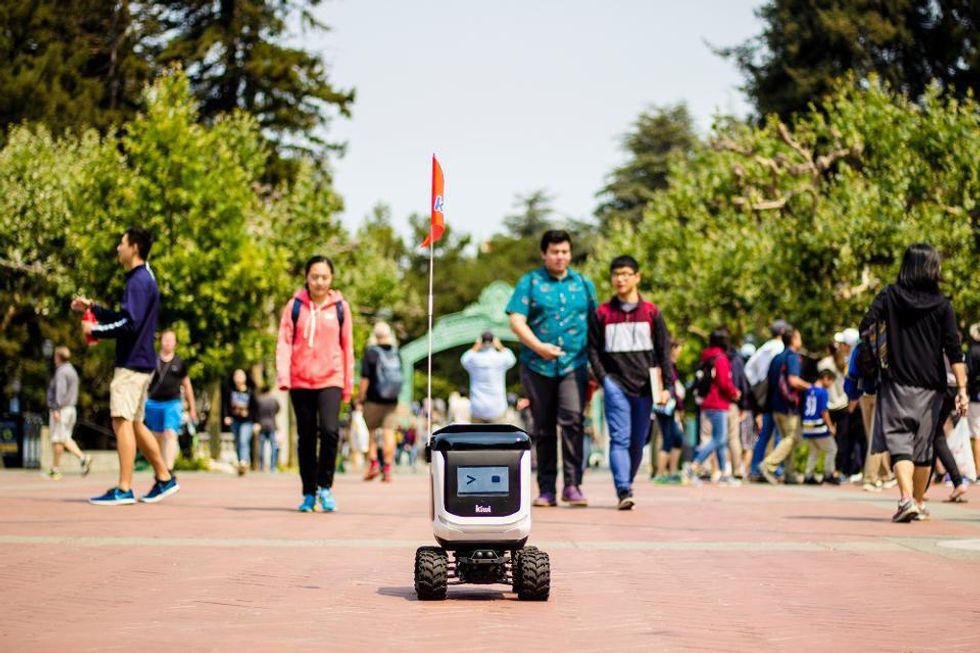
Even when the technology is ready, Kiwibot has what may be a tougher obstacle to overcome – public acceptance. Public safety commissioners in West Hollywood raised concerns about Postmates' robots and even in tech-friendly San Francisco, a city lawmaker, worried they might run into pedestrians, tried to ban them.
Kiwibot warns potential investors on its crowdfunding page: "Delivery bots have proved controversial in some regulatory environments with some cities, like San Francisco, putting out laws that make it difficult for us to deploy. If this became widespread we would have trouble going to market."
Chavez says he spends a great deal of time thinking about how he can get the public to be comfortable with robots.
"There is a sector of people that are concerned about robots and I think that it is very important to listen to them and to get their feedback on everything. but robots are going to happen," Chavez said.
The robot also has a sign affixed to the back to clarify that it is not recording any video, something that was added after homeless people in San Jose feared they were being spied on.
There is a "black box," which records in case of an emergency, but none of the devices have been stolen — so far.
Even though local regulations can allow for robots to go as fast as 10 mph, Chavez has found a speed of 6 mph makes people feel safer.
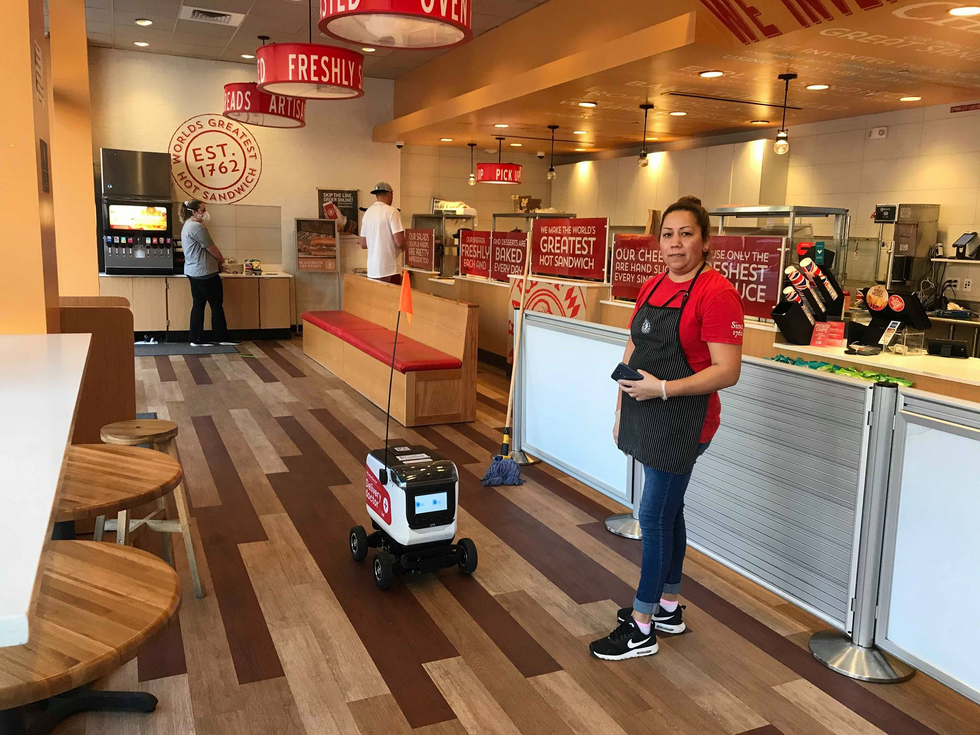
There are also important visual considerations. Kiwibot's robots look nothing like the hulking devices conjured up in sci-fi movies like "Transformers" or "The Terminator." They are more like a plastic cooler on wheels with lights on the front that resemble a smiling face.
"The new version is even more cute," said Chavez. "It's like a squirrel on a rock."
Taking a page from nature, the design is deliberately playful and small.
"When you see an animal and it is bigger than the width of your shoulders you feel threatened," Chavez said. "So we have made sure that the robot is never going to be wider [than you] so that people don't feel threatened."
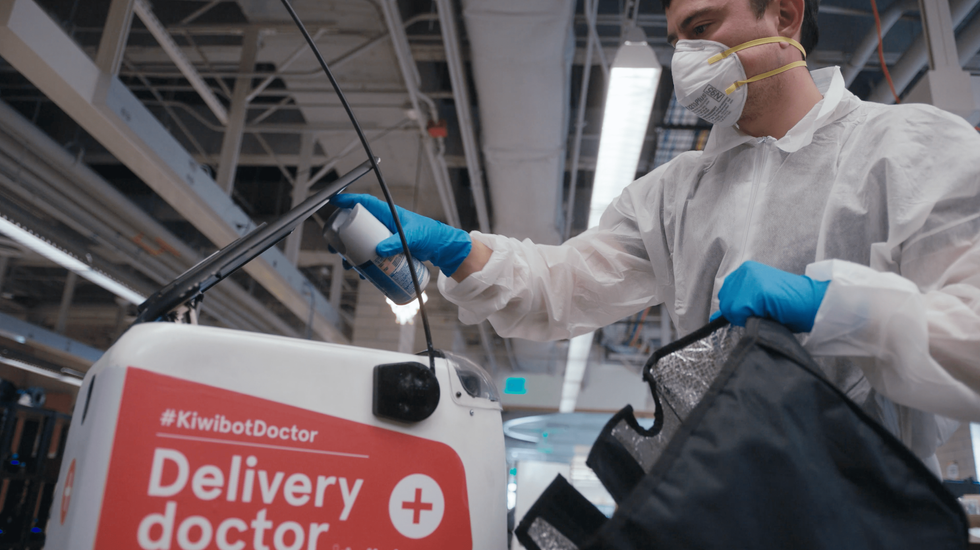
Coronavirus has also been helpful, helping accelerate the adoption not only of delivery but also of robots – who you don't have to worry about coughing on you.
Competition with Bigger Robot Deliveries
Kiwibot, which is based in San Jose, has raised more than half $1 million from more than 650 investors in its latest crowdfunding campaign, to bring its fundraising total to over $3 million.
That pales in comparison to not only Uber but also much larger rivals Starship, a robot food delivery service launched in 2014 by two Skype co-founders that plans to rollout deliver to 100 universities by next summer and Nuro – an autonomous vehicle startup founded by two ex-Google engineers valued at $4 billion. The company received regulatory approval last week to operate on city streets in the Bay Area.
But with global autonomous last-mile delivery projected to grow from $11.16 billion next year to $76 billion by 2030, Kiwibot sees room for multiple competitors.
"In L.A. right now we are talking with multiple partners, very big companies," said Chavez.
"Everything is moving very fast," he added, as his robot inched along the sidewalk, heading back to the lab to continue more testing.
From Your Site Articles
- Amazon unveils its own smart grocery cart, in new effort to automate ... ›
- CVS and UPS Are Teaming Up For Drone Deliveries to Retirees ... ›
- Los Angeles Wants Drone Delivery by 2023 - dot.LA ›
- At UCLA, Robots Are Delivering Groceries, Pizza and Coffee - dot.LA ›
- BloomNation Florist Platform Launches Dig-In, Swigg - dot.LA ›
- Delivery Robots Comes to Santa Monica - dot.LA ›
- LA Restaurant Owners Are Taking on the Delivery App Empire - dot.LA ›
- Cartwheel Raises $1M To Take on Food Delivery Apps - dot.LA ›
- El Pollo Loco Launches a Backyard Drone Delivery Program - dot.LA ›
- On The Go LA Aims to Boost Local Food Truck Vendors - dot.LA ›
- Los Angeles Sets Rules for Delivery Robots On City Sidewalks - dot.LA ›
- Coco Joins LA's Delivery Robot Race - dot.LA ›
- Graze Unveils an Autonomous Electric Lawn Mower - dot.LA ›
- A Timeline of Robotaxis, Autonomous Vehicles in Los Angeles - dot.LA ›
- A Timeline of Robotaxis, Autonomous Vehicles in Los Angeles - dot.LA ›
- Wage Growth Outpaced Inflation In Los Angeles - dot.LA ›
Related Articles Around the Web
https://twitter.com/thebenbergman
ben@dot.la