
Here Are the LA Seed Startups Top VCs Wish They'd Invested In

Ben Bergman

Ben Bergman is the newsroom's senior finance reporter. Previously he was a senior business reporter and host at KPCC, a senior producer at Gimlet Media, a producer at NPR's Morning Edition, and produced two investigative documentaries for KCET. He has been a frequent on-air contributor to business coverage on NPR and Marketplace and has written for The New York Times and Columbia Journalism Review. Ben was a 2017-2018 Knight-Bagehot Fellow in Economic and Business Journalism at Columbia Business School. In his free time, he enjoys skiing, playing poker, and cheering on The Seattle Seahawks.

Here Are the LA Seed Startups Top VCs Wish They'd Invested In

Los Angeles is home to around 5,000 startups, the majority of which are in their young, formative years.

Which of those thousands are poised for a breakout in 2021? We asked dozens of L.A.'s top VCs to weigh in. We wanted to know which companies they would have invested in if they could go back and do it all over again.


Yesterday, our investors picked their favorite Series-A or later startups, and not surprisingly there was more consensus, with familiar names like PopShop Live and Scopely leading the way.

But the most lucrative returns come from identifying companies in their infancy, as recent blockbuster IPOs vividly demonstrate. For instance, Sequoia's $600,000 seed check to Airbnb in 2009 accounted for 70% of its shares in the company and helped it get into competitive later rounds. When the vacation rental service went public last month, Sequoia's stake was worth $4.8 billion.

What will be the next breakout? The complete list is below and is ranked in random order except for the first three, which stood out by virtue of getting multiple votes: Pipe enables companies with recurring revenues to tap into their deferred cash flows with an instant cash advance. Clash App, Inc., is a TikTok alternative launched by a former employee of the social network in August. And XCLAIM allows bankruptcy claims to be digitally traded.

Boiling

Pipe logo

Pipe

Pipe provides financial services to help cloud service companies tap into their deferred cash flows, allowing them to continue growing without taking on debt or giving up ownership. For subscription-based businesses, this makes it "as if all of your customers converted to annual plans overnight," according to the company.

Founded by Harry Hurst, Josh Mangel and Zain Allarakhia, the company raised $66 million of seed funding earlier this year in a deal led by Craft Ventures and Fin Venture Capital.

clash logo

Clash App Inc.

Created by former Vine-r Brendon McNerney and entrepreneur and marketing expert P.J. Leimgruber, Clash App is a short form video platform similar to TikTok, but without built-in sound libraries. It's geared toward empowering creators with innovative monetization options and inclusive communities.

xclaim logo

XCLAIM 

XCLAIM has created an electronic platform where bankruptcy claims that take a notoriously long time to process can be digitally traded. Founded in 2018 by Matthew Sedigh, who has operated in the corporate restructuring field for more than a decade, the company says "rather than wait years for the bankruptcy court process to issue payment distributions, creditors can now access immediate liquidity by selling their claim to interested buyers." Earlier this year, it raised a $4 million seed round led from Luma Launch, First Round Capital and Freestyle Capital.

Simmering
Freck Beauty logo

Freck Beauty

Freck Beauty manufactures beauty products intended to make the user feel seen. Remi Brixton, the company's chief executive officer, founded the startup in 2015 when she was in search of a freckle makeup product. When she couldn't find one, she launched her own, the FRECK OG. The East Los Angeles-based company raised an undisclosed amount of seed funding in a deal led by KarpReilly and Stage 1 Fund earlier this year.

The Skills logo

The Skills

The Skills wants to be the master class on sports and life. The Los Angeles-based startup launched two months ago and offers classes from gold medal Olympians — including swimmer Michael Phelps and volleyball player Kerri Walsh Jennings — and Grand Slam tennis Champion Maria Sharapova. In December, it closed a $5 million seed round backed by Boston-based Will Ventures, Global Founders Capital, 8VC, Maveron, Hack VC and Correlation VC.

mapped logo

Mapped 

Founded by Shaun Cooley, former chief technology officer of Cisco's Internet-of-Things (IoT) and Industries division, Mapped provides IoT services in El Segundo.

The company raised $3 million of seed funding in a deal led by Greycroft earlier this year, putting its pre-money valuation at $9 million.
dataplor logo

DataPlor 

Created in 2016 by Geoffrey Michener, Dataplor indexes micro-businesses in Mexico (and will soon be expanding to other countries in Central and South America) and sells the data to larger companies.The company relies on contractors in those countries to collect the information from local businesses. It raised $4 million from ff Venture Capital, Quest Venture Partners and Space Capital earlier this year and expects to use it to expand into more Latin American countries.

Grow Credit logo

Grow Credit 

Launched by serial entrepreneur Joe Bayen, Grow Credit helps customers improve their credit score by providing credit for subscription services like Netflix and Spotify. Their MasterCard can help consumers with thin or damaged credit scores and the small line of credit can be upgraded for a fee. The company closed a $2 million seed round earlier this year with participation from Mucker Labs.

outer logo

Outer 

The two-year-old Santa Monica-based company has seen business boom during the pandemic as retail stores shut down and online orders surged. The direct-to-consumer outdoor furniture brand uses backyards as showrooms and raised $4.3 million in a seed round earlier this year led by Mucker Capital. Founded by Jake Liu and Terry Lin, a former designer at Pottery Barn, Outer aims to appeal to Restoration Hardware and Pottery Barn shoppers.
WhatNot

A livestreaming reseller of collectibles like FunkoPop vinyl figurines, Pokémon cards and sports cards, WhatNot taps into a growing retail trend and promises that the collectibles are verified, much like sneaker reseller GOAT.

The startup secured $4 million in seed funding this month from Scribble Ventures, Wonder Ventures, Operator Partners, Y Combinator, Liquid 2 Ventures, Twenty Two Ventures and other investors. The company plans to use the funds to expand into video games, comics books, designer toys and vintage fashion.
Fourthwall

Fourthwall is the developer of an internet platform that helps content creators launch fully-branded websites focused on interacting with fans. Their website tag phrase is "Make a living doing what you love," which is complemented by their model, which provides creators 100% ownership of their website and brand.

Founded by Walker Williams and Will Baumann, the company has raised $4 million to date, from investors Defy Partners, Lightspeed Venture Partners and Initialized Capital Management.

shop latinx logo

Shop LatinX 

Shop LatinX calls itself the "leading beauty, fashion, and lifestyle ecommerce designed by and made for Latinas." The brainchild of two Los-Angeles-based Latinas, Brittany Chavez and Raquel Garcia launched their website before Black Friday in 2016. It features more than 200 brands.
First Resonance logo

First Resonance 

Founded by former SpaceX software engineer Karan Talati and Neal Sarraf, First Resonance promises to ease the workflow for manufactures with software intended to provide greater visibility into production and test product development lifecycle. The company raised $1.75 million of seed funding last year from Wavemaker Partners, Stage Venture Partners and PLG Ventures, among clothes.

vurbl logo

Vurbl

Vurbl offers curated, one-stop-shop of what it calls the best audio on the internet, which can include podcasts but also goes well beyond that from religious sermons to court arguments. The new platform founded by CEO Audra Gold is being built with the $1.3 million pre-seed round Vurbl closed in September led by AlphaEdison with participation from Halogen Ventures and Ten13.

pocketwatch logo

PocketWatch 

Former Disney executive Chris Williams founded the studio that produces family-focused content from YouTube stars. This year it launched clock.work, an advertising agency designed to help major brands reach kids. Investors include Viacom, Greycroft, Third Wave Digital and United Talent Agency, along with strategic angels including Robert Downey Jr. and Jon Landau.

pocketlist logo

PocketList

The app allows renters to see and share apartments that will soon be available before they're listed — reducing the time properties sit vacant and potentially heating up competition among apartment hunters. It launched earlier this year. The company has $2.8 million in seed funding led by David Sacks' Craft Ventures along with Abstract VC, Wonder Ventures and angel investor Spencer Rascoff, co-founder of Zillow and dot.LA.

Quilt logo

Quilt 

The audio-based social platform promises to be the spot for "live, supportive, feel good conversations—just like hopping on the phone with a friend when you need it most." It lets people start a conversation around any topic or join by listening. Quilt raised an undisclosed amount of venture funding from Freestyle Capital in 2019.
tonebase logo

Tonebase

Founded by Abhi Nayar, Chris Garwood and Igor Licthmann, Tonebase provides high-level music education online. Yale School of Music alumnus Garwood and Lichtman told their alma mater that it built with the idea that it was "a way for people everywhere to learn from the very best musicians around the world — individuals who, due to their busy performing and teaching careers, are traditionally accessible to only a select few." The company has raised an undisclosed amount from Launch fund, e.ventures and other undisclosed last May.

Second Spectrum logo

Second Spectrum

Launched in 2013 by Jeff Su, Yu-Han Chang and Rajiv Maheswaran, Second Spectrum already has deals with the NBA and English Premier League. This year it scored another one with Major League Soccer to use its optical tracking system to evaluate and analyze performance.

Second Spectrum puts their tracking cameras inside the stadium. Machine learning and AI-powered analytics provide detailed data that helps coaches and others better understand the game from player speed and deceleration to shot velocity in near real time. That technology can also be used on broadcast platforms to give fans more insight. The company raised about $20 million backed by CAA Ventures, Raine Ventures and The Chernin Group in 2018.
Toucan logo

Toucan 

Founded by CEO Taylor Nieman, Shaun Merritt and Brandon Dietz, Toucan is a Chrome browser extension that lets people learn a new language. It scans websites you visit and translates some words into the language you want to learn. The Santa Monica-based company most recently raised a $3 million round backed by GSV Ventures, Amplifyher Ventures, and Wonder Ventures, among others.
Serve Automation logo

Serve Automation

Created by former SpaceX engineers, Serve Automation aims to change the way foods get delivered. It has secured $7 million in a seed round and is operating in stealth mode.

Lead art by Candice Navi.

https://twitter.com/thebenbergman
ben@dot.la
The $100M Plan to Deliver Sunlight After Dark
Reflect Orbital

🔦 Spotlight

Hello, LA.

Most companies built around solar energy are trying to capture more sunlight.

Reflect Orbital wants to move it.

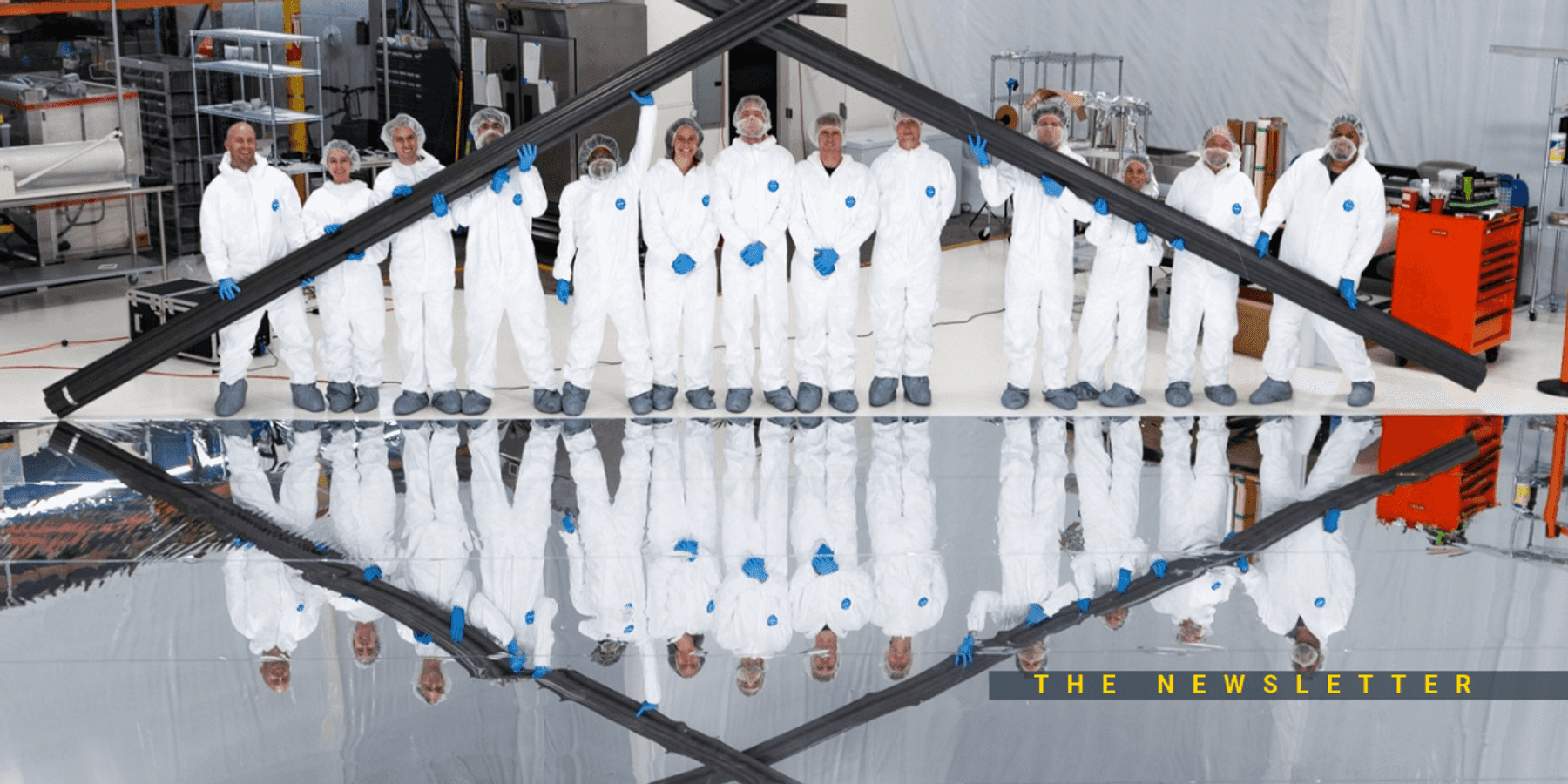
The Hawthorne-based startup is developing satellites equipped with large reflectors that could redirect sunlight from orbit to specific locations on Earth after sunset. The idea sounds borrowed from science fiction, but Reflect Orbital is getting closer to testing whether it can work at commercial scale.

This week, the company announced $73.5M in new funding, bringing its total raised to more than $100M. Existing investors Sequoia Capital, Lux Capital and Starship Ventures participated alongside new backers including Buckley Ventures, Convective Capital, The Uncommon Group and Salesforce Ventures.

The funding will support Reflect Orbital’s first satellite launches, continued development of its reflector technology and new commercial partnerships across the energy and lighting industries.

The company’s premise begins with a familiar limitation: Solar panels stop producing energy when the sun disappears below the horizon, often just as electricity demand is rising.

Reflect Orbital wants to extend that window.

Its planned satellites would remain in sunlight while orbiting Earth, then angle their reflectors toward selected areas on the ground. Solar farms could potentially generate electricity beyond daylight hours without acquiring more land or replacing their existing infrastructure.

The same technology could eventually illuminate disaster zones for search-and-rescue teams, help construction crews work more safely at night and provide light in places without reliable electrical infrastructure.

That is a considerable expansion from where the company stood two years ago.

Reflect Orbital raised a $6.5M seed round in 2024 to develop its production vehicles and grow its Hawthorne team. It followed that with a $20M Series A led by Lux Capital in May 2025.

Now, the company is preparing to leave the warehouse and test its technology where it was designed to operate.

Reflect Orbital has received Federal Communications Commission approval for its first demonstration mission, Eärendil-1, which is expected to launch in the second quarter of 2027. The satellite will allow the company to study how its reflector deploys and performs in low Earth orbit while gathering data that could shape future versions of the system. Reflect Orbital has also secured additional launch opportunities for 2027, including two dedicated missions with Skyroot Aerospace.

Building the satellites presents its own unusual manufacturing challenge. According to the company, its team produces reflector material 28 times thinner than a human hair, folds individual sections into packages roughly the size of a shoebox and assembles satellites containing approximately 12,000 parts.

In other words, delivering sunlight after dark requires some very careful folding.

The concept has naturally prompted questions from astronomers and dark-sky advocates about light pollution and potential interference with scientific observations. Reflect Orbital says it is designing the service around predictability, transparency and control, including limiting reflections to defined locations and short periods, publishing satellite positions in advance and avoiding observatories and other protected sites.

The demonstration mission is expected to produce illumination comparable to a full moon for no more than five minutes during the two hours following local sunset. Reflect Orbital has also said it will collect data, invite outside evaluation and use the results to refine both its technology and safeguards before attempting to scale.

That process will matter because Reflect Orbital is not simply building another satellite. It is proposing a new kind of infrastructure, one that could change when and where sunlight becomes available.

The company still has significant technical and regulatory work ahead. But it has already moved from an unconventional idea to more than $100M in funding, an approved demonstration mission and multiple launch opportunities.

The next step is proving that its technology can deliver light precisely, reliably and responsibly from hundreds of miles above Earth.

If it succeeds, the sun may no longer disappear from the energy grid when it drops below the horizon.

More from this week’s LA startup and venture scene below.

🤝 Venture Deals

    LA Companies

    • Helix raised $6.2M in a round led by Chicago Ventures, with participation from BAM Ventures, Aglaé Ventures, Corazon Capital and others. The startup is developing on-device voice technology that verifies whether users are human and estimates their age without collecting traditional identity documents, offering a privacy-focused alternative to CAPTCHA and photo verification. - learn more
    • Opdo raised a $2.3M pre-seed round led by Angular Ventures, with participation from Inflection and Tiny.vc. The company uses AI agents alongside established optical-design software to help engineers develop and manufacture complex components faster, and will use the funding to expand its engineering capabilities, improve its AI tools and support more customer projects. - learn more
    • Athlete To Athlete raised an $8M Series A led by Rally Ventures, with participation from Newbound VC, Scrum Ventures and UpHonest Capital. The platform pairs young athletes with college-athlete mentors for virtual one-on-one guidance and will use the funding to expand youth sports partnerships, strengthen participant safeguards and reach more families nationwide. - learn more
    • Kindo raised $30M in a round co-led by Crosspoint Capital and Forgepoint Capital, bringing its total funding to $57.6M. The company provides a centralized platform for enterprises to monitor and control AI agents, including their data access, activity and costs, and will use the capital to expand sales and further develop its AI management and security products. - learn more

    LA Venture Funds
    • Trousdale Ventures made a follow-on investment in Databento’s $100M Series C, which was led by Fifth Down Capital and valued the market-data company at $1.1B. Databento plans to accelerate its global infrastructure expansion and build a larger historical market-data archive as demand grows from financial institutions and AI companies. - learn more
    • Upfront Ventures led General Translation’s seed round, while Andreessen Horowitz led its Series A, bringing the AI localization startup’s combined funding across the two rounds to $27M. The company is building full-stack infrastructure that helps businesses translate and continuously update apps, websites, documents and videos across languages. - learn more
    • Alpha Edison participated in Q-CTRL’s $290M Series C, which was led by Salesforce Ventures. The quantum infrastructure company will use the funding to expand its AI-powered software for improving the performance and reliability of quantum computers and sensors while accelerating commercial adoption. - learn more
    • KittyHawk Frontier participated in Twin1 AI’s $5M seed extension, which was led by Curql and brought the company’s total seed financing to $25M. Twin1 develops privacy-focused AI “digital twins” that preserve professionals’ knowledge and working context, and will use the capital to expand across credit unions, law firms and financial institutions while growing its teams and enterprise governance tools. - learn more
    • Bonfire Ventures co-led Axle’s $9M funding round alongside Eniac, with participation from Teamworthy Ventures. Axle provides investment banks with a unified platform for managing conferences, corporate access, roadshows and expert engagements, and will use the capital to expand its AI capabilities and bring the product to more financial institutions. - learn more
    • TenOneTen Ventures participated in Tristar AI’s $12.4M Series A, which was led by Isogon Ventures. The Cambridge-based company uses AI-powered visual inspection to identify manufacturing defects in real time and will use the funding to improve its vision and edge-computing platform, enter additional industries and support larger deployments across customer facilities. - learn more
    • Clearlake Capital Group co-led Mirendil’s $1B Series A alongside Kleiner Perkins, with M13 participating among the company’s other new and existing investors. Mirendil is developing AI agents and tools that allow smaller teams to conduct advanced AI research and will use the funding to make frontier-level R&D more accessible to scientists and engineers. - learn more
    • CommonKind VC participated in Akara’s $5.5M funding round, which was led by Locke Health and brought the healthcare technology company’s total funding to $12.3M. Akara combines privacy-preserving sensors, AI agents and robotics to give hospitals real-time visibility into clinical operations, and will use the capital to expand its teams, grow adoption across U.S. hospitals and further develop its physical AI platform. - learn more
    • March Capital co-led Rox’s $100M Series B alongside General Catalyst, valuing the AI sales startup at $1.3B. Rox helps large enterprises automate pipeline generation, deal execution and upselling, and will use the funding to advance its AI models and expand across industries including healthcare, energy, financial services and manufacturing. - learn more
    • Clocktower Technology Ventures participated in Palomma’s $10M Series A, which was led by Cometa and brought the Colombian fintech’s total funding to $14M. Palomma combines AI leasing software, rent payments and financial products for landlords and tenants, and will use the capital to expand in Colombia, develop additional services and prepare for entry into new markets. - learn more
    • Alpha Edison led Agent F’s $4M pre-seed round, with participation from United Founders, Tiny Supercomputer Investment Company and several technology executives and founders. The Berlin startup is building AI-powered enterprise software that automates accounting, financial planning and compliance tasks for fast-growing companies while keeping finance professionals responsible for final approval. - learn more
    • Bail Capital participated in Delix Therapeutics’ oversubscribed $100M Series C, which was co-led by Johnson & Johnson Innovation and SV Health Investors’ Dementia Discovery Fund. The neuroscience company will use the funding to advance its non-hallucinogenic depression treatment Zalsupindole into Phase II development and expand its broader pipeline of therapies for psychiatric and neurodegenerative conditions. - learn more
    • M13 participated in Nominal’s $240M Series C, which was led by Lightspeed Venture Partners and co-led by Insight Partners at a $3B valuation. The hardware intelligence company will use the funding to expand its AI-powered engineering platform, develop new tools across the hardware lifecycle and enter additional industries and markets. - learn more
    • MANTIS Venture Capital participated in Project Omega’s $80M Series A, which was led by B Capital. The nuclear technology company will use the funding to begin building a domestic fuel-recycling facility and advance long-duration power systems that transform materials recovered from used nuclear fuel into energy, reactor feedstock and strategic isotopes. - learn more
    • Critical Frontier participated in Mavria’s latest funding round, which was led by Paradigm and valued the infrastructure startup at $1B. Mavria has raised $130M across its pre-seed and seed rounds to scale manufacturing, secure supply chains and build factory-produced data centers designed to bring AI computing capacity online faster and at lower cost. - learn more

      Download the dot.LA App

      Northwood’s Nine-Month Rise to $2B
      Northwood

      🔦 Spotlight

      Happy Friday, Los Angeles.

      Nine months ago, Northwood Space was operating from a 35,000-square-foot facility in Torrance. Today, it occupies a factory more than five times the size, has deployed six ground sites across two continents and is reportedly worth $2B.

      Aerospace companies are not generally known for moving this quickly.

      When dot.LA last covered Northwood, the company had just raised a $100M Series B and secured a nearly $50M contract with the U.S. Space Force. The deal established Northwood as one of the more closely watched companies working on the essential infrastructure that keeps satellites connected to Earth.

      Less than a year later, Northwood is operating at a considerably different scale.

      The company announced this week that it raised a $375M Series C co-led by Andreessen Horowitz and DFJ Growth, with additional investment from Washington Harbour Partners, Alpine Space Ventures, StepStone, In-Q-Tel and others. The round values Northwood at a reported $2B. A separate credit facility from HSBC Innovation Banking will provide additional support for working capital and network expansion.

      The financing is notable. What Northwood accomplished between rounds is the more interesting part.

      Since January, the company has deployed six ground sites across two continents, demonstrated communication with a government satellite in geosynchronous orbit and introduced a high-throughput antenna system for moving larger volumes of data. It also opened a 185,000-square-foot headquarters and factory in Torrance, expanding its manufacturing footprint more than fivefold.

      Northwood now employs more than 140 people and plans to add 400 jobs across Torrance and Washington, D.C., over the next three years.

      The company builds the infrastructure that allows satellites to exchange commands and data with operators on Earth. Rather than requiring every satellite company to develop its own ground stations, Northwood is creating a shared network that commercial operators and government agencies can access as needed.

      Think cloud infrastructure, except the servers are antennas and adding capacity requires considerably more than clicking a button.

      That distinction matters. Software companies can often scale by purchasing additional computing power. Northwood must manufacture physical systems, establish sites around the world and reliably serve customers operating across multiple orbits.

      Its new Torrance factory is central to that plan. The facility is designed to produce hundreds of antennas each year, giving Northwood the manufacturing capacity to expand its network faster than traditional ground infrastructure can typically be built.

      Demand is moving just as quickly. The number of active satellites worldwide grew from roughly 3,000 in 2020 to more than 14,000 by the end of 2025. Every one of them eventually needs to send information somewhere, and existing ground networks were not designed for the volume of missions now entering orbit.

      Northwood’s previous funding helped prove it could build the technology and win serious customers. This round is about turning that early progress into global infrastructure.

      The question is no longer whether Northwood can build a modern ground network. It is whether the company can make Torrance-built hardware the default connection layer for a rapidly expanding space economy.

      With another $375M behind it, that test begins now.

      More from this week’s LA startup and venture scene below.

      🤝 Venture Deals

        LA Companies

        • Guava, a Los Angeles-based developer platform for building AI voice agents, raised a $12.5M seed round led by Acrew Capital, with participation from Flourish Ventures, WillowTree Ventures, Clocktower Ventures and existing investor Commerce Ventures. The company will use the funding to further develop its voice AI models and products while building a go-to-market team focused on enterprises and business process outsourcing providers. - learn more

        LA Venture Funds
        • Blue Bear Capital participated in Ocient’s $100M Series C alongside Greycroft, In-Q-Tel, Buoyant Ventures and other existing investors, while BOKA Capital and OCA Ventures co-led the round. The data analytics and AI infrastructure company will use the funding to expand OcientAIQ, its platform for delivering fast, reliable answers from petabyte-scale datasets, and bring its technology to more customers globally. - learn more
        • Mystic Ventures participated in Siggy’s $6M pre-seed round, which was led by Village Global and also included PsyMed Ventures, Coalition Operators and several angel investors. Founded by veterans of Nurx and Journey Clinical, Siggy combines AI, wearable data and licensed clinicians to monitor patients between mental health appointments, with the funding supporting product development, regulatory work and hiring across its clinical and engineering teams. - learn more
        • Grid Capital and Thin Line Capital participated in Strive Robotics’ more than $3M pre-seed round alongside Tenon Ventures, with Hi Ventures leading the financing. The Cambridge-based startup develops adaptable robots that can learn complete manufacturing workflows and operate existing factory equipment, with the funding supporting product development, hiring and early customer deployments. - learn more
        • Sum Ventures participated in Circularity Fuels’ $7M seed round alongside Automotive Ventures, with DCVC and Trucks Venture Capital co-leading the financing. The company converts dairy biogas into sustainable aviation fuel and will use the capital to build a demonstration plant, design its first commercial facility and begin licensing its reactor technology to outside partners. - learn more
        • Griffin Gaming Partners participated in EloElo Group’s $80M Series C alongside MIT Investment Co., Play Ventures, Kalaari Capital and WaterBridge Ventures, while Hornbill Capital and NBCUniversal co-led the round. The Bengaluru-based entertainment company will use the funding to produce more original microdramas across multiple languages, expand its Story TV platform internationally and continue developing Dolphin AI, its AI-powered creative suite. - learn more
        • Mucker Capital participated in Lazarus AI’s $43M funding round alongside QBE, State Farm Ventures, Wave Function Ventures, Techstars and several other investors. The Boston-based company develops AI systems for enterprises and government agencies that retain control over their data, models and deployment, with the new capital supporting research and development, strategic partnerships and new product launches. - learn more
        • Alexandria Venture Investments continued its support of Thryv Therapeutics by participating in the company’s $30M Series B, which was led by InClin and included several other existing investors. The clinical-stage biotech will use the funding to launch a Phase 2a study of THRV-1268 in patients with heart failure and evaluate the drug’s safety and potential effects on cardiac function and arrhythmia risk. - learn more
        • Supply Change Capital led Kodiact’s $2.5M pre-seed round, with participation from Green Circle Foodtech Ventures and Velocity Catalyst. Kodiact helps manufacturers anticipate raw-material price swings and simulate sourcing decisions, and will use the funding to expand its market data and AI capabilities, grow enterprise deployments and enter additional industries including cosmetics, packaging and chemicals. - learn more

          Download the dot.LA App

          Anduril Built Fighter Jets. Now It’s Making a Laptop.
          Anduril

          🔦 Spotlight

          Happy Friday, Los Angeles.

          Anduril has built autonomous drones, underwater vehicles and fighter aircraft. Its newest product is considerably more familiar.

          A laptop.

          The Costa Mesa-based defense technology company announced this week that it is partnering with San Diego-based Qualcomm Technologies to launch BlueChip, a new line of computers designed in California and manufactured in the United States.

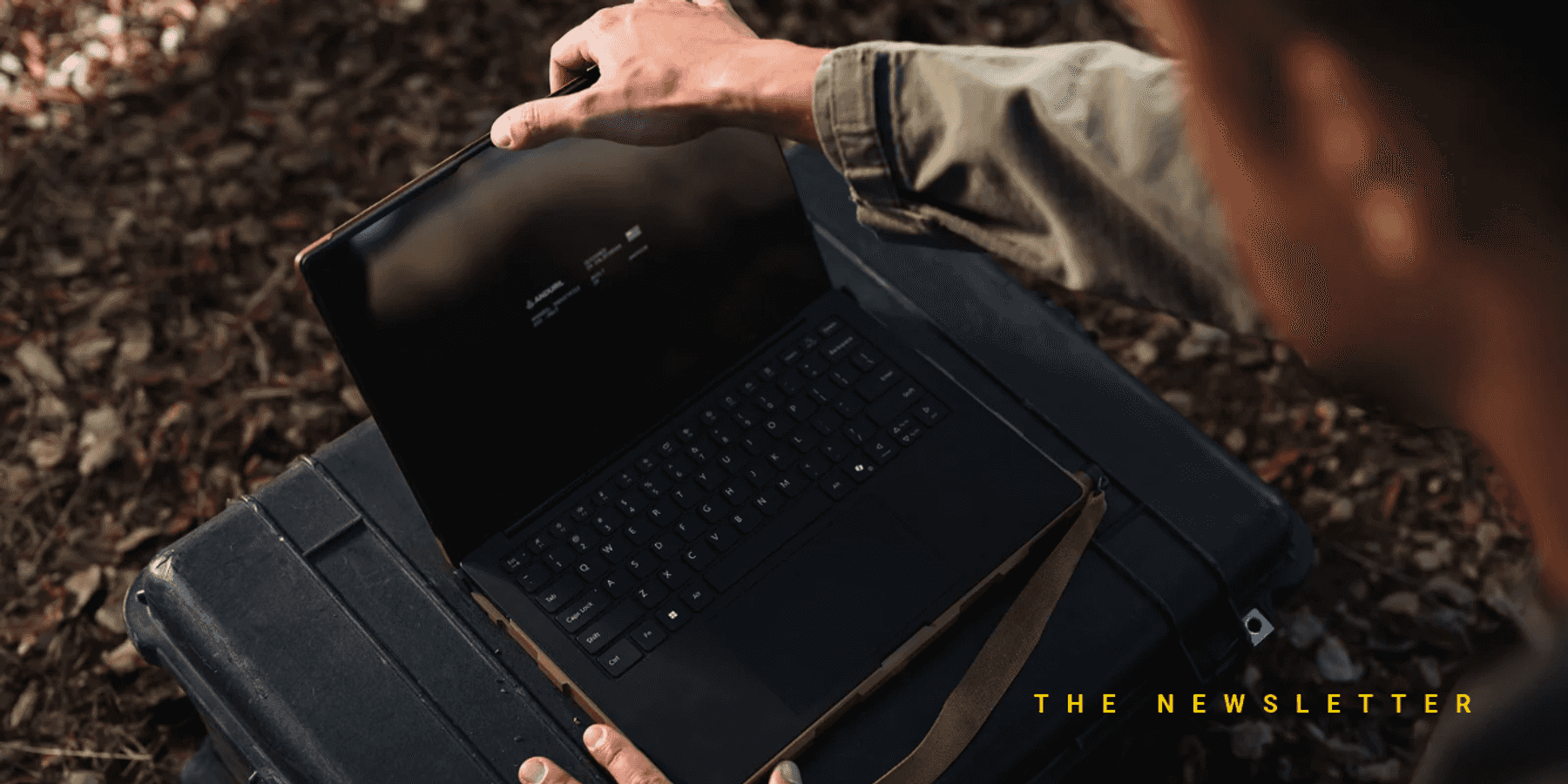
          The first product will be a rugged laptop powered by Qualcomm’s Snapdragon X Series platform and built for customers in government, defense, public safety and other critical industries. Anduril has already produced working prototypes and plans to begin accepting orders in 2027.

          At first glance, a laptop may seem like a modest addition to a company known for developing autonomous military systems. But BlueChip is less about entering the crowded consumer-electronics market and more about rebuilding the industrial foundation behind the machines Americans use every day.

          The United States remains a leader in designing advanced technology, but much of the physical production required to turn those designs into finished computers has moved overseas. That includes not only semiconductor manufacturing, but also circuit boards, displays, batteries, enclosures and the network of specialized suppliers that connects them.

          For most consumers, that dependency is largely invisible. For the government and military, it represents a potential vulnerability.

          BlueChip is Anduril’s attempt to close that gap.

          Components sourced from the United States and allied countries already account for more than 90% of the prototype laptop’s procurement cost. Circuit-board assembly is planned for Anduril’s Arsenal-1 facility in Ohio, while the company develops domestic production capabilities for enclosures, batteries and other hardware.

          The goal is to gradually replace remaining foreign dependencies and create an end-to-end American computer supply chain that can support additional products beyond the first laptop.

          That process requires more than moving an existing design into an American factory. Anduril is redesigning the computer around what domestic manufacturers can realistically produce at scale. The work includes selecting machinable American metals, adapting power systems to available battery technology and developing a bonding process for domestically made display glass.

          In other words, Anduril is not simply assembling a laptop in America. It is working backward through the supply chain to make American assembly possible.

          Qualcomm will supply the computing foundation. Its Snapdragon X platform will handle processing, graphics and on-device artificial intelligence, giving BlueChip users the ability to run certain AI models locally rather than sending sensitive information to the cloud.

          That is particularly valuable for government and defense customers operating in secure environments, but it also reflects a broader shift in computing. As AI becomes embedded in everyday workflows, the location where information is processed may become nearly as important as the model doing the processing.

          The partnership also reinforces Southern California’s growing role in the effort to rebuild American advanced manufacturing.

          Anduril remains headquartered in Orange County, but its regional footprint is expanding. The company is investing $1B in a new campus spanning Long Beach and Lakewood that is expected to support approximately 5,500 jobs and include engineering, laboratory and prototype-manufacturing space.

          Qualcomm, meanwhile, has spent decades building San Diego into a center for wireless technology and semiconductor design.

          BlueChip brings those two Southern California strengths together: Anduril’s ability to move quickly from engineering concept to physical product and Qualcomm’s expertise in efficient, high-performance computing.

          The first BlueChip laptop is not intended to compete for space in every backpack or coffee shop. Its early customers will likely be institutions that care deeply about security, reliability and control over their technology supply chains.

          But the larger ambition reaches far beyond a single device.

          If BlueChip succeeds, Anduril and Qualcomm will have created more than an American-made computer. They will have helped restore the suppliers, production knowledge and technical workforce required to build the next one.

          For a company accustomed to tackling difficult national-security problems, the laptop may be one of Anduril’s most practical ideas yet.

          Sometimes rebuilding an industry begins with reopening the machine.

          More from this week’s LA startup and venture scene below.

          🤝 Venture Deals

            LA Companies

            • StimCardio raised an oversubscribed $30M Series A led by Metis MedTech, with participation from Catalyst Health Ventures and other investors. The Los Angeles medical device company will use the funding to advance a pivotal study of Rhyvive, its investigational wrist-worn therapy designed to reduce recurring atrial fibrillation after catheter ablation, and prepare for an FDA submission. - learn more
            • Gardena-based Neuron Industries raised an oversubscribed $10M seed round co-led by FCVC and Obvious Ventures, with participation from Y Combinator, Thin Line Capital, Zee Prime Capital and Founder Factor. The company will use the funding to develop and launch its AI-powered industrial control platform, expand its product line and establish domestic production as it works to help engineers automate new factories and machinery more quickly. - learn more
            • Offe Market raised a $3M seed round led by Slauson & Co., bringing the off-price retail marketplace’s total funding to $4.3M. The company will use the capital to expand its commerce platform with AI-powered pricing and inventory tools, personalized recommendations and live shopping features designed to help brands sell excess merchandise without sacrificing control over presentation or pricing. - learn more
            • Loamy raised a $6M seed round led by Zeal Capital Partners, with participation from LA investors Slauson & Co., Supply Change Capital and Amplify.LA, bringing its total funding to $10M. The company will use the capital to expand its engineering and sales teams, advance its AI platform and enter additional food categories as it helps growers, packers and distributors reduce waste and prevent rejected shipments. - learn more

            LA Venture Funds
            • MaC Venture Capital co-led Rendezvous Robotics’ oversubscribed $20M seed round alongside Toyota Ventures, marking the space startup’s first priced financing. The company will use the funding to develop its next-generation modular spacecraft, expand its team and prepare for flight demonstrations of technology that allows spacecraft components to assemble and reconfigure autonomously in orbit. - learn more
            • BOLD Capital Partners participated in General Compute’s $100M Series A, which was co-led by Blackbird and Abstract. The company will use the funding to scale its AI inference cloud, which deploys specialized chips from companies including Cerebras, SambaNova and Positron AI to help customers run AI workloads faster without managing the underlying infrastructure. - learn more
            • Mantis Venture Capital participated in Vera Health’s $28.5M Series A, which was led by Threshold Ventures and brought the clinical AI company’s total funding to $32M. Vera will use the capital to strengthen its medical-evidence infrastructure, enter new healthcare markets and expand partnerships with medical societies, publishers and health systems. - learn more

            LA Exits

            • Breastfeeding platform Swehl was acquired by Willow Innovations alongside infant-feeding technology company Momtech, with financial terms undisclosed. Swehl’s educational resources and community programs will anchor Willow World, a new platform designed to expand Willow’s business beyond wearable breast pumps and support mothers across more of the postpartum journey. - learn more
            • SmartLess Mobile was acquired by Noble Mobile and will transition to the Noble brand as the companies combine their efforts to offer simpler, more affordable wireless service. Existing customers will retain their plans, prices, phone numbers and T-Mobile 5G coverage, while gaining the ability to use their data in Mexico and Canada at no additional cost; financial terms were not disclosed. - learn more

              Download the dot.LA App

              RELATEDEDITOR'S PICKS
              Trending