


Illustration by Ian Hurley
What Are LA’s Hottest Startups of 2022? See Who VCs Picked in dot.LA’s Annual Survey
In Los Angeles—like the startup environment at large—venture funding and valuations skyrocketed in 2021, even as the coronavirus pandemic continued to surge and supply chain issues rattled the economy. The result was a startup ecosystem that continued to build on its momentum, with no shortage of companies raising private capital at billion-dollar-plus unicorn valuations.
In order to gauge the local startup scene and who’s leading the proverbial pack, we asked more than 30 leading L.A.-based investors for their take on the hottest firms in the region. They responded with more than two dozen venture-backed companies; three startups, in particular, rose above the rest as repeat nominees, while we've organized the rest by their amount of capital raised as of January, according to data from PitchBook. (We also asked VCs not to pick any of their own portfolio companies, and vetted the list to ensure they stuck to that rule.)
Without further ado, here are the 26 L.A. startups that VCs have their eyes on in 2022.
1. Whatnot ($225.4 million raised)
Whatnot was the name most often on the minds of L.A. venture investors—understandably, given its prolific fundraising year. Whatnot raised some $220 million across three separate funding rounds in 2021, on the way to a $1.5 billion valuation.
The Marina del Rey-based livestream shopping platform was founded by former GOAT product manager Logan Head and ex-Googler Grant LaFontaine. The startup made its name by providing a live auction platform for buying and selling collectables like rare Pokémon cards, and has since expanded into sports memorabilia, sneakers and apparel.
2. Boulevard ($40.3 million raised)
Boulevard’s backers include Santa Monica-based early-stage VC firm Bonfire Ventures, which focuses on B2B software startups. The Downtown-based company fits nicely within that thesis; Boulevard builds booking and payment software for salons and spas. The firm has worked with prominent brands such as Toni & Guy and HeyDay.

3. GOAT ($492.7 million)
GOAT launched in 2015 as a marketplace to help sneakerheads authenticate used Air Jordans and other collectible shoes. It has since grown at a prolific rate, expanding into apparel and accessories and exceeding $2 billion in merchandise sales in 2020. The startup sealed a $195 million funding round last summer that more than doubled its valuation, to $3.7 billion.
The Best of the Rest
VideoAmp ($578.6 raised)
Nielsen competitor VideoAmp gathers data on who's watching what across streaming services, traditional TV and social apps like YouTube. The company positions itself as an alternative to so-called "legacy" systems like Nielsen, which it says are "fragmented, riddled with complexity and inaccurate." In addition to venture funding, its total funding figure includes more than $165 million in debt financing.
Mythical Games ($269.4 million raised)
Seizing on the NFT craze, Mythical Games is building a platform that powers the growing realm of “play-to-earn games.” Backed by NBA legend Michael Jordan and Andreessen Horowitz, the Sherman Oaks-based startup’s partners include game publishers Abstraction, Creative Mobile and CCG Lab.

FloQast ($202 million raised)
FloQast founder Michael Whitmire says he got a “no” from more than 100 investors in the process of raising a seed round. Today, the accounting software company is considered a unicorn.

Nacelle ($70.8 million raised)
Nacelle produces docuseries, books, comedy albums and podcasts. The media company’s efforts include the Netflix travel series “Down To Earth with Zac Efron.”
Wave ($66 million raised)
A platform for virtual concerts, Wave has hosted performances by artists including Justin Bieber, Tinashe and The Weeknd. The company says it has raised $66 million to date from the likes of Warner Music and Tencent.
Papaya ($65.2 million raised)
Sherman Oaks-based Papaya looks to make it easier to pay “any” bill—from hospital bills to parking tickets—via its mobile app.
LeaseLock ($63.2 million raised)
Based in Marina del Rey, LeaseLock says it’s on a mission to eliminate security deposits for apartment renters.
Emotive ($58.1 million raised)
Emotive sells text message-focused marketing tools to ecommerce firms like underwear brand Parade and men's grooming company Beardbrand.
Dray Alliance ($55 million raised)
Based in Long Beach, Dray says its mission is to “modernize the logistics and trucking industry.” Its partners include Danish shipping company Maersk and toy maker Mattel.
Coco ($43 million raised)
Coco makes small pink robots on wheels (you may have seen them around town) that deliver food via a remote pilot. Its investors include Y Combinator and Silicon Valley Bank.
HiveWatch ($25 million raised)
HiveWatch develops physical security software. Its investors include former Twitter executive Dick Costollo and NBA star Steph Curry’s Penny Jar Capital.

Popshop ($24.5 million raised)
Whatnot competitor Popshop is betting that live-shopping is the future of ecommerce. The West Hollywood-based firm focuses on collectables such as trading cards and anime merchandise.
First Resonance ($19.4 million raised)
Founded by former SpaceX engineer Karan Talati, First Resonance runs a software platform for makers of electric cars and aerospace technology. Its clients include Santa Cruz-based air taxi company Joby Aviation and Alameda-based rocket company Astra.
Open Raven ($19 million raised)
Founded by Crowdstrike and Microsoft alums, Open Raven aims to protect user data. The cybersecurity firm’s investors include Kleiner Perkins and Upfront Ventures.
Fourthwall ($17 million raised)
When an actor faces the camera and speaks directly to the audience, it’s known as “breaking the fourth wall.” Named after the trope, Venice-based Fourthwall offers a website builder that’s designed for content creators.
The Non Fungible Token Company ($15 million raised)
The Non Fungible Token Company creates NFTs for musicians under the name Unblocked. Its investors include Jay Z’s Marcy Venture Partners and Shawn Mendez.
Safe Health Systems ($15 million raised)
Backed by Mayo Clinic Ventures, Safe Health develops telehealth software and offers tools for enterprises to launch their own health care apps.

Intro ($11.6 million raised)
Intro’s app lets you book video calls with experts—from celebrity stylists, to astrologists, to investors.
DASH Systems ($8.5 million raised)
With the tagline “Land the package, not the plane,” DASH Systems is a Hawthorne-based shipping company that builds hardware and software for automated airdrops.

Ettitude ($3.5 million raised)
With a focus on sustainability, Ettitude is a direct-to-consumer brand that sells bedding, bathroom textiles and sleepwear.

Afterparty ($3 million raised)
Along similar lines as Unblocked, Afterparty creates NFTs for artists and content creators such as Clay Perry and Tropix.

Heart to Heart ($0.75 million raised)
Heart to Heart is an audio-focused dating app that “lets you listen to the story behind the pictures in a profile.” Precursor Ventures led the pre-seed funding round.
Frigg (undisclosed)
Frigg makes hair and beauty products that contain cannabinoids such as CBD. The Valley Village-based company raised an undisclosed seed round in August.
From Your Site Articles
- The Early-Stage Startups in LA Set to Take Off in 2021 - dot.LA ›
- Los Angeles Startups Closed a Record Number of Deals in Q3 - dot.LA ›
- dot.LA's Map of Startups in Los Angeles - dot.LA ›
- The Hottest LA Startups of 2020 - dot.LA ›
- Los Angeles Cleantech Incubator Launches Green Loan Fund - dot.LA ›
- dot.LA's Guide on L.A. Flight Startups Overair, Archer Aviation - dot.LA ›
- Here Are LA’s Hottest Startups for 2023 - dot.LA ›
- Nobody Studios Plans to Build 100 Startups in Five Years - dot.LA ›
- From GameTree to Sota — Ukrainian Founders Call LA Home - dot.LA ›
Related Articles Around the Web


Now comes the harder part: producing them at scale.
The Torrance-based defense startup raised a $1B Series C at a $13B valuation. The financing includes $800M in equity and a $250M revolving credit facility, making it one of the largest recent raises for an LA defense technology company.
JPMorganChase’s Strategic Investment Group, Andreessen Horowitz and Carlyle co-led the round. Lightspeed Venture Partners, Lavrock Ventures, Altimeter, General Catalyst, T. Rowe Price and LA-based Interlagos Capital also participated.
Castelion will use the capital to ramp production of Blackbeard, its low-cost hypersonic strike missile, while developing a longer-range precision weapon and new defensive systems. Hundreds of millions of dollars will go toward expanding manufacturing at Project Ranger, the company’s 1,000-acre production campus in New Mexico.
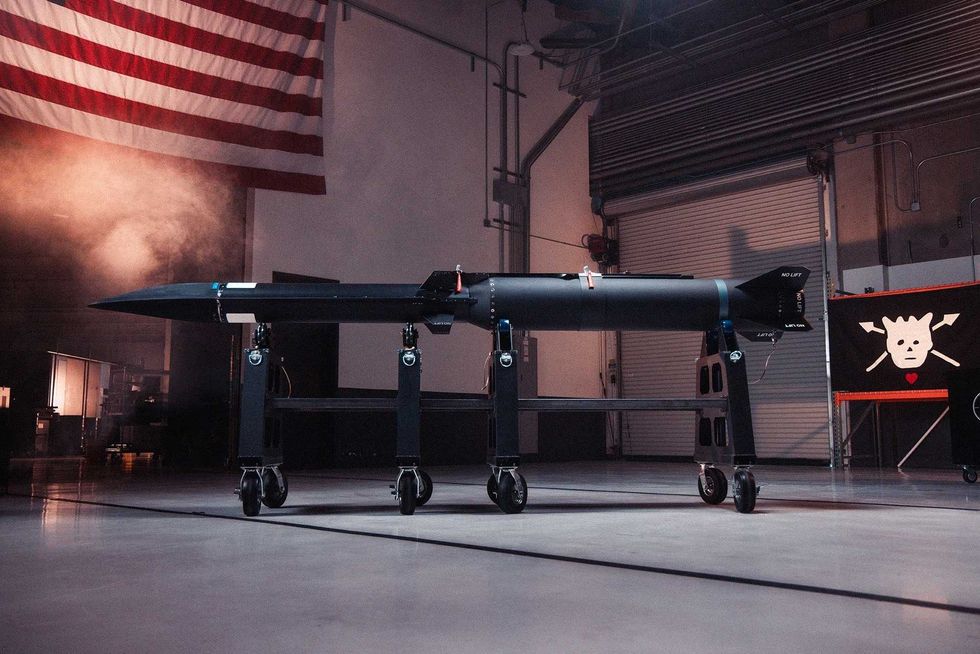 Image Source: Castelion
Blackbeard was designed in California, will be built in New Mexico and is expected to enter service in 2027. Castelion says it has already secured more than $500M in U.S. military contracts over the past 18 months and moved the missile from a clean-sheet concept to an official program in fewer than four years.
That timeline is central to Castelion’s pitch. Traditional defense programs are often associated with long development cycles, limited production runs and eye-watering costs. Castelion is applying the rapid testing and vertically integrated manufacturing approach popularized by commercial space companies to weapons production.
But a $13B valuation changes the standard. Castelion is no longer being judged as a promising startup with an impressive prototype. It is being funded like a company expected to become a major part of the American defense industrial base.
The question is no longer whether a startup can build a hypersonic missile. It is whether one can manufacture thousands of them without losing the speed, discipline and cost advantages that made it disruptive in the first place.
For LA’s defense ecosystem, that shift matters. The region has become home to a growing number of companies promising to modernize how America builds critical hardware. Castelion now has the capital, contracts and facilities to show what happens when that promise reaches the factory floor.
The next test will not be in a pitch deck. It will be in production.
More from this week’s LA startup and venture scene below.
🤝 Venture Deals
LA Companies
- Long Beach based Ampaire raised a $19M Series B led by DiamondStream Partners, with strategic participation from Alaska Star Ventures and IAGi Ventures, bringing its total funding to $68M. The hybrid-electric aviation company will use the capital to expand flight operations, produce additional Eco Caravan aircraft, advance regulatory certification and scale its manufacturing capabilities. - learn more
LA Venture Funds
- SUM Ventures participated in AssistMe’s €6.5M funding round, which was led by CRB Health Tech and Vorwerk Ventures and included several returning investors. The German care technology company will use the capital to expand across Europe, prepare for a U.S. launch and further develop alea, its digital platform for supporting caregivers and improving nursing-home operations. - learn more
- CIV led Hypercubic’s $5.3M seed round, with participation from Y Combinator, Afore Capital, Pioneer Fund, Multimodal Ventures and several angel investors. The San Francisco startup will use the capital to develop AI agents that can analyze, document and rewrite decades-old COBOL systems, helping enterprises modernize critical mainframe software faster and with less risk. - learn more
- Plus Capital participated in Wispr Flow’s $280M Series B, led by Menlo Ventures and joined by existing and new investors, valuing the AI voice company at $2B. The funding brings Wispr’s total capital raised to $361M and will support its expansion beyond dictation into meeting tools and proprietary speech technology, including its new Canto model. - learn more
- Alexandria Venture Investments participated in Leal Therapeutics’ $30M Series A extension alongside new investor Eli Lilly and returning backers including OrbiMed, Newpath Partners and SV Health Investors’ Dementia Discovery Fund. The biotech company will use the funding to advance clinical trials of LTX-001 for schizophrenia and LTX-002 for ALS, with initial schizophrenia trial data expected by year-end. - learn more
- BroadLight Capital participated in Higgsfield’s $400M Series B, led by DST Global and joined by investors including Goldman Sachs Alternatives, Smash Capital, Fifth Wall and Intel Capital. The AI video and image platform, now valued at $5.4B with $700M in annualized revenue, will use the funding for R&D, global infrastructure, AI hiring and international expansion. - learn more