

Intersect Summit Updates: Snap Inc’s AR Play; How SportsTech is Remaking the Game

Sarah Favot

Favot is an award-winning journalist and adjunct instructor at USC's Annenberg School for Communication and Journalism. She previously was an investigative and data reporter at national education news site The 74 and local news site LA School Report. She's also worked at the Los Angeles Daily News. She was a Livingston Award finalist in 2011 and holds a Master's degree in journalism from Boston University and BA from the University of Windsor in Ontario, Canada.

Intersect Summit Updates: Snap Inc’s AR Play; How SportsTech is Remaking the Game
Photo by izayah ramos on Unsplash

Intersect event

From NFTs to augmented reality and streaming services, a new frontier reshaping entertainment and technology has exploded in Los Angeles. It's ripe with media talent and fueled by venture capital.

Dot.LA will explore that intersection of media and tech during our inaugural Intersect summit. We'll be talking to Los Angeles executives, entrepreneurs and investors at the forefront about trends moving the industry.

The event kicks off Wednesday with a keynote address from the CEO of Kevin Hart's Laugh Out Loud Productions and concludes with a pitch competition featuring three SoCal startups. Join the live event by applying to attend at the Intersect site. Follow us here for coverage.


The Live Events Industry Braces For a New Normal, and a 'Roaring' Return to In-Person

As more people get vaccinated, venues and stadiums are opening up, leaving a looming question: what will events look like in the future?

Leaders in the entertainment and event space said events in the near term will be hybrid, with organizers ensuring attendees feel and are safe. The industry is hoping that those watching at home will see others experiencing the in-person event, and become more comfortable with the idea of returning in person.

While some companies have found success in remote events, panelists said, it isn't equivalent to standing shoulder-to-shoulder with friends and strangers on the concert hall floor as they're experiencing their favorite artists.

"I'm looking forward for live to come back," said Robert Ellin, founder, CEO and chairman of LiveXLive.

LiveXLive will be testing the waters for its return to live events in June with an in-person matchup in Miami called "Social Gloves," which will pit YouTubers against TikTokers in the boxing ring. It will also be livestreamed.

VidCon will return as a live event in October in Anaheim. It's also selling digital tickets for remote access.

"I know they're going to enjoy the experience so much they're going to want to go to a VidCon somewhere else around the world when it comes near them in '22 or '23," Jim Louderback, GM and senior vice president of VidCon at Viacom, said of at-home viewers.

Ellin said he feels like we are moving into the Roaring 20s based on his experience of the excitement in Miami.

"We're all in the digital space right now," he said. "No matter what we do, the live experience is nothing like it. You're actually interacting with people and so there's going to be audiences."

In Los Angeles, SoFi stadium will host Vaxx Live on May 8, a charity concert featuring Selena Gomez. Organizers said it will host thousands of fully vaccinated frontline health care and essential workers.

Even as things return, more or less, to normal, industry insiders say the future live events will use more technology than it once did, including touchless purchasing at the ticket booth and concession stand, as well as more virtual and augmented reality experiences.

Louderback said at VidCon they're thinking of ways to incorporate those technologies, maybe a scavenger hunt or secret party through AR.

"I think there's really creative unique ways to integrate them," he said. "I think we all have to be thinking about those and those special ways to make it more interesting," he said.

Ellin said Social Gloves will feature NFTs in the form of a digital card, but also a physical card.

"As you can touch it and feel it, you're going to want to really have a responsibility of protecting those assets long term," he said.

When it comes to touchless technology at venues or processes like mobile ordering and individual packaging, Wroan said it might seem cumbersome and costly upfront, but it will put more people in seats.

"I think, once they're up and running, we're actually going to be more efficient — probably in the long run, better," she said. "Part of it, too, is just people feeling confident and safe to get off the couch and come experience a live event."

Snap Inc’s AR Play
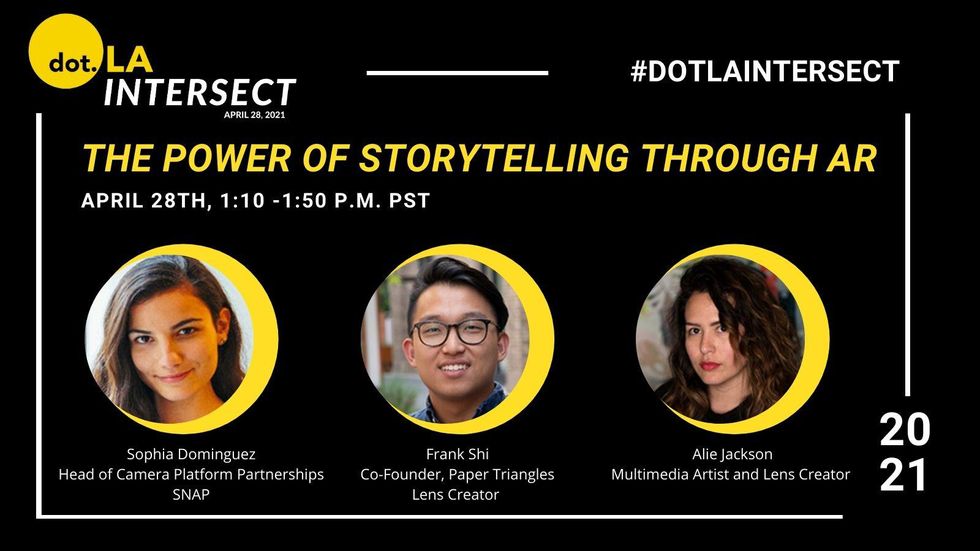
Snap Inc. is placing big bets on AR technology.

Last year, it announced a $3.5 million fund for augmented reality (AR) creators building their own lenses for the app.


The fund will help the Santa Monica-based company keep products fresh for its 280 million users and potentially reel in big revenue for developers and artists like Frank Shi, who co-founded a boutique AR studio called Paper Triangles.

But perhaps most importantly, it feeds Snap's advertising deals as brands look for new ways to sell products.

Shi remembers the first time he showed Crocs how to use Snap's AR try-on feature, which lets users step into shoes and clothes virtually.

"That experience to us was magical," Shi said. "I think when it comes to brands, they're a little hesitant at first, but once they see the magic...how easy it is to use AR, their eyes kind of twinkle."

As advertising remains a key component of Snap's business model, AR represents a natural avenue for companies scouting new customers. Fashion-oriented AR is a promising market given how shopping habits have moved online since the pandemic. Last month, Snap acquired FitAnalytics to help shoppers find the right clothing sizes.

"Before, it was a question of who's using AR," said Sophia Dominguez, who heads camera platform partnerships for Snap. "Brands have seen the value."

During its first quarter Q1 earnings call last week, Snap focused on two of its software development kits — Camera Kit and Lens Studio — and its community of "lens creators" like Shi who get early access to AR tools, training and support.

"Those who want to build AR on Snap," Dominquez said, "we hear you and we're looking for more ways to create streamlined sources of monetization."

How SportsTech is Remaking the Game

Intersect sport-tech panel

Athletes are moving from the court or the playing field into boardrooms. Increasingly they are shunning traditional endorsements for a stake in startups and other companies. It comes amid rapid-fire changes in sports tech and is altering the landscape for both investors and founders.


"What makes [athletes] really, really interesting partners is not only their ability to command an audience with their social following or their conversations on the court and in interviews and whatnot, but also their ability to support business development," said Amanda Groves, a partner at Plus Capital. The Marina del Rey-based venture advisory firm helps celebrities across entertainment and sports facilitate investments and equity-based partnerships.

Groves said athletes are particularly good storytellers and team players who are passionate about their underlying investments and can tell a complicated story in a way that's approachable and interesting for the consumer.

"It's not just a service day to go do this photoshoot to support a product line. It's like, 'this is my baby and I want to help grow it and so I'm going to give it to all my friends and I'm going to to talk about it every chance I get'," she said.

DeMarcus Williams, a partner at Silicon Valley Bank, which supports early stage entrepreneurs and VC firms, said athletes are cultural influencers, using NBA legend Michael Jordan as an example.

"I would say for startups that are pursuing athletes, it's really important that you really sit down and understand what they're passionate about and appeal to that passion point," Williams said.

Athletes' journeys through training from a young age to achieving success at a professional level is similar to the growth startups face, Groves said.

These changes are unfolding as the technology people use to interact with sports is changing.

For instance, the panelists think bite-sized highlight clips will be key to delivering sports that air on traditional regional networks.

Williams said he thinks these networks will still be around for the next 20 to 30 years, but he used the example of his 8-year-old son to highlight how younger audiences want to engage with sports.

"Can he sit down and watch a game for its entirety for three hours? No, for an hour, no, for 30 minutes, maybe, 15, maybe," he said. "A lot of these sports leaders and sports leagues, they're going to have to meet their audience where they are."

Kyle Laughlin, CEO of Surfline Wavetrak, Inc., a Huntington Beach-based company that specializes in surf forecasting and surf reports, said the World Surf League has demonstrated how to use digital platforms.

"I think there's a real range from a league perspective, from the little niche league to the mass, that is embracing technology to engage ether fans in new and interesting ways from both an athlete and a technology perspective," he said.

But it's not only in professional sports that tech is altering viewership. Pasadena-based BallerTV live streams and shows replays of youth basketball and volleyball, mainly targeting the audience of parents who can't make it to their kid's games. Since being founded in 2016, it has broadcasted more than 500,000 games, typically showing 10,000 games each weekend.

It is looking to expand into different vertices with the launch of youth soccer this summer.

"In this industry, we like to say that we're sort of first to market or category definers with respect to video at scale in this market," said Sandeep Hingorani, EVP, Founding Team at BallerTV.

PlayVS CEO Delane Parnell Has Ambitions Beyond HS, College Esports

Keynote with Delane Parnell

Founder and CEO of PlayVS Delane Parnell was living in Detroit and developing the idea for his company, when he had a chance meeting at South by Southwest with Peter Pham, co-founder of Santa Monica venture fund Science Inc.

Darnell recounted that Pham encouraged him to come to L.A., saying 'You can be a millionaire in Detroit or a billionaire in L.A., but don't waste my time.'

The startup has been on a remarkable ascendency since.

PlayVS has raised $107 million since it entered the esports marketplace for high school teams in 2018 and now 43% of all high schools in the country have an esports team, playing Fortnite, SMITE, League of Legends and other games using the PlayVS platform.

It expanded into the college market last year and now has 30% of colleges in the country on the platform.

"We wanted to build an environment to actually reengage and reactivate that community," he said.

While there are only 1,000 professional gamers in North America, there are 2.8 billion gamers globally, many of whom don't have aspirations to become professional. Parnell wanted to tap into that market starting with high schoolers, who sometimes are prevented from playing because they are under 18.

He said the beauty of amateur esports is "there's more gamers who care about actionality and don't necessarily care or have aspirations of going pro, and so they just want to play their favorite game at the time with their friends and teammates."

Eventually he'd like to expand, building PlayVS digital playground beyond school sports.

"I still want to build the digital playground in which every gamer can compete whether they're high school-aged or college-aged or in their 40s in any sort of context of competition," he said.

But, Parnell said, the company relies on partnerships with game publishers, who drive the content.

"We don't just add any game to our platform," he said. "We're really thoughtful in which titles we decide to partner with and integrate with."

NFTs Are 'No Get Quick Rich Scheme'
NFT Panel

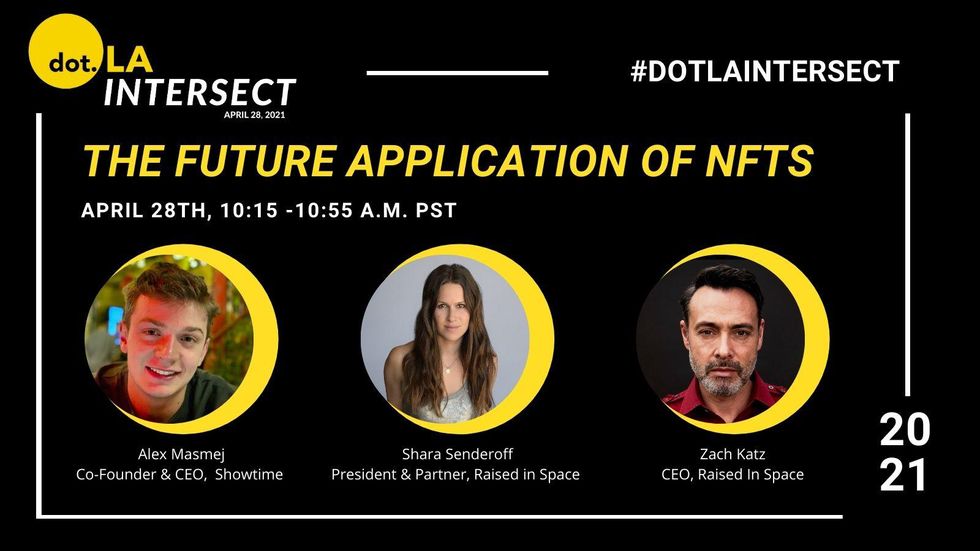
The underpinning of the hottest new trend, NFTs or "non-fungible tokens," is blockchain and it's here to stay.

At least in the eyes of Zach Katz, CEO of the music-tech investment firm Raised in Space.

"Blockchain is finally finding its footing in supporting something that fans and artists have wanted to do for a long time," Katz said.

As the pandemic reshaped how businesses and creatives made money, NFTs have boomed as a new market for digital commerce. Artists and musicians can now build new and profitable relationships with fans — ones that do away with "traditional financing" they once relied upon, he said.

NFT sales have spiked in the first three months of the year. And artists and creators are looking at new ways to use the tokens to provide fans exclusive, paid experiences.

"Graphic artists and 3D designers now have a way to monetize their creativity and monetize the art that had been previously really, really hard to sell," added Shara Senderoff, president and partner at Raised in Space.

But in the world of NFTs, "there's no get quick rich scheme," Senderoff said. "This is about being able to show your loyalty and follow the people you admire and respect."

And the environmental consequences are looming.

"When you're putting in that level of energy and using that level of computing power at scale, it's absolutely doing something," Senderoff said about the climate change risks of blockchain technology. "Entrepreneurs need to be accountable and responsible for what the products they create are doing."

​'It's About Reading The Room': How Kevin Hart's LOL Connects with Audiences

Panel with LOL Productions

Created by comic Kevin Hart, the four-year-old startup Laugh Out Loud, or LOL, is quickly becoming a force, carving out its own space for comedy across multiple platforms.

The company, which originally began as a joint venture between Hart and Lionsgate, now has a deal with NBCUniversal and estimates it reaches over 100 million people on streaming and audio platforms with original scripted and unscripted series, stand-up specials, live broadcasts and other events.

Last year, it inked a deal with Snapchat for "Coach Kev," a show in which the comedian doles out wisdom and advice. The move pushed LOL's content further across media channels having already been on Roku Channel, ViacomCBS's PlutoTV, SiriusXM and YouTube. It has also given an expansive platform to comedians of color.

"An entertainment media company, you have to be involved with tech," said CEO Jeff Clanagan. "You have to embrace tech because the worldwide consumer accesses content through technology."

That's become key as demographic shifts have been playing out in media. Gen Z, for instance, would rather scroll through social media, play video games and stream music than watch TV or catch a film.

"Comedy is about keeping your finger on the pulse," said Candice Wilson Cherry, the company's head of development and production. "It's about reading the room, reading the cultures, seeing what's changing and it's changing so quickly."

NFTs: What They Are and What's Coming Next

Sam Blake

NFTs, or non-fungible tokens, have exploded in popularity in 2021, but what's hype, and what's here to stay? That's the main question dot.LA will be exploring with a panel of experts during one session of our inaugural Intersect conference this Wednesday.

NFTs have helped create scarcity among digital assets. Consider a photo, GIF, video or any other type of online item: previously these could be endlessly copied, with limited ability to reliably distinguish the copies from the original. Using blockchain, an NFT injects scarcity by serving as a unique, traceable certificate of ownership of that digital asset.

Read more >>

Brex’s $5.15B Deal With Capital One Marks A New Era For Fintech

🔦 Spotlight

Happy Friday, Los Angeles. 💳

The first big fintech plot twist of 2026 is here. Capital One is buying Brex in a cash and stock deal valued at about $5.15 billion, in what the companies are calling the largest bank - fintech deal in history.

From college dropouts to a multibillion exit

Brex launched in 2017, when Brazilian founders Henrique Dubugras and Pedro Franceschi, then in their early 20s after dropping out of Stanford, set out to fix the “startup card” problem. That project turned into an AI-native finance platform that now serves tens of thousands of companies, from early-stage startups to hundreds of public enterprises.

A few years into that journey, both founders moved to Los Angeles and continued running Brex from here as the company embraced a fully remote model. Now that same LA-based duo is steering a multibillion-dollar acquisition that will plug their software directly into one of the biggest banks in the country. Pedro will stay on as CEO of Brex inside Capital One, with the brand and product continuing rather than disappearing into a rebrand.

Why this looks like a win

“Big bank buys fintech” can sound like the end of the startup story, but here it reads more like an expansion pack. Capital One gets Brex’s cloud-based spend stack, AI-powered controls and roughly $13 billion in commercial deposits. Brex gets a massive balance sheet, a regulated rails partner and access to the mainstream business market it has been edging toward for years.

For founders and operators here, it is also quiet validation that building hard fintech infrastructure still pays off. Brex spent years doing the unglamorous work of licenses, compliance, underwriting and integrations. The outcome isn’t a hype cycle spike; it is a classic, real-money exit for a very modern stack.

What it signals for LA’s ecosystem

LA is not getting a new headquarters out of this. Brex has embraced a “no HQ” model. What the city does have is a pair of founders who chose to build their lives here and just proved that you can run a global finance platform from Los Angeles and end up selling it to a top-six U.S. bank.

It also fits a broader pattern our ecosystem is leaning into. Whether it is fintech, defense tech or climate, the most interesting LA stories right now are not about front-end apps. They are about deep, regulated infrastructure that incumbents eventually need more than startups need them.

For Brex, this is the start of a new chapter inside Capital One. For LA, it is one more data point that the city’s founders can build products the rest of the financial system has to buy.

Scroll on for the latest LA venture rounds, fund news and acquisitions.

🤝 Venture Deals

      LA Companies


      • L-Nutra secured a new $36.5M investment from Mubadala, bringing its total Series D proceeds to $83.5M. The company, which develops longevity-focused and medical nutrition therapies, plans to use the funding to accelerate global expansion, advance clinical research, and scale adoption of its nutrition programs across healthcare providers and consumers. - learn more
      • RiskFront AI raised $3.3M in pre-seed funding to make financial crime and compliance work far less manual. The US-based startup uses “agentic AI” to automate time-consuming tasks like research, data analysis and documentation, with its Airos platform handling much of the day-to-day workload so human analysts can focus on higher-value judgment calls. The new capital will help expand engineering and product teams and deepen integrations with banks and fintechs already piloting the system. - learn more
      • Balance Homes relaunched with a $30M investment led by Falco Group to scale its equity-sharing model for homeowners who are “house rich but cash and credit constrained.” The company buys a co-ownership stake in a home to free up trapped equity so owners can pay down mortgages and high-interest debt while staying in their homes, instead of being forced to sell. After stabilizing its existing portfolio following EasyKnock’s shutdown, Balance Homes is now resuming originations in six states, with plans to expand as affordability and household debt pressures intensify. - learn more

              LA Venture Funds

              • Distributed Global co-led Superstate’s $82.5M Series B, backing the Robert Leshner - founded tokenization platform as it builds regulated, on-chain capital markets infrastructure. The round, alongside Bain Capital Crypto and other institutional investors, will help Superstate expand beyond its existing tokenized U.S. Treasury funds to a full issuance layer for SEC-registered equities on Ethereum and Solana. The company, which already manages over $1.1B in tokenized assets, plans to scale its Opening Bell platform and transfer agent stack so public companies can issue and manage compliant on-chain shares directly. - learn more
              • Krew Capital participated in GIGR (Playad.ai)’s $5.4M pre-seed round, backing the San Francisco based startup as it builds multi-agent AI workflows for marketing teams. GIGR’s Playad platform starts with interactive ads, using AI agents to help marketers create, test and iterate on playable and other ad formats much faster while turning performance data into continuous creative improvement. The new funding will support product development, expansion of its AI-native creative workflow and scaling to more customers looking to cut production costs and tighten the loop between ad performance and creative decisions. - learn more
              • Trousdale Ventures participated in AheadComputing’s additional $30M Seed2 round, backing the Portland-based chip startup as it reimagines CPU architecture for the AI era. AheadComputing is developing high-performance RISC-V based CPUs and breakthrough microarchitecture aimed at handling the growing wave of AI data center, workstation and embedded workloads where CPU performance has become a bottleneck. The new funding, which brings total capital raised to $53M, will support R&D, software innovation and test chip development as the company races to deliver next-generation general purpose processors. - learn more
              • Untapped Ventures participated in Nexxa.ai’s $9M seed round, backing the Sunnyvale-based startup as it scales specialized AI agents for heavy-industry workflows. Nexxa’s Nitro platform layers multi-agent automation on top of existing tools used in sectors like rail, construction, manufacturing and critical infrastructure, helping engineers plan and execute complex projects without ripping out legacy systems. The new funding brings Nexxa.ai’s total capital raised to $14M and will go toward expanding deployments, forward-deployed engineering teams and support for more industrial customers. - learn more
              • UP.Partners participated in Zanskar’s $115M Series C, backing the Salt Lake City based geothermal startup as it uses AI to uncover overlooked conventional geothermal resources across the Western U.S. The company has already validated several high-potential sites and plans to use the funding to expand its discovery platform and begin developing multiple greenfield power plants, with a goal of bringing significant new clean baseload capacity to the grid before 2030. - learn more
              • Smash Capital participated in Stream’s $90M Series D, backing the UK based workplace finance startup as it ramps expansion into the U.S. market. Formerly known as Wagestream, Stream partners with employers to offer workers tools like earned wage access, savings, budgeting and pensions in a single app, targeting financial stress for lower and middle income employees. The new funding, led by Sofina, brings total capital raised to about $228M and will help Stream scale its multi-product platform across more brands and workers globally. - learn more
              • Fika Ventures participated in Ivo’s $55M funding round, backing the San Francisco based legal AI startup alongside lead investor Blackbird and others. Ivo builds contract intelligence tools for in-house legal teams and enterprises, using a highly structured approach that breaks reviews into hundreds of smaller AI tasks to boost accuracy and reduce hallucinations. The new capital, which reportedly values the company at around $355M, will go toward accelerating product development and hiring more sales and go-to-market talent to meet growing demand. - learn more
              • Amplify.LA participated in Overworld’s latest funding round, backing the AI startup as it unveils a real-time diffusion world model for playable, AI-native worlds. Overworld’s system runs locally and generates persistent, interactive environments on the fly, aiming to become core infrastructure for next-generation games, simulations and creative tools built around world models rather than static assets. The new capital will support further development of its Waypoint 1 research preview and help the team expand its platform for researchers, engineers and builders working on interactive AI experiences. - learn more
              • Dangerous Ventures participated in Carbogenics’ $3M investment and grant funding round, backing the Edinburgh-based bio-carbon startup as it scales its carbon removal technology. Carbogenics turns difficult-to-recycle organic waste into CreChar, a biochar product that boosts biogas production, supports wastewater treatment and locks away carbon. The new funding will help the company expand manufacturing in the US, grow its centralized UK operations and deploy its biocarbon products across the UK, Europe and North America. - learn more

                    LA Exits

                    • Farcaster is being acquired by Neynar, the infrastructure company that already powers much of the Farcaster ecosystem, in a full-stack handoff from Merkle Manufactory. Neynar will assume control of the decentralized social protocol’s smart contracts, code repositories, official app and Clanker client, while Farcaster co-founders Dan Romero and Varun Srinivasan step back from day-to-day operations after five years. The deal keeps the network running without disruption and sets Neynar up to roll out a new, builder-focused roadmap for on-chain social. - learn more
                    • ScribbleVet has been acquired by Instinct Science, which is folding the veterinary AI-scribing startup into its Instinct EMR platform to create what it calls an “intelligent-native” practice management system. The combined offering aims to move traditional PIMS beyond record-keeping by embedding AI scribing, workflow automation and clinical decision support in one system, reducing documentation burden and helping veterinary teams focus more on patient care. ScribbleVet’s team is joining Instinct, with founder and CEO Rohan Relan taking on a key role leading product strategy for intelligence features across the platform. - learn more

                                        Download the dot.LA App

                                        JetZero Just Raised $175M to Rewrite How We Fly

                                        🔦 Spotlight

                                        Happy Friday, Los Angeles ✈️

                                        While everyone in tech is still busy arguing about the next AI model, one startup based out of Long Beach just raised a whole lot of money to change the shape of the airplane itself.

                                        Image Source: JetZero

                                        JetZero closed a $175 million Series B to build its blended wing body “all-wing” airliner, with B Capital leading the round alongside United Airlines Ventures, Northrop Grumman, 3M Ventures, Trucks VC and RTX Ventures. The company is working toward a full-scale Demonstrator aircraft that targets at least 30% better fuel efficiency than today’s tube-and-wing jets, with a first flight planned for 2027 and a commercial Z4 airliner to follow in the early 2030s.

                                        This is not a small bet. JetZero’s pitch is that airlines and regulators need a way to hit climate targets without waiting on sci-fi batteries or hydrogen infrastructure, and that a radically more efficient airframe is the most realistic path. It is also very much an LA story: deep aerospace talent, strategic money at the table, and a product that looks like a mashup of climate tech, defense tech and old-school manufacturing rather than another SaaS dashboard.

                                        There is still a long way to go. The next few years are about turning simulations and wind-tunnel charts into flight data, working with regulators and proving that a manta-ray-shaped jet can slot into a world built for Boeings and Airbuses. But if JetZero gets anywhere close, it will mean that one of the most ambitious hardware bets in commercial aviation is being engineered out of Long Beach.

                                        Scroll on for the latest LA venture rounds, fund news and acquisitions.

                                        🤝 Venture Deals

                                            LA Companies


                                            • No Agent List secured $10M in private investment to launch its AI powered real estate platform ahead of a planned Spring 2026 debut. The Los Angeles based company aims to put “agent level” tools directly in the hands of buyers, sellers and vendors, offering direct access to off market properties, FSBOs, distressed assets, foreclosures, tax liens and auctions that have traditionally been gated by agents and insiders. The funding will support product development and rollout of the platform, which promises more control over transactions while using AI to surface opportunities and streamline the deal process. - learn more
                                            • Hadrian, the Los Angeles based advanced manufacturing startup, announced new capital led by accounts advised by T. Rowe Price Associates to accelerate its push to “reindustrialize” American manufacturing. The financing, which also includes Altimeter Capital, D1 Capital Partners, StepStone Group, 1789 Capital, Founders Fund, Lux Capital, a16z, Construct Capital and others, values the company at $1.6B and will be used to expand its high-throughput factories, grow its workforce and deploy more AI, software and automation across its “factories-as-a-service” platform for aerospace, defense and critical infrastructure customers.- learn more

                                                  LA Venture Funds

                                                  • Blue Bear Capital joined Hydrosat’s $60M Series B, backing the thermal infrared satellite data company alongside lead investors Hartree Partners, Subutai Capital Partners and Space 4 Earth. The funding will help Hydrosat expand its constellation beyond its two current satellites, ramp global coverage and deepen its AI-powered “thermal intelligence” products for water resource management, agriculture, civil government and defense customers worldwide. - learn more
                                                  • Elysian Park Ventures led a $12M growth round for Diamond Kinetics, backing the Pittsburgh-based baseball tech company as it doubles down on youth development. The new capital will help Diamond Kinetics scale sidelineHD, its AI-powered youth baseball and softball live streaming and highlights platform, and expand its broader suite of training tools as MLB’s Trusted Youth Development Platform. - learn more
                                                  • MANTIS Ventures participated in Depthfirst’s $40M Series A round, backing the San Francisco based applied AI lab alongside lead investor Accel, Alt Capital, BoxGroup, Liquid 2 Ventures and SV Angel. Depthfirst is building an AI-native “General Security Intelligence” platform that uses autonomous agents to detect, triage and remediate software vulnerabilities across code and infrastructure, aiming to outpace a new wave of AI-powered cyberattacks. The fresh capital will fund R&D, go-to-market efforts and hiring as the company scales its security platform for enterprise customers. - learn more
                                                  • Cedars-Sinai Health Ventures participated in Vista AI’s $29.5M Series B, joining a slate of leading health systems backing the company’s automated MRI scanning software. The Palo Alto-based startup will use the funding to expand its FDA-cleared cardiac MRI platform to additional anatomies like brain, prostate and spine, and to roll out remote scanning services that let hospitals without in-house MRI expertise offer advanced imaging while easing backlogs and technologist shortages - learn more
                                                  • Fourward Ventures is leading a new strategic growth investment in Mermaid Gin, backing the Isle of Wight–based premium spirits brand as it accelerates expansion in the U.S. market. The round brings Fourward’s founder Will Ward onto the board as lead investor and is paired with a national distribution partnership with Southern Glazer’s Wine & Spirits, plus the appointment of longtime Moët Hennessy veteran Jim Clerkin as CEO for the U.S. push. The capital and partnership are aimed at scaling Mermaid Gin in the fast-growing U.S. super-premium gin segment while preserving its sustainability-focused, Isle of Wight roots. - learn more
                                                  • Hyperion Capital joined Haiqu’s $11M seed round, backing the quantum software startup alongside Primary Venture Partners, Collaborative Fund, Alumni Ventures, Qudit Ventures, Silicon Roundabout Ventures, Harlow Capital, Toyota Ventures and MaC Venture Capital. Haiqu is building a hardware-aware quantum operating system and middleware layer that boosts the performance of today’s noisy quantum hardware, with the new funding going toward productizing its platform and enabling near-term commercial use cases in areas like finance, cybersecurity and scientific computing. - learn more
                                                  • Sound Ventures led WitnessAI’s $58M strategic funding round, backing the Mountain View based AI security and governance platform alongside investors including Fin Capital, Qualcomm Ventures, Samsung Ventures and Forgepoint Capital Partners. The company will use the capital to accelerate global go-to-market efforts and expand its platform, which secures AI agents and models by monitoring agent activity, linking human and agent actions, and blocking prompt injection and other attacks in real time. WitnessAI also unveiled new agentic AI governance tools that give enterprises deeper observability and policy control as they scale AI agents across their operations. - learn more
                                                  • Alexandria Venture Investments joined Proxima’s oversubscribed $80M seed financing, backing the newly rebranded AI-native biotech (formerly VantAI) alongside lead investor DCVC, NVentures (NVIDIA’s venture arm), Braidwell, Roivant and others. Proxima is building a generative AI driven platform for “proximity-based medicines” that modulate protein protein interactions, including molecular glues and PROTACs, to go after historically undruggable targets in oncology, immunology and beyond. The new capital will accelerate its NeoLink structural proteomics and Neo AI model stack, and advance a pipeline of first-in-class proximity-modulating therapeutics toward the clinic. - learn more
                                                  • Clocktower Technology Ventures participated in WeatherPromise’s oversubscribed $12.8M Series A, backing the weather-guarantee startup alongside lead investor Maveron, 1Sharpe, Lerer Hippeau, Commerce Ventures, MS Transverse, Start Ventures, 1Flourish and others. WeatherPromise partners with major travel brands like Marriott, Expedia and JetBlue to offer “weather guarantees” that automatically refund trips when conditions are worse than promised, driving demand for travel, events and outdoor experiences. The new capital will accelerate product development, expand strategic partnerships and scale the platform across more consumer categories. - learn more
                                                  • MANTIS Ventures participated in Sandstone’s $10M seed round, backing the AI-native legal tech startup alongside lead investor Sequoia Capital and others. Sandstone is building an operating system for in-house legal teams that uses AI agents to route requests, draft and review contracts, and surface answers directly inside tools like email, Slack and Salesforce, turning institutional legal knowledge into reusable workflows. The new capital will help the Brooklyn-based company scale its product and grow its customer base of corporate legal departments. - learn more
                                                  • Strong Ventures participated in Hupo’s $10M Series A round, backing the Singapore-based AI sales coaching startup alongside lead investor DST Global Partners, Collaborative Fund, January Capital and Goodwater Capital. Hupo’s platform uses AI to coach frontline banking, insurance and financial services sales teams in real time, helping them ramp faster and close more deals across highly regulated markets in APAC and Europe. The new funding will support product development, expansion of its coaching features and scaling enterprise deployments as the company eyes broader international growth. - learn more
                                                  • Freeflow Ventures joined Vivere Oncotherapies’ more than $10M funding round, backing the UC Berkeley spinout alongside YK Bioventures, Pillar, Berkeley Frontier Fund and the National Cancer Institute. Vivere is developing targeted immunotherapies for “cold” solid tumors like colorectal and ovarian cancers, aiming to activate the immune system against tumors that typically evade detection and resist existing treatments. The new capital will support advancement of its proprietary bioengineering platform and pipeline of therapies for patients with few effective options today. - learn more
                                                  • Alexandria Venture Investments joined Precede Biosciences’ $63.5M Series B equity round, part of an $83.5M total financing package that also includes a $20M strategic, non-dilutive credit facility. The Boston based precision diagnostics and data company is scaling its blood-based platform, which measures target expression and pathway activity to support next-generation cancer therapies like drug, radio and immune conjugates. The new capital will help Precede meet growing demand from biopharma partners developing these precision medicines and accelerate commercialization and health system adoption. - learn more
                                                  • Alexandria Venture Investments participated in Recludix Pharma’s new equity financing round alongside Access Biotechnology, NEA and Westlake BioPartners, with additional strategic investment from Eli Lilly. The San Diego based, clinical-stage biotech will use the $123M in total equity raised to advance clinical development of its novel SH2 domain inhibitor pipeline for inflammatory diseases and to tap Lilly’s TuneLab AI/ML platform to accelerate discovery across its broader SH2 domain program. - learn more
                                                  • BOLD Capital Partners participated in MagicCube’s $10M funding round, backing the Cupertino-based software security company alongside strategic investor Verifone and other existing backers. MagicCube plans to use the capital to expand beyond its core tap-to-phone payments offering into biometrics, identity verification and AI-driven device security, while scaling its Software Defined Trust platform that delivers hardware-grade protection through software on standard mobile and IoT devices.- learn more

                                                        LA Exits

                                                        • Webalo is being acquired by Prometheus Group, which is folding the Los Angeles based “no-code for the frontline” platform into its enterprise asset management software suite. The deal will combine Webalo’s mobile, real-time workflows for frontline workers with Prometheus Group’s planning and scheduling tools, aiming to create a closed-loop digital execution platform that connects shopfloor actions directly back into systems of record like SAP and Oracle. - learn more

                                                                            Download the dot.LA App

                                                                            Inside Tinder’s 380-Matches-Per-Second Sunday

                                                                            🔦 Spotlight

                                                                            Happy New Year, Los Angeles. 💘

                                                                            If you want a clear read on how people actually behave when the calendar flips, you do not need a survey. You need Tinder’s Dating Sunday data. The numbers below are from January 2025, compared with 2024, and they show a pattern the app sees every year when millions of people log in and take their love life off pause.

                                                                            🔥 Tinder’s Annual Traffic Spike, By The Numbers

                                                                            On Dating Sunday, the first Sunday of the year, Tinder hit its biggest activity spike on the calendar. Compared with the app’s typical daily averages for that year, and trends versus the prior year:

                                                                            📈 Swipes were nearly 13% higher

                                                                            💬 Messages were nearly 10% higher

                                                                            ❤️ Likes were over 10% higher

                                                                            🗣️ Users had almost 7% more conversations

                                                                            🤝 Matches climbed to about 380 matches per second, roughly a 10% lift compared to the rest of the year

                                                                            Across Peak Season, from January 1 through February 14, Tinder saw on the order of 10 million more messages per day and roughly 40 million additional likes than its non peak baseline.

                                                                            The figures are from last January, but the shape of this curve is remarkably consistent year after year, which is why they are a solid proxy for what is happening again at the start of 2026.

                                                                            ⚡ Not Just More Use, Different Use

                                                                            What makes the Dating Sunday data more interesting than a simple “usage went up” story is how behavior shifted compared with the same day the year before.

                                                                            Users replied about 2 hours and 25 minutes faster on average while also sending more messages, more likes and starting more conversations. That looks less like background swiping and more like a concentrated intent spike, people coming back to the app with a clear goal and actually engaging.

                                                                            From a product and infrastructure perspective, that turns this one Sunday into a full stack exercise. Ranking, recommendations, notifications, trust and safety and core scale all get hammered at once, with high signal data flooding the system over a short window. Most apps only see that kind of behavior during a one off viral moment or a big launch. Tinder sees it every January.

                                                                            📊 What The Surge Actually Signals

                                                                            There is plenty of talk about people being tired of apps. The behavior here tells a more nuanced story.

                                                                            When the calendar flipped last year, people reopened Tinder, used it more, started more conversations and replied faster than they had the year before. That does not look like a category that has lost its grip on users. It looks like a mature consumer network that can still generate predictable, measurable spikes of attention and intent on cue.

                                                                            If those patterns hold, the first few weeks of 2026 once again look less like a slow reset and more like a live load test for an LA built product at global scale.

                                                                            Now keep scrolling for this week’s LA venture deals, fund announcements and acquisitions.

                                                                            🤝 Venture Deals

                                                                                LA Companies

                                                                                • Cambium, an El Segundo based advanced materials startup, raised a $100M Series B led by 8VC. The company uses AI, chemical informatics and high-performance computing to design new polymers and composites for defense, aerospace and other high-performance sectors, and will use the funding to accelerate its product pipeline and scale manufacturing capacity across the U.S. and Europe following its acquisition of SHD. - learn more

                                                                                      LA Venture Funds

                                                                                      • Plus Capital joined Pomelo Care’s $92M Series C, backing the New York based virtual care company at a $1.7B valuation alongside lead investor Stripes, Andreessen Horowitz, Atomico, BoxGroup and SV Angel. Pomelo, which already covers about 25 million lives and nearly 7% of U.S. births, will use the funding to take its proven, outcomes-driven maternity model and expand it across women’s and children’s health more broadly, from reproductive care and pediatrics through hormonal health, perimenopause and menopause. - learn more
                                                                                      • Kittyhawk Frontier is leading a $2M seed round in Denver based encoord, joining new and existing investors to back the company’s grid-planning software platform. encoord’s flagship product, SAInt, is designed to give utilities, developers, data centers and grid operators an integrated financial and operational view of the power system, helping cut interconnection timelines by up to five years and optimize capital planning. The new capital will go toward expanding the team, advancing the platform and scaling into key markets as demand for smarter, electrification-ready grid planning tools accelerates. - learn more
                                                                                      • Alexandria Real Estate Equities participated in Mediar Therapeutics’ oversubscribed $76M Series B, joining new investors like Longwood Fund and Asahi Kasei Pharma Ventures in a round co-led by Amplitude Ventures and ICG. The Boston-based biotech will use the funding to advance its first-in-class fibrosis portfolio, including MTX-474, now in a global Phase 2a trial for systemic sclerosis, and MTX-439, which is moving into Phase 1 studies for fibrosis associated with chronic kidney disease, alongside its partnered MTX-463 program with Eli Lilly. - learn more
                                                                                      • GordonMD Global Investments joined Soley Therapeutics’ $200M Series C, backing the South San Francisco based biotech as it advances its AI-enabled cell stress sensing platform and oncology pipeline. The round, led by Surveyor Capital with participation from new and existing investors, will fund IND-enabling work and early clinical trials for Soley’s lead acute myeloid leukemia (AML) program and a second solid-tumor asset, while also expanding non-oncology programs in neurodegenerative and metabolic diseases and scaling the platform. - learn more

                                                                                          LA Exits

                                                                                          • CareRev is being acquired by IntelyCare, which is combining its post-acute healthcare staffing platform with CareRev’s on-demand workforce marketplace for acute care. The deal creates one of the more comprehensive clinical labor platforms in the market, spanning clinician-facing job boards, internal resource pool tools, contingent labor and recruiter solutions to help health systems manage permanent and flexible staff in one place. Both brands will continue operating under their existing names while integrating offerings for hospitals, health systems and clinicians. - learn more

                                                                                                              Download the dot.LA App

                                                                                                              RELATEDEDITOR'S PICKS
                                                                                                              Trending