Toonstar and Hot Topic Partner To Bring NFTs to Stores

Kristin Snyder

Kristin Snyder is dot.LA's 2022/23 Editorial Fellow. She previously interned with Tiger Oak Media and led the arts section for UCLA's Daily Bruin.

Hot Topic storefront featuring gothic lettering signage lit with red LED lights.

Teens crawling the mall—if there are any who still do so—will soon be able to pick up an NFT under the dim lights of Hot Topic.

Toonstar, a Los Angeles-based Web3 animation studio, is joining Hot Topic, Inc. as the retail company’s official Web3 partner, the companies announced Wednesday. Creating NFTs related to Toonstar’s original projects and Hot Topic IP, Toonstar will facilitate NFT sales that can then be redeemed as physical merchandise in stores. The partnership will also include community-driven digital projects and will work with brands featured in Hot Topic to create new Web3 activations.


“We thought (the partnership) was a really good fit for Toonstart and for Web3,” Toonstar CEO and co-founder John Attanasio told dot.LA. “When you look at their community…they're all heavy collectors of both digital and physical goods already. When you think of the NFT world, a lot of it is about collectibles.”

Hot Topic’s teenage and young adult demographic also drew Toonstar to the company, as Attanasio said it matches their current projects, such as Mila Kunis’ NFT show “The Gimmicks,” a workplace comedy series set in the world of regional wrestling. Attanasio said Hot Topic shoppers are often the type to show up to fan events such as San Diego Comic-Con—which is where the partnership will officially launch later this month. Social media brand ambassadors HT Fanatics will be able to cameo in an episode of “The Gimmicks” at the event.

Creators have previously turned to NFTs to encourage their community amongst their fanbases—a theory Toonstar is following with this partnership.

The collaboration marks a shift in the previous trend of incorporating NFTs into retail brands. Clothing companies including American Eagle and Gap have respectively launched a digital clothing shop and an NFT collection. Even high-end brands have explored Web3, with Gucci releasing a series of digital and physical collectibles earlier this year and Prada offering a tying a free NFT to purchases from its Timecapsule initiative. But the Toonstar and Hot Topic partnership allows people to purchase NFT activation codes in stores and online, effectively merging their retail experience with their digital spaces.

As more retailers turn to digital creations, how states will handle sales tax remains up for debate. And as more questions of intellectual property ownership pop up amidst the crypto winter, retailers will have to navigate the changing digital landscape on top of inflation.

Partnering with a retail store provides Web3 companies like Toonstar the ability to “make buying an NFT as easy as buying a shirt in store,” Attanasio said. Such collaborations, particularly focused on the entertainment realm, may also help Web3 reach a wider audience.

“Web3 and NFTs are still very much a niche category, with only a few million people really active in the community,” he said. “Our thesis is that entertainment is going to be one of the things that bring NFTs and Web3 mainstream.”

https://twitter.com/ksnyder_db
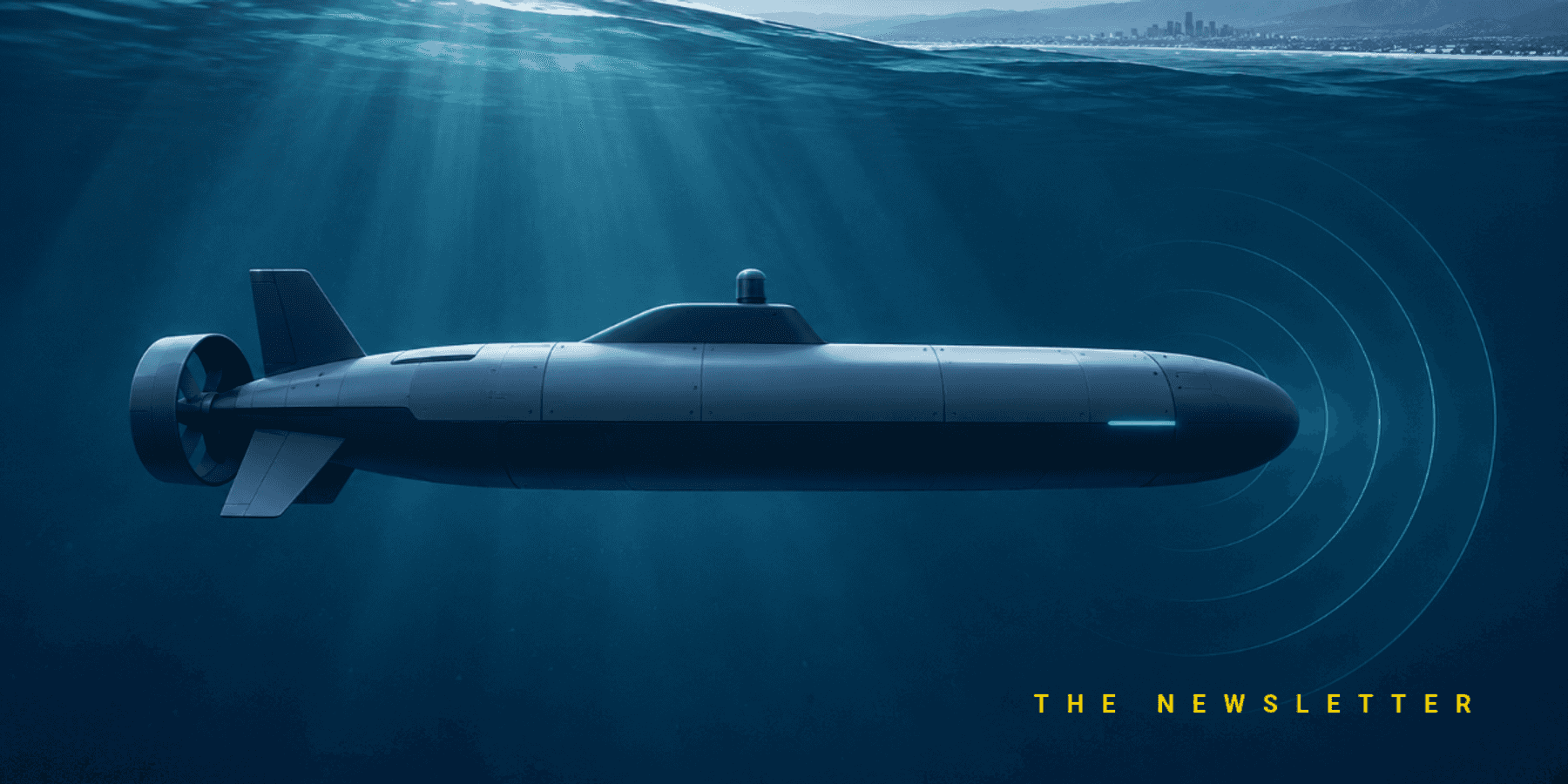
LA’s Defense-Tech Boom Is Going Underwater

🔦 Spotlight

Happy Friday, Los Angeles.

Southern California’s defense-tech industry has spent the past several years looking toward the sky.

Odin Dynamics is heading in the opposite direction.

The Los Angeles startup emerged from stealth this week with $17M in total funding to build autonomous vessels designed to operate above and below the ocean’s surface.

The financing includes a $13.75M seed round from Freestyle VC, BlueYard Capital and Sierra Ventures.

Its first product is Dolphin, a family of unmanned underwater vehicles built for long-range naval missions. The smaller Dolphin S can operate for more than three days, carry roughly 50 pounds and be deployed without the submarines and other expensive infrastructure required by conventional torpedoes.

The company is also developing a medium-sized version capable of carrying significantly larger payloads, along with an autonomous surface vessel and a separate line of power systems for the Navy.

This is not merely a prototype looking for a customer. Odin says it secured more than $20M in contracts during its first year, and its Dolphin platform is already covered by a Pentagon prototype agreement. The company expects to begin delivering Dolphin S vehicles to the Navy in early 2027.

That speed reflects a broader shift in how the Pentagon is approaching military technology. Instead of relying exclusively on a small number of large and costly platforms, defense agencies are increasingly looking for autonomous systems that can be manufactured quickly, deployed in greater numbers and adapted for multiple missions.

For undersea operations, the engineering challenge is especially difficult. Vehicles must navigate without dependable GPS or communications, withstand pressure and remain operational for days without human intervention.

Odin’s answer begins with energy.

Co-founder and CEO Amir Hasan Khan previously worked on batteries and powertrains at Tesla before helping develop electric boats at Arc. Odin now designs its batteries and powertrains internally, combining them with its autonomy software to extend the range and endurance of its vessels.

That vertical approach is increasingly familiar across Southern California’s defense sector. Companies such as Anduril, Castelion, Mach Industries and Neros are building more of their hardware, software and manufacturing systems under one roof, aiming to move from concept to deployment faster than traditional procurement cycles typically allow.

Odin is applying that same philosophy to a part of the defense market that receives far less public attention than drones, missiles or satellites.

The ocean may be less visible, but it is becoming increasingly important. Undersea cables carry global communications, maritime routes underpin international trade and the Indo-Pacific has placed naval technology closer to the center of U.S. defense planning.

Odin is positioning itself for that change with systems designed to travel farther, remain at sea longer and be produced at a scale that conventional naval hardware rarely reaches.

The company still has to prove it can turn early contracts and working prototypes into reliable production. But it is already moving beyond the stage where many hardware startups stall: building a compelling demonstration without securing a path to deployment.

Los Angeles’ defense-tech ecosystem has become known for rockets, aircraft and autonomous systems in the sky. Odin’s arrival suggests its next frontier may be the one beneath the surface.

More from this week’s LA startup and venture scene below.

🤝 Venture Deals


LA Venture Funds
  • Kinship Ventures participated in Hone Health’s $228M financing, which was led by MarcyPen Capital Partners and included $28M in equity and $200M in growth financing from General Catalyst’s Customer Value Fund. Hone will use the capital to expand its physician-led longevity programs, add advanced diagnostics and develop AI tools that help clinicians turn patient data into personalized care plans. - learn more
  • Cobalt Capital and existing investor Upfront Ventures participated in BrightAI’s $97M financing, which was led by Smith Point Capital and brought the company’s total funding to $184M. BrightAI will use the capital to expand its physical AI platform, which combines sensors, autonomous robots, drones and wearable tools to help operators monitor infrastructure and prevent failures across energy, water and other essential industries. - learn more
  • Struck Capital participated in Sequel’s oversubscribed $15M funding round, which was led by Sorenson Capital and brought the company’s total funding to $26M. Sequel will use the capital to expand its AI agents, audience data infrastructure and personalization tools, helping businesses turn webinars and other video content into marketing insights, content and sales opportunities. - learn more
  • Mucker Capital participated in Linq’s $90M funding round, which was led by Andreessen Horowitz and valued the AI infrastructure company at $1B. Linq will use the capital to expand the messaging, calling and computing tools that allow businesses to deploy AI agents capable of communicating with customers and completing tasks across phones and software. - learn more
  • Overture Ventures led Aarden’s $8M funding round, with participation from Madrona and Propeller, bringing the company’s total raised to $12M. Aarden uses AI and geospatial data to help landowners, developers and investors evaluate land for uses such as data centers, energy projects, housing and conservation, and will use the funding to improve its market intelligence, advance transactions and grow its team. - learn more
  • Alexandria Venture Investments participated in Seawolf Therapeutics’ $100M financing, which included a seed round led by Versant Ventures and a Series A backed by Versant, MPM BioImpact and Novartis Venture Fund. The San Diego biotech will use the capital to advance its DNA-delivery platform and therapeutic pipeline, including a lead metabolic-disease program, while pursuing a separate Sanofi partnership worth up to $1.2B in potential milestones. - learn more
  • Cedars-Sinai Technology Ventures participated strategically in TestDynamics’ $9M financing, which included a Series A led by Healthier Capital. TestDynamics will use the funding to expand clinical validation and hospital deployments of Satori, its vendor-neutral platform that continuously compares medical-imaging AI algorithms and delivers radiologists a single prioritized result. - learn more
  • Halogen Ventures participated in Scoutz’s $600,000 pre-seed round, which was led by Delaware Seed and brought the company’s total funding to more than $1M. The AI-powered recruiting platform will use the capital to expand its basketball business and begin supporting additional sports, starting with volleyball and later adding soccer and football. - learn more

LA Exits

  • The Africa Channel is being acquired by South African media and advertising group Primedia, giving the buyer its first owned-and-operated U.S. television network and streaming platform. Primedia plans to expand the company’s international distribution, original programming and advertising business while combining its linear channel, Demand Africa streaming service, production studio and AI team under the newly established Primedia USA; financial terms were not disclosed. - learn more
  • Santa Monica-based Evolution LA has been acquired by experiential marketing and event production company Exhibitus, with financial terms undisclosed. Evolution LA will be integrated into Exhibitus’ EXstudios division, combining its video and creative production expertise with the buyer’s national event, fabrication and brand activation capabilities. - learn more
  • AI wedding-writing platform Provenance has been acquired by Lovebird, with financial terms undisclosed. Provenance, which has helped more than 350,000 couples and wedding participants create ceremonies, vows and toasts, will bring its AI tools to Lovebird’s broader wedding-planning and guest-communication platform. - learn more

    Download the dot.LA App

    The $100M Plan to Deliver Sunlight After Dark
    Reflect Orbital

    🔦 Spotlight

    Hello, LA.

    Most companies built around solar energy are trying to capture more sunlight.

    Reflect Orbital wants to move it.

    The Hawthorne-based startup is developing satellites equipped with large reflectors that could redirect sunlight from orbit to specific locations on Earth after sunset. The idea sounds borrowed from science fiction, but Reflect Orbital is getting closer to testing whether it can work at commercial scale.

    This week, the company announced $73.5M in new funding, bringing its total raised to more than $100M. Existing investors Sequoia Capital, Lux Capital and Starship Ventures participated alongside new backers including Buckley Ventures, Convective Capital, The Uncommon Group and Salesforce Ventures.

    The funding will support Reflect Orbital’s first satellite launches, continued development of its reflector technology and new commercial partnerships across the energy and lighting industries.

    The company’s premise begins with a familiar limitation: Solar panels stop producing energy when the sun disappears below the horizon, often just as electricity demand is rising.

    Reflect Orbital wants to extend that window.

    Its planned satellites would remain in sunlight while orbiting Earth, then angle their reflectors toward selected areas on the ground. Solar farms could potentially generate electricity beyond daylight hours without acquiring more land or replacing their existing infrastructure.

    The same technology could eventually illuminate disaster zones for search-and-rescue teams, help construction crews work more safely at night and provide light in places without reliable electrical infrastructure.

    That is a considerable expansion from where the company stood two years ago.

    Reflect Orbital raised a $6.5M seed round in 2024 to develop its production vehicles and grow its Hawthorne team. It followed that with a $20M Series A led by Lux Capital in May 2025.

    Now, the company is preparing to leave the warehouse and test its technology where it was designed to operate.

    Reflect Orbital has received Federal Communications Commission approval for its first demonstration mission, Eärendil-1, which is expected to launch in the second quarter of 2027. The satellite will allow the company to study how its reflector deploys and performs in low Earth orbit while gathering data that could shape future versions of the system. Reflect Orbital has also secured additional launch opportunities for 2027, including two dedicated missions with Skyroot Aerospace.

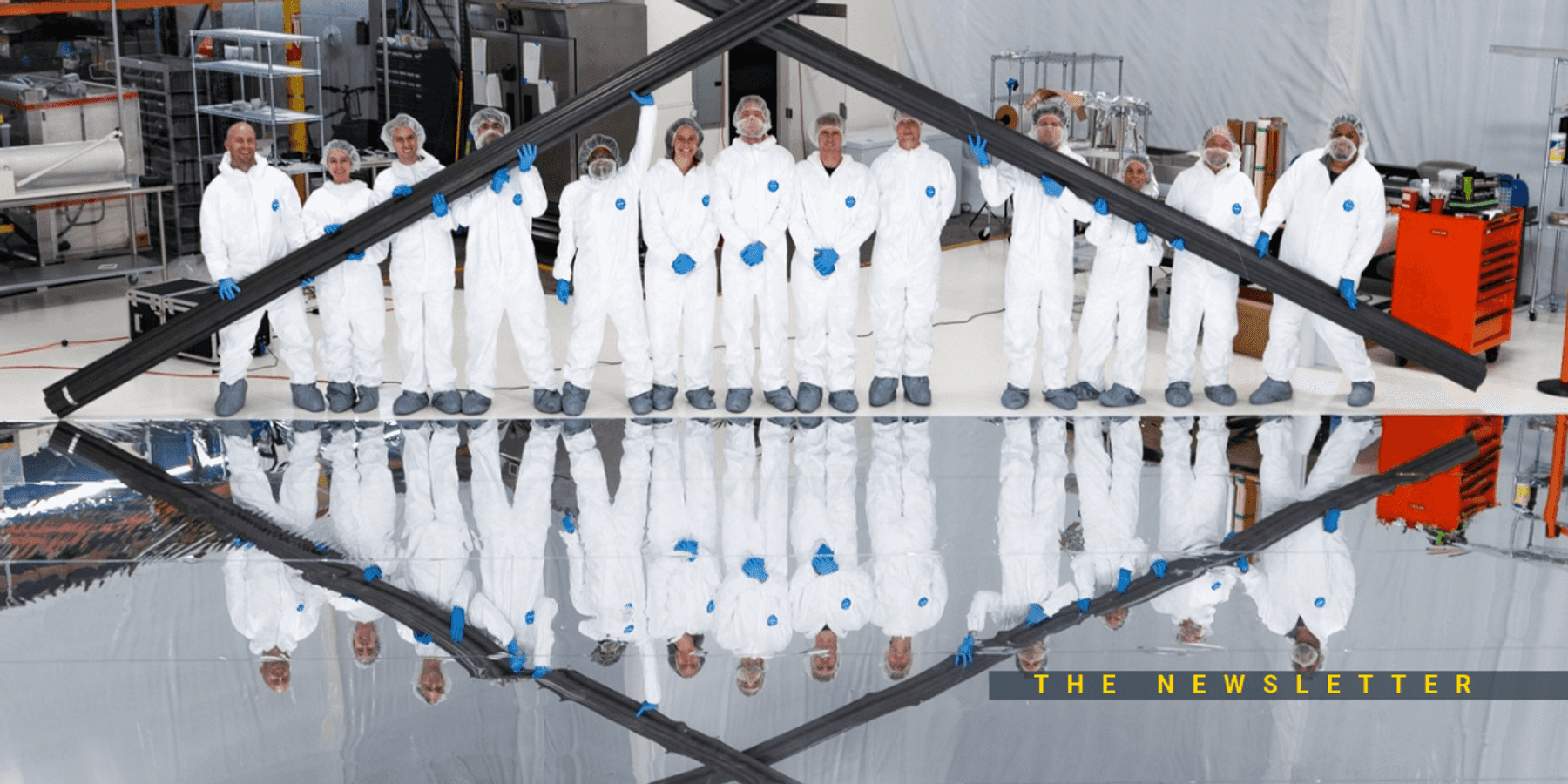
    Building the satellites presents its own unusual manufacturing challenge. According to the company, its team produces reflector material 28 times thinner than a human hair, folds individual sections into packages roughly the size of a shoebox and assembles satellites containing approximately 12,000 parts.

    In other words, delivering sunlight after dark requires some very careful folding.

    The concept has naturally prompted questions from astronomers and dark-sky advocates about light pollution and potential interference with scientific observations. Reflect Orbital says it is designing the service around predictability, transparency and control, including limiting reflections to defined locations and short periods, publishing satellite positions in advance and avoiding observatories and other protected sites.

    The demonstration mission is expected to produce illumination comparable to a full moon for no more than five minutes during the two hours following local sunset. Reflect Orbital has also said it will collect data, invite outside evaluation and use the results to refine both its technology and safeguards before attempting to scale.

    That process will matter because Reflect Orbital is not simply building another satellite. It is proposing a new kind of infrastructure, one that could change when and where sunlight becomes available.

    The company still has significant technical and regulatory work ahead. But it has already moved from an unconventional idea to more than $100M in funding, an approved demonstration mission and multiple launch opportunities.

    The next step is proving that its technology can deliver light precisely, reliably and responsibly from hundreds of miles above Earth.

    If it succeeds, the sun may no longer disappear from the energy grid when it drops below the horizon.

    More from this week’s LA startup and venture scene below.

    🤝 Venture Deals

      LA Companies

      • Helix raised $6.2M in a round led by Chicago Ventures, with participation from BAM Ventures, Aglaé Ventures, Corazon Capital and others. The startup is developing on-device voice technology that verifies whether users are human and estimates their age without collecting traditional identity documents, offering a privacy-focused alternative to CAPTCHA and photo verification. - learn more
      • Opdo raised a $2.3M pre-seed round led by Angular Ventures, with participation from Inflection and Tiny.vc. The company uses AI agents alongside established optical-design software to help engineers develop and manufacture complex components faster, and will use the funding to expand its engineering capabilities, improve its AI tools and support more customer projects. - learn more
      • Athlete To Athlete raised an $8M Series A led by Rally Ventures, with participation from Newbound VC, Scrum Ventures and UpHonest Capital. The platform pairs young athletes with college-athlete mentors for virtual one-on-one guidance and will use the funding to expand youth sports partnerships, strengthen participant safeguards and reach more families nationwide. - learn more
      • Kindo raised $30M in a round co-led by Crosspoint Capital and Forgepoint Capital, bringing its total funding to $57.6M. The company provides a centralized platform for enterprises to monitor and control AI agents, including their data access, activity and costs, and will use the capital to expand sales and further develop its AI management and security products. - learn more

      LA Venture Funds
      • Trousdale Ventures made a follow-on investment in Databento’s $100M Series C, which was led by Fifth Down Capital and valued the market-data company at $1.1B. Databento plans to accelerate its global infrastructure expansion and build a larger historical market-data archive as demand grows from financial institutions and AI companies. - learn more
      • Upfront Ventures led General Translation’s seed round, while Andreessen Horowitz led its Series A, bringing the AI localization startup’s combined funding across the two rounds to $27M. The company is building full-stack infrastructure that helps businesses translate and continuously update apps, websites, documents and videos across languages. - learn more
      • Alpha Edison participated in Q-CTRL’s $290M Series C, which was led by Salesforce Ventures. The quantum infrastructure company will use the funding to expand its AI-powered software for improving the performance and reliability of quantum computers and sensors while accelerating commercial adoption. - learn more
      • KittyHawk Frontier participated in Twin1 AI’s $5M seed extension, which was led by Curql and brought the company’s total seed financing to $25M. Twin1 develops privacy-focused AI “digital twins” that preserve professionals’ knowledge and working context, and will use the capital to expand across credit unions, law firms and financial institutions while growing its teams and enterprise governance tools. - learn more
      • Bonfire Ventures co-led Axle’s $9M funding round alongside Eniac, with participation from Teamworthy Ventures. Axle provides investment banks with a unified platform for managing conferences, corporate access, roadshows and expert engagements, and will use the capital to expand its AI capabilities and bring the product to more financial institutions. - learn more
      • TenOneTen Ventures participated in Tristar AI’s $12.4M Series A, which was led by Isogon Ventures. The Cambridge-based company uses AI-powered visual inspection to identify manufacturing defects in real time and will use the funding to improve its vision and edge-computing platform, enter additional industries and support larger deployments across customer facilities. - learn more
      • Clearlake Capital Group co-led Mirendil’s $1B Series A alongside Kleiner Perkins, with M13 participating among the company’s other new and existing investors. Mirendil is developing AI agents and tools that allow smaller teams to conduct advanced AI research and will use the funding to make frontier-level R&D more accessible to scientists and engineers. - learn more
      • CommonKind VC participated in Akara’s $5.5M funding round, which was led by Locke Health and brought the healthcare technology company’s total funding to $12.3M. Akara combines privacy-preserving sensors, AI agents and robotics to give hospitals real-time visibility into clinical operations, and will use the capital to expand its teams, grow adoption across U.S. hospitals and further develop its physical AI platform. - learn more
      • March Capital co-led Rox’s $100M Series B alongside General Catalyst, valuing the AI sales startup at $1.3B. Rox helps large enterprises automate pipeline generation, deal execution and upselling, and will use the funding to advance its AI models and expand across industries including healthcare, energy, financial services and manufacturing. - learn more
      • Clocktower Technology Ventures participated in Palomma’s $10M Series A, which was led by Cometa and brought the Colombian fintech’s total funding to $14M. Palomma combines AI leasing software, rent payments and financial products for landlords and tenants, and will use the capital to expand in Colombia, develop additional services and prepare for entry into new markets. - learn more
      • Alpha Edison led Agent F’s $4M pre-seed round, with participation from United Founders, Tiny Supercomputer Investment Company and several technology executives and founders. The Berlin startup is building AI-powered enterprise software that automates accounting, financial planning and compliance tasks for fast-growing companies while keeping finance professionals responsible for final approval. - learn more
      • Bail Capital participated in Delix Therapeutics’ oversubscribed $100M Series C, which was co-led by Johnson & Johnson Innovation and SV Health Investors’ Dementia Discovery Fund. The neuroscience company will use the funding to advance its non-hallucinogenic depression treatment Zalsupindole into Phase II development and expand its broader pipeline of therapies for psychiatric and neurodegenerative conditions. - learn more
      • M13 participated in Nominal’s $240M Series C, which was led by Lightspeed Venture Partners and co-led by Insight Partners at a $3B valuation. The hardware intelligence company will use the funding to expand its AI-powered engineering platform, develop new tools across the hardware lifecycle and enter additional industries and markets. - learn more
      • MANTIS Venture Capital participated in Project Omega’s $80M Series A, which was led by B Capital. The nuclear technology company will use the funding to begin building a domestic fuel-recycling facility and advance long-duration power systems that transform materials recovered from used nuclear fuel into energy, reactor feedstock and strategic isotopes. - learn more
      • Critical Frontier participated in Mavria’s latest funding round, which was led by Paradigm and valued the infrastructure startup at $1B. Mavria has raised $130M across its pre-seed and seed rounds to scale manufacturing, secure supply chains and build factory-produced data centers designed to bring AI computing capacity online faster and at lower cost. - learn more

        Download the dot.LA App

        Northwood’s Nine-Month Rise to $2B
        Northwood

        🔦 Spotlight

        Happy Friday, Los Angeles.

        Nine months ago, Northwood Space was operating from a 35,000-square-foot facility in Torrance. Today, it occupies a factory more than five times the size, has deployed six ground sites across two continents and is reportedly worth $2B.

        Aerospace companies are not generally known for moving this quickly.

        When dot.LA last covered Northwood, the company had just raised a $100M Series B and secured a nearly $50M contract with the U.S. Space Force. The deal established Northwood as one of the more closely watched companies working on the essential infrastructure that keeps satellites connected to Earth.

        Less than a year later, Northwood is operating at a considerably different scale.

        The company announced this week that it raised a $375M Series C co-led by Andreessen Horowitz and DFJ Growth, with additional investment from Washington Harbour Partners, Alpine Space Ventures, StepStone, In-Q-Tel and others. The round values Northwood at a reported $2B. A separate credit facility from HSBC Innovation Banking will provide additional support for working capital and network expansion.

        The financing is notable. What Northwood accomplished between rounds is the more interesting part.

        Since January, the company has deployed six ground sites across two continents, demonstrated communication with a government satellite in geosynchronous orbit and introduced a high-throughput antenna system for moving larger volumes of data. It also opened a 185,000-square-foot headquarters and factory in Torrance, expanding its manufacturing footprint more than fivefold.

        Northwood now employs more than 140 people and plans to add 400 jobs across Torrance and Washington, D.C., over the next three years.

        The company builds the infrastructure that allows satellites to exchange commands and data with operators on Earth. Rather than requiring every satellite company to develop its own ground stations, Northwood is creating a shared network that commercial operators and government agencies can access as needed.

        Think cloud infrastructure, except the servers are antennas and adding capacity requires considerably more than clicking a button.

        That distinction matters. Software companies can often scale by purchasing additional computing power. Northwood must manufacture physical systems, establish sites around the world and reliably serve customers operating across multiple orbits.

        Its new Torrance factory is central to that plan. The facility is designed to produce hundreds of antennas each year, giving Northwood the manufacturing capacity to expand its network faster than traditional ground infrastructure can typically be built.

        Demand is moving just as quickly. The number of active satellites worldwide grew from roughly 3,000 in 2020 to more than 14,000 by the end of 2025. Every one of them eventually needs to send information somewhere, and existing ground networks were not designed for the volume of missions now entering orbit.

        Northwood’s previous funding helped prove it could build the technology and win serious customers. This round is about turning that early progress into global infrastructure.

        The question is no longer whether Northwood can build a modern ground network. It is whether the company can make Torrance-built hardware the default connection layer for a rapidly expanding space economy.

        With another $375M behind it, that test begins now.

        More from this week’s LA startup and venture scene below.

        🤝 Venture Deals

          LA Companies

          • Guava, a Los Angeles-based developer platform for building AI voice agents, raised a $12.5M seed round led by Acrew Capital, with participation from Flourish Ventures, WillowTree Ventures, Clocktower Ventures and existing investor Commerce Ventures. The company will use the funding to further develop its voice AI models and products while building a go-to-market team focused on enterprises and business process outsourcing providers. - learn more

          LA Venture Funds
          • Blue Bear Capital participated in Ocient’s $100M Series C alongside Greycroft, In-Q-Tel, Buoyant Ventures and other existing investors, while BOKA Capital and OCA Ventures co-led the round. The data analytics and AI infrastructure company will use the funding to expand OcientAIQ, its platform for delivering fast, reliable answers from petabyte-scale datasets, and bring its technology to more customers globally. - learn more
          • Mystic Ventures participated in Siggy’s $6M pre-seed round, which was led by Village Global and also included PsyMed Ventures, Coalition Operators and several angel investors. Founded by veterans of Nurx and Journey Clinical, Siggy combines AI, wearable data and licensed clinicians to monitor patients between mental health appointments, with the funding supporting product development, regulatory work and hiring across its clinical and engineering teams. - learn more
          • Grid Capital and Thin Line Capital participated in Strive Robotics’ more than $3M pre-seed round alongside Tenon Ventures, with Hi Ventures leading the financing. The Cambridge-based startup develops adaptable robots that can learn complete manufacturing workflows and operate existing factory equipment, with the funding supporting product development, hiring and early customer deployments. - learn more
          • Sum Ventures participated in Circularity Fuels’ $7M seed round alongside Automotive Ventures, with DCVC and Trucks Venture Capital co-leading the financing. The company converts dairy biogas into sustainable aviation fuel and will use the capital to build a demonstration plant, design its first commercial facility and begin licensing its reactor technology to outside partners. - learn more
          • Griffin Gaming Partners participated in EloElo Group’s $80M Series C alongside MIT Investment Co., Play Ventures, Kalaari Capital and WaterBridge Ventures, while Hornbill Capital and NBCUniversal co-led the round. The Bengaluru-based entertainment company will use the funding to produce more original microdramas across multiple languages, expand its Story TV platform internationally and continue developing Dolphin AI, its AI-powered creative suite. - learn more
          • Mucker Capital participated in Lazarus AI’s $43M funding round alongside QBE, State Farm Ventures, Wave Function Ventures, Techstars and several other investors. The Boston-based company develops AI systems for enterprises and government agencies that retain control over their data, models and deployment, with the new capital supporting research and development, strategic partnerships and new product launches. - learn more
          • Alexandria Venture Investments continued its support of Thryv Therapeutics by participating in the company’s $30M Series B, which was led by InClin and included several other existing investors. The clinical-stage biotech will use the funding to launch a Phase 2a study of THRV-1268 in patients with heart failure and evaluate the drug’s safety and potential effects on cardiac function and arrhythmia risk. - learn more
          • Supply Change Capital led Kodiact’s $2.5M pre-seed round, with participation from Green Circle Foodtech Ventures and Velocity Catalyst. Kodiact helps manufacturers anticipate raw-material price swings and simulate sourcing decisions, and will use the funding to expand its market data and AI capabilities, grow enterprise deployments and enter additional industries including cosmetics, packaging and chemicals. - learn more

            Download the dot.LA App

            RELATEDEDITOR'S PICKS
            Trending