
'It Felt Like a Black Mirror Episode' The Inside Account of How Bird Laid off 406 People in Two Minutes via a Zoom Webinar

Ben Bergman

Ben Bergman is the newsroom's senior finance reporter. Previously he was a senior business reporter and host at KPCC, a senior producer at Gimlet Media, a producer at NPR's Morning Edition, and produced two investigative documentaries for KCET. He has been a frequent on-air contributor to business coverage on NPR and Marketplace and has written for The New York Times and Columbia Journalism Review. Ben was a 2017-2018 Knight-Bagehot Fellow in Economic and Business Journalism at Columbia Business School. In his free time, he enjoys skiing, playing poker, and cheering on The Seattle Seahawks.

'It Felt Like a Black Mirror Episode' The Inside Account of How Bird Laid off 406 People in Two Minutes via a Zoom Webinar

Last Friday morning, 406 Bird employees – who had been working from home for two weeks because of the coronavirus and bleary-eyed from putting in longer than usual days in an unprecedented effort to rapidly wind down global operations in cities around the world – received a generic-sounding Zoom webinar invitation titled "COVID-19 Update."

Travis VanderZanden, 41, a former top Uber executive who founded Bird only three years ago, had abruptly cancelled the previous Thursday's regular biweekly all-hands meeting, referred to internally as Birdfams. He had not addressed Bird's thousand-plus employees since they were forced to leave their offices, so most employees assumed he was giving an update on the company's response to the worsening global pandemic.

But some grew suspicious when they noticed the guest list and host were hidden and they learned only some colleagues were included. It was also unusual they were being invited to a Zoom webinar, allowing no participation, rather than the free-flowing meeting function the company normally uses. Over the next hour, employees traded frantic messages on Slack and searched coworkers' calendars to see who was unfortunate enough to be invited.

"It should go down as a poster child of how not to lay people off, especially at a time like this," said one employee.


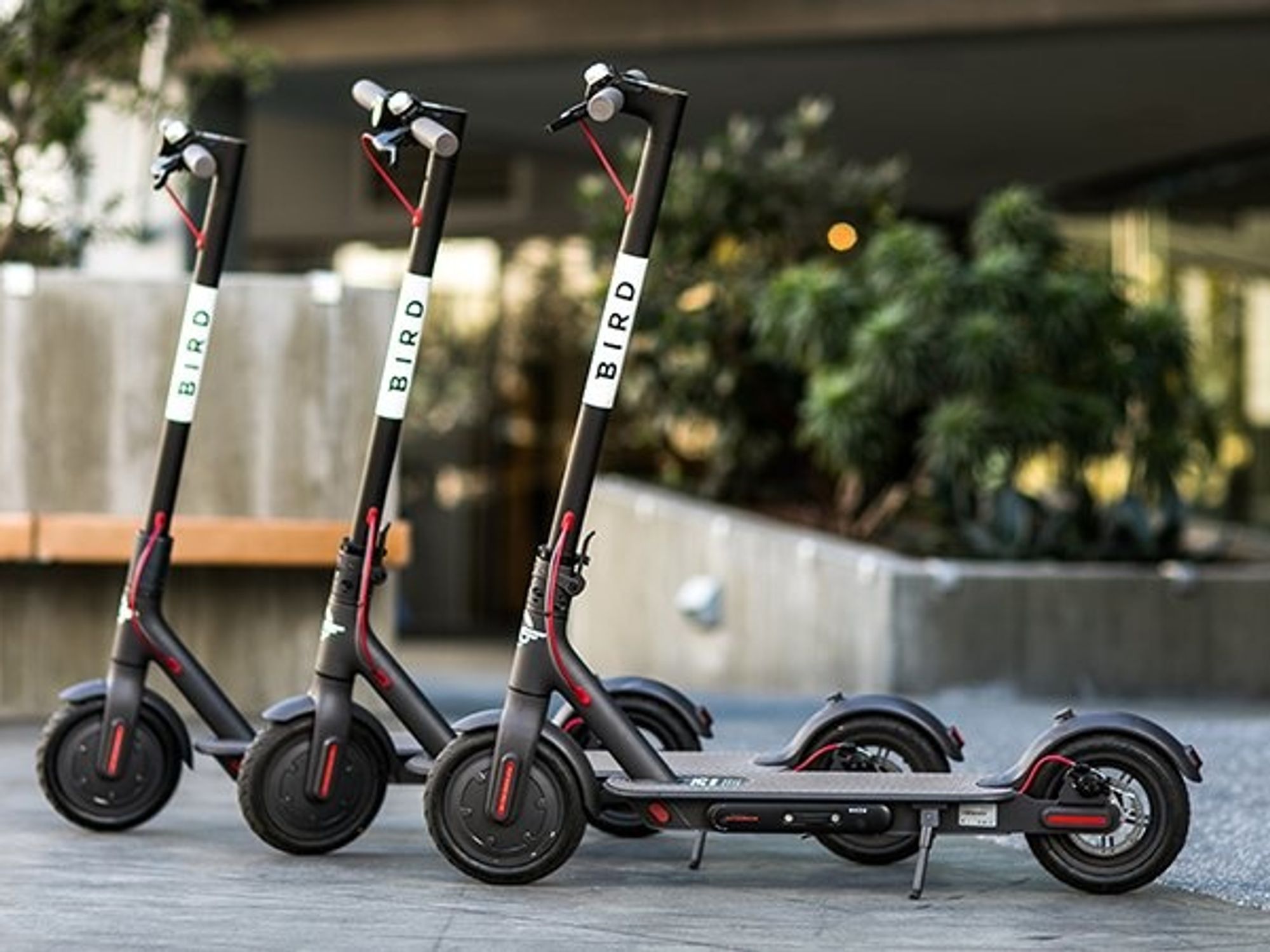
Before the novel coronavirus brought the world to a halt, Bird had been on an exceptionally meteoric rise, even by the frothy standards of what now seems like a bygone era of venture capital that brought ever-ballooning valuations to all manner of companies. In 2018, Bird became the fastest company in history to reach unicorn status. Shortly after that, it achieved a $2 billion valuation in less than a year and announced it had expanded to 100 cities with 10 million scooter rides.

In late January, Bird raised another $75 million of Series D2 funding at a $2.77 billion valuation. But less than two months later, the company suddenly found itself mostly shuttered at the worst possible time during the crucial post-winter months when it counts on earning most of its revenue after bringing scooters out of what employees refer to as "hibernation." During a pandemic the last thing people want to do is touch a shared scooter, if they're going anywhere at all.

Employees say the company has swiftly responded to by far the biggest crisis in its short history more severely than it has publicly let on, suspending operations in every market and slashing its workforce by 40%, a figure based on the global Slack channel all employees are required to join that includes about 1,060 employees. (A Bird spokeswoman declined to comment on the figure and referred to an earlier TechCrunch article that put the percentage at "around 30%.")

It Felt Like a Black Mirror Episode;' The Inside Account of how Bird Laid off 406 People in Two Minutes via a Dystopian Zoom Webinarassets.rebelmouse.io

Sign up for dot.LA's daily newsletter to catch every headline

Bird's Santa Monica headquarters has been particularly hard hit. Whenever the office is able to reopen, there will be fewer than half as many workers as before Coronavirus.

This account, which includes many previously unreported details, is based on a review of internal memos and a recording of the now infamous Zoom meeting obtained by dot.LA as well as extensive conversations with more than half a dozen Bird employees at all levels of the company who were laid off. Most requested anonymity so as not to jeopardize their severance or future job prospects.

Bird declined to make anyone available for an interview or even fully answer a list of written questions, instead sending a statement to dot.LA: "Layoffs are never easy or comfortable to do and COVID-19 has impacted the way they are done in at least the near term...We are eternally grateful to the impacted individuals and wish that the entire situation could have been avoided."

Employees describe being thrilled to join such a fast-growing startup brimming with talent that had a lofty mission to forever change the way people are transported all around the world. Last year, LinkedIn named Bird as one of the hottest startups to work for in the U.S.

The now sadly common occurrence of reducing headcount, as employers like to call it, during coronavirus is challenging when face-to-face meetings are not possible. However, Bird employees say they are disheartened by how coldly Bird handled the reductions.

"Lots of companies have to lay people off right now," said Jenny Alvauaje, a 23-year-old Bird data scientist who was dismissed after a year and half at the company. "People will recognize the companies who did it well and the ones that didn't. I hope Bird is the one that is remembered as one who did it poorly."

"It felt like a Black Mirror episode"

At 10:30 a.m., employees logged onto Zoom but were greeted only by a cracking silence. Meetings at Bird are usually always punctual and more frenzied Slack messages followed.

"Is there audio? Why can't i hear anything?" Alvauaje messaged her colleagues.

"We never start late," another employee remembers thinking. "This is strange. Something feels off."

For the next five minutes, employees stared at a sparse slide with a dark grey background that said only "COVID-19."

"It was not our brand color or font, which frankly was unsettling in a way I couldn't articulate," Alvauaje said.

Thinking there were technical difficulties, some employees logged-off and were never able to return to the meeting. Then, after five minutes of dead air that seemed like an eternity, a robotic-sounding, disembodied voice came on the line.

The woman began by acknowledging "this is a suboptimal way to deliver this message." Then she cut to the chase: "COVID-19 has also had a massive impact on our business, one that has forced our leadership team and our board of directors to make extremely difficult and painful decisions. One of those decisions is to eliminate a number of roles at the company. Unfortunately your role is impacted by this decision."

The meeting was scheduled to last half an hour but ended up going for only two minutes. Towards the end of the monologue, as the woman started talking about the future of Bird, she sounded like she was getting choked up and was trying to hold back tears.

"It felt like a Black Mirror episode," Alvauaje said. "This ominous voice came over and told us we were losing our jobs."

Almost no one recognized the voice, and there remains disagreement about who had the unfortunate job of delivering the message. But this much is clear: It was not VanderZanden or a top executive.

"It was a cowardly move," said a Bird manager. "Travis did not want to deliver the news."

"It sounded like a recording and it was very strange and ominous," said an operations employee.

VanderZanden, who Tweets sparingly and has been silent on the messaging service since late January, defended the meeting Saturday in a reply to a recounting of the meeting that had gone viral: "We did NOT let employees go via a pre-recording. It was via a live zoom mtg (not ideal either) b/c we're all WFH during COVID. Video was turned off which we thought was more humane. In retrospect, we should've made 1on1 calls to the 100s impacted over the course of a few days."

VanderZanden's defensive replies and an internal memo have been his only comments about the layoffs. In its statement, the company said, "we purposefully and intentionally did not have any video on to protect privacy as we delivered the news live to individuals. A live speaker delivered the news in real time over the web-based call and a slide was projected outlining additional information including four weeks of pay, three months of medical coverage and an extended timeframe to exercise options."

Most employees dot.LA spoke with still believe the call was pre-recorded. They say it's hard to otherwise explain how the message could be delivered so robotically, but some also say at this point the distinction is moot.

"It might as well have been a recording given the lack of human interaction," said one staffer.

Making it more surreal, some people were logged out while the brief speech was still underway. As the voice on the line was speaking, employees stared at their computer and began to take in the news that they were losing their jobs. Then their screens suddenly went dark and their company issued MacBooks restarted. By 10:40 a.m, everyone was locked out, just as employees were frantically trying to exchange personal numbers and emails on Slack and take screenshots of their contacts. They wondered why they were being cut off then since they had just been told their last day was not until April 3rd.

Bird Layoffs: An Audio Recordingwww.youtube.com

A month earlier, someone in Bird's IT department had been tasked by his superiors to write a script that would allow the company to instantly shut down all of a user's accounts – computer, email, Slack – with the click of a single button, according to an employee. He was told the script would be used for general off-boarding rather than the mass layoff that he ended up being included in. Last Friday, the script seems to have been activated early.

Some employees, who had the day off or were working a later shift, did not understand why their computers were restarting and why they could not log back in. Others tried in vain to join the webinar and got a message saying it was full, likely because Bird's webinar license didn't accommodate enough attendees. Some employees did not realize what was going on until they saw a brief TechCrunch article posted at 11:26 a.m.

According to Bird's statement, "HR representatives, managers, and/or executives personally reached out to all individuals directly as a follow up." But few employees have seen any follow-up. It did not help that many managers were included in the layoffs and had no idea who on their team had been cut. Some resorted to messaging their reports on LinkedIn to see if they still worked at the company.

The next day, one employee received what seemed like a heartfelt note of gratitude from his boss's boss thanking him for what he had contributed during his 18 months at Bird, but he soon discovered he had gotten a form letter. "Seven of my contemporaries said they had received the exact same message," the employee said. "I realized he had just copy and pasted it."

Workers were told they would be receiving three months of healthcare benefits but when they looked into it, they discovered the company is actually only providing coverage until April 30th. After that employees have the option of enrolling in COBRA, according to an off boarding memo obtained by dot.LA.

"I can't pay the $600 out of pocket for that," said one employee. "I'm just going to go on MediCal." (A Bird spokeswoman clarified Wednesday: "All impacted employees will receive three months health coverage paid for by Bird. Ensuring these individuals were taken care of through June during the global pandemic was key and we wanted to go beyond the industry standard.")

Employees say Bird seems primarily concerned about getting their now locked laptops back, which are mostly MacBook Pro's for older employees and the cheaper MacBook Air's for newer staffers, who joined in an era when the company became more focused on cutting costs.

"IT will send a box with a return shipping label to retrieve company assets (e.g., Laptops, chargers, and badge)," the company stated in its off boarding memo. "All items should be put in the box and mailed back to us by April 15."

The company has been less specific about how employees will get back the items they left at their desks when they walked out of the office for what turned out to be the last time nearly three weeks ago. It is a sad fact of the COVID-19 era that laid off employees do not even get to clean out their own desks.

"They said any personal items would be sent back to us 'eventually,'" said one staffer. "There's a lot of stuff on desks and monitors that belong to employees of the company."

live.staticflickr.com

A workforce decimated

Almost no division was spared from wrenching cuts, from engineering to data to government partnerships to legal.

"Pretty much everybody I worked with was let go," said one operations employee. "They eradicated whole teams."

Several employees noted that the cuts included some viewed internally as superstars. They also noticed that the layoffs will result in a much less diverse company.

"It seems like they got rid of the majority of women and people of color," said one staffer. "In engineering they got rid of the only women in significant leadership."

"As far as I know, the folks that are left from my immediate team consist of all men, most of whom are white," Alvauaje wrote in a Medium blog post. She said her data team was reduced from around 50 to just five people. "When your C-Suite looks the way Bird's does (the way many do, in tech and otherwise) and your data team follows suit, you cannot best serve the communities you pretend to care about," she wrote.

Laid off employees have joined an ex-Bird Slack group to share job leads and try to process what happened. "There's a lot of dark humor being passed around," said one employee.

"This could not have happened at a worse time"

When the coronavirus hit, many Bird employees were busy coordinating taking scooters out of "hibernation" for the busy spring and summer months, a period known as "Spring Push." The company brings in little revenue in the winter, banking on ridership to return in warmer months.

"This could not have happened at a worse time for the company so that's why this happened so quickly," said one employee.

Bird's biggest competitor, Lime, announced March 21st that it was "winding down and pausing" service in all markets except for South Korea. Bird did not follow suit, at least publicly. Its last announcement about COVID-19 came on March 12th - which seems like a lifetime ago in this rapidly changing environment. The blog post said only that the company would be cleaning scooters more frequently.

"The only cleaning I was aware of was when they were putting them away," said a Bird operations employee. "They have been rapidly removing scooters from marketplaces and putting them in sleep mode. Externally they were not telling customers that. They weren't telling people they were removing everything."

Bird would not directly address whether the company has suspended operations in all markets. "Our decision to temporarily pause or reduce our fleet in some cities is very fluid as the response to and recommendations regarding COVID-19 evolve," a spokeswoman said Wednesday afternoon in an e-mail to dot.LA. "Our actions are in line with voluntary, as well as mandatory measures set by governments for businesses. We will continue our close dialogue with local officials in each of the cities we provide our service and will again offer full fleets of our safe, clean transportation alternative as soon as possible."

The last weeks at Bird were particularly frantic for many employees because the company was doing something no rapidly growing unicorn ever wants to do: scaling back its operations as quickly as possible.

"My sole focus the last weeks of my employment was reducing operational spend as much as I could," said a manager. "My department had quite a bit of spending. I was told to get it to zero."

This manager was part of a team of about two dozen employees responsible for planning Bird's response to the novel coronavirus.

"I thought cuts were likely coming at some point," said the manager. "But I did not expect to be cut in the first round."

Like others, he heard about the call when he logged onto the Zoom webinar. He wished he had at least had enough time to say goodbye to his team.

"The leadership at Bird handled this in an immature manner,' he said. "The world deserves to hear about it."

From Your Site Articles
Related Articles Around the Web
https://twitter.com/thebenbergman
ben@dot.la
💘Zeitview’s New Valentine : Catching Methane Leaks

🔦 Spotlight

Hello Los Angeles, happy Friday and happy Valentine’s Day weekend.

While the rest of us are debating flowers vs. gifts vs. reservations, LA’s infrastructure nerds are out here celebrating a different kind of romance: finding leaks before they ghost your entire operation.

Zeitview just made methane a first-class feature

Zeitview has acquired Insight M, folding high-frequency aerial methane detection into its broader “see it, measure it, fix it” play for critical infrastructure. The combined offering pairs methane monitoring with Zeitview’s predictive asset-health and inspection workflows, so operators can spot emissions faster, prioritize repairs, and tie results back to ROI instead of vibes.

What Zeitview actually does, beyond the buzzwords

If you haven’t been tracking them, Zeitview is essentially the operating layer for inspecting big, physical assets using drones, aircraft, and computer vision. They can analyze imagery you already have or capture fresh data, then turn it into inspection reports and analytics through their Asset Insights platform.

Zeitview was previously known as DroneBase and rebranded after raising an expansion round, signaling a broader push beyond “drones” into enterprise-grade infrastructure intelligence across energy and other asset-heavy industries.

Why Insight M fits, and why this isn’t just “climate tech”

Methane is the rare climate problem that also hits the P&L, because a leak is both emissions and lost product. Insight M has built credibility around methane monitoring that’s meant to be operational, not just observational, and that plugs neatly into Zeitview’s inspection footprint.

Put together, this looks less like a single acquisition and more like a workflow upgrade: one system that finds a problem, quantifies it, routes it to the right team, and proves it was fixed. The least romantic Valentine’s message of all, maybe, but also the most adult: “I noticed something small, and I handled it before it became expensive.”

Keep scrolling for the latest LA venture rounds, fund news and acquisitions.

🤝 Venture Deals

      LA Companies


      • HAWKs (Hiking Adventures With Kids), a nature-based children’s enrichment brand founded in Los Angeles, secured a strategic investment from Post Investment Group to accelerate its nationwide franchise expansion. The company plans to scale its mobile, outdoor-program model (after-school adventures, camps, and weekend sessions) by opening franchise territories across the U.S. while using Post’s franchising platform to build the operational infrastructure and support system for new operators. - learn more

                  LA Venture Funds

                  • Allomer Capital Group participated in TRUCE Software’s newly closed Series B, a round led by Yttrium with additional backing from New Amsterdam Growth Capital. The company did not disclose the amount, but says it will use the funding to scale go-to-market for two mobile-first product suites: an AI video telematics platform for commercial fleets that runs on standard smartphones, and TRUCE Family, a software approach to limiting student phone distractions in K–12 schools. - learn more
                  • Wonder Ventures participated in The Biological Computing Company’s $25M seed round, which was led by Primary Venture Partners alongside Builders VC, Refactor Capital, E1 Ventures, Proximity, and Tusk Ventures. The startup is commercializing “biological compute,” connecting living neurons to modern AI systems to make certain tasks dramatically more energy-efficient, and says its first product shows a 23x retained improvement in video model efficiency while also helping discover new AI architectures. - learn more
                  • Bonfire Ventures co-led Santé’s $7.6M seed round, with backing from Operator Collective, Y Combinator, and Veridical Ventures. Santé is building an AI- and fintech-driven operating system for wine and liquor retailers that brings POS, inventory, e-commerce, delivery orders, and invoice workflows into one platform to replace a lot of manual, fragmented processes. - learn more
                  • B Capital co-led Apptronik’s initial 2025 Series A and participated again in the company’s new $520M Series A extension, bringing the total Series A to $935M+ (nearly $1B raised overall). The company says it will use the fresh capital to ramp production and deployments of its Apollo humanoid robots and invest in facilities for robot training and data collection, with the extension also bringing in new backers like AT&T Ventures, John Deere, and Qatar Investment Authority alongside repeat investors including Google and Mercedes-Benz. - learn more
                  • WndrCo participated in Inertia Enterprises’s new $450M Series A, a round led by Bessemer Venture Partners with additional investors including GV, Modern Capital, and Threshold Ventures. The company says it will use the milestone-based financing to commercialize laser-based fusion built on physics proven at the National Ignition Facility at Lawrence Livermore National Laboratory, including building its “Thunderwall” high-power laser system and scaling a production line to mass-manufacture fusion fuel targets. - learn more
                  • Riot Ventures participated as a returning investor in Integrate’s $17M Series A, which was led by FPV Ventures with participation from Fuse VC and Rsquared VC. Integrate is pitching an ultra-secure project management platform built for classified, multi-organization programs, and says it has become a requirement for certain U.S. Space Force launch efforts. The company plans to use the new funding to ship additional capabilities for government customers and scale go-to-market across the defense tech sector. - learn more
                  • MANTIS Ventures participated in Project Omega’s $12M oversubscribed seed round, which was led by Starship Ventures alongside Buckley Ventures, Decisive Point, Slow Ventures, and others. Project Omega is emerging from stealth to build an end-to-end nuclear fuel recycling capability in the U.S., aiming to turn spent nuclear fuel into long-duration power sources and critical materials, with early lab demonstrations underway and an ARPA-E partnership to validate a commercially viable recycling pathway. - learn more
                  • Plus Capital participated in Garner Health’s $118M round, which was led by Khosla Ventures with additional backing from Founders Fund and existing investors including Maverick Ventures and Thrive Capital, valuing the company at $1.35B. Garner says it helps employers steer members to high-quality doctors using its “Smart Match” provider recommendations and a reimbursement-style incentive called “Garner Rewards,” and it will use the funding to expand its offerings, grow its care team, and scale partnerships with payers and health systems. - learn more
                  • Emerging Ventures co-led Taiv’s $13M Series A+ alongside IDC Ventures, with continued support from investors including Y Combinator and Garage Capital. Taiv says it will use the funding to scale its “Business TV” platform, which uses AI to detect and swap TV commercials in venues like bars and restaurants with more relevant ads and on-screen content, as it expands across major North American markets. - learn more

                            LA Exits

                            • Mattel163 is being acquired by Mattel, which is buying out NetEase’s remaining 50% stake and valuing the mobile games studio at $318M. The deal gives Mattel full ownership and control of the team behind its IP driven mobile titles, strengthening its in-house publishing and user acquisition capabilities as it expands its digital games business. - learn more
                            • DJ Mex Corp. is set to be acquired in part by Marwynn Holdings, which signed a non-binding letter of intent to purchase a 51% stake in the U.S.-based e-waste sourcing and logistics company. The deal would bring DJ Mex into Marwynn’s EcoLoopX platform to expand its asset-light “reverse supply chain” services for recyclable materials, though it’s still subject to due diligence and final agreements. - learn more

                                                    Download the dot.LA App

                                                    Skyryse Raised $300M+ to Do What Most Startups Can’t

                                                    🔦 Spotlight

                                                    Hello Los Angeles

                                                    LA just minted another aviation unicorn, and it is not because someone built a prettier helicopter demo. It's because Skyryse is trying to do the rarest thing in tech: turn software into something regulators will sign their name to, and that pilots will trust when conditions are at their worst.

                                                    El Segundo’s newest unicorn is simplifying the cockpit

                                                    Skyryse raised $300M+ in a Series C at a $1.15B valuation. The round was led by Autopilot Ventures and returning investor Fidelity Management & Research Company, with participation from Qatar Investment Authority, ArrowMark Partners, Atreides, BAM Elevate, Baron Capital Group, Durable Capital Partners, Positive Sum, Rokos (RCM Private Markets Fund), and Woodline Partners, among others.

                                                    Image Source: Skyryse

                                                    The pitch is bold and deceptively simple. Skyryse is building a “universal operating system for flight,” SkyOS, designed to replace the cockpit’s maze of mechanical controls with a computer-driven system that makes routine flight easier and emergency situations more manageable. The bigger claim is standardization: if you can make the interface and controls feel consistent across aircraft, you reduce training friction, lower pilot workload, and create fewer opportunities for human error when the stakes spike.

                                                    The real work starts after the press release

                                                    Skyryse says the funding will be used to accelerate FAA certification and scale SkyOS across additional aircraft platforms, including the Black Hawk. That is the hard part, and also the part most startups never reach. Aviation is where software has to prove itself in edge cases, repeatedly, with zero tolerance for surprises, because “mostly works” is another way of saying “eventually fails.”

                                                    The bet hiding inside the headlines

                                                    If Skyryse clears certification and can port SkyOS across aircraft types the way software ports across devices, it could unlock a new category of safety automation for fleets that cannot afford downtime, confusion, or long training cycles. Emergency response, defense modernization, and industrial aviation are all markets where reliability is the product, and simplicity is the differentiator. In a world obsessed with shipping faster, Skyryse is playing a different game: getting permission to ship at all.

                                                    Keep scrolling for the latest LA venture rounds, fund news and acquisitions.

                                                    🤝 Venture Deals

                                                        LA Companies

                                                        • Accrual announced it has raised $75M in new funding led by General Catalyst, with participation from Go Global Ventures, Pruven Capital, Edward Jones Ventures, and a group of founders and industry executives. The company says the raise supports its official launch and continued buildout, alongside early partner firms, investors, and advisors. - learn more
                                                        • Morpheus Space secured a $15M strategic investment led by Alpine Space Ventures and the European Investment Fund, with continued support from existing investors, to fuel its next phase of growth. The company says it will use the capital to expand mass-production capacity and its team at its Dresden “Reloaded” facility, helping industrialize its GO-2 electric propulsion systems and meet rising demand from large satellite constellations. - learn more
                                                        • Machina Labs raised a $124M Series C to build its first large-scale “Intelligent Factory,” a U.S.-based production site aimed at rapidly manufacturing complex metal structures for defense, aerospace, and advanced mobility. The company says the funding, backed by investors including Woven Capital, Lockheed Martin Ventures, Balerion Space Ventures, and Strategic Development Fund, will help it scale its AI-and-robotics “software-defined” manufacturing approach from breakthrough tech into high-throughput production infrastructure. - learn more
                                                        • Midi Health raised a $100M Series D led by Goodwater Capital, with new investors Foresite Capital and Serena Ventures joining and existing backers including GV, Emerson Collective, and others returning, valuing the company at over $1B. The women’s telehealth provider says it will use the funding to scale beyond menopause care into a broader, AI-enabled women’s health platform, expanding access and using AI to personalize care and streamline clinical operations. - learn more
                                                        • Mitra EV raised $27M in financing, combining equity led by Ultra Capital with a credit facility from S2G Investments, to expand its “no upfront capital” fleet electrification model. The Los Angeles-based company says it will use the money to grow its shared charging network, roll out additional fleet solutions, and expand into new markets, positioning itself as a fully managed package that bundles EV leasing, overnight charging, and access to shared fast-charging hubs. - learn more
                                                        • Plug raised a $20M Series A to scale its EV-first marketplace, following $60M in used EV sales since launching in 2024. The round was led by Lightspeed with participation from Galvanize and existing investors including Autotech Ventures, Leap Forward Ventures, and Renn Global, as Plug positions itself as infrastructure for the coming wave of off-lease EV inventory with EV-native pricing, battery health insights, and faster dealer transactions. - learn more
                                                        • Breezy, a Los Angeles-based AI operating system for residential real estate professionals, raised an oversubscribed $10M pre-seed round led by Ribbit Capital, with participation from Fifth Wall, DST Global, Liquid 2 Ventures, O.G. Venture Partners, and others. The company says it will use the funding to strengthen its product and data platform, grow engineering and design, invest in security, and prepare for broader U.S. and international rollout. - learn more

                                                                  LA Venture Funds

                                                                  • Upfront Ventures participated in Daytona’s $24M Series A, a round led by FirstMark Capital with participation from Pace Capital and existing investors E2VC and Darkmode, plus strategic checks from Datadog and Figma Ventures. Daytona is building “composable computers” for AI agents, essentially programmatic, stateful sandboxes that can be spun up, paused, and snapshotted on demand so agents can safely run code and explore many paths in parallel at scale. - learn more
                                                                  • Second Sight Ventures participated in Willie’s Remedy+’s $15M Series A, a round led by Left Lane Capital to fuel national retail expansion and continued product development for its hemp-derived THC beverages positioned as an alcohol alternative. The company says it has already sold 400,000+ bottles in under a year and claims the top spot for online THC beverage sales as it gears up for broader distribution in 2026. - learn more
                                                                  • Navitas Capital led Cadastral’s $9.5M funding round, with participation from JLL Spark Global Ventures, AvalonBay, Equity Residential, and 1Sharpe. Cadastral says it will use the capital to accelerate product development and expand go-to-market for its vertical AI platform, positioning the product as an “AI analyst in a box” that automates core commercial real estate workflows like underwriting and due diligence. - learn more
                                                                  • B Capital participated in Lunar Energy’s $232M raise, which the company disclosed as two rounds: a $102M Series D led by B Capital and Prelude Ventures, and a previously unannounced $130M Series C led by Activate Capital. The startup says it will use the capital to rapidly scale home-battery manufacturing and deployments, turning those distributed systems into a grid-supporting virtual power plant as electricity demand surges. - learn more
                                                                  • B Capital participated in Goodfire’s $150M Series B at a $1.25B valuation, a round that also included investors like Juniper Ventures, DFJ Growth, Salesforce Ventures, Menlo Ventures, Lightspeed, South Park Commons, Wing, and Eric Schmidt. Goodfire says it will use the funding to scale its interpretability-driven “model design environment,” aimed at helping teams understand, debug, and deliberately shape how AI models behave in high-stakes settings. - learn more
                                                                  • Helena participated in Positron AI’s oversubscribed $230M Series B at a post-money valuation above $1B, alongside strategic investors including Qatar Investment Authority and Arm. The round was co-led by ARENA Private Wealth, Jump Trading, and Unless, and the company says it will use the capital to scale energy-efficient AI inference now and accelerate its next-generation “Asimov” silicon roadmap. - learn more
                                                                  • Smash Capital participated in ElevenLabs’ $500M Series D, which values the company at $11B as it scales its voice and conversational AI products for enterprise use. The round was led by Sequoia Capital with support from existing backers like Andreessen Horowitz and ICONIQ Capital, plus additional participation including Lightspeed Venture Partners. - learn more
                                                                  • MTech Capital participated in Pasito’s $21M Series A, a round led by Insight Partners with additional participation from Y Combinator. Pasito says it’s building an AI-native workspace for group health, life, and retirement benefits that turns messy, unstructured plan and census data into a unified layer so carriers and brokers can automate workflows end-to-end, from quoting and enrollment to support and claims. - learn more
                                                                  • Rebel Fund participated in Ruvo’s $4.6M seed round, led by 1confirmation with participation from Coinbase Ventures and others, as the Y Combinator-backed fintech expands its cross-border payments infrastructure between Brazil and the U.S. Ruvo says it operates like a U.S. dollar account for Brazilians, combining Pix, stablecoins, ACH/wire transfers, and a Visa card in one app to speed up remittances by reducing intermediaries. - learn more
                                                                  • Rainfall Ventures participated in a seed funding round for Deft Robotics alongside Spring Camp, backing the company’s push to build AI-driven automation tools for manufacturers. The round amount wasn’t disclosed in the announcement, but the funding is positioned to help Deft scale product development and customer deployments in industrial settings. - learn more
                                                                  • Trousdale Ventures participated in CesiumAstro’s Series C by leading the $270M equity portion of a $470M total growth-capital raise, alongside investors including Woven Capital, Janus Henderson Investors, and Airbus Ventures. CesiumAstro says the broader financing also includes $200M from Export-Import Bank of the United States and J.P. Morgan, and will fund a major U.S. scale-up including a new 270,000-square-foot HQ and expanded manufacturing to accelerate deployment of its software-defined, AI-enabled space communications platforms. - learn more
                                                                  • Mucker Capital participated in Linq’s $20M Series A, which was led by TQ Ventures to help the company become infrastructure for AI assistants that run directly inside messaging apps. Linq’s platform lets developers and businesses deploy assistants through channels like iMessage, RCS, and SMS, and the company says the funding will go toward expanding the team, building a go-to-market motion, and continuing to develop the product. - learn more
                                                                  • Sound Ventures participated in Day AI’s $20M Series A, which was led by Sequoia Capital with additional participation from Greenoaks, Conviction, and Permanent Capital. Day AI says the funding will help scale its AI-native CRM platform and support its move into general availability, positioning “CRMx” as a faster, context-driven alternative to legacy systems that turn simple questions into slow projects. - learn more
                                                                  • Chaac Ventures participated in Arbor’s $6.3M seed round, which was led by 645 Ventures with additional backing from Next Play Ventures, Comma Capital, and angel investors. Arbor is building an AI interview and research platform that captures frontline employee and customer conversations and turns that qualitative “ground truth” into structured operational intelligence leaders can act on quickly, without slow surveys or pricey consultants. - learn more
                                                                  • B Capital participated in When’s $10.2M Series A, a round co-led by ManchesterStory and 7wire, with new investor Mairs & Power Venture Capital and returning backers Enfield Capital Partners, TTV Capital, and Alumni Ventures. When says it helps employers and departing or transitioning employees navigate health coverage changes by steering people to more affordable alternatives to COBRA through an AI-powered marketplace and targeted reimbursements, with the new capital going toward team growth and expanding into more transition scenarios like Medicare eligibility and early retirements. - learn more

                                                                                          Download the dot.LA App

                                                                                          $100M and a Space Force Deal: Northwood’s One-Two Punch

                                                                                          🔦 Spotlight

                                                                                          Hello Los Angeles

                                                                                          The most underrated part of the space boom isn’t what gets launched, it’s what happens after. A satellite can be flawless in orbit and still be functionally useless if you can’t talk to it fast, often, and reliably, especially when something breaks.

                                                                                          Torrance is proving the next space race is won on the ground

                                                                                          Northwood Space, operating out of a 35,000-square-foot facility in Torrance, just landed a rare one-two punch: a $100M Series B and a roughly $49.8M U.S. Space Force contract tied to upgrades for the Satellite Control Network, the system that supports launches, early operations, tracking and control, and emergency support when satellites go sideways. The Series B was led by Washington Harbour Partners, co-led by Andreessen Horowitz, and included participation from Alpine Space Ventures, Founders Fund, StepStone, Balerion, Fulcrum, Pax, 137 Ventures, and others.

                                                                                          Image Source: Northwood Space

                                                                                          What’s intriguing here isn’t just the dollars, it’s the thesis. Northwood is arguing that the next wave of space companies won’t be constrained by rockets, but by operations and connectivity, meaning the ground layer becomes the strategic choke point. Their approach combines vertically integrated ground infrastructure with phased-array systems (“Portal”) that can steer multiple beams electronically and support missions across LEO, MEO, and GEO, aiming to make ground access feel less like bespoke aerospace procurement and more like scalable infrastructure.

                                                                                          Why this matters right now

                                                                                          In a market where “space” headlines often center on what’s above the atmosphere, this week’s signal is that the decisive advantage may live down here. If Northwood can make satellite communications more frequent, more flexible, and easier to scale, it doesn’t just help one mission, it changes the economics of operating entire fleets.

                                                                                          Scroll on for the latest LA venture rounds, fund news and acquisitions.

                                                                                          🤝 Venture Deals

                                                                                              LA Companies


                                                                                              • Origin, a pelvic floor physical therapy and women’s musculoskeletal care provider, raised a Series B led by SJF Ventures with participation from Blue Venture Fund and Gratitude Railroad, plus financing from California’s IBank and several angel investors. The company says it will use the funding to expand access to its hybrid model of in-person clinics and nationwide virtual care, and to invest in AI-enabled clinical tools, clinician training through Origin University, and additional clinical research. - learn more
                                                                                              • OpenDrives announced new funding led by IAG Capital Partners to support growth of its software platform for video data management used by media, sports, and enterprise teams. Alongside the investment, the company named longtime COO Trevor Morgan as CEO as it continues shifting from a hardware-first business to a software-focused platform. - learn more

                                                                                                        LA Venture Funds

                                                                                                        • MANTIS Venture Capital participated in Rogo’s $75M Series C, a round led by Sequoia that values the AI “agent” platform at about $750M. The company says it will use the new funding to scale its AI system for investment-banking workflows and accelerate its European expansion, including opening its first international office in London. - learn more
                                                                                                        • B Capital led PaleBlueDot AI’s $150M Series B, pushing the AI compute platform’s valuation to over $1B. The company says it will use the funding to deepen its core tech and platform engineering, expand go-to-market, and scale across North America and Asia to meet rising enterprise demand for cost-efficient AI infrastructure. - learn more
                                                                                                        • Rebel Fund participated in Modelence’s seed round, which raised $3M and was led by Y Combinator alongside other investors. Modelence is building an all-in-one TypeScript toolkit that bundles essentials like auth, databases, hosting, and LLM observability to reduce the “stitching things together” headaches that come with vibe-coding and modern app infrastructure. - learn more
                                                                                                        • Alexandria Venture Investments participated in TRexBio’s oversubscribed $50M financing alongside several new investors and existing backers. The company says it will use the funds to advance TRB-061, its TNFR2 agonist designed to selectively activate regulatory T cells, in an ongoing Phase 1a/b study for atopic dermatitis, and to move preclinical programs TRB-071 and TRB-081 toward the clinic. - learn more
                                                                                                        • Bonfire Ventures led Risotto’s $10M seed round to help the startup bring AI into help desk workflows and make ticketing systems easier to use. Risotto aims to autonomously resolve support tickets by sitting between tools like Jira and a company’s internal systems, using an AI layer designed to keep model outputs reliable and controlled. - learn more
                                                                                                        • Calibrate Ventures participated as a returning investor in Grid Aero’s $20M Series A, which was co-led by Bison Ventures and Geodesic Capital. The aerospace and defense startup says it will use the funding to move its Lifter Lite autonomous aircraft from testing into operational deployments, supporting major exercises and early customer use cases as it scales long-range, low-cost autonomous airlift for contested environments. - learn more

                                                                                                                LA Exits

                                                                                                                • Bridg is being acquired by PAR Technology (from Cardlytics) in a deal valued at $27.5M in PAR stock, with the price potentially adjusting up to $30M, and it’s expected to close in Q1 2026. PAR plans to integrate Bridg’s identity-resolution capabilities so restaurants and retailers can unify loyalty and non-loyalty purchase data, recognize previously anonymous customers, and run and measure marketing more effectively. - learn more
                                                                                                                • Assembly, an employee recognition and rewards platform founded in 2018 and used by 500+ organizations, is being acquired by talent-management provider Quantum Workplace. The deal adds built-in rewards to Quantum Workplace’s suite and is intended to connect recognition data with engagement, performance, development, and retention insights so leaders can better spot impact, reinforce values, and invest in keeping top talent. - learn more

                                                                                                                                      Download the dot.LA App

                                                                                                                                      RELATEDEDITOR'S PICKS
                                                                                                                                      Trending