

dot.LA Summit: Grid110 Wins Social Justice Award

dot.LA Summit: Grid110 Wins Social Justice Award

dot.La kicked off its inaugural in-person summit on Oct. 28-29 at the Fairmont Miramar hotel in Santa Monica. This year's summit features over 45 speakers covering cryptocurrency, telehealth, urban mobility and women in tech, among others. You can find a full schedule of this year's summit here and read the recap below!

Updates:


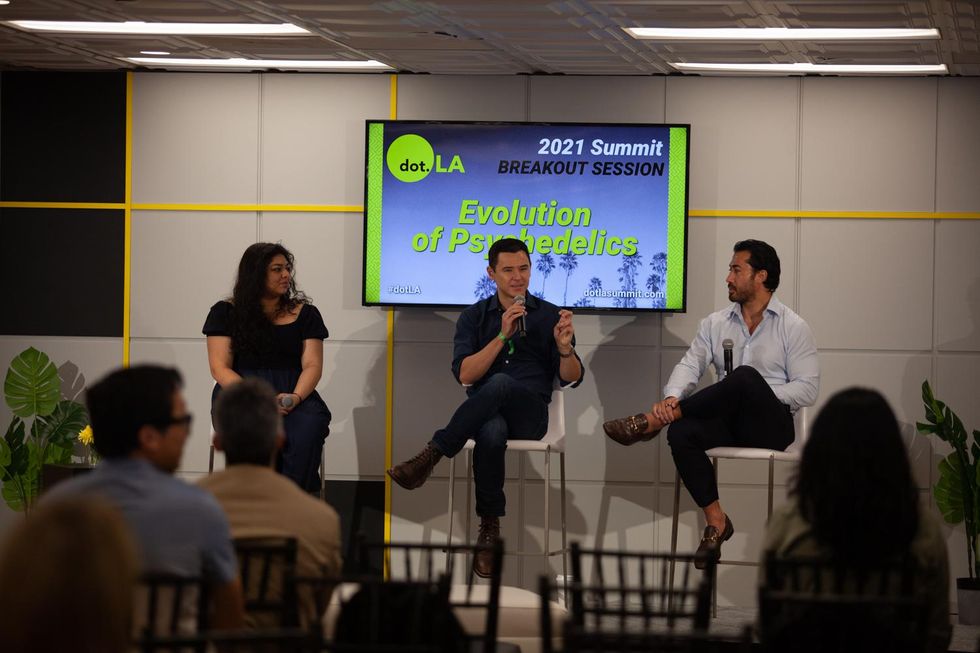
dot.LA Summit: As Attitudes Shift Around Drugs and Mental Health, ‘It’s Time’ for Psychedelic Therapies
Keerthi Vedantam

Fifty years after President Nixon announced the war on drugs, changing cultural attitudes around psychedelics have led to a slew of decriminalization and legalization efforts across the U.S. The Food and Drug Administration is now reviewing psychedelic-based drug, a sea change from just a few years ago.

Mike Dow from Field Trip Health, one of the many companies testing psychedelic-based drugs, and cannabis company Kurvana CEO Mehran Moghaddam believe that this shift will change the course of mental health treatment as the drugs become more accepted for medicinal use.

Canada-based Field Trip Health has clinics around the world, including Santa Monica, where therapists perform ketamine-assisted psychotherapy. Ketamine, once known as a rave drug, has long been studied for its correlation with positive mental health outcomes in patients who use it. Read more >>

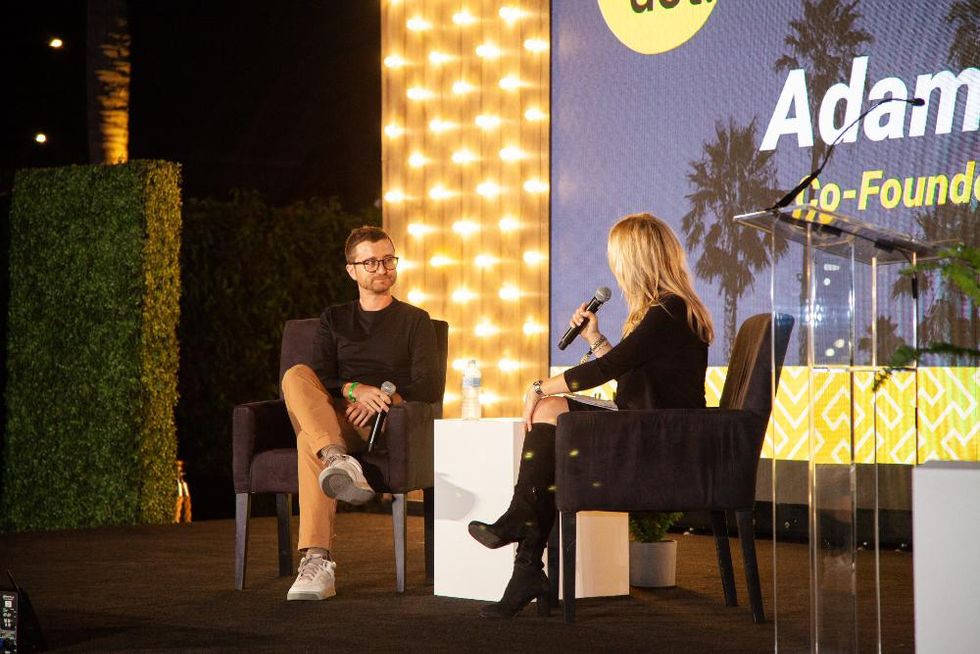
dot.LA Summit: The Concerts of the Future Will Be Hybrid, Says Wave Co-Founder
Joshua Letona

As the pandemic shut down, cancelled and delayed events people had been looking forward to, Wave co-founder and CEO Adam Arrigo saw an opportunity.

His company was founded in 2016 at a time when brands like Oculus and PlayStation were looking to bring virtual reality into the mainstream. Not knowing how ready people would be, Arrigo and his team were conservative with the company's money.

"We basically didn't spend any money because we weren't sure how quickly people were going to strap these things to their heads… And we were kind of right because VR sort of petered out," said Arrigo. Read more >>

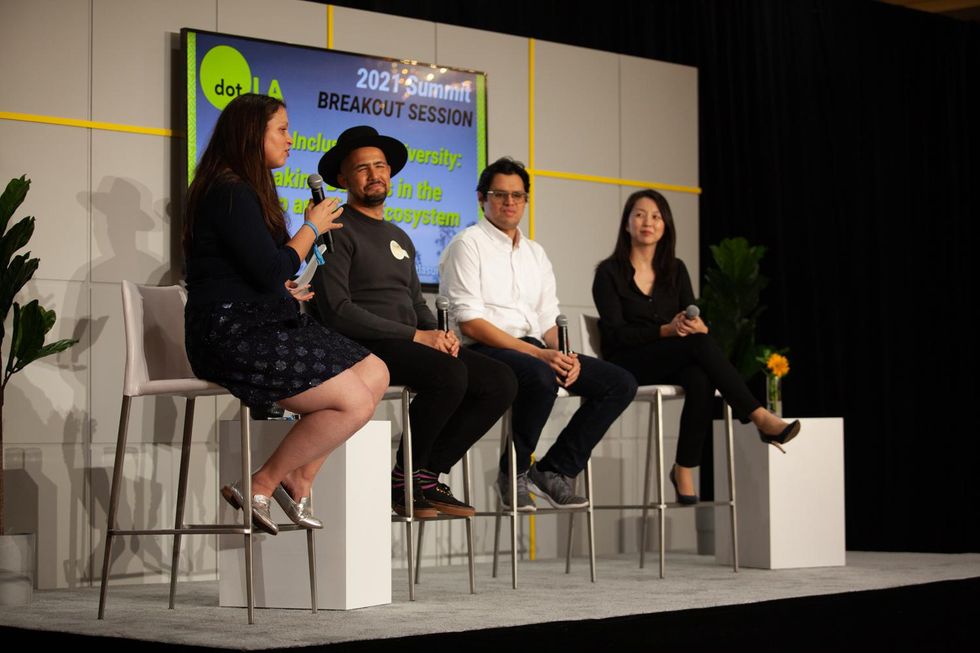
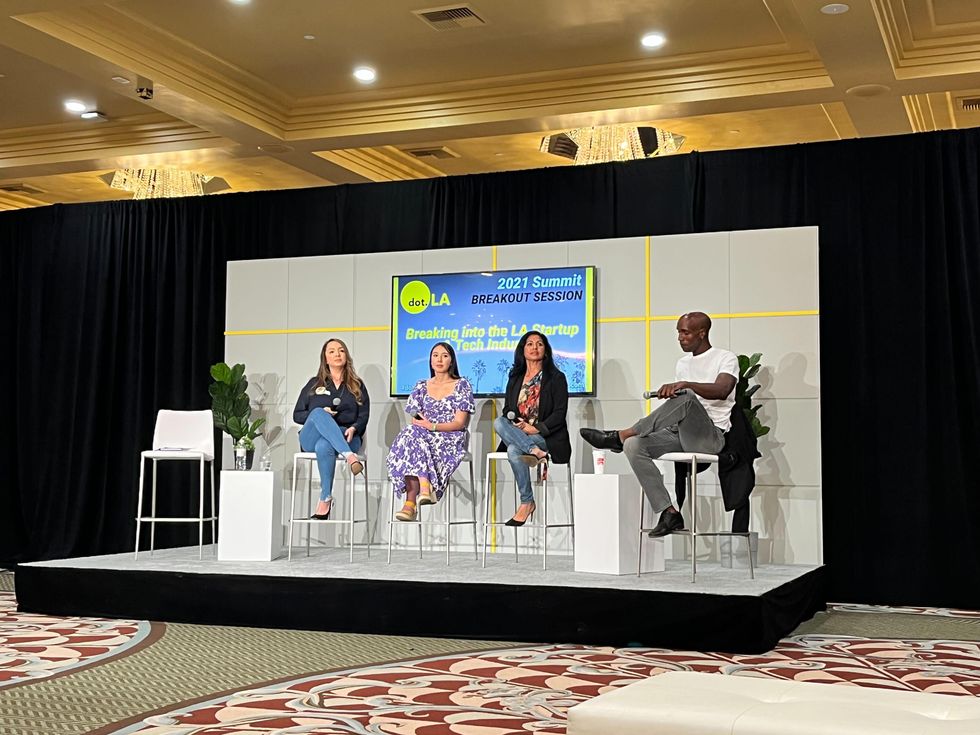
dot.LA Summit: What to Expect When Breaking Into Tech Startups
Decerry Donato

There is no one secret to breaking into the tech industry, but one thing helps, a strong support system of colleagues and believing in yourself.

A group of powerhouse tech veterans talked about the roadblocks faced when starting out. Grace Kangdani, senior vice president market manager at Bank of America moderated a discussion on the pitfalls of coming up in a fast-paced industry. BallerTV Chief Technology Officer Kavodel Ohiomoba, Zella Life CEO Remy Meraz and Supernatural's Vice President of People Operations Lynnette Scarratt and Elisabeth Tuttass, head of community at Grid110 all agreed that there's no one path to success.

Finding success is oftentimes a matter of seeking out the right people to help you.

"At the end of the day people are genuinely wanting to help people," said Meraz who runs the life coaching platform. "And I guarantee you within two degrees of separation, there's a connection and people are really willing to make introductions and help in any way they can."

It's not uncommon for even accomplished people to feel as if they aren't competent. Read more >>

Once a Moonshot, Los Angeles' Venture Scene is Bigger Than Ever
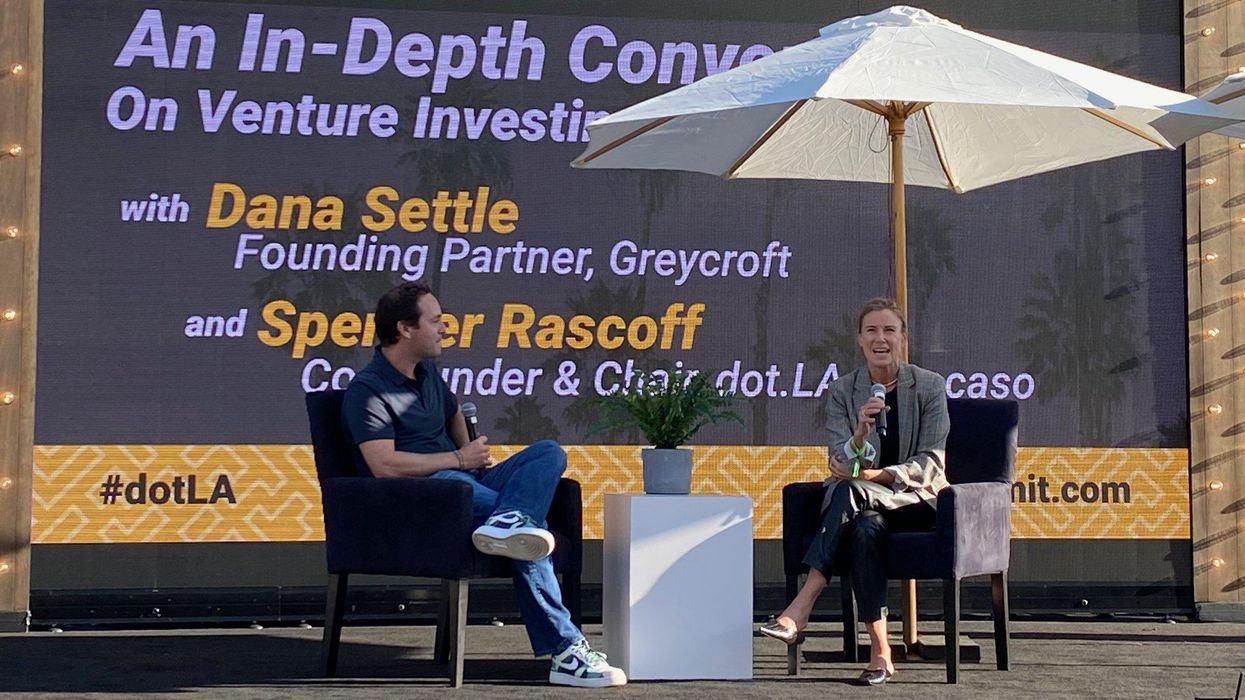
Los Angeles has long taken a back seat to San Francisco when it comes to investing in and incubating local companies, but in recent years the venture capital scene in Silicon Beach has exploded.

Greycroft Partners co-founder and partner Dana Settle told dot.LA co-founder Spencer Rascoff during the second annual dot.LA summit Friday that when she started Greycroft 15 years ago, her fellow investors in Northern California balked at her choice to leave the Bay Area and start investing in what was then a seldom talked-about market: Los Angeles. But since then, Settle's happily proved the haters wrong.

Settle told Rascoff that being an early investor in LA technology wasn't easy, and that over the years she also struggled to raise funding for Greycroft at first, which informs how she advises new companies.

Read more >>

Solving LA's Big Problem: How Metropolis Wants to Change Mobility 

By Ivan Fernandez

Metropolis co-founder Alex Israel has a grand plan to fix L.A.'s infrastructure. It just won't happen overnight.

Speaking to dot.LA co-founder Sam Adams during the "The Future of Urban Mobility" session out closed out dot.LA's summit, Israel described his vision of a complete repurposing of parking spaces and mobility that looks ahead at least 30 years into the future. Electric cars fit into this vision; rideshare companies do, too.

"Parking is the wild, wild west of real estate," said Israel. "It's a component of real estate that represents a large swath of the city that is non-institutionalized."

The startup raised $41 million in Series A financing earlier this year. It has parking garages throughout the U.S., in cities that include Los Angeles and Nashville.

Israel laid out three components that are at the core of Metropolis' work in understanding how to improve and empower the future they hope to create. The first is to understand the inventory of the facility in real time. The second is to have the ability to provision access to that facility in real time. Finally, one must be able to price inventory in real time.

"You have to understand the underlying infrastructure before you can repurpose the infrastructure," said Israel.

In a city as car-dependent as L.A., Israel will certainly have a lot of people rooting for his company's success.

"Getting around L.A. is one of the biggest obstacles to [Los Angeles] being, objectively, one of the nicest places on Earth to be," said Adams.

dot.LA Summit: Women at the Top on How to Expand LA's Tech Scene
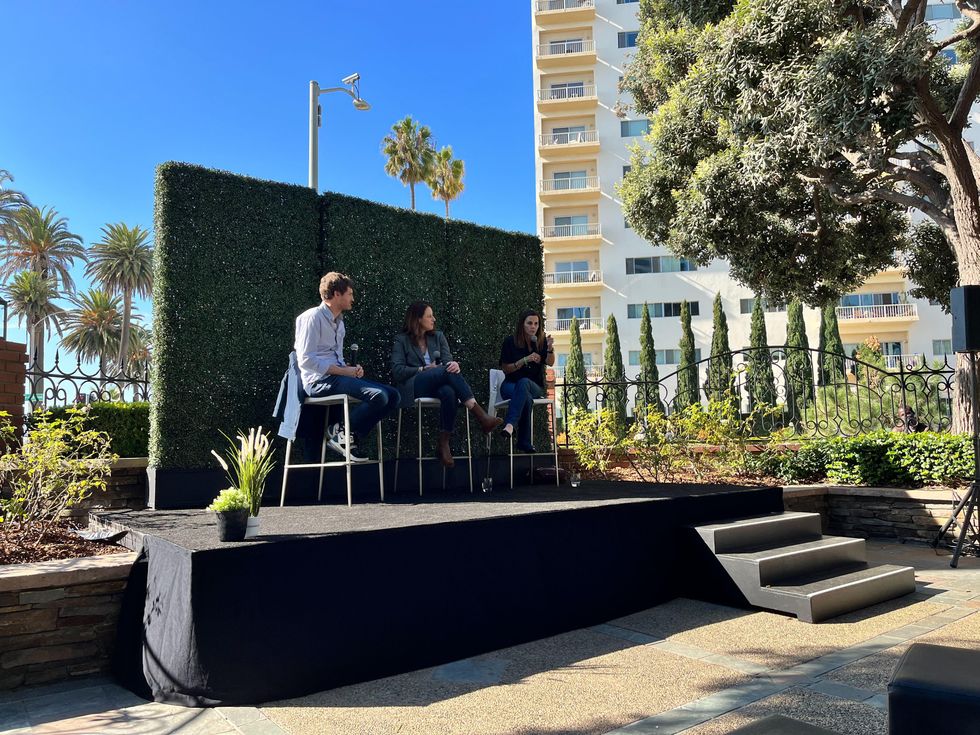
As women in tech and venture, Kara Nortman and Robyn Ward heard a lot of nos when they started out. No we won't fund you. No, we don't have positions.

But, it was the yeses that kept them going.

"We have to expand the tent, we have to figure out how to continue. The tent needs to get bigger every day. If every one of us every day can find one more woman to bring into this tent, in some way it gets bigger and bigger," Nortman said.

Read more >>

dot.LA Summit: Telehealth Changed the Game for Health Care -- for Most
Even before the coronavirus pandemic, telehealth had been lauded as a great equalizer in the health care world.

The benefits were clear: It could help patients avoid travelling long distances and allow those with dependents to seek help without looking for childcare. And for poor neighborhoods and rural areas, where health care options are few and far between, telehealth could send specialists straight to their doors.

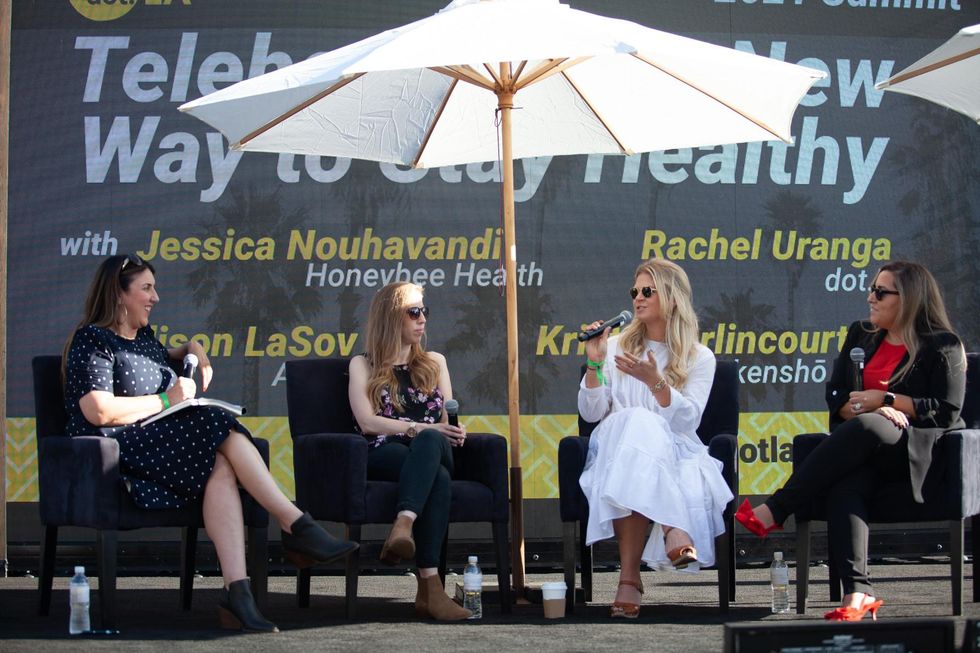
Those advantages have only become obvious during the pandemic, as executives from Honeybee Health, Advekit and Kenshō Health explained during dot.LA's panel "Telehealth: The New Way To Stay Healthy." The conversation was moderated by dot.LA's Rachel Uranga.

Read more >>

Going Beyond Lip Service

Pledges to boost diversity and inclusion are widespread in the tech and startup world, but the industry chronically fails to realize its own goals.

That's no coincidence. The venture capital world, which provides much of the capital fueling fledgling startups, remains a boys club with a bias towards white male founders. And that bias has a ripple effect, warping industry hiring practices and decision making. The problem is repelling workers, too, as post-lockdown resignations skyrocket and companies weigh new policies, such as remote work and hybrid schedules, to retain staffers.

"It's about being able to show up at work as your full self, said Ricardo Vazquez, executive officer at the mayor's Office of Economic Development, in a dot.LA Summit panel on building diversity and inclusion within startups and larger firms.

Read more >>

Pixar-Level Storytelling on Social Media
In just a few weeks, social media users can meet Jennifer Aniston's brand new 3D animated character—and though the avatar is mostly under wraps, word on the street is that it's "very cute." That character comes thanks to a partnership with Invisible Universe, an entertainment technology company partnering with celebrities to capitalize on their unique IP.

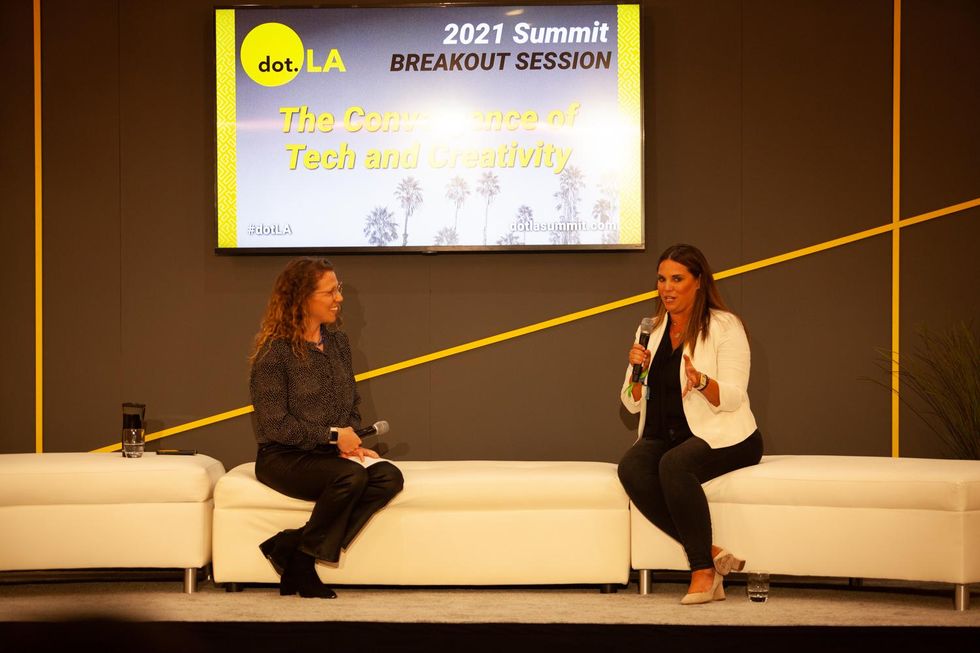
In a conversation with Rachel Horning (CEO of RippleFX Events), Invisible Universe CEO Tricia Biggio described the company as the "Pixar of the internet." The company creates beloved, celebrity-sponsored animated characters who live on social media and interact with fans.

Biggio, who started in television, is passionate about bringing Hollywood quality storytelling and worldbuilding to social media characters:

"We really think about being platform agnostic and story and character obsessed," she said. Pandemic isolation and scrolling was a boon for the company, with ten times the rate of growth on TikTok versus YouTube, Instagram and others.

Read more >>

How the Pandemic Changed Entertainment Tech Forever
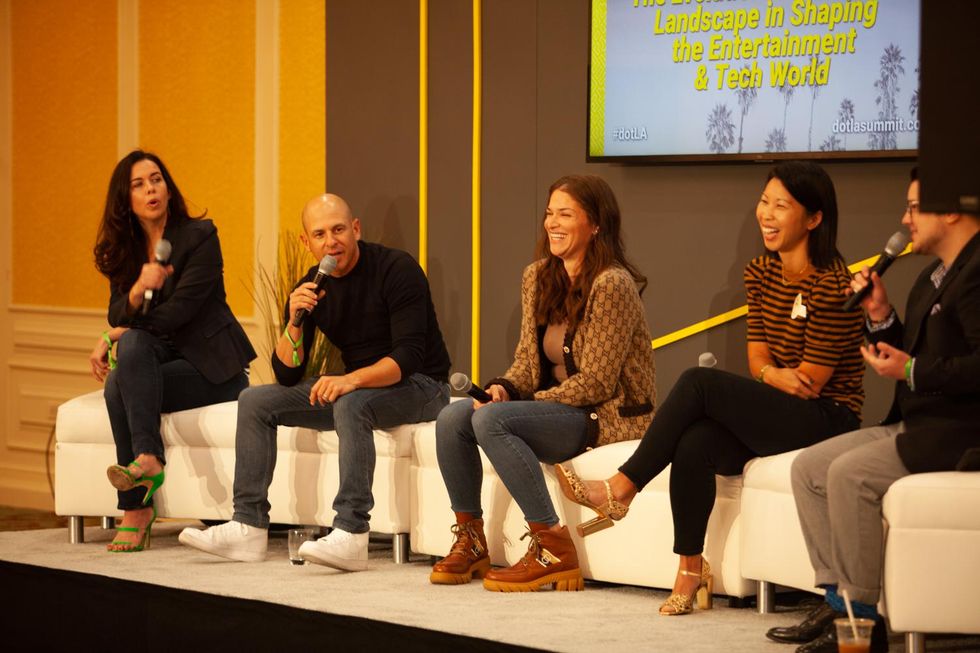
By Ivan Fernandez

Like so many other industries, the world of entertainment went through some radical shifts during the pandemic. And, for the speakers at dot.LA's "The Evolution of the Digital Landscape in Shaping the Entertainment & Tech World" panel, that wasn't always a bad thing.

Take the music sector, for example. When the pandemic put a pause on live concerts—leaving musicians, promoters and stage crews without a main source of income—industry players pivoted to streaming.

"We found other ways to get our clients into people's homes, whether it was through a digital series or just releasing music in a more unconventional manner," said Allison Kaye, president of SB Projects. "Our clients really turned into content creators in a way that they hadn't been before."

"The need for kids content, especially digital-first, escalated tremendously as kids were stuck at home with nothing else to do except hang out on YouTube," added Kerry Tucker, chief marketing and franchise officer at pocket.watch, which works with kid stars/influencers on YouTube. "We actually saw a rise in our constant consumption, and then we also saw a rise in our consumer products."

Many artists, however, needed a helping hand when dabbling into the new digital space. That's where a company like Wave enters the picture. Wave is at the forefront of virtual entertainment, helping artists create virtual—and interactive—performances to livestream to viewers all over the world. "We are in this really cool, exciting space and everyone wants to get in on the action," said Tina Rubin, CMO at Wave. "In terms of the artists we work with, the way I think about it is virtual concept art. It's still evolving. We're still trying to figure out what is the art form and how does it encapsulate various types of performances?"

Technology can also help to strengthen traditional models such as the sale and purchase of a concert ticket. There are many issues that fans and promoters face when purchasing or selling a ticket. Scalpers use bots to scoop up tickets en masse and resell them on a secondary market. There's also the risk that a fan will purchase a fake ticket from a scammer. Tech such as blockchain and crypto can help with these challenges.

"Blockchain technology, crypto technology, can solve that," said Brent Weinstein, chief innovation officer & partner at United Talent Agency. "That's really, really exciting because that is a chance to completely change the nature of how people buy tickets to live events [and] how they relate to artists. That's a real life problem that people have been trying to solve for a long time and I finally have some hope that can be solved."

What It Takes to Transition From Founder to CEO
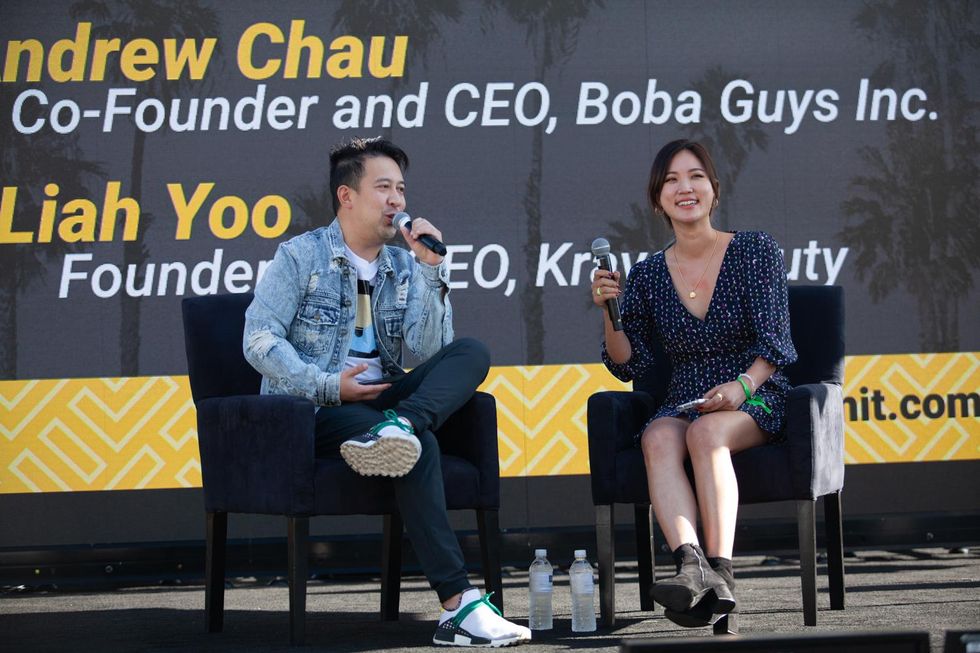
by Michaella Huck

A good founder will have a clear yet flexible vision. The same might be said of a good CEO. Still, there are plenty of differences between the two titles, as the speakers at dot.LA's "From Founder to CEO" discussion made clear.

"To be an entrepreneur you are the tip of the spear," said Boba Guys and Tea People USA founder and CEO Andrew Chau. "You want to be apologetic, you want to be authentic."

Chau chatted with KraveBeauty founder and CEO Liah Yoo about starting their businesses from the ground up. He said that as the company grew, he became much more than "a guy who owns a boba shop"; Yoo said she, too, morphed into something beyond a YouTube influencer.

"I call myself an accidental entrepreneur because I now have a skin care brand. Nowhere in my life did I ever think that I would be starting a company and second running a company," Yoo said.

One might assume a business' creator would spearhead its strategies, but that's often not the case. In fact, in a World Management Survey that looked at 212 startups over a 20-year period, only 50% of founders were still in control of their companies.

For Chau, the key lies in embracing both the micro- and macro-level problems. He said that though he has successfully transitioned into CEO, he sometimes can't help but treat his business like a grassroots operation, picking up trash he finds in front of his Boba Guys storefront in Culver City. Yet he's also often talking business strategies with other entrepreneurs over Zoom.

For Yoo, becoming a CEO was also an exercise in self-acceptance. "You keep comparing yourself to another CEO," she said. "I think the more I did that and then when we got started, I started to trick myself into this vicious cycle of 'I'm not good enough.'"

The Challenge of Finding Male Allies in Tech Circles
by Michaella Huck

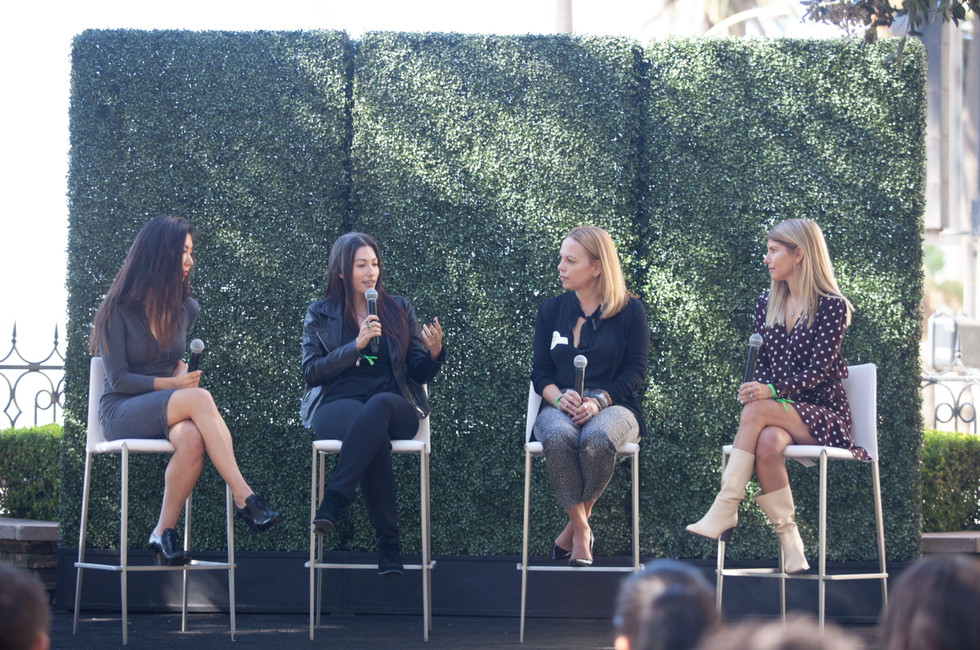
Women-led startups made up just 2.3% of venture capital funding in 2020. In addition, only about 12.4% of decision makers at venture capital firms are women. Though these numbers have increased throughout the years, the industry is still very much a boys' club, and, as the women at dot.LA's "Elevating Your Presence as a Woman in Tech" panel discussed, it can be tough to break through the glass ceiling.

"We are talking into an echo chamber about our problems, so it is also going to require a man to help us change that," said Samantha Ettus, founder and CEO of Park Place Payments.

Ettus was joined by founder and CEO of Makelene, Dulma Altan; co-founder and CEO of Vurbl Media, Audra Gold; and Head of Community at How Women Invest, Sophie Nazerian. Their discussion was centered around how they have managed to navigate leadership and microaggressions from co-workers, all while climbing the corporate ladder as an anomaly in the tech world.

Ettus discussed how she has experienced microaggressions firsthand; she remembered being on a conference call with a bank executive when he mentioned he brought a guest: his daughter. Ettus thought it was sweet until he mentioned he wouldn't have put her on the screen if it were a male CEO because he would not want to be seen as less professional. Ettus reminded him he has the power to change that.

"It's always on our shoulders to speak up or to wrong the right or to have this panel where 90% of the attendees are women," she said.

The panelists also talked about the importance of finding a good work/life balance — something that doesn't always come naturally. "The biggest thing I'm proud of, I've learned that not everything is actually on fire," said Altan. "My ability to discern what actually is from what isn't has increased, and my mental health has stabilized."

dot.LA Summit: How Crypto Is Changing the Creative Industries
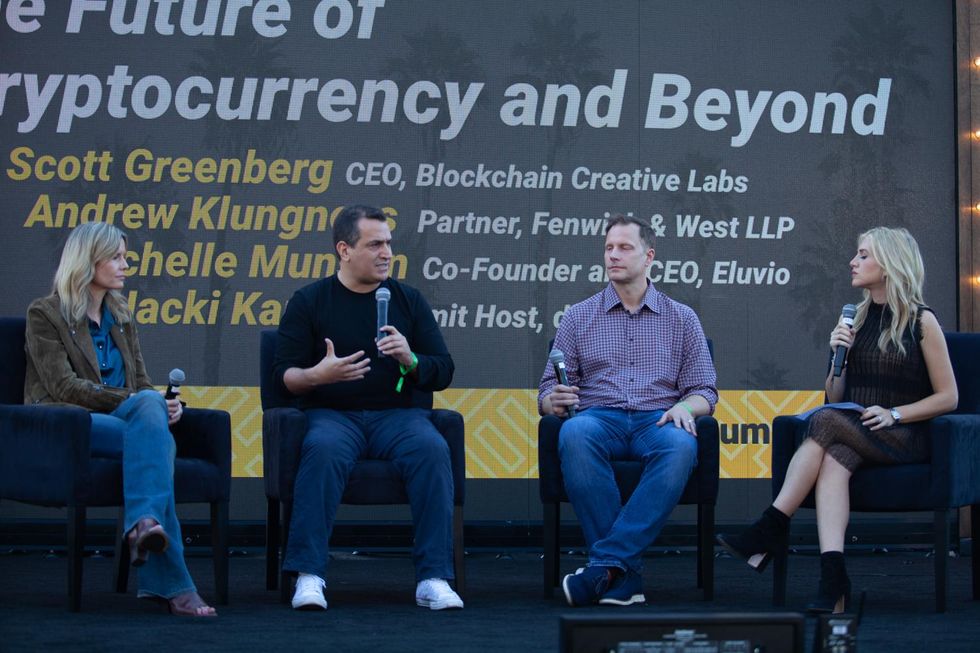
NFTs aren't just remaking investments but they are changing how entertainment is being produced and distributed.

Non fungible tokens were the focus of the panel with Scott Greenberg, CEO of Blockchain Creative Labs; Andrew Klungness, Partner at Fenwick & West LLP; and Michelle Munson, CEO of Eluvio.

"When you own an NFT, you actually own what we call a convertible electronic record on the blockchain. You own a space in a ledger," said Klungness. As an example, it's the difference between owning the record versus owning the commercial rights to the property, like owning a baseball card doesn't give you the right to use that image commercially.

Read more >>

Virtual Influencer Lil' Miquela Will Soon Be Run By Her Community
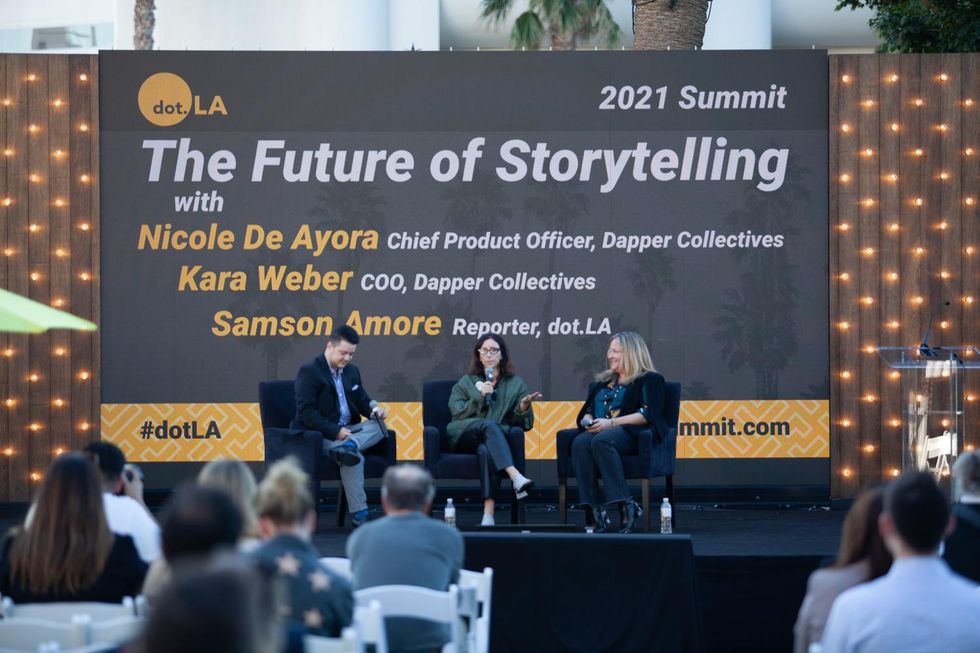
Dapper Labs, the company that helped bring NFTs into the mainstream, is set on decentralization. And it's turning to its signature virtual social media influencer Lil Miquela to drive home the idea, company executives told a crowd at Friday's Future of Storytelling panel at the dot.LA Summit.

The NFT startup behind NBA Top Shot, Dapper Labs clearly sees the value of virtual influencers. Brands are expected to spend about $15 billion on influencer marketing by 2022, according to Business Insider Intelligence. And the company is betting that a rising number of dollars will be spent on virtual influencers who can be fully controlled.

Read more >>

LA Investors on Tech Resilience and the Future of Work

Plenty of tech firms laid off workers as the pandemic took hold, but the industry ultimately raked in record profits as schools and offices spent big on remote tools and lockdowns drove shoppers toward digital services.

But there are challenges ahead for the startup community, like adapting to workers' evolving needs and expectations and building climate change mitigation into investment strategies.

Those were some of the takeaways from dot.LA's Town Hall panel on "rising from the COVID-19 ashes as a thriving startup ecosystem," which also explored how the virus is reshaping work. The talk was moderated by dot.LA CEO Sam Adams and featured Barber, RippleFX Events CEO Rachel Horning, Grid110 CEO Miki Reynolds, M13 partner Anna Barber and Leila Lee, of the mayor's Office of Economic Development.

Read more >>

Everlaunch Wins dot.LA's Startup Pitch Competition

A startup that offers gamified how-to guides for aspiring entrepreneurs was declared the winner of the second annual dot.LA pitch competition on Thursday in Santa Monica.

"My mission is to 'Pinky and the Brain' all of the currently available resources," said Everlaunch CEO Michelle Heng, referring to a cartoon where the main character was obsessed with taking over the world. Heng's service sets out to build a community for entrepreneurs and bring together essential business resources in a single hub.

Read more >>

Jam City's Josh Yguado on How the Blockchain WIll Change Gaming
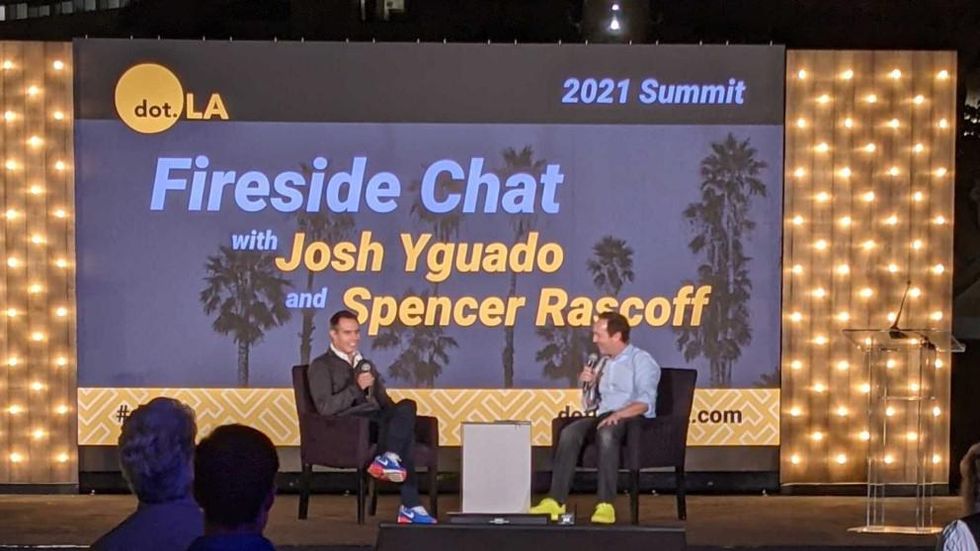
At dot.LA's second annual summit, mobile game publisher Jam City's Chief Operating Officer Josh Yguado said he believes the next generation of mobile gaming will enable users to own parts of their favorite games on the blockchain.

"More than anything we're investing in where gaming is going, so we're making huge investments right now in augmented reality and cryptocurrency," Yguado said during the summit's fireside chat Thursday evening. "We've talked about the metaverse a bit today, but we're really thinking about where gaming is going to be two to three years from now."

Read more >>

What to Expect at This Year's In-Person Summit

dot.LA Summit The Annual dot.LA Summit Kicks Off in Santa Monica

The two-day conference will begin with a pitch showcase competition for early-stage startup companies that have raised less than $1 million in funding. Judges for the event include Boba Guys and Tea People USA co-founder and CEO Andrew Chau, Worklife Venture Capital founder Brianne Kimmel and Plug and Play Ventures Associate Kiswana Browne. The winner will receive a prize package from Fenwick, Coda Search and TriNet.

The pitch competition will be followed by a fireside chat and podcast taping with Jam City co-founder & President Josh Yguado. Jam City isa leader in mobile entertainment and Yguado has proven himself a mastermind behind it, leading the company's operations, growth strategies and game portfolio.

While this event will be in person, the panels will be covered by dot.LA and those interested are still able to register for the conference here. Last year, the event drew over 500 guests virtually. This year's summit expects over 300 in-person guests. There is no livestream this year.

On Friday, the activities will begin at 9 a.m. An L.A. tech and startup town hall will focus on the tech and startup landscape as the effects of COVID-19 retreat. There will also be panels on the future of cryptocurrency and storytelling at this hour.

The afternoon's speakers will include United Talent Agency Chief Innovation Officer Brent Weinstein, BallerTV Chief Technology Officer Kavodel "Kav" Ohiomoba, KraveBeauty founder & CEO Liah Yoo, Makelane founder and CEO Dulma Altan and many other CEOs, technologists, founders and innovators.

Join us here and on Twitter and Instagram for updates from the summit. And let us know your thoughts using the hashtag #DOTLASUMMIT.

This LA Startup Wants Dealers to Fight Over Your Car

🔦 Spotlight

Happy Friday Los Angeles,

Selling a car is one of those modern processes that somehow still feels like it was designed to test your patience.

You can list it yourself and deal with strangers from the internet. You can take the first online offer and wonder if you left money on the table. Or you can walk into a dealership and prepare for the emotional sport of negotiation.

Los Angeles-based Bidbus is trying to make that process feel a little less broken.

The company raised a $15M Series A led by Ibex Investors, with participation from Mucker Capital, FJ Labs, Motley Fool Ventures, Data Point Capital, Walter Ventures and Yossi Levi, better known as the Car Dealership Guy.

Bidbus lets consumers submit their cars and have verified dealerships compete to buy them. Instead of a seller shopping the same car around manually, the platform turns the process into a competitive auction where dealers bid against each other for inventory.

That model is especially interesting right now because used cars remain one of the strangest corners of consumer commerce. The market is huge, the transaction is high-stakes and the average seller still has very little visibility into whether they are getting a fair price.

Bidbus says its marketplace can generate offers that are $2,000 to $3,000 higher than Carvana in some cases. That is the kind of delta that can make people pay attention, especially in a category where convenience often comes at the cost of leverage.

The company is currently focused on California and Texas and plans to use the new funding to expand into more markets. The bigger question is whether it can make dealer competition feel as simple and trustworthy as the instant-offer platforms consumers already know.

For sellers, the pitch is easy to understand: make the dealers fight for your car, not the other way around.More from this week’s LA startup and venture scene below.

🤝 Venture Deals

    LA Companies

    • EdVisorly raised a $13.3M Series A led by Breachway Capital, with participation from U.S. News & World Report, Lumina Foundation, Strada Education Foundation, Motley Fool Ventures, Juvo Ventures and Zeal Capital Partners. The company builds AI-powered software that helps colleges and universities automate admissions, transcript processing, transfer credit evaluation and enrollment workflows, with the new funding going toward product innovation, engineering infrastructure and expanding its student-facing tools. - learn more
    • Savi Security launched its iOS and Android app to help families detect and avoid AI-powered scams and fraud, while also announcing $7M in seed funding led by Acrew Capital. The app uses behavioral AI to screen calls, texts, voicemails and suspicious messages before users engage, with features including text protection, voicemail screening, live call monitoring and a free scam-checking tool called Scamwise. The round also included participation from Magnify Ventures, TTCER and Resolute Ventures. - learn more

    LA Venture Funds
    • UP.Partners co-led Skapion’s $36M seed round alongside Khosla Ventures, with participation from Fusion VC, Stratos Ventures, TBD VC and q Fund. Skapion is developing a counter-drone swarm defense system designed to address large-scale UAV attacks involving dozens or hundreds of drones operating at once. The company was founded in late 2025, has R&D operations in Ramat Gan and a headquarters in Washington, D.C., and plans to use the funding to expand engineering, system development, integration, testing and work with defense and government customers. - learn more
    • Trousdale Ventures participated in Venus Aerospace’s $91M Series B, which was led by Mercury Fund with backing from investors including Lockheed Martin Ventures. Houston-based Venus Aerospace is scaling its rotating detonation rocket engine technology after completing a U.S. flight test in 2025, with potential applications across hypersonic aircraft, defense systems, orbital vehicles and space propulsion. The funding will help move the company’s engine technology from prototype toward production. - learn more
    • B Capital led Kaon AI’s Series B, backing the company’s push to build an AI-native content engine for brands and creators. Kaon AI is developing tools that combine deep computer science with mainstream culture, helping teams generate, personalize and distribute content for the generative AI era. The company plans to use the new funding to expand its platform, grow its team and support broader adoption across enterprise and creative customers. - learn more
    • Ulysses Capital participated in Pearl Health’s $110M capital raise, which included a $50M equity round led by Andreessen Horowitz and a $60M debt facility led by Trinity Capital. Pearl Health builds AI-powered technology for Medicare-focused providers, helping care teams manage risk, predict patient needs and automate workflows across value-based care. The company supports more than 10,000 providers across over 40 states and plans to use the new capital to expand its AI platform, Medicare Advantage offerings and provider partnerships. - learn more
    • WndrCo co-led Wonderdog’s $5M pre-seed round alongside Maveron, with participation from Cultivate Next, Mars Petcare’s early-stage investment program. Hermosa Beach-based Wonderdog is building an AI-powered preventive health platform for dogs, using microbiome, blood and genetic testing to help identify health risks earlier and recommend personalized diet, supplement and care plans. The company plans to use the funding to scale its diagnostics platform, expand its AI tools and grow into new markets. - learn more
    • GordonMD Global Investments co-led Cyllene Therapeutics’ €33M Series C alongside M Ventures, with participation from existing investors including Andera Partners, Bpifrance’s InnoBio 3 Fund and Lamond Ventures. Paris-based Cyllene, formerly known as EG 427, is developing precision genetic medicines using its non-replicating HSV-1 HERMES platform, with the funding going toward continued clinical development of EG110A for neuro-urology indications and broader pipeline expansion. The company plans to initiate a Phase 2b/3 study for EG110A in 2027. - learn more
    • Bonfire Ventures led Katalyze AI’s $10.5M seed round, with participation from Inovia Capital, Ripple Ventures, Alumni Ventures and angel investors including Gokul Rajaram and Farzad Soleimani. San Francisco-based Katalyze is building an agentic operating system for pharmaceutical companies, helping scientists, engineers and analysts deploy AI agents across scientific, engineering and manufacturing workflows. The company says its platform is already used by five of the 20 largest global pharma companies. - learn more
    • Strong Ventures participated in Studio Kiko’s undisclosed Pre-A round for NearDoc, alongside Smilegate Investment and Korea Investment Accelerator. NearDoc is an AI medical charting service that listens to doctor-patient conversations in real time and automatically generates completed SOAP notes for EMR systems, helping reduce physicians’ documentation burden. The company says NearDoc was adopted by more than 300 clinics and hospitals within two months of launch and plans to use the funding to recruit talent, advance the product into a clinical decision support system and expand into non-English-speaking Asian markets. - learn more
    • Foxhog Ventures invested $1.34M in FundingBazar.com, a fintech platform building a digital marketplace to help startups, SMEs and businesses access capital. Currently in beta, FundingBazar.com plans to connect companies with investors through both equity funding and revenue-based financing, while adding tools for investor discovery, digital documentation, due diligence and founder-investor communication. - learn more
    • March Capital participated in Together AI’s $800M Series C, alongside investors including Aramco Ventures, NVIDIA, Vista Equity, General Catalyst, Emergence Capital, SE Ventures, Pegatron, Salesforce Ventures, DTCP Growth, Lux Capital, Geodesic and others. Together AI provides infrastructure for open-source and custom AI, spanning inference, training, fine-tuning, GPU clusters and accelerated compute for companies building production AI applications. The company also secured commitments for more than 500 MW of compute capacity to support future growth. - learn more
    • Wavemaker360 Health co-led Materna Medical’s $5M B3 financing alongside InnovaHealth Partners and Band of Angels, with continued support from existing investors. Mountain View-based Materna is developing women’s pelvic health products, including Milli, an FDA-cleared vaginal dilator, and Ellora, an investigational obstetrical system designed to reduce pelvic floor muscle injury during vaginal delivery. The funding will support Materna’s EASE pivotal trial readout, Ellora launch preparations, market access work and commercial manufacturing capabilities. - learn more
    • CIV participated in 1001’s $30M Series A, which was led by Lux Capital with participation from Sanabil Investments, 9Yards, Hanabi and existing backers including General Catalyst. Dubai- and London-based 1001 is building sovereign AI operating systems for critical infrastructure sectors such as aviation, ports, logistics, energy and industrial operations, helping operators automate decisions while keeping AI systems locally owned and governed. The company plans to use the funding to expand engineering and go-to-market teams across key GCC markets. - learn more
    • Fifth Wall participated in Higharc’s $95M Series C, which was led by Insight Partners with additional backing from Wellington Management and existing investors including Spark Capital, Lux Capital, SE Ventures, Simpson Strong-Tie, PSP Partners, RXR Arden Digital Ventures, Suffolk Technologies, Vertex Ventures, NC Tweener Fund and MetaProp. Higharc builds AI software for homebuilding, generating homes as 3D spatial data so builders and suppliers can better manage design, estimating, sales and construction workflows. The new funding brings Higharc’s total raised to more than $170M and will support AI product development and expansion into building materials supply chain workflows through a new partnership with US LBM. - learn more
    • StoryHouse Ventures is an existing investor in PvX Partners, which secured a new $5M equity investment from MIT to expand its user acquisition financing platform for consumer apps and mobile games. Singapore-based PvX uses its machine learning system, PvX Lambda, to evaluate marketing and performance data before underwriting user acquisition campaigns, giving app companies an alternative to traditional venture capital or lending. The company has now surpassed $750M in committed user acquisition financing. - learn more
    • WndrCo participated in 8090 Labs’ $135M Series A, which was led by Salesforce Ventures with additional backing from Craft Ventures, The Production Board and Launch. Founded by Chamath Palihapitiya, 8090 Labs is building Software Factory, an AI coding agent designed for enterprise engineering teams that need production-quality software, audit trails and controls rather than quick prototypes. Palihapitiya is also stepping in as CEO. - learn more
    • Multiball Capital participated in Nebex’s $30M seed round, which was led by GV, as the company builds market infrastructure for the global space economy. Nebex connects sovereign space programs with the founders and companies building space technologies, while also announcing a banking relationship with J.P. Morgan to support revenue, cash flow and transaction infrastructure for space-sector deals. The company was founded by former Axiom Space executives and entrepreneurs Tejpaul Bhatia and Anand Subramanian. - learn more

    LA Exits

    • Versed, the clean skincare and makeup brand founded by Katherine Power, was acquired by Belle Brands, a platform company formed by consumer-focused private investment firm Windsong Global. Versed will join JVN Hair, Pipette and KVD Beauty under Belle Brands, with CEO Andy Chiu supporting the transition. Terms of the transaction were not disclosed. - learn more

      Download the dot.LA App

      Not Every Robot Wants Your Job

      🔦 Spotlight

      Happy Friday Los Angeles,

      When people talk about the robotics boom, the conversation usually turns to warehouses, defense, humanoids or automation.

      But one Los Angeles company is building a very different kind of robot.

      Tombot, a local companion robotics startup, closed a $7 million Series A3 round with participation from Caduceus Capital Partners, Wavemaker 360, the Lutheran Foundation for Long Term Living and Florida Community Health Network to scale production of Jennie, its robotic companion dog. The product is designed for older adults, people with dementia, children with autism and others who may benefit from the emotional comfort of a pet but cannot safely or practically care for a real animal.

      It is a quieter kind of robotics story, but a revealing one.

      The most common vision of the robotics future is built around productivity: robots that move boxes, patrol borders, assemble parts or perform repetitive tasks. Tombot is aiming at something more personal. Its bet is that robots will not only help people work faster, but also help them feel less alone.

      That makes the company part of a broader shift in robotics, where the question is not just “What can a machine do?” but “What role can it play in someone’s daily life?”

      The need is real. Aging populations, caregiver shortages and rising demand for dementia care are putting pressure on families and health systems. At the same time, many people who would benefit from animal companionship cannot manage feeding, walking, grooming, vet bills or the safety risks that come with a live pet.

      Image Source: Tombot

      Tombot’s answer is a robotic dog that behaves like a companion, not a gadget. Jennie is designed to respond to touch, voice and interaction, giving users some of the emotional benefits of pet ownership without the responsibilities of caring for a living animal.

      Southern California’s robotics scene is often viewed through the lens of defense, drones, aerospace and manufacturing. Those categories are important. But LA also has deep advantages in design, storytelling, entertainment, consumer products and human-centered technology. A companion robot sits at the intersection of all of those things.

      It has to work technically. But it also has to feel right. The movement, expression, texture and emotional cues matter. This is where robotics starts to look less like pure engineering and more like product design, character development and trust-building.

      The broader robotics market is still difficult. Hardware is expensive. Manufacturing is hard. Consumer expectations are high. And companion robots have historically been a tricky category, with plenty of hype and uneven adoption.

      But Tombot’s traction suggests there may be real demand for robots that solve emotional and caregiving problems, not just operational ones. The company says it has built a large waitlist as it moves toward commercialization, giving it a chance to test whether companion robotics can move from novelty to necessity.

      The bigger takeaway is that LA’s robotics future may not fit into one box.

      Some companies will build for the battlefield. Some will build for factories. Some will build for space. And some, like Tombot, will build for the living room, the care facility and the family trying to support someone they love.

      The robotics boom is often framed as a story about replacing human labor.

      This one is about supporting human care.

      More from this week’s LA startup and venture scene below.

      🤝 Venture Deals

        LA Companies

        • Cosm received a $100M strategic investment from Sony Pictures Entertainment, with Sony taking a minority stake as the lead investor in Cosm’s Series C financing round. Cosm operates immersive “Shared Reality” venues that use dome-shaped LED screens for live sports, concerts and entertainment experiences, and the funding will support venue expansion and new technology initiatives across sports and entertainment. Sony Pictures CEO Ravi Ahuja will join Cosm’s board as part of the deal. - learn more
        • Pasadena-based Sophia Space finalized a $7M SAFE financing round, bringing its total funding to $22M. The round included participation from EverGreen, The NVIDIA Alumni Investment Network, SparkLabs Group and other strategic investors, with the new capital going toward product development, engineering and commercial hiring, partnerships and deployment across government, commercial and international markets. Sophia Space is building AI-powered infrastructure and intelligent systems for the space economy, including autonomous computing capabilities for orbital and terrestrial environments. - learn more

        LA Venture Funds
        • Sound Ventures participated in Warp’s $60M Series B, which was led by Battery Ventures with additional backing from Peak XV and Y Combinator. Warp is building an AI-native employee management platform for payroll, benefits, compliance, onboarding, offboarding and workforce operations, with the new funding bringing its total raised to $85M. The company says the capital will support deeper AI agents, expanded tax and compliance infrastructure, a broader product suite and more customer support. - learn more
        • Mucker Capital participated in Zave’s ₹4.7 crore bridge round, which was led by Inflection Point Ventures. Zave is building an AI-native shopping assistant that helps consumers discover products, compare prices and make purchase decisions across Amazon, Flipkart and more than 5,000 brand websites. The company plans to use the funding to strengthen its AI product, improve platform reliability and scalability, and support continued user growth. - learn more
        • B Capital co-led Seltz’s $12.5M seed round alongside Speedinvest, with participation from Future Present, Italian Founders Fund, Arc Investors, United Ventures, Vento Ventures, Mango Capital, 2100 Ventures and Future Back Ventures. Seltz is building web search infrastructure for AI agents, designed for the way agents query the internet: running long, parallel searches, pulling full documents and accessing live web context. The company plans to use the funding to scale its index to tens of billions of documents and build out engineering, sales and marketing. - learn more
        • Clocktower Technology Ventures participated in Caplight’s $16M Series A, which was led by BlackRock and Fin Capital, with strategic participation from UBS Investment Bank. San Francisco-based Caplight is building data, trading and workflow infrastructure for private markets, including secondary market pricing, institutional trading, company and investor intelligence, and AI-powered venture deal sourcing. The company says the new funding will help expand its role in rebuilding the rails for venture capital as private markets become larger, more liquid and more complex. - learn more
        • MaC Venture Capital participated in Coval’s $28M Series A, which was led by Norwest with backing from Base10 Partners, Twilio Ventures, Y Combinator and others. San Francisco-based Coval builds simulation, evaluation and monitoring infrastructure for voice and chat AI agents, helping enterprises test and improve autonomous agents before and after deployment. The company works with more than 60 organizations, including Zoom and Deepgram. - learn more
        • B Capital participated in Cadence’s $100M Series C, which was led by Spark Capital with additional backing from Thrive Capital, General Catalyst, Coatue, Corewell Health Ventures, Memorial Hermann and Duke Health. Cadence is a clinical AI company automating chronic care for older adults through supervised AI agents that monitor patient vitals, surface risks and coordinate care between visits. The company now works with more than 20 health systems, treats over 100,000 active patients and will use the funding to expand across new health systems, advance its AI agents and grow value-based care models. - learn more
        • WndrCo participated in Partly’s $50M Series B, which was led by DST Global Partners. Partly is building AI-powered infrastructure for the auto repair industry, helping repairers, insurers and parts suppliers identify and source the right vehicle parts as cars become more complex. The new funding will support Partly’s push to bring frontier AI into repair workflows and reduce friction across the global replacement parts market. - learn more
        • Döpfner Capital participated in Stark Defence’s €500M funding round, which was backed by major investors including Sequoia Capital and Founders Fund and valued the German drone company at roughly €3.2B to €3.5B. Stark develops unmanned defense systems, including loitering munitions, and plans to use the funding to expand R&D and manufacturing capacity across Europe. The raise comes as European defense tech continues attracting significant investor interest amid rising military spending and demand for autonomous systems. - learn more
        • Smash Capital led Redo’s $81M Series B, with participation from existing investors Pelion Venture Partners and Cervin Ventures, valuing the commerce technology company at a reported $1.25B. Draper, Utah-based Redo started in returns and exchanges but has expanded into a broader post-purchase and AI-powered commerce platform covering order tracking, package protection, fulfillment, customer service, marketing and shopper engagement. The funding will support product development, AI initiatives and international expansion. - learn more
        • Wavemaker 360 Health participated in ChemT Biotechnology’s $4M seed round, which was led by Wavemaker Ventures with participation from co-investment partner SEEDS. Singapore-based ChemT has raised $5M total in 18 months and is building AI infrastructure for biomanufacturing, including its CelMo virtual cell platform, which helps manufacturers model and guide cell behavior to improve biologics production, scalability and cost. The funding will support expansion of ChemT’s AI and experimental infrastructure, advancement of its molecular products toward GMP standards and broader commercial partnerships. - learn more

        LA Exits

        • The New Bar, a Venice-born non-alcoholic beverage discovery platform, was acquired by The Zero Proof. The deal combines The New Bar’s hospitality, live events and cultural partnerships with The Zero Proof’s national e-commerce, owned brand portfolio and retail distribution platform. The New Bar’s leadership will join The Zero Proof, with founder Brianda Gonzalez becoming Vice President of Strategy and Partnerships. - learn more

          Download the dot.LA App

          Snap May Have Finally Found AR’s Moment

          🔦 Spotlight

          Hello Los Angeles,

          Snap has spent years trying to make augmented reality feel less like a demo and more like a daily habit. This week, it introduced its latest attempt.

          At Augmented World Expo, Santa Monica-based Snap unveiled SPECS, its new standalone augmented reality glasses. The device is designed to bring AI assistance, work tools, entertainment and shared experiences into the physical world without requiring a phone, puck or tether.

          The pitch is not simply “screens on your face.” Snap is trying to position SPECS as a different kind of computer: one that can understand what you are looking at, respond to your surroundings and make AI useful in the moment. That could mean directions placed where you need them, a virtual workspace that travels with you or AI assistance that sees the same context you do.

          The developer piece may be just as important as the hardware. Snap says developers have already built hundreds of Lenses for SPECS, and the company is rolling out new tools inside Lens Studio, including agentic development support through Claude Code, Codex and Cursor, a new Native Development Kit and a spatial benchmark for AR experiences.

          That matters because AR has always had a chicken-and-egg problem: impressive demos, but not enough everyday reasons to wear the device. Snap is trying to solve that by building not only the glasses, but the software, developer tools, operating system, computer vision stack and creative ecosystem around them.

          Specs

          SPECS are available for pre-order at $2,195, with a $200 refundable deposit, and are expected to ship this fall in the U.S., U.K. and France.

          For Snap, the bigger question is whether augmented reality can finally move from developer demos and futuristic keynote moments into something people actually want to use. SPECS are its latest answer, but the real test will be whether developers can build experiences useful enough to make the glasses feel less like a gadget and more like a habit.

          More from this week’s LA startup and venture scene below.

          🤝 Venture Deals

            LA Companies

            • Critical Energy raised $19M in seed funding co-led by Upfront Ventures and Susa Ventures, and also secured $3M in venture debt from Silicon Valley Bank, bringing its total early capital to $22M. Founded by SpaceX alum Spencer Jackson, the company is adapting rocket-engine-style turbomachinery for modular geothermal power plants and plans to use the funding to build its first 2.5 MW project. - learn more

            LA Venture Funds
            • Group 11 co-led Dream’s $260M funding round alongside Bicycle Capital, with participation from Antler, Bain Capital Ventures, Tru Arrow Partners and other investors. Dream builds sovereign AI and cyber defense technology for governments and critical infrastructure operators, with the new funding valuing the company at $3B and bringing total funding to $412M. The company plans to use the capital to expand its national cyber defense and AI platforms across Europe, the Middle East, Asia and the Americas. - learn more
            • Undeterred Ventures participated in Portal Biotechnologies’ oversubscribed $9M financing round, which was led by NFX with backing from existing investors including IA Ventures, Pear VC, IKJ Capital and TechU Ventures. Watertown-based Portal is building cell engineering infrastructure for drug discovery, AI data generation and cell therapy manufacturing, using its mechanoporation platform to deliver RNA, gene editors and other molecules into hard-to-transfect cells. The company also expanded its DARPA work through an Embedded Entrepreneur Initiative contract tied to point-of-care cell therapy manufacturing and says its platform has been adopted by more than 100 customer sites. - learn more
            • Clocktower Ventures participated in Trace Finance’s $32M Series A, which was led by CoinFund with backing from Coinbase Ventures, Haun Ventures, Jump Crypto, Valor Capital, Paxos, HOF Capital and others. Trace Finance is building regulated banking and stablecoin infrastructure for cross-border payments across Brazil, the U.S. and emerging markets, combining local payment rails, FX, compliance operations and stablecoin settlement. The company has processed more than $10B in institutional cross-border volume and will use the funding to expand product capabilities and grow across LatAm, APAC and other priority markets. - learn more
            • Alexandria Venture Investments participated in Vedana Therapeutics’ $46M Series A, which was co-led by Westlake BioPartners and Canaan Partners, with additional participation from Dawn Biopharma. Seattle-based Vedana is developing next-generation preventive migraine therapies, including antibody-based treatments targeting PACAP and CGRP pathways, with the funding going toward advancing its internally discovered portfolio of subcutaneously delivered antibodies. - learn more
            • Fulcrum Capital participated in HighGround’s $6.5M seed round, which was led by Next Frontier Capital with additional backing from Tandem Ventures and Context Ventures. HighGround is building an intelligence platform for defense and aerospace capital markets, helping investors, operators and advisors analyze government spending, procurement signals, deal risks and market demand. The funding will support expanded data coverage and deeper analytical models for defense-focused investment and business development workflows. - learn more
            • Bonfire Ventures participated in Vali Health’s $6M funding round, alongside Supernode, Comma Capital and healthcare industry veteran Jacquelyn Kung. San Francisco-based Vali Health is building responsible AI infrastructure for healthcare, helping providers and health systems evaluate, monitor and safely deploy AI tools across clinical and administrative workflows. - learn more
            • Clocktower Ventures participated in Karta’s $15M Series A, which was led by Galaxy Ventures, with additional backing from Canary and Illuminate Financial. Miami-based Karta is building a WhatsApp-first premium U.S. credit card for non-U.S. clients, helping global travelers with U.S. bank or brokerage accounts access dollar-denominated spending power without needing a traditional U.S. credit history. The company also secured a $125M credit facility from Community Investment Management, bringing its total new financing to $140M. - learn more
            • Alexandria Venture Investments participated in Triveni Bio’s $65M Series C, which was co-led by Ascenta Capital and Janus Henderson Investors, with significant participation from Deep Track Capital. Watertown-based Triveni is developing antibody treatments for immunological and inflammatory disorders, with the funding going toward expanding clinical development of TRIV-573, its bispecific antibody targeting atopic dermatitis, including a larger Phase 2 proof-of-concept study expected to begin later this year. - learn more
            • WndrCo participated in XDOF’s $70M funding round, alongside investors including Thrive Capital, Spark Capital, a16z and Lux Capital. XDOF is building robotics data infrastructure for AI labs, handling the unglamorous but critical work of collecting, labeling and organizing real-world robot training data. The company says it already works with about 20 customers, including several frontier AI labs. - learn more
            • Fika Ventures participated in SubBase’s $7M Series A, which was led by FINTOP and brings the company’s total funding to more than $15M. Ft. Lauderdale-based SubBase is a construction materials procurement platform that helps specialty trade contractors and self-performing general contractors manage pricing requests, orders, supplier communication, delivery tracking and invoice reconciliation in one system. The company plans to use the funding to expand product and engineering, deepen supplier integrations and build more AI-driven workflow and intelligence features. - learn more
            • Upfront Ventures participated in Bland’s $50M Series C, which was led by Dell Technologies Capital with additional participation from HubSpot Ventures, Archerman Capital and Tribeca Venture Partners. San Francisco-based Bland builds voice AI agents for complex phone, SMS and chat conversations, with a focus on longer, high-stakes workflows in regulated industries like healthcare and financial services. The round brings Bland’s total funding to more than $100M. - learn more
            • Impatient Ventures participated in Traysar’s $25M seed round, which was led by Silent Ventures and included backing from Lux Capital, Ora Global, NeverLift VC, Mana, New Vista, Entree Capital and angel investors. Traysar emerged from stealth at the 2026 Reindustrialize Summit as a subterranean defense tech company building autonomous “subterra” platforms designed to detect, penetrate and secure underground environments. The company says its technology is aimed at addressing underground military facilities and other hard-to-reach subsurface domains. - learn more
            • MaC Venture Capital participated in Swsh’s $4M seed round, which was led by Game Changers Ventures with additional backing from Stellation Capital, SignalFire and angel investors including Scooter Braun and Guy Oseary. Swsh is building an AI-powered fan engagement platform for live events, helping artists, teams and brands organize fan-captured photos and videos while turning that content into audience insights and first-party engagement data. - learn more
            • B Capital led SolarSquare Energy’s $53M Series C, backing the Mumbai-based residential rooftop solar company as investor interest grows in India’s home solar market. The round valued SolarSquare at roughly $450M–$500M and included participation from existing investors including Lightspeed, Lowercarbon Capital, Rainmatter by Zerodha and Good Capital. SolarSquare plans to use the funding to expand into new cities, strengthen its technology platform and scale operations. - learn more

            LA Exits

            • Mavida Health, a digital mental health company focused on women and families, was acquired by WPS Health Solutions. The deal expands WPS’ digital health capabilities with Mavida’s virtual therapy, medication management and specialized mental health support across fertility, pregnancy, postpartum, loss, parenting and menopause. Financial terms were not disclosed. - learn more
            • Vica, an AI video startup focused on helping small businesses create cinematic-quality marketing content, was acquired by Addi. The acquisition brings Vica’s AI video capabilities into Addi’s growth platform for Main Street businesses, which combines financial intelligence with marketing tools to help small businesses attract and retain customers. - learn more
            • GateMaker, a female-founded influencer marketing agency, was added to Residence, the Los Angeles-based global network of independent creative companies. The deal brings GateMaker’s creator economy expertise across paid, earned and owned influencer relationships into Residence’s broader creative network, which also includes companies like BUCK, OK COOL, Giant Ant, Part & Sum and Wild. - learn more
            • Gavel, an AI-native legal tech company used by legal professionals to draft, review and automate legal work in Microsoft Word and on the web, was acquired by Relativity. The deal will bring Gavel’s drafting, redlining and document automation tools into Relativity’s legal data intelligence platform, allowing work product created in RelativityOne and Relativity aiR to be edited in Microsoft Word while syncing back to the underlying matter data. Financial terms were not disclosed. - learn more

              Download the dot.LA App

              RELATEDEDITOR'S PICKS
              Trending