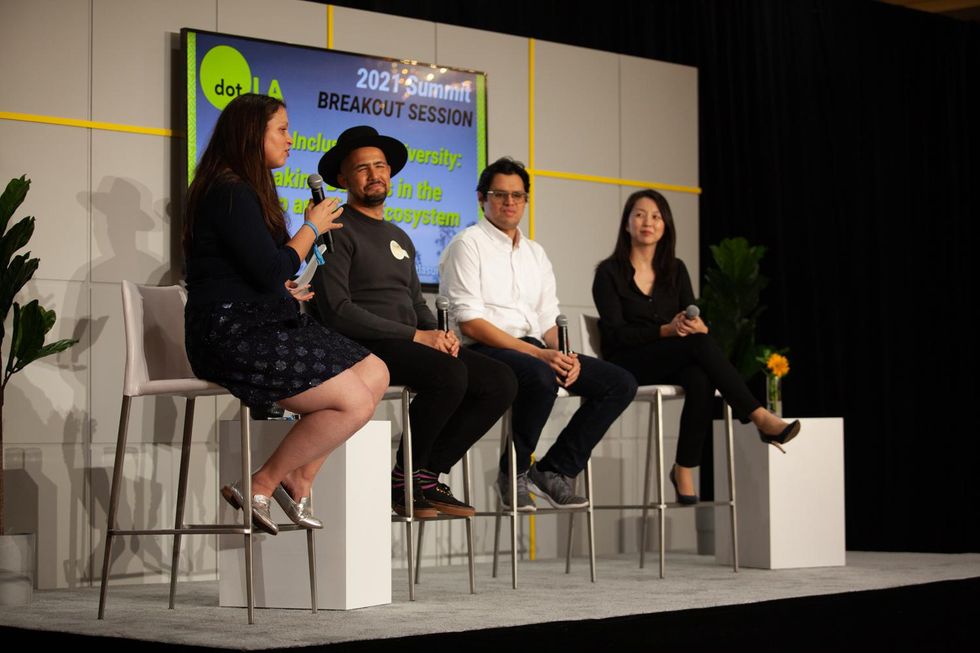


dot.LA Summit: Grid110 Wins Social Justice Award

dot.LA Summit: Grid110 Wins Social Justice Award

dot.La kicked off its inaugural in-person summit on Oct. 28-29 at the Fairmont Miramar hotel in Santa Monica. This year's summit features over 45 speakers covering cryptocurrency, telehealth, urban mobility and women in tech, among others. You can find a full schedule of this year's summit here and read the recap below!

Updates:


dot.LA Summit: As Attitudes Shift Around Drugs and Mental Health, ‘It’s Time’ for Psychedelic Therapies

Keerthi Vedantam

Fifty years after President Nixon announced the war on drugs, changing cultural attitudes around psychedelics have led to a slew of decriminalization and legalization efforts across the U.S. The Food and Drug Administration is now reviewing psychedelic-based drug, a sea change from just a few years ago.

Mike Dow from Field Trip Health, one of the many companies testing psychedelic-based drugs, and cannabis company Kurvana CEO Mehran Moghaddam believe that this shift will change the course of mental health treatment as the drugs become more accepted for medicinal use.

Canada-based Field Trip Health has clinics around the world, including Santa Monica, where therapists perform ketamine-assisted psychotherapy. Ketamine, once known as a rave drug, has long been studied for its correlation with positive mental health outcomes in patients who use it. Read more >>

dot.LA Summit: The Concerts of the Future Will Be Hybrid, Says Wave Co-Founder

Joshua Letona

As the pandemic shut down, cancelled and delayed events people had been looking forward to, Wave co-founder and CEO Adam Arrigo saw an opportunity.

His company was founded in 2016 at a time when brands like Oculus and PlayStation were looking to bring virtual reality into the mainstream. Not knowing how ready people would be, Arrigo and his team were conservative with the company's money.

"We basically didn't spend any money because we weren't sure how quickly people were going to strap these things to their heads… And we were kind of right because VR sort of petered out," said Arrigo. Read more >>

dot.LA Summit: What to Expect When Breaking Into Tech Startups
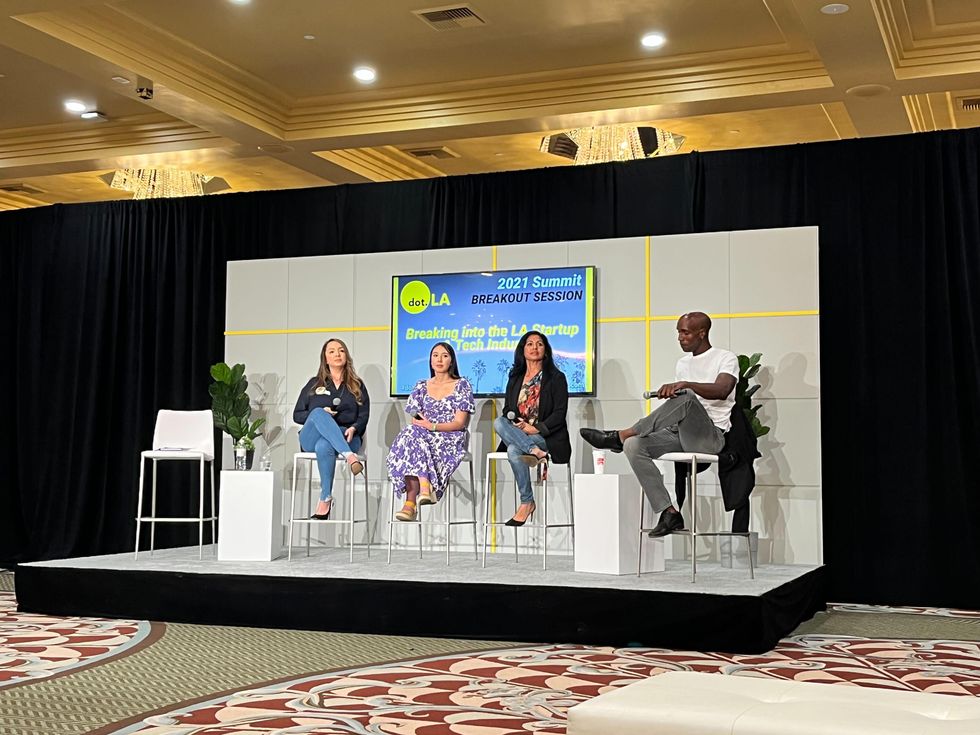
Decerry Donato

There is no one secret to breaking into the tech industry, but one thing helps, a strong support system of colleagues and believing in yourself.

A group of powerhouse tech veterans talked about the roadblocks faced when starting out. Grace Kangdani, senior vice president market manager at Bank of America moderated a discussion on the pitfalls of coming up in a fast-paced industry. BallerTV Chief Technology Officer Kavodel Ohiomoba, Zella Life CEO Remy Meraz and Supernatural's Vice President of People Operations Lynnette Scarratt and Elisabeth Tuttass, head of community at Grid110 all agreed that there's no one path to success.

Finding success is oftentimes a matter of seeking out the right people to help you.

"At the end of the day people are genuinely wanting to help people," said Meraz who runs the life coaching platform. "And I guarantee you within two degrees of separation, there's a connection and people are really willing to make introductions and help in any way they can."

It's not uncommon for even accomplished people to feel as if they aren't competent. Read more >>

Once a Moonshot, Los Angeles' Venture Scene is Bigger Than Ever
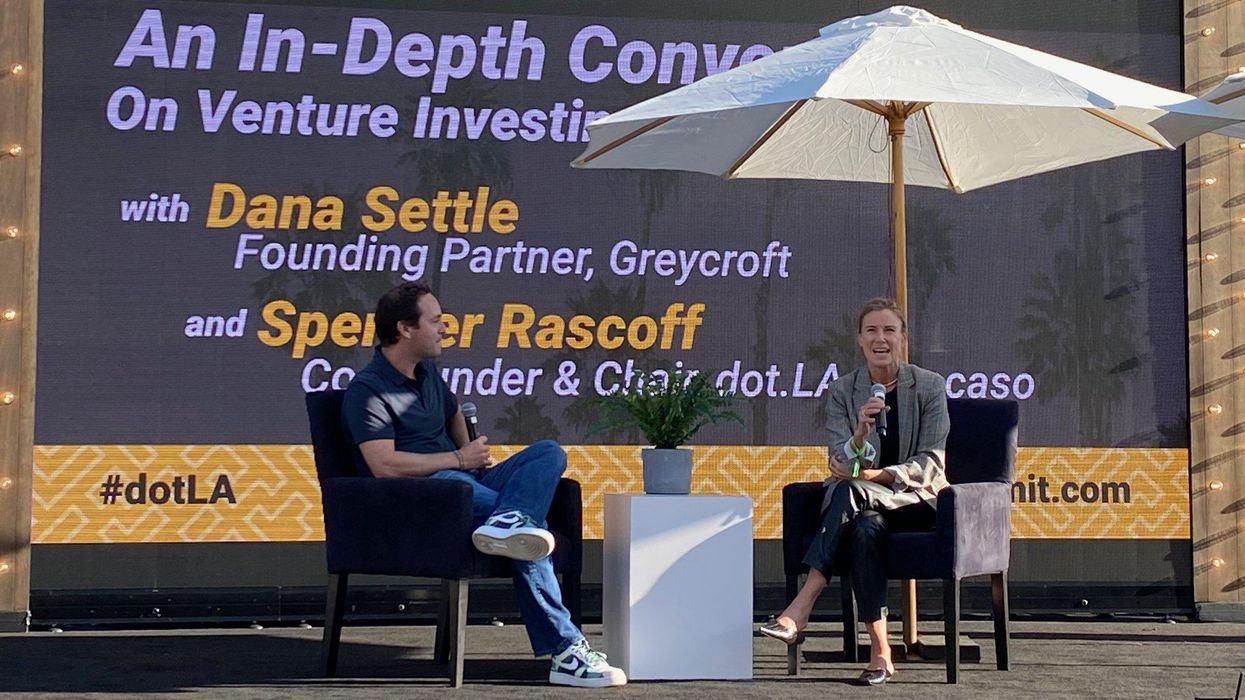
Los Angeles has long taken a back seat to San Francisco when it comes to investing in and incubating local companies, but in recent years the venture capital scene in Silicon Beach has exploded.

Greycroft Partners co-founder and partner Dana Settle told dot.LA co-founder Spencer Rascoff during the second annual dot.LA summit Friday that when she started Greycroft 15 years ago, her fellow investors in Northern California balked at her choice to leave the Bay Area and start investing in what was then a seldom talked-about market: Los Angeles. But since then, Settle's happily proved the haters wrong.

Settle told Rascoff that being an early investor in LA technology wasn't easy, and that over the years she also struggled to raise funding for Greycroft at first, which informs how she advises new companies.

Read more >>

Solving LA's Big Problem: How Metropolis Wants to Change Mobility 

By Ivan Fernandez

Metropolis co-founder Alex Israel has a grand plan to fix L.A.'s infrastructure. It just won't happen overnight.

Speaking to dot.LA co-founder Sam Adams during the "The Future of Urban Mobility" session out closed out dot.LA's summit, Israel described his vision of a complete repurposing of parking spaces and mobility that looks ahead at least 30 years into the future. Electric cars fit into this vision; rideshare companies do, too.

"Parking is the wild, wild west of real estate," said Israel. "It's a component of real estate that represents a large swath of the city that is non-institutionalized."

The startup raised $41 million in Series A financing earlier this year. It has parking garages throughout the U.S., in cities that include Los Angeles and Nashville.

Israel laid out three components that are at the core of Metropolis' work in understanding how to improve and empower the future they hope to create. The first is to understand the inventory of the facility in real time. The second is to have the ability to provision access to that facility in real time. Finally, one must be able to price inventory in real time.

"You have to understand the underlying infrastructure before you can repurpose the infrastructure," said Israel.

In a city as car-dependent as L.A., Israel will certainly have a lot of people rooting for his company's success.

"Getting around L.A. is one of the biggest obstacles to [Los Angeles] being, objectively, one of the nicest places on Earth to be," said Adams.

dot.LA Summit: Women at the Top on How to Expand LA's Tech Scene
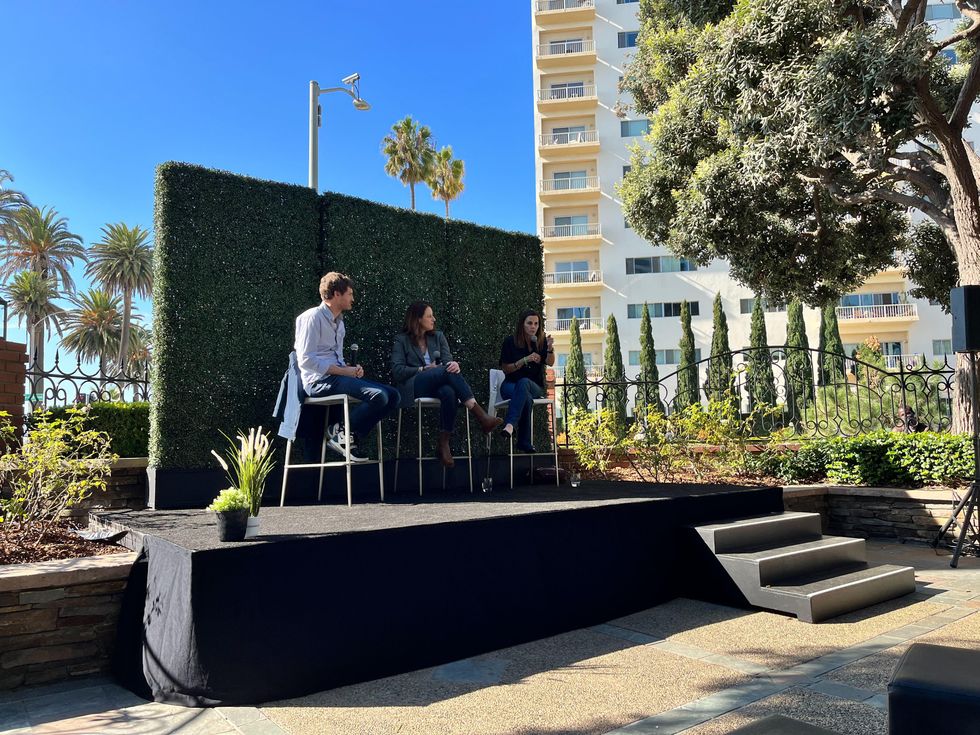
As women in tech and venture, Kara Nortman and Robyn Ward heard a lot of nos when they started out. No we won't fund you. No, we don't have positions.

But, it was the yeses that kept them going.

"We have to expand the tent, we have to figure out how to continue. The tent needs to get bigger every day. If every one of us every day can find one more woman to bring into this tent, in some way it gets bigger and bigger," Nortman said.

Read more >>

dot.LA Summit: Telehealth Changed the Game for Health Care -- for Most
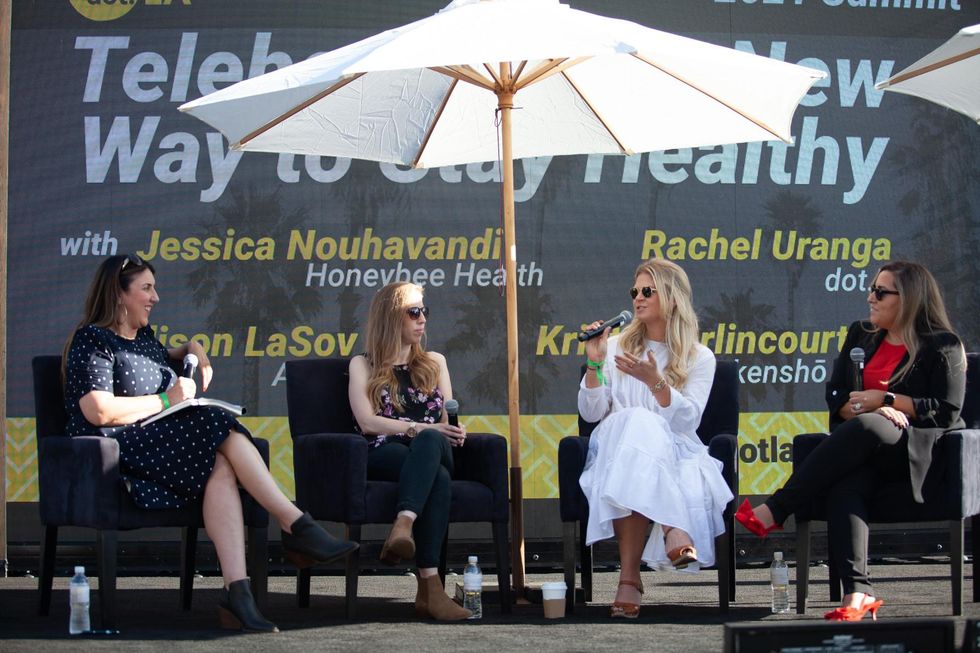
Even before the coronavirus pandemic, telehealth had been lauded as a great equalizer in the health care world.

The benefits were clear: It could help patients avoid travelling long distances and allow those with dependents to seek help without looking for childcare. And for poor neighborhoods and rural areas, where health care options are few and far between, telehealth could send specialists straight to their doors.

Those advantages have only become obvious during the pandemic, as executives from Honeybee Health, Advekit and Kenshō Health explained during dot.LA's panel "Telehealth: The New Way To Stay Healthy." The conversation was moderated by dot.LA's Rachel Uranga.

Read more >>

Going Beyond Lip Service

Pledges to boost diversity and inclusion are widespread in the tech and startup world, but the industry chronically fails to realize its own goals.

That's no coincidence. The venture capital world, which provides much of the capital fueling fledgling startups, remains a boys club with a bias towards white male founders. And that bias has a ripple effect, warping industry hiring practices and decision making. The problem is repelling workers, too, as post-lockdown resignations skyrocket and companies weigh new policies, such as remote work and hybrid schedules, to retain staffers.

"It's about being able to show up at work as your full self, said Ricardo Vazquez, executive officer at the mayor's Office of Economic Development, in a dot.LA Summit panel on building diversity and inclusion within startups and larger firms.

Read more >>

Pixar-Level Storytelling on Social Media
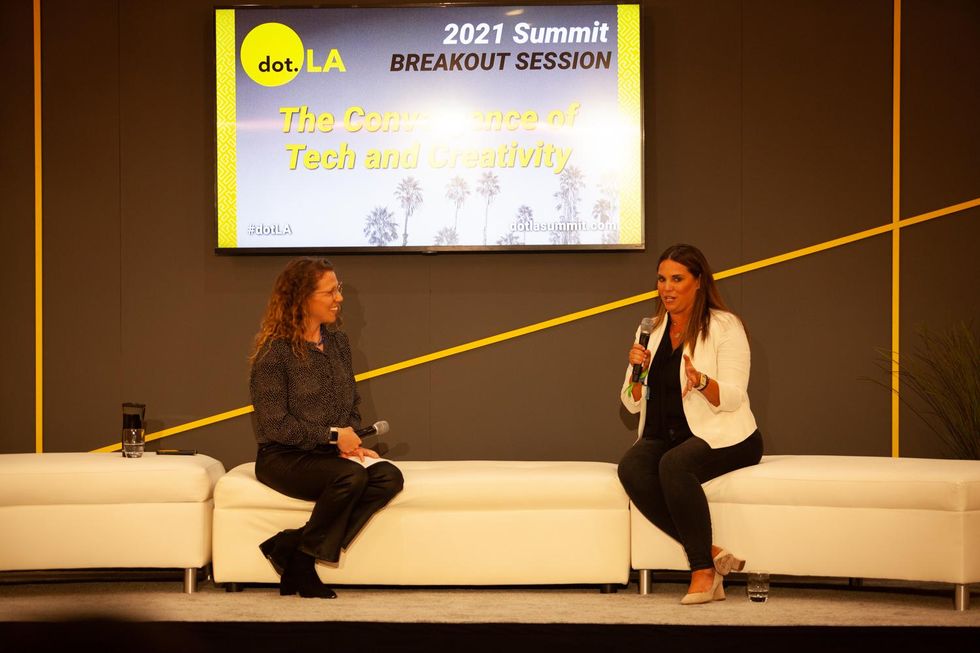
In just a few weeks, social media users can meet Jennifer Aniston's brand new 3D animated character—and though the avatar is mostly under wraps, word on the street is that it's "very cute." That character comes thanks to a partnership with Invisible Universe, an entertainment technology company partnering with celebrities to capitalize on their unique IP.

In a conversation with Rachel Horning (CEO of RippleFX Events), Invisible Universe CEO Tricia Biggio described the company as the "Pixar of the internet." The company creates beloved, celebrity-sponsored animated characters who live on social media and interact with fans.

Biggio, who started in television, is passionate about bringing Hollywood quality storytelling and worldbuilding to social media characters:

"We really think about being platform agnostic and story and character obsessed," she said. Pandemic isolation and scrolling was a boon for the company, with ten times the rate of growth on TikTok versus YouTube, Instagram and others.

Read more >>

How the Pandemic Changed Entertainment Tech Forever
By Ivan Fernandez

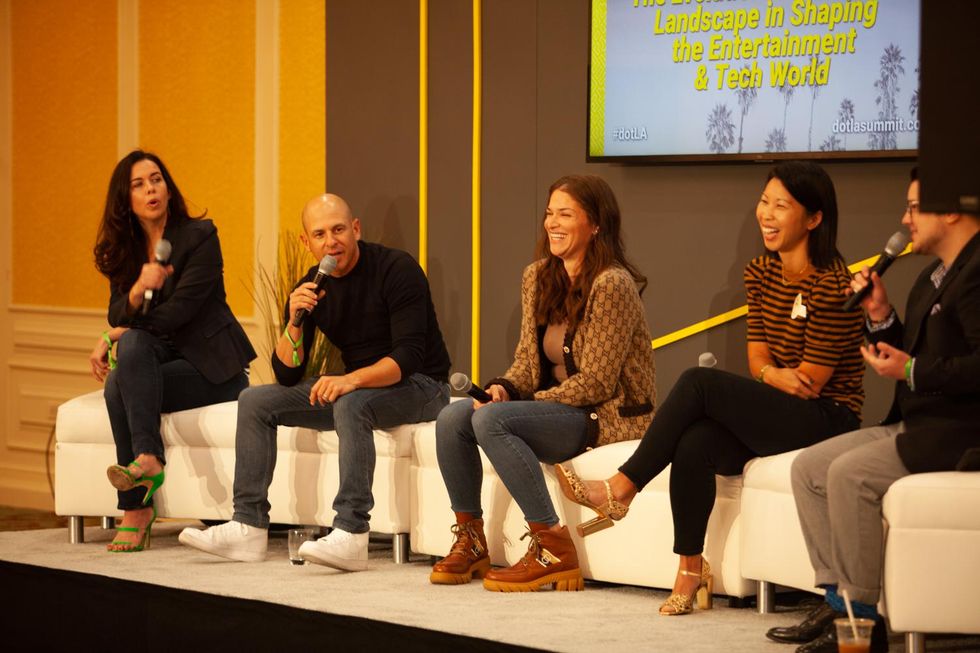
Like so many other industries, the world of entertainment went through some radical shifts during the pandemic. And, for the speakers at dot.LA's "The Evolution of the Digital Landscape in Shaping the Entertainment & Tech World" panel, that wasn't always a bad thing.

Take the music sector, for example. When the pandemic put a pause on live concerts—leaving musicians, promoters and stage crews without a main source of income—industry players pivoted to streaming.

"We found other ways to get our clients into people's homes, whether it was through a digital series or just releasing music in a more unconventional manner," said Allison Kaye, president of SB Projects. "Our clients really turned into content creators in a way that they hadn't been before."

"The need for kids content, especially digital-first, escalated tremendously as kids were stuck at home with nothing else to do except hang out on YouTube," added Kerry Tucker, chief marketing and franchise officer at pocket.watch, which works with kid stars/influencers on YouTube. "We actually saw a rise in our constant consumption, and then we also saw a rise in our consumer products."

Many artists, however, needed a helping hand when dabbling into the new digital space. That's where a company like Wave enters the picture. Wave is at the forefront of virtual entertainment, helping artists create virtual—and interactive—performances to livestream to viewers all over the world. "We are in this really cool, exciting space and everyone wants to get in on the action," said Tina Rubin, CMO at Wave. "In terms of the artists we work with, the way I think about it is virtual concept art. It's still evolving. We're still trying to figure out what is the art form and how does it encapsulate various types of performances?"

Technology can also help to strengthen traditional models such as the sale and purchase of a concert ticket. There are many issues that fans and promoters face when purchasing or selling a ticket. Scalpers use bots to scoop up tickets en masse and resell them on a secondary market. There's also the risk that a fan will purchase a fake ticket from a scammer. Tech such as blockchain and crypto can help with these challenges.

"Blockchain technology, crypto technology, can solve that," said Brent Weinstein, chief innovation officer & partner at United Talent Agency. "That's really, really exciting because that is a chance to completely change the nature of how people buy tickets to live events [and] how they relate to artists. That's a real life problem that people have been trying to solve for a long time and I finally have some hope that can be solved."

What It Takes to Transition From Founder to CEO
by Michaella Huck

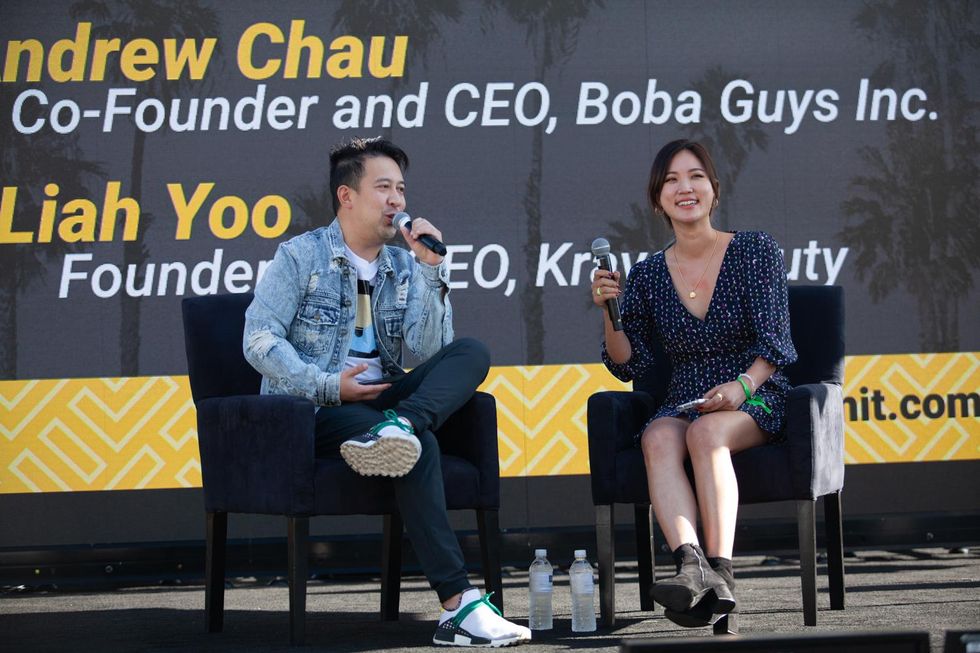
A good founder will have a clear yet flexible vision. The same might be said of a good CEO. Still, there are plenty of differences between the two titles, as the speakers at dot.LA's "From Founder to CEO" discussion made clear.

"To be an entrepreneur you are the tip of the spear," said Boba Guys and Tea People USA founder and CEO Andrew Chau. "You want to be apologetic, you want to be authentic."

Chau chatted with KraveBeauty founder and CEO Liah Yoo about starting their businesses from the ground up. He said that as the company grew, he became much more than "a guy who owns a boba shop"; Yoo said she, too, morphed into something beyond a YouTube influencer.

"I call myself an accidental entrepreneur because I now have a skin care brand. Nowhere in my life did I ever think that I would be starting a company and second running a company," Yoo said.

One might assume a business' creator would spearhead its strategies, but that's often not the case. In fact, in a World Management Survey that looked at 212 startups over a 20-year period, only 50% of founders were still in control of their companies.

For Chau, the key lies in embracing both the micro- and macro-level problems. He said that though he has successfully transitioned into CEO, he sometimes can't help but treat his business like a grassroots operation, picking up trash he finds in front of his Boba Guys storefront in Culver City. Yet he's also often talking business strategies with other entrepreneurs over Zoom.

For Yoo, becoming a CEO was also an exercise in self-acceptance. "You keep comparing yourself to another CEO," she said. "I think the more I did that and then when we got started, I started to trick myself into this vicious cycle of 'I'm not good enough.'"

The Challenge of Finding Male Allies in Tech Circles
by Michaella Huck

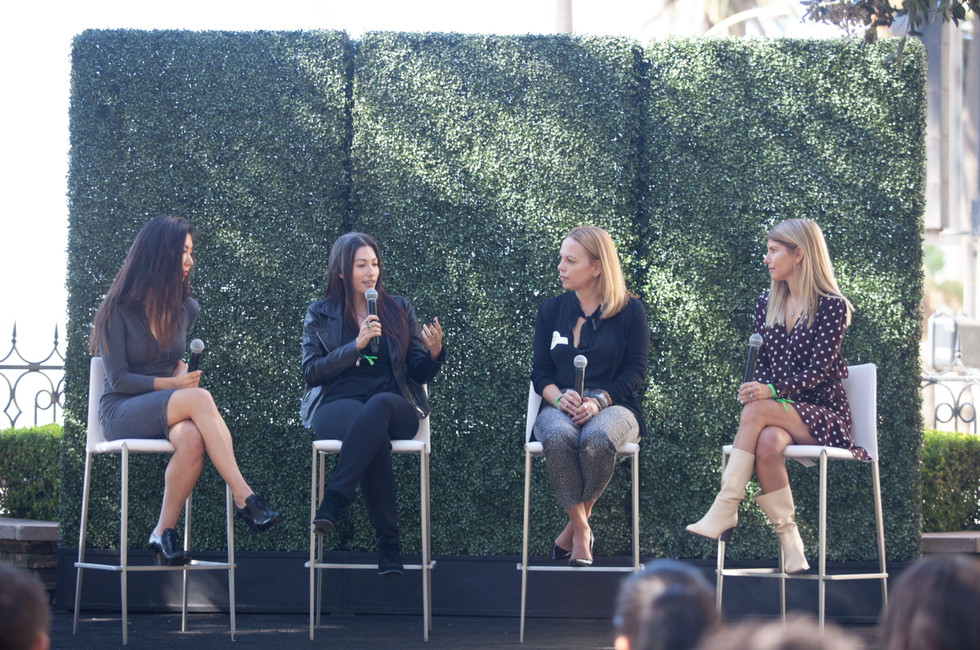
Women-led startups made up just 2.3% of venture capital funding in 2020. In addition, only about 12.4% of decision makers at venture capital firms are women. Though these numbers have increased throughout the years, the industry is still very much a boys' club, and, as the women at dot.LA's "Elevating Your Presence as a Woman in Tech" panel discussed, it can be tough to break through the glass ceiling.

"We are talking into an echo chamber about our problems, so it is also going to require a man to help us change that," said Samantha Ettus, founder and CEO of Park Place Payments.

Ettus was joined by founder and CEO of Makelene, Dulma Altan; co-founder and CEO of Vurbl Media, Audra Gold; and Head of Community at How Women Invest, Sophie Nazerian. Their discussion was centered around how they have managed to navigate leadership and microaggressions from co-workers, all while climbing the corporate ladder as an anomaly in the tech world.

Ettus discussed how she has experienced microaggressions firsthand; she remembered being on a conference call with a bank executive when he mentioned he brought a guest: his daughter. Ettus thought it was sweet until he mentioned he wouldn't have put her on the screen if it were a male CEO because he would not want to be seen as less professional. Ettus reminded him he has the power to change that.

"It's always on our shoulders to speak up or to wrong the right or to have this panel where 90% of the attendees are women," she said.

The panelists also talked about the importance of finding a good work/life balance — something that doesn't always come naturally. "The biggest thing I'm proud of, I've learned that not everything is actually on fire," said Altan. "My ability to discern what actually is from what isn't has increased, and my mental health has stabilized."

dot.LA Summit: How Crypto Is Changing the Creative Industries

NFTs aren't just remaking investments but they are changing how entertainment is being produced and distributed.

Non fungible tokens were the focus of the panel with Scott Greenberg, CEO of Blockchain Creative Labs; Andrew Klungness, Partner at Fenwick & West LLP; and Michelle Munson, CEO of Eluvio.

"When you own an NFT, you actually own what we call a convertible electronic record on the blockchain. You own a space in a ledger," said Klungness. As an example, it's the difference between owning the record versus owning the commercial rights to the property, like owning a baseball card doesn't give you the right to use that image commercially.

Read more >>

Virtual Influencer Lil' Miquela Will Soon Be Run By Her Community
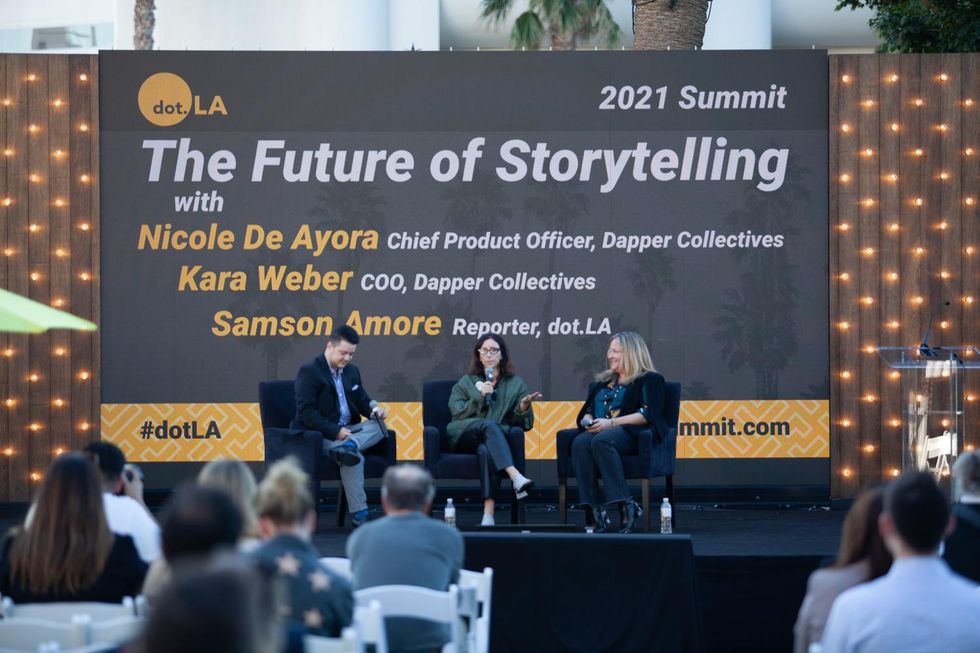
Dapper Labs, the company that helped bring NFTs into the mainstream, is set on decentralization. And it's turning to its signature virtual social media influencer Lil Miquela to drive home the idea, company executives told a crowd at Friday's Future of Storytelling panel at the dot.LA Summit.

The NFT startup behind NBA Top Shot, Dapper Labs clearly sees the value of virtual influencers. Brands are expected to spend about $15 billion on influencer marketing by 2022, according to Business Insider Intelligence. And the company is betting that a rising number of dollars will be spent on virtual influencers who can be fully controlled.

Read more >>

LA Investors on Tech Resilience and the Future of Work

Plenty of tech firms laid off workers as the pandemic took hold, but the industry ultimately raked in record profits as schools and offices spent big on remote tools and lockdowns drove shoppers toward digital services.

But there are challenges ahead for the startup community, like adapting to workers' evolving needs and expectations and building climate change mitigation into investment strategies.

Those were some of the takeaways from dot.LA's Town Hall panel on "rising from the COVID-19 ashes as a thriving startup ecosystem," which also explored how the virus is reshaping work. The talk was moderated by dot.LA CEO Sam Adams and featured Barber, RippleFX Events CEO Rachel Horning, Grid110 CEO Miki Reynolds, M13 partner Anna Barber and Leila Lee, of the mayor's Office of Economic Development.

Read more >>

Everlaunch Wins dot.LA's Startup Pitch Competition

A startup that offers gamified how-to guides for aspiring entrepreneurs was declared the winner of the second annual dot.LA pitch competition on Thursday in Santa Monica.

"My mission is to 'Pinky and the Brain' all of the currently available resources," said Everlaunch CEO Michelle Heng, referring to a cartoon where the main character was obsessed with taking over the world. Heng's service sets out to build a community for entrepreneurs and bring together essential business resources in a single hub.

Read more >>

Jam City's Josh Yguado on How the Blockchain WIll Change Gaming
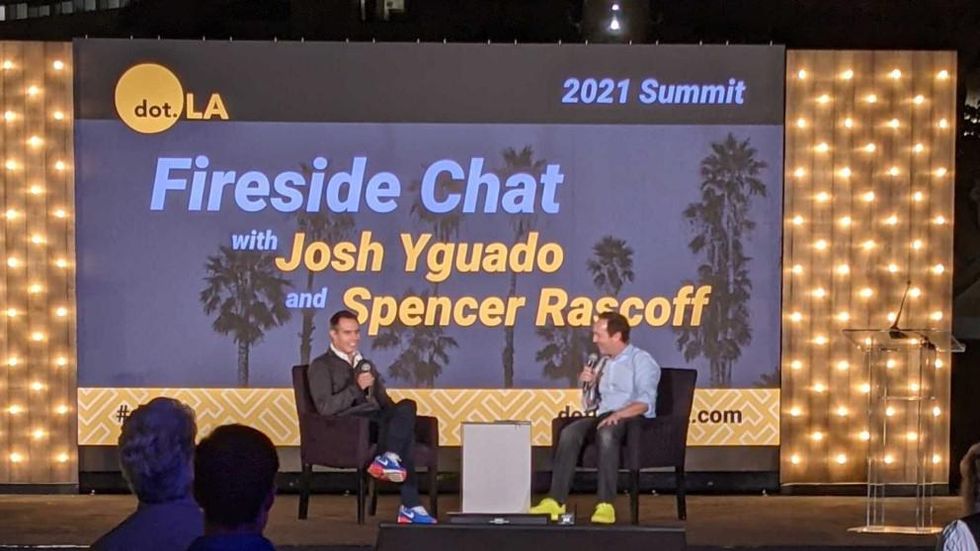
At dot.LA's second annual summit, mobile game publisher Jam City's Chief Operating Officer Josh Yguado said he believes the next generation of mobile gaming will enable users to own parts of their favorite games on the blockchain.

"More than anything we're investing in where gaming is going, so we're making huge investments right now in augmented reality and cryptocurrency," Yguado said during the summit's fireside chat Thursday evening. "We've talked about the metaverse a bit today, but we're really thinking about where gaming is going to be two to three years from now."

Read more >>

What to Expect at This Year's In-Person Summit

dot.LA Summit The Annual dot.LA Summit Kicks Off in Santa Monica

The two-day conference will begin with a pitch showcase competition for early-stage startup companies that have raised less than $1 million in funding. Judges for the event include Boba Guys and Tea People USA co-founder and CEO Andrew Chau, Worklife Venture Capital founder Brianne Kimmel and Plug and Play Ventures Associate Kiswana Browne. The winner will receive a prize package from Fenwick, Coda Search and TriNet.

The pitch competition will be followed by a fireside chat and podcast taping with Jam City co-founder & President Josh Yguado. Jam City isa leader in mobile entertainment and Yguado has proven himself a mastermind behind it, leading the company's operations, growth strategies and game portfolio.

While this event will be in person, the panels will be covered by dot.LA and those interested are still able to register for the conference here. Last year, the event drew over 500 guests virtually. This year's summit expects over 300 in-person guests. There is no livestream this year.

On Friday, the activities will begin at 9 a.m. An L.A. tech and startup town hall will focus on the tech and startup landscape as the effects of COVID-19 retreat. There will also be panels on the future of cryptocurrency and storytelling at this hour.

The afternoon's speakers will include United Talent Agency Chief Innovation Officer Brent Weinstein, BallerTV Chief Technology Officer Kavodel "Kav" Ohiomoba, KraveBeauty founder & CEO Liah Yoo, Makelane founder and CEO Dulma Altan and many other CEOs, technologists, founders and innovators.

Join us here and on Twitter and Instagram for updates from the summit. And let us know your thoughts using the hashtag #DOTLASUMMIT.

Heaviside Raises $28M for Autonomous Precision Munitions

🔦 Spotlight

Hey Los Angeles,

For years, Southern California’s defense tech story has largely been told through satellites, rockets, drones and software. This week, another category stepped into the frame: autonomous precision munitions.

Los Angeles-based Heaviside Industries emerged from stealth with a $28M Series A led by Interlagos, with participation from Menlo Ventures, Flume Ventures, Cantos, Anorak Ventures and several individual defense and technology investors. The company, founded in 2024, is building autonomous precision munitions for U.S. and allied special operations and conventional forces.

The round will help Heaviside accelerate development, production and delivery of its multi-domain munitions platforms, including its first aerial and underwater systems. According to the company, its products are designed to operate in jammed and GPS-denied environments, where legacy systems can degrade or fail.

That detail matters. Modern warfare has been reshaped by unmanned systems, contested communications and the growing need for weapons that are not only precise, but affordable enough to be produced and deployed at scale. In other words, the defense tech race is not just about building more advanced systems. It is about building systems that can actually survive the battlefield they are designed for.

Heaviside has been operating in stealth for more than two years and says it has built a team of more than 50 engineers and operators across Los Angeles and Oslo, Norway. The company also says it already has a roster of U.S. and allied customers, with the new funding going toward expanding production and accelerating deliveries domestically and abroad.

For LA’s hard tech ecosystem, Heaviside adds to a growing defense-tech cluster that is less about splashy software and more about applied engineering. The company’s work sits at the intersection of autonomy, manufacturing and national security, where Southern California’s aerospace and robotics talent has become increasingly relevant.

Now onto this week’s LA venture deals and fund announcements.


🤝 Venture Deals

    LA Companies

    • Furientis emerged from stealth with a $5M pre-seed led by Silent Ventures, with participation from Bessemer Venture Partners, SV Angel and other investors. Founded in 2025, the defense technology startup is developing cost-effective, ship-based interceptor systems designed for scalable production, with the funding going toward initial production, expanded testing and hiring across engineering, manufacturing and operations. - learn more
    • Rogue raised a $2.5M pre-seed led by Science Inc., with participation from Uncommon VC, Simple Food Ventures and strategic investors, to accelerate its national retail and digital commerce strategy. Built by the team behind Dollar Shave Club and Liquid Death, Rogue makes high-protein chips and puffs with active probiotics, no seed oils and no artificial ingredients, and will launch in 2,800 Walmart stores nationwide in July. - learn more
    • Develo raised $14M led by Blueprint Equity, with participation from Villain Capital, Z21 Ventures and Bienville Capital, to grow its AI-native operating system for pediatric practices. The platform unifies clinical, billing and family engagement workflows beyond the traditional EMR, with the new capital going toward R&D and customer success as Develo expands across pediatric providers nationwide. - learn more
    LA Venture Funds
    • Kinship Ventures participated in Nectar Social’s $30M Series A, which was led by Menlo Ventures and its Anthology Fund, with participation from True Ventures and GV. Nectar Social is building an agentic social operating system for modern marketing, helping brands manage social intelligence, community engagement, creator workflows and conversational commerce across platforms like Meta, TikTok, LinkedIn, Reddit and X. The new funding will support engineering and applied AI hiring, deepen platform partnerships and expand Nectar Agent into more brand workflows. - learn more
    • Alexandria Venture Investments participated in CREATE Medicines’ $122M Series B, which was co-led by existing investors Newpath Partners, ARCH Venture Partners and Hatteras Venture Partners. The Cambridge-based biotech is developing in vivo CAR therapies for autoimmune disease and oncology using an mRNA-LNP platform that engineers immune cells directly inside the body, with the funding going toward advancing its CD19-targeted autoimmune program into the clinic, expanding its dual CAR CD19 x BCMA program and continuing work across its oncology pipeline. - learn more
    • Overture Ventures participated in GridCARE’s $64M Series A, which was led by Sutter Hill Ventures with backing from John Doerr, National Grid Partners, Future Energy Ventures, Emerson Collective, Stanford University and other existing investors. Redwood City-based GridCARE is building a physics-based AI platform that helps identify underused grid capacity and accelerate power delivery for AI data centers, compressing interconnection timelines from years to months. The company says it is already engaged in projects across more than a dozen markets representing more than 2 GW of new AI compute capacity. - learn more
    • Taste Tomorrow Ventures invested in Harken Sweets’ seed round, joining Selva and GRTSHT as the early-stage VC firm continues backing better-for-you snack brands. Founded by Katie Lefkowitz, Harken Sweets makes cleaner-label chocolate bars sweetened with whole-food dates instead of refined sugar or synthetic alternatives, and is already sold through retailers including Sprouts, Whole Foods, Kroger, Costco, Walmart, Albertsons and Wegmans. - learn more
    • Bonfire Ventures led Ranger AI’s $8.4M seed round, with participation from 25madison, Inovia Capital and Panache Ventures. Ranger AI is building an agentic revenue operations platform for industrial tendering, helping industrial, manufacturing and supply chain companies automate complex RFP, bid and project workflows. The company says its platform is already being used across more than 1,000 projects and can cut industrial tendering time by up to 50%. - learn more
    • Fika Ventures participated in Outmarket AI’s $17M Series A, which was led by Permanent Capital Ventures, with participation from SignalFire, TTV Capital, Dash Fund and senior insurance industry executives. Outmarket AI builds AI workflow software for insurance agencies and brokers, helping teams automate policy reviews, quote comparisons, renewals, coverage gap analysis, proposal building and other core workflows. The round brings the company’s total funding to $21.7M. - learn more
    • Wedbush Ventures participated in Secludy’s $4M seed round, which was led by Impression Ventures and also included LAUNCH, The Syndicate, Precursor Ventures, Hustle Fund, Script Capital, Mana Ventures and Chispa VC. San Francisco-based Secludy helps banks, payments firms and fintech companies safely use proprietary customer data to train and evaluate GenAI models by generating privacy-protected synthetic data, with the funding going toward hiring, go-to-market growth and expanding its platform across more enterprise AI workflows. - learn more
    • Sound Ventures led a new $17M funding round for Anomaly Insights, joined by Alumni Ventures and existing investors Link Ventures, Redesign Health and RRE Ventures. The New York-based company uses AI to help health systems analyze payer behavior, identify denials, underpayments and contract issues, and strengthen how providers engage with insurers across claims management and managed care negotiations. The new funding brings Anomaly’s total raised to $34M. - learn more
    • B Capital and UP.Partners participated in Havoc’s $100M Series A, backing the company’s push to scale its all-domain autonomous systems for defense operations. Havoc’s autonomy stack is designed to operate across air, sea and land platforms, and the new funding brings its total capital raised to nearly $200M as it expands deployment capacity, engineering and partnerships with defense manufacturers. - learn more
    • B Capital led Star Catcher’s oversubscribed $65M Series A, with the round co-led by Shield Capital and Cerberus Ventures. The Florida-based company is building what it calls the first power grid in space, using optical power beaming to deliver electricity on demand to satellites and other spacecraft, with the funding going toward orbital demonstrations, engineering and commercial expansion. The round brings Star Catcher’s total funding to $88M. - learn more
    • Interlagos participated in Cowboy Space Corporation’s $275M Series B, which was led by Index Ventures and valued the company at $2B. Formerly known as Aetherflux, the San Carlos-based company is building vertically integrated orbital infrastructure for the AI era, including low-Earth orbit satellites, purpose-built launch vehicles and in-orbit data centers designed to help meet rising demand for AI compute. - learn more

      Download the dot.LA App

      The LA Startup Taking on One of Parenting’s Most Frustrating Problems

      🔦 Spotlight

      Hello Los Angeles,

      Every parent knows the feeling of becoming an overnight expert in something they never wanted to learn.

      For families navigating developmental delays, behavioral health needs, autism, speech therapy, occupational therapy or pediatric mental health support, that learning curve can become a full-time job. Finding the right specialist is hard enough. Getting those specialists, pediatricians, insurers and families to actually coordinate with each other? That’s often where the system breaks.

      That’s the problem Los Angeles-based Village is trying to solve.

      The specialty pediatrics startup raised $9.5 million in seed funding this week, led by Upfront Ventures, with participation from Bling Capital, GTMFund and Perceptive Ventures.

      Its AI-powered platform is designed to bring families, providers, pediatricians and payers into one coordinated care system for children with developmental, behavioral and mental health needs.

      The company was born out of co-founder Brandon Terry’s personal experience navigating care for his daughter after she was diagnosed with a rare genetic condition. Like many parents, his family faced long waitlists, high out-of-pocket costs and a fragmented web of specialists who were not necessarily working from the same playbook.

      The pitch is not simply “find a provider faster.” Village wants to coordinate the entire team around a child, including occupational therapists, speech-language pathologists, behavioral therapists and pediatricians. Its AI agent, Vera, is designed to help with the administrative drag that often slows pediatric practices down: scheduling, documentation, billing and care coordination.

      The company’s raise also points to a less flashy, but deeply consequential corner of health tech: making complex care easier to navigate. In specialty pediatrics, the pain point is not always the quality of care itself. It is the space between appointments, referrals, insurance approvals and provider communication where families are often left to connect the dots themselves.

      So far, Village says it has built a network of more than 400 independent pediatric specialty providers in Southern California and has contracts with major commercial insurers including Blue Cross & Blue Shield, Cigna and UnitedHealthcare. The new funding will help the company expand across Southern California, into other parts of California and eventually into new states.

      In other words, the next wave of healthcare infrastructure may not look like one giant hospital system. It may look more like a connected network built around the people who have been holding the system together all along: families.

      And yes, in this case, it really does take a Village.

      Venture deals follow below.👇


      🤝 Venture Deals

        LA Companies

        • MOSH, the brain health nutrition brand co-founded by Maria Shriver and Patrick Schwarzenegger, raised a $13M Series A led by Main Street Advisors to expand nationally across grocery retailers and accelerate product innovation. The Los Angeles-based company plans to use the funding to grow its retail footprint, including an upcoming Target launch, while expanding its lineup of brain-focused nutrition products with new high-protein bars designed to support both cognitive and physical performance. - learn more
        • Spring Labs raised $5M to expand its AI-native compliance platform for banks and fintechs, with the funding led by BankTech Ventures and Haymaker Ventures. The Marina del Rey-based company is building AI agents that automate complaint handling, dispute resolution, and other compliance workflows, helping regulated financial institutions scale operations more efficiently while maintaining oversight and auditability. - learn more
        • FlowPrompt.ai secured a strategic seed investment from ART Fund SP, part of ChainBLX SPC, as the company expands its AI orchestration platform designed to help developers build and manage complex AI workflows through a visual interface. Alongside the investment, the companies also launched a global AI hackathon and builder program that will give selected founders access to funding opportunities, platform tools, and a live investor pitch event in Los Angeles later this summer. - learn more
        • Chance Studios raised $3.2M to build a unified platform for trading card game collectors, aiming to bring inventory management, marketplace activity, and community features into a single ecosystem. The round was co-led by Makers Fund and Hashed, with participation from Arbitrum Gaming Ventures, GAM3GIRL VC, and others, as the company looks to modernize how collectors buy, track, and interact around physical and digital TCG assets. - learn more

        LA Venture Funds
        • Rebel Fund participated in Moritz’s $9M seed round, backing the AI-native law firm as it looks to automate large portions of routine corporate legal work. The company combines software with experienced attorneys to speed up contract drafting and review, and says it has already handled more than $2 billion worth of contracts across over 100 companies since launching earlier this year. - learn more
        • Rebel Fund participated in Corvera’s $4.2M seed round, backing the AI-native supply chain platform as it automates back-office operations for consumer packaged goods brands. The Y Combinator-backed startup is building AI agents that can handle workflows like order processing, invoicing, and demand planning across fragmented enterprise systems, helping brands scale operations without significantly increasing headcount. - learn more
        • Chaac Ventures participated in Astrocade’s $5.6M funding round, backing the gaming startup as it builds a social gaming platform centered around community-created interactive experiences. The company is focused on blending gaming, streaming, and creator tools into a more collaborative entertainment platform, and plans to use the funding to expand development and grow its creator ecosystem. - learn more
        • Fusion VC participated in MSICS Pharma’s $3.6M funding round, backing the biotech company as it advances psilocybin-based treatments for PTSD, depression, and OCD. The company is developing medical-grade psychedelic compounds and plans to use the funding to expand production, accelerate clinical trials, and prepare for broader commercialization as interest in psychedelic therapies continues to grow. - learn more
        • JAM Fund participated in Fun’s $72M Series A, backing the payments infrastructure startup as it scales its platform for moving money across fintech and digital asset applications. The round was co-led by Multicoin Capital and SignalFire, and the company plans to use the funding to expand internationally, pursue acquisitions, and deepen its infrastructure stack as demand grows for faster global payment systems. - learn more

        LA Exits

        • Tapin2 was acquired by Greater Sum Ventures, joining MyVenue as part of GSV’s expanded point-of-sale technology platform for stadiums, arenas and live entertainment venues. Tapin2 provides self-service, suite catering and mobile ordering technology for high-volume sports and entertainment venues, while MyVenue offers cloud-native POS software across concessions, premium seating, retail, in-seat ordering and other venue operations. Together, the companies say their technology is used in more than 70% of MLB and NFL stadiums. Terms of the transaction were not disclosed. - learn more
        • Motiv Space Systems signed a definitive agreement to be acquired by Rocket Lab, bringing its space robotics, motion control systems and precision spacecraft mechanisms into Rocket Lab’s growing space systems business. Motiv’s technology has supported major missions including NASA’s Mars Perseverance rover and lunar rover programs, and the company will be rebranded as Rocket Lab Robotics after the deal closes, which is expected in the second quarter of 2026. - learn more
        • Robyn was acquired by Los Angeles-based Tot Squad, bringing its AI-powered doula tool into Tot Squad’s broader support platform for expecting and new moms. Robyn’s AI was trained on more than 70,000 de-identified messages between parents and doulas, and the acquisition will help Tot Squad offer free, around-the-clock pregnancy and early motherhood guidance alongside access to human experts like doulas, lactation consultants and sleep coaches. Terms of the deal were not disclosed. - learn more

          Download the dot.LA App

          Match Goes Niche With $100M Move

          🔦 Spotlight

          Hello Los Angeles,

          It’s May, and LA is about to have one of its more important weeks.

          The Milken Institute Global Conference 2026 returns to Beverly Hills next week, bringing together thousands of investors, operators, policymakers, and executives. It’s one of the few places where public markets, private capital, and tech actually overlap in the same rooms, and where you can usually get an early read on what capital is leaning into before it fully shows up in the data.

          This year, one theme is already starting to surface. Platforms are getting more specific, not more broad.

          This week’s news is a good example.

          Match Group is investing $100 million into Sniffies, a fast-growing, location-based platform built for gay, bi, trans, and queer men. It’s a notable move for a company best known for mainstream dating apps like Tinder and Hinge, and it signals a deeper push into more niche, community-driven platforms.

          Sniffies operates very differently from traditional dating apps. It’s more real-time, more map-based, and more focused on immediacy than long-term matching. In other words, it’s built around behavior, not profiles.

          And that’s what makes the investment interesting.

          For years, the dominant strategy in consumer platforms was scale, build one product that works for everyone. But what we’re seeing now is the opposite. The platforms that are gaining traction tend to be the ones that understand a specific audience deeply and build for how that group actually behaves.

          Match leaning into that shift isn’t just about expanding its portfolio. It’s a recognition that growth is coming from focus.

          And in a city like Los Angeles, that’s usually where things start.

          Below are this week’s venture deals and fund announcements across LA 👇


          🤝 Venture Deals

            LA Companies

            • Illuminant Surgical raised an $8.4M seed round to accelerate the rollout of its real-time anatomical projection platform, which aims to give surgeons enhanced visibility during procedures. The company’s “Skylight” system is designed to project internal imaging directly onto the patient, improving precision and reducing risk, and the funding will support product development and early commercialization efforts. - learn more
            • Jupid raised $840K in early funding to support its AI-native accounting platform, which is designed to automate bookkeeping, tax filing, and compliance for small businesses directly within banking platforms. The company is building what it describes as an embedded “AI accountant” that integrates with financial institutions to streamline operations for entrepreneurs, and plans to use the funding to expand partnerships and accelerate product development as demand grows for automated financial tools. - learn more
            • Lumicup raised a $4.38M Series A to expand its product line and scale manufacturing as it looks to meet growing demand for its consumer health and wellness products. The company plans to use the funding to increase production capacity, invest in new product development, and strengthen its distribution as it continues to grow its footprint in the market. - learn more
            • Counterpart raised a $50M Series C to expand its AI-driven “agentic insurance” platform, which helps small businesses manage growing legal and employment risks tied to AI adoption. The round was led by Valor Equity Partners with participation from existing investor Vy Capital, bringing the company’s total funding to $106M, and the capital will be used to launch new insurance products, expand risk management capabilities, and scale its underwriting platform. - learn more
            • Nervonik raised a $52.5M Series B to advance its next-generation peripheral nerve stimulation technology, which aims to deliver more precise, personalized treatment for chronic pain. The round was led by Amzak Health with participation from Elevage Medical Technologies, U.S. Venture Partners, Lumira Ventures, Foothill Ventures, and Shangbay Capital, and the company plans to use the funding to accelerate clinical programs and move toward commercialization. - learn more
            • LighthouseAI raised an $8M Series A to expand its AI-powered platform that helps pharmaceutical companies manage state licensing and regulatory compliance. The round was led by Boxcars Ventures with participation from TGVP and existing investors, and the company plans to use the funding to enhance product development, improve service delivery, and support continued growth as it scales across the pharma supply chain. - learn more

            LA Venture Funds
            • MANTIS Venture Capital participated in Rogo’s $75M Series C, backing the AI platform as it builds autonomous financial agents designed to streamline complex workflows for banks and investment firms. The round was led by Sequoia Capital and included a mix of major financial institutions and venture firms, signaling strong demand for AI tools that can augment decision-making across high-stakes finance. - learn more
            • M13 participated in Chord’s $7M funding round, backing the AI commerce platform as it builds a “context layer” designed to unify fragmented data, tools, and workflows for retail brands. The round was led by Equal Ventures with participation from Chingona Ventures and CEAS Investments, and the company aims to help operators move beyond dashboards toward systems that can make real-time decisions and automate actions across the business. - learn more
            • Fika Ventures participated in Lumian’s funding round, backing the startup as it launches an AI-native Amazon agency designed to automate and optimize how brands operate on the marketplace. The company is focused on replacing traditional agency workflows with AI-driven systems that can manage everything from advertising to operations in real time, reflecting a broader shift toward automation in e-commerce. - learn more
            • Riot Ventures co-led True Anomaly’s $650M Series D, backing the defense space startup as it scales spacecraft, software, and autonomous systems designed for national security missions in orbit. The round values the company at around $2.2 billion and brings total funding to over $1 billion since its 2022 founding, and the company plans to use the capital to accelerate mission deployments, expand manufacturing, and grow its workforce as demand increases for space-based defense capabilities. - learn more
            • Clocktower Technology Ventures participated in Clarasight’s $11.5M Series A, backing the AI-powered travel and expense platform as it works to unify fragmented enterprise data into a single system. The round was led by AlleyCorp with participation from several travel and fintech-focused investors, and the company plans to use the funding to expand product development and scale go-to-market efforts as demand grows for AI-driven efficiency in corporate travel. - learn more
            • Halogen Ventures and Mucker Capital participated in SkyfireAI’s $11M seed round, backing the startup as it builds an AI-native platform for coordinating autonomous, multi-drone operations. The company’s software is designed for public safety and defense use cases, helping teams deploy and manage fleets of drones with greater speed and efficiency without increasing staffing, and it plans to use the funding to accelerate product development, expand its team, and scale deployments with government and mission-critical customers as demand grows for autonomous drone systems. - learn more
            • Matter Venture Partners led OpenLight’s $50M Series A-1, with participation from Acclimate Ventures, Catapult Ventures, and existing investors, backing the photonics company as it scales its next-generation chip platform for AI infrastructure. The funding brings total capital raised to $84M and will be used to accelerate global deployment of its silicon photonics technology across data centers, telecom, and other high-bandwidth applications. - learn more
            • Alexandria Venture Investments participated in Fathom Therapeutics’ $47M Series A, backing the biotech startup as it applies quantum chemistry and AI to design next-generation small molecule drugs. The oversubscribed round was led by Sutter Hill Ventures with participation from Chemistry and other investors, and the company plans to advance its platform, which simulates protein behavior inside living cells to accelerate drug discovery. - learn more

              Download the dot.LA App

              RELATEDEDITOR'S PICKS
              Trending