
Meet the 25 Year-Old Behind L.A.'s Plan to Test Every Resident for COVID-19

Rachel Uranga

Rachel Uranga is dot.LA's Managing Editor, News. She is a former Mexico-based market correspondent at Reuters and has worked for several Southern California news outlets, including the Los Angeles Business Journal and the Los Angeles Daily News. She has covered everything from IPOs to immigration. Uranga is a graduate of the Columbia School of Journalism and California State University Northridge. A Los Angeles native, she lives with her husband, son and their felines.

Meet the 25 Year-Old Behind L.A.'s Plan to Test Every Resident for COVID-19

Fred Turner, the 25-year-old founder of Curative Inc., is the man behind L.A.'s push to bring universal testing to the region. But, he has bigger plans.

Turner, an Oxford dropout, just landed a deal with the Air Force to test military worldwide and he's now eyeing national expansion for his startup. By the end of this month, the company he started months ago is expected to pump out more than a million test kits a week.

"We are a strange company because our goal is to essentially put ourselves out of business," Turner said.


Turner, who was named UK Young Engineer of the Year at age 17 when he built a DNA machine from his bedroom to figure out why his brother had red hair and he had brown hair, turned his focus to coronavirus in January. He upended his life as head of Shield Bio, which sought to eliminate sepsis, and moved to Southern California after a local venture capitalist connected him with a lab that he could build out for COVID-19 testing.

Curative Inc. was born.
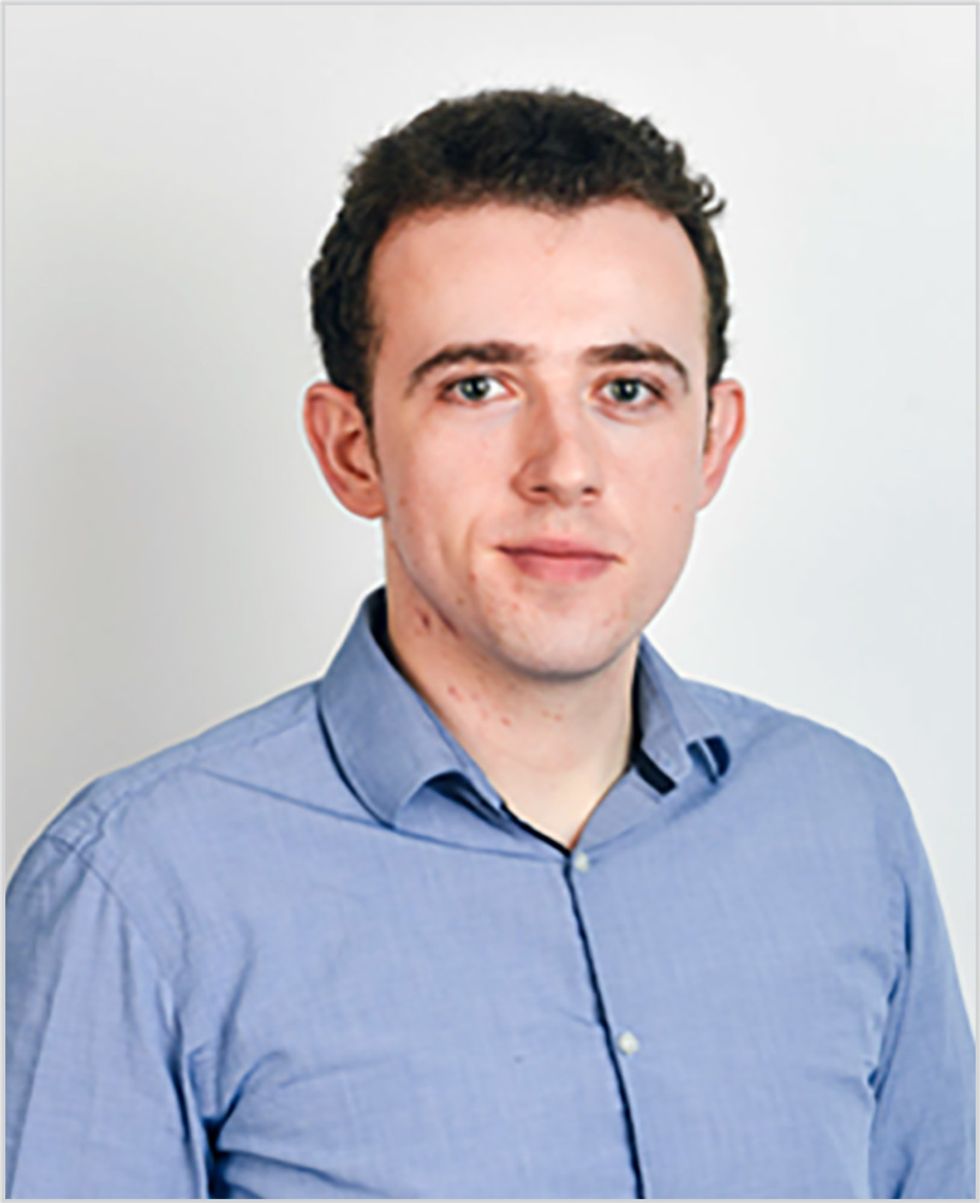
Curative, Inc. Founder Fred Turner is the man behind L.A.'s push to bring universal testing to the region.

For weeks he lived in hotels as he created what has become the backbone of testing in America's second largest city. The company, one of the few saliva-based tests that have gotten emergency approvals from the FDA, has a 10% false negative rate, according to their own non-peer reviewed studies. Turner argues the rate is better than most of the nasal swab testing out there and oral tests, which can be self-administered, are the only way the country can reopen quickly.

He is now operating two labs, one in San Dimas another in Washington D.C., with plans for several more across the nation. Meanwhile, the rest of the country is watching to see if Los Angeles' promise of universal testing meets the expectations with some already complaining about the difficulty of securing an appointment.

dot.LA: Curative is responsible for 95% of Los Angeles COVID-19 tests. Can you meet the demand for universal testing?

Curative, Inc. Founder Fred Turner: We will be able to fulfill demand. There's more infrastructure that needs to be put in place. With the collection site, the mayor's office has been working hard to scale those up and make sure that the collection site infrastructure is in place. On the lab side, we definitely have enough capacity to serve the area.

In (the San Dimas) lab we have capacity for about 20,000 per day. We're going to be scaling this lab up to 30,000 over the next week or so, eventually, probably slightly more than that.

Ultimately, the goal is to do as many tests as we need to reopen the country and I think we've had many different estimates of how many that might be. I've heard estimates (that it will take) as high as five million tests a day to reopen, but the current supply chain is nowhere near going to be able to keep up with that. The next goal we are shooting for is a million tests a week by about mid-May, end of May.

If we're testing more people will that strain the turnaround time? Right now, I understand it's about 24 to 72 hours. Can you take it down to several hours or even minutes?

We are always aiming to push it down. I think it can be pushed under 24 hours, but we tend to focus more on scaling it up at that point. I think 24 hours is around optimal as you bring on more capacity. We're obviously being careful to match the capacity coming into the lab against the turnaround.

Curative is one of the few companies that the FDA has provided emergency approval for use of a saliva test. Do you think this is the answer to universal testing nationally?

Oral fluids is the technical term, which is slightly different from saliva. Our protocol involves having the person cough first, which releases virus from the upper and lower respiratory tract. Some of that is then caught in the saliva, and also viruses in the saliva. The idea is you're effectively sampling multiple sites at once, which we think gives a slight increase in the sensitivity of the testing.

Self-collected sampling has got to be the way forward. There's just no way that we can do a million nasal pharyngeal swabs, or we call them 'brain swabs,' it's just not practical. We don't have the medical staff, and as a country we just can't do that many swabs. And so the way forward is going to be self collection. That's the only thing we can do at scale.

Covid-19 Oral Fluid Test Kit Instructionswww.youtube.com

Curative recently secured a contract with the Department of Defense. What's next?

We haven't settled on the exact number, but we will be in a large number of states. That is the plan, building out the infrastructure for this kind of testing. We can take the L.A. model and scale it across the country. We have a version of the drive-thru software that other cities and states can take. We have all the training material. We have a team that fly around the country setting up these drive-thru sites. We have really tried to make a plug-and-play package where cities and states that want to launch drive-thru testing, we have everything they need.

Is Los Angeles a testing ground and a proving ground for national efforts?

Yeah, I think Mayor Garcetti has definitely demonstrated what can be done if the city moves very quickly to build out the infrastructure, I do think the drive-thru testing, walk through testing is going to be an essential component of this.

It's just much faster to get the samples to the lab than shipping it out and then shipping it back again. The infrastructure piece is critical for getting these tests out there and we're working with several other states now on building out a similar infrastructure. Some of them have existing programs that we would be plugging into and expanding, and some of them are looking to roll out their own similar programs. You can test a lot more people with the oral tests with far fewer staff.

What are the challenges with the supply chain in terms of making your tests more widely available?

We need more plastic, more robots, more people. Most of the components that go into these tests are just already maxed out in their production capacity. And so we've been throwing online a bunch of internal production, such as injection molding to make our swab kit tubes, as well as bringing on other sources of similar materials that are not being used for COVID-19 testing and validating them for COVID. So for the swabs, for example, we use a swab type that is usually used for testing clean rooms. It works just as well for COVID testing, but nobody else is using it for that purpose.

We don't want to be competing with other people, stopping them from getting access to resources. We want to bring on new supply so it's not a zero- sum game, and the total amount of tests will increase. But, I think distribution is going to be a bigger bottleneck over the next month. Los Angeles has done a fantastic job in building out infrastructure and collection. That needs to happen now across the whole country.

What would it take to meet national demand?

It would take a network of multiple labs that we are calling gigalabs that can process 50,000 to 100,000 tests a day across the country and a significant scale up in the production of the physical components that go into the tests. We've been investigating lab sites in a few states, something central like Texas or Colorado.

Are you concerned that you have too high of a false negative rate at 10%?

All COVID tests will have false negative rates. In our studies, we demonstrated that the sensitivity is at least as good if not better than the nasal pharyngeal swab tests. So, there will definitely be false negatives as there will be in every test, but we think the data supports us having a low rate of false negatives. The sensitivity is about 90%.

When you include all patients, the nasal pharyngeal came in at about 79%. A new (non-peer reviewed) Yale study shows a higher sensitivity from saliva and all fluids than the nasal pharyngeal. I don't think we have the evidence to say that we're better yet, but we have the evidence to say that we're at least equivalent. The ease of doing oral tests and the accessibility is obviously significantly better. We're not using PPE. We're not exposing healthcare workers. It's just a much easier test to roll out that people can test themselves.

File:Florida National Guard (49677710741).jpg - Wikimedia Commonsupload.wikimedia.org

At one point, Curative was attempting to roll out at-home testing and then had to pull back after FDA warnings. Will you be making home testing kits again?

I can't give a time estimate but we are actively working with the FDA right now. I think their concern is "can people adequately collect the sample, or will they do it wrong, and then get a negative test result," which is incorrect. Our plan is to use telemedicine observation. What we've seen in our clinical studies is that if you give people the chance to do it wrong, they will do it wrong. In fact when you have somebody observing, they read the instructions better and they collect a better sample. We're still working on the pricing and potentially looking at whether there is federal or state reimbursement for some of that testing and the potential of billing insurance.

Tracing technology has been promising. Do you have any plans to tie tests to these applications to testing?

We've had several conversations with contact tracing apps and we continue to work in collaboration with public health departments in their contract tracing efforts. Having the test is obviously one thing, but you have to use the information to actually stem the tide of COVID infection. And so, it is an essential step in working closely with various people.

I do like the app-based models where you obviously want to maintain people's privacy, but having people opt-in to share their location history if they test positive so you can contact nearby people.

What does Curative do once there's a vaccine? Are you obsolete?

The U.S. needs to maintain some kind of spare capacity so that next time we are not having to build all of this during a pandemic. But we are a strange company because our goal is to essentially put ourselves out of business. Ultimately, and I say this to everyone we hire, we don't know how long this will go on for. We want to provide as many tests as needed, but the goal is to end COVID and not be doing COVID testing anymore.

Curative took off in March when you arrived in Los Angeles from Silicon Valley, how has the journey been for you personally?

I don't have very much free time, but it's been a lot of fun to be able to work at this pace and have the support of people like the city, the mayor's office to really just do what is needed to scale this up. When we work with suppliers, and we say we're doing COVID testing, they just move heaven and earth to make things happen. It's been really inspiring to be a part of that push forward.

We are just pushing as hard as we can to scale up as fast as we possibly can and bring on as much testing as we can. The city opening up testing to everybody is kind of a culmination of that. We're making about 50,000 kits a day right now and we want to make that as widely available as we can. I would like to get a little more sleep.

The interview has been edited for clarity and brevity.

Correction: An earlier version of this story stated that Curative's saliva tests have a 10% false positive rate. In actuality, the tests have a 10% false negative rate.

Do you have a story that needs to be told? My DMs are open on Twitter @racheluranga. You can also email me.

From Your Site Articles
Related Articles Around the Web
https://twitter.com/racheluranga
rachel@dot.la
The Streaming Era Just Ate the Studio Era

🔦 Spotlight

Hello Los Angeles!

In a week where everyone was already arguing about what “the future of entertainment” is supposed to look like, Netflix decided to skip the debate and buy a giant piece of the past and, possibly, the future. Netflix announced a definitive agreement to acquire Warner Bros. Discovery’s Studios and Streaming business, including Warner Bros. film and television studios plus HBO and HBO Max. This is not just another media merger. It is a power transfer, from the studio era where the gatekeepers were greenlight committees to the platform era where the gatekeepers are subscriber relationships, home screens, and retention math.

Here are the bones of the deal. WBD shareholders would receive $27.75 per share, made up of $23.25 in cash and $4.50 in Netflix stock, with the stock portion subject to a symmetrical collar. Netflix puts the transaction at roughly $72 billion in equity value and $82.7 billion in enterprise value, and expects it to close in 12 to 18 months, but only after WBD completes its planned separation of its Global Networks business into Discovery Global, now expected in Q3 2026.

Now zoom in on why this matters in Los Angeles specifically.

LA’s creative engine is about to be run by a single, very efficient distribution machine

Warner Bros. is not just a studio. It is an institutional muscle memory for how to develop, package, and produce at scale, plus a library and franchises that can carry a business through multiple economic cycles. Netflix is not just a distributor. It is the largest direct to consumer entertainment subscription platform on earth, built around global reach, product iteration, and data feedback loops. Put them together and you get a company that can create, market, distribute, and monetize premium entertainment without needing anyone else’s permission.

That will sound exciting to some creators and terrifying to others, often for the same reason. When the same entity owns the audience relationship and the content factory, it can take bigger swings because it has more margin for error. It can also take fewer swings because it does not need to. The incentive shifts from “What is culturally important?” to “What makes people stay?” Those are sometimes the same question. Sometimes they are not.

This deal won’t be decided in a writers’ room. It’ll be decided by regulators.

This is exactly the type of consolidation regulators have been itching to interrogate. A combined Netflix plus HBO Max instantly raises questions about market power, competition, and pricing, plus downstream effects on theaters, independent studios, and negotiating leverage with talent. Even if Netflix vows to maintain current operations and keep the consumer experience strong, the political story is straightforward: fewer giant buyers typically means less bargaining power for everyone who sells into the system.

Also worth noting, Reuters reports a termination fee of $5.8 billion under certain circumstances, which tells you both sides are bracing for a drawn out, high scrutiny process.

The quiet subtext: the bundle is coming back, just wearing a streaming hoodie

Netflix will almost certainly pitch this as more choice and better value. Regulators will hear less competition. Consumers will hear how much is this going to cost me. The most plausible end state is not a single mega app on day one. It is a reimagined bundle: separate brands, packaged pricing, shared sign on, cross promotion, and eventually tighter integration if the politics and churn math allow it.

The real disruption is not whether HBO Max keeps its name. It is whether Netflix becomes the default front door to premium scripted entertainment globally.

🤝 Venture Deals

      LA Companies

      • Castelion, a Torrance based defense technology startup, raised a $350M Series B round led by Altimeter Capital and Lightspeed Venture Partners, with participation from investors including Andreessen Horowitz, General Catalyst, Lavrock Ventures, Space VC, Avenir and Interlagos Capital. The money will be used to scale production of its Blackbeard hypersonic weapon, stand up its Project Ranger manufacturing campus in New Mexico, and support multiservice testing and integration with U.S. Army and Navy platforms starting in 2026. - learn more
      • Antares announced a $96M Series B to accelerate an iterative “build, test, iterate” approach to developing nuclear reactors quickly, with the funding going toward hardware and subsystem testing, fuel fabrication, manufacturing, and the infrastructure to turn on a reactor. The company says it plans a low-power “Mark-0” reactor demonstration in 2026 at Idaho National Laboratory, with a pathway to a full-power electricity-producing reactor as early as 2027 and a commercial prototype microreactor (“Mark-1”) after the Mark-0 milestone. - learn more

        LA Venture Funds

        • With FirstLook Partners participating, Flex raised a $60M Series B led by Portage, bringing its total equity raised to $105M to build an AI native finance platform for middle market business owners. The company says it will use the new funding to accelerate product expansion and scale its AI agent infrastructure across areas like private credit, business finance, personal finance, payments, and ERP. - learn more
        • Led by MTech Capital, Curvestone AI raised a $4M seed round with participation from Boost Capital Partners, D2 Fund, and Portfolio Ventures to scale its AI automation platform for regulated industries like financial services, legal, and insurance. The company says it’s tackling the “compound error” problem that makes multi step AI workflows unreliable, and will use the funding to accelerate product development and go to market expansion. - learn more
        • Co-led by CIV, Unlimited Industries raised a $12M seed round (alongside Andreessen Horowitz) to scale its “AI-native construction” approach to designing and building major infrastructure projects. The company says its platform can generate and evaluate massive numbers of design configurations to optimize for cost, safety, and performance, cutting pre-construction engineering timelines from months to weeks, and it is initially focusing on projects that rapidly expand U.S. power capacity for things like data centers, critical minerals, and advanced manufacturing. - learn more
        • With Hyperion Capital participating (alongside Amplify Venture Partners, Spark Capital, Tamarack Global and others), Antithesis raised a $105M Series A led by Jane Street, which is both an investor and an existing customer. The company says it will use the capital to accelerate its deterministic simulation testing platform and scale go to market efforts across North America, Europe, and Asia, positioning the product as “critical infrastructure” for teams running complex distributed systems. - learn more
        • With XO Ventures participating, Orq.ai raised an oversubscribed €5M seed round led by seed + speed Ventures and Galion.exe to help enterprises build, deploy, and manage production grade AI agents with stronger control over data, behavior, and compliance. The company says the funding will accelerate expansion of its platform, including its newly launched Agent Studio and managed runtime, as it pushes to close the “AI production gap” for companies moving beyond demos into real deployment. - learn more
        • Untapped Ventures participated in Lemurian Labs’ oversubscribed $28M Series A, co-led by Pebblebed Ventures and Hexagon, as the company builds a software-first platform designed to run AI workloads efficiently across any hardware and across edge, cloud, and on-prem environments. Lemurian says the funding will help it expand engineering, accelerate product development, and deepen ecosystem collaborations aimed at reducing vendor lock in and infrastructure costs. - learn more
        • Fifth Wall and Park Rangers Capital participated in Ridley’s $6.4M seed round, which Fifth Wall led, backing the company’s push to rebuild the real estate process around consumers with fewer commission-heavy frictions. Ridley says the capital will help launch an AI-powered buy-side experience that surfaces private, for-sale, and “soon-to-be-listed” homes using predictive analytics, while also expanding its commission-free seller tools and “Preferred Agents” network for on-demand support. - learn more
        • Anthos Capital participated in Kalshi’s $1B Series E at an $11B valuation, a round led by Paradigm with other backers including Sequoia, Andreessen Horowitz, Meritech, IVP, ARK Invest, CapitalG, and Y Combinator. Kalshi says its trading volume now exceeds $1B per week across 3,500+ markets, and it will use the new capital to accelerate consumer adoption, integrate more brokerages, strike news partnerships, and expand product offerings. - learn more

                        Download the dot.LA App

                        Perelel, the LA startup quietly fixing women’s health

                        🔦 Spotlight

                        Happy Friday LA!

                        While the market obsesses over the latest AI tool, one of the most interesting checks this week went to something more basic and much harder to fake: women’s health.

                        Perelel, a doctor founded, research backed supplement company for women, just raised 27 million dollars in growth funding led by Prelude Growth Partners, with existing investors including Unilever Ventures, Willow Growth Partners and Selva Ventures coming back in. Co founded by CEO Victoria Thain Gioia, who comes from a background in finance and operating roles at consumer brands, former media executive Alex Taylor, and OB GYN Dr. Banafsheh Bayati, the company has spent the last five years quietly building a profitable business that has doubled revenue year over year and has some of the strongest subscriber retention in its category.

                        Image Source: Perelel

                        The wellness aisle is crowded with influencer brands and one size fits all multivitamins. Perelel is trying to be the adult in the room. The team designs products with OB GYN input, clinical backing and formulas tailored to specific chapters of a woman’s hormonal life, from fertility and pregnancy to postpartum, perimenopause and beyond. Most of its line now carries a Clean Label Project Purity Award, which is a polite way of saying they’re willing to have someone else check what’s actually in the bottle.

                        This round is less about a splashy launch and more about upgrading the cap table and the support system. The founders used the raise to buy out early angel investors and bring in Prelude Growth, a women-founded firm with a track record in modern consumer health and beauty. The new capital is aimed at deeper research, more life stage specific products and broader distribution rather than chasing the trend of the month.

                        In a category that has historically treated women’s health as an afterthought, a clinically serious, women led company raising growth capital to build a full lifecycle platform feels like a meaningful data point. Scroll down for this week’s LA venture deals, funds and acquisitions.

                        🤝 Venture Deals

                            LA Venture Funds

                            • Anthos Capital participated in Kalshi’s new $1B funding round, which values the CFTC-regulated prediction market platform at $11B and was led by returning investors Sequoia Capital and CapitalG alongside Andreessen Horowitz, Paradigm and Neo. The capital will help Kalshi scale its event-contracts exchange, expand beyond politics into areas like macro data and business events, and compete more aggressively with rival prediction platforms as institutional and retail interest in trading real-world outcomes grows. - learn more
                            • UP Partners participated in Point One Navigation’s $35M Series C round, backing the San Francisco-based precise location startup alongside lead investor Khosla Ventures and fellow existing investors IA Ventures and Alumni Ventures. The company provides centimeter-level GNSS correction and positioning services for “physical AI” applications like autonomous vehicles, robots and smart equipment, and plans to use the new funding to expand its Polaris RTK network, enhance its location platform and grow its team across R&D, OEM integrations and international operations. - learn more
                            • Embark Ventures participated in QSimulate’s latest seed financing, which brings the Boston-based quantum simulation startup’s total funding to just over $11M. The company also launched QUELO v2.3, a new generation of its quantum-powered drug discovery platform that uses real-time quantum mechanics to model drug–protein interactions far faster than traditional methods, and it plans to use the capital to scale operations and support growing collaborations with major pharma and tech partners. - learn more
                            • Cultivate Next, Chipotle Mexican Grill’s venture fund, participated in Athian’s $4M Series A round, backing the Indianapolis-based startup alongside Ajinomoto Group Ventures, Mondelēz International’s Sustainable Futures platform and a roster of existing strategic investors from across the livestock and food value chain. Athian, founded in 2022, operates a platform that aggregates, verifies and monetizes on-farm greenhouse gas reductions so food brands can hit their Scope 3 climate targets, and it says it has already facilitated $18M in payments to farmers as it expands its protocols, species coverage and international footprint. - learn more
                            • Fika Ventures joined Coverbase’s $16M Series A as a returning investor from the seed round, backing the company alongside lead investor Canapi Ventures and others. The San Francisco based startup uses AI agents to automate vendor procurement and third-party risk review for regulated enterprises, serving customers like Coinbase, Okta and Nationwide, and the new funding will help it expand into contract management, continuous security monitoring and a larger go-to-market team. - learn more
                            • BroadLight Capital and HeartBeat Ventures are among the investors backing Function Health’s $298M Series B round, which values the company at $2.5B and supports its push to become a new standard in proactive, data-driven healthcare. The Austin-based startup offers a membership platform that combines extensive lab testing with AI to help people track and manage their health, and it’s using the new capital to launch its Medical Intelligence Lab, an initiative aimed at turning that data into personalized medical insights at scale. - learn more
                            • Hallwood Media joined Menlo Ventures and other investors in Suno’s $250M Series C round, which values the AI music startup at $2.45B. The Cambridge based company lets users generate fully produced songs from text prompts and is using the new funding to expand tools like its Suno Studio workstation and next-generation music models, even as it navigates high-profile copyright lawsuits from major record labels. - learn more
                            • Upfront Ventures joined the $7M seed round for alphaXiv, investing alongside co-leads Menlo Ventures and Haystack, plus Shakti VC, Conviction Embed and several high-profile angels. The San Francisco based company runs a platform that helps AI practitioners and researchers discover, compare and apply cutting-edge AI papers, benchmarks and implementations, and it plans to use the new funding to further bridge the gap between fast-moving AI research and real-world production deployments. - learn more
                            • Regeneration.vc joined TULU’s $37M Series A extension as an existing investor, backing the company alongside GreenSoil PropTech Ventures, Bosch Ventures, New Era Capital Partners and others. TULU runs an AI powered product access platform that installs shared, IoT enabled units inside residential and commercial buildings so residents can rent or buy items like appliances, e scooters and household essentials on demand, and the new funding will help the company scale its “TULU Brain” data engine and expand its footprint beyond the 500,000 residents it already serves across North America and Europe. - learn more
                            • WndrCo has joined Method Security’s $26M combined seed and Series A round, alongside Andreessen Horowitz, General Catalyst, Blackstone Innovations and others. The startup, which operates out of New York and Washington DC, is building an autonomous cyber platform that combines offensive and defensive tools into a digital twin of an organization, helping US government agencies, the Department of Defense and large enterprises continuously test and strengthen their defenses against AI driven threats, a thesis that fits neatly with WndrCo’s focus on infrastructure and security. - learn more
                            • Coral Tree Partners has led a new Series B round for KERV.ai, backing the Austin based company as it scales its AI-powered contextual commerce and video advertising platform. The funding will be used to invest in R&D, technology, talent and infrastructure so KERV.ai can further expand its interactive, shoppable video solutions and first-party data targeting tools for brands, agencies and publishers, while pushing into new markets and strategic partnerships. - learn more
                            • CIM Group and Group 11 are backing Venn’s new $52M Series B, with CIM co-leading the round alongside NOA and Group 11 re-upping as an existing investor. The New York and Tel Aviv based company builds an operating system for multifamily housing that unifies data and workflows so landlords and operators can run buildings more efficiently and treat them like modern consumer brands. Over the last 18 months, Venn says it has expanded across dozens of U.S. states, partnered with hundreds of owners and operators, and grown annual recurring revenue ninefold, setting up this round to fuel further product development and market expansion. - learn more
                            • Walkabout Ventures led Barker’s $3.5M seed round, backing the New York based fintech as it builds warrantied AI valuations for illiquid, hard-to-price assets in asset-backed lending. Barker’s platform uses an “agentic valuation system” and insurance from Munich Re to warranty its AI-generated prices on assets like aircraft, equipment, art and GPUs, so lenders are protected if the collateral ultimately sells for less than the model predicted, and the new funding will help the company expand into more asset classes and deepen partnerships across banks and private lenders. - learn more
                            • Freeflow Ventures joined Erg Bio’s $6.5M seed round, investing alongside lead Azolla Ventures, Chevron Technology Ventures, Plug and Play and other strategic backers. Erg Bio is developing its Aspire platform, a flexible, low-temperature pretreatment and catalytic process that turns agricultural and forestry waste into intermediates for synthetic aviation fuel and critical biobased chemicals, and the new capital will help scale the technology, expand engineering and bioprocessing teams, and move toward pilot-scale demos. - learn more
                            • Pinegrove Venture Partners participated in Ramp’s new $300M financing round, joining Lightspeed Venture Partners and a long list of existing and new backers as the company’s valuation hit $32B. The New York based spend management and corporate card platform now generates over $1B in annualized revenue, serves more than 50,000 business customers and processes upwards of $100B in annual purchase volume, and this fresh capital will support continued product expansion and enterprise growth. - learn more
                            • Alexandria Venture Investments and B Capital joined Solve Therapeutics’ new $120M financing round, backing the San Diego based biotech alongside lead investor Yosemite and a broader syndicate that includes Merck & Co. and other life sciences funds. The company is developing next-generation antibody-drug conjugates for solid tumors using its proprietary CloakLink linker platform, and it plans to use the capital to advance its lead programs SLV-154 and SLV-324 through Phase 1b trials and further build out its ADC and diagnostics pipeline. - learn more
                            • Factorial Funds joined Sakana AI’s $135M Series B round, backing the Tokyo-based startup as it doubles down on building efficient, Japan-focused AI models rather than chasing ever-larger, compute-heavy systems. The financing, which values Sakana at about $2.65B, will help expand its “sustainable AI” research and grow its team as it rolls out sovereign, culturally tailored AI solutions for Japanese enterprises and sectors like finance, manufacturing, and government. - learn more
                            • Smash Capital joined AVP and other investors in backing Flatpay’s latest round, which raised roughly €145–170M and crowned the Danish SMB payments startup as Europe’s newest fintech unicorn at around a €1.5B valuation. The company, which offers flat-rate card terminals and POS systems for small merchants, has scaled to roughly 60,000 customers and over €100M in ARR, and will use the fresh capital to accelerate European expansion, deepen its product stack and significantly grow headcount. - learn more
                            • Fusion joined No Barrier’s oversubscribed $2.7M seed round, investing alongside lead backers A-Squared Ventures, Esplanade Ventures and Rock Health Capital to scale the company’s AI-first approach to medical interpretation. The San Francisco based startup integrates real-time, HIPAA-compliant language interpretation into hospital systems and EHRs across 40+ languages, and will use the new funding to expand deployment across U.S. care settings and further reduce health disparities for patients with limited English proficiency. - learn more
                            • Matter Venture Partners joined Vertex Ventures and other global investors in backing Ruochuang Technology’s Pre A round, which totals tens of millions of dollars to fuel the company’s next stage of growth. The startup develops low speed robotics and related IoT hardware, spanning technology R and D, device manufacturing and sales, and this new capital will help it deepen intelligent hardware research and expand its market footprint as demand for smart manufacturing and IoT applications accelerates. - learn more
                            • B Capital joined Shipday’s $7M Series A as a participating investor, re-upping after leading the company’s 2023 seed round and backing the Menlo Park–based startup alongside co-leads ECP Growth and Ibex Investors. Shipday provides an AI-powered last-mile delivery and logistics platform for SMBs like restaurants and local retailers, and it plans to use the new funding to build out features such as its AgentFlow automation engine, deepen integrations, and expand its global reach beyond the 5,000 businesses it already serves in 100+ countries. - learn more
                            • MANTIS Venture Capital participated in Bedrock Data’s $25M Series A round, joining lead investor Greylock Partners alongside Mangusta Capital, Pier 88 Investment Partners and others to back the Menlo Park based data security startup. Bedrock Data provides an AI-native, data-centric security and governance platform powered by its “Metadata Lake,” and it plans to use the new funding to accelerate product development and expand go-to-market efforts as enterprises look to secure data across cloud, SaaS and AI systems at multi-petabyte scale. - learn more
                            • TenOneTen Ventures and Wedbush Ventures joined Meadow AI’s $6M in total funding, including a $4.5M seed round they backed alongside co-lead Leadout Ventures and other investors. The Seattle-based startup is emerging from stealth with a multimodal AI platform that helps restaurants and retailers monitor real-time operations and automate “secret shopper” audits across 10–300-location chains, already driving more than $2.5M in contracted ARR as it targets further growth in physical retail. - learn more

                                  LA Exits

                                  • Neotech, a long-time provider of high-reliability electronic manufacturing services, has been acquired by private equity firm Arkview Capital in a deal that marks a major new chapter for the company. With Arkview as its new owner, Neotech plans to strengthen its balance sheet, invest in next-generation manufacturing, and expand its capabilities across core markets like defense, aerospace, medical and industrial electronics, while continuing to emphasize quality, reliability and customer service. - learn more

                                              Download the dot.LA App

                                              CHAOS in the Skies, Valar in the Core and Robotaxis on the 405

                                              🔦 Spotlight

                                              Hello LA!

                                              If you are reading this while watching the clouds stack up over the city, you are not wrong. The forecast is calling for heavy rain and possible flooding through Sunday, so consider this your permission slip to cancel a few plans, stay dry and catch up on what the hard-tech crowd has been building this week.

                                              Let us start with the least subtle name in local defense tech. CHAOS Industries just closed a $510 million dollar round led by Valor Equity Partners, valuing the company at $4.5 billion dollars and pushing its total funding past the $1 billion dollar mark in under three years. The company builds Coherent Distributed Networks radar, essentially a mesh of smaller, lower cost sensors that can pick up drones and other low flying threats minutes earlier than legacy radar systems, a gap that has become painfully obvious on modern battlefields. The new capital is going toward product development and manufacturing so militaries and border agencies can actually field these systems at scale rather than treating them as one-off experiments.

                                              What makes CHAOS interesting is not just the size of the round but the architecture choice. Instead of a single massive radar on a hill, they are betting on distributed, software first networks that can be upgraded, repositioned and re-tasked as threats change. It is a very cloud-era way of thinking about defense hardware, and it is pulling engineers from a mix of aerospace, gaming and traditional software backgrounds into a category that used to be the domain of slow, closed incumbents.

                                              Image Source: Valar Atomics

                                              If CHAOS is focused on keeping the skies manageable, Valar Atomics wants to keep the lights on for everything that needs compute. The Hawthorne based nuclear startup raised $130 million dollars in Series A funding led by Snowpoint Ventures, with participation from Crosscut Ventures and a roster of deep tech backers that includes Palmer Luckey and Palantir CTO Shyam Sankar. Valar is building compact, high temperature gas reactors that use TRISO fuel and helium coolant, designed for strong safety characteristics and very high operating temperatures.

                                              Instead of a single gigantic nuclear plant, Valar’s plan is to mass produce one standardized reactor design and cluster hundreds of them on “gigasites” that sit directly behind the meter for big energy users. Think hydrogen production, AI data centers, heavy industry and synthetic fuel plants, not just electrons on the grid. Construction is already underway on a first test reactor in Utah, targeted for completion in 2026, and the company is positioning itself as part of a new wave of nuclear companies that treat reactors as a product you replicate, not a megaproject you tolerate.

                                              Image Source: Waymo

                                              On the consumer side, your weekend mobility options are getting an upgrade too, weather permitting. Waymo has begun routing paid robotaxi rides onto freeways in Los Angeles, alongside San Francisco and Phoenix, after years of staying mostly on surface streets. The company says freeway segments can cut some trip times by as much as half, making a driverless ride to LAX or a cross town trek on the 405 feel less like a novelty and more like a practical option. Regulators and human drivers now have to figure out what it means to share the fast lane with cars that never get tired and never text at red lights.

                                              Image Source: Apple

                                              Apple is also coming for the least fun part of any LA trip: the airport ID check. The new Digital ID feature lets you create a passport based identity inside Apple Wallet that TSA will accept at more than 250 airports for domestic travel, including LAX. You scan your passport, verify with Face ID and then present your Digital ID at TSA checkpoints using your iPhone or Apple Watch without handing over your device. It will not replace a physical passport for international flights, but it does mean boarding passes, credit cards and ID can all live in the same tap-to-go flow the next time you sprint to Terminal 4.

                                              Between radar that sees drones earlier, reactors that promise industrial scale clean power and robotaxis that hop on the freeway, a lot of the future is quietly being wired in while you hunt for an umbrella. Stay safe, stay dry this weekend and keep scrolling for this week’s venture rounds, fund announcements and acquisitions.

                                              🤝 Venture Deals

                                                  LA Companies

                                                  • Skims has raised $225M in new funding at a $5B valuation, in a round led by Goldman Sachs Alternatives with participation from BDT & MSD Partners. The company plans to use the capital to accelerate its shift toward brick-and-mortar retail and international expansion, while continuing to invest in product innovation across intimates, shapewear, apparel, and activewear, including its new NikeSKIMS collaboration; Skims is on track to surpass $1B in net sales in 2025, just six years after launch. - learn more
                                                  • Neros has raised $75M in a Series B round led by Sequoia Capital, with participation from existing investors Vy Capital US and Interlagos, bringing its total funding to over $120M. The El Segundo based defense drone startup will use the capital to massively scale production of its Archer and Archer Strike FPV drone platforms and ground control systems, expand industrial capacity, and deepen a China-free, allied supply chain. The raise coincides with Neros being selected as one of the primary FPV drone suppliers for the U.S. Army’s Purpose-Built Attritable Systems program, following a major Marine Corps drone order. - learn more

                                                          LA Venture Funds

                                                          • BAM Ventures joined Exowatt’s new $50M financing round, backing the Miami based company’s push to deliver dispatchable, American made solar power to AI data centers and other energy hungry industrial sites. The round, an extension of Exowatt’s $70M Series A led by MVP Ventures and 8090 Industries, brings the company’s total funding to $140M in under two years. Exowatt will use the capital to expand U.S. manufacturing and scale deployments of its modular P3 system, which stores solar energy as heat and converts it to electricity on demand to provide round the clock, grid independent power. - learn more
                                                          • WndrCo joined the $145M Series B round for Alembic, the AI marketing analytics startup it first backed in early 2024, as the company’s valuation jumped to $645M. The round was led by Prysm Capital and Accenture and will help Alembic scale its platform, which uses AI to link brand marketing across channels like TV, podcasts and social media to real sales outcomes. Alembic also plans to use part of the funding to build a new Nvidia powered supercomputing cluster in San Jose to support growing demand from enterprise customers. - learn more
                                                          • Magnify Ventures joined Joy’s $14M Series A round, backing the San Francisco based startup’s push to build an AI powered parenting platform that blends machine intelligence with real human experts. Co-led by Forerunner and Raga Partners, the funding coincides with the launch of the Joy Parenting Club app, which gives new parents and parents of toddlers 24/7 access to certified coaches plus AI driven guidance, milestone tracking and personalized product recommendations. Joy plans to use the capital to further develop its AI model, expand partnerships with baby and parenting brands, and grow its expert network to support families through more stages of childhood. - learn more
                                                          • Overture VC, via its climate focused Overture Climate fund, reupped in Harbinger’s $160M Series C round as the medium duty electric and hybrid truck maker continues to scale its U.S. built EV platform. The round was co led by FedEx, Capricorn’s Technology Impact Fund, and THOR Industries, and includes existing backers like Tiger Global, Ridgeline, Maniv Mobility, Schematic Ventures, Ironspring Ventures, ArcTern Ventures, Litquidity Ventures, and The Coca Cola System Sustainability Fund. Harbinger will use the capital to ramp production of its electric stripped chassis platform and fulfill an initial FedEx order for 53 Class 5 and 6 trucks, supporting large fleet electrification and last mile delivery use cases. - learn more
                                                          • Sound Ventures joined the $60M Series B round for GC AI, an AI platform built for in-house legal teams, alongside lead investors Scale Venture Partners and Northzone. The new funding values the San Francisco based startup at $555M and brings its total capital raised to $73M. GC AI will use the money to accelerate product development and deepen its integrations and AI agents, building on rapid growth to more than 1,000 customers, $10M in ARR, and 1.75 million legal prompts processed in under a year. - learn more
                                                          • Fulcrum Venture Group doubled down on its backing of Code Metal, joining the startup’s $36.5M Series A to support its push to bring verifiable AI powered code translation to mission critical industries. Led by Accel at a $250M valuation, the round also brought in RTX Ventures, Bosch Ventures, Smith Point Capital, Overmatch VC, AE Ventures, Shield Capital, J2 Ventures, and several strategic angels. Code Metal will use the capital to expand its platform across defense, automotive, and semiconductor customers, promising formally verified, regulation-ready code that can be ported between chips and modernized much faster than traditional methods. - learn more
                                                          • MarcyPen Capital Partners led Rebel’s $25M oversubscribed Series B to scale the company’s returns recommerce marketplace, which helps retailers resell open box and overstock goods instead of sending them to landfills. The new capital will fund expansion into outdoor and sporting goods categories with existing retail partners and support broader growth of Rebel’s tech platform, which processes and resells returned products at up to 70 percent off retail while tackling the trillion dollar returns problem. - learn more
                                                          • Halogen Ventures joined Auditocity’s $2M seed round alongside Techstars, Innovate Alabama, and several angel investors to help scale the company’s AI driven HR compliance auditing platform. The Alabama based startup plans to use the capital to expand nationally and deepen its intelligent automation tools so HR teams can spot compliance risks in real time and resolve issues before they become costly problems. - learn more
                                                          • Upfront Ventures joined Majestic Labs’ more than $100M financing as the AI infrastructure startup emerged from stealth with a new memory centric server architecture. Founded by ex Google and Meta executives, the company claims its all in one servers deliver up to 1000 times the memory capacity of top tier GPU systems, effectively replacing multiple racks with a single box for the largest AI workloads. Majestic will use the capital to grow its team, finish its full software stack, and run pilot deployments with customers looking to cut power use and costs while training massive models. - learn more
                                                          • Alexandria Venture Investments and Freeflow Ventures joined an oversubscribed round of more than $100M for Iambic, a San Diego based biotech using an AI driven discovery platform to develop new cancer therapies. The clinical stage company will use the fresh capital to expand its operations and advance a pipeline that includes IAM1363, a HER2 targeted candidate that has already shown early anti tumor activity, as well as additional AI designed programs and pharma partnerships. - learn more
                                                          • EGB Capital joined Extellis’ $6.8M oversubscribed seed round, backing the Durham based startup’s push to deliver reliable, all weather satellite imagery at industrial scale. Led by Oval Park Capital with participation from Duke Capital Partners, First Star Ventures, New Industry Ventures, Front Porch Venture Partners, and Blue Lake VC, the funding will support Extellis’ first satellite launch and initial product rollout. - learn more
                                                          • Core Innovation Capital joined Arrived’s $27M Series B style funding round, backing the Seattle startup’s push to make fractional real estate investing feel more like buying stocks. Led by Neo with participation from Forerunner Ventures, Bezos Expeditions, and other investors, the new capital will help Arrived scale its “stock market for real estate” platform and recently launched Secondary Market, which lets investors buy and sell shares of individual rental homes across the U.S. with just a few clicks. - learn more
                                                          • Strong Ventures participated in a new pre Series A round for Provotive, the company behind AI packaging design platform Packative. The round was led by Japanese VC firm Miraise, with Korean fund VNTG and a Japan based strategic CVC also joining. Provotive plans to use the capital to expand its AI driven packaging services across Japan, Korea, and the broader Asian market, helping brands quickly generate localized, customized packaging at scale. - learn more

                                                                LA Exits

                                                                • Nativo is being acquired by family safety and location app Life360 in a cash and stock deal valued at about $120M. The acquisition folds Nativo’s native ad platform, programmatic tools, and publisher network into Life360’s advertising business so brands can reach families both inside the Life360 app and across CTV, mobile, and premium web environments. The companies say the combined platform will offer a full funnel, privacy minded, “family safe” ad solution and expect the deal to close in January 2026, pending customary approvals. - learn more
                                                                • RealtyMogul, an online real estate crowdfunding and investment platform, has been acquired from its venture backers by The Wideman Company, a cash flow focused, high touch real estate investment firm. The deal gives RealtyMogul a long term owner while keeping its brand and digital marketplace intact, supporting a member base that has invested more than $1.2B of equity into properties valued above $8B. The Wideman Company says the acquisition will bring additional capital and strategic support to expand RealtyMogul’s offerings and deal flow for individual investors and real estate sponsors. - learn more

                                                                          Download the dot.LA App

                                                                          RELATEDEDITOR'S PICKS
                                                                          Trending