

Meet the Nonprofit Connecting Veterans With Psychedelic Therapy to Prevent Suicide

Samson Amore

Samson Amore is a reporter for dot.LA. He holds a degree in journalism from Emerson College. Send tips or pitches to samsonamore@dot.la and find him on Twitter @Samsonamore.

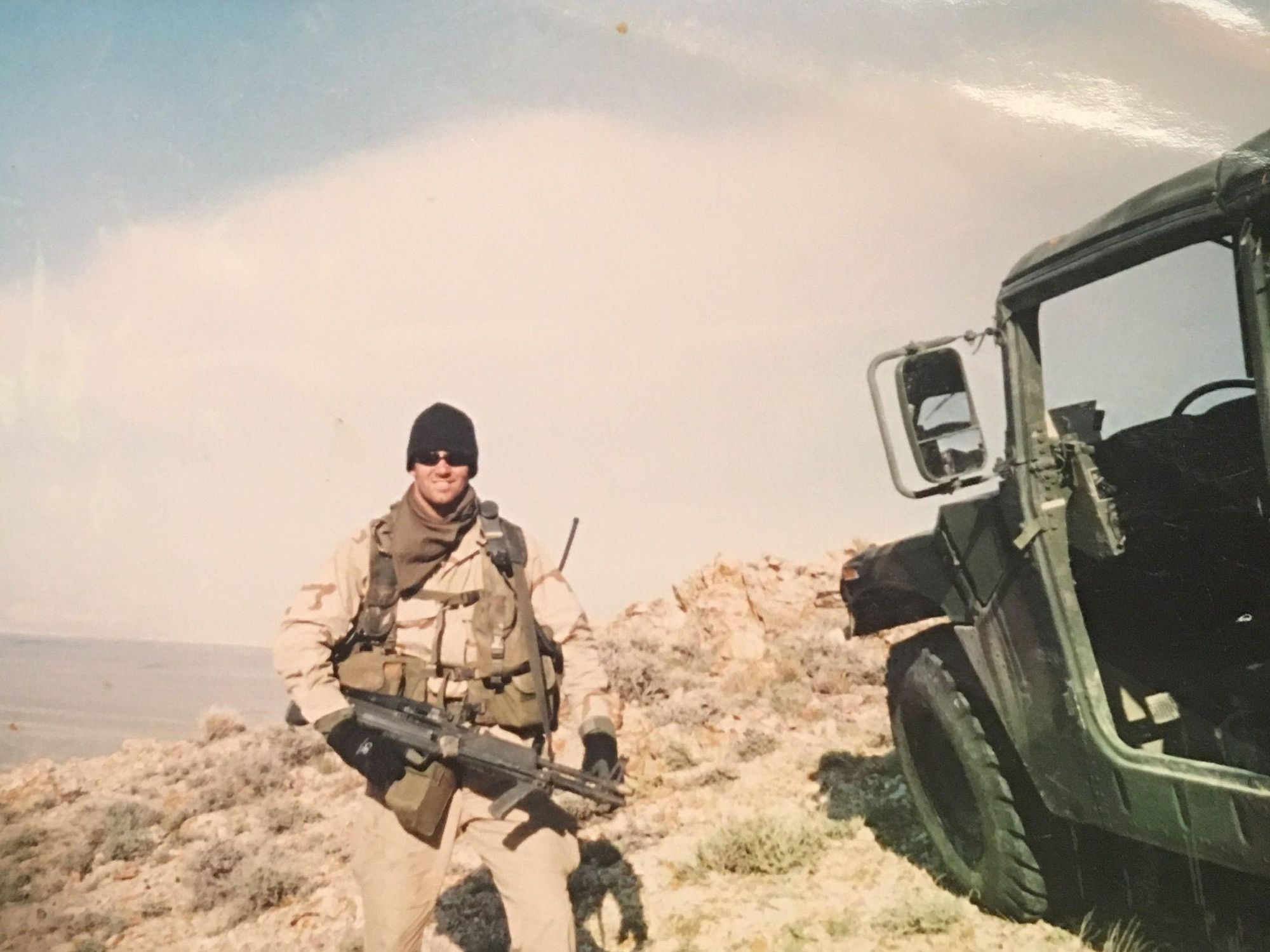
war veteran Marcus Capone
Photo: VETS

In 2013, Navy Seal Marcus Capone medically retired after 13 years of service. Throughout his military career, Capone served on the Seals’ elite counter-terrorism unit, Seal Team 6, and was deployed to Afghanistan shortly after 9/11.

After over a decade of warfare, Capone struggled to ease back into everyday life.

“I was terrified that I would lose Marcus to suicide and I was determined to find anything that could help him,” says Amber Capone, Marcus Capone’s wife and partner since the age of 17. “I at one point thought we had exhausted everything and had decided this was not a life that I could continue living… and then sitting with that realization, I remembered one friend who had done psychedelic therapy outside of the U.S.”


At first, Marcus was skeptical. But after having spent nearly seven years taking various antidepressants, sleeping pills, and focus medications, Marcus was out of options.

“He had nothing to lose,” Amber says. So they decided to check Marcus into a treatment center in Mexico for a “heroic dose” of Ibogaine, an anti-addiction compound found in a West African plant that indigenous peoples have used for years as a form of psychedelic therapy. Marcus followed his first Ibogaine treatment with DMT.

Commonly known as the “spirit molecule,” DMT is considered one of the most powerful psychedelics in existence and researchers are just beginning to document its potential benefits in treating an array of mental health ailments including PTSD and addiction.

“I felt the weight of the world on my shoulders, was super anxious and I was really depressed,” Marcus says. “I just came out of there feeling extremely light,” as though he’d condensed “ten years of talk therapy” into a single week.

In 2019, two years after Marcus’s initial brush with psychedelic therapy, he decided to form VETS (Veterans Exploring Treatment Solutions), a San Diego-based nonprofit that offers veterans grants to pursue psychedelic therapy outside the U.S. Amber serves as the nonprofit’s executive director while Marcus is its chairman.

Marcus Capone and wife Amber after he completed BUD/S training. Photo: VETS

Currently, 17 veterans die by suicide every day, 57% more than civilians in the same age range, according to a study released by the VA in September. According to the department, over 1.7 million veterans were treated for mental health problems last year.

“While VA is conducting initial studies of the effectiveness of psychedelic drugs as a form of treatment for veterans with PTSD and other serious mental health issues, it’s important to note that there is much more to learn at this time,” a spokesperson for the VA tells dot.LA. “We do not endorse or encourage the use of any psychoactive substances as part of a self-treatment program.”

VETS co-founder and Chairman Marcus Capone.

Photo: VETS

The agency also says that while it “must follow all federal laws regarding Schedule I drugs,” and that “VA health care providers may not recommend them or assist veterans to obtain them, ” veterans who choose to take or are taking illegal drugs, won’t be denied their VA benefits.

Since its launch two years ago VETS has raised $7 million and helped over 700 veterans seek treatment in Mexico and Costa Rica.

“The Navy SEAL community, we do probably one of the best jobs in the world at taking care of each other,” Marcus says. “We pick up the slack if we’re not getting the support that we need. It's always been that way.” Adding that our country has a bad track record of taking care of its veterans when they return home – “I went and did work with the Israeli SEALs and they said, ‘you guys are like the world's premier fighting force [and] your country sucks at taking care of you when you come back.”

There are some signs that these unconventional therapies could become more mainstream. In July Democratic Sen. Cory Booker and Republican Sen. Rand Paul introduced a bill that would grant terminally ill people access to therapies that are currently classified as schedule I drugs. Texas Republican Sen. Dan Crenshaw and New York Democrat Alexandria Ocasio-Cortez co-sponsored an amendment to the National Defense Authorization Act that instructed the Pentagon to conduct more research on psychedelics and passed in July. But currently the only psychedelic that can be legally prescribed in the U.S. is ketamine.

“This is an issue that seems to be very bipartisan, very purple, and [it’s] very exciting,” says Amber. “It's really encouraging to see our nation's leaders actually agree on something and not only just agree on it, but actually come out together in support of it.”

https://twitter.com/samsonamore
samsonamore@dot.la
A $26M Push Into Power in LA

🔦 Spotlight

Hello, Los Angeles.

Coachella Weekend 2 is here, which usually means LA is either heading back to the desert or happily staying put this time around. Back in the city, the focus this week is less about music infrastructure and more about something far more critical, power.

That’s where this week’s news comes in.

Critical Loop, a Los Angeles-based energy startup, raised a $26 million Series A to tackle one of the least talked about bottlenecks in tech right now, grid interconnection. In simple terms, it’s the process of getting power to where it’s needed, and increasingly, that process is too slow to keep up.

Critical Loop is building modular microgrid systems that can be deployed in days instead of years, giving industrial operators, data centers, and other energy-heavy users faster access to power without waiting on traditional grid upgrades. The round was led by Conifer Infrastructure Partners and Hanover, with participation from Better Ventures, Climate Capital, Adapt Nation Capital, and Cyrus Ventures.

The timing here matters. Between AI infrastructure demands, electrification, and a broader push toward domestic energy resilience, power is quickly becoming a gating factor for growth. You can build the data center, the factory, or the next big thing, but none of it works if you can’t turn it on.

That’s what makes companies like Critical Loop worth watching. They’re not building the flashiest part of the stack, but they’re solving for the piece everything else depends on.

And in a city that knows a thing or two about scaling ambition quickly, that might be the most important layer of all.

Below are this week’s fund announcements across LA 👇


🤝 Venture Deals

LA Venture Funds

  • Anthos Capital participated in Wealth.com’s $65M Series B, backing the AI-powered estate and tax planning platform as it scales across financial institutions. The oversubscribed round included new investors like Titanium Ventures and Pruven Capital alongside existing backers, and the company plans to use the funding to expand product development, pursue acquisitions, and grow its enterprise footprint as demand rises for AI-driven wealth management solutions. - learn more
  • Anamika Ventures participated in Sage Haven’s $3M pre-seed round, backing the AI-powered messaging and calling app designed to create a safer communication environment for kids. The round was led by Anamika Ventures alongside Fabric Ventures and a group of early-stage investors, as the company launches a platform focused on preventing cyberbullying through real-time AI moderation and parent oversight tools. - learn more
  • MANTIS Venture Capital participated in Factory’s $150M Series C, backing the AI startup as it builds autonomous software engineering systems for enterprise teams. The round was led by Khosla Ventures and included firms like Sequoia Capital, Blackstone, Insight Partners, and NEA, valuing the company at $1.5 billion. Factory plans to use the funding to invest further in product development and global expansion as demand grows for AI-driven tools that can automate large portions of the software development process. - learn more
  • Rebel Fund participated in Uplane’s $4.5M seed round, backing the AI startup as it looks to replace traditional marketing agencies with a platform that automates ad creation, testing, and budget optimization. The round was led by Play Ventures with participation from Y Combinator, 20VC, and Multimodal Ventures, and the company says its technology can improve return on ad spend by automating performance marketing workflows. - learn more
  • Alexandria Venture Investments and Presight Capital participated in Alloy Therapeutics’ $40M Series E, backing the biotech infrastructure company as it scales its AI-powered platform for drug discovery and development. The round included a mix of new investors like 8VC and JIC Venture Growth Investments alongside returning backers, valuing the company at $1 billion and underscoring continued interest in platforms that combine AI, data, and lab services across the biopharma lifecycle. - learn more
  • Finality Capital Partners participated in HYFIX’s $15M seed round, backing the semiconductor startup as it builds American-made chips designed to power drones and autonomous robots. The round was led by Craft Ventures with participation from Catapult Ventures, Multicoin Capital, and Sky Dayton, and the company is developing an integrated system-on-a-chip to replace fragmented hardware stacks and reduce reliance on foreign components. - learn more
  • Rainfall Ventures participated in Stendr’s $5.4M pre-seed round, backing the Norwegian defense tech startup as it builds an AI-native platform for drone detection and counter-drone operations. The round was co-led by Rainfall alongside ACME Capital and Skyfall, with additional participation from Antler, StartupLab, and other early-stage investors, and the company plans to use the funding to accelerate development of its multi-sensor technology and expand engineering capabilities. - learn more
  • Slauson & Co. participated in Slate Auto’s $650M funding round, backing the EV startup as it works to bring a lower-cost electric pickup truck to market. The round was led by TWG Global and comes as the Bezos-backed company prepares to begin production, targeting a more affordable segment of the EV market with a customizable truck expected to launch later this year. - learn more
  • Navitas Capital co-led Primepoint’s $10M seed round, backing the AI startup as it builds a platform that reads and connects complex construction drawings to streamline project workflows. The round also included investors like Penny Jar Capital, NextView Ventures, GS Futures, and Aglaé Ventures, and the company plans to use the funding to expand its platform and grow adoption among large commercial contractors. - learn more
  • Alexandria Venture Investments participated in Neomorph’s $100M Series B, backing the biotech company as it advances its molecular glue degrader platform targeting previously undruggable diseases. The round was led by Deerfield Management with participation from Regeneron Ventures, Longwood Fund, and Binney Street Capital, and the company plans to use the funding to support ongoing clinical trials and expand its broader drug development pipeline. - learn more

Download the dot.LA App

Hermeus Moves In. Uber Lines Up. LA Wins.

🔦 Spotlight

Hello, Los Angeles.

This week’s transportation news says a lot about where LA is headed and who wants to build here.

Start with Hermeus, which hit a $1 billion valuation after raising $350 million as it works on high-speed aircraft for defense applications. More notably for Los Angeles, the company is moving its headquarters to El Segundo, adding to the region’s growing aerospace and defense cluster. The round was led by Khosla Ventures, with participation from returning backers including Canaan Partners, Founders Fund, RTX Ventures, Bling Capital, and In-Q-Tel, along with new investors including Cox Enterprises, Socium Ventures, Destiny Tech100, Georgia Tech Foundation, 137 Ventures, and GSBackers.

Then there’s Uber, which made two separate autonomous vehicle announcements that both put Los Angeles in the rollout map.

The first is a partnership with Zoox, Amazon’s autonomous vehicle company. Uber said the service is expected to launch in Las Vegas in summer 2026 and then come to Los Angeles by mid-2027, giving riders the option to match with a Zoox robotaxi through the Uber app.

The second is a new deal with MOIA America, which plans to deploy autonomous ID. Buzz vehicles on the Uber platform in Los Angeles by the end of 2026.

Taken together, the message is pretty straightforward: LA is not just watching the future of transportation take shape, it is increasingly being used as the place to test it, scale it, and sell it. Hermeus is bringing its headquarters here as defense aviation regains momentum. Uber is lining up autonomous partners with Los Angeles as a target market. Different companies, different timelines, same conclusion: a meaningful share of the next transportation cycle is being built with LA in mind.

Below are this week’s venture deals, fund announcements, and acquisitions across LA.


🤝 Venture Deals

LA Companies
  • PeakMetrics raised a $6M Series A to scale its AI-powered narrative intelligence platform, which helps organizations track how information spreads online and identify risks from misinformation and coordinated campaigns. The round was led by Moneta Ventures with participation from Techstars, Parameter Ventures, VITALIZE Venture Capital, and Gurtin Ventures, and the company plans to use the funding to enhance its real-time detection capabilities and expand adoption across enterprise and government customers. - learn more
  • Hybron raised a $25M seed round to scale its advanced carbon fiber composite manufacturing technology, which aims to produce high-performance components faster and at lower cost than traditional methods. The round was led by Marque Ventures with participation from a mix of venture firms and strategic investors, and the company plans to use the funding to expand manufacturing capacity, grow its team, and support increasing demand from aerospace and defense programs. - learn more

LA Venture Funds

  • Emmeline Ventures participated in Osteoboost’s $8M funding round, backing the company as it expands access to its FDA-cleared wearable designed to treat low bone density in postmenopausal women. The round was led by Ambit Health Ventures with participation from Disrupt Health Impact Fund and others, and the company plans to use the capital to scale manufacturing, expand clinical research, and grow commercial adoption. - learn more
  • Bonfire Ventures led Juno’s $12M seed round, backing the AI-powered tax preparation platform as it aims to automate up to 90% of the manual work in tax filing for accounting firms. The round included participation from Impression Ventures and Xfund, and the company says its software can significantly reduce preparation time while keeping CPAs in the loop for review and advisory work. - learn more
  • Alexandria Venture Investments participated in Sidewinder Therapeutics’ $137M Series B, which will help fund the company’s push to bring its precision bispecific ADC cancer programs into the clinic. The round was co-led by Frazier Life Sciences and Novartis Venture Fund, and Sidewinder said it expects to advance its lead program into clinical development in 2027. - learn more
  • Slauson & Co. participated in Flora Fertility’s $5M seed round, backing the company as it builds what it describes as an individually owned fertility insurance platform that is not tied to an employer. The round was led by ManchesterStory, and Flora plans to use the funding to scale a model aimed at making fertility coverage more portable and accessible for consumers. - learn more
  • Mucker Capital participated in Fastrflow’s $375K early funding round, backing the startup as it builds a screen-aware AI copilot designed to assist students and professionals directly within their workflows. The company is focused on creating an assistant that can understand what’s on a user’s screen in real time to provide contextual help, positioning itself as a more integrated alternative to traditional standalone AI tools. - learn more

LA Exits

  • Modern Animal has been acquired by Chewy, giving the pet e-commerce giant a much bigger physical veterinary footprint as it expands deeper into healthcare. The deal brings Chewy an additional 29 clinics, 24/7 virtual care, and a membership-based model, and is expected to grow Chewy Vet Care from 18 to 47 locations nationwide while adding more than $125 million in annualized run-rate revenue. - learn more
  • Honk has been acquired by Frontenac, with the Los Angeles roadside assistance software company simultaneously completing an add-on acquisition of CurbsideSOS as part of the deal. The combination is meant to scale Honk’s platform for roadside assistance, towing, and accident management, with former Grubhub executives including Adam DeWitt, Matt Maloney, and Eric Ferguson joining the company to lead its next phase of growth. - learn more

Download the dot.LA App

Valar Atomics Wants to Power AI, Literally

🔦 Spotlight

Hello, Los Angeles.

This week’s spotlight belongs to a startup chasing one of the biggest and messiest questions in tech right now: where all the power for AI is actually supposed to come from. El Segundo-based Valar Atomics, founded by Isaiah Taylor, is reportedly raising $450 million at a $2 billion valuation to build clusters of small nuclear reactors aimed at powering data centers and other energy-hungry industrial sites.

That is not a subtle ambition. On its website, Valar says it wants to build “hundreds of nuclear reactors” on what it calls gigasites, focusing on grid-independent products including data center power, hydrogen, heavy industrial power, and clean hydrocarbon fuels. Its reactor approach is based on high-temperature gas reactor design principles using TRISO fuel, and the company is explicitly pitching its model as a way to meet the surge in power demand coming from AI.

Valar’s investor roster also helps explain why the company has drawn so much attention. The startup is backed by Palmer Luckey and Palantir CTO Shyam Sankar, and its earlier $130M round in November 2025 was led by Snowpoint Ventures.

What makes the story especially interesting is that this is not just another AI infrastructure company talking about faster chips or more efficient software. It is a bet that the next bottleneck is electricity itself, and that the winning response might look a lot more like hard infrastructure than cloud optimization. In a market full of startups promising to power the future metaphorically, Valar is making a much stranger and bolder claim: it wants to do it literally.

The company is also moving with unusual speed. Valar says it has been selected by the U.S. Department of Energy to achieve criticality on American soil by July 4, 2026 under the administration’s accelerated nuclear program, and related company materials tie its Project NOVA work to the Nuclear Reactor Pilot Program. Whether that timeline proves realistic or not, it tells you something important about the kind of company this wants to be: not a distant science project, but a startup trying to force nuclear power onto AI’s timetable.

And maybe that is the bigger LA angle here. For all the conversation around software, content, and consumer apps, Southern California keeps producing founders who are drawn to the hard stuff: defense, aerospace, energy, logistics, real-world systems with real-world constraints. Valar may still have plenty to prove, but it is hard to accuse this one of thinking small.

Now onto this week’s LA venture deals, fund announcements and acquisitions.

🤝 Venture Deals

                  LA Venture Funds

                  • Matter Venture Partners participated in Anvil Robotics’ $5.5M seed round, which it led and which also included Humba Ventures, DNX Ventures, Vivek Sodera, Spacecadet Ventures, and Position Ventures. Anvil said it is building a kind of “Legos for robots” platform for physical AI teams, with open-source custom robots that can ship in one to two days, and has already delivered more than 100 units globally while surpassing seven figures in revenue. - learn more
                  • WndrCo led daydream’s $15M Series A, backing the AI-native SEO agency alongside First Round Capital and Basis Set Ventures. daydream said the round brings total funding to $21M and will be used to accelerate hiring, product development, and go-to-market expansion as it combines SEO agents with human experts to help companies navigate both traditional search and AI search. - learn more
                  • Embark Ventures participated in Via Separations’ $36M funding round, which also brought in new strategic backing from Climate Investment, Aramco Ventures, and Marathon Petroleum Corporation. Via said the capital will help deploy more commercial projects and expand its membrane-based industrial filtration platform into refining and chemicals, building on commercial traction in pulp and paper and a pilot completed at a major Gulf Coast refinery. - learn more
                  • Finality Capital Partners co-led Alien’s $7.1M round alongside Initialized, backing the company’s push to build identity infrastructure for both humans and AI agents. According to the X post announcing the raise, Alien plans to use the funding to develop unique identity systems at a time when proving whether an entity online is human or agentic is becoming increasingly important. - learn more
                  • M13 participated in OpenFX’s $94M Series A, as the company builds API infrastructure for global FX liquidity. OpenFX said it now moves more than $45B a year across borders, settles 98% of transactions in under 60 minutes, and plans to use the funding to expand its institutional-grade, API-first platform for cross-border payments and treasury operations. - learn more
                  • M13 led Jimini Health’s $17M seed round, backing the company alongside Town Hall Ventures, LionBird, Zetta Venture Partners, and OneMind as it builds a clinician-supervised AI platform for behavioral health. Jimini said the funding will help scale Sage into more care settings and deepen partnerships with major behavioral health providers across the U.S., positioning it as a safer alternative to unsupervised consumer AI tools for mental health support. - learn more
                  • MANTIS Venture Capital participated in depthfirst’s $80M Series B, which was led by Meritech Capital and also included Forerunner Ventures, The House Fund, Accel, Box Group, Liquid 2 Ventures, and Alt Capital. The company said the new funding will be used to train additional security models, grow its AI research team, and scale enterprise adoption as it builds an AI-native platform for software security and launches its first in-house security model. - learn more
                  • Freeflow Ventures participated in TippingPoint Biosciences’ $4.5M seed round, joining SOSV, LKS Fund, Sazze Partners, StoryHouse Ventures, Sontag Innovation Fund, BrightEdge, XEIA Venture Partners, West Coast Angel Network, and others. The company said the financing will help de-risk its epigenetic discovery platform as it works to translate chromatin biology into new therapeutics. - learn more

                                    LA Exits

                                    • Warner Music Group agreed to acquire Revelator, a B2B music platform focused on digital distribution, rights management, royalty accounting, and real-time analytics for independent labels, artists, and distributors. WMG said the deal will strengthen its distribution and label services business, expand the tools available through its labels and ADA, and allow Revelator to keep serving its existing customers while scaling through WMG’s global infrastructure. - learn more
                                    • Omni Agent Solutions has been acquired by Fortress Investment Group, which said the deal will provide long-term capital and resources to expand Omni’s tech-forward platform for bankruptcy and restructuring case administration. Omni said the investment will support continued technology development and scale across services such as claims management, noticing, solicitation support, securities services, disbursements, and call center operations, while its executive and operational teams remain in place. - learn more
                                    • Apium Swarm Robotics is being acquired by Red Cat, adding its distributed control technology for autonomous swarming drones and uncrewed surface vessels to Red Cat’s broader defense platform. Red Cat said Apium will continue operating independently while its autonomy stack is integrated across the business to strengthen coordinated multi-agent operations in contested and communications-degraded environments. - learn more
                                    • HOPWTR is being fully acquired by Constellation Brands, which first invested in the non-alcoholic sparkling water brand through its venture arm in 2021. Constellation said the deal strengthens its no- and low-alcohol portfolio as consumer demand in the space grows, while HOPWTR is expected to keep operating as it does today in the near term with CEO Jordan Bass remaining involved. - learn more

                                                              Download the dot.LA App

                                                              RELATEDEDITOR'S PICKS
                                                              Trending