
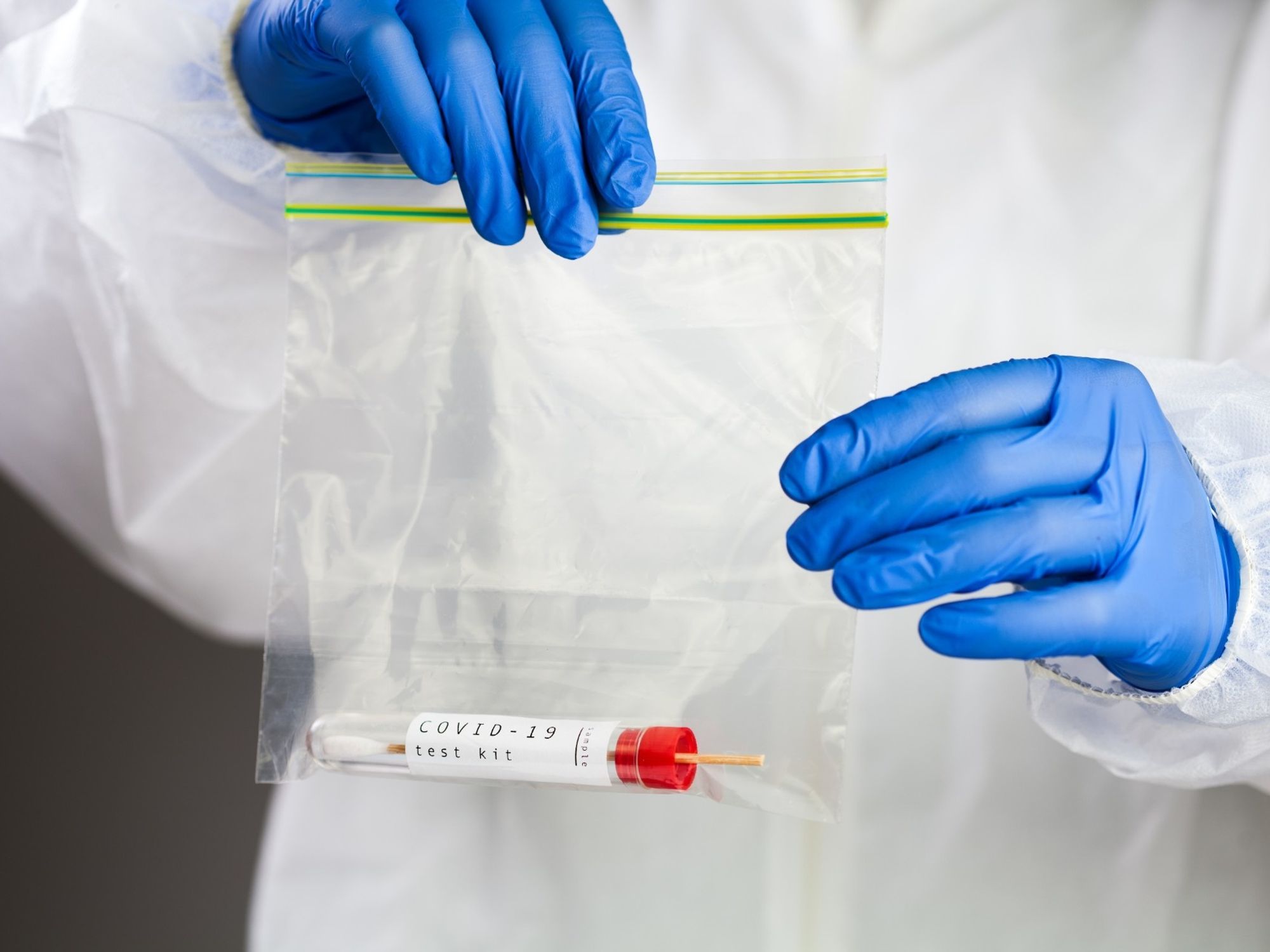
Meet the 25 Year-Old Behind L.A.'s Plan to Test Every Resident for COVID-19

Rachel Uranga

Rachel Uranga is dot.LA's Managing Editor, News. She is a former Mexico-based market correspondent at Reuters and has worked for several Southern California news outlets, including the Los Angeles Business Journal and the Los Angeles Daily News. She has covered everything from IPOs to immigration. Uranga is a graduate of the Columbia School of Journalism and California State University Northridge. A Los Angeles native, she lives with her husband, son and their felines.

Meet the 25 Year-Old Behind L.A.'s Plan to Test Every Resident for COVID-19

Fred Turner, the 25-year-old founder of Curative Inc., is the man behind L.A.'s push to bring universal testing to the region. But, he has bigger plans.

Turner, an Oxford dropout, just landed a deal with the Air Force to test military worldwide and he's now eyeing national expansion for his startup. By the end of this month, the company he started months ago is expected to pump out more than a million test kits a week.

"We are a strange company because our goal is to essentially put ourselves out of business," Turner said.


Turner, who was named UK Young Engineer of the Year at age 17 when he built a DNA machine from his bedroom to figure out why his brother had red hair and he had brown hair, turned his focus to coronavirus in January. He upended his life as head of Shield Bio, which sought to eliminate sepsis, and moved to Southern California after a local venture capitalist connected him with a lab that he could build out for COVID-19 testing.

Curative Inc. was born.
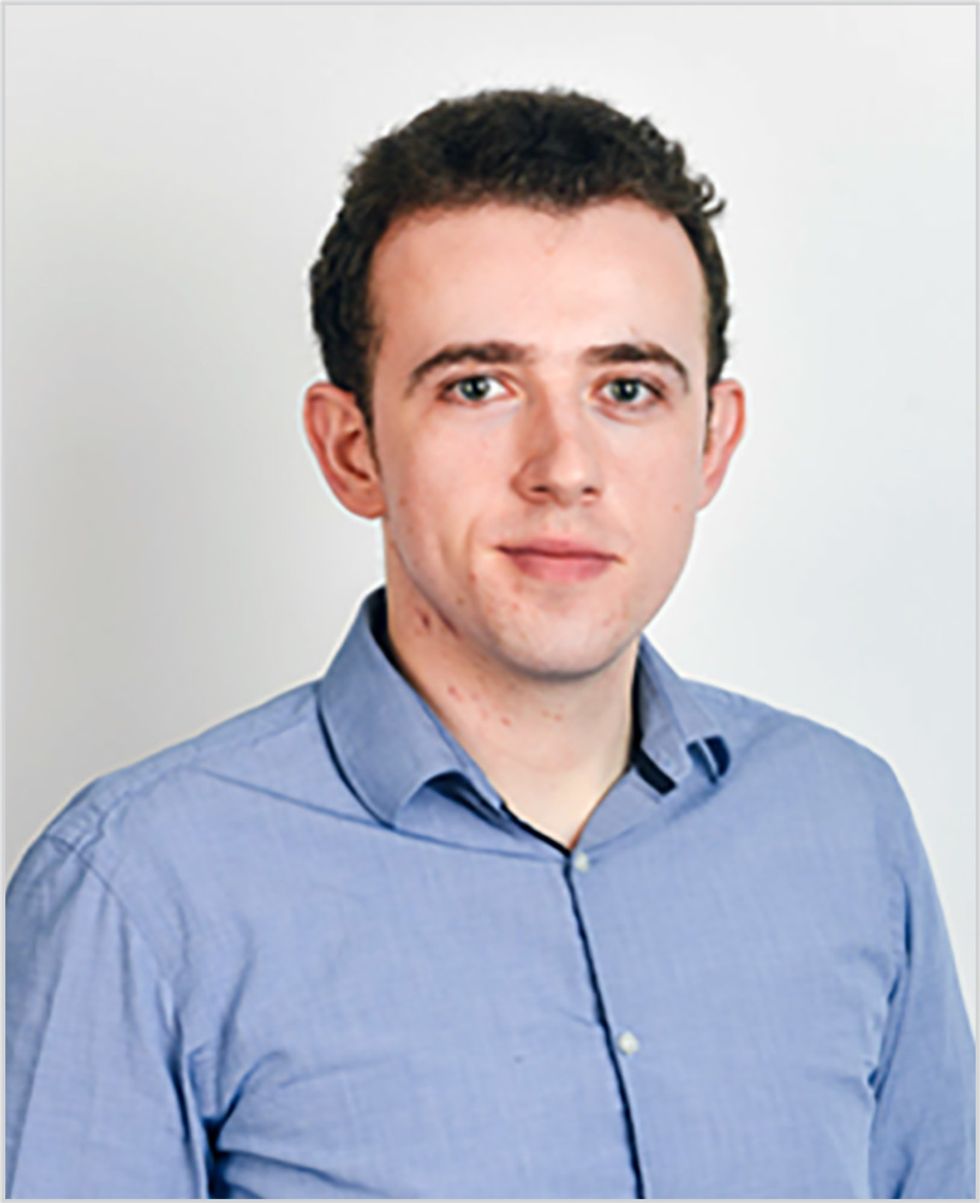
Curative, Inc. Founder Fred Turner is the man behind L.A.'s push to bring universal testing to the region.

For weeks he lived in hotels as he created what has become the backbone of testing in America's second largest city. The company, one of the few saliva-based tests that have gotten emergency approvals from the FDA, has a 10% false negative rate, according to their own non-peer reviewed studies. Turner argues the rate is better than most of the nasal swab testing out there and oral tests, which can be self-administered, are the only way the country can reopen quickly.

He is now operating two labs, one in San Dimas another in Washington D.C., with plans for several more across the nation. Meanwhile, the rest of the country is watching to see if Los Angeles' promise of universal testing meets the expectations with some already complaining about the difficulty of securing an appointment.

dot.LA: Curative is responsible for 95% of Los Angeles COVID-19 tests. Can you meet the demand for universal testing?

Curative, Inc. Founder Fred Turner: We will be able to fulfill demand. There's more infrastructure that needs to be put in place. With the collection site, the mayor's office has been working hard to scale those up and make sure that the collection site infrastructure is in place. On the lab side, we definitely have enough capacity to serve the area.

In (the San Dimas) lab we have capacity for about 20,000 per day. We're going to be scaling this lab up to 30,000 over the next week or so, eventually, probably slightly more than that.

Ultimately, the goal is to do as many tests as we need to reopen the country and I think we've had many different estimates of how many that might be. I've heard estimates (that it will take) as high as five million tests a day to reopen, but the current supply chain is nowhere near going to be able to keep up with that. The next goal we are shooting for is a million tests a week by about mid-May, end of May.

If we're testing more people will that strain the turnaround time? Right now, I understand it's about 24 to 72 hours. Can you take it down to several hours or even minutes?

We are always aiming to push it down. I think it can be pushed under 24 hours, but we tend to focus more on scaling it up at that point. I think 24 hours is around optimal as you bring on more capacity. We're obviously being careful to match the capacity coming into the lab against the turnaround.

Curative is one of the few companies that the FDA has provided emergency approval for use of a saliva test. Do you think this is the answer to universal testing nationally?

Oral fluids is the technical term, which is slightly different from saliva. Our protocol involves having the person cough first, which releases virus from the upper and lower respiratory tract. Some of that is then caught in the saliva, and also viruses in the saliva. The idea is you're effectively sampling multiple sites at once, which we think gives a slight increase in the sensitivity of the testing.

Self-collected sampling has got to be the way forward. There's just no way that we can do a million nasal pharyngeal swabs, or we call them 'brain swabs,' it's just not practical. We don't have the medical staff, and as a country we just can't do that many swabs. And so the way forward is going to be self collection. That's the only thing we can do at scale.

Covid-19 Oral Fluid Test Kit Instructionswww.youtube.com

Curative recently secured a contract with the Department of Defense. What's next?

We haven't settled on the exact number, but we will be in a large number of states. That is the plan, building out the infrastructure for this kind of testing. We can take the L.A. model and scale it across the country. We have a version of the drive-thru software that other cities and states can take. We have all the training material. We have a team that fly around the country setting up these drive-thru sites. We have really tried to make a plug-and-play package where cities and states that want to launch drive-thru testing, we have everything they need.

Is Los Angeles a testing ground and a proving ground for national efforts?

Yeah, I think Mayor Garcetti has definitely demonstrated what can be done if the city moves very quickly to build out the infrastructure, I do think the drive-thru testing, walk through testing is going to be an essential component of this.

It's just much faster to get the samples to the lab than shipping it out and then shipping it back again. The infrastructure piece is critical for getting these tests out there and we're working with several other states now on building out a similar infrastructure. Some of them have existing programs that we would be plugging into and expanding, and some of them are looking to roll out their own similar programs. You can test a lot more people with the oral tests with far fewer staff.

What are the challenges with the supply chain in terms of making your tests more widely available?

We need more plastic, more robots, more people. Most of the components that go into these tests are just already maxed out in their production capacity. And so we've been throwing online a bunch of internal production, such as injection molding to make our swab kit tubes, as well as bringing on other sources of similar materials that are not being used for COVID-19 testing and validating them for COVID. So for the swabs, for example, we use a swab type that is usually used for testing clean rooms. It works just as well for COVID testing, but nobody else is using it for that purpose.

We don't want to be competing with other people, stopping them from getting access to resources. We want to bring on new supply so it's not a zero- sum game, and the total amount of tests will increase. But, I think distribution is going to be a bigger bottleneck over the next month. Los Angeles has done a fantastic job in building out infrastructure and collection. That needs to happen now across the whole country.

What would it take to meet national demand?

It would take a network of multiple labs that we are calling gigalabs that can process 50,000 to 100,000 tests a day across the country and a significant scale up in the production of the physical components that go into the tests. We've been investigating lab sites in a few states, something central like Texas or Colorado.

Are you concerned that you have too high of a false negative rate at 10%?

All COVID tests will have false negative rates. In our studies, we demonstrated that the sensitivity is at least as good if not better than the nasal pharyngeal swab tests. So, there will definitely be false negatives as there will be in every test, but we think the data supports us having a low rate of false negatives. The sensitivity is about 90%.

When you include all patients, the nasal pharyngeal came in at about 79%. A new (non-peer reviewed) Yale study shows a higher sensitivity from saliva and all fluids than the nasal pharyngeal. I don't think we have the evidence to say that we're better yet, but we have the evidence to say that we're at least equivalent. The ease of doing oral tests and the accessibility is obviously significantly better. We're not using PPE. We're not exposing healthcare workers. It's just a much easier test to roll out that people can test themselves.

File:Florida National Guard (49677710741).jpg - Wikimedia Commonsupload.wikimedia.org

At one point, Curative was attempting to roll out at-home testing and then had to pull back after FDA warnings. Will you be making home testing kits again?

I can't give a time estimate but we are actively working with the FDA right now. I think their concern is "can people adequately collect the sample, or will they do it wrong, and then get a negative test result," which is incorrect. Our plan is to use telemedicine observation. What we've seen in our clinical studies is that if you give people the chance to do it wrong, they will do it wrong. In fact when you have somebody observing, they read the instructions better and they collect a better sample. We're still working on the pricing and potentially looking at whether there is federal or state reimbursement for some of that testing and the potential of billing insurance.

Tracing technology has been promising. Do you have any plans to tie tests to these applications to testing?

We've had several conversations with contact tracing apps and we continue to work in collaboration with public health departments in their contract tracing efforts. Having the test is obviously one thing, but you have to use the information to actually stem the tide of COVID infection. And so, it is an essential step in working closely with various people.

I do like the app-based models where you obviously want to maintain people's privacy, but having people opt-in to share their location history if they test positive so you can contact nearby people.

What does Curative do once there's a vaccine? Are you obsolete?

The U.S. needs to maintain some kind of spare capacity so that next time we are not having to build all of this during a pandemic. But we are a strange company because our goal is to essentially put ourselves out of business. Ultimately, and I say this to everyone we hire, we don't know how long this will go on for. We want to provide as many tests as needed, but the goal is to end COVID and not be doing COVID testing anymore.

Curative took off in March when you arrived in Los Angeles from Silicon Valley, how has the journey been for you personally?

I don't have very much free time, but it's been a lot of fun to be able to work at this pace and have the support of people like the city, the mayor's office to really just do what is needed to scale this up. When we work with suppliers, and we say we're doing COVID testing, they just move heaven and earth to make things happen. It's been really inspiring to be a part of that push forward.

We are just pushing as hard as we can to scale up as fast as we possibly can and bring on as much testing as we can. The city opening up testing to everybody is kind of a culmination of that. We're making about 50,000 kits a day right now and we want to make that as widely available as we can. I would like to get a little more sleep.

The interview has been edited for clarity and brevity.

Correction: An earlier version of this story stated that Curative's saliva tests have a 10% false positive rate. In actuality, the tests have a 10% false negative rate.

Do you have a story that needs to be told? My DMs are open on Twitter @racheluranga. You can also email me.

From Your Site Articles
Related Articles Around the Web
https://twitter.com/racheluranga
rachel@dot.la
Arc’s $50M Push Into Commercial Maritime

🔦 Spotlight

Hey LA,

As the city pushes through a record-breaking March heat wave, one of the week’s most interesting LA startup stories came with a reminder that climate tech gets a lot more real when it leaves the pitch deck and hits the water. In Arc’s case, that means tugboats.

LA based Arc, founded in 2021 by a team of SpaceX alumni, announced a $50M Series C this week, led by Eclipse, a16z, Menlo Ventures, Lowercarbon, Necessary Ventures, and Offline Ventures, as it pushes deeper into commercial maritime. The raise follows Arc’s $160M contract with Curtin Maritime to deliver eight hybrid-electric tugboats beginning at the Port of Los Angeles, with the first expected to hit the water this year.

Imsage Source: Arc

That feels notable not just because of the funding, but because it marks a clear evolution in Arc’s business. What started as a premium electric boat company is now making a serious push into the industrial side of maritime transportation, with ambitions spanning tugboats, ferries, and defense vessels.

There is also something fitting about this story happening in Los Angeles. This is a city known for spectacle, but Arc is building in a category where performance actually has to perform. No amount of branding can fake a working tugboat, and that is exactly why this moment feels worth paying attention to.

Now, onto this week’s LA venture deals, fund announcements and acquisitions.

🤝 Venture Deals

      LA Companies

      • Talino closed a $7.5M Series A led by Chemonics International, with participation from Mt Sinai Capital and Gulf Blvd, as it shifts from a venture studio into what it calls a global fintech foundry. The company said the new funding will help build an API-first cross-border payments infrastructure layer connecting the U.S. with emerging markets, starting with the Philippines, where it is targeting faster, more compliant financial product launches and modernizing legacy rails with stablecoin and real-time payment capabilities. - learn more
      • PADO AI raised a $6M seed round led by NovaWave Capital to expand its AI-powered orchestration software for mid-market colocation data centers. The company said the funding will support product delivery and global growth as it helps operators better manage power, compute, cooling, and distributed energy resources to increase GPU utilization and maximize “compute per megawatt” without requiring major new infrastructure buildouts. - learn more
      • Meadow Memorials raised a $9M Series A led by Lachy Groom and Haystack to expand its software-enabled funeral planning platform, which lets families arrange services online or by phone. Founded in 2024 by former Stripe executive Sam Gerstenzang and Emma Gilsanz, the company says it is using a real-estate-light model to offer lower-cost funerals as it expands beyond California into states including Texas, Washington, and Arizona. - learn more

                      LA Venture Funds

                      • Anthos Capital participated in Bluesky’s $100M Series B, which was led by Bain Capital Crypto and also included Alumni Ventures, Bloomberg Beta, Knight Foundation, and True Ventures. The company said the round gave it the resources to scale both the Bluesky app and the broader AT Protocol ecosystem, which it says has grown to more than 43 million users and now supports a fast-expanding network of third-party apps and developers. - learn more
                      • Navigate Ventures participated in VerbaFlo’s oversubscribed $7M seed round, which was led by Pi Labs and also included Haatch and Old College Capital. VerbaFlo said it plans to use the funding to scale its conversational AI platform for real estate operators, building on traction across more than 200,000 units and expanding further into markets including the U.S., Middle East, and Australia. - learn more
                      • March Capital participated in Xage Security’s $15M equity financing round, which was led by Piva Capital as the company posted 81% year-over-year revenue growth and expanded its Zero Trust platform for AI and critical infrastructure. Xage said the funding, which closed in December 2025, will support go-to-market expansion and continued product innovation, including new AI security capabilities, as demand grows across sectors such as energy, manufacturing, utilities, transportation, and defense. - learn more
                      • B Capital led Knox Systems’ $25M Series A, backing the company’s push to scale what it says is the largest AI-managed federal cloud and dramatically shorten the FedRAMP authorization process for software vendors. Knox said the new funding will help accelerate growth after its June 2025 seed round, with the goal of helping customers achieve FedRAMP authorization in as little as 90 days at roughly 90% lower first-year cost, while expanding adoption across both government and commercial environments. - learn more
                      • WndrCo participated in Tenkara’s $7M round, which was led by True Ventures as the company builds AI-powered operations agents for American manufacturers. Tenkara said it is creating tooling to help factories handle sourcing and operational work more efficiently at a time of rising supply-chain pressure, with backing from a broader investor group that also included Articulate Capital, Night Capital, HF0, SF1, and Transpose Platform. - learn more
                      • Aurora Capital participated in Niv-AI’s $12M seed round, backing the startup alongside Glilot Capital, Grove Ventures, Arc VC, Encoded VC, and Leap Forward as it emerged from stealth. Niv-AI is building sensors and software to measure millisecond-scale GPU power surges and help data centers use electricity more efficiently, with plans to deploy its system in a handful of U.S. facilities within the next six to eight months. - learn more
                      • Clocktower Technology Ventures participated in Fuse’s $25M Series A, which TechCrunch reported was led by Footwork, Primary Venture Partners, NextView Ventures, and Commerce Ventures, with Fuse also naming Clocktower Ventures among its backers. The company said it plans to use the funding to expand its AI-native loan origination and account opening platform for credit unions, building on traction with more than 100 customers and a $5M “rescue fund” aimed at helping institutions switch off legacy systems. - learn more
                      • Kairos Ventures participated in Alomana’s €4M seed round, which was led by CDP Venture Capital and also included Founders Factory, Italian Angels for Growth, Club degli Investitori, and others. Alomana said it will use the funding to strengthen its enterprise AI platform, add more capabilities for autonomous workflow automation, and support larger deployments across Europe as demand grows in sectors like finance, manufacturing, and pharma. - learn more

                                        LA Exits

                                        • Optimal’s Entertainment Media division is being acquired by Capstone Point Holdings, with the business set to operate under its legacy name, Optimad Media, following the deal. The transaction keeps founder Kevin Weisberg in place to lead the company from Los Angeles, while giving Optimad more backing to expand its entertainment media planning, buying, and prints-and-advertising investment capabilities across theatrical, streaming, and broadcast campaigns. - learn more

                                                                  Download the dot.LA App

                                                                  Inside Tinder’s Biggest Product Shift in Years

                                                                  🔦 Spotlight

                                                                  Hello Los Angeles,

                                                                  Despite headlines about swipe fatigue and dating app burnout, Tinder believes the problem isn’t that people are tired of dating. They’re tired of bad dating experiences.

                                                                  So it felt fitting that Tinder chose the El Rey Theatre in Los Angeles, a venue known for reinvention, to make its case that the category is far from over.

                                                                  Walking into the El Rey, it was clear Tinder wanted this to feel less like a tech launch and more like a cultural moment. Music was bumping, the room buzzed with chatter and excited energy, red light beams cut through the room, and chandeliers glowed overhead.

                                                                  At Tinder Sparks 2026: Start Something New, Match Group and Tinder CEO Spencer Rascoff took the stage to outline what the company calls the biggest evolution of the app in years. Tinder remains the largest dating app in the world, used by tens of millions of people across more than 185 countries and responsible for billions of matches every year.

                                                                  Match Group and Tinder CEO Spencer Rascoff

                                                                  Rascoff framed the shift around a broader cultural reality. In a world where people increasingly interact with machines, technology and AI, the need for real human connection has not gone away. If anything, Tinder believes it has only grown stronger.

                                                                  To respond to that shift, Tinder says it’s focusing on what it calls “sparks,” the moments when a match actually turns into a real conversation.

                                                                  As Rascoff put it on stage:

                                                                  “We are not optimizing for swipes or likes. We are optimizing for sparks.”

                                                                  That philosophy is shaping a wave of new features discussed throughout the keynote by Tinder’s leadership team, including Mark Kantor, SVP and Head of Product, Yoel Roth, SVP of Trust & Safety, and product leaders Claire Watanabe and Hillary Paine.

                                                                  Image Source: Tinder

                                                                  Among the updates are Music Mode, which lets users connect through shared songs and artists, and a new Astrology Mode that highlights compatibility between zodiac signs. Tinder is also leaning further into social dating with Double Date, a feature that lets friends match with other pairs together. The feature is already gaining traction with Gen Z users, reflecting a broader shift toward more social and lower-pressure ways to meet people.

                                                                  Image Source: Tinder

                                                                  Tinder is also redesigning profiles to help users express more personality. New tools can surface stronger photos from a user’s camera roll, improve lighting, and highlight interests more visually, while integrations with platforms like Spotify, Duolingo and the restaurant app Belly bring more of a person’s real life into their profile.

                                                                  Image Source: Tinder

                                                                  But the most interesting experiment might be happening right here in LA. Tinder is launching IRL Events in the city, letting users browse and RSVP to real-world meetups directly through the app. Think coffee shop raves, trivia nights and pickleball tournaments. The idea is simple. Dating works better when it feels like a social activity instead of an interview.

                                                                  Image Source: Tinder

                                                                  Under the hood, Tinder is also leaning more heavily on AI to improve recommendations. New tools like Learning Mode and Chemistry aim to better understand what users are actually looking for and surface stronger matches faster. At the same time, the company is investing heavily in safety, expanding Face Check, a facial verification system designed to reduce bots and impersonation accounts.

                                                                  Closing out the presentation, Melissa Hobley, Tinder’s Chief Marketing Officer, zoomed out from the product roadmap to the brand’s cultural footprint, noting that Tinder is mentioned in billions of TikTok videos and has become shorthand for how younger generations talk about dating.

                                                                  Taken together, the updates represent Tinder’s most significant evolution in years. And judging by the energy inside the El Rey this week, the company believes the next chapter of dating will be more social, more expressive and more intentional. It’s a shift being shaped right here in Los Angeles, and one that could redefine how the next generation meets.

                                                                  Now onto this week’s LA venture deals, fund announcements and acquisitions.


                                                                  🤝 Venture Deals

                                                                      LA Companies

                                                                      • Hurray’s GIRL BEER raised a $5M seed round led by Lakehouse Ventures, with participation from Spice Capital plus CPG insiders and entertainment executives, as it accelerates national expansion. The LA-based flavored light beer brand says it has already landed retail placements at Walmart, Kroger, Albertsons, and Whole Foods, and plans to use the new capital to deepen distribution, enter new markets, and ramp up marketing, alongside a rollout of seven new flavors. - learn more
                                                                      • Freestyle closed a $10M Series A led by Silas Capital, with significant participation from ECP Growth. The company also noted continued backing from existing investors including Mucker Capital, Adapt Ventures, and Superangel, as it scales its premium diapers and wipes business following nationwide launches at Walmart and Target. - learn more
                                                                      • MAX BioPharma announced a new investment and partnership with Technomark Life Sciences to advance Oxy210, its oxysterol-based, orally available drug candidate for MASH. Technomark is joining as a strategic lead investor by participating in MAX BioPharma’s $13M Series A to fund a Phase 1a/1b first-in-human study, and the companies say the collaboration will pair MAX’s therapeutic platform with Technomark’s drug development experience. - learn more

                                                                                      LA Venture Funds

                                                                                      • B Capital participated in ORO Labs’ $100M Series C, which was led by Brighton Park Capital and Growth Equity at Goldman Sachs Alternatives, as the company pushes deeper into what it calls agentic procurement orchestration. ORO said the new funding follows 300% revenue growth over the past year and will be used to speed up product development, expand go-to-market and customer teams globally, and broaden enterprise use cases across procurement, finance, legal, and supply chain workflows. - learn more
                                                                                      • Aliment Capital participated in Tropic’s oversubscribed $105M Series C, which was co-led by Forbion’s Bioeconomy Fund and Corteva as the company scales the commercial rollout of its gene-edited tropical crops. Tropic said the funding will help expand production of its banana portfolio, accelerate its banana and rice pipelines, and support entry into additional climate-resilient crops, following the 2025 launch of its first new banana varieties in more than 75 years and demand that is already outpacing supply. - learn more
                                                                                      • B Capital doubled down in Axiom’s $200M Series A, which valued the company at more than $1.6 billion and was led by Menlo Ventures. Axiom said the new funding will help it extend its lead from formal mathematics into what it calls “Verified AI,” with plans to apply its technology beyond mathematical discovery into software and hardware verification. - learn more
                                                                                      • WndrCo participated in Quince’s $500M Series E, a round led by ICONIQ that values the manufacturer-to-consumer retail platform at $10.1B post-money. Quince says it will use the fresh capital to accelerate growth and global expansion of its proprietary M2C operating system, which uses AI-driven demand forecasting and direct factory partnerships to cut traditional retail markups. Other investors in the round included Basis Set Ventures, Wellington Management, MarcyPen Capital Partners, Baillie Gifford, Notable Capital, and DST Global. - learn more
                                                                                      • Matter Venture Partners co-led Eridu’s oversubscribed Series A, part of $200M+ raised as the AI networking startup emerges from stealth to tackle what it calls the “network wall” bottleneck in AI data centers. - learn more
                                                                                      • Matter Venture Partners participated in Rhoda AI’s $450M Series A, backing the startup as it comes out of 18 months in stealth with FutureVision, a video-predictive control platform aimed at helping robots operate reliably in messy, real-world industrial environments. The round included a large syndicate of investors, including Capricorn Investment Group, Khosla Ventures, Leitmotif, Mayfield, Premji Invest, Prelude Ventures, Temasek, Xora, and John Doerr, and the company says the funding will accelerate development and industrial deployments. - learn more
                                                                                      • Halogen Ventures participated in Rasa Legal’s $5M late-seed round, backing the company’s push to scale its tech-enabled criminal record sealing and expungement service nationwide. The round was led by Rethink Education with participation from Social Finance and the Richard King Mellon Foundation, and Rasa says the funding will help it expand leadership, speed product development, and grow beyond its current footprint (Utah, Arizona, and Pennsylvania). - learn more
                                                                                      • Halogen Ventures participated in Nyad’s $1.3M oversubscribed pre-seed round, backing the Birmingham-based startup as it launches an AI decision-support tool for wastewater treatment operators. The round was led by Boost VC with participation from Draper Associates, Ollin Ventures, Apprentis, First Avenue Ventures, and strategic angel Troy Wallwork, and Nyad says it will use the funding to hire, grow customers, and keep building the product as retirements thin the wastewater workforce. - learn more
                                                                                      • MANTIS VC participated in Scanner’s $22M Series A, which was led by Sequoia Capital and also included CRV, as the company builds a high-speed security data layer for AI-driven threat investigation. Scanner said the funding comes as security teams at companies like Notion, Ramp, and BeyondTrust use its platform to search years of log data quickly and power agentic workflows that help hunt threats, triage alerts, and investigate incidents more efficiently. - learn more
                                                                                      • Chapter One participated in Zcash Open Development Lab’s $25M+ seed round, joining a syndicate that included Paradigm, a16z crypto, Winklevoss Capital, Coinbase Ventures, Cypherpunk Technologies, and Maelstrom. The new company, formed by former Electric Coin Company team members, said the funding will support continued development of privacy-focused infrastructure for the Zcash ecosystem, including its self-custodial wallet and broader shielded payments tooling. - learn more
                                                                                      • CIV participated in Isembard’s $50M Series A, which was led by Union Square Ventures and also included Tamarack Global, IQ Capital, and existing backer Notion Capital. Isembard said the new funding will help it open 25 AI-powered factories by the end of 2026, expand its engineering team, and enter Germany, France, and Ukraine as it scales software-driven component manufacturing for aerospace and defense customers. - learn more
                                                                                      • WndrCo participated in Crafting’s $5.5M seed round, which was led by Mischief as the startup launched general availability for Crafting for Agents. The company said the new capital will support its push to become core infrastructure for AI-driven engineering teams, giving agents secure access to production-like environments so they can validate, test, and ship code inside complex enterprise systems used by customers including Brex, Faire, and Webflow. - learn more

                                                                                                        LA Exits

                                                                                                        • Hireguide has been acquired by HireVue, which is buying Hireguide’s underlying technology and bringing the Hireguide team into HireVue’s product org. HireVue says the deal accelerates its agentic AI roadmap, starting with a voice-based AI interviewer designed to help employers qualify candidates earlier and run smarter, more conversational hiring workflows. - learn more
                                                                                                        • Ultracor has been acquired by Applied Aerospace & Defense, bringing the California-based maker of specialized honeycomb core materials into Applied’s advanced composites platform. Applied says the deal supports its selective vertical integration strategy by strengthening supply chain control and boosting speed and capacity for space and defense programs, from satellites and missiles to antennas, radomes, and next-gen aircraft. - learn more

                                                                                                                                  Download the dot.LA App

                                                                                                                                  Montgomery Summit Is Back at the Fairmont Miramar

                                                                                                                                  🔦 Spotlight

                                                                                                                                  Hey Los Angeles,

                                                                                                                                  If you’re looking to stack your March with the right rooms and the right people, The Montgomery Summit, presented by March Capital, is coming back to Santa Monica (March 10–11, 2026) at the Fairmont Miramar. It’s been running since 2004, founded by March Capital co-founder Jamie Montgomery, and it consistently draws a tight mix of founders, investors, and execs who show up to have real conversations, not just do the conference lap.

                                                                                                                                  This year’s program is shaping up to be a big one: 1,200+ attendees, 180+ speakers, and CEOs from 120+ carefully selected private tech companies. In other words, if you want early looks at breakout companies and the context you can’t get from a headline scroll, this is one of LA’s most high-signal two-day events.

                                                                                                                                  What I like about Montgomery is the vibe. It’s less “conference chaos” and more “high-signal collisions,” with structured ways to connect, including 1:1 meeting scheduling through the Summit app for eligible attendees. The agenda doesn’t stop when the panels do, there’s a Getty Villa reception and a closing reception, so the Summit keeps moving well past the main stage hours.

                                                                                                                                  It’s invitation-only, but you can request an invitation here.

                                                                                                                                  Keep scrolling for the latest LA venture rounds, fund news and acquisitions.


                                                                                                                                  🤝 Venture Deals

                                                                                                                                      LA Companies

                                                                                                                                      • Vast secured $500M in new financing, made up of $300M in Series A equity and $200M in debt, to accelerate production of its Haven commercial space stations and expand its facilities and team. The round was led by Balerion Space Ventures with participation from IQT, Qatar Investment Authority, Mitsui & Co., MUFG, Nikon, Stellar Ventures, Space Capital, Earthrise Ventures, and founder/first investor Jed McCaleb, as Vast pushes toward Haven-1 and its longer-term successor vision. - learn more
                                                                                                                                      • PartsPulse has raised $3M from UP.Partners and used the momentum to officially launch its unified AI platform at CONEXPO in Las Vegas. The startup says its “command center” combines inventory planning, pricing optimization, and sales intelligence into one system for OEMs, dealers, and fleet managers, and it was built with UP.Labs and co-developed with Wabash to help parts businesses spot revenue opportunities and stock the right parts at the right time. - learn more
                                                                                                                                      • Procode AI launched out of stealth with $4M in venture funding and acquired The Auctus Group, a major revenue cycle management (RCM) firm that bills for 300+ plastic surgery and dermatology providers. The company says the combination will bring AI into private-practice surgical billing, using its “Coding Copilot” to translate operative reports into billing codes faster and reduce denials, while Auctus continues operating under CEO John Gwin. - learn more
                                                                                                                                      • Smack has raised $32M across Seed and Series A to scale what it calls the first “frontier AI lab” built specifically for national security, after landing contracts with multiple branches of the U.S. military in 2025. The Series A was led by Geodesic Capital and Costanoa Ventures, with participation from Point72 Ventures, Felicis, First In, Scribble Ventures, Bloomberg Beta, Washington Harbour Partners, Palumni VC, Fulcrum Venture Group, Anomaly Fund, and Fortitude Ventures. - learn more

                                                                                                                                                      LA Venture Funds

                                                                                                                                                      • BOLD Capital Partners participated in KeyCare’s $27.4M financing round, backing the Epic-native virtual care company as it scales an AI-enabled model designed to extend health systems’ capacity with 24/7 virtual urgent, preventive, chronic, and virtual-first primary care. The round was led by HealthX Ventures and also included 8VC, LRVHealth, and Ikigai Venture Partners, plus strategic investors such as WellSpan Health, Allina Health, University of Chicago Ventures, Edge Ventures, and Exact Sciences, bringing KeyCare’s total funding to $55M+. - learn more
                                                                                                                                                      • Fifth Wall led RenoFi’s $22M Series B, backing the Philadelphia startup’s push to make renovation financing simpler through an AI-enabled platform that underwrites loans based on a home’s after-renovation value. The round also included meaningful participation from Progressive Insurance and additional support from investors such as HighSage Ventures, Alumni Ventures, Flintlock Capital, and Gaingels, plus continued backing from Canaan, First Round Capital, Curql, TruStage Ventures, and several credit union partners. - learn more
                                                                                                                                                      • B Capital co-led Bounce’s $5M internal round alongside existing backers Accel and Qualcomm Ventures, extending fresh capital without bringing in new investors. Bounce founder Vivekananda Hallekere told The Economic Times the round underscores continued support from its current investors as the electric mobility startup pushes forward in the EV space. - learn more

                                                                                                                                                                      LA Exits

                                                                                                                                                                      • Silent House Group has been acquired by concert staging and live-experiences giant TAIT, formalizing a long-running partnership between the two companies. The deal pairs Silent House’s LA-born creative and production chops, behind major tours and live experiences including Taylor Swift’s The Eras Tour and Kendrick Lamar’s Grand National Tour, with TAIT’s engineering, staging, and global delivery capabilities to build touring, experiential, and broadcast productions at any scale. - learn more

                                                                                                                                                                                                Download the dot.LA App

                                                                                                                                                                                                RELATEDEDITOR'S PICKS
                                                                                                                                                                                                Trending