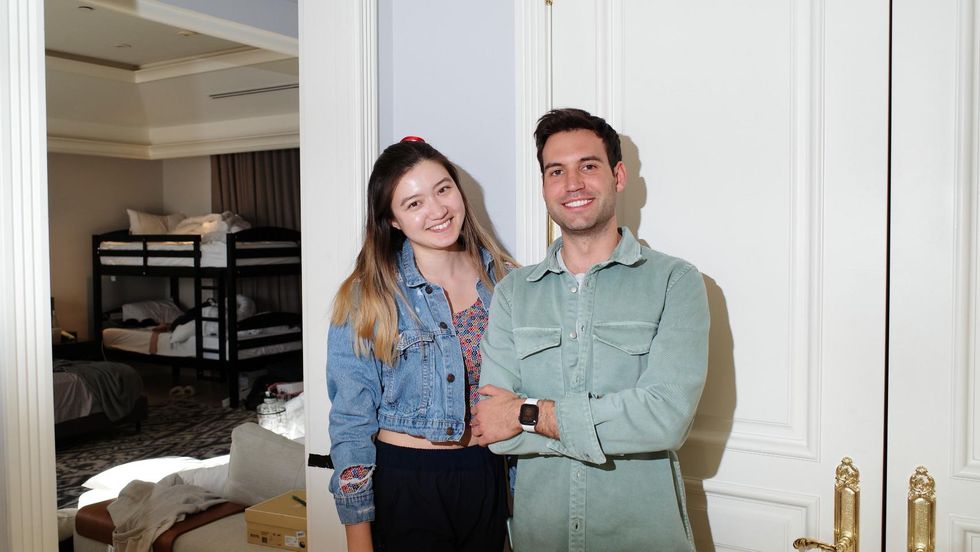

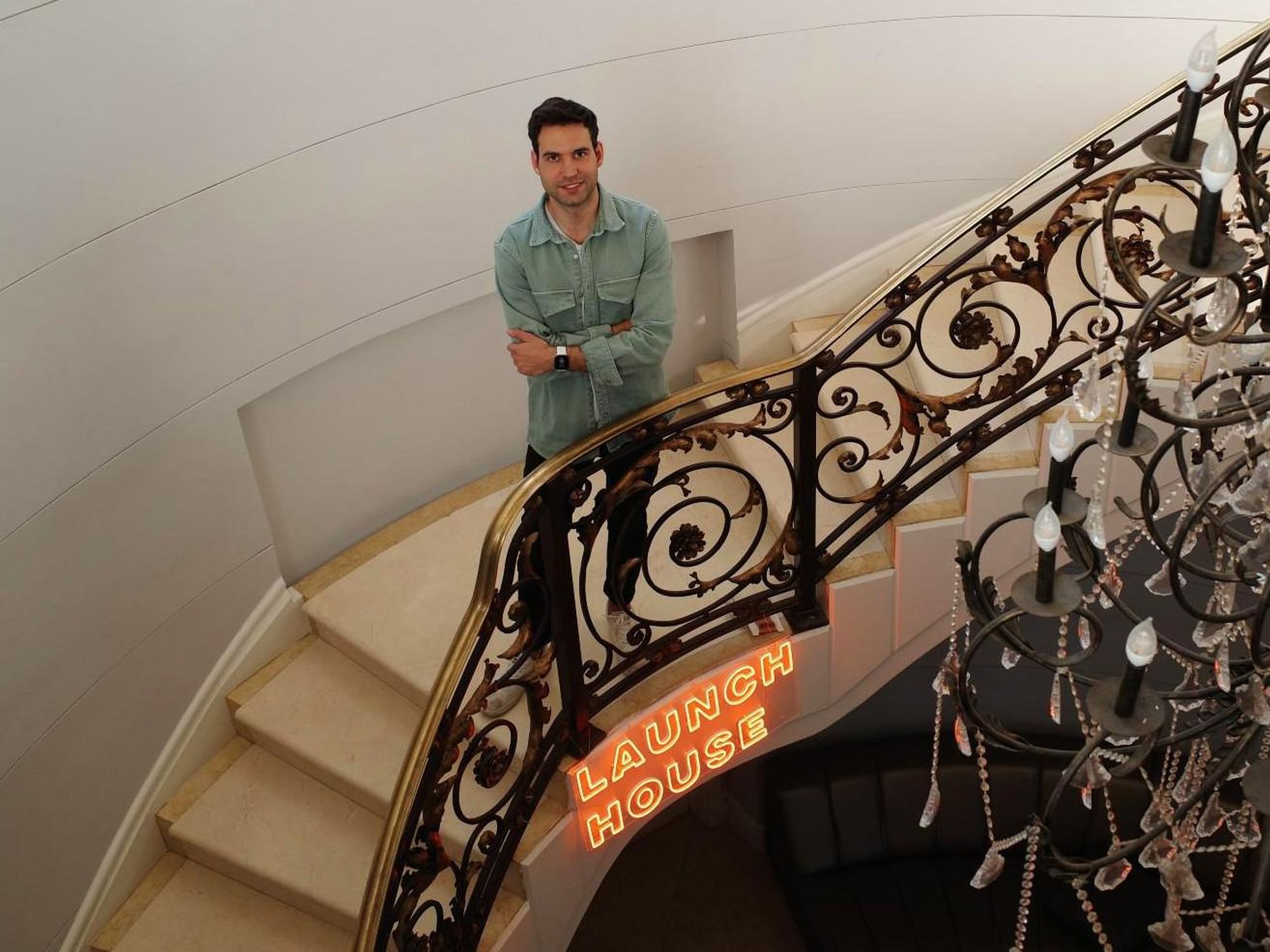
A TikTok Mansion for Startup Founders. Launch House Isn’t What it Looks Like.

Francesca Billington

Francesca Billington is a freelance reporter. Prior to that, she was a general assignment reporter for dot.LA and has also reported for KCRW, the Santa Monica Daily Press and local publications in New Jersey. She graduated from Princeton in 2019 with a degree in anthropology.

Launch  House
Photo by Eray Alan

Kristen Anderson was four-and-a-half months pregnant when she got a private message on Twitter about a new self-proclaimed "creator house for entrepreneurs" in Los Angeles.

"We've rented out a $35 million mansion in Beverly Hills and have brought in some amazing founders to live together," the message read.

Anderson is no stranger to the world of venture capital and startup accelerators. She landed $8.1 million in funding for her company after finishing Y Combinator, a program that helped launch big names like Instacart and Airbnb.


But after a year of lockdown and stay-at-home orders, the job got lonely. So in February, just two weeks after learning about it, she booked a flight from Boston to Los Angeles to join Launch House, a live-in accelerator where mostly twentysomethings build their dream tech companies while chronicling it all for TikTok and Instagram.

And they're doing it from a 12,000 square-foot property they say was last rented by Paris Hilton.

In the living room, a whiteboard calendar lists upcoming events like "How to think about the future" and "hackathon presentations." One night, Anderson and her co-founder ordered pizza for the house in exchange for a brainstorm session.

"We just want to be with really smart, talented young people who are building amazing things," she said. "That helps us maintain energy."

The idea came from former Airbnb and Uber product manager Michael Houck, Google alum Brett Goldstein and Commsor co-founder Jacob Peters. The trio sees traditional startup incubators as a relic of the past.

Their goal is to recreate the basements and dorm rooms where the minds behind Google, Amazon and Apple began their empires. Only in their version, it's in a palatial setting replete with a waterfall and hot tub overlooking Los Angeles.

"Universities are no longer going to be the aggregators of great talent," said Peters, who's started to invest his own money — he won't say how much — in Launch House residents. "It's going to be small, niche communities that start in houses."

Perched on a hill in the 90210 zip code, the house reads part co-working space, part dorm-room with the pace of a reality show. Competition to get in is fierce. To secure a spot, applicants fill out an online questionnaire. For those who make the cut, an interview with the founders comes next.

Everyone pays rent, but they call it "membership."

"It's kind of syntax but it matters," Goldstein said. "This is a club and a community, and the physical living experience is just a small component."
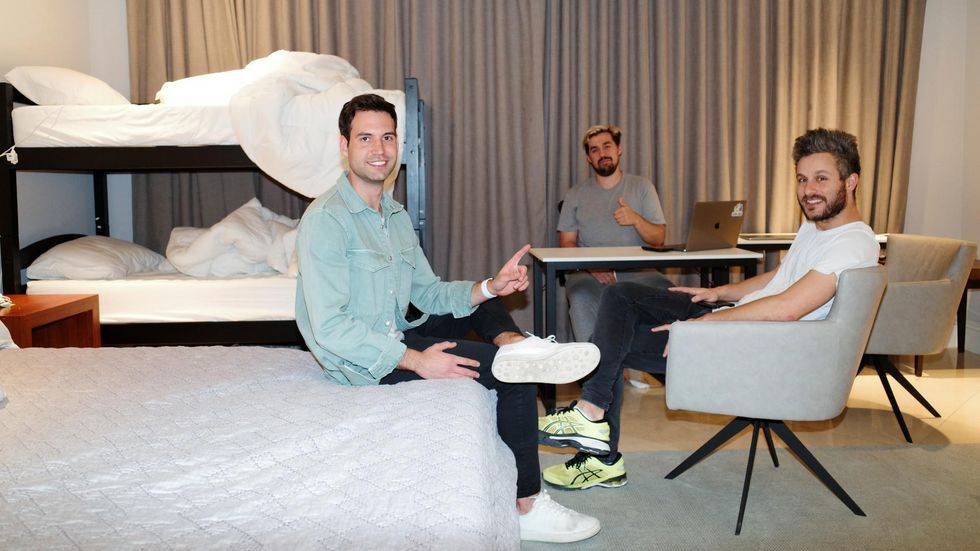
Launch HouseCommsor co-founder Jacob Peters, Airbnb and Uber product manager Michael Houck and Google alum Brett Goldstein.Photo by Eray Alan

The vision captures a very specific — and opportune — moment in L.A. The sway of TikTok celebrities and influencers has crashed into VC money. It's at this meeting point where socially-native entrepreneurs hope to make a name for themselves and their nascent companies.

Just take 21-year-old Marc Baghadjian, a senior at Babson College who wakes up for 5 a.m. Zoom classes some mornings before working on his startup late into the night. Earlier this month — right before moving in — Baghadjian landed $1.1 million for his TikTok-style dating app, Lolly. Baghadjian has used the house as a networking opportunity and it helped him land more investors. Recently he secured another $2.5 million in new commitments and his company's valuation tripled.

Influencers drop by almost every other day, Baghadjian said. In February, Lolly posted an ad on TikTok featuring 19-year-old Milo Manheim, a Disney Channel actor and "Dancing with the Stars" competitor.

(Jacobs said the house maintains a "very strict policy" when it comes to visitors and socializing. Guests are required to test negative for COVID-19 at the door, using self-administered rapid tests.)

But unlike veteran accelerators like Y Combinator, Launch House doesn't promise entrepreneurs any investment. The draw is something else — schmoozing, advice and social media exposure.

As the line between advertisement and content creation blurs, it's changing the way companies find both investors and consumers.

"What on Instagram is marketing and what is entertainment?" said Olav Sorenson, a professor specializing in entrepreneurship at UCLA's business school.

"People are no longer thinking about buying ad space as the way to market a product. They're thinking about how we generate word of mouth through connecting to influencers."

L.A. is "on the forefront of this," said Sorenson. "Entertainment itself is often very entrepreneurial."

'Let's Pretend This Is a TikTok Creator House'
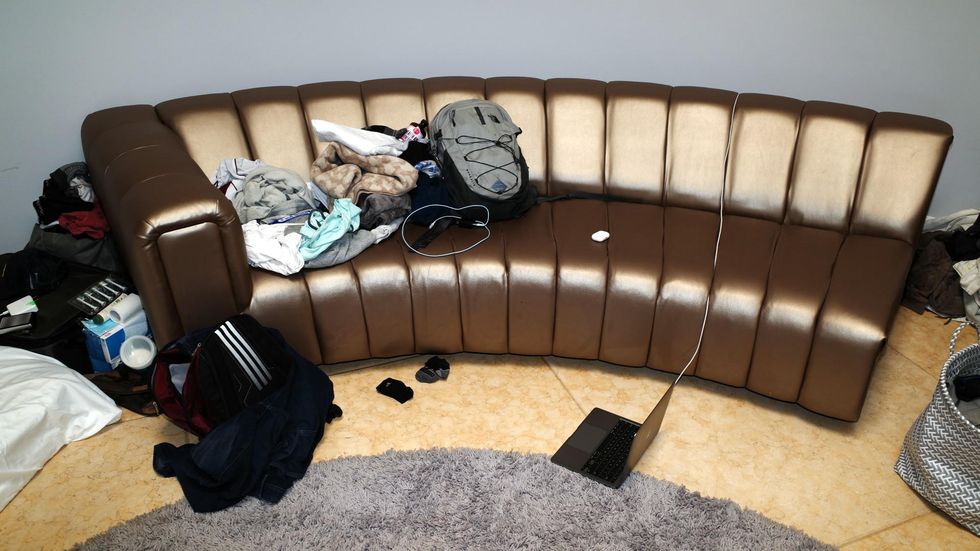
Photo by Eray Alan

At almost all hours of the day, entrepreneurs at Launch House work from slender white desks and office chairs scattered across the living room, decorated with sparkly art they say Hilton left behind. Others choose to work outside, on lounge chairs lining the pool.

"I spend a lot of time in the laundry room," said Kathryn Cross, a 22-year-old from Manhattan Beach. "That's a pretty big room and you can lock the door. I'll take calls from my car or in the garage."

Cross is a model, runs a Gen Z consultancy firm called Bridge Strategy and streams herself playing chess on Twitch for extra cash. She was worried about the lack of privacy before moving in, but said space and noise aren't issues. Even weekends are work days.

"At 2 a.m. on a Saturday, there will be someone sitting in a corner coding," she said.

And Cross doesn't want to leave. While Launch House was designed to bring on a new cohort of founders every month, many stay longer.

The concept for a live-in accelerator was born last summer, when some tech companies closed their offices and even dropped pricey leases. Fashioning themselves as "digital nomads," young entrepreneurs across the country took off for remote work spots. Their offices could suddenly be anywhere.

@launch_house

Reply to @alyssaasf - were a creator house for #startups #tech #fyp

Houck picked Tulum, Mexico. He already knew Goldstein and Jacobs through On Deck, a fellowship program for entrepreneurs cooking up new startup ideas, and asked them to tag along.

"On the way down, we got this cheeky idea," Goldstein said. "Let's pretend this is TikTok creator house."

The first version of Launch House was born there, in an AirBnb villa blocks from the beach, as a "co-living, co-working experiment," Peters said. It was set up like an upscale college campus for about 18 entrepreneurs to build software and apps. A big facet of that experiment was documenting it online.

"We made a website, an Instagram page and a TikTok," said Peters. "Our social accounts got immediate buzz. No one had ever really lifted that veil of mystique that often surrounds early-stage startup founders."

But, as Goldstein put it, the infrastructure in Mexico was "not there for us to give the right experience."

COVID-19 cases were still soaring last fall. There was a small outbreak at the house. Then, in October, Tulum was issued a warning when Hurricane Delta ripped through the Gulf of Mexico and into Louisiana.

"There were leaks in our place," he said. "The grocery store was closed because there was a hurricane. It was just kind of hot. We couldn't Instacart orders."

Joining LA's Influencer Buzz

The three relocated to L.A., a city clad with venture capitalists they already knew. And inside other extravagant houses across the city, young content creators were churning out TikToks and Instagram posts, signing deals with big name companies for advertisements.

"Paris Hilton moved out literally a week before we moved in," Peters said. "We turned a celebrity mansion into a hacker house," said Peters.

Hilton's PR agency did not respond to questions about whether she rented the house prior, but a few TikTok posts look to be filmed inside. Launch House has no ties to M13 Ventures, the firm founded by Hilton's fiancé, Carter Reum, according to M13 partner Christine Choi.

If the common areas resemble a glamorous WeWork, the seven bedrooms read more like dorms. Grey metal bunk beds, piles of laundry, books written by successful entrepreneurs.

Those are parts rarely seen on Launch House's social media accounts.

The goofy yet focused atmosphere inside the house — along with the success of those living there — are what the public sees.

Faraaz Nishtar, a software engineer, ended his lease in San Francisco to join Launch House. It's there he met Brendon Davis, a 23-year-old stunt YouTuber who films videos with members of Sway House, a buzzy TikTok house in Bel Air home to a group of young influencers. At least once a week, Davis drives to Launch House to brainstorm with Nishtar on pitching his app to content creators.

His startup, Alias, archives a user's digital footprint, which Nishtar hopes will become a "global directory" of online content. He scored half a million from investors like Balaji S. Srinivasan, a former general partner at Andreessen Horowitz, and later attracted a few new angel investors when he moved in. Peters included.

"Last night, we stayed up talking from midnight until 2 a.m. about the future of media," Nishtar said. "In college, people are dicking around and lounging. There's not much of that happening here."

https://twitter.com/frosebillington
francesca@dot.la
Skyryse Raised $300M+ to Do What Most Startups Can’t

🔦 Spotlight

Hello Los Angeles

LA just minted another aviation unicorn, and it is not because someone built a prettier helicopter demo. It's because Skyryse is trying to do the rarest thing in tech: turn software into something regulators will sign their name to, and that pilots will trust when conditions are at their worst.

El Segundo’s newest unicorn is simplifying the cockpit

Skyryse raised $300M+ in a Series C at a $1.15B valuation. The round was led by Autopilot Ventures and returning investor Fidelity Management & Research Company, with participation from Qatar Investment Authority, ArrowMark Partners, Atreides, BAM Elevate, Baron Capital Group, Durable Capital Partners, Positive Sum, Rokos (RCM Private Markets Fund), and Woodline Partners, among others.

Image Source: Skyryse

The pitch is bold and deceptively simple. Skyryse is building a “universal operating system for flight,” SkyOS, designed to replace the cockpit’s maze of mechanical controls with a computer-driven system that makes routine flight easier and emergency situations more manageable. The bigger claim is standardization: if you can make the interface and controls feel consistent across aircraft, you reduce training friction, lower pilot workload, and create fewer opportunities for human error when the stakes spike.

The real work starts after the press release

Skyryse says the funding will be used to accelerate FAA certification and scale SkyOS across additional aircraft platforms, including the Black Hawk. That is the hard part, and also the part most startups never reach. Aviation is where software has to prove itself in edge cases, repeatedly, with zero tolerance for surprises, because “mostly works” is another way of saying “eventually fails.”

The bet hiding inside the headlines

If Skyryse clears certification and can port SkyOS across aircraft types the way software ports across devices, it could unlock a new category of safety automation for fleets that cannot afford downtime, confusion, or long training cycles. Emergency response, defense modernization, and industrial aviation are all markets where reliability is the product, and simplicity is the differentiator. In a world obsessed with shipping faster, Skyryse is playing a different game: getting permission to ship at all.

Keep scrolling for the latest LA venture rounds, fund news and acquisitions.

🤝 Venture Deals

      LA Companies

      • Accrual announced it has raised $75M in new funding led by General Catalyst, with participation from Go Global Ventures, Pruven Capital, Edward Jones Ventures, and a group of founders and industry executives. The company says the raise supports its official launch and continued buildout, alongside early partner firms, investors, and advisors. - learn more
      • Morpheus Space secured a $15M strategic investment led by Alpine Space Ventures and the European Investment Fund, with continued support from existing investors, to fuel its next phase of growth. The company says it will use the capital to expand mass-production capacity and its team at its Dresden “Reloaded” facility, helping industrialize its GO-2 electric propulsion systems and meet rising demand from large satellite constellations. - learn more
      • Machina Labs raised a $124M Series C to build its first large-scale “Intelligent Factory,” a U.S.-based production site aimed at rapidly manufacturing complex metal structures for defense, aerospace, and advanced mobility. The company says the funding, backed by investors including Woven Capital, Lockheed Martin Ventures, Balerion Space Ventures, and Strategic Development Fund, will help it scale its AI-and-robotics “software-defined” manufacturing approach from breakthrough tech into high-throughput production infrastructure. - learn more
      • Midi Health raised a $100M Series D led by Goodwater Capital, with new investors Foresite Capital and Serena Ventures joining and existing backers including GV, Emerson Collective, and others returning, valuing the company at over $1B. The women’s telehealth provider says it will use the funding to scale beyond menopause care into a broader, AI-enabled women’s health platform, expanding access and using AI to personalize care and streamline clinical operations. - learn more
      • Mitra EV raised $27M in financing, combining equity led by Ultra Capital with a credit facility from S2G Investments, to expand its “no upfront capital” fleet electrification model. The Los Angeles-based company says it will use the money to grow its shared charging network, roll out additional fleet solutions, and expand into new markets, positioning itself as a fully managed package that bundles EV leasing, overnight charging, and access to shared fast-charging hubs. - learn more
      • Plug raised a $20M Series A to scale its EV-first marketplace, following $60M in used EV sales since launching in 2024. The round was led by Lightspeed with participation from Galvanize and existing investors including Autotech Ventures, Leap Forward Ventures, and Renn Global, as Plug positions itself as infrastructure for the coming wave of off-lease EV inventory with EV-native pricing, battery health insights, and faster dealer transactions. - learn more
      • Breezy, a Los Angeles-based AI operating system for residential real estate professionals, raised an oversubscribed $10M pre-seed round led by Ribbit Capital, with participation from Fifth Wall, DST Global, Liquid 2 Ventures, O.G. Venture Partners, and others. The company says it will use the funding to strengthen its product and data platform, grow engineering and design, invest in security, and prepare for broader U.S. and international rollout. - learn more

                LA Venture Funds

                • Upfront Ventures participated in Daytona’s $24M Series A, a round led by FirstMark Capital with participation from Pace Capital and existing investors E2VC and Darkmode, plus strategic checks from Datadog and Figma Ventures. Daytona is building “composable computers” for AI agents, essentially programmatic, stateful sandboxes that can be spun up, paused, and snapshotted on demand so agents can safely run code and explore many paths in parallel at scale. - learn more
                • Second Sight Ventures participated in Willie’s Remedy+’s $15M Series A, a round led by Left Lane Capital to fuel national retail expansion and continued product development for its hemp-derived THC beverages positioned as an alcohol alternative. The company says it has already sold 400,000+ bottles in under a year and claims the top spot for online THC beverage sales as it gears up for broader distribution in 2026. - learn more
                • Navitas Capital led Cadastral’s $9.5M funding round, with participation from JLL Spark Global Ventures, AvalonBay, Equity Residential, and 1Sharpe. Cadastral says it will use the capital to accelerate product development and expand go-to-market for its vertical AI platform, positioning the product as an “AI analyst in a box” that automates core commercial real estate workflows like underwriting and due diligence. - learn more
                • B Capital participated in Lunar Energy’s $232M raise, which the company disclosed as two rounds: a $102M Series D led by B Capital and Prelude Ventures, and a previously unannounced $130M Series C led by Activate Capital. The startup says it will use the capital to rapidly scale home-battery manufacturing and deployments, turning those distributed systems into a grid-supporting virtual power plant as electricity demand surges. - learn more
                • B Capital participated in Goodfire’s $150M Series B at a $1.25B valuation, a round that also included investors like Juniper Ventures, DFJ Growth, Salesforce Ventures, Menlo Ventures, Lightspeed, South Park Commons, Wing, and Eric Schmidt. Goodfire says it will use the funding to scale its interpretability-driven “model design environment,” aimed at helping teams understand, debug, and deliberately shape how AI models behave in high-stakes settings. - learn more
                • Helena participated in Positron AI’s oversubscribed $230M Series B at a post-money valuation above $1B, alongside strategic investors including Qatar Investment Authority and Arm. The round was co-led by ARENA Private Wealth, Jump Trading, and Unless, and the company says it will use the capital to scale energy-efficient AI inference now and accelerate its next-generation “Asimov” silicon roadmap. - learn more
                • Smash Capital participated in ElevenLabs’ $500M Series D, which values the company at $11B as it scales its voice and conversational AI products for enterprise use. The round was led by Sequoia Capital with support from existing backers like Andreessen Horowitz and ICONIQ Capital, plus additional participation including Lightspeed Venture Partners. - learn more
                • MTech Capital participated in Pasito’s $21M Series A, a round led by Insight Partners with additional participation from Y Combinator. Pasito says it’s building an AI-native workspace for group health, life, and retirement benefits that turns messy, unstructured plan and census data into a unified layer so carriers and brokers can automate workflows end-to-end, from quoting and enrollment to support and claims. - learn more
                • Rebel Fund participated in Ruvo’s $4.6M seed round, led by 1confirmation with participation from Coinbase Ventures and others, as the Y Combinator-backed fintech expands its cross-border payments infrastructure between Brazil and the U.S. Ruvo says it operates like a U.S. dollar account for Brazilians, combining Pix, stablecoins, ACH/wire transfers, and a Visa card in one app to speed up remittances by reducing intermediaries. - learn more
                • Rainfall Ventures participated in a seed funding round for Deft Robotics alongside Spring Camp, backing the company’s push to build AI-driven automation tools for manufacturers. The round amount wasn’t disclosed in the announcement, but the funding is positioned to help Deft scale product development and customer deployments in industrial settings. - learn more
                • Trousdale Ventures participated in CesiumAstro’s Series C by leading the $270M equity portion of a $470M total growth-capital raise, alongside investors including Woven Capital, Janus Henderson Investors, and Airbus Ventures. CesiumAstro says the broader financing also includes $200M from Export-Import Bank of the United States and J.P. Morgan, and will fund a major U.S. scale-up including a new 270,000-square-foot HQ and expanded manufacturing to accelerate deployment of its software-defined, AI-enabled space communications platforms. - learn more
                • Mucker Capital participated in Linq’s $20M Series A, which was led by TQ Ventures to help the company become infrastructure for AI assistants that run directly inside messaging apps. Linq’s platform lets developers and businesses deploy assistants through channels like iMessage, RCS, and SMS, and the company says the funding will go toward expanding the team, building a go-to-market motion, and continuing to develop the product. - learn more
                • Sound Ventures participated in Day AI’s $20M Series A, which was led by Sequoia Capital with additional participation from Greenoaks, Conviction, and Permanent Capital. Day AI says the funding will help scale its AI-native CRM platform and support its move into general availability, positioning “CRMx” as a faster, context-driven alternative to legacy systems that turn simple questions into slow projects. - learn more
                • Chaac Ventures participated in Arbor’s $6.3M seed round, which was led by 645 Ventures with additional backing from Next Play Ventures, Comma Capital, and angel investors. Arbor is building an AI interview and research platform that captures frontline employee and customer conversations and turns that qualitative “ground truth” into structured operational intelligence leaders can act on quickly, without slow surveys or pricey consultants. - learn more
                • B Capital participated in When’s $10.2M Series A, a round co-led by ManchesterStory and 7wire, with new investor Mairs & Power Venture Capital and returning backers Enfield Capital Partners, TTV Capital, and Alumni Ventures. When says it helps employers and departing or transitioning employees navigate health coverage changes by steering people to more affordable alternatives to COBRA through an AI-powered marketplace and targeted reimbursements, with the new capital going toward team growth and expanding into more transition scenarios like Medicare eligibility and early retirements. - learn more

                                        Download the dot.LA App

                                        $100M and a Space Force Deal: Northwood’s One-Two Punch

                                        🔦 Spotlight

                                        Hello Los Angeles

                                        The most underrated part of the space boom isn’t what gets launched, it’s what happens after. A satellite can be flawless in orbit and still be functionally useless if you can’t talk to it fast, often, and reliably, especially when something breaks.

                                        Torrance is proving the next space race is won on the ground

                                        Northwood Space, operating out of a 35,000-square-foot facility in Torrance, just landed a rare one-two punch: a $100M Series B and a roughly $49.8M U.S. Space Force contract tied to upgrades for the Satellite Control Network, the system that supports launches, early operations, tracking and control, and emergency support when satellites go sideways. The Series B was led by Washington Harbour Partners, co-led by Andreessen Horowitz, and included participation from Alpine Space Ventures, Founders Fund, StepStone, Balerion, Fulcrum, Pax, 137 Ventures, and others.

                                        Image Source: Northwood Space

                                        What’s intriguing here isn’t just the dollars, it’s the thesis. Northwood is arguing that the next wave of space companies won’t be constrained by rockets, but by operations and connectivity, meaning the ground layer becomes the strategic choke point. Their approach combines vertically integrated ground infrastructure with phased-array systems (“Portal”) that can steer multiple beams electronically and support missions across LEO, MEO, and GEO, aiming to make ground access feel less like bespoke aerospace procurement and more like scalable infrastructure.

                                        Why this matters right now

                                        In a market where “space” headlines often center on what’s above the atmosphere, this week’s signal is that the decisive advantage may live down here. If Northwood can make satellite communications more frequent, more flexible, and easier to scale, it doesn’t just help one mission, it changes the economics of operating entire fleets.

                                        Scroll on for the latest LA venture rounds, fund news and acquisitions.

                                        🤝 Venture Deals

                                            LA Companies


                                            • Origin, a pelvic floor physical therapy and women’s musculoskeletal care provider, raised a Series B led by SJF Ventures with participation from Blue Venture Fund and Gratitude Railroad, plus financing from California’s IBank and several angel investors. The company says it will use the funding to expand access to its hybrid model of in-person clinics and nationwide virtual care, and to invest in AI-enabled clinical tools, clinician training through Origin University, and additional clinical research. - learn more
                                            • OpenDrives announced new funding led by IAG Capital Partners to support growth of its software platform for video data management used by media, sports, and enterprise teams. Alongside the investment, the company named longtime COO Trevor Morgan as CEO as it continues shifting from a hardware-first business to a software-focused platform. - learn more

                                                      LA Venture Funds

                                                      • MANTIS Venture Capital participated in Rogo’s $75M Series C, a round led by Sequoia that values the AI “agent” platform at about $750M. The company says it will use the new funding to scale its AI system for investment-banking workflows and accelerate its European expansion, including opening its first international office in London. - learn more
                                                      • B Capital led PaleBlueDot AI’s $150M Series B, pushing the AI compute platform’s valuation to over $1B. The company says it will use the funding to deepen its core tech and platform engineering, expand go-to-market, and scale across North America and Asia to meet rising enterprise demand for cost-efficient AI infrastructure. - learn more
                                                      • Rebel Fund participated in Modelence’s seed round, which raised $3M and was led by Y Combinator alongside other investors. Modelence is building an all-in-one TypeScript toolkit that bundles essentials like auth, databases, hosting, and LLM observability to reduce the “stitching things together” headaches that come with vibe-coding and modern app infrastructure. - learn more
                                                      • Alexandria Venture Investments participated in TRexBio’s oversubscribed $50M financing alongside several new investors and existing backers. The company says it will use the funds to advance TRB-061, its TNFR2 agonist designed to selectively activate regulatory T cells, in an ongoing Phase 1a/b study for atopic dermatitis, and to move preclinical programs TRB-071 and TRB-081 toward the clinic. - learn more
                                                      • Bonfire Ventures led Risotto’s $10M seed round to help the startup bring AI into help desk workflows and make ticketing systems easier to use. Risotto aims to autonomously resolve support tickets by sitting between tools like Jira and a company’s internal systems, using an AI layer designed to keep model outputs reliable and controlled. - learn more
                                                      • Calibrate Ventures participated as a returning investor in Grid Aero’s $20M Series A, which was co-led by Bison Ventures and Geodesic Capital. The aerospace and defense startup says it will use the funding to move its Lifter Lite autonomous aircraft from testing into operational deployments, supporting major exercises and early customer use cases as it scales long-range, low-cost autonomous airlift for contested environments. - learn more

                                                              LA Exits

                                                              • Bridg is being acquired by PAR Technology (from Cardlytics) in a deal valued at $27.5M in PAR stock, with the price potentially adjusting up to $30M, and it’s expected to close in Q1 2026. PAR plans to integrate Bridg’s identity-resolution capabilities so restaurants and retailers can unify loyalty and non-loyalty purchase data, recognize previously anonymous customers, and run and measure marketing more effectively. - learn more
                                                              • Assembly, an employee recognition and rewards platform founded in 2018 and used by 500+ organizations, is being acquired by talent-management provider Quantum Workplace. The deal adds built-in rewards to Quantum Workplace’s suite and is intended to connect recognition data with engagement, performance, development, and retention insights so leaders can better spot impact, reinforce values, and invest in keeping top talent. - learn more

                                                                                    Download the dot.LA App

                                                                                    Brex’s $5.15B Deal With Capital One Marks A New Era For Fintech

                                                                                    🔦 Spotlight

                                                                                    Happy Friday, Los Angeles. 💳

                                                                                    The first big fintech plot twist of 2026 is here. Capital One is buying Brex in a cash and stock deal valued at about $5.15 billion, in what the companies are calling the largest bank - fintech deal in history.

                                                                                    From college dropouts to a multibillion exit

                                                                                    Brex launched in 2017, when Brazilian founders Henrique Dubugras and Pedro Franceschi, then in their early 20s after dropping out of Stanford, set out to fix the “startup card” problem. That project turned into an AI-native finance platform that now serves tens of thousands of companies, from early-stage startups to hundreds of public enterprises.

                                                                                    A few years into that journey, both founders moved to Los Angeles and continued running Brex from here as the company embraced a fully remote model. Now that same LA-based duo is steering a multibillion-dollar acquisition that will plug their software directly into one of the biggest banks in the country. Pedro will stay on as CEO of Brex inside Capital One, with the brand and product continuing rather than disappearing into a rebrand.

                                                                                    Why this looks like a win

                                                                                    “Big bank buys fintech” can sound like the end of the startup story, but here it reads more like an expansion pack. Capital One gets Brex’s cloud-based spend stack, AI-powered controls and roughly $13 billion in commercial deposits. Brex gets a massive balance sheet, a regulated rails partner and access to the mainstream business market it has been edging toward for years.

                                                                                    For founders and operators here, it is also quiet validation that building hard fintech infrastructure still pays off. Brex spent years doing the unglamorous work of licenses, compliance, underwriting and integrations. The outcome isn’t a hype cycle spike; it is a classic, real-money exit for a very modern stack.

                                                                                    What it signals for LA’s ecosystem

                                                                                    LA is not getting a new headquarters out of this. Brex has embraced a “no HQ” model. What the city does have is a pair of founders who chose to build their lives here and just proved that you can run a global finance platform from Los Angeles and end up selling it to a top-six U.S. bank.

                                                                                    It also fits a broader pattern our ecosystem is leaning into. Whether it is fintech, defense tech or climate, the most interesting LA stories right now are not about front-end apps. They are about deep, regulated infrastructure that incumbents eventually need more than startups need them.

                                                                                    For Brex, this is the start of a new chapter inside Capital One. For LA, it is one more data point that the city’s founders can build products the rest of the financial system has to buy.

                                                                                    Scroll on for the latest LA venture rounds, fund news and acquisitions.

                                                                                    🤝 Venture Deals

                                                                                        LA Companies


                                                                                        • L-Nutra secured a new $36.5M investment from Mubadala, bringing its total Series D proceeds to $83.5M. The company, which develops longevity-focused and medical nutrition therapies, plans to use the funding to accelerate global expansion, advance clinical research, and scale adoption of its nutrition programs across healthcare providers and consumers. - learn more
                                                                                        • RiskFront AI raised $3.3M in pre-seed funding to make financial crime and compliance work far less manual. The US-based startup uses “agentic AI” to automate time-consuming tasks like research, data analysis and documentation, with its Airos platform handling much of the day-to-day workload so human analysts can focus on higher-value judgment calls. The new capital will help expand engineering and product teams and deepen integrations with banks and fintechs already piloting the system. - learn more
                                                                                        • Balance Homes relaunched with a $30M investment led by Falco Group to scale its equity-sharing model for homeowners who are “house rich but cash and credit constrained.” The company buys a co-ownership stake in a home to free up trapped equity so owners can pay down mortgages and high-interest debt while staying in their homes, instead of being forced to sell. After stabilizing its existing portfolio following EasyKnock’s shutdown, Balance Homes is now resuming originations in six states, with plans to expand as affordability and household debt pressures intensify. - learn more

                                                                                                LA Venture Funds

                                                                                                • Distributed Global co-led Superstate’s $82.5M Series B, backing the Robert Leshner - founded tokenization platform as it builds regulated, on-chain capital markets infrastructure. The round, alongside Bain Capital Crypto and other institutional investors, will help Superstate expand beyond its existing tokenized U.S. Treasury funds to a full issuance layer for SEC-registered equities on Ethereum and Solana. The company, which already manages over $1.1B in tokenized assets, plans to scale its Opening Bell platform and transfer agent stack so public companies can issue and manage compliant on-chain shares directly. - learn more
                                                                                                • Krew Capital participated in GIGR (Playad.ai)’s $5.4M pre-seed round, backing the San Francisco based startup as it builds multi-agent AI workflows for marketing teams. GIGR’s Playad platform starts with interactive ads, using AI agents to help marketers create, test and iterate on playable and other ad formats much faster while turning performance data into continuous creative improvement. The new funding will support product development, expansion of its AI-native creative workflow and scaling to more customers looking to cut production costs and tighten the loop between ad performance and creative decisions. - learn more
                                                                                                • Trousdale Ventures participated in AheadComputing’s additional $30M Seed2 round, backing the Portland-based chip startup as it reimagines CPU architecture for the AI era. AheadComputing is developing high-performance RISC-V based CPUs and breakthrough microarchitecture aimed at handling the growing wave of AI data center, workstation and embedded workloads where CPU performance has become a bottleneck. The new funding, which brings total capital raised to $53M, will support R&D, software innovation and test chip development as the company races to deliver next-generation general purpose processors. - learn more
                                                                                                • Untapped Ventures participated in Nexxa.ai’s $9M seed round, backing the Sunnyvale-based startup as it scales specialized AI agents for heavy-industry workflows. Nexxa’s Nitro platform layers multi-agent automation on top of existing tools used in sectors like rail, construction, manufacturing and critical infrastructure, helping engineers plan and execute complex projects without ripping out legacy systems. The new funding brings Nexxa.ai’s total capital raised to $14M and will go toward expanding deployments, forward-deployed engineering teams and support for more industrial customers. - learn more
                                                                                                • UP.Partners participated in Zanskar’s $115M Series C, backing the Salt Lake City based geothermal startup as it uses AI to uncover overlooked conventional geothermal resources across the Western U.S. The company has already validated several high-potential sites and plans to use the funding to expand its discovery platform and begin developing multiple greenfield power plants, with a goal of bringing significant new clean baseload capacity to the grid before 2030. - learn more
                                                                                                • Smash Capital participated in Stream’s $90M Series D, backing the UK based workplace finance startup as it ramps expansion into the U.S. market. Formerly known as Wagestream, Stream partners with employers to offer workers tools like earned wage access, savings, budgeting and pensions in a single app, targeting financial stress for lower and middle income employees. The new funding, led by Sofina, brings total capital raised to about $228M and will help Stream scale its multi-product platform across more brands and workers globally. - learn more
                                                                                                • Fika Ventures participated in Ivo’s $55M funding round, backing the San Francisco based legal AI startup alongside lead investor Blackbird and others. Ivo builds contract intelligence tools for in-house legal teams and enterprises, using a highly structured approach that breaks reviews into hundreds of smaller AI tasks to boost accuracy and reduce hallucinations. The new capital, which reportedly values the company at around $355M, will go toward accelerating product development and hiring more sales and go-to-market talent to meet growing demand. - learn more
                                                                                                • Amplify.LA participated in Overworld’s latest funding round, backing the AI startup as it unveils a real-time diffusion world model for playable, AI-native worlds. Overworld’s system runs locally and generates persistent, interactive environments on the fly, aiming to become core infrastructure for next-generation games, simulations and creative tools built around world models rather than static assets. The new capital will support further development of its Waypoint 1 research preview and help the team expand its platform for researchers, engineers and builders working on interactive AI experiences. - learn more
                                                                                                • Dangerous Ventures participated in Carbogenics’ $3M investment and grant funding round, backing the Edinburgh-based bio-carbon startup as it scales its carbon removal technology. Carbogenics turns difficult-to-recycle organic waste into CreChar, a biochar product that boosts biogas production, supports wastewater treatment and locks away carbon. The new funding will help the company expand manufacturing in the US, grow its centralized UK operations and deploy its biocarbon products across the UK, Europe and North America. - learn more

                                                                                                      LA Exits

                                                                                                      • Farcaster is being acquired by Neynar, the infrastructure company that already powers much of the Farcaster ecosystem, in a full-stack handoff from Merkle Manufactory. Neynar will assume control of the decentralized social protocol’s smart contracts, code repositories, official app and Clanker client, while Farcaster co-founders Dan Romero and Varun Srinivasan step back from day-to-day operations after five years. The deal keeps the network running without disruption and sets Neynar up to roll out a new, builder-focused roadmap for on-chain social. - learn more
                                                                                                      • ScribbleVet has been acquired by Instinct Science, which is folding the veterinary AI-scribing startup into its Instinct EMR platform to create what it calls an “intelligent-native” practice management system. The combined offering aims to move traditional PIMS beyond record-keeping by embedding AI scribing, workflow automation and clinical decision support in one system, reducing documentation burden and helping veterinary teams focus more on patient care. ScribbleVet’s team is joining Instinct, with founder and CEO Rohan Relan taking on a key role leading product strategy for intelligence features across the platform. - learn more

                                                                                                                          Download the dot.LA App

                                                                                                                          RELATEDEDITOR'S PICKS
                                                                                                                          Trending