
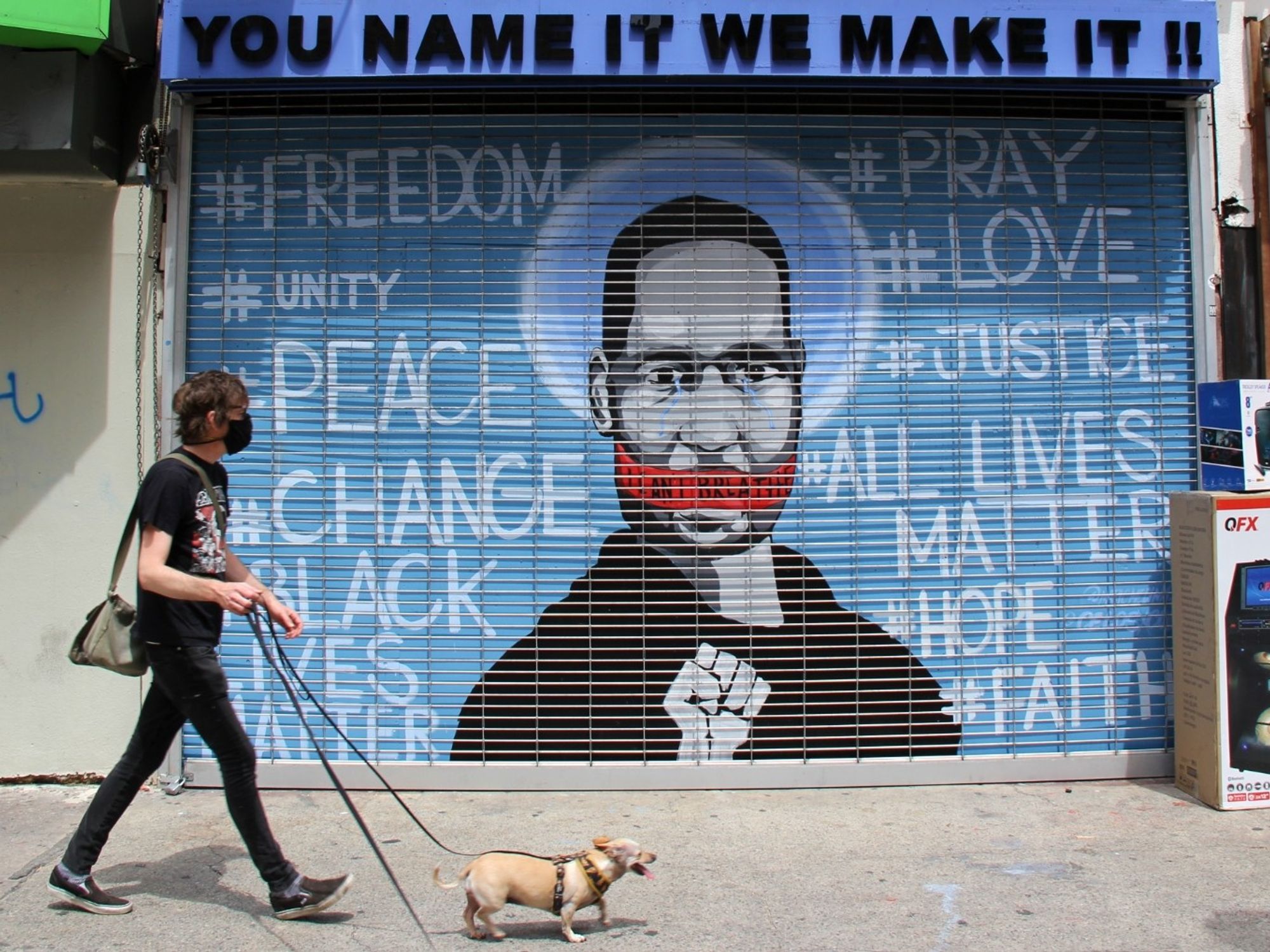
George Floyd Protests: Music Industry Vows 'Blackout Tuesday'; Snap CEO Calls for Reparation Commission; Cities Impose Midday Curfews

George Floyd Protests: Music Industry Vows 'Blackout Tuesday'; Snap CEO Calls for Reparation Commission; Cities Impose Midday Curfews
Eric Zassenhaus, dot.LA

Here are the latest headlines regarding how the protests around the killing of George Floyd are impacting the Los Angeles startup and tech communities. Sign up for our newsletter and follow dot.LA on Twitter for the latest update.

Today:

  • TikTok addresses 'tough but fair questions' about treatment of black creators
  • L.A. VC's react
  • L.A.'s top health official: racism fuels health inequities
  • L.A.'s music industry will shut down for 'Black Out Tuesday'
  • Hollywood, streaming services nod to Black Lives Matter
  • Snap and Twitter reportedly used by ill-intentioned protesters to organize theft
  • Snap CEO talks reparations and heartbreak
  • Airmap's Santa Monica headquarters destroyed by looters
  • Santa Monica, Beverly Hills announce 1 pm curfews for business districts

TikTok addresses 'tough but fair questions' about opportunities for black creators on the platform
TikTok sent a message out to "our black community" on Monday addressing what the company called "tough but fair questions" about whether the platform allows all creators the opportunity to have their content viewed.

In a message to its black community, Vanessa Pappas, TikTok's U.S. general manager and Kudzi Chikumbu, director of creator community, said "we hear you and we care about your experienced on TikTok.

"We acknowledge and apologize to our Black creators and community who have felt unsafe, unsupported, or suppressed. We don't ever want anyone to feel that way."

The company, which is owned by ByteDance, a Beijing-based internet technology company, said that on May 19 black creators and their allies changed their profile pictures and connected on the platform to speak out against how they felt marginalized on TikTok. Then, last week, "a technical glitch made it temporarily appear as if posts uploaded using #BlackLivesMatter and #GeorgeFloyd would receive 0 views."

TikTok said that the company understands that many assumed the bug to be an intentional act to suppress the black community's experiences and invalidate their emotions. It's unclear why TikTok wrote about the glitch Monday, or if had intended to do so before recent demonstrations in the aftermath of George Floyd’s death. A Minneapolis police officer pressed his knee into Floyd’s neck while he pleaded for his mother and to breathe.

The company, which has its U.S. headquarters in Culver City, said it is donating $3 million in honor of black creators to nonprofits that help the black community, which has been disproportionately affected by the effects of the COVID-19 pandemic. TikTok also said it is committing $1 million to fighting racial injustice and inequality.

TikTok said it will standing in solidarity on Tuesday by participating in Blackout Tuesday, turning off all playlists and campaigns on its "Sounds" page to observe a moment of reflection and action. The company said it is also investing in technology. and better moderation strategies with a more user-friendly appeals process. It's also establishing a creator diversity council and developing a creator portal to expand communication and opportunities.

"We know we have work to do to regain and repair that trust," the post said.

-- Tami Abdollah

Los Angeles VC's react

Women in tech Art by Candace Navi

It has been notoriously difficult for people of color to break into the insular world of venture capital, where who you know and previous success are are highly prized. Just 2% of investment professionals are black, which in turn makes it hard for black founders to get funded. Here is a sampling of some of the reaction from the Los Angeles VC community, many of whom have offices in Santa Monica near protests and looting:

-Ben Bergman

LA County public health director calls police violence "a public health issue"

Los Angeles County top public health official Barbara Ferrer linked the unrest that has rocked the region to the deep health disparities that black Americans experience. Ferrer, who has been providing somber daily updates on coronavirus deaths and its spread, called police brutality a public health issue that must be addressed.

"It's important to comment on the connection between these two concerns the death of a black man at the hands of police and the experience of COVID-19 in L.A. County," she said in starting her briefing. "We know that black Americans fare worse than other groups on virtually every measure of health status. And it has become all too common to blame this on individual behaviors, when in fact the science is clear, the root cause of health inequities is racism and discrimination."

"Science also tells us that lifetime stress associated with experiences of daily acts of discrimination and oppression, play a major role," she said. "It starts at birth with higher rates of black infant mortality and shockingly higher rates of maternal mortality among black women and extends to adulthood, when we see black residents in L.A. County experiencing earlier onset of heart disease, hypertension and diabetes and earlier deaths."

"When I report each week that we have seen elevated numbers of black deaths in this county due to COVID-19, I am reporting on the consequences of these long standing inequities. And it's not just the direct victim of violence, the person who's beaten, or shot or asphyxiated who pays the price for brutality. It is an entire community that lives with the fear that the next time, it could be them or their son or daughter neighbor or friend. It is a consequence of that fear that we are seeing when we report instance after instance of inequality and health outcomes," she said.

"As the department responsible for public health in L.A. County and in acknowledgement of our national association, the American Public Health Association, declaring that addressing law enforcement violence is a public health issue, this rush to justice has to be part of our prescription, as well.

Los Angeles county and city declared a 6 p.m. curfew on Monday.

-Rachel Uranga

L.A.'s music industry will shut down for 'Black Out Tuesday'
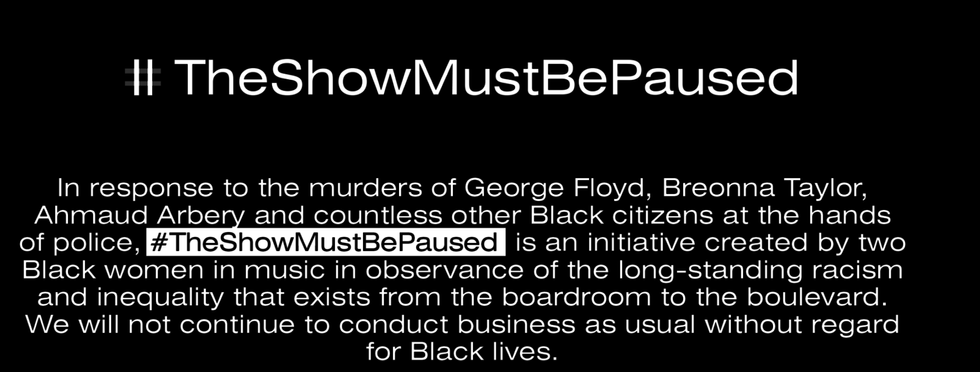
Many organizations in the music industry are pledging to close on Tuesday as part of a 'Black Out Tuesday' campaign. Participants include the three major labels: Warner Music Group, Sony Music and Universal Music Group, along with many of their associated sub-labels.

The initiative started with a pop-up webpage calling for the music industry to shut down on Tuesday, published by Jamila Thomas, a marketing executive at Atlantic Records (owned by Warner Music Group), and Brianna Agyemang, an artist campaign manager at Platoon (owned by Apple).

"It is a day to take a beat for an honest, reflective and productive conversation about what actions we need to collectively take to support the black community," the post said. "The music industry is a multi-billion dollar industry. An industry that has profited predominantly from Black art. Our mission is to hold the industry at large, including major corporations + their partners who benefit from the efforts, struggles and successes of Black people accountable… This is not just a 24-hour initiative. We are and will be in this fight for the long haul. A plan of action will be announced."

The post includes a list of links for suggested actions to take on Tuesday.

#TheShowMustBePaused has traveled widely through the music industry's social media. Santa Monica-based Interscope (owned by Universal Music) pledged to delay releasing new music this week.

Other organizations have been posting messages of solidarity to their social media accounts including Sony Music, Columbia Records (owned by Sony), Universal Music, and Atlantic Records (owned by Warner).

Spotify and Apple Music have also issued brief statements on their social channels.

— Sam Blake

Hollywood, streaming services nod to Black Lives Matter
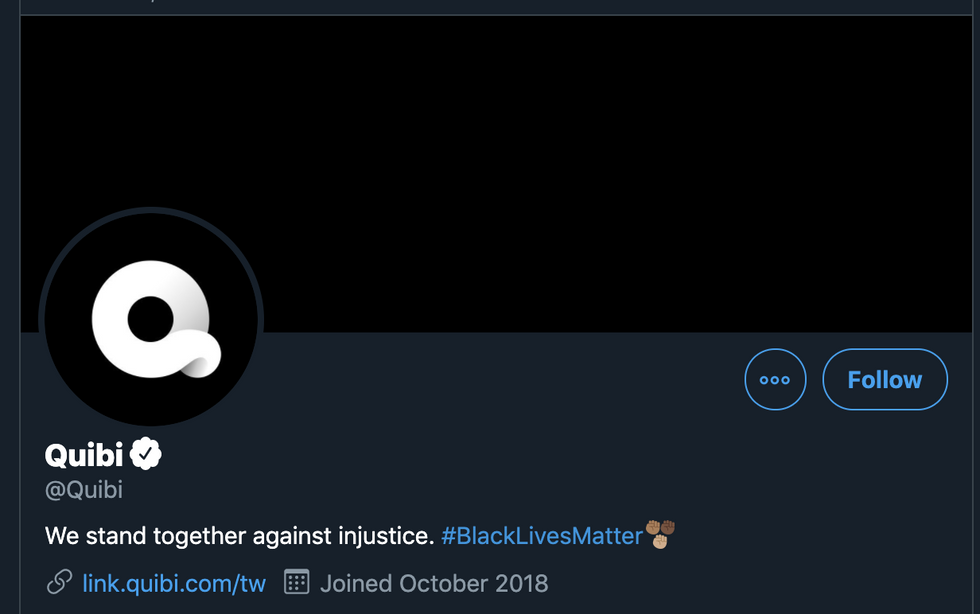
Over the weekend, several streaming companies took to social media to show support for the peaceful protests.

Some streaming platforms have changed their social media profile names and descriptions to express solidarity, including HBO Max and Quibi. Other organizations with similar messages on their social media pages include NBCUniversal, Disney, and Hulu.

On Sunday, various Hollywood union leaders weighed in as well.

SAG-AFTRA leaders Gabrielle Carteris and David P. White issued a statement. "The murder of George Floyd is deeply emblematic of a corrosive inequality and injustice at the heart of America," it began. "It's not enough to demand change. We must recognize that racism lives in our culture and only we can change that."

WGA West President David Goodman said: "As demonstrations continue today across America, our union stands with those who peacefully protest the racist, extrajudicial murders of George Floyd and other Black people...National outrage about bigotry, discrimination, and injustice is the only way we will ever see real change."

ViacomCBS announced on Monday that several of its networks, including Nickelodeon, BET and CBS Sports Network, would go dark for 8 minutes and 46 seconds in tribute to George Floyd and "other victims of racial violence."

— Sam Blake

L.A.'s gaming companies express support for BLM

live.staticflickr.com

Several Los Angeles gaming companies have weighed in to express solidarity and sympathy with social activists.

Culver City-based Jam City, a mobile game developer founded in 2010, took to social media to stand with Black Lives Matter. Santa Monica's Activision Blizzard and West LA's Riot Games also posted on social media, as has startup Esports One.

Gaming and lifestyle company FaZe Clan, based in Hollywood, published an "honest message" to its fans:

FaZe Clan is donating all profits from a retail campaign to a Memorial Fund created in George Floyd's name.

— Sam Blake

Snap and Twitter reportedly used by ill-intentioned protesters to organize theft; Snap CEO talks reparations and heartbreak 
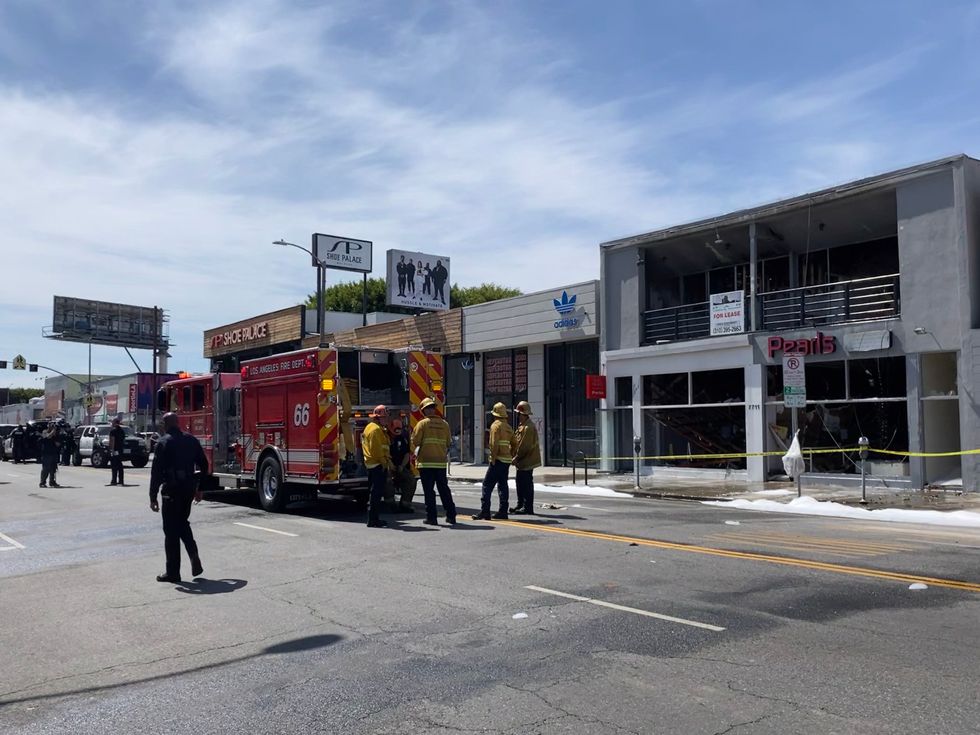
Photo by Tami Abdollah

Twitter has long been the social media platform of choice for people protesting an abuse of power -- during the Arab Spring uprisings it proved crucially useful as a way to get around and deal with internet blackouts.

So too has it been used this past week, by groups organizing mostly peaceful efforts to express their anger at George Floyd's death. But as Twitter has upped its efforts to counter violence on its platform, notably by placing a warning label on a tweet by President Trump for glorifying violence, those with less peaceful intentions have also taken their messages to Snapchat to urge their contacts and the broader public to engage in violence, theft and property damage.

A Snap spokesperson said the company's Community Guidelines "prohibit content that incites or glorifies violence, hate speech and discrimination of any kind. We have in-app reporting tools that Snapchatters can use to quickly report any content that may be in violation of our guidelines to our Trust and Safety team, who then reviews the reports and takes appropriate action."

On Sunday evening, Snap CEO Evan Spiegel sent a letter to staff in which he said "we simply cannot promote accounts in America that are linked to people who incite racial violence, whether they do so on or off our platform.

"Our Discover content platform is a curated platform, where we decide what we promote. We have spoken time and again about working hard to make a positive impact, and we will walk the talk with the content we promote on Snapchat. We may continue to allow divisive people to maintain an account on Snapchat, as long as the content that is published on Snapchat is consistent with our community guidelines, but we will not promote that account or content in any way."

The self-described camera company is currently protected from financial liability for such messages by Section 230 of the Communications Decency Act that that has been broadly interpreted by the courts over the years as shielding internet sites and apps from being financially liable for what user tweets, posts or generally publishes on their platforms.

Last week, Trump signed an executive order that may change all of that by enabling federal regulators to punish social media companies for how they moderate content on their sites. Lawmakers and internet freedom advocates called the action illegal and improper under the First Amendment.

Such a change could have far-reaching impacts on Santa Monica-based Snap and smaller companies with an online presence that lack the budgets to moderate every single message or post on their apps.

Spiegel said he is "heartbroken and enraged by the treatment of black people and people of color in America." He called for the establishment of a diverse, nonpartisan "Commission on Truth, Reconciliation, and Reparations" to investigate the criminal justice system and take action on reconciliation and reparations.

— Tami Abdollah

Airmap's Santa Monica headquarters destroyed by looters
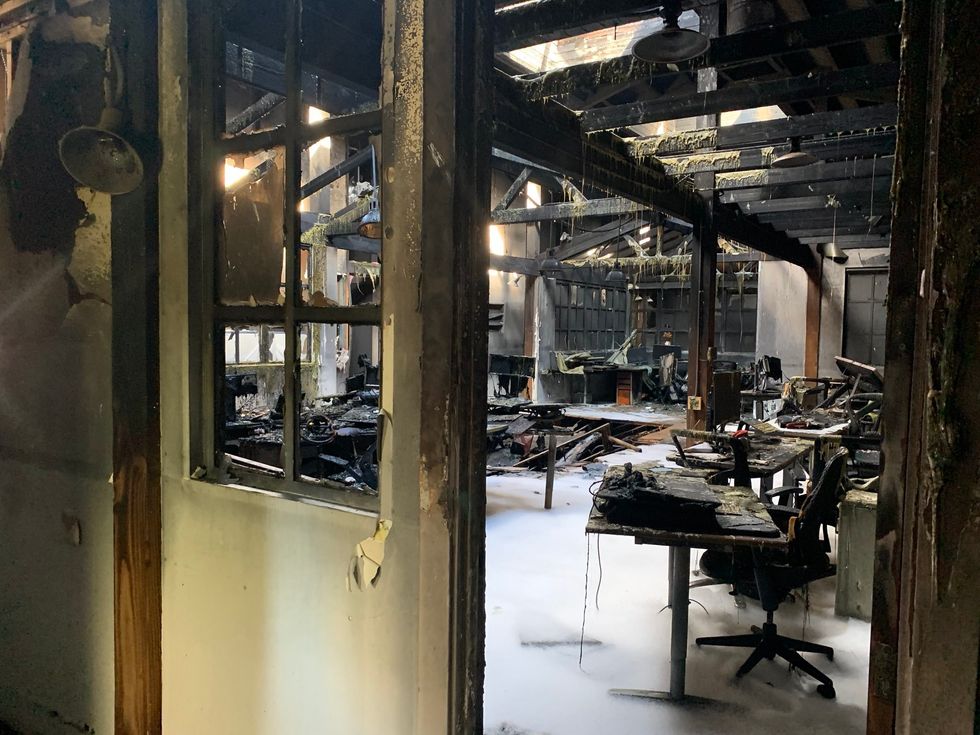
Greg McNeal/Twitter

Airmap's headquarters on Santa Monica boulevard near the Third Street Promenade was destroyed by looters Sunday night, according to co-founder Greg McNeal, who recounted the damage in a series of Twitter posts. The company, founded in 2015, is the world's leading airspace services platform for unmanned aircraft.

AirMap co-founder and chairman Ben Marcus added this on Twitter: "Last night, the AirMap office in Santa Monica was consumed by fire. Thankfully, nobody was hurt. What hurts is the unending racism & injustice in America. We all must work harder to make our union more perfect. We're all brothers and sisters. Let's treat each other with love, respect, & dignity, and create opportunity for all who choose to make a positive impact."

— Ben Bergman

Santa Monica, Beverly Hills announce 1 pm curfews for business districts
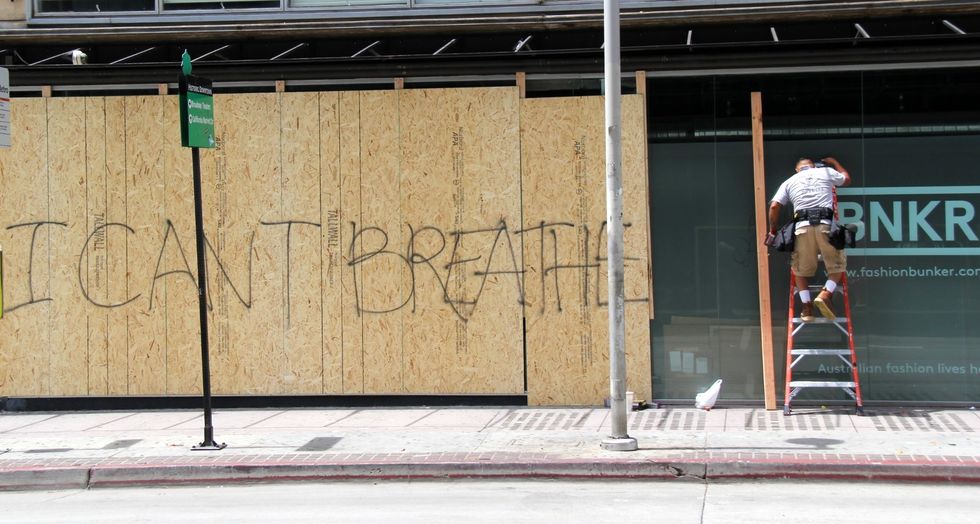
Santa Monica and Beverly Hills announced 1 p.m. curfews for their business districts on Monday, as shop owners and residents began sweeping the glass off the street and assessing the damage after a night of peaceful protests turned into fires, looting and vandalism over the death of George Floyd, who was killed by a police officer in Minneapolis. Citywide curfews will go into effect at 4 p.m. The chaos went to the heart of Silicon Beach, home to tech companies like Snap Inc and venture capitalists like Upfront Ventures, whose office overlooks the Pacific Ocean.

Long Beach issued a similar curfew.

"Sunday was one of the most distressing days in Santa Monica history," said Santa Monica Mayor Kevin McKeown in a statement. "We know better than to let the looters obscure the message of the protesters, who have indeed been heard."

Downtown L.A., Beverly Hills, Fairfax District and the Grove shopping center all got hit by looters over the weekend as police cars were set ablaze and the national guard was called in. News outlets reported that some chanted "eat the rich" as they marched along Rodeo Drive, one of the most expensive slices of commercial real estate in the region.

Floyd's death caused anguish in communities that have seen a number of black men die or be hurt by police officers who often suffer few consequences. Meanwhile, blacks and Latinos have higher arrest and incarceration rates. The deep disparity extends beyond the criminal justice system to education, housing and other areas.

And the frustration over it played out during the protests. Unlike the 1992 civil unrest after the release of Los Angeles police officers who beat Rodney King, demonstrations hit some of the wealthiest parts of the city. In 1992, looting and fires devastated South Central, further impoverishing an already economically disadvantaged area.

"Pretty wild to see the epicentre of this chaos at my office," Laurent Grill, an investor at Santa Monica based Luma Launch wrote on Twitter Sunday. "Quite a divide... on one side we had massive peaceful protests and 3 blocks away, people are looting & burning stores in my community. Makes me extremely sad."

— Rachel Uranga

Two LA Startups Raised $2.37B to Build What AI Needs

🔦 Spotlight

Happy Friday, LA.

The largest checks in tech are increasingly going toward companies trying to build their way out of America’s biggest physical constraints.

This week, two Los Angeles startups raised a combined $2.37 billion in equity to tackle two particularly urgent ones: how the country manufactures critical hardware and where it will find enough electricity to power the AI era.

Torrance-based Hadrian is building highly automated factories for defense and aerospace. El Segundo’s Valar Atomics wants to manufacture nuclear reactors at scale. Different industries, same underlying bet: the next generation of technology will depend on our ability to produce physical infrastructure much faster than we do today.

Hadrian raised $1.37 billion in Series D funding, bringing its valuation to $7.87 billion. The company plans to use the capital to open new factories, expand research and development, and increase its capacity to produce critical defense, aerospace and industrial systems.

Hadrian’s pitch is straightforward, if wildly ambitious: America needs to relearn how to build things and build them quickly.

Its factories combine skilled workers with AI, robotics and proprietary software to manufacture precision components and, increasingly, complete mission-critical systems. Its customers include defense giants such as Lockheed Martin and RTX, along with newer players like Anduril.

The company has come a long way from simply making aerospace parts. Hadrian is positioning itself as a piece of America’s industrial infrastructure, offering manufacturers a way to rapidly scale domestic production at a time when wars abroad, strained supply chains and growing defense demands have made the country’s manufacturing gaps increasingly difficult to ignore.

Investors are clearly buying the argument. The new round comes just over a year after Hadrian raised $260 million, suggesting that “reindustrialization” has officially graduated from venture capital buzzword to billion-dollar investment thesis.

Meanwhile, roughly 15 miles away in El Segundo, Valar Atomics is moving even faster than its enormous ambitions suggested.

When we last wrote about Valar, the company was reportedly raising $450 million at a $2 billion valuation and racing to prove that nuclear energy could move on AI’s timetable. Now, it has closed a $1 billion Series B led by Sequoia Capital, secured an additional $200 million credit facility and reportedly reached a $6 billion valuation.

Valar is developing standardized, factory-built nuclear power plants designed to avoid the enormous costs and decades-long construction timelines associated with traditional nuclear projects. Its goal is not merely to build a working reactor, but to eventually manufacture fleets of them.

That ambition also sounds considerably less theoretical than it did when we first covered the company. In June, Valar’s Ward 250 reactor achieved a self-sustaining nuclear reaction. Just one week later, the company demonstrated the reactor generating electricity to power an Nvidia Blackwell system. Valar now says the new funding will help it move from proving its technology works to producing reactors at scale.

The timing is no coincidence. AI’s enormous appetite for electricity is forcing the tech industry to confront a basic reality: the cloud still has to plug into something. Training models and operating massive data centers will require far more reliable power, and nuclear energy is rapidly becoming one of Silicon Valley’s favorite answers.

Hadrian and Valar may be solving different problems, but their unusually large rounds point to the same shift. AI can design, predict and automate, but it cannot manufacture a missile component or generate a megawatt of electricity on its own. That requires factories, energy systems, supply chains and a great deal of capital.

For years, venture-backed companies competed to build the software layer. Now, some of the biggest bets are being placed on the infrastructure underneath it.

The future may run on AI. But first, someone has to build what keeps it running.

More from this week’s LA startup and venture scene below.

🤝 Venture Deals

    LA Companies

    • Endeavor Optical Networks emerged from stealth with $10.75M in seed funding from General Catalyst and Andreessen Horowitz to develop a satellite network that uses lasers to move data between continents. The startup plans to use the capital to build an optics lab, hire engineers and conduct ground testing ahead of a demonstration satellite launch targeted for late 2027. - learn more
    • Actualyze AI emerged from stealth with a $7M seed round backed by Storm Ventures, Canaan Partners, Morado Ventures and AME Cloud Ventures. Its platform gives enterprises a central control layer for managing AI usage across teams and applications, helping them enforce security policies, track spending, route requests between models and maintain audit trails. - learn more
    • Blaze.tech raised $8.5M in pre-seed funding led by Friale, a healthcare-focused venture firm founded by the family behind HCA Healthcare. The company helps digital health startups, providers and payers turn AI-generated prototypes into HIPAA-compliant software for uses including e-prescribing, EHR integrations, telehealth and auditing. - learn more

    LA Venture Funds
    • Canon Capital participated in Oligo Security’s $60M funding round alongside Ballistic Ventures, Greenfield Partners, Lightspeed Venture Partners, Red Dot Capital Partners, TLV Partners and other investors, bringing the cybersecurity company’s total funding to $140M. Oligo will use the capital to accelerate product development and expand its global go-to-market operations as it helps organizations detect and block software exploits in real time. - learn more
    • Matter Venture Partners participated in Volta’s seed and Series A financing alongside Azora, Andreessen Horowitz, Altimeter, NVIDIA and Michael Dell’s family office, valuing the AI infrastructure startup at $2.4B. Emerging from stealth, Volta plans to use the backing to develop and operate large-scale AI data centers, supported by a $5B infrastructure financing program with Azora and a $10B European compute partnership. - learn more
    • Cedars-Sinai participated in Cirrus Therapeutics’ expanded seed financing through its Intellectual Property Company, bringing the ocular immunology biotech’s total funding to $14.7M. Cirrus will use the backing to advance its gene and cell therapy pipeline, including a lead treatment for geographic atrophy, while a new collaboration with Singapore Eye Research Institute and Duke-NUS will support research, clinical development and expansion across Asia-Pacific. - learn more
    • Strong Ventures made a follow-on investment in Ready Robust Machine’s ₩13.4B Series B, which was led by Quantum Ventures Korea and brought the heavy-equipment technology company’s total funding to ₩22.9B. The company develops energy-recovery systems for hydraulic machinery and will use the capital to build out mass production, expand its data services and enter the Japanese market. - learn more

    LA Exits

    • Artium has been acquired by global consulting firm AlixPartners, bringing its expertise in building enterprise-grade AI agents for clients including BNY Mellon, Mayo Clinic and eBay to a broader global platform. The company will continue operating as a distinct team under the name Artium by AlixPartners, retaining its founders, employees, methodology and research relationships. - learn more

      Download the dot.LA App

      How Replify Found Its Niche and an Acquirer

      🔦 Spotlight

      Hello LA,

      This week’s startup story began three years ago with an AI assistant built for almost any small business. It ended, or perhaps graduated, with an acquisition by one of the fitness industry’s largest technology providers.

      ABC Fitness has acquired Replify, an AI platform that manages customer communication for gyms and wellness businesses across phone, text, email and chat. Its virtual agents can answer questions, qualify leads, schedule tours and classes, follow up on missed calls and run outbound campaigns. Financial terms were not disclosed.

      Before Replify found its footing in fitness, it was HeyLibby, a general-purpose AI assistant founded in 2023 by former Zillow colleagues Spencer Rascoff, Tony Small and Anna Rodriguez. The company was incubated inside Rascoff’s 75 & Sunny Labs and initially set out to help small businesses turn incoming messages into qualified leads.

      That broad vision gave HeyLibby a large potential customer base, from real estate agents and contractors to hairstylists and event planners. But as the team searched for product-market fit, one industry’s problem stood out. Gym and wellness employees were often too busy helping customers in person to answer every call, text or email, leaving prospective members waiting and potential revenue on the table.

      That insight reshaped the company. HeyLibby narrowed its focus to fitness and wellness, raised a $4.5M seed round in 2025 and later rebranded as Replify. It went on to work with brands including Gold’s Gym and UFC Gym, proving that its AI agents could do more than answer routine questions. According to the company, customers have captured up to 10 times more leads and shortened sales cycles from roughly 30 days to as little as three to five days.

      ABC Fitness became a natural next step. The company provides software to more than 30,000 fitness businesses serving over 40 million members worldwide. By adding Replify to its platform, ABC can offer gyms an always-available AI front desk while bringing Replify’s technology to a much larger global customer base.

      Replify’s journey offers a useful lesson amid the rush to build AI products for everyone. The company began with a broad promise, identified a customer with a specific and expensive problem, and built deeply around that need. Gym owners did not need another flashy chatbot. They needed someone to answer the phone when the front desk could not.

      Sometimes the smartest AI strategy is simply picking up the call.

      More from this week’s LA startup and venture scene below.

      🤝 Venture Deals

        LA Companies

        • Dimension raised a $1.65M seed round backed by Science Inc., UpscaleX, OpenSky, Long Run Capital, 1864 Fund and others. The profitable social-commerce company will use the funding to launch Seller OS more broadly, an agentic AI platform that automates TikTok Shop operations for brands and agencies. - learn more
        • Procode raised a $10M Series A led by Health Velocity Capital, bringing its total funding to $14M. The AI-powered medical billing company will use the capital to acquire two additional billing businesses and expand its platform beyond plastic surgery and dermatology into all surgical specialties and ambulatory surgery centers. - learn more
        • Antares raised $470M in Series C financing, including $370M in equity and $100M in debt, in a round co-led by Paradigm and Caffeinated Capital. The nuclear energy company will use the capital to commercialize its autonomous microreactors, with an electricity-producing model planned for 2027 and initial deployments at U.S. military installations beginning in 2028. - learn more

        LA Venture Funds
        • Wilshire Lane Capital participated in Ellis’ more than $10M seed round, which was led by First Round Capital and included Kearny Jackson, 645 Ventures, Harlem Capital, Khosla Ventures and others. Founded by Cadre founder Ryan Williams, Ellis has emerged from stealth with an AI-native operations platform that helps private credit managers reconcile fragmented data and automate workflows such as portfolio monitoring, investor reporting and compliance; the funding will support team growth and further product development. - learn more
        • Rebel Fund participated in Dili’s $15M Series A, led by Khosla Ventures, bringing the AI compliance company’s total funding to $21.7M. Dili helps energy, construction, infrastructure and manufacturing companies identify compliance issues by reviewing project data in real time, and will use the funding to expand its team and broaden its platform into additional audit and waste-detection workflows. - learn more
        • B Capital led ChipAgents’ $60M Series A2, which brought the semiconductor AI startup’s expanded Series A financing to $134M. ChipAgents will use the funding to scale customer deployments, expand its engineering and go-to-market teams and further develop its AI platform, which automates complex chip design and verification workflows. - learn more
        • StoryHouse Ventures participated as a returning investor in Henry AI’s $16.5M Series A, led by FirstMark Capital with backing from Thomson Reuters Ventures, Y Combinator and others. The commercial real estate AI company will use the funding to expand its engineering and product teams and scale Henry Deal, a platform that automates underwriting, offering materials and other back-office work throughout a transaction. - learn more
        • Walkabout Ventures and Bungalow Capital co-led Discern’s $10M Series A, bringing the company’s total funding to $17.5M. Discern provides a software-based registered agent service that automates state filings and compliance tasks, and will use the capital to scale its platform following fourfold annual recurring revenue growth in 2025. - learn more
        • Starshot Capital participated in Quercus Biosolutions’ oversubscribed $5M seed round, which was led by Serra Ventures and included several climate, agriculture and grower-backed investors. The agtech startup will use the funding to expand its pipeline of AI-designed proteins for fighting herbicide-resistant weeds, begin regulatory work and explore applications targeting fungi, insects and other crop pests. - learn more
        • B Capital co-led Flourish Health’s $26M Series A alongside F-Prime and Cherryrock Capital, bringing the youth mental health provider’s total funding to $46M. Flourish will use the capital to expand its psychiatrist-led, in-home care model nationwide, hire and train clinicians and further develop its AI-enabled platform for coordinating care. - learn more
        • Powerhouse Capital participated in European Technology Network’s $1.6M seed round alongside Axel Springer, a LADbible co-founder and angel investors from OpenAI and DeepMind. The London-based tech media startup will use the funding to open a larger studio, expand its team, launch a newsletter and increase its livestreamed programming from two shows per week to five. - learn more

        LA Exits

        • Saltair, the Los Angeles body-care brand founded by model and entrepreneur Iskra Lawrence, is selling a majority stake to private equity firm TSG Consumer. Financial terms were not disclosed, but the deal will support Saltair’s expansion across e-commerce, retail and new products, while Lawrence transitions into the role of chief community advocate. - learn more
        • Digital marketing agency GR0 plans to acquire Ultimate AI’s enterprise deployment division and use the team’s technology to launch a new company called GR0 AI. The platform will deploy AI agents across brands’ customer data, commerce and marketing systems to personalize outreach, recover abandoned sales and generate measurable revenue; financial terms were not disclosed. - learn more

          Download the dot.LA App

          From Uber to Atoms: Travis Kalanick’s $1.7 Billion Return

          🔦 Spotlight

          Hello LA,

          Nine years after his turbulent exit from Uber, Travis Kalanick is back with a new company, an enormous war chest and, apparently, some unfinished business.

          Los Angeles-based Atoms announced this week that it has secured a $1.7 billion equity investment led by Andreessen Horowitz, with a16z cofounder Ben Horowitz joining its board. Bain Capital, Fifth Wall, Uber and several other investors participated, while a roster of major banks, including Goldman Sachs, JPMorgan and Bank of America, are listed as debt partners.

          Yes, Uber itself is now backing the comeback of its famously ousted cofounder. Silicon Valley may preach disruption, but it has always appreciated a good redemption arc.

          Atoms is the culmination of the company Kalanick has spent the past eight years building largely out of public view. Formerly known as City Storage Systems, the parent company behind CloudKitchens, it is now bringing its businesses together under one ambitious umbrella: Atoms Food, Atoms Mining and Atoms Transport.

          The premise is that AI’s next major frontier will not be confined to screens, chatbots or software. Atoms wants to build what Kalanick calls a “computer for the physical world,” using software, sensors, robotics and AI to automate how physical goods are produced, stored and moved.

          That means tackling decidedly unglamorous but enormous industries such as mining, construction, food production and heavy transportation. Rather than betting on humanoid robots that can theoretically do everything, Atoms is focused on specialized machines designed to perform specific, economically useful jobs.

          In other words, the robot does not need a face. It needs a business model.

          For a16z, the investment is as much a bet on Kalanick as it is on industrial AI. In an essay bluntly titled “Travis Is Back,” Horowitz argues that Kalanick possesses the rare mix of technical range, endurance and sheer force of will required to drag old-line industries into a new technological era. The firm’s broader thesis is that robotics will eventually handle much of the repetitive work involved in making, moving and storing physical goods, creating a market potentially as consequential as computing itself.

          There is also some history being settled. Kalanick, Horowitz and Marc Andreessen nearly partnered during Uber’s early days but never completed the deal. In a new conversation about Atoms, Kalanick and Horowitz revisit that missed opportunity and the long road that brought them back together. Sixteen years later, the check is considerably larger.

          The scale of the investment is remarkable, but so is its location. Atoms is headquartered in Los Angeles, giving the city a front-row seat to one of tech’s boldest industrial AI bets. It also reinforces something increasingly evident across LA’s startup ecosystem: the next era of AI will not only be written in code. It will be built in kitchens, warehouses, mines, vehicles and factories.

          Whether Atoms becomes the operating system for the physical world or simply proves that even $1.7 billion cannot make atoms behave like bits remains to be seen. But Kalanick is taking another enormous swing, and this time, Los Angeles is where the comeback story begins.

          More from this week’s LA startup and venture scene below.

          🤝 Venture Deals

            LA Companies

            • Hawthorne-based Andrenam raised an $18M Series A led by Upfront Ventures, with participation from Valor Equity Partners, Also Capital, First Round Capital and Long Journey Ventures, bringing its total funding to $30M. The maritime defense startup will use the capital to scale production of its sonar-equipped buoys and expand its AI-powered platform for detecting and tracking underwater activity. - learn more
            • Long Beach-based Bluecore Energy emerged from stealth with approximately $10M in oversubscribed financing led by Slauson & Co., with participation from Harlem Capital, Precursor Ventures, Hartbeat Ventures and others. The company is developing small modular nuclear reactors that can operate aboard floating barges and deliver zero-emission power to ports, data centers and other critical infrastructure. - learn more
            • Vikk AI raised $4.2M across a $700K pre-seed and $3.5M seed round, with backing from MagnaSci Ventures and several angel investors. The legal AI startup will use the funding to expand its consumer assistant, document tools and advertising platform that connects users with lawyers based on their needs and location. - learn more
            • Final Boss Sour raised $4M in strategic funding from Evolution VC Partners, The Angel Group, Mondelēz International’s SnackFutures Ventures and others, bringing its total funding to $12M. The gaming-inspired real-fruit snack brand will use the capital to expand into major retailers, including Walmart, Kroger, Target and 7-Eleven, while developing new products and collaborations. - learn more

            LA Venture Funds
            • Overture Ventures participated in Fluxco’s $26M seed round, led by 8VC and Congruent Ventures, alongside Trust Ventures, Koch Disruptive Technologies and others. The Austin startup uses AI to help companies source electrical transformers from more than 150 manufacturers, reducing a procurement process that can take months to just days. - learn more
            • Alexandria Venture Investments and Wedbush Healthcare Partners participated as returning investors in Crystalys Therapeutics’ oversubscribed $130M Series B, which was led by Frazier Life Sciences. The San Diego biotech will use the funding to advance Phase 3 trials and commercialization preparations for dotinurad, its once-daily oral treatment for gout. - learn more
            • Rebel Fund participated in Klaimee’s $5.5M seed round, led by FundersClub’s Alexander Mittal and backed by ex/ante, Pioneer Fund, Y Combinator and others. The San Francisco insurtech startup certifies and insures autonomous AI agents, helping businesses manage financial and liability risks that traditional cyber and technology policies may not cover. - learn more
            • M13 participated in Skyfall AI’s undisclosed funding round alongside Fidelity, Inovia Capital, Touring Capital, NextView Ventures and Garage Capital. Founded by former Microsoft researchers, the San Francisco startup is developing AI systems capable of making long-term decisions across finance, operations, marketing and other business functions, with the goal of building an autonomous enterprise. - learn more
            • Interlagos Capital led Beyond Reach Labs’ $10M seed round, with participation from TerraForge Capital, Off-Piste Capital, Y Combinator and Augur VC. The startup will use the funding to scale production of its deployable solar-array hardware for satellites at a new 16,000-square-foot facility in Brooklyn, with plans to achieve flight qualification by the end of 2026. - learn more

              Download the dot.LA App

              RELATEDEDITOR'S PICKS
              Trending