
Four Things to Watch as the Influencer Economy Ramps Up in 2022

Jolene Latimer
Jolene Latimer has her Master of Arts in specialized journalism and writes about sports, entertainment and personal finance.
Four Things to Watch as the Influencer Economy Ramps Up in 2022
Image courtesy of Shutterstock

The age of the creator is upon us.

After years of gaining momentum, the creator economy has gone mainstream. Payment processing platform Stripe estimates the number of individuals who now see themselves as full-time “creators”—those who use online tools to sell digital content—grew 48% in 2021, while earnings across the industry are expected to soon eclipse $10 billion.


Major brands have taken notice, as influencers can garner loyal social media followings that outpace those of many Hollywood celebrities. Meanwhile, some top-tier influencers now make more than S&P 500 CEOs. As more Gen Z creators enter the workforce—looking for opportunities beyond traditional models—the industry is poised to grow at a breakneck pace. We talked with Famous Birthdays founder Evan Britton, whose platform tracks and measures the industry, as well as several emerging influencers about what to watch for over the coming year.

1. Gaming Influencers Grow

There is more gaming content now than ever. According to TwitchTracker, which catalogs streamers, 2021 was the most popular year ever for Twitch, which averaged more than 3.1 million daily viewers at its peak in May 2021. January 2022's numbers (2.9 million) are not far behind.

“Twitch streamers have highly engaged fans,” said Britton. He pointed to Twitter as an example of a platform where many brands and personalities find it “hard to get engagement,” yet where many streamers routinely manage to draw “thousands of likes and comments.”

“Their fans are so engaged with them because they’re watching them for hours on end,” he added. “They just want more content.”

Even though demand for gaming content is up, expect gaming creators to become more strategic about repurposing content in 2022.

“As a streamer, one of the biggest things right now is finding ways to continue to grow while being efficient,” said gamer and Twitch streamer Nick Bartels. In the past, influencers in the gaming world would commit many hours to livestreaming their adventures—but when the game was over, traditionally, so was the stream, and few did anything with the resulting content.

Expect to see creators looking for ways to funnel growth into platforms even when they aren’t streaming. Bartels said he’s looking to work with an editor who can repurpose much of the live content he creates.

“One of the bigger concerns is burnout over air time,” said Bartels. “It’s part of the grind initially, but the last thing you’re going to want to do after you stream is edit. You want to have some life balance.”
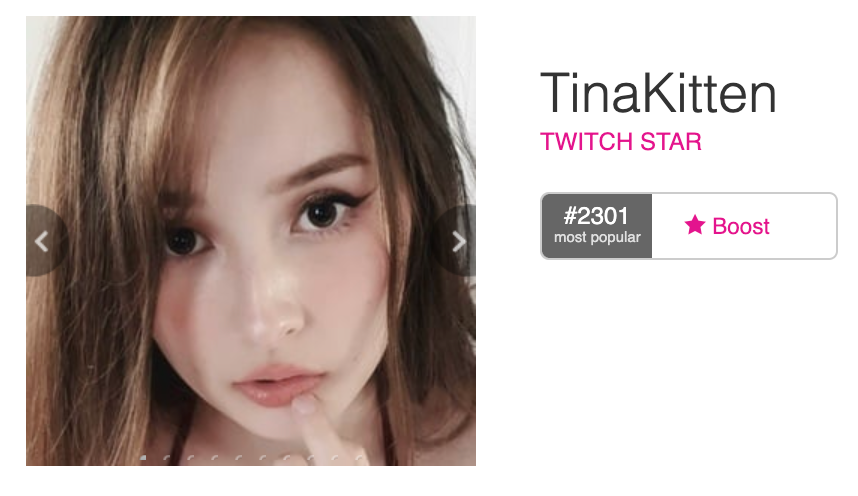
TinaKitten/ Famous Birthdays

Famous Birthdays' Gaming Influencers to Watch

2. The Blockchain Provides a New Source of Income and Experimentation

In years past, influencers relied largely on advertising dollars to monetize their massive audiences and provide them with an income. More recently, however, the blockchain—including cryptocurrency and NFTs— have stepped in, providing a new way to create community while growing revenue.

“The growth of cryptocurrency followed by the explosion of NFTs was a big trend in 2021 that will continue into 2022,” said Britton. “Last year, creators sold digital art and communities sold limited edition collectables offering unique access and clout. This year, offerings will become even more creative.”

Britton said one driver of this trend is entertainment and engagement. NFTs, or non-fungible tokens, provide a way for influencers to reward their most engaged users, as well as a way for audiences to literally invest in the creators they love. “I think it’s a fun way for people to get involved and be part of a community,” he noted. As creators build engaged communities of their own, NFTs could provide additional methods for them to monetize.

But there has been a dark side to influencers’ interest in crypto. Earlier this month, Kim Kardashian and Floyd Mayweather were among a number of influencers accused of taking part in an online pump-and-dump crypto scam. TikTok has since banned promotional content related to financial services, including cryptocurrency, by adding them to its list of “globally prohibited industries.”

While it remains to be seen just how effective NFTs will be as an investment tool, expect interest in the space to continue to grow.
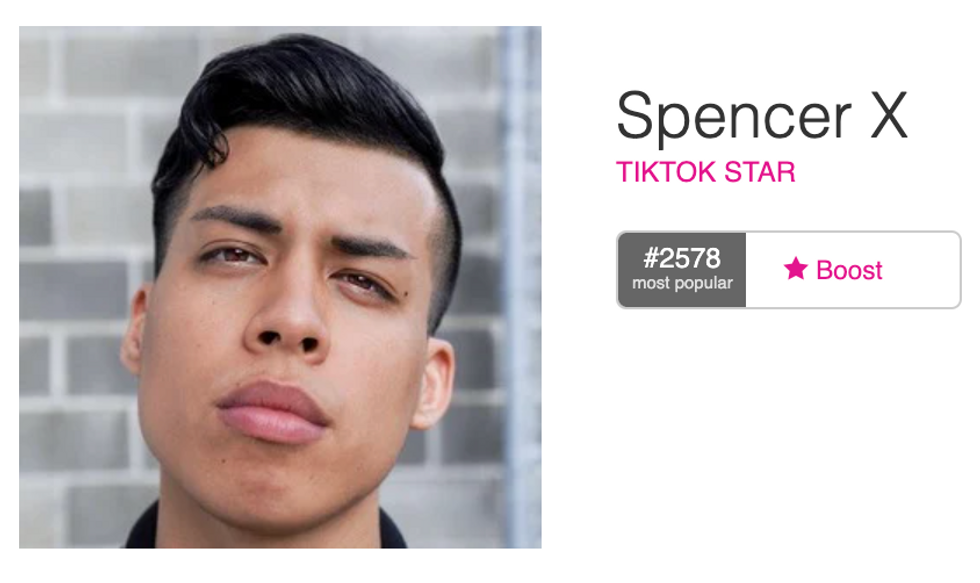
Spencers/ Famous Birthdays

Famous Birthdays' Influencers with NFT Projects to Watch

3. More Fun with Food

Food has emerged as a growing subset of the influencer economy, and several new platforms launched in 2021 looking to seize on that growing interest. Restaurants large and small have taken notice.

“One huge tailwind on TikTok has been creators offering up their unique recipes and fun takes on food,” said Britton, who expects this trend to build throughout 2022. “TikTok is about fun, short videos. Everybody loves food and a lot of people like making food. It just has a lot of natural product-market fit with TikTok.”

Videos showing food can be instrumental in convincing consumers to try new restaurants or menu items. In a survey by restaurant marketing firm MGH, 36% of TikTok users said they have visited or ordered food from a restaurant after seeing a TikTok video featuring that establishment.

Influencer Cassie Sharp found success in 2021 by creating bite-sized content around food challenges, like her popular “five random ingredients” challenge.

“I’m trying to find new challenges that garner similar engagement, and take short-form videos and turn them into long-form content so that I can take some of those views on my shorts and apply them on my long-form videos,” she said, highlighting a trend common among creators in all verticals: repurposing content.

“The greatest thing about short-form content is you can throw it out there and see what catches,” Sharp added. “If I get an audience for a specific short-form video, when I start making long-form videos people are already comfortable with it.”

Her biggest takeaway so far: Clear bowls are essential for creating engaging food videos. “It’s just more interesting to watch the butter and brown sugar melt together,” she said.
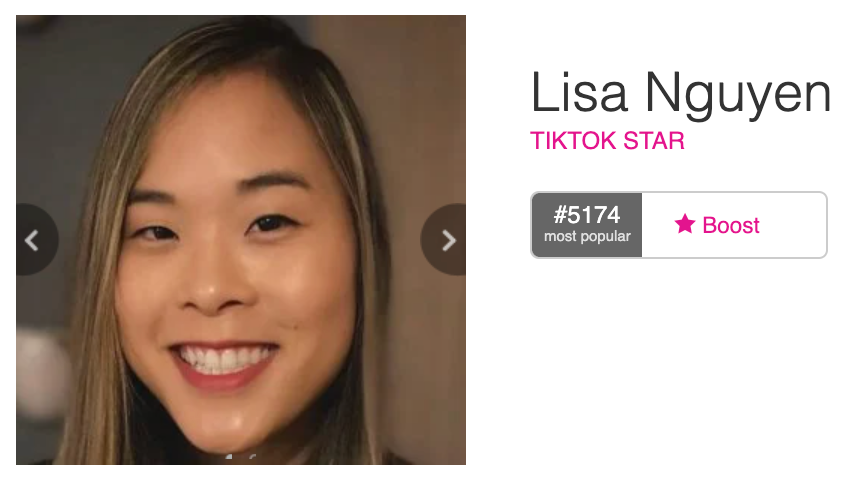
Lisa Nguyen/ Famous Birthdays

Famous Birthdays' Food-Focused Influencers to Watch

4. Social Shopping Upends Ecommerce

The pandemic helped cement ecommerce’s rapidly growing advantage over brick-and-mortar shopping. As more influencers take to livestreaming platforms, expect the nature of online shopping to change.

“Facebook, Instagram and TikTok each facilitate live-shopping and YouTube launched livestreams to promote shopping ahead of the 2021 holiday season,” noted Britton, who added that he expects live-shopping to become increasingly popular in 2022. “It took a while to get here, but it’s growing.”

Gen Z is certainly keen to buy in real time. Survey results from the 2022 Instagram Trend Report show 27% of users aged 13 to 24 shop directly on social media.

Instagram’s native affiliate tool is just one example of this trend in action. The platform began testing the tool in 2021, incentivizing creators to include shoppable content not just in their feeds but also in their Instagram Stories and livestreams.
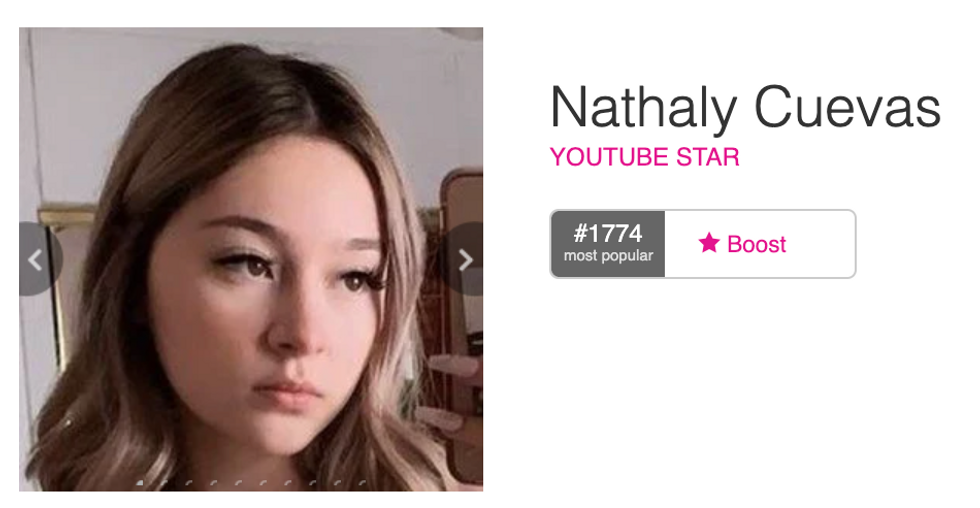
Nathaly Cuevas/ Famous Birthdays

Famous Birthdays' Ecommerce Influencers to Watch

Correction: An earlier version of this story misspelled Nick Bartels' last name.

Northwood’s Nine-Month Rise to $2B
Northwood

🔦 Spotlight

Happy Friday, Los Angeles.

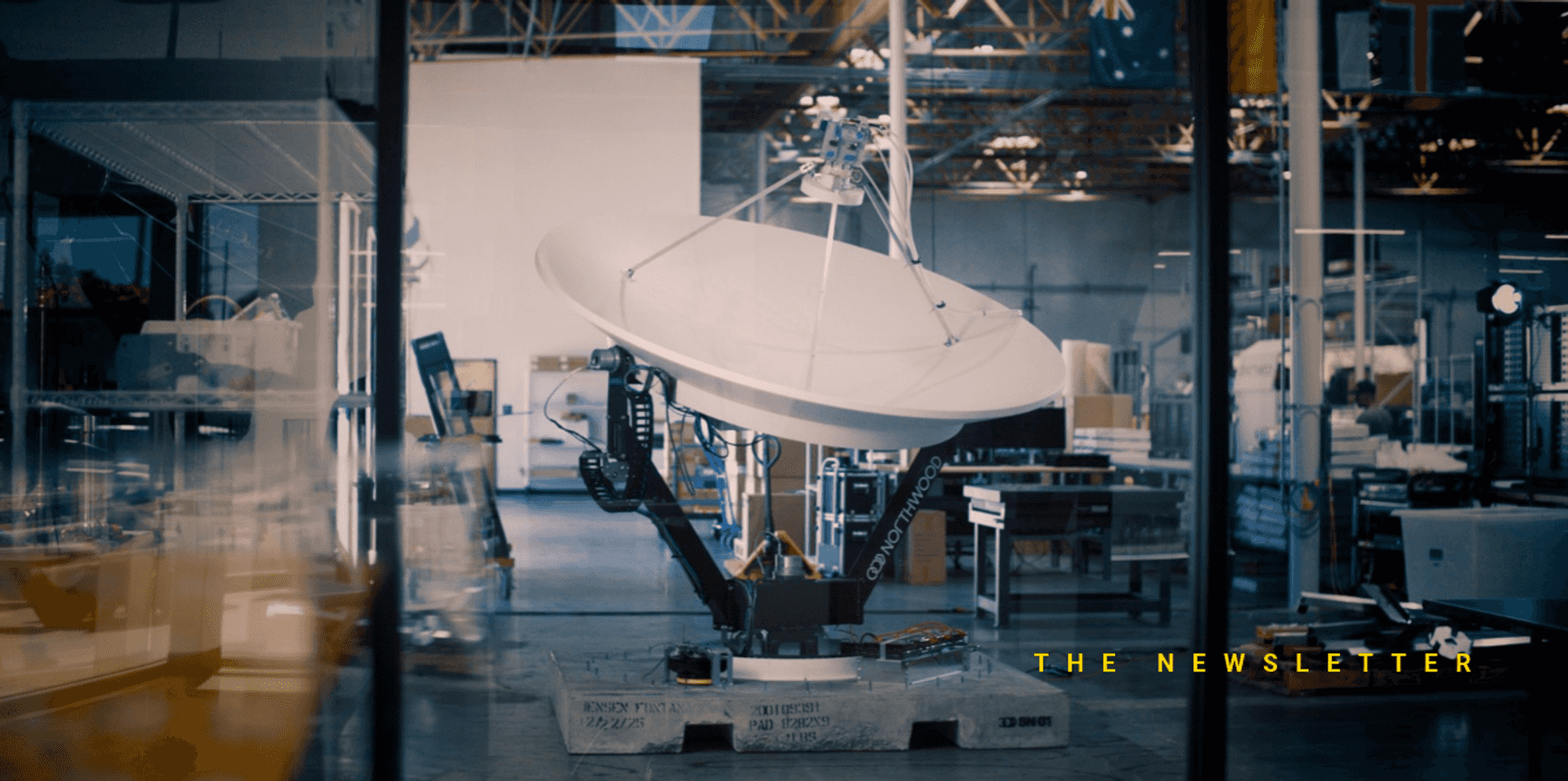
Nine months ago, Northwood Space was operating from a 35,000-square-foot facility in Torrance. Today, it occupies a factory more than five times the size, has deployed six ground sites across two continents and is reportedly worth $2B.

Aerospace companies are not generally known for moving this quickly.

When dot.LA last covered Northwood, the company had just raised a $100M Series B and secured a nearly $50M contract with the U.S. Space Force. The deal established Northwood as one of the more closely watched companies working on the essential infrastructure that keeps satellites connected to Earth.

Less than a year later, Northwood is operating at a considerably different scale.

The company announced this week that it raised a $375M Series C co-led by Andreessen Horowitz and DFJ Growth, with additional investment from Washington Harbour Partners, Alpine Space Ventures, StepStone, In-Q-Tel and others. The round values Northwood at a reported $2B. A separate credit facility from HSBC Innovation Banking will provide additional support for working capital and network expansion.

The financing is notable. What Northwood accomplished between rounds is the more interesting part.

Since January, the company has deployed six ground sites across two continents, demonstrated communication with a government satellite in geosynchronous orbit and introduced a high-throughput antenna system for moving larger volumes of data. It also opened a 185,000-square-foot headquarters and factory in Torrance, expanding its manufacturing footprint more than fivefold.

Northwood now employs more than 140 people and plans to add 400 jobs across Torrance and Washington, D.C., over the next three years.

The company builds the infrastructure that allows satellites to exchange commands and data with operators on Earth. Rather than requiring every satellite company to develop its own ground stations, Northwood is creating a shared network that commercial operators and government agencies can access as needed.

Think cloud infrastructure, except the servers are antennas and adding capacity requires considerably more than clicking a button.

That distinction matters. Software companies can often scale by purchasing additional computing power. Northwood must manufacture physical systems, establish sites around the world and reliably serve customers operating across multiple orbits.

Its new Torrance factory is central to that plan. The facility is designed to produce hundreds of antennas each year, giving Northwood the manufacturing capacity to expand its network faster than traditional ground infrastructure can typically be built.

Demand is moving just as quickly. The number of active satellites worldwide grew from roughly 3,000 in 2020 to more than 14,000 by the end of 2025. Every one of them eventually needs to send information somewhere, and existing ground networks were not designed for the volume of missions now entering orbit.

Northwood’s previous funding helped prove it could build the technology and win serious customers. This round is about turning that early progress into global infrastructure.

The question is no longer whether Northwood can build a modern ground network. It is whether the company can make Torrance-built hardware the default connection layer for a rapidly expanding space economy.

With another $375M behind it, that test begins now.

More from this week’s LA startup and venture scene below.

🤝 Venture Deals

    LA Companies

    • Guava, a Los Angeles-based developer platform for building AI voice agents, raised a $12.5M seed round led by Acrew Capital, with participation from Flourish Ventures, WillowTree Ventures, Clocktower Ventures and existing investor Commerce Ventures. The company will use the funding to further develop its voice AI models and products while building a go-to-market team focused on enterprises and business process outsourcing providers. - learn more

    LA Venture Funds
    • Blue Bear Capital participated in Ocient’s $100M Series C alongside Greycroft, In-Q-Tel, Buoyant Ventures and other existing investors, while BOKA Capital and OCA Ventures co-led the round. The data analytics and AI infrastructure company will use the funding to expand OcientAIQ, its platform for delivering fast, reliable answers from petabyte-scale datasets, and bring its technology to more customers globally. - learn more
    • Mystic Ventures participated in Siggy’s $6M pre-seed round, which was led by Village Global and also included PsyMed Ventures, Coalition Operators and several angel investors. Founded by veterans of Nurx and Journey Clinical, Siggy combines AI, wearable data and licensed clinicians to monitor patients between mental health appointments, with the funding supporting product development, regulatory work and hiring across its clinical and engineering teams. - learn more
    • Grid Capital and Thin Line Capital participated in Strive Robotics’ more than $3M pre-seed round alongside Tenon Ventures, with Hi Ventures leading the financing. The Cambridge-based startup develops adaptable robots that can learn complete manufacturing workflows and operate existing factory equipment, with the funding supporting product development, hiring and early customer deployments. - learn more
    • Sum Ventures participated in Circularity Fuels’ $7M seed round alongside Automotive Ventures, with DCVC and Trucks Venture Capital co-leading the financing. The company converts dairy biogas into sustainable aviation fuel and will use the capital to build a demonstration plant, design its first commercial facility and begin licensing its reactor technology to outside partners. - learn more
    • Griffin Gaming Partners participated in EloElo Group’s $80M Series C alongside MIT Investment Co., Play Ventures, Kalaari Capital and WaterBridge Ventures, while Hornbill Capital and NBCUniversal co-led the round. The Bengaluru-based entertainment company will use the funding to produce more original microdramas across multiple languages, expand its Story TV platform internationally and continue developing Dolphin AI, its AI-powered creative suite. - learn more
    • Mucker Capital participated in Lazarus AI’s $43M funding round alongside QBE, State Farm Ventures, Wave Function Ventures, Techstars and several other investors. The Boston-based company develops AI systems for enterprises and government agencies that retain control over their data, models and deployment, with the new capital supporting research and development, strategic partnerships and new product launches. - learn more
    • Alexandria Venture Investments continued its support of Thryv Therapeutics by participating in the company’s $30M Series B, which was led by InClin and included several other existing investors. The clinical-stage biotech will use the funding to launch a Phase 2a study of THRV-1268 in patients with heart failure and evaluate the drug’s safety and potential effects on cardiac function and arrhythmia risk. - learn more
    • Supply Change Capital led Kodiact’s $2.5M pre-seed round, with participation from Green Circle Foodtech Ventures and Velocity Catalyst. Kodiact helps manufacturers anticipate raw-material price swings and simulate sourcing decisions, and will use the funding to expand its market data and AI capabilities, grow enterprise deployments and enter additional industries including cosmetics, packaging and chemicals. - learn more

      Download the dot.LA App

      Anduril Built Fighter Jets. Now It’s Making a Laptop.
      Anduril

      🔦 Spotlight

      Happy Friday, Los Angeles.

      Anduril has built autonomous drones, underwater vehicles and fighter aircraft. Its newest product is considerably more familiar.

      A laptop.

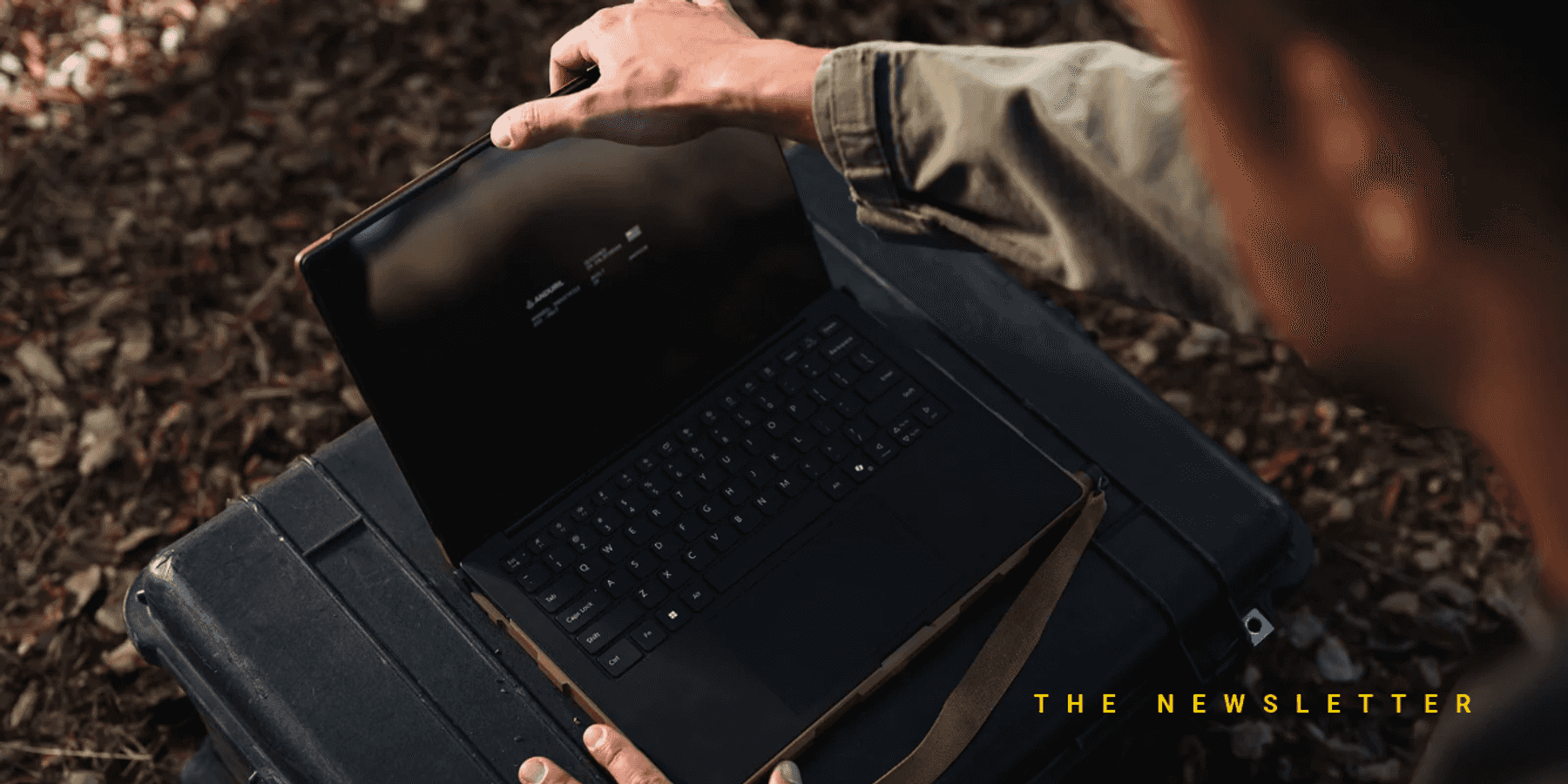
      The Costa Mesa-based defense technology company announced this week that it is partnering with San Diego-based Qualcomm Technologies to launch BlueChip, a new line of computers designed in California and manufactured in the United States.

      The first product will be a rugged laptop powered by Qualcomm’s Snapdragon X Series platform and built for customers in government, defense, public safety and other critical industries. Anduril has already produced working prototypes and plans to begin accepting orders in 2027.

      At first glance, a laptop may seem like a modest addition to a company known for developing autonomous military systems. But BlueChip is less about entering the crowded consumer-electronics market and more about rebuilding the industrial foundation behind the machines Americans use every day.

      The United States remains a leader in designing advanced technology, but much of the physical production required to turn those designs into finished computers has moved overseas. That includes not only semiconductor manufacturing, but also circuit boards, displays, batteries, enclosures and the network of specialized suppliers that connects them.

      For most consumers, that dependency is largely invisible. For the government and military, it represents a potential vulnerability.

      BlueChip is Anduril’s attempt to close that gap.

      Components sourced from the United States and allied countries already account for more than 90% of the prototype laptop’s procurement cost. Circuit-board assembly is planned for Anduril’s Arsenal-1 facility in Ohio, while the company develops domestic production capabilities for enclosures, batteries and other hardware.

      The goal is to gradually replace remaining foreign dependencies and create an end-to-end American computer supply chain that can support additional products beyond the first laptop.

      That process requires more than moving an existing design into an American factory. Anduril is redesigning the computer around what domestic manufacturers can realistically produce at scale. The work includes selecting machinable American metals, adapting power systems to available battery technology and developing a bonding process for domestically made display glass.

      In other words, Anduril is not simply assembling a laptop in America. It is working backward through the supply chain to make American assembly possible.

      Qualcomm will supply the computing foundation. Its Snapdragon X platform will handle processing, graphics and on-device artificial intelligence, giving BlueChip users the ability to run certain AI models locally rather than sending sensitive information to the cloud.

      That is particularly valuable for government and defense customers operating in secure environments, but it also reflects a broader shift in computing. As AI becomes embedded in everyday workflows, the location where information is processed may become nearly as important as the model doing the processing.

      The partnership also reinforces Southern California’s growing role in the effort to rebuild American advanced manufacturing.

      Anduril remains headquartered in Orange County, but its regional footprint is expanding. The company is investing $1B in a new campus spanning Long Beach and Lakewood that is expected to support approximately 5,500 jobs and include engineering, laboratory and prototype-manufacturing space.

      Qualcomm, meanwhile, has spent decades building San Diego into a center for wireless technology and semiconductor design.

      BlueChip brings those two Southern California strengths together: Anduril’s ability to move quickly from engineering concept to physical product and Qualcomm’s expertise in efficient, high-performance computing.

      The first BlueChip laptop is not intended to compete for space in every backpack or coffee shop. Its early customers will likely be institutions that care deeply about security, reliability and control over their technology supply chains.

      But the larger ambition reaches far beyond a single device.

      If BlueChip succeeds, Anduril and Qualcomm will have created more than an American-made computer. They will have helped restore the suppliers, production knowledge and technical workforce required to build the next one.

      For a company accustomed to tackling difficult national-security problems, the laptop may be one of Anduril’s most practical ideas yet.

      Sometimes rebuilding an industry begins with reopening the machine.

      More from this week’s LA startup and venture scene below.

      🤝 Venture Deals

        LA Companies

        • StimCardio raised an oversubscribed $30M Series A led by Metis MedTech, with participation from Catalyst Health Ventures and other investors. The Los Angeles medical device company will use the funding to advance a pivotal study of Rhyvive, its investigational wrist-worn therapy designed to reduce recurring atrial fibrillation after catheter ablation, and prepare for an FDA submission. - learn more
        • Gardena-based Neuron Industries raised an oversubscribed $10M seed round co-led by FCVC and Obvious Ventures, with participation from Y Combinator, Thin Line Capital, Zee Prime Capital and Founder Factor. The company will use the funding to develop and launch its AI-powered industrial control platform, expand its product line and establish domestic production as it works to help engineers automate new factories and machinery more quickly. - learn more
        • Offe Market raised a $3M seed round led by Slauson & Co., bringing the off-price retail marketplace’s total funding to $4.3M. The company will use the capital to expand its commerce platform with AI-powered pricing and inventory tools, personalized recommendations and live shopping features designed to help brands sell excess merchandise without sacrificing control over presentation or pricing. - learn more
        • Loamy raised a $6M seed round led by Zeal Capital Partners, with participation from LA investors Slauson & Co., Supply Change Capital and Amplify.LA, bringing its total funding to $10M. The company will use the capital to expand its engineering and sales teams, advance its AI platform and enter additional food categories as it helps growers, packers and distributors reduce waste and prevent rejected shipments. - learn more

        LA Venture Funds
        • MaC Venture Capital co-led Rendezvous Robotics’ oversubscribed $20M seed round alongside Toyota Ventures, marking the space startup’s first priced financing. The company will use the funding to develop its next-generation modular spacecraft, expand its team and prepare for flight demonstrations of technology that allows spacecraft components to assemble and reconfigure autonomously in orbit. - learn more
        • BOLD Capital Partners participated in General Compute’s $100M Series A, which was co-led by Blackbird and Abstract. The company will use the funding to scale its AI inference cloud, which deploys specialized chips from companies including Cerebras, SambaNova and Positron AI to help customers run AI workloads faster without managing the underlying infrastructure. - learn more
        • Mantis Venture Capital participated in Vera Health’s $28.5M Series A, which was led by Threshold Ventures and brought the clinical AI company’s total funding to $32M. Vera will use the capital to strengthen its medical-evidence infrastructure, enter new healthcare markets and expand partnerships with medical societies, publishers and health systems. - learn more

        LA Exits

        • Breastfeeding platform Swehl was acquired by Willow Innovations alongside infant-feeding technology company Momtech, with financial terms undisclosed. Swehl’s educational resources and community programs will anchor Willow World, a new platform designed to expand Willow’s business beyond wearable breast pumps and support mothers across more of the postpartum journey. - learn more
        • SmartLess Mobile was acquired by Noble Mobile and will transition to the Noble brand as the companies combine their efforts to offer simpler, more affordable wireless service. Existing customers will retain their plans, prices, phone numbers and T-Mobile 5G coverage, while gaining the ability to use their data in Mexico and Canada at no additional cost; financial terms were not disclosed. - learn more

          Download the dot.LA App

          Your Bank Wants to Cancel Your Subscriptions

          🔦 Spotlight

          Hello, LA.

          Somewhere between the streaming service you still use and the free trial you forgot to cancel, recurring payments have become a surprisingly complicated part of modern financial life.

          Los Angeles-based ScribeUp believes your bank should help manage them.

          The fintech company raised a $13M Series A led by Curql, with participation from Mucker Capital and Service Ventures. The financing includes $10M in equity and a $3M venture debt facility, bringing ScribeUp new capital to expand its team, accelerate sales and further develop its AI-powered bill-management technology.

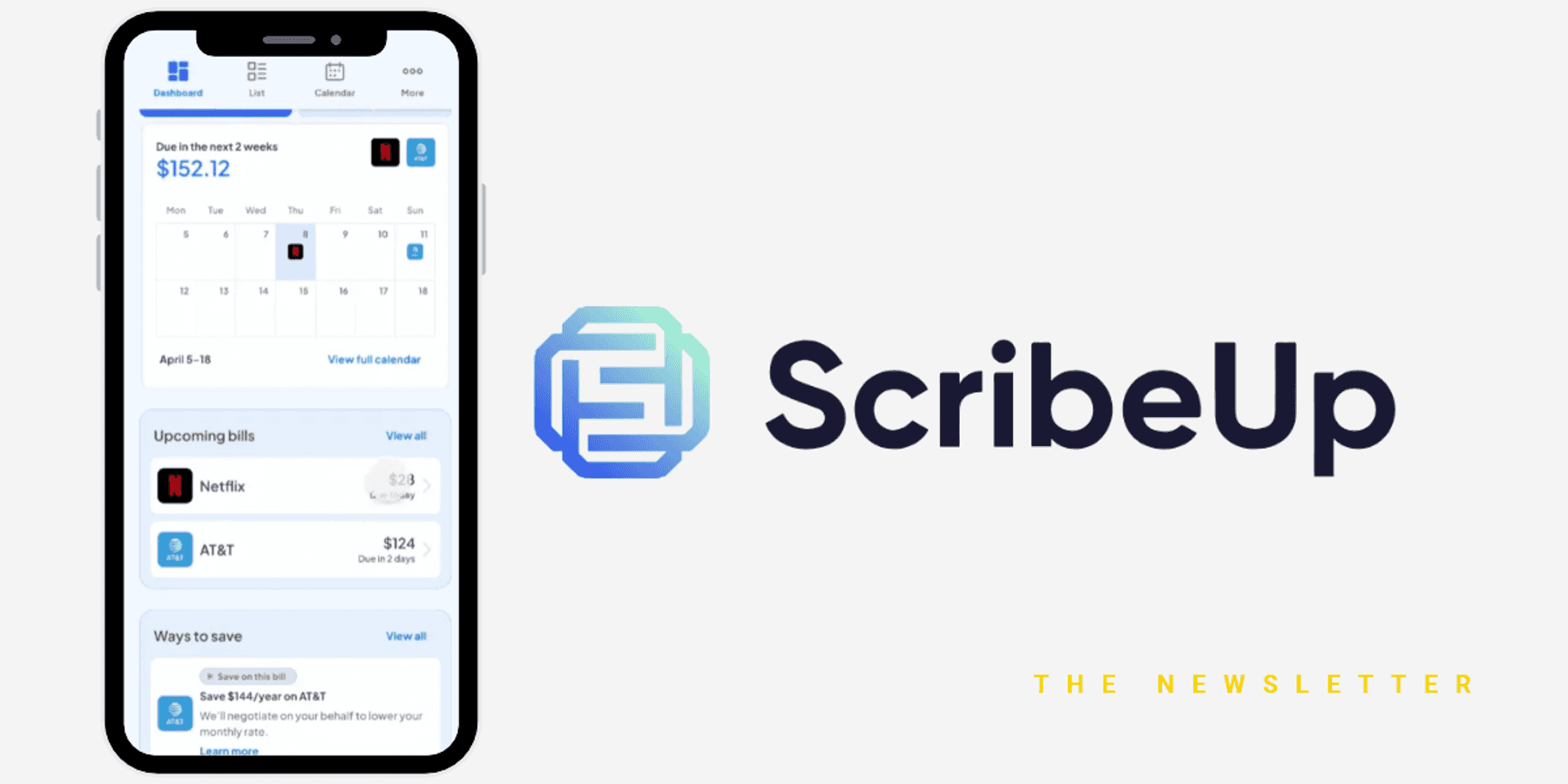
          The product is designed to live directly within the apps of banks, credit unions, fintechs and neobanks. Instead of simply showing customers that a recurring charge occurred, ScribeUp gives them tools to do something about it.

          That could mean canceling a forgotten subscription, changing a payment method, accessing an advance or exploring refinancing options for an outside loan, all without leaving the financial institution’s app.

          It sounds like a useful feature. It is also part of a much larger contest over who gets to manage the consumer’s financial life.

          For years, banks have held customers’ money while third-party apps have increasingly helped them understand and manage it. Budgeting platforms organize spending. Subscription services identify recurring charges. Fintech apps recommend ways to save, borrow or invest.

          Now AI assistants are beginning to combine those functions into a single interface capable of not only analyzing financial information, but acting on it.

          That creates a risk for traditional financial institutions. If consumers begin turning to an outside app whenever they need to cancel a service, manage a bill or make a financial decision, their bank could become little more than the infrastructure beneath someone else’s customer experience.

          ScribeUp offers banks a way to compete without building that technology themselves.

          Its platform combines recurring-payment information with the financial context a bank already has, including balances, cash flow and payment timing. That allows a financial institution to do more than flag an upcoming charge. It can potentially recommend and execute an action based on the customer’s broader financial position.

          ScribeUp says its technology is already used by more than 60 banks, credit unions, fintechs and neobanks. It can be added through an API, software development kit or embedded interface, allowing institutions to introduce bill-management features without creating the underlying infrastructure from scratch.

          The new funding will support more advanced AI capabilities that can take action across different billers. That distinction matters. The first generation of personal finance software helped people see where their money was going. The next generation wants permission to do something about it.

          For banks, the opportunity is straightforward: become more useful before another app takes their place.

          For consumers, the appeal may be even simpler. Most people do not want another financial dashboard. They want the unwanted charge to stop.

          The next battle in banking may not be over who holds your money.

          It may be over who gets to press cancel.

          More from this week’s LA startup and venture scene below.

          🤝 Venture Deals

            LA Companies

            • International Dance League raised a $15M Series A led by Elysian Park Ventures, with participation from Sony, KB Partners, APEX, Yamaha Music Innovations Fund and October Ventures. Following a debut season that sold out all six events and generated 2B views, IDL will use the funding to expand its tour, strengthen team and dancer operations, improve broadcast production and develop new fan experiences for 2027. - learn more
            • Santa Fe Springs-based DrizzleX raised a $6.8M Series A-2 led by Israel Investment Fund Group, with several of the water-management platform’s own customers also investing. The company will use the funding to expand sales, streamline hardware manufacturing, build partnerships and develop new products that help property owners detect leaks, reduce water use and lower operating costs. - learn more
            • POV Beauty raised an undisclosed Series A led by Silas Capital, with participation from RÉDO Capital and existing investor Imaginary Ventures. The skin-prep brand will use the funding to build on its nationwide Sephora launch, expand its team and TikTok Shop presence, and develop more skincare-makeup hybrid products. - learn more

            LA Venture Funds
            • Chapter One participated in Warp Sciences’ $215M Series A, which was led by Lightspeed and included a large group of venture firms and angel investors. The company is building AI-powered, increasingly automated laboratories that will manufacture and test molecules for drug developers, aiming to accelerate preclinical research while expanding scientific infrastructure in the U.S. - learn more
            • Capital Group participated in Legora’s $550M Series E, which was led by Atreides Management and valued the legal AI company at $8.8B. Legora will use the funding to expand across the U.S. and international markets while developing new capabilities for its agentic operating system, which is used by more than 140,000 legal professionals. - learn more
            • Group 11 participated in CapitalOS’ $21.9M Series A, which was led by LGVP and included WEX Venture Capital, Great North Ventures and Night Capital. CapitalOS will use the funding to scale its infrastructure, which enables B2B software platforms to quickly offer financial products while outsourcing functions such as compliance, risk management and underwriting. - learn more
            • Starshot Capital participated in IMIO’s $12M funding round, which was led by Sofinnova Partners and included Chipotle’s Cultivate Next, Grow Together Salinas, Earth Foundry and Serra Ventures. The agricultural biotechnology company will use the capital to build a Chicago headquarters, laboratory and manufacturing facility for its freeze-dried microbial products, which are designed to improve soil health and crop yields. - learn more
            • SUM Ventures participated in Vectorial’s $3M seed round, which was co-led by Smilegate and SenseAI Ventures and included several investors connected to UC Berkeley and Stanford. The startup will use the funding to scale its AI-powered consumer research platform, which lets companies test products, marketing campaigns and AI agents against simulated audiences before launching them publicly. - learn more
            • Wave Function Ventures participated in Stellios Technologies’ oversubscribed $5M pre-seed round alongside Sofreh Capital, Cubit Capital, Mana Ventures, Atoms & Bits and other investors. The Austin-based company will use the funding to deliver its first high-power microwave systems, establish domestic research and manufacturing facilities, grow its team and advance technologies spanning directed energy, compact fusion and next-generation propulsion. - learn more
            • Upfront Ventures participated in Daytona’s $60M Series B, marking the Santa Monica firm’s third investment round with the company. Led by FirstMark Growth, the financing valued Daytona at $1B and will help the startup expand sales and engineering for its cloud infrastructure, which provides secure virtual computers where AI agents can execute tasks. - learn more
            • Core Innovation Capital participated in Delegance Brokerage’s $3.1M pre-seed round, which was led by Grit Capital Partners and included Gilgamesh Ventures and Outside VC. The AI-powered commercial insurance brokerage will use the funding to hire licensed brokers and engineers and expand partnerships as it promotes a flat 5% fee model in place of traditional commissions. - learn more
            • Core Innovation Capital participated in Prism Data’s $20M Series A, which was led by Story Ventures and included FINTOP Capital, Obvious Ventures, 1st & Main Growth Partners and Mana Ventures. Prism will use the funding to expand its cash-flow underwriting technology, AI infrastructure and data science team while growing across the U.S. and Canada and preparing for international expansion. - learn more

            LA Exits

            • Sanctuary has been acquired by WSG Brands, adding the contemporary women’s label to a portfolio that includes Von Dutch, Nasty Gal and Allbirds. The purchase price was not officially disclosed, though earlier documents placed it at $67M; WSG plans to expand Sanctuary internationally and into new categories, while founders Ken and Debra Polanco will remain involved. - learn more
            • SecureNet Solutions was acquired by CompassMSP, expanding the managed IT and cybersecurity provider’s presence on the West Coast. The deal gives SecureNet’s real estate, healthcare and professional services clients access to CompassMSP’s national cybersecurity, compliance and advisory resources while retaining their existing service team; financial terms were not disclosed. - learn more

              Download the dot.LA App

              RELATEDEDITOR'S PICKS
              Trending