


Get in the KNOW
on LA Startups & Tech
X
Design, Bitches
Looking to Build a Granny Flat in Your Backyard? Meet the Firms and Designs Pre-Approved in LA
Sarah Favot
Favot is an award-winning journalist and adjunct instructor at USC's Annenberg School for Communication and Journalism. She previously was an investigative and data reporter at national education news site The 74 and local news site LA School Report. She's also worked at the Los Angeles Daily News. She was a Livingston Award finalist in 2011 and holds a Master's degree in journalism from Boston University and BA from the University of Windsor in Ontario, Canada.
Adding a backyard home in Los Angeles is now nearly as easy as buying a barbecue.
Homeowners who for years have wanted to build a granny flat in their backyard, but dreaded the red tape, can now choose from 20 pre-designed homes that the city has already approved for use.
The shift, made official last week, will speed up a weeks-long process and bring more badly needed units to an overpriced market. It also has the potential to elevate the 14 startups and firms building the next generation of homes.
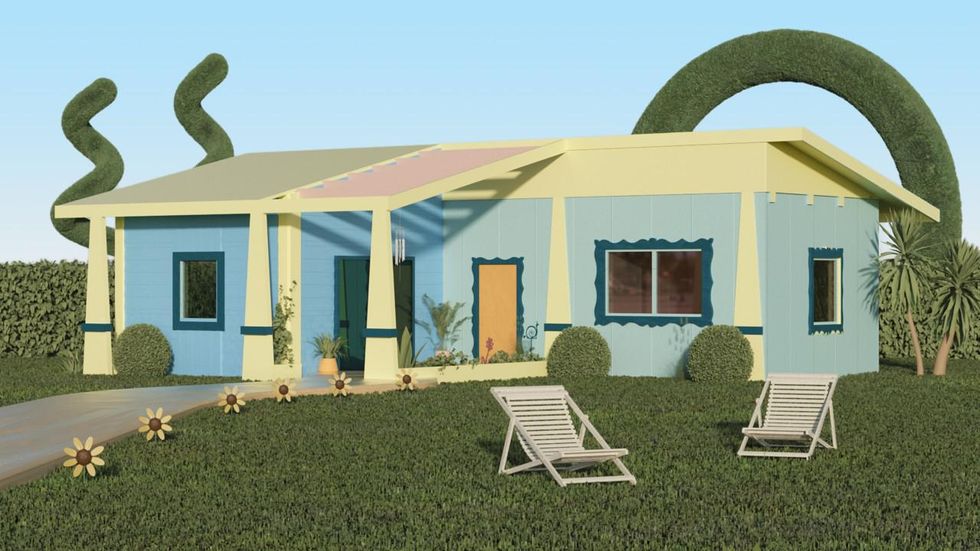
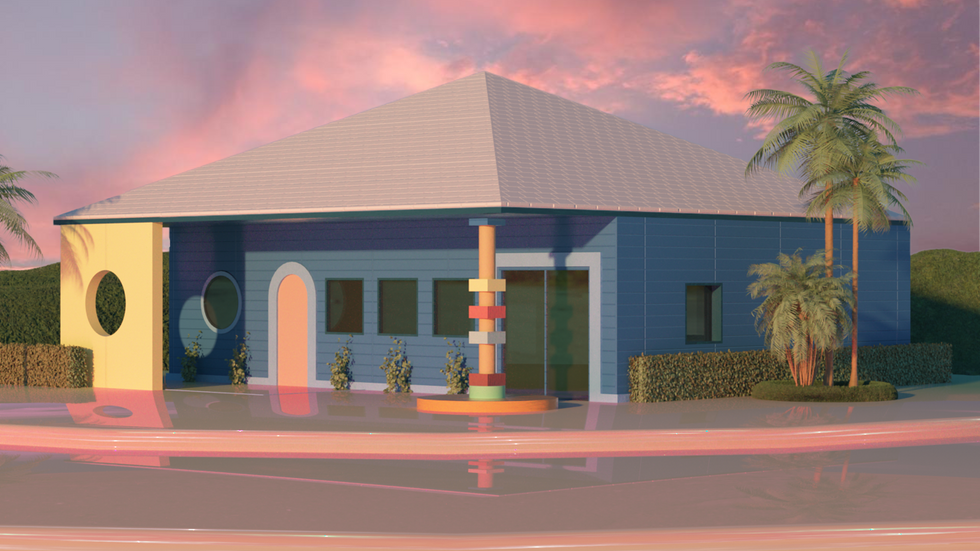
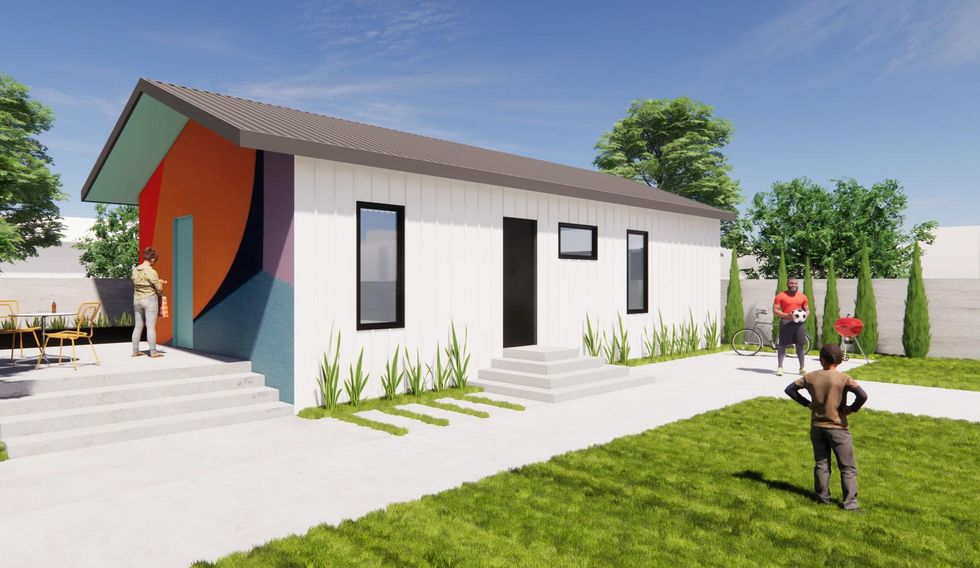
The designs for the stand-alone residences range from a 200-square-foot studio to a 1,200-square foot, two-story, two-bedroom unit. And many of the homes are filled with design flourishes, reflecting the diverse architecture of the city, from a house in the silhouette of a flower to one with a spiral outdoor staircase leading to the roof.
It's no surprise. The program was spearheaded by Christopher Hawthorne, a former architecture critic at the Los Angeles Times and now the city's chief design officer.
The firms are primarily local and startup architecture and design firms, while others are well-known with a history of building granny flats, also know as accessory dwelling units, or ADUs.
The standard plans avoid the Los Angeles Department of Building and Safety's typical four-to six-week review process and can allow approvals to be completed in as quickly as one day.
Some aspects of the plans can be modified to fit a homeowner's preferences. Eight other designs are pending approval.
Mayor Eric Garcetti believes by adding more such units, the city can diversify its housing supply and tackle the housing crisis. Recent state legislation made it easier to build the small homes on the lot of single-family residences. Since then, ADUs have made up nearly a quarter of Los Angeles' newly permitted housing units.
Because construction costs are relatively low for the granny flats – the pre-approved homes start at $144,000 and can go beyond $300,000 – the housing is generally more affordable. The median home price in L.A. County in January was $690,000.
Here's a quick look at the designs approved so far:
Abodu

Abodu
Abodu, based in Redwood City in the Bay Area, exclusively designs backyard homes. In 2019, it worked with the city of San Jose on a program similar to the one Los Angeles is undertaking.
In October, it closed a seed funding round of $3.5 million led by Initialized Capital.
It has been approved for a one-story 340-square-foot studio, a one-story one-bedroom at 500 square feet, and a one-story, 610-square-foot two-bedroom.
The pricing for the studio is $189,900, while the one-bedroom costs $199,900 and the two-bedroom is $259,900.
Amunátegui Valdés Architects
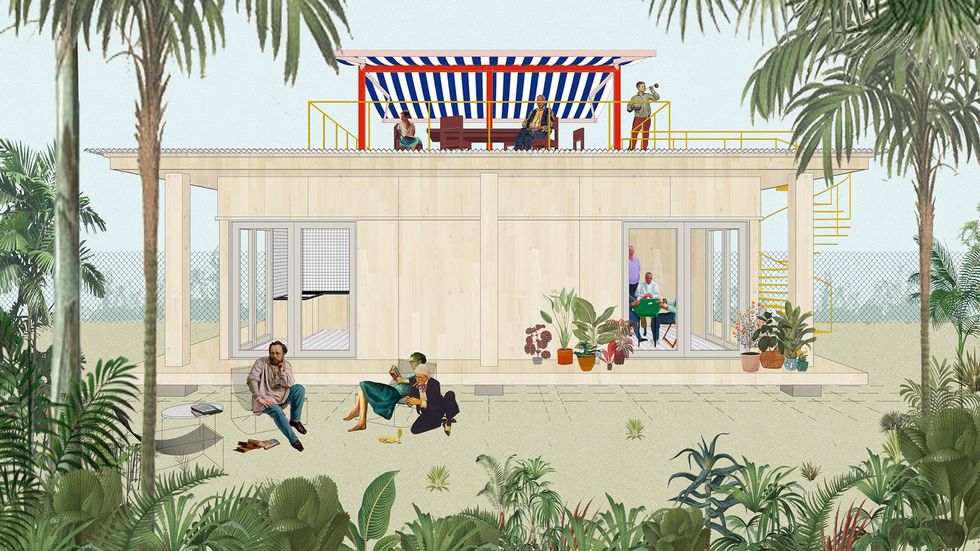
Led by Cristobal Amunátegui and Alejandro Valdés, the firm was founded in 2011 and has offices in Los Angeles and Santiago, Chile. Amunátegui is an assistant professor at the Department of Architecture and Urban Design at UCLA.
The firm designs work in various scales and mediums, including buildings, furniture and exhibitions.
Its one-story, two-bedroom with a covered roof deck 934-square-foot unit is pending approval from the city.


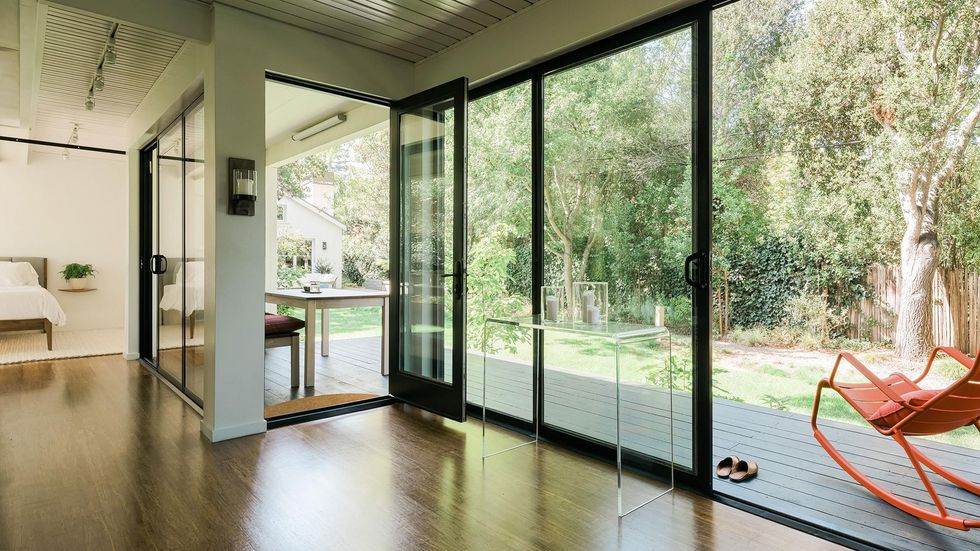
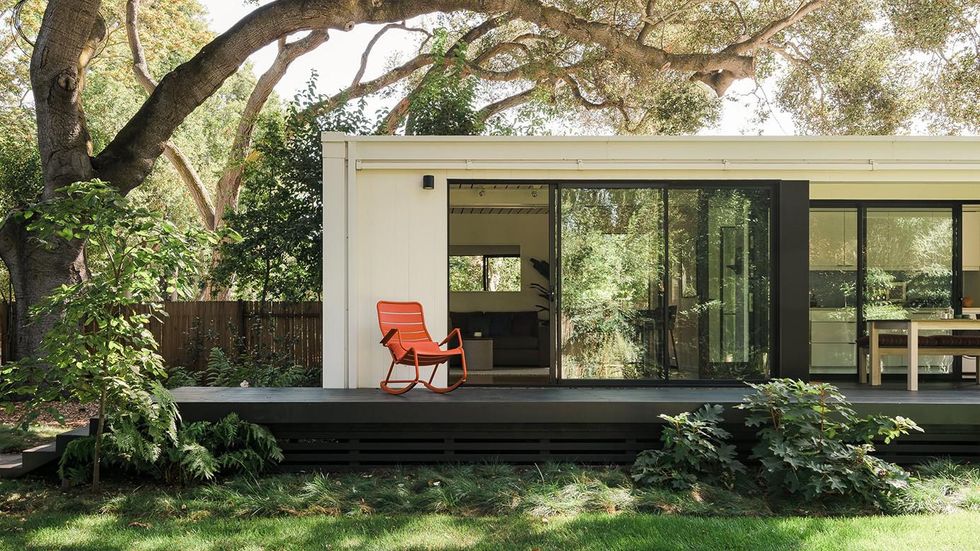
Connect Homes
Connect Homes has a 100,000-square foot factory in San Bernardino and an architecture studio in Downtown L.A.
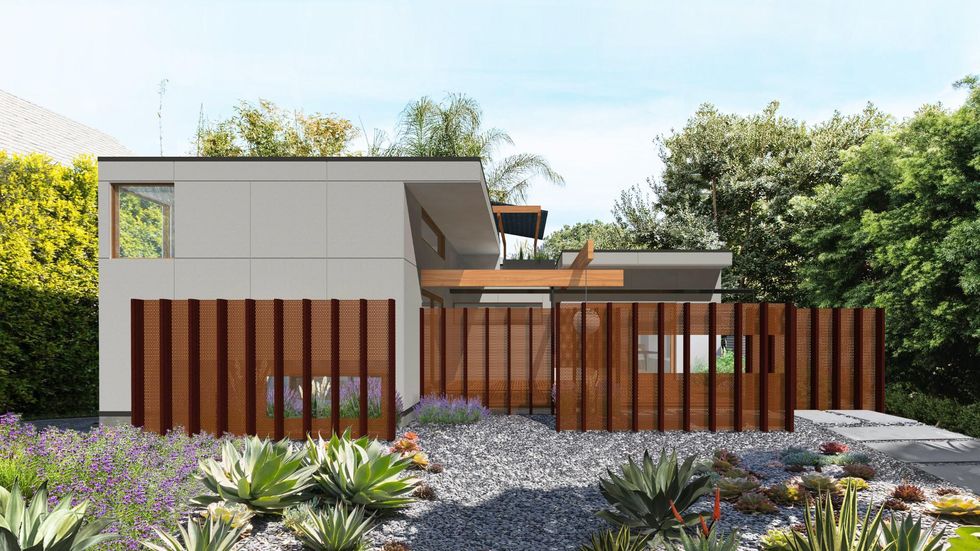
It specializes in glass and steel homes and has completed 80 homes in California. Its designs have an aesthetic of mid-century modern California residential architecture.
It has two one-bedroom models pre-approved by the city, one is 460 square feet, which costs $144,500 with a total average project cost of $205,000. The other is 640 square feet, which costs $195,200 with a total project cost of $280,000.


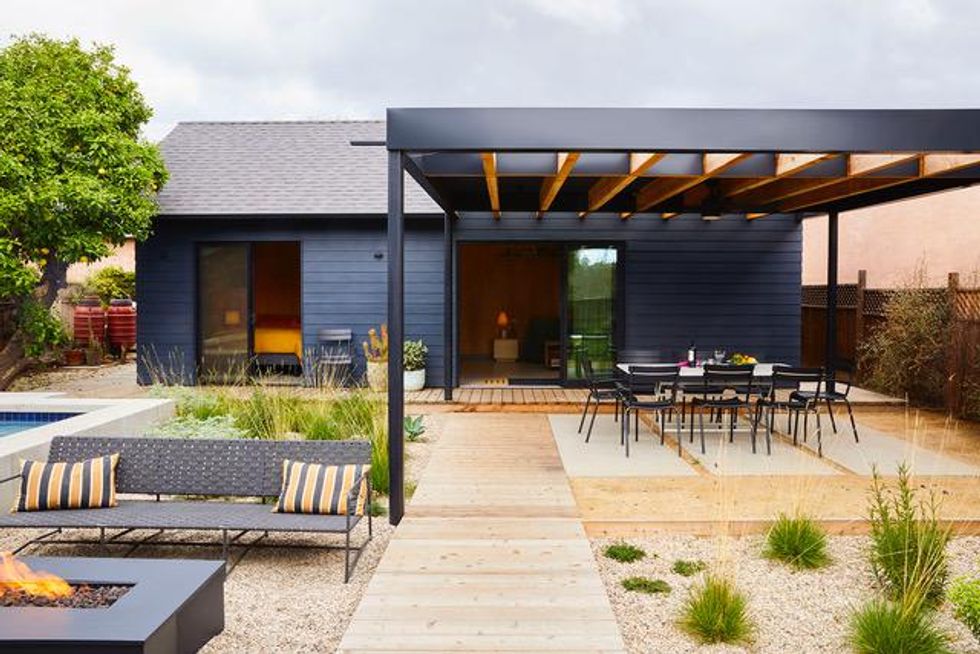
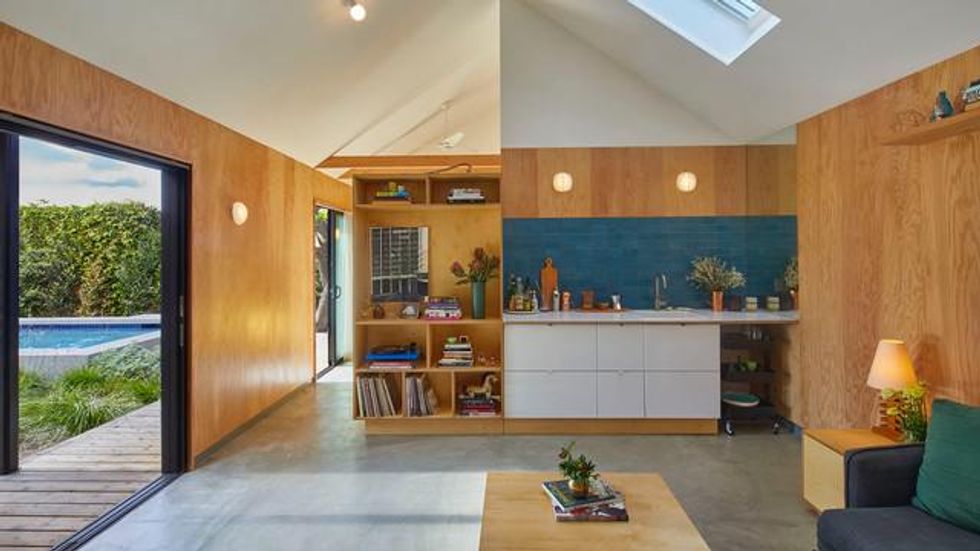
Design, Bitches
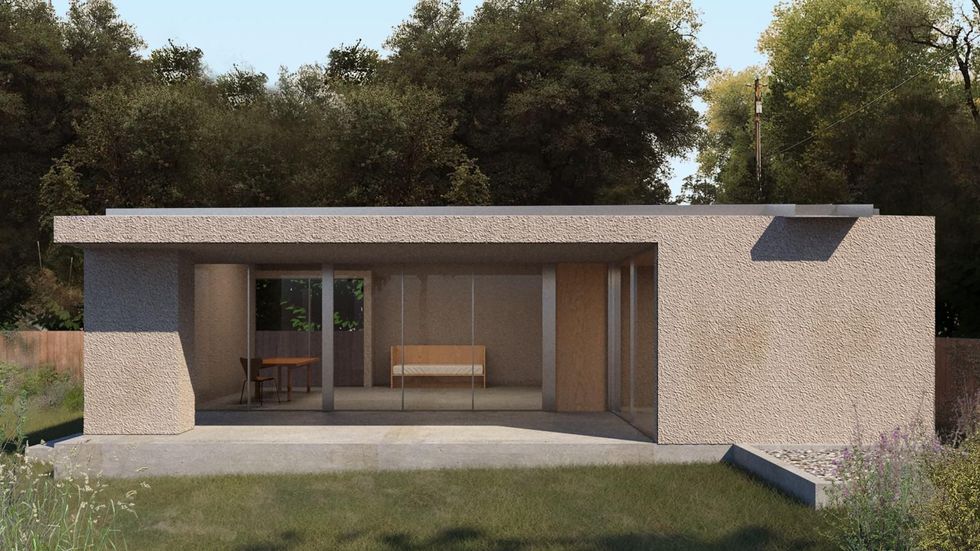
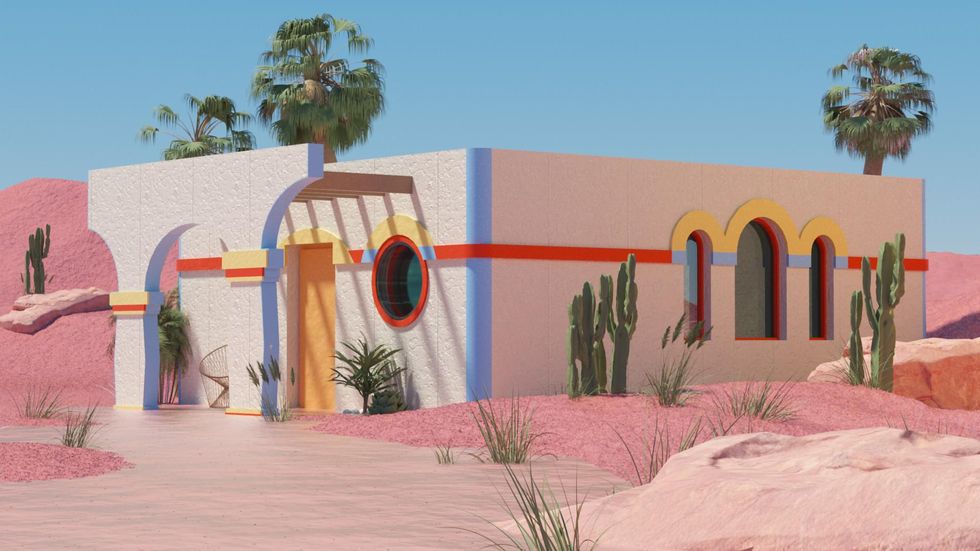
The Los Angeles-based architectural firm founded in 2010 describes itself as having a "bold and irreverent vision." Its projects include urban infill ground-up offices to single-family homes, adaptive re-use of derelict commercial buildings and renovations of historic landmarks.
Its pre-approved design, named "Midnight Room," is a guest house/ studio. Its bedroom can be left open for a loft feel or enclosed as a separate room. The design is a one-story, one-bedroom at 454 square feet.


Escher GuneWardena Architecture
Founded in Los Angeles in 1996, Escher GuneWardena Architecture has received international recognition and has collaborated with contemporary artists, worked on historical preservation projects and more.
The company has been approved for two different one-story, one- or two-bedroom units, one at 532 square feet with an estimated cost of $200,000 and another at 784 square feet with an estimated cost of $300,000. The firm noted the costs depend on site conditions and do not include soft costs. Those could add 10% to 12% to the total construction costs.


First Office
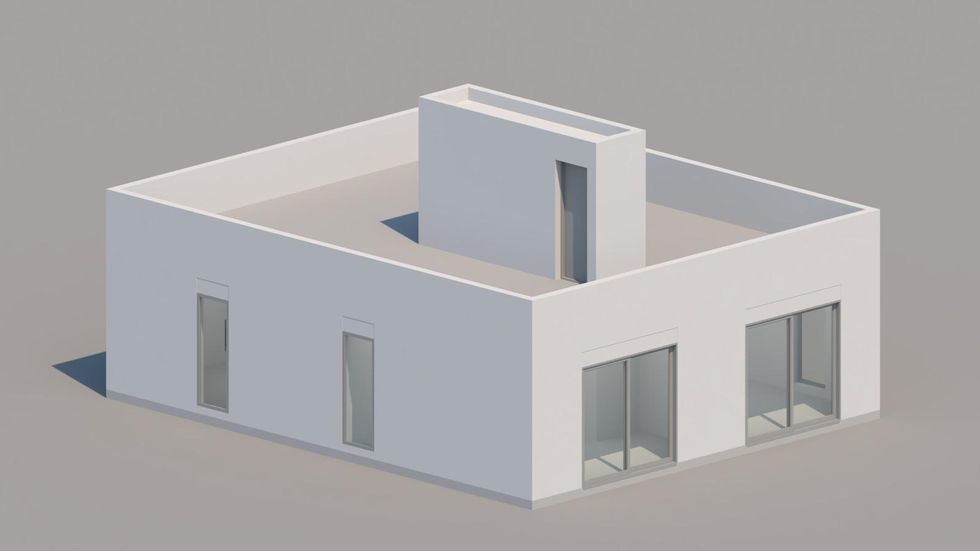
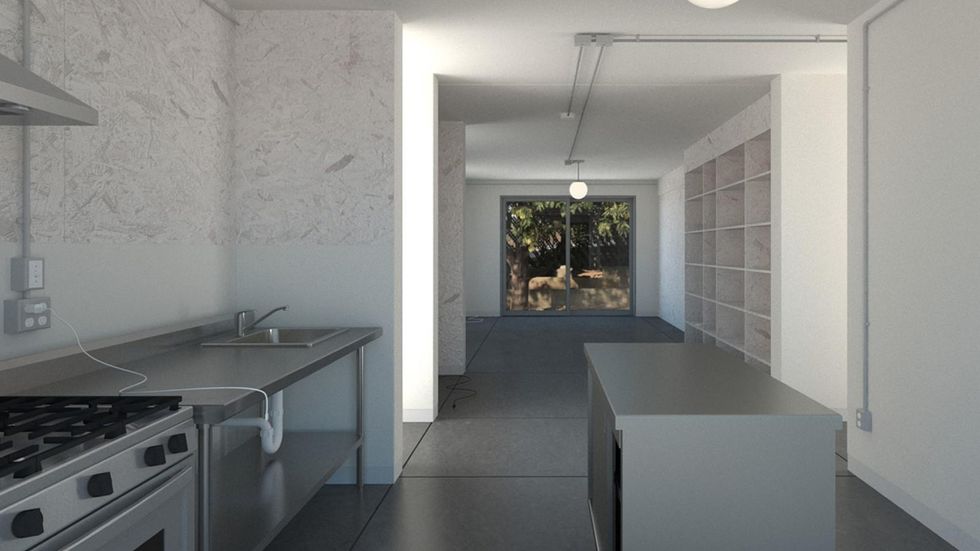
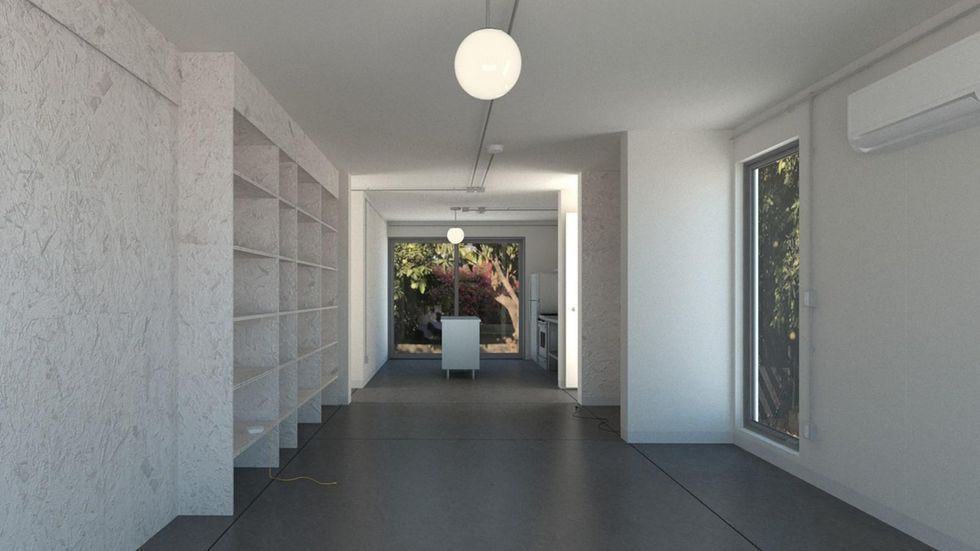
First Office is an architecture firm based in Downtown Los Angeles. Its approved ADUs will be built using prefabricated structural insulated panels, which allow for expedited construction schedules and high environmental ratings.
The interior finishes include concrete floors, stainless steel counters and an occasional element of conduit.
There are five options:
- A one-story studio, 309 to 589 square feet
- A one-story one-bedroom, 534 to 794 square feet
- And a one-story two-bedroom, 1,200 square feet


Fung + Blatt Architects

Fung + Blatt Architects is a Los Angeles-based firm founded in 1990.
The city has approved its 795-square-foot, one-story, one-bedroom unit with a roof deck. It estimates the construction cost to be $240,000 to $300,000, excluding landscape, site work and the solar array. Homeowners can also expect other additional costs.
Taalman Architecture/ IT House Inc.
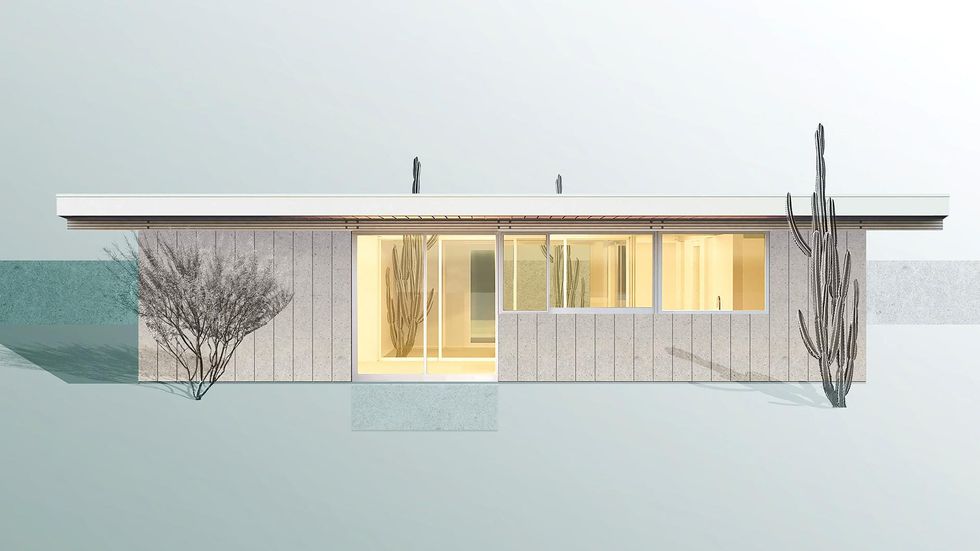
The design team behind "IT House" is Los Angeles-based studio Taalman Architecture. Over the past 15 years, IT House has built more than 20 homes throughout California and the U.S.
The IT House ADU standard plans include the tower, bar, box, cube, pod and court.
The city has approved four options, including:
- A two-story including mechanical room, 660 square feet
- A two-story including mechanical room, 430 square feet
- A one-story studio, 200 square feet
- A one-story including mechanical room, 700 square feet
The firm also has another two projects pending approval: a 360-square-foot one-story studio and a one-story, three-bedroom at 1,149 square feet.


LA Más
LA Más is a nonprofit based in Northeast Los Angeles that designs and builds initiatives promoting neighborhood resilience and elevating the agency of working-class communities of color. Homeowners who are considering their design must commit to renting to Section 8 tenants.
The city has approved two of LA Más' designs: a one-story, one-bedroom, 528 square feet unit and a one-story, two-bedroom, 768 square feet unit. The firm has another design for a one-story studio pending approval. That design would be the first 3D-printed ADU design in the city's program.


Jennifer Bonner/MALL

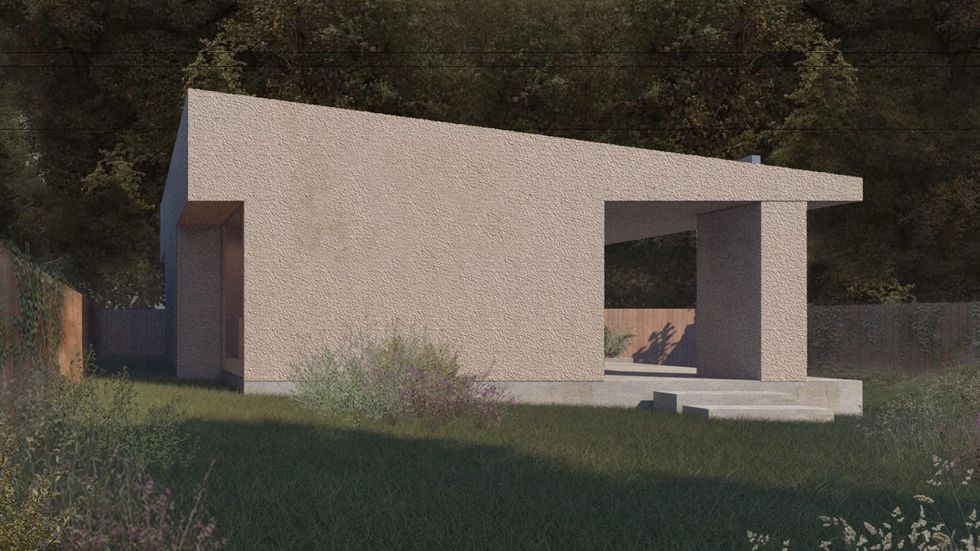
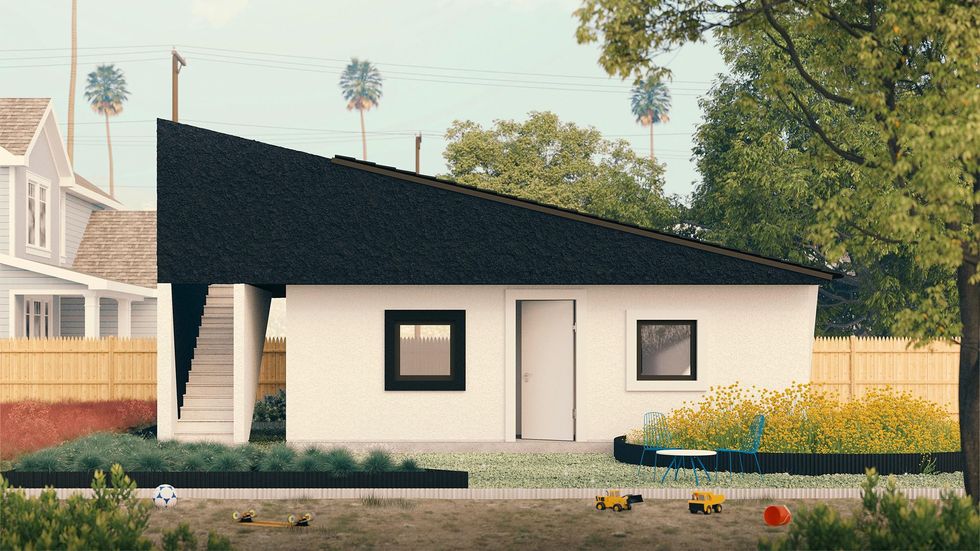
Massachusetts-based Jennifer Bonner/MALL designed a "Lean-to ADU" project, reinterpreting the stucco box and exaggerated false front, both Los Angeles architectural mainstays.
The design has been approved for a 525-square-foot one-story, one-bedroom unit with a 125-square-foot roof deck.
sekou cooke STUDIO
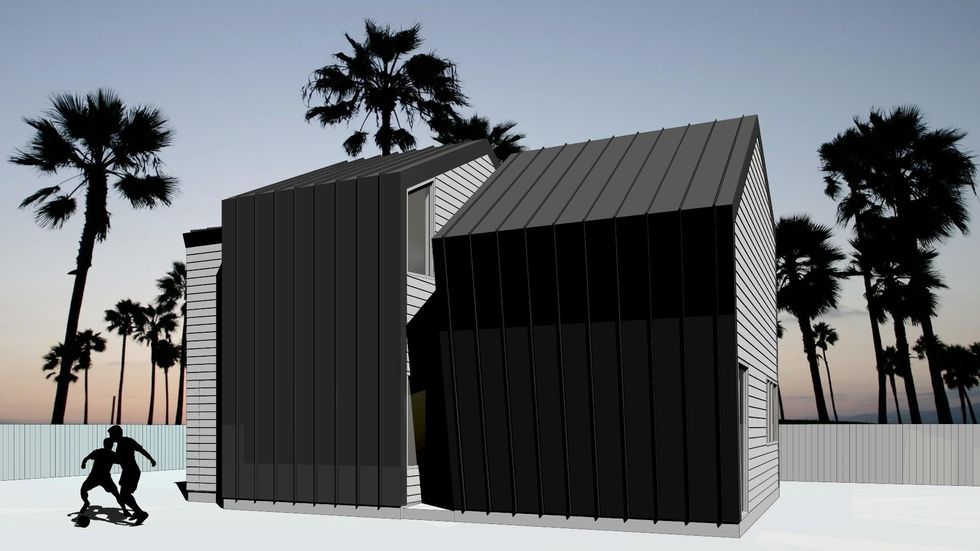
New York-based sekou cooke STUDIO is the sole Black-owned architectural firm on the project.
"The twisted forms of this ADU recalls the spin and scratch of a DJ's records" from the early 90s, the firm said.
Its design, still pending approval, is for a 1,200-square-foot, two bedroom and two bathroom can be adapted to a smaller one-bedroom unit or to include an additional half bath.
SO-IL

New York-based SO-IL was founded in 2008. It has completed projects in Leon, Seoul, Lisbon and Brooklyn.
Its one-story, one-bedroom 693-square-foot unit is pending approval. It is estimated the construction cost will be between $200,000 and $250,000.
WELCOME PROJECTS
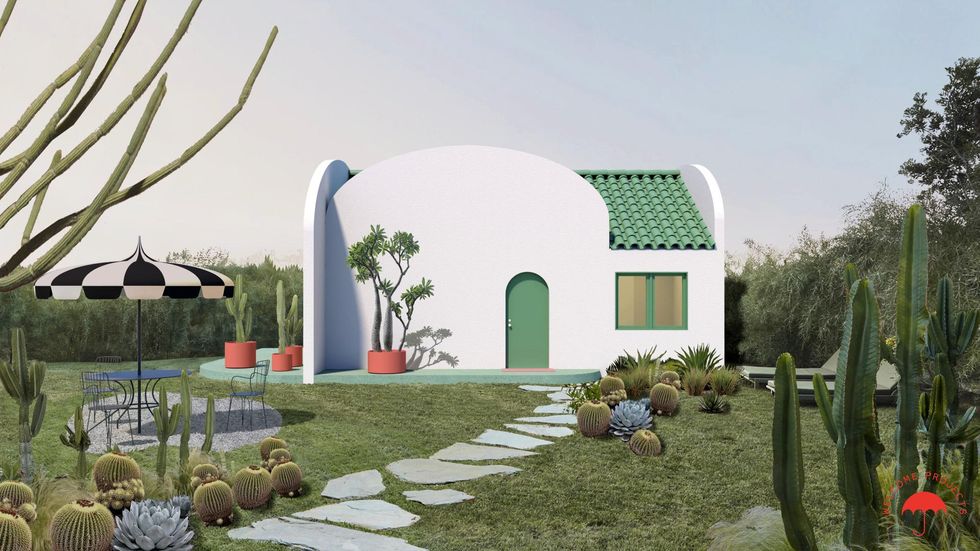
Los Angeles-based Welcome Projects has worked on projects ranging from buildings, houses and interiors to handbags, games and toys.
Its ADU is nicknamed The Breadbox "for its curved topped walls and slight resemblance to that vintage counter accessory."
It has been approved for a one-story, one-bedroom 560-square-foot unit.
wHY Architecture
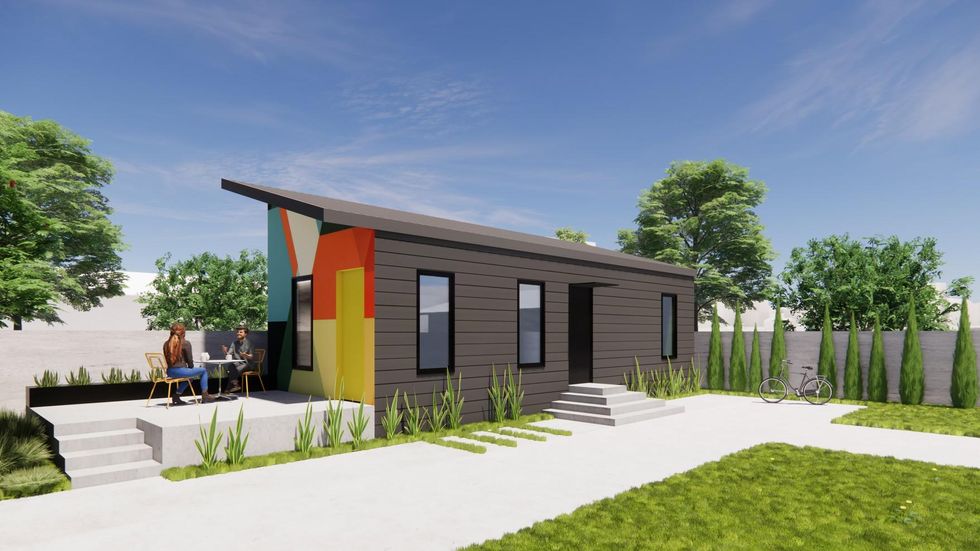
Founded in 2004, wHY is based in Los Angeles and New York City. It has taken on a landmark affordable housing and historic renovation initiative in Watts.
Its one-story, one- or two-bedroom 480 to 800-square-foot unit is pending approval.


Firms that want to participate in the program can learn more here . Angelenos interested in building a standard ADU plan can learn more the approved projects here.
From Your Site Articles
- United Dwelling Raises $10M to Address the Housing Shortage ... ›
- Plant Prefab Raises An Additional $30 Million - dot.LA ›
- How 3D Printing Could Help Tackle Homelessness in LA - dot.LA ›
- New Bills, New Startups Address Housing in California - dot.LA ›
- LA's ADU Culture Still Faces Financial Barriers - dot.LA ›
- What Will Take To Make Modular Homes Mainstream? - dot.LA ›
Related Articles Around the Web
Sarah Favot
Favot is an award-winning journalist and adjunct instructor at USC's Annenberg School for Communication and Journalism. She previously was an investigative and data reporter at national education news site The 74 and local news site LA School Report. She's also worked at the Los Angeles Daily News. She was a Livingston Award finalist in 2011 and holds a Master's degree in journalism from Boston University and BA from the University of Windsor in Ontario, Canada.
Peter Pham Is Not Afraid to Die. How One of LA's Preeminent VCs Became Obsessed with COVID
06:03 AM | February 23, 2021
As Thanksgiving approached, Los Angeles Mayor Eric Garcetti implored residents to stay home and halt all nonessential travel as COVID-19 cases skyrocketed.
But on Thanksgiving Day, Peter Pham, one of L.A.'s most prominent early-stage investors and the co-founder of Science Inc, a Santa Monica startup studio and early-stage venture fund that manages over $100 million and recently launched a $310.5 million SPAC, posted a selfie of himself atop Las Vegas' High Roller ferris wheel.
He was clutching a can of Liquid Death, the bad boy-themed canned water brand that has improbably become Science's buzziest startup. Pham guzzles six cans a day, because he says he does not trust municipal tap water.
"I'm not afraid of dying," Pham told me recently. "There's risk for everything and COVID is a risk that I feel very confident in my ability to deal with. I could be wrong and that's OK. I am OK if I fucked up and I die from it."
Pham has been transfixed by COVID since March, often tweeting dozens of times a day and sometimes much more – about his aversion to lockdowns and school closures, blockbuster treatments the government is allegedly ignoring, and the rocky vaccine rollout. He has also made it his mission to help distribute millions of PPE to medical workers.
"I like to go deep on things, like OCD-type deep," he said. "I like to learn and I like to fix things. I can get obsessed."
Pham stands out from most, but certainly not all VCs – who strive to remain as bland and non-controversial as possible, according to Tom Nicholas, a Harvard Business School professor who wrote the book, VC: An American History.
"Being neutral makes sense in an industry where investments are frequently syndicated," said Nicholas. "There's a lot of downside to being a contrarian and very little upside."
Pham says he does not care about being liked or offending others.
"It's opt-in, dude," he said. "If you don't like it, don't fucking follow me."
Pham says his tweets are a perfect reflection of his personality, which he admits can be scattered. But it is more than worth it, he says, because he is intensely loyal and "goes to the mat" for friends, colleagues, and founders that Science is backing.
"You know what you're going to get with me," he said. "You're going to get an erratic person who's passionate beyond belief."
Pham has scored the sort of exits that give him the license to speak his mind in the elite venture world, none bigger than the Dollar Shave Club, the direct-to-consumer razors and grooming startup that put Science on the map when it was bought by Unliever for $1 billion in 2016.

"Peter is definitely wired differently than most VCs I've met," said Michael Dubin, founder of Dollar Shave Club, "I think of Peter as an expert networker and fundraiser. He's highly social. He loves people. He's the first one on the dance floor, as he says on his Twitter bio."
Dubin says Pham is not the sort of investor to labor over the details of a company. Instead, Pham stands out for two qualities – he is a gifted "hype man," which is very useful when you're trying to build any company but especially consumer brands. And most of all, he possesses probably the most valuable skill in tech: The ability to quickly raise vast sums of capital.
"He is incredible at raising money," Dubin said. "When you're a VC looking to invest in companies and Peter Pham calls you, you definitely pick up the phone and listen to what he says. It doesn't mean you believe him, but you definitely pick up the call."
To Dubin, it makes sense that Pham has been consumed with trying to find light at the end of the COVID tunnel.
"The way Peter's brain is wired, it doesn't surprise me he is on the leading edge of trying to find helpful interpretations," Dubin said, before pausing to add: "It doesn't make him right. He's not Dr. Fauci."
'The Biggest Scandal in the History of COVID'
Pham talks frequently about his "research" and the hours he devotes to pouring over scientific papers even though his scientific training is limited to majoring in biology and pre-medicine during his undergraduate years at the University of California, Irvine. He planned to be a doctor but changed his mind junior year when he decided it required too much structure.
"I was premed, so I actually understand science," he said.
Pham has been especially vocal about the antiparasitic drug Ivermectin, which he went so far as to give to his housekeeper's ailing 80-year-old friend, which he shared on Twitter.
"It's a cheap drug that clearly is helping," Pham said. "That's been my crusade for the last couple of months."
A recent paper in the Journal Lancet found "limited evidence" that Ivermectin was effective in treating COVID patients. The FDA has warned people not to take the drug because it has not been tested outside of the lab.
Pham has no such patience, posting frequently that the drug needs to be widely distributed immediately.
"That will go down as the biggest scandal in the history of COVID," he declared.
Last month, amidst the chaotic vaccine rollout in L.A. County, Pham shared that he devoted a day to visiting five vaccination sites and more than 30 hours researching and talking to friends in health care.
Asked how he has so much time to devote to COVID, Pham said that he stays up until 3:30 a.m. every morning and only sleeps four hours a night.
"My partners are amazing and they know that I like to help people," Pham said. "Making money is not my goal in life, but I'm not neglecting my startups and my company."
Michael Jones, the former MySpace CEO who recruited Pham to work at Science Inc. in 2011, says he has no concerns about Pham's work habits.
"Peter has his own unique style of working, Jones said. "He complements our firm in a really unique and special way that I think benefits a lot from our investors."
'Sit This One Out;' Other Prominent Investors Push Back
In early March, Pham hosted his exclusive annual gathering of top VCs at Gjelina, a tony restaurant in Venice. The guests of honor were the suddenly very wealthy founders of Honey, an L.A. startup that sold to Paypal for $4 billion at the end of 2019. Pham hoped that the conversation would stay focused on the dinner's purpose – raising money – rather than the mysterious virus that by then was consuming people's attention.

In the early days of the crisis, Pham repeatedly played down the seriousness of COVID, arguing that it only affected the old and sick, something Balaji S. Srinivasan, an angel investor and entrepreneur and former general partner at Andreessen Horowitz, pushed back against.
Pham now freely admits he underestimated the threat of COVID and he is certainly not the only one to do so, but he says the important thing is to learn from new information when it becomes available.
"I didn't think it would be that bad in March and obviously I was wrong," Pham said. "I'm not dogmatic in anything."
To Pham's credit, in March he also started raising money in the tech community to buy and distribute badly needed PPE as a founding member of C19 Coalition, which has delivered more than one billion units of masks, face shields, and other equipment.

But those early overly rosy assessments have not deterred Pham from continuing to downplay the risk from COVID, advocate for herd immunity, and accuse the media of hyping up the threat.
In August, he tweeted that the worst of the pandemic was over, when U.S. case numbers were a third what they were this month. In November, he said hospitals "will continue to be fine," a month before ICU capacity in Southern California plummeted to zero percent.
Chris Sacca, a venture investor best known for being a judge on Shark Tank who is a limited partner in Science, shot back around the time ICU was hitting 0% capacity, telling Pham to "sit this one out."
Pham says he can't recall what he was tweeting about. He deleted the original tweets that Sacca and Srinivasan were referencing.
"I should autodelete my tweets, to be honest, but I use it for search because my memory is so bad," Pham said. "I have ADHD with the memory capacity of the bottom 16th percentile of the population."
Pham does not appear to be exaggerating. Two weeks after we spoke for over an hour on two Zoom video calls, Pham had no memory of us ever talking.
"My memory is horrible," he said.
Pham says his lack of memory is one of the reasons he is perpetually upbeat.
"I'm always optimistic because I forgot what happened yesterday," he tweeted last month.
He says his lack of memory is also why he is so blunt and unfiltered.
"People are trying to create this persona online, which is weird and a lot of work and I think you have to have a good memory, and I don't have that," Pham said. "I don't care. I just say it."
The one thing Pham never talks about is family, which he says he avoids doing for privacy reasons, especially as he has gotten more involved with the sometimes shadowy world of cryptocurrency. He also won't reveal his age or the city where he grew up for "security reasons."
Pham may not fear COVID, but he lives in constant fear of being hacked.
The Embodiment of the American Dream
Pham often says he has lived the embodiment of the American dream and it is not hard to see why.
His father served as a fleet commander for the South Vietnamese Navy during the Vietnam War and in 1975, weeks after the fall of Saigon, the U.S. Navy evacuated Pham's parents and four older siblings to California.
Pham was born in a refugee camp about a month later.
The family grew up poor in a cramped one-bedroom apartment, the reason he says he has been dismayed many public schools have closed their doors during the pandemic. His parents both became social workers while the siblings took on odd jobs to put food on the table.
Pham was a straight-A student in high school and applied to only one college, the University of California, Irvine, which he picked because it was close to home.
He put himself through college, waiting tables at Red Lobster, selling computers at Circuit City and helping people install Windows operating software on their computers.
Pham found he was much more interested in tech than being a doctor and after adding a business management minor to his biology major, he bounced around 13 enterprise software and hardware startups for the first nine years of his career in business development.
Biz dev, as it is known, is largely sales and marketing. Above all, it requires hustle and building and maintaining big networks of individuals who can help your company – things Pham discovered he could do with ease.
His first major success came in 2005 when his friend Alex Welch recruited him to do biz dev at Photobucket, an early digital photo sharing platform that is now mostly forgotten. Pham was hired as the fifth employee and three years later News Corp. acquired the company for $300 million.
Pham went on to start BillShrink, a website to help consumers save on cell phone bills, credit cards, and gas. It was eventually bought by Mastercard.
After those exits, Pham had the credibility to raise major sums of capital from top Sand Hill Road firms — and that is exactly what he did in 2010 when he teamed with serial entrepreneur Bill Nguyen to start Color – named for their love of the Apple logo — the photo-sharing app.
"He's probably the best sales person I've ever met in my life, which is saying a lot because people think I'm a pretty good salesperson," Pham said. "He can convince you of anything."
Pham and Nguyen quickly amassed $41 million from Sequoia Capital, Bain Capital and Silicon Valley Bank before they ever launched a product. That was far more than Instagram, which was founded the same year with just half a million in seed funding, or about what Color spent just on acquiring the domain names color.com and colour.com.
Color also rented a cavernous office with a hand-built skateboard ramp in Palo Alto with room for 160 employees even though they had fewer than 40.
The New York Times featured the company as a prime example of another bubble in start-up investing. (It also warned about Airbnb in the same article, which had a much better fate.)
Unlike Instagram, which was built around users seeing photos of accounts they chose to follow, Color users viewed photos by location. But it turned out that was not what users wanted at all and the 2011 launch was a dud. Nyugen fired Pham three months later. Pham said he quit.
Apple bought Color in 2012 for $7 million amidst bizarre allegations of an abusive work environment, which was not only far less than the $167 million valuation Color had raised at in 2010 but also a long ways away from the $200 million Google had offered to buy the company in early 2011, according to Techcrunch.
Reflecting on his Color tenure now, which is omitted from his official bio, Pham says he barely knew Nyugen before they started the company – a mistake he would never make again – and describes their partnership as a "shotgun marriage."
"It wasn't a marriage that lasted," he said. "We were different people."
Pham defends the premise of Color as ahead of its time, pointing out that Snap launched a map feature two years ago that emulated what Color was trying to do.
"We were just early, and of course execution of this thing," Pham said. "Shit happens. Startups fail. It just didn't work."
But it did not take Pham long to get another job offer. Three months after his departure, Pham bumped into his old friend Jones at the Lobby Conference, an invitation-only consumer and enterprise tech gathering held annually in Maui.
They had been kicking around the idea for years of creating a Santa Monica version of Bill Gross' longtime startup studio, Idealab, which is in Pasadena.
"I wanted to do Idealab, but on the west side of town, because I like the beach," Pham said.
Up to that point, Pham and Jones had been consumed with other startups, but now they were both jobless and Pham wanted to move back to L.A., where he grew up and his family lived.
"Most people thought it was insane to leave the gold rush in the valley at that time," Pham said. "But what we wanted to do is be closer to building the business, not just writing the check."
Jones says he had no reservations about teaming with Pham, despite him only being a few months removed from being fired from Color.
"I wasn't at Color and I don't really know any of the background of Color," Jones said. "What I knew is that I knew Peter for a very long time."
Jones also recruited his longtime attorney Greg Gilman and former Myspace colleague Tom Dare to round out the founding team. Science Inc. launched with $10 million in venture backing from investors including Google CEO Eric Schmidt and another $30 million from the Hearst Corporation.
The now defunct Gawker tech gossip spinoff, Valleywag, marvelled at how quickly Pham was able to escape the Color fiasco.
"Why the hell are people still giving this guy money?" reporter Sam Biddle asked. "In just a couple short years, Pham has failed upwards, meteorically, from industry laughingstock to managing hundreds of millions of dollars."
But Pham soon proved the doubters wrong.
In its first year, Science had the sort of breakout success that it has never been able to top in the decade since.
Science incubated a small startup that sold razors and grooming supplies direct to consumers with quirky marketing campaigns with a $100,000 check. The next year, Kleiner Perkins Caufield & Byers led a $1 million seed round. In 2016, Unilever acquired Dollar Shave Club for $1 billion and yielded its founder, Dubin, a reported $200 million payday.
"Peter was instrumental in helping us fundraise," Dubin said. "He knows the art and science of raising money. He's extremely connected. We just would not have raised the money we did if it had not been for him."
Science has also scored big wins with DogVacay, which merged with its larger competitor Rover in 2018, and FameBit, an influencer marketing platform that was acquired by Google in 2016 before being shut down last year.
These days the firm's buzziest startup is decidedly low tech. Liquid Death, featuring the slogan "Murder Your Thirst," packages Austrian mountain water in aluminum cans. Pham says he was drawn to Liquid Death after a friend showed him the brand's edgy Facebook page.
Science incubated the brand in 2019 and led the $2.26 million seed round at a pre-money valuation of $5 million. In September, Liquid Death raised another $23 million Series B funding at a pre-money valuation at $82 million.

Mike Cessario, the creative director turned founder and CEO of Liquid Death says the first time he met Pham at Science's offices he struck him as "a really smart guy who talks a million miles a minute."
"Peter has stepped up with us to make sure we can get the best deals we can get where we are not being taken advantage of by other investors," Cessario said.
Pham is rarely seen without a tall can of Liquid Death by his side. He says he consumes six a day because is worried about drinking the tap water where he lives.
"I don't trust the water in Manhattan Beach," Pham said. "It's got PFAS in it – plastics forever. If you don't know what that is, Google it. It's going to blow your mind."
Unlike with Nyugen, in Jones Pham says he has found someone who he will be friends with for life. Pham says he has finally found the role that perfectly suits his unique personality. At Science, he is in-charge of business development. Crucially, he has no direct reports.
"I don't like managing people," Pham said. "I was CEO once. It's not my thing."
Last month, Science Inc. announced that it was launching a $270 million SPAC to focus on direct-to-consumer, mobile and entertainment companies.
'It's All Over in 60 Days'
These days Pham has been traveling to Miami, which comes with the dual advantages of being a place unencumbered by the lockdowns he hates and also home to a rapidly growing startup scene that he says reminds him of L.A. 10 years ago. Ever the networker and promoter, Pham hosted a sunset cruise there this month for tech founders and investors where they sipped on Liquid Death.
Pham continues to advocate for Ivermectin and has also been pushing the yet-to-be-approved Novavax Vaccine. He enrolled in the vaccine's phase III trial and says it is his "favorite" vaccine because it is easier to store and can be used on immunocompromised patients.
Far from a distraction, Pham says his passion about COVID and helping secure PPE has brought the unintended effect of further expanding his professional network.
"It opened up a whole new network of entrepreneurs and spaces and industries that we're now looking into investing in," Pham said. "It all comes full circle. It turns out if you do good things in life, you get rewarded."
While so many Americans are relentlessly dreary after nearly a year of the pandemic, Pham is more sanguine than ever.
"I still am optimistic it's all over in 60 days," he tweeted this month.
"We will all be having easter dinner with family," he added last week.
Lead image by Eduardo Ramón Trejo.
Editor's note: This story has been updated with Science's closing amount for its SPAC and a clarification from Pham on Color.
From Your Site Articles
- Science Inc. Makes $270 Million SPAC Debut - dot.LA ›
- Liquid Death Files Paperwork to Raise $15 Million - dot.LA ›
- How Science Inc CEO Mike Jones Stays Ahead of the Trends - dot.LA ›
Related Articles Around the Web

Read moreShow less
Ben Bergman
Ben Bergman is the newsroom's senior finance reporter. Previously he was a senior business reporter and host at KPCC, a senior producer at Gimlet Media, a producer at NPR's Morning Edition, and produced two investigative documentaries for KCET. He has been a frequent on-air contributor to business coverage on NPR and Marketplace and has written for The New York Times and Columbia Journalism Review. Ben was a 2017-2018 Knight-Bagehot Fellow in Economic and Business Journalism at Columbia Business School. In his free time, he enjoys skiing, playing poker, and cheering on The Seattle Seahawks.
https://twitter.com/thebenbergman
ben@dot.la
Resy Cofounder’s New App Lands in LA: A Loyalty Tool Restaurants Actually Want
10:08 AM | October 24, 2025
🔦 Spotlight
Hello LA,
Blackbird, the loyalty and payments startup from Resy and Eater co-founder Ben Leventhal, officially landed in LA this week. The product is simple in the wild: you check in, pay through the app, and earn rewards that restaurants can actually act on, helping them spot and serve regulars without guessing. The LA launch goes live with more than 50 partners centered on the Westside, including names like Gjelina and Felix, plus spots across groups such as Rustic Canyon and Citrin, with expansion planned beyond Venice and Santa Monica.

Under the hood, Blackbird has been building a national network and says it is live at more than 1,000 restaurants. The company raised fresh capital earlier this year to expand markets and roll out cross-restaurant rewards, positioning LA as a key beachhead for growth. If you dine out a lot, the appeal is that the app collapses discovery, payment, and loyalty into one flow. If you run a dining room, the promise is cleaner data on guests you actually see, instead of a generic points program that lives somewhere else.
For LA specifically, the draw is that this model fits how the city eats. We spread across neighborhoods, follow chefs, and rotate between a small set of favorites and a long list of next-ups. A networked loyalty layer that recognizes that pattern could move real dollars, particularly for independents that want to keep the relationship direct. We’ll be watching how quickly the footprint moves east from the coast and which operators lean into memberships and targeted rewards first.
Scroll for this week’s LA venture deals, funds, and acquisitions.
🤝 Venture Deals
LA Companies
- GammaTime, a Los Angeles based premium micro drama platform founded by former Miramax CEO Bill Block, raised $14M seed led by vgames and Pitango, with participation from Alexis Ohanian, Kris Jenner, Kim Kardashian, and Traverse Ventures. The app is live on iOS and Android, features more than 20 vertical phone native originals, and plans new series from “CSI” creator Anthony E. Zuiker as it scales a freemium model for U.S. audiences. - learn more
- Wolf Games, a generative-AI gaming startup backed by Dick Wolf, raised a $9M Series A led by Main Street Advisors. The company also inked a partnership with NBCUniversal to develop interactive games using NBCU IP, built on Wolf Games’ platform for creating “living, cinematic” game worlds. Notable participants include Maverick Carter, Tom Werner, and Rashid Johnson, alongside returning investors Jimmy Iovine, Paul Wachter, and Dick Wolf. - learn more
- Quantum Elements, a Los Angeles based startup, launched Constellation, an AI native platform that helps teams build quantum software and co design hardware using agentic AI, natural language prompts, and a large noisy qubit simulator. The company emerged from stealth with funding from QDNL Participations and support from USC Viterbi, and says Constellation can speed code generation, debugging, and testing for applications in pharma, energy, and finance. - learn more
- Arbor Energy raised a $55M Series A co-led by Lowercarbon Capital and Voyager Ventures, with Gigascale Capital and Marathon Petroleum Corporation participating, to accelerate deployment of its zero-emission, fuel-flexible turbines. The funding completes a 1 MW pilot called ATLAS and advances HALCYON, a 25 MW modular turbine that uses oxy-combustion with supercritical CO₂ for efficient, carbon-neutral baseload power aimed at data centers, utilities, and industrial customers. - learn more
- Dialogue AI raised a $6M seed led by Lightspeed Venture Partners to scale its AI-native research platform, which uses a live conversational AI interviewer to run real-time customer interviews and deliver insights faster. Participants include Seven Stars, Uncommon Projects, the Tornante Company, and notable angels, and the funds will accelerate product and go-to-market efforts with early customers such as Wayfair, Square, Nextdoor, and Suno. - learn more
LA Venture Funds
- March Capital participated in Uniphore’s $260M Series F, joining strategic investors NVIDIA, AMD, Snowflake, and Databricks. The funding will accelerate development and adoption of Uniphore’s Business AI Cloud and expand its partner ecosystem, alongside investors like NEA, BNF Capital, National Grid Partners, and Prosperity7 Ventures. - learn more
- Beast Ventures participated in Nutropy’s latest funding round to scale precision-fermented casein for next-gen dairy ingredients. The France-based startup will use the capital to ramp production and deliver larger samples of its “cheeseable milk” powder to food manufacturers as it targets a 2027 launch. - learn more
- Patron participated in Notch’s $8M seed financing round, alongside investors such as Wing, Samsung, and Balaji, to scale the company’s AI platform for generating performance ads. Notch has since launched a “URL-to-animated-ads” feature that turns a product link into ready-to-run animated creatives within minutes, supporting a faster workflow for marketers rolling out motion ads. - learn more
- B Capital participated in CurbWaste’s $28M Series B, which was led by Socium Ventures with Flourish Ventures, TTV Capital, and Squarepoint Capital also joining. The funding brings total capital to $50M and will accelerate product and go-to-market work on CurbWaste’s operating system for independent waste haulers, including AI-driven dispatch, reporting, and payments. - learn more
- Thin Line Capital participated in SenseNet’s $14M Series A to scale its AI wildfire-detection network in the United States. The round was led by Stormbreaker with Fusion Fund, Plaza Ventures, FOLD36 Capital, and B Current also joining; funds go toward new offices and installations as SenseNet fuses gas sensors, AI cameras, satellites, and weather data to spot fires before they are visible. The company says it already monitors about 130 million acres and can flag ignitions within minutes. - learn more
- MANTIS Venture Capital participated in Keycard’s $38M financing for its identity and access platform for AI agents. The combined seed and Series A were led by Andreessen Horowitz, Acrew Capital, and Boldstart Ventures, and coincide with Keycard’s early-access launch. Keycard says its system issues short-lived, auditable identity tokens to help developers govern agent actions and data across apps. - learn more
- WndrCo participated in Defakto’s $30.75M Series B, a round led by XYZ Venture Capital with The General Partnership and Bloomberg Beta also joining. Defakto, formerly SPIRL, builds a Non-Human Identity and Access Management platform that replaces static credentials with dynamic, auditable identities for services, pipelines, workloads, and AI agents across multi-cloud environments. The company will use the capital to accelerate product development and expand go-to-market efforts. - learn more
- CIV co led 1001’s $9M round alongside General Catalyst and Lux Capital to build an AI native operating system for decision making in critical industries. 1001 combines live data ingestion, operational mapping, AI driven decisioning, and governance to help operators act in real time, with early pilots in aviation, logistics, and large infrastructure projects. The raise also includes backers like Chris Ré and Amjad Masad and will fund early deployments and hiring in Dubai, London, and beyond. - learn more
- Brentwood Associates led Throne Labs’ $15M Series B initial close to expand the company’s smart restroom infrastructure across new and existing U.S. markets. Existing investors including Uncorrelated Ventures, DiPalo Ventures, Rabil Ventures, and Arpiné Capital participated as Throne scales its network of sensor-equipped, ADA-compliant restrooms and city partnerships. - learn more
- M13 led Estuary’s $17M Series A, with participation from FirstMark and Operator Partners, to scale the company’s “right-time data” platform. Estuary unifies change data capture, streaming, and batch into one managed system with BYOC deployment so enterprises can control latency and feed AI applications more reliably; funds will support product and go-to-market expansion. - learn more
- Strong Ventures provided follow-on funding in Unjeonseonsaeng’s ₩2.8B (~$2.0M) Series A, backing the driving-school comparison and booking platform as it scales nationwide. New investors Fast Ventures and Korea Credit Guarantee Fund joined the round, with proceeds going to expand the company’s SaaS tools for driving schools and enhance data-driven features like AI recommendations and advertising. The startup reports monthly GMV above ₩1B and its first profitable quarter in 2025. - learn more
- Interlagos led Adaptyx Biosciences’ $14M seed, with Hyperlink Ventures participating alongside Overwater Ventures, Starbloom Capital, Stanford University, the Chan Zuckerberg Biohub, and others. Adaptyx is developing a biowearable for continuous, multi-analyte molecular monitoring; the raise brings total funding to about $23M and supports R&D, clinical progress toward FDA clearance, and platform scaling. - learn more
- B Capital participated in Faeth Therapeutics’ new $25M financing, which brings the company’s total funding to $92M and supports a randomized Phase 2 trial of its PIKTOR regimen in endometrial cancer with the GOG Foundation. The raise, led by S2G Ventures with additional new and existing backers, follows Phase 1b data showing an 80% overall response rate and 11-month median PFS when PIKTOR was combined with paclitaxel. - learn more
- Btech Consortium participated in PortX’s strategic growth round, joining renewed backers alongside new investors Allied Solutions and the American Bankers Association. The funding extends PortX’s Series B and underscores industry support for its AI-powered data integration platform for banks and credit unions. - learn more
LA Exits
- Breez was acquired by JumpCloud to bolster JumpCloud’s identity threat detection and response capabilities and accelerate its security roadmap. The deal brings Breez’s ITDR technology and team into JumpCloud’s platform; terms were not disclosed. The Breez group is led by former Adobe executive Abhinav Srivastava. - learn more
Read moreShow less
RELATEDTRENDING
LA TECH JOBS