

LA-Based Matter Moves Into Audio to Create a Better Dating App Experience

Katherine Abando
Katherine Abando is a lifestyle writer and social media producer from Los Angeles. Her coverage interests include internet culture/tech and Asian American Pacific Islander (AAPI) identity. She enjoys learning about emerging entrepreneurs and digital trends that pop up on her social media feed. Follow her on Twitter @kaband0.
Matter dating
Courtesy Matter

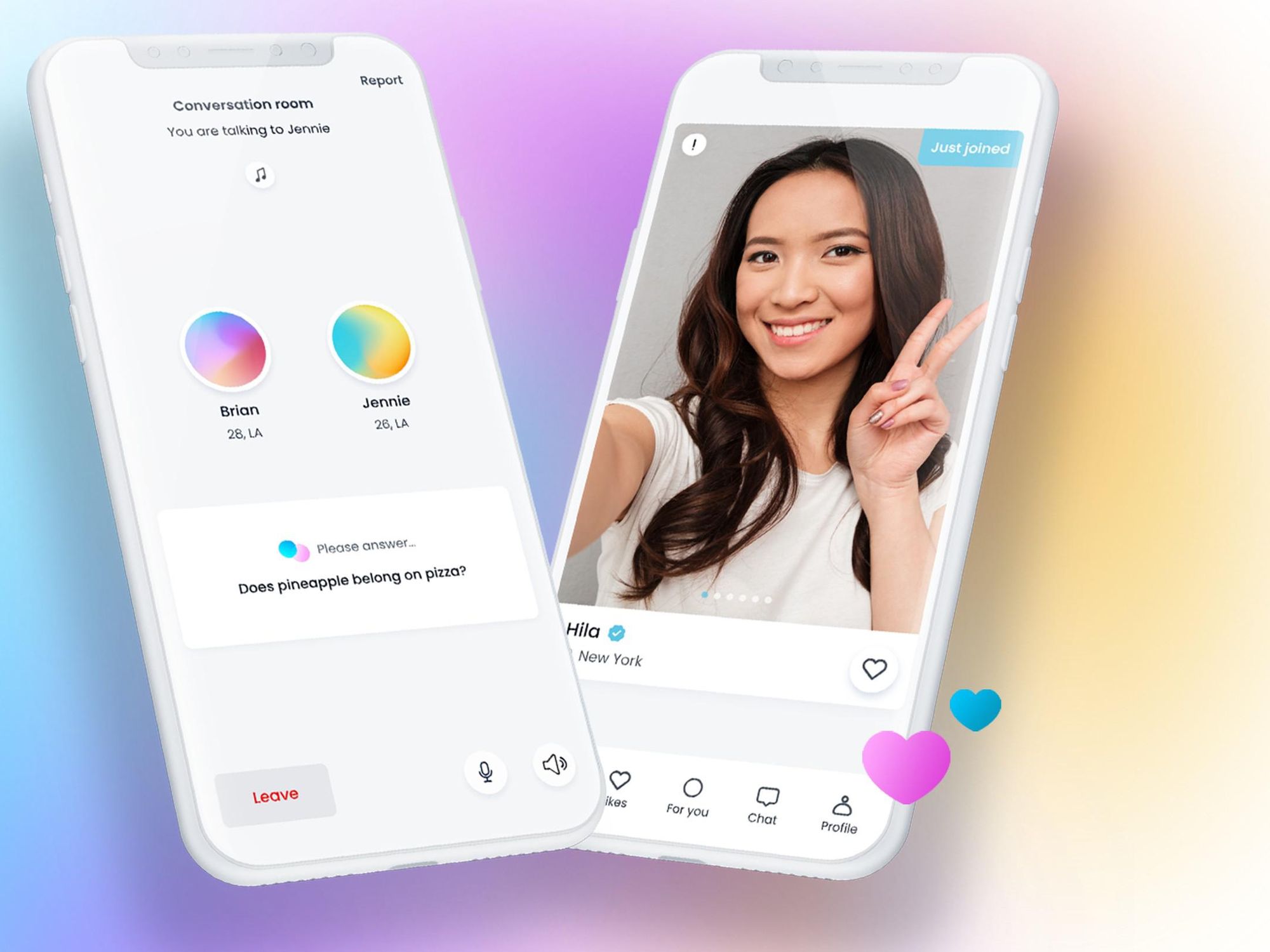
The latest entrant in Los Angeles' busy dating app scene has been testing audio elements and a speed dating feature as it builds toward its goal of creating meaningful relationships based on what matters most to people.

Matter is revamping its platform to capture the happy hour experience with audio. The app will soon include a speed-dating feature, allowing users to connect over a two-minute call to determine if they want to match.


Another feature called "communities" will allow users to connect with potential mates based on the interests and values that are most important to them.

Launched in November 2020, Matter grew its core users from USC and UCLA students who relied on it to meet classmates while campuses were closed.

UCLA student Jenna Rose, 22, says she was never a dating app user, but found herself using the app because many of the faces she saw in her feed were already familiar.

"A lot of the people that I was seeing on my feed were people I could actually see myself, you know, meeting up with or being friends with because they were students in the L.A. area," she says.
\u200bMatter CEO and founder Monji Batmunkh

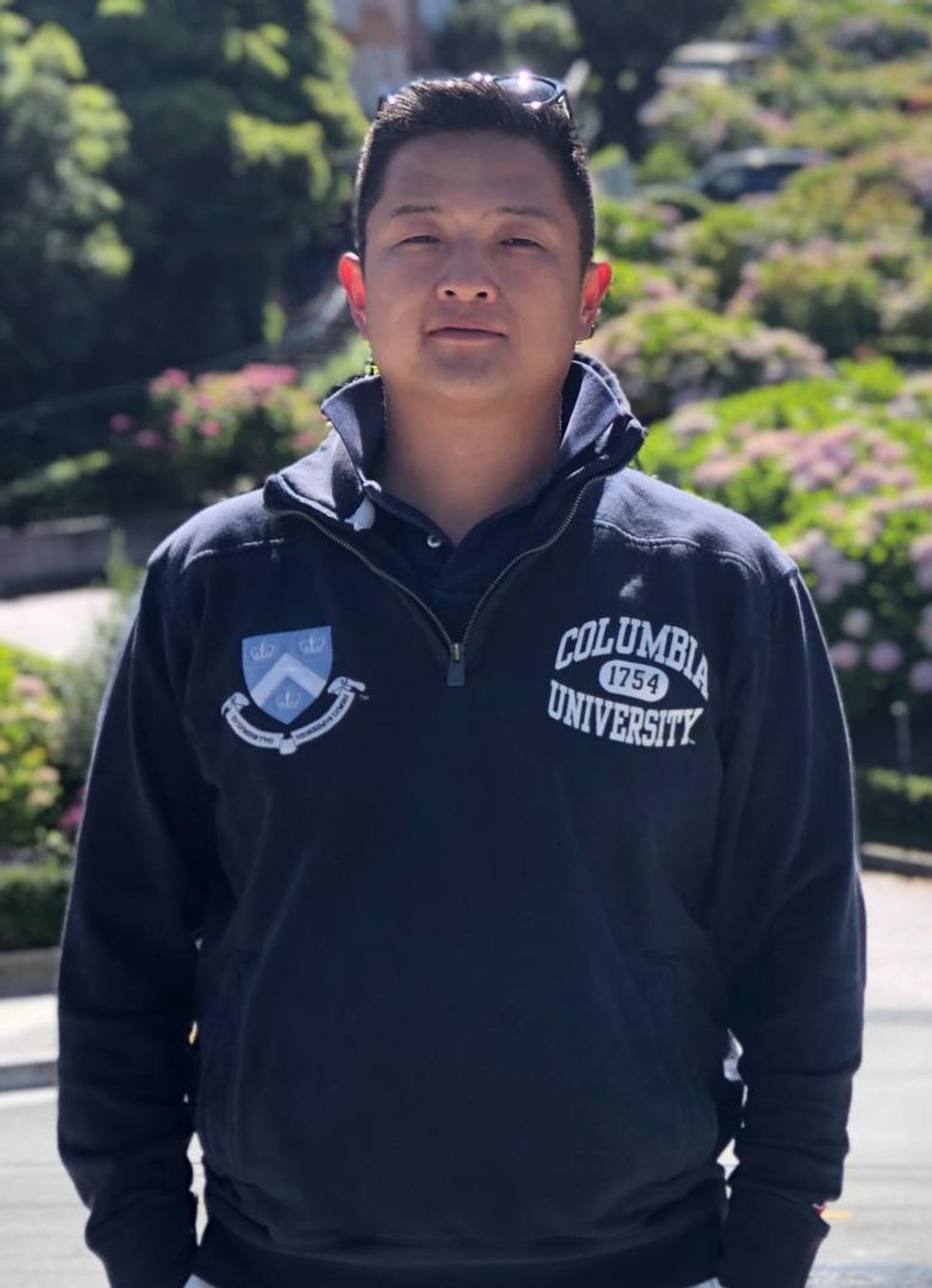
Matter CEO and founder Monji Batmunkh

CEO and founder Monji Batmunkh says starting off only at two of L.A.'s premier universities allows Matter to focus on solving one problem at a time before expanding nationally.

An Angeleno himself, Batmunkh, 35, says he formed his startup in the area because of the region's diversity and the experimental nature of college dorms' hothouse environment.

"I went to USC and established networks there. I'm very familiar with other schools like UCLA, Santa Monica College, CSUN, UC Irvine, etc. L.A. is a very diverse place where complex cultural communities will be a big part of it," he says. "They are the early adopters, if we can build the products that are liked by college, they happen to be very influential and [will] spread it across other areas."

Batmunkh moved to the U.S. at 16 from Mongolia. He got his associate's degree from Santa Monica College before focusing on business administration and finance at USC and getting his master's at Columbia. From there, he worked as a consultant at McKinsey for four years.

The pandemic, he says, has provided aspiring entrepreneurs with a silver lining.

"It's one of the best times to be starting companies, because the barriers to entry are becoming lower and lower," Batmunkh says, "I think this is a great time to do it especially if you have a network and established connections in your home country, that could be an arbitrage opportunity."

In 2020, Batmunkh launched his first startup, Simpozium, a social network focused on Los Angeles college students. Most of Simpozium users were female and conversations in the app trended toward the dating scene at a time when in-person connections were next to impossible.

Simpozium soon made the switch to a dating app and traded its name for another: Matter.

Last September, Batmunkh was able to bring on Swiss Founders Fund as an investor. The proptech-focused venture firm led an early round that helped Matter raise half a million in pre-seed funding.

The dating app scene is crowded. Big dating apps like Tinder, Bumble and Hinge have relied on their simple format and ease of use to streamline the process. A new crop, led by apps including L.A.-based Lolly and S'More, borrow from popular short video apps like TikTok and Instagram to focus on Gen Z singles.

Matter's format is similar to Hinge, focusing on user likes and prompts. But the app aims to focus on the things that matter to its audience through its user experience, which is more akin to an Instagram feed. The app generates questions that cater to L.A. residents by asking, for instance, "which they prefer: saddle ranch or urth cafe?" and "what's your ideal date in L.A." There are no character limits for the answers.

They allow users to customize the section of "what are you looking for" with users' own words.

Batmunkh focused on honing his app with students at his alma mater, USC, and UCLA before expanding to other college campuses. He's also keen on providing students with opportunities to gain experience and income working for a tech startup. USC student Katrina Nguyen, 20, worked for Matter as a growth development intern.

"Monji did a really great job capturing what startups should be at least like really new startups," she says, "I love that he didn't helicopter us, he really trusted the interns, despite us being college students. We really had a lot of responsibilities as we were basically paving the way for Matter."

Matter will start their pre-registration process for virtual happy hour in the coming week. They plan to re-release their app in Los Angeles in late June.

https://twitter.com/kaband0
https://www.linkedin.com/in/katherineabando/
This Torrance Startup Just Raised $1B to Mass-Produce Hypersonic Missiles

🔦 Spotlight

Happy Friday, Los Angeles.

Castelion has spent the past four years trying to prove that hypersonic missiles do not need to take decades to develop or cost so much that the military can only afford a limited supply.

Now comes the harder part: producing them at scale.

The Torrance-based defense startup raised a $1B Series C at a $13B valuation. The financing includes $800M in equity and a $250M revolving credit facility, making it one of the largest recent raises for an LA defense technology company.

JPMorganChase’s Strategic Investment Group, Andreessen Horowitz and Carlyle co-led the round. Lightspeed Venture Partners, Lavrock Ventures, Altimeter, General Catalyst, T. Rowe Price and LA-based Interlagos Capital also participated.

Castelion will use the capital to ramp production of Blackbeard, its low-cost hypersonic strike missile, while developing a longer-range precision weapon and new defensive systems. Hundreds of millions of dollars will go toward expanding manufacturing at Project Ranger, the company’s 1,000-acre production campus in New Mexico.

Image Source: Castelion

Blackbeard was designed in California, will be built in New Mexico and is expected to enter service in 2027. Castelion says it has already secured more than $500M in U.S. military contracts over the past 18 months and moved the missile from a clean-sheet concept to an official program in fewer than four years.

That timeline is central to Castelion’s pitch. Traditional defense programs are often associated with long development cycles, limited production runs and eye-watering costs. Castelion is applying the rapid testing and vertically integrated manufacturing approach popularized by commercial space companies to weapons production.

But a $13B valuation changes the standard. Castelion is no longer being judged as a promising startup with an impressive prototype. It is being funded like a company expected to become a major part of the American defense industrial base.

The question is no longer whether a startup can build a hypersonic missile. It is whether one can manufacture thousands of them without losing the speed, discipline and cost advantages that made it disruptive in the first place.

For LA’s defense ecosystem, that shift matters. The region has become home to a growing number of companies promising to modernize how America builds critical hardware. Castelion now has the capital, contracts and facilities to show what happens when that promise reaches the factory floor.

The next test will not be in a pitch deck. It will be in production.

More from this week’s LA startup and venture scene below.

🤝 Venture Deals

    LA Companies

    • Long Beach based Ampaire raised a $19M Series B led by DiamondStream Partners, with strategic participation from Alaska Star Ventures and IAGi Ventures, bringing its total funding to $68M. The hybrid-electric aviation company will use the capital to expand flight operations, produce additional Eco Caravan aircraft, advance regulatory certification and scale its manufacturing capabilities. - learn more

    LA Venture Funds
    • SUM Ventures participated in AssistMe’s €6.5M funding round, which was led by CRB Health Tech and Vorwerk Ventures and included several returning investors. The German care technology company will use the capital to expand across Europe, prepare for a U.S. launch and further develop alea, its digital platform for supporting caregivers and improving nursing-home operations. - learn more
    • CIV led Hypercubic’s $5.3M seed round, with participation from Y Combinator, Afore Capital, Pioneer Fund, Multimodal Ventures and several angel investors. The San Francisco startup will use the capital to develop AI agents that can analyze, document and rewrite decades-old COBOL systems, helping enterprises modernize critical mainframe software faster and with less risk. - learn more
    • Plus Capital participated in Wispr Flow’s $280M Series B, led by Menlo Ventures and joined by existing and new investors, valuing the AI voice company at $2B. The funding brings Wispr’s total capital raised to $361M and will support its expansion beyond dictation into meeting tools and proprietary speech technology, including its new Canto model. - learn more
    • Alexandria Venture Investments participated in Leal Therapeutics’ $30M Series A extension alongside new investor Eli Lilly and returning backers including OrbiMed, Newpath Partners and SV Health Investors’ Dementia Discovery Fund. The biotech company will use the funding to advance clinical trials of LTX-001 for schizophrenia and LTX-002 for ALS, with initial schizophrenia trial data expected by year-end. - learn more
    • BroadLight Capital participated in Higgsfield’s $400M Series B, led by DST Global and joined by investors including Goldman Sachs Alternatives, Smash Capital, Fifth Wall and Intel Capital. The AI video and image platform, now valued at $5.4B with $700M in annualized revenue, will use the funding for R&D, global infrastructure, AI hiring and international expansion. - learn more

      Download the dot.LA App

      Why Samsonite Just Paid $178.5M for BÉIS

      🔦 Spotlight

      Hello, Hello.

      This week, one of LA’s most recognizable consumer brands packed its biggest bag yet.

      Samsonite Group has agreed to acquire an 85% stake in BÉIS for $178.5M, valuing the Los Angeles-based travel and lifestyle brand at approximately $210M. The deal is expected to close in Q4, pending regulatory approval.

      Founded by actress and entrepreneur Shay Mitchell and incubated by LA-based Beach House Group in 2018, BÉIS has grown from a digitally native luggage startup into a profitable business that generated approximately $210M in sales last year. Along the way, it built the kind of fiercely loyal online following that legacy brands spend years and considerable marketing budgets trying to manufacture.

      Image Source: BÉIS

      That may be the most interesting part of this deal. Samsonite is not simply acquiring another luggage line. It is buying access to a younger, predominantly female customer base, a sophisticated direct-to-consumer operation and a brand that knows how to turn social media attention into actual sales. The suitcases are useful; the cultural relevance is the real carry-on.

      BÉIS will continue operating as a standalone brand under CEO Adeela Hussain Johnson and its existing management team. Mitchell will retain a 15% ownership stake and continue guiding the company’s creative and product vision, while Samsonite brings the global distribution, sourcing and logistics infrastructure needed to take the brand further.

      For LA’s startup community, the acquisition is another reminder that valuable technology companies do not always look like software companies. BÉIS built its advantage through digital distribution, community and an unusually sharp understanding of its customer. Now, one of the world’s largest luggage companies wants what it created.

      Sometimes the strongest exit starts with knowing exactly what people want to pack.

      More from this week’s LA startup and venture scene below.

      🤝 Venture Deals

        LA Companies

        • Heaviside Industries raised a $60M Series B to accelerate the development and production of its autonomous precision munitions for U.S. and allied forces. The company also announced a strategic partnership with defense manufacturer Nammo, combining Heaviside’s autonomous weapons technology with Nammo’s expertise in propulsion, warheads and large-scale munitions production. - learn more
        • Alex Cooper and Matt Kaplan’s media company Unwell received its first outside investment from WTSL, giving the profitable business a $500M pre-money valuation. Unwell, which reaches a reported 70M women each month through podcasts, film and television, live events, consumer products and a creative agency, will use the capital to pursue acquisitions, make investments and expand into new business lines. - learn more
        • Neros raised a $250M Series C at a $2.5B valuation, with participation from LA-based Interlagos, MANTIS Venture Capital and Thiel Capital. The El Segundo defense startup will use the funding to scale its autonomous strike and interceptor drone programs, expand production and strengthen its domestic supply chain as demand grows from the U.S. military and allied forces. - learn more
        • FriskAI raised $3.6M from MaC Venture Capital to expand its observability and security platform for AI agents. The startup helps companies monitor what autonomous agents do in real time, giving teams greater visibility into agent behavior and helping them identify errors, risks and unexpected actions. - learn more
        • Diald raised $1M in follow-on funding led by Feedback Ventures, bringing its total funding to $4.75M. The company also launched a rebuilt conversational AI platform that lets commercial real estate investors create pro formas and evaluate zoning, permits, neighborhood sentiment and other property risks through plain-language prompts. - learn more

        LA Venture Funds
        • Alexandria Venture Investments participated in Khartis Therapeutics’ $50M Series B, led by Forge Life Science Partners, bringing the San Diego biotech’s total funding to $95M. Khartis will use the capital to advance its lead oral treatment for thyroid eye disease and expand its pipeline of small-molecule immunology drugs. - learn more
        • Finality Capital Partners co-led Entravel Group’s $7.5M funding round alongside Ethereal Ventures, with participation from GSR, Varrock, G1 Ventures, Seier Capital, Veris Ventures, Funfair Ventures and WTG Ventures. The traveltech company will use the capital to expand its white-label hotel-booking infrastructure beyond crypto platforms and develop a stablecoin-powered system for settlement, treasury and working-capital financing. - learn more
        • Regeneration.VC participated in Clarity Systems’ $4.4M seed round, led by LMnT Ventures and joined by Humba Ventures and Massive Technology Ventures. Clarity uses X-ray imaging, computer vision and AI to detect counterfeits, product swaps and other forms of returns fraud in seconds without opening the package. - learn more
        • CIV participated in AGent Energy’s $11M Series Seed round alongside existing investor Zero Infinity Partners, with Spero Ventures and MassMutual Ventures co-leading and Intrepid Investment Management also joining. The Houston startup uses AI-powered hardware and software to turn largely idle backup generators into on-demand grid capacity during emergencies, and the new funding brings its total raised to $17M. - learn more
        • Smash Capital co-led CodeRabbit’s $143M Series C alongside Atomico, valuing the AI code-review company at $1.5B. CodeRabbit will use the funding to expand internationally and develop its new Agentic Change Management platform, which helps companies review, govern and monitor software created by both humans and AI agents. - learn more
        • Multiball Capital backed Soctera’s $4M seed round alongside Anorak Ventures, with additional participation from 9Yards Capital, Mana Ventures and Red Bear Ventures. The Cornell spinout will use the funding to develop heat-efficient power amplifiers designed to improve the range, signal quality and reliability of radar, electronic warfare, satellite and telecommunications systems. - learn more
        • WndrCo participated in Genera’s $10M seed round, which was led by First Round Capital and also included BoxGroup, Carpenter Capital and Success Venture Partners. Genera will use the funding to scale its AI platform, which automates the often labor-intensive process of deploying enterprise software, including customer discovery, data migration and system configuration. - learn more
        • M13 co-led Baselayer’s $20M Series A alongside Koro Capital, bringing the fintech startup’s total funding to approximately $47M. Baselayer will use the capital to enhance its AI-powered platform, which helps banks, fintech companies and government agencies automate business verification, risk assessment and fraud monitoring. - learn more

          Download the dot.LA App

          Two LA Startups Raised $2.37B to Build What AI Needs

          🔦 Spotlight

          Happy Friday, LA.

          The largest checks in tech are increasingly going toward companies trying to build their way out of America’s biggest physical constraints.

          This week, two Los Angeles startups raised a combined $2.37 billion in equity to tackle two particularly urgent ones: how the country manufactures critical hardware and where it will find enough electricity to power the AI era.

          Torrance-based Hadrian is building highly automated factories for defense and aerospace. El Segundo’s Valar Atomics wants to manufacture nuclear reactors at scale. Different industries, same underlying bet: the next generation of technology will depend on our ability to produce physical infrastructure much faster than we do today.

          Hadrian raised $1.37 billion in Series D funding, bringing its valuation to $7.87 billion. The company plans to use the capital to open new factories, expand research and development, and increase its capacity to produce critical defense, aerospace and industrial systems.

          Hadrian’s pitch is straightforward, if wildly ambitious: America needs to relearn how to build things and build them quickly.

          Its factories combine skilled workers with AI, robotics and proprietary software to manufacture precision components and, increasingly, complete mission-critical systems. Its customers include defense giants such as Lockheed Martin and RTX, along with newer players like Anduril.

          The company has come a long way from simply making aerospace parts. Hadrian is positioning itself as a piece of America’s industrial infrastructure, offering manufacturers a way to rapidly scale domestic production at a time when wars abroad, strained supply chains and growing defense demands have made the country’s manufacturing gaps increasingly difficult to ignore.

          Investors are clearly buying the argument. The new round comes just over a year after Hadrian raised $260 million, suggesting that “reindustrialization” has officially graduated from venture capital buzzword to billion-dollar investment thesis.

          Meanwhile, roughly 15 miles away in El Segundo, Valar Atomics is moving even faster than its enormous ambitions suggested.

          When we last wrote about Valar, the company was reportedly raising $450 million at a $2 billion valuation and racing to prove that nuclear energy could move on AI’s timetable. Now, it has closed a $1 billion Series B led by Sequoia Capital, secured an additional $200 million credit facility and reportedly reached a $6 billion valuation.

          Valar is developing standardized, factory-built nuclear power plants designed to avoid the enormous costs and decades-long construction timelines associated with traditional nuclear projects. Its goal is not merely to build a working reactor, but to eventually manufacture fleets of them.

          That ambition also sounds considerably less theoretical than it did when we first covered the company. In June, Valar’s Ward 250 reactor achieved a self-sustaining nuclear reaction. Just one week later, the company demonstrated the reactor generating electricity to power an Nvidia Blackwell system. Valar now says the new funding will help it move from proving its technology works to producing reactors at scale.

          The timing is no coincidence. AI’s enormous appetite for electricity is forcing the tech industry to confront a basic reality: the cloud still has to plug into something. Training models and operating massive data centers will require far more reliable power, and nuclear energy is rapidly becoming one of Silicon Valley’s favorite answers.

          Hadrian and Valar may be solving different problems, but their unusually large rounds point to the same shift. AI can design, predict and automate, but it cannot manufacture a missile component or generate a megawatt of electricity on its own. That requires factories, energy systems, supply chains and a great deal of capital.

          For years, venture-backed companies competed to build the software layer. Now, some of the biggest bets are being placed on the infrastructure underneath it.

          The future may run on AI. But first, someone has to build what keeps it running.

          More from this week’s LA startup and venture scene below.

          🤝 Venture Deals

            LA Companies

            • Endeavor Optical Networks emerged from stealth with $10.75M in seed funding from General Catalyst and Andreessen Horowitz to develop a satellite network that uses lasers to move data between continents. The startup plans to use the capital to build an optics lab, hire engineers and conduct ground testing ahead of a demonstration satellite launch targeted for late 2027. - learn more
            • Actualyze AI emerged from stealth with a $7M seed round backed by Storm Ventures, Canaan Partners, Morado Ventures and AME Cloud Ventures. Its platform gives enterprises a central control layer for managing AI usage across teams and applications, helping them enforce security policies, track spending, route requests between models and maintain audit trails. - learn more
            • Blaze.tech raised $8.5M in pre-seed funding led by Friale, a healthcare-focused venture firm founded by the family behind HCA Healthcare. The company helps digital health startups, providers and payers turn AI-generated prototypes into HIPAA-compliant software for uses including e-prescribing, EHR integrations, telehealth and auditing. - learn more

            LA Venture Funds
            • Canon Capital participated in Oligo Security’s $60M funding round alongside Ballistic Ventures, Greenfield Partners, Lightspeed Venture Partners, Red Dot Capital Partners, TLV Partners and other investors, bringing the cybersecurity company’s total funding to $140M. Oligo will use the capital to accelerate product development and expand its global go-to-market operations as it helps organizations detect and block software exploits in real time. - learn more
            • Matter Venture Partners participated in Volta’s seed and Series A financing alongside Azora, Andreessen Horowitz, Altimeter, NVIDIA and Michael Dell’s family office, valuing the AI infrastructure startup at $2.4B. Emerging from stealth, Volta plans to use the backing to develop and operate large-scale AI data centers, supported by a $5B infrastructure financing program with Azora and a $10B European compute partnership. - learn more
            • Cedars-Sinai participated in Cirrus Therapeutics’ expanded seed financing through its Intellectual Property Company, bringing the ocular immunology biotech’s total funding to $14.7M. Cirrus will use the backing to advance its gene and cell therapy pipeline, including a lead treatment for geographic atrophy, while a new collaboration with Singapore Eye Research Institute and Duke-NUS will support research, clinical development and expansion across Asia-Pacific. - learn more
            • Strong Ventures made a follow-on investment in Ready Robust Machine’s ₩13.4B Series B, which was led by Quantum Ventures Korea and brought the heavy-equipment technology company’s total funding to ₩22.9B. The company develops energy-recovery systems for hydraulic machinery and will use the capital to build out mass production, expand its data services and enter the Japanese market. - learn more

            LA Exits

            • Artium has been acquired by global consulting firm AlixPartners, bringing its expertise in building enterprise-grade AI agents for clients including BNY Mellon, Mayo Clinic and eBay to a broader global platform. The company will continue operating as a distinct team under the name Artium by AlixPartners, retaining its founders, employees, methodology and research relationships. - learn more

              Download the dot.LA App

              RELATEDEDITOR'S PICKS
              Trending