


Watch: Film, Music Execs on What the Future of Streaming Means for Artists

Annie Burford

Annie Burford is dot.LA's director of events. She's an event marketing pro with over ten years of experience producing innovative corporate events, activations and summits for tech startups to Fortune 500 companies. Annie has produced over 200 programs in Los Angeles, San Francisco and New York City working most recently for a China-based investment bank heading the CEC Capital Tech & Media Summit, formally the Siemer Summit.

Watch: Film, Music Execs on What the Future of Streaming Means for Artists

Streaming has dramatically changed how consumers view Hollywood and hear music as theatrical release windows shrink and social media replaces radio and television as a source of music discovery.

In our latest Strategy Session, dot.LA spoke with three talent representatives about how new platforms, models and the pandemic are shifting the ways artists reach their audiences, and what might be in store for the future.


Q&A co-founder Troy Carter has worked on providing new tools that allow musicians to gauge the future success of their songs, and to take care of back-office needs once provided by record labels. UTA Independent Film Group partners Rena Ronson and Jim Meenaghan bring new directors and filmmakers to light and help them get financing and distribution deals for their films. Each plays a role in helping artists navigate bringing their work to market.

Carter said where once record companies and radio stations, MTV and BET picked who would be played and who wouldn't, now a whole new world has opened up to artists on social media, streaming apps, as well as entire new industries such as gaming and streaming video.

What hasn't much changed, Carter said, is the way that artists are compensated. Those who own the music copyright are paid well by streaming services such as Spotify, but that money often doesn't trickle down as quickly to artists. "And that's where, you know, things need to be fixed," he said.

"If an artist is releasing music independently, they still run a label, essentially. So they should be organized with the same tools," he said. "Everybody's a label, essentially."

The question for artists has become 'how do you cut through the noise'. His goal is to give them — as well as record labels and agents — the tools to reach listeners.

"The idea is to, you know, can we make the music industry run more efficiently, and be able to allow labels and artists to make smarter and more informed decisions?"

For filmmakers, the marketplace is getting to be more difficult, especially for those who — like many independent directors — would like to see their films on the traditional big screen, Ronson and Meenaghan said. The pandemic has accelerated trends within the industry that favor streaming services, which were already able to offer larger sums for films.

"Everybody in our ecosystem still wants there to be theatrical releases," Meenaghan said. "COVID has just put a pause on theatrical releasing during the pandemic, but I don't think any of us believe that theatrical releasing is going away."

Much of that may depend on whether the pandemic has created new habits for audiences, who are now used to watching movies on demand and at home. Meenaghan said he's also heard questions about whether theater chains will consolidate or become part of large studios such as Netflix or Disney.

"That was the speculation," he said. "The studios would buy out the exhibition chains, take the real estate, presumably, and then use the theaters for captive marketing and releasing venues."

Ronson said viewers can probably expect the 'theatrical window' — the time when films are available only in theaters, before they're released online — to shrink.

"The big question is going to be 'how is the windowing going to look? Will people stay, you know, continue to go to the theaters?'," she said.

Watch the full discussion above and sign up for our newsletter to get updates on upcoming dot.LA events.
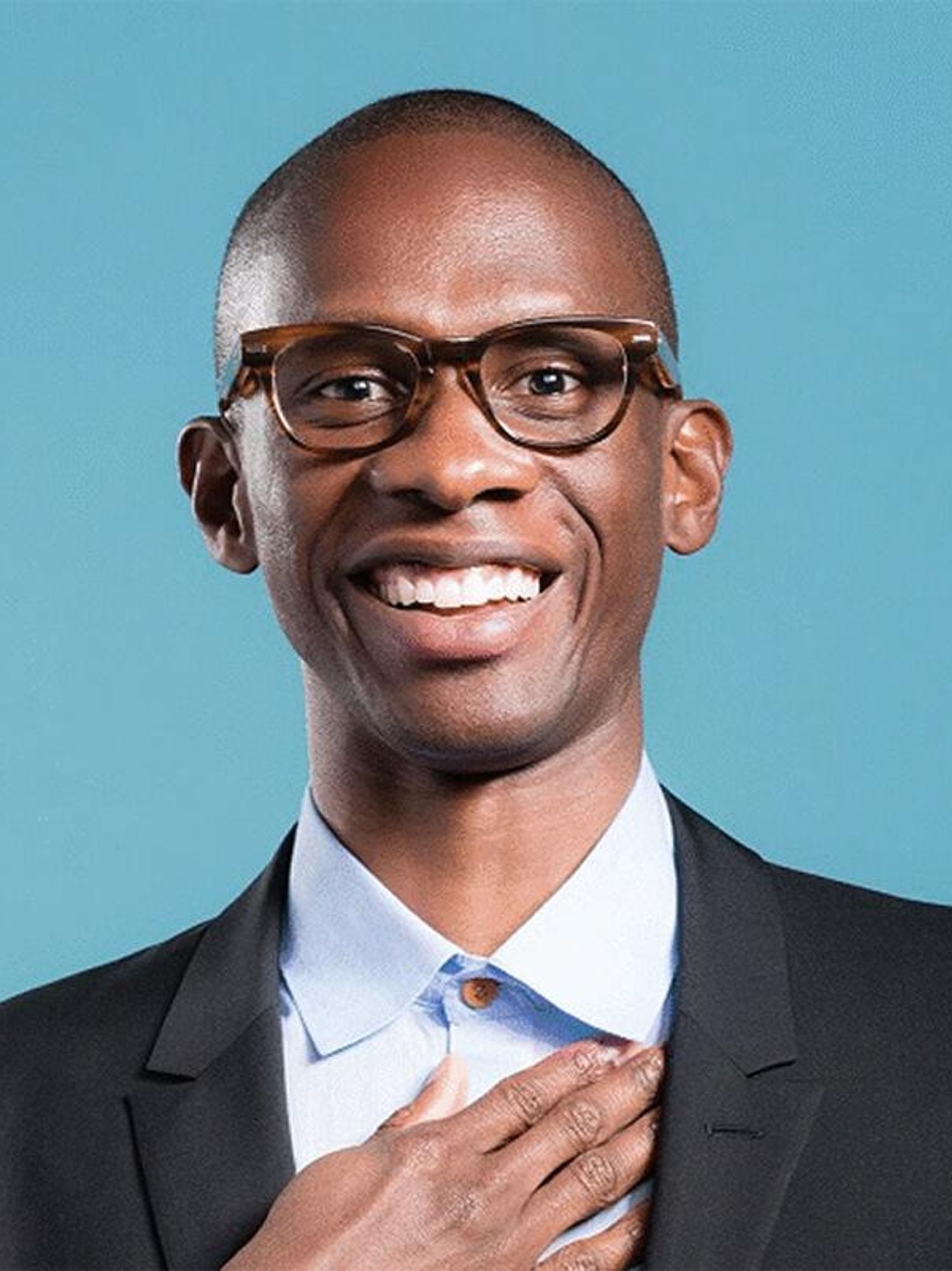
Troy Carter, Founder and CEO of Q&A

​Troy Carter, Founder and CEO of Q&A

Troy Carter is the founder and CEO of Q&A, a technology and media company focused on powering the business of music through distribution, services, and data analytics. Formerly, Troy was the founder and CEO of Atom Factory, where he rose to prominence, nurturing the careers of global superstars including Lady Gaga and John Legend. He most recently served at Spotify as its global head of creator services, overseeing the company's growth strategy for artists and record labels. In 2017, Carter was also named entertainment advisor to the Prince Estate.

His interest in the intersection of technology and culture resulted in the formation of AF Square Investments. Early investments include Uber, Lyft, Dropbox, Spotify, Warby Parker, theSkimm, Blavity, Gimlet Media, Thrive Market, PlayVs, and FazeClan. Troy currently serves as a trustee for The Aspen Institute, Los Angeles County Museum of Art, and CalArts.
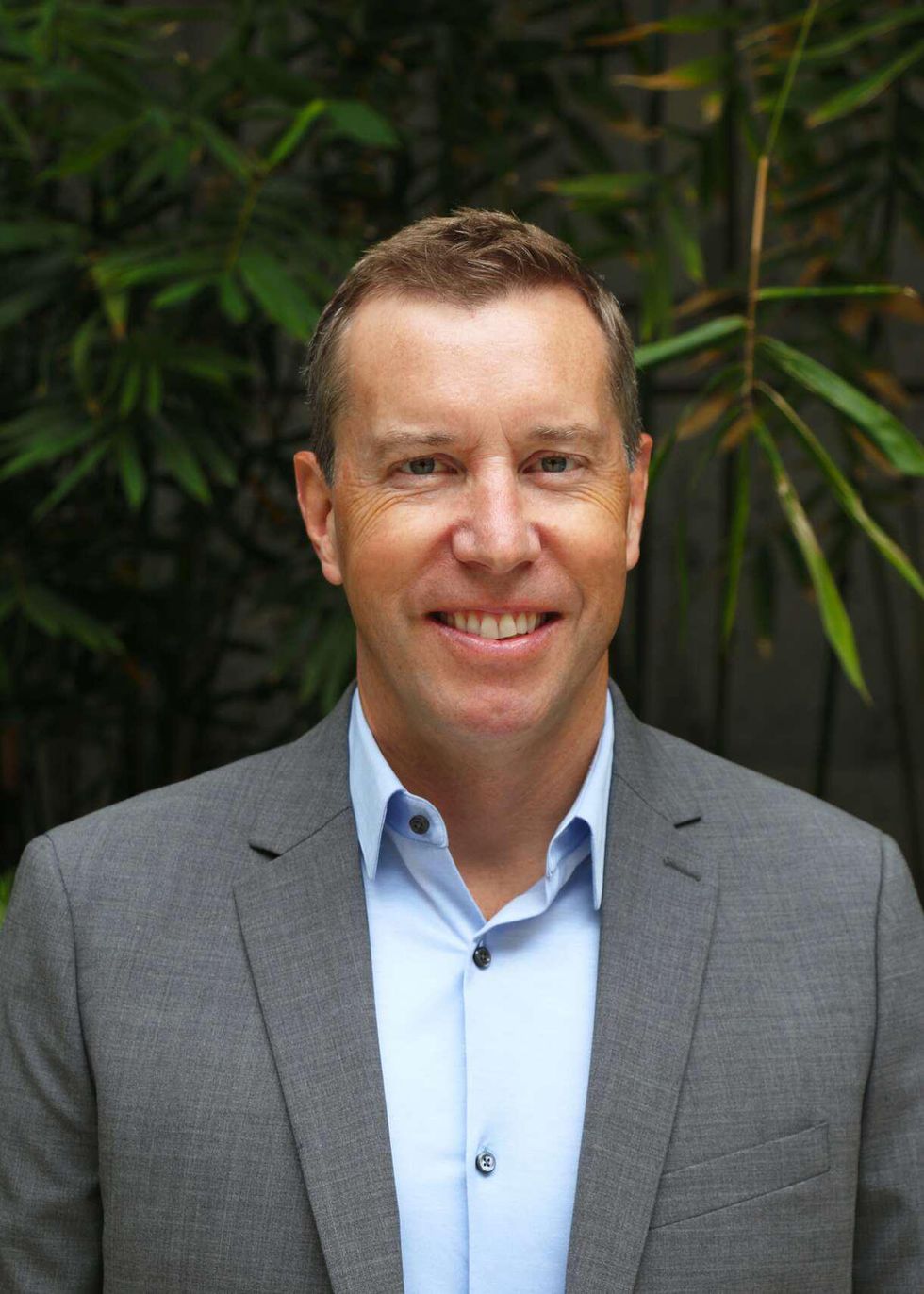
Jim Meenaghan, Co-Head of the Independent Film Group and Head of Business Affairs - Motion Pictures

Jim Meenaghan, Co-Head of Independent Film Group and Head of Business Affairs, Motion Pictures

As co-head of UTA Independent Film Group, Meenaghan is actively involved in structuring and negotiating film financing and distribution deals for independent films across all media. Meenaghan also oversees day-to-day business affairs operations for the motion picture departments across the agency and works closely with many of UTA's high-profile clients including Wes Anderson, Joel and Ethan Coen, Drew Goddard and Noah Baumbach.

Prior to joining UTA, Meenaghan served as executive vice president of Anschutz Film Group/Walden Media ("The Chronicles of Narnia," "Charlotte's Web," "Ray") and was in charge of all aspects of the company's business and legal affairs. Prior to that, he was senior vice president, business affairs at Icon Productions ("What Women Want," "We Were Soldiers," "Passion of the Christ").

Rena Ronson, Partner and the Co-Head of the Independent Film Group

Rena Ronson, Partner and Co-Head of the Independent Film Group

Rena Ronson is a partner and the co-head of the Independent Film Group at leading global talent and entertainment company United Talent Agency (UTA). One of the industry's pre-eminent packaging and finance executives, Ronson specializes in global film finance, distribution and marketing strategies for independent and co-financed features, helping the world's most acclaimed independent filmmakers see their work reach global audiences.

Throughout her career, Ronson has helped package, structure financing for, and sell numerous high profile films, including Oscar-winning "I, Tonya," "Room" and "Icarus," and Oscar-nominated films, "Hidden Figures," "The Big Sick," "Lady Bird," and "Call Me By Your Name," among many others. She is also known for working with acclaimed filmmakers on their directorial debuts, including Greta Gerwig's "Lady Bird," Haifaa al-Mansour's "Wadjda," Don Cheadle's "Miles Ahead," Marielle Heller's "Diary of a Teenage Girl," Jill Soloway's "Afternoon Delight," Crystal Moselle's "Skate Kitchen," and Emerald Fennell's "Promising Young Woman." Additional upcoming films include "The Father" starring Anthony Hopkins and "The Mauritanian" starring Tahar Rahim, Jodie Foster, and Benedict Cumberbatch.
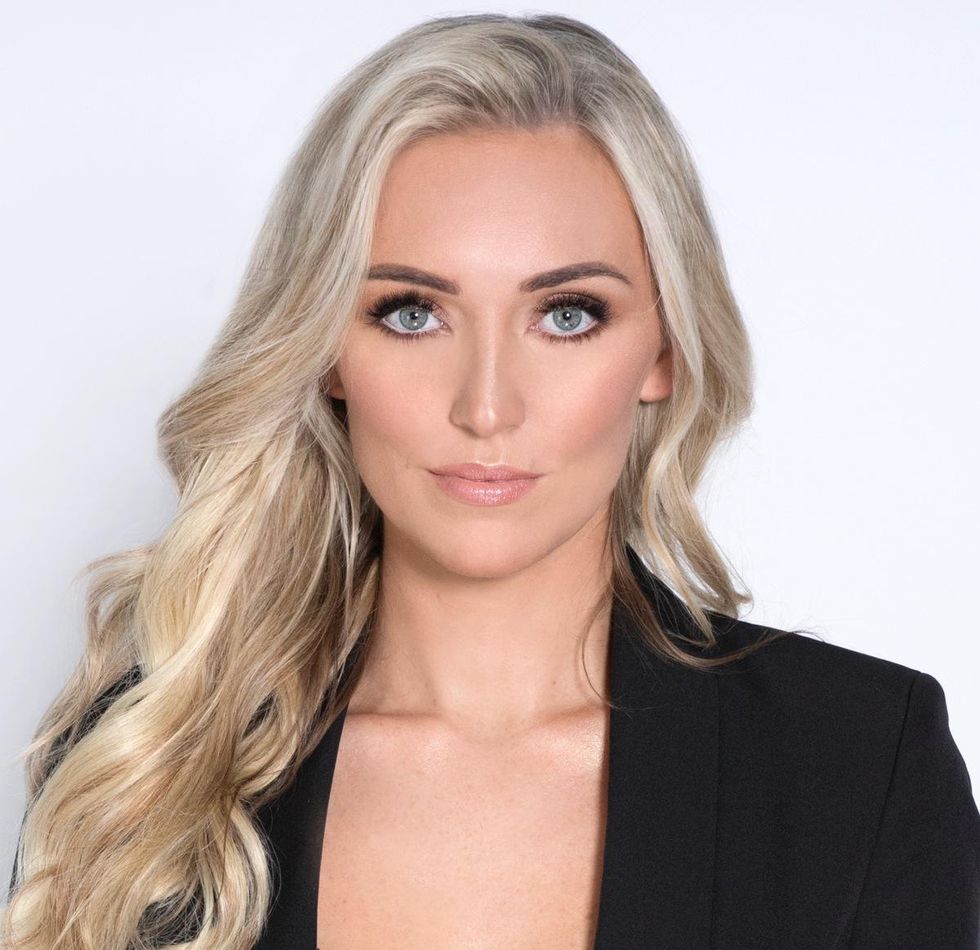
Kelly O'Grady, Chief Host and Correspondent

Kelly O'Grady, Chief Host and Correspondent

Kelly O'Grady is dot.LA's chief host & correspondent. Kelly serves as dot.LA's on-air talent, and is responsible for designing and executing all video efforts. A former management consultant for McKinsey, and TV reporter for NESN, she also served on Disney's Corporate Strategy team, focusing on M&A and the company's direct-to-consumer streaming efforts. Kelly holds a bachelor's degree from Harvard College and an MBA from Harvard Business School. A Boston native, Kelly spent a year as Miss Massachusetts USA, and can be found supporting her beloved Patriots every Sunday come football season.
Sam Blake, dot.LA Entertainment Reporter

Sam Blake, dot.LA Entertainment Reporter 

Sam Blake is dot.LA's entertainment reporter. Prior to joining dot.LA, he had a writing fellowship with The Economist, where he wrote primarily for the business and finance sections of the print edition. Sam previously interned at KCRW and hosted a podcast at UCLA's college radio station while completing his dual-degree MBA and Master's in Public Policy. A native of Detroit, Sam previously lived in Madison, Wisconsin and New York City. He studied history at the University of Michigan and speaks four languages.

http://www.linkedin.com/in/annieburford
annie@dot.la
How Replify Found Its Niche and an Acquirer

🔦 Spotlight

Hello LA,

This week’s startup story began three years ago with an AI assistant built for almost any small business. It ended, or perhaps graduated, with an acquisition by one of the fitness industry’s largest technology providers.

ABC Fitness has acquired Replify, an AI platform that manages customer communication for gyms and wellness businesses across phone, text, email and chat. Its virtual agents can answer questions, qualify leads, schedule tours and classes, follow up on missed calls and run outbound campaigns. Financial terms were not disclosed.

Before Replify found its footing in fitness, it was HeyLibby, a general-purpose AI assistant founded in 2023 by former Zillow colleagues Spencer Rascoff, Tony Small and Anna Rodriguez. The company was incubated inside Rascoff’s 75 & Sunny Labs and initially set out to help small businesses turn incoming messages into qualified leads.

That broad vision gave HeyLibby a large potential customer base, from real estate agents and contractors to hairstylists and event planners. But as the team searched for product-market fit, one industry’s problem stood out. Gym and wellness employees were often too busy helping customers in person to answer every call, text or email, leaving prospective members waiting and potential revenue on the table.

That insight reshaped the company. HeyLibby narrowed its focus to fitness and wellness, raised a $4.5M seed round in 2025 and later rebranded as Replify. It went on to work with brands including Gold’s Gym and UFC Gym, proving that its AI agents could do more than answer routine questions. According to the company, customers have captured up to 10 times more leads and shortened sales cycles from roughly 30 days to as little as three to five days.

ABC Fitness became a natural next step. The company provides software to more than 30,000 fitness businesses serving over 40 million members worldwide. By adding Replify to its platform, ABC can offer gyms an always-available AI front desk while bringing Replify’s technology to a much larger global customer base.

Replify’s journey offers a useful lesson amid the rush to build AI products for everyone. The company began with a broad promise, identified a customer with a specific and expensive problem, and built deeply around that need. Gym owners did not need another flashy chatbot. They needed someone to answer the phone when the front desk could not.

Sometimes the smartest AI strategy is simply picking up the call.

More from this week’s LA startup and venture scene below.

🤝 Venture Deals

    LA Companies

    • Dimension raised a $1.65M seed round backed by Science Inc., UpscaleX, OpenSky, Long Run Capital, 1864 Fund and others. The profitable social-commerce company will use the funding to launch Seller OS more broadly, an agentic AI platform that automates TikTok Shop operations for brands and agencies. - learn more
    • Procode raised a $10M Series A led by Health Velocity Capital, bringing its total funding to $14M. The AI-powered medical billing company will use the capital to acquire two additional billing businesses and expand its platform beyond plastic surgery and dermatology into all surgical specialties and ambulatory surgery centers. - learn more
    • Antares raised $470M in Series C financing, including $370M in equity and $100M in debt, in a round co-led by Paradigm and Caffeinated Capital. The nuclear energy company will use the capital to commercialize its autonomous microreactors, with an electricity-producing model planned for 2027 and initial deployments at U.S. military installations beginning in 2028. - learn more

    LA Venture Funds
    • Wilshire Lane Capital participated in Ellis’ more than $10M seed round, which was led by First Round Capital and included Kearny Jackson, 645 Ventures, Harlem Capital, Khosla Ventures and others. Founded by Cadre founder Ryan Williams, Ellis has emerged from stealth with an AI-native operations platform that helps private credit managers reconcile fragmented data and automate workflows such as portfolio monitoring, investor reporting and compliance; the funding will support team growth and further product development. - learn more
    • Rebel Fund participated in Dili’s $15M Series A, led by Khosla Ventures, bringing the AI compliance company’s total funding to $21.7M. Dili helps energy, construction, infrastructure and manufacturing companies identify compliance issues by reviewing project data in real time, and will use the funding to expand its team and broaden its platform into additional audit and waste-detection workflows. - learn more
    • B Capital led ChipAgents’ $60M Series A2, which brought the semiconductor AI startup’s expanded Series A financing to $134M. ChipAgents will use the funding to scale customer deployments, expand its engineering and go-to-market teams and further develop its AI platform, which automates complex chip design and verification workflows. - learn more
    • StoryHouse Ventures participated as a returning investor in Henry AI’s $16.5M Series A, led by FirstMark Capital with backing from Thomson Reuters Ventures, Y Combinator and others. The commercial real estate AI company will use the funding to expand its engineering and product teams and scale Henry Deal, a platform that automates underwriting, offering materials and other back-office work throughout a transaction. - learn more
    • Walkabout Ventures and Bungalow Capital co-led Discern’s $10M Series A, bringing the company’s total funding to $17.5M. Discern provides a software-based registered agent service that automates state filings and compliance tasks, and will use the capital to scale its platform following fourfold annual recurring revenue growth in 2025. - learn more
    • Starshot Capital participated in Quercus Biosolutions’ oversubscribed $5M seed round, which was led by Serra Ventures and included several climate, agriculture and grower-backed investors. The agtech startup will use the funding to expand its pipeline of AI-designed proteins for fighting herbicide-resistant weeds, begin regulatory work and explore applications targeting fungi, insects and other crop pests. - learn more
    • B Capital co-led Flourish Health’s $26M Series A alongside F-Prime and Cherryrock Capital, bringing the youth mental health provider’s total funding to $46M. Flourish will use the capital to expand its psychiatrist-led, in-home care model nationwide, hire and train clinicians and further develop its AI-enabled platform for coordinating care. - learn more
    • Powerhouse Capital participated in European Technology Network’s $1.6M seed round alongside Axel Springer, a LADbible co-founder and angel investors from OpenAI and DeepMind. The London-based tech media startup will use the funding to open a larger studio, expand its team, launch a newsletter and increase its livestreamed programming from two shows per week to five. - learn more

    LA Exits

    • Saltair, the Los Angeles body-care brand founded by model and entrepreneur Iskra Lawrence, is selling a majority stake to private equity firm TSG Consumer. Financial terms were not disclosed, but the deal will support Saltair’s expansion across e-commerce, retail and new products, while Lawrence transitions into the role of chief community advocate. - learn more
    • Digital marketing agency GR0 plans to acquire Ultimate AI’s enterprise deployment division and use the team’s technology to launch a new company called GR0 AI. The platform will deploy AI agents across brands’ customer data, commerce and marketing systems to personalize outreach, recover abandoned sales and generate measurable revenue; financial terms were not disclosed. - learn more

      Download the dot.LA App

      From Uber to Atoms: Travis Kalanick’s $1.7 Billion Return

      🔦 Spotlight

      Hello LA,

      Nine years after his turbulent exit from Uber, Travis Kalanick is back with a new company, an enormous war chest and, apparently, some unfinished business.

      Los Angeles-based Atoms announced this week that it has secured a $1.7 billion equity investment led by Andreessen Horowitz, with a16z cofounder Ben Horowitz joining its board. Bain Capital, Fifth Wall, Uber and several other investors participated, while a roster of major banks, including Goldman Sachs, JPMorgan and Bank of America, are listed as debt partners.

      Yes, Uber itself is now backing the comeback of its famously ousted cofounder. Silicon Valley may preach disruption, but it has always appreciated a good redemption arc.

      Atoms is the culmination of the company Kalanick has spent the past eight years building largely out of public view. Formerly known as City Storage Systems, the parent company behind CloudKitchens, it is now bringing its businesses together under one ambitious umbrella: Atoms Food, Atoms Mining and Atoms Transport.

      The premise is that AI’s next major frontier will not be confined to screens, chatbots or software. Atoms wants to build what Kalanick calls a “computer for the physical world,” using software, sensors, robotics and AI to automate how physical goods are produced, stored and moved.

      That means tackling decidedly unglamorous but enormous industries such as mining, construction, food production and heavy transportation. Rather than betting on humanoid robots that can theoretically do everything, Atoms is focused on specialized machines designed to perform specific, economically useful jobs.

      In other words, the robot does not need a face. It needs a business model.

      For a16z, the investment is as much a bet on Kalanick as it is on industrial AI. In an essay bluntly titled “Travis Is Back,” Horowitz argues that Kalanick possesses the rare mix of technical range, endurance and sheer force of will required to drag old-line industries into a new technological era. The firm’s broader thesis is that robotics will eventually handle much of the repetitive work involved in making, moving and storing physical goods, creating a market potentially as consequential as computing itself.

      There is also some history being settled. Kalanick, Horowitz and Marc Andreessen nearly partnered during Uber’s early days but never completed the deal. In a new conversation about Atoms, Kalanick and Horowitz revisit that missed opportunity and the long road that brought them back together. Sixteen years later, the check is considerably larger.

      The scale of the investment is remarkable, but so is its location. Atoms is headquartered in Los Angeles, giving the city a front-row seat to one of tech’s boldest industrial AI bets. It also reinforces something increasingly evident across LA’s startup ecosystem: the next era of AI will not only be written in code. It will be built in kitchens, warehouses, mines, vehicles and factories.

      Whether Atoms becomes the operating system for the physical world or simply proves that even $1.7 billion cannot make atoms behave like bits remains to be seen. But Kalanick is taking another enormous swing, and this time, Los Angeles is where the comeback story begins.

      More from this week’s LA startup and venture scene below.

      🤝 Venture Deals

        LA Companies

        • Hawthorne-based Andrenam raised an $18M Series A led by Upfront Ventures, with participation from Valor Equity Partners, Also Capital, First Round Capital and Long Journey Ventures, bringing its total funding to $30M. The maritime defense startup will use the capital to scale production of its sonar-equipped buoys and expand its AI-powered platform for detecting and tracking underwater activity. - learn more
        • Long Beach-based Bluecore Energy emerged from stealth with approximately $10M in oversubscribed financing led by Slauson & Co., with participation from Harlem Capital, Precursor Ventures, Hartbeat Ventures and others. The company is developing small modular nuclear reactors that can operate aboard floating barges and deliver zero-emission power to ports, data centers and other critical infrastructure. - learn more
        • Vikk AI raised $4.2M across a $700K pre-seed and $3.5M seed round, with backing from MagnaSci Ventures and several angel investors. The legal AI startup will use the funding to expand its consumer assistant, document tools and advertising platform that connects users with lawyers based on their needs and location. - learn more
        • Final Boss Sour raised $4M in strategic funding from Evolution VC Partners, The Angel Group, Mondelēz International’s SnackFutures Ventures and others, bringing its total funding to $12M. The gaming-inspired real-fruit snack brand will use the capital to expand into major retailers, including Walmart, Kroger, Target and 7-Eleven, while developing new products and collaborations. - learn more

        LA Venture Funds
        • Overture Ventures participated in Fluxco’s $26M seed round, led by 8VC and Congruent Ventures, alongside Trust Ventures, Koch Disruptive Technologies and others. The Austin startup uses AI to help companies source electrical transformers from more than 150 manufacturers, reducing a procurement process that can take months to just days. - learn more
        • Alexandria Venture Investments and Wedbush Healthcare Partners participated as returning investors in Crystalys Therapeutics’ oversubscribed $130M Series B, which was led by Frazier Life Sciences. The San Diego biotech will use the funding to advance Phase 3 trials and commercialization preparations for dotinurad, its once-daily oral treatment for gout. - learn more
        • Rebel Fund participated in Klaimee’s $5.5M seed round, led by FundersClub’s Alexander Mittal and backed by ex/ante, Pioneer Fund, Y Combinator and others. The San Francisco insurtech startup certifies and insures autonomous AI agents, helping businesses manage financial and liability risks that traditional cyber and technology policies may not cover. - learn more
        • M13 participated in Skyfall AI’s undisclosed funding round alongside Fidelity, Inovia Capital, Touring Capital, NextView Ventures and Garage Capital. Founded by former Microsoft researchers, the San Francisco startup is developing AI systems capable of making long-term decisions across finance, operations, marketing and other business functions, with the goal of building an autonomous enterprise. - learn more
        • Interlagos Capital led Beyond Reach Labs’ $10M seed round, with participation from TerraForge Capital, Off-Piste Capital, Y Combinator and Augur VC. The startup will use the funding to scale production of its deployable solar-array hardware for satellites at a new 16,000-square-foot facility in Brooklyn, with plans to achieve flight qualification by the end of 2026. - learn more

          Download the dot.LA App

          LA’s New Defense Startup Comes Out Swinging

          🔦 Spotlight

          Happy Friday LA,

          A new defense startup just emerged from stealth with one of the week’s biggest funding rounds and a mission built for the realities of modern warfare.

          Los Angeles-based Singularity raised an oversubscribed $80M Series A at a $400M valuation to develop low-cost air defense systems at scale. Khosla Ventures and Felicis led the round, with participation from AE Ventures, NEA, Long Journey, Harpoon, Menlo Ventures, Y Combinator and others.

          The company is targeting an increasingly lopsided problem: inexpensive drones and munitions can be produced quickly and deployed in large numbers, while the systems used to intercept them are often costly and difficult to manufacture at comparable scale.

          Singularity’s answer is to borrow from the automotive industry. Its manufacturing team, which includes talent from Tesla and Toyota, is building an assembly line designed to rapidly produce interceptors, while developing the hardware and software in-house. The broader team also includes veterans of SpaceX, Anduril and Lockheed Martin, along with military operators who have deployed air defense systems in combat.

          The company is already conducting multiple flight tests each month. Now it has $80M to prove that air defense can be manufactured more like cars and less like traditional military hardware.

          Whatnot Wants AI to Find Your Next Obsession

          The thrill of Whatnot is not always finding what you came for. It is stumbling into a live show and discovering something you suddenly need to own.

          Now the Marina del Rey-based marketplace is investing in AI to make those moments happen more often.

          Whatnot acquired Shaped, a machine-learning startup that builds real-time recommendation and search systems. Financial terms were not disclosed.

          Shaped founder and CEO Tullie Murrell and nearly a dozen engineers and researchers will join Whatnot, where Murrell will create and lead a new applied AI research group focused initially on discovery and personalization.

          The acquisition comes as Whatnot’s marketplace becomes much larger and more complicated. The company launched more than 35 new categories last year and over 45 during the first half of 2026. Cross-category purchasing is also up 170% year over year, suggesting users are increasingly willing to venture beyond the products that first brought them to the platform.

          Unlike a traditional online store, Whatnot’s inventory shifts constantly as sellers start and end live shows. That makes recommending the right product or stream in real time a particularly difficult AI problem.

          Whatnot is betting Shaped can help solve it. Because the longer shoppers keep discovering new interests, sellers and communities, the less likely they are to close the app.

          More from this week’s LA startup and venture scene below.

          🤝 Venture Deals

            LA Companies

            • Senra Systems raised a $65M Series B co-led by Lowercarbon Capital and Interlagos, with participation from CIV and several other investors, bringing its total funding to more than $112M. The aerospace and defense manufacturer will use the capital to expand production of its software-enabled wire harnesses and open a third factory, following a recent expansion expected to increase monthly output from 1,000 harnesses to 10,000 by next year. - learn more
            • Intrinsic Power announced the first close of its seed round, with backing from Kyocera Ventures, Drive Catalyst, Boost VC and RPV Global; the company did not disclose the amount raised. The funding will support product development, engineering hires and customer deployments as Intrinsic commercializes its AI-powered platform for optimizing electricity use across commercial buildings, critical infrastructure and data centers. - learn more
            • Pasadena-based Linker Finance raised an additional $5M in seed funding, bringing its total seed financing to $8.7M. Existing investors Chingona Ventures, Ten One Ten Ventures, Audaz Capital and Angeles Investors returned for the round, alongside new strategic investor 22nd State Banking Company, with the funding earmarked for product development, agentic AI and expanded payment capabilities. - learn more
            • Corner Health raised $32.5M across seed and Series A financing, with its latest round led by Oak HC/FT and participation from First Round Capital and Zigg Capital. The company, which helps nurse practitioners launch independent primary care practices using an AI-powered operating platform, will use the funding to expand its team, improve its technology and enter additional states. - learn more
            • Cognify Health raised a multimillion-dollar seed round led by Game Changers Ventures, with participation from Westbound Equity and several individual investors. The company, which provides youth athletes with virtual concussion care within 24 hours, will use the funding to grow its team and enhance its platform and medical services. - learn more

            LA Venture Funds
            • Act One Ventures participated in logcat.ai’s $2.55M pre-seed round, which was led by Founders’ Co-op and included TheFounderVC, Shorewind Capital, Clayoquot Capital and Alumni Ventures. The startup is building an AI platform that helps engineering teams diagnose and fix complex software issues across Android and Linux-powered devices, including phones, vehicles and robots. - learn more
            • Plus Capital participated in Fora’s $60M Series D, which was led by Forerunner and Tactile Ventures and valued the travel platform at $1B. Fora will use the funding to expand its AI capabilities, enter new markets, grow into categories including cruises and flights, and continue hiring. - learn more
            • M13 led Rime’s $24M Series A, with participation from Corazon Capital, Unusual Ventures, Cadenza Ventures and Twilio Ventures. The AI startup will use the funding to develop faster, more natural voice models for enterprise applications, while M13 partner Morgan Blumberg will join its board. - learn more
            • Calibrate Ventures participated in Walden Robotics’ $300M seed round, co-led by Toyota and Deviation Capital, which valued the company at $1.1B. The robotics startup emerged from stealth with general-purpose robots designed to learn on the job and work alongside people in manufacturing and logistics environments. - learn more
            • Lasagna Ventures participated in Cyclops’ $20M Series A, which was led by Nava Ventures and also included Castle Island Ventures, Coinbase Ventures, Circle and Global PayTech Ventures. The stablecoin infrastructure company will use the funding to accelerate product development, expand its teams and global licensing, and grow its go-to-market operations. - learn more
            • MaC Venture Capital participated in Pure’s $8M seed financing, raised across multiple rounds led by Hidden Capital. The company will use the funding to expand its engineering and compliance teams and further develop its platform for verified, real-money peer-to-peer games. - learn more
            • Clocktower Technology Ventures participated in Feathery’s latest financing, which brought the company’s total funding to $30M, including its recently completed Series A. The AI platform, used by insurance and wealth-management firms to automate workflows and improve decision-making, plans to expand its products and grow its engineering and go-to-market teams. - learn more
            • Matter Venture Partners led TYLsemi’s oversubscribed $43M early-stage funding round, with participation from Viola Ventures, GHOVC, Egis Technology and other strategic investors. The semiconductor startup emerged from stealth with a full-stack chiplet platform designed to cut the time and cost of developing custom AI silicon by as much as 50%. - learn more
            • Lasagna participated in Pact Labs’ $7M Series A, which was anchored by a strategic investment from Tether and also included Blockchange Ventures. The company will use the funding to expand infrastructure that brings Tether’s U.S.-regulated USA₮ stablecoin to payroll, earned-wage access, credit and payment platforms. - learn more

            LA Exits

            • Communications startup TextPlus has agreed to be acquired by Truecaller for $15M in cash. TextPlus, which provides app-based phone numbers, messaging and internet calling to roughly 1.5M monthly active users, will help Truecaller expand its U.S. presence and add second-number and VoIP services to its platform. - learn more

              Download the dot.LA App

              RELATEDEDITOR'S PICKS
              Trending