


'These Things Happen Too Often': How an Encounter with Police Launched an App to Hold Cops Accountable

Yasmin Tayag
Yasmin Tayag is a science editor and writer. She was previously the lead editor of the Medium Coronavirus Blog and founding editor of Future Human, a publication about science and the future. She was also a senior editor at the health website Elemental and the tech website OneZero. Before that, she was the senior science editor at Inverse. She is most interested in biology, health, the future of food, and the intersection of science with racial and social justice.
'These Things Happen Too Often': How an Encounter with Police Launched an App to Hold Cops Accountable
Photo by James Eades on Unsplash

Tony Rice II was just a 17-year-old kid living in the Dallas-Fort Worth area when an officer approached his car with his gun drawn, saying he suspected the car was stolen.

"He pulled me over, came up to my car, and actually pulled a gun on me," said Rice. In the end, the officer still gave Rice a traffic ticket. It was only later he said he discovered there had been no corresponding reports of a stolen vehicle.


Rice and his family never filed a complaint about the interaction. "I think we were all just glad that it didn't result in a fatal encounter," said Rice, now 36, whose father grew up in the segregated South and whose mother is an immigrant from Haiti. "Unfortunately in my community, these things happen too often."
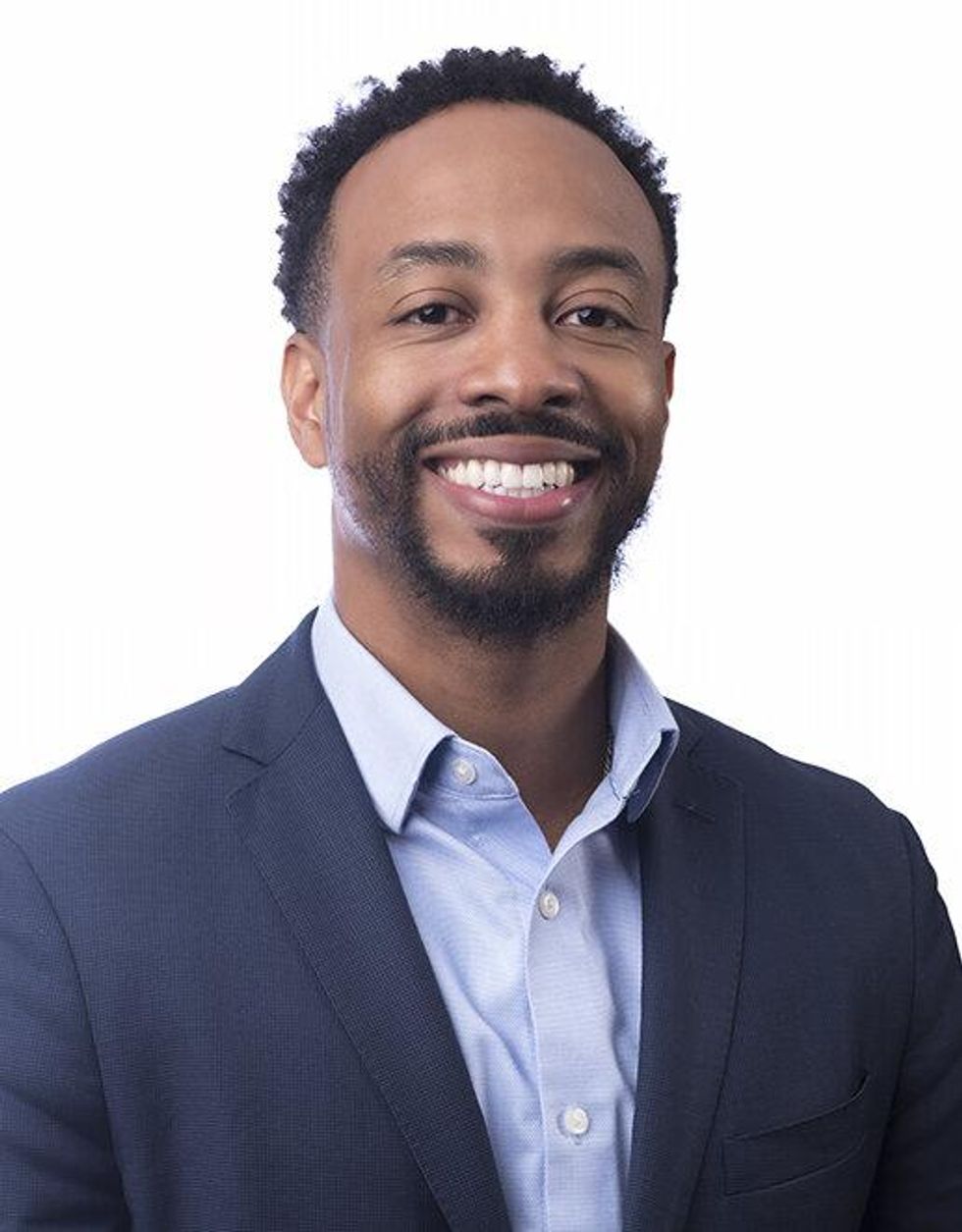
Tony Rice II

Unarmed founder Tony Rice II

Systemic racism was something that Rice couldn't avoid over the next two decades, even as he was building his career at Google and Deloitte and eventually with his own consulting firm, which helped cities launch tech projects with vendors such as Oracle. He said he was "just not sure how I could help address it."

Then, in 2020, George Floyd and Breonna Taylor were killed by police. It dawned on Rice that he could leverage his personal and professional experience to address police violence in a meaningful way. "Knowing that could have been me," he said, "I thought I was uniquely positioned to create a technology project that could potentially help resolve this disparity."

He began developing Unarmed, an online platform that allows city government agencies to easily gather and manage civilian feedback about law enforcement, including cases involving use of force. The public often doesn't know that they can give feedback about police, he said, and even when they do, they don't know how to do so. He hopes streamlining the process will increase both access and awareness about these options.

So far, Rice has self-funded the company, and he plans to hold a family-and-friends funding round at the end of the second quarter. Though the launch of the completed product is slated for the end of this year, Rice points out that its major functionality is already finalized. "We could deploy tomorrow," he said, adding that the platform can be implemented quickly because it can be installed remotely rather than onsite.

Mock-up videos on the Unarmed website show a streamlined online platform where a user can select to file a "complaint" or a "compliment." Subsequent pages give civilians the option to either provide personal information or file anonymously, and to provide information about the incident, officers involved, details about witnesses and any photo or video evidence. Cases are submitted to a city's oversight officers and labeled with a tracking number, which allows users to check for updates.

Unarmed might seem like an obvious solution, but in many cities there are relatively few avenues for civilians to file complaints about police. While some cities have robust citizen complaint review boards (also known as civilian oversight agencies) that are external to police, most police departments log and review complaints internally.

Even though some departments have "very independent complaint review processes," said Jack Glaser, an expert on policing and racial justice at UC Berkeley's Goldman School of Public Policy, "it is very difficult to get a complaint 'sustained.'" Sustainment occurs when a complaint is found to be supported by sufficient factual evidence and deemed a policy violation. He said complaints about racial profiling in particular are almost never sustained.

Worse yet, Rice has found that while a few cities offer fillable PDFs or forms that can be printed out and submitted, many do not offer any online options and instead require civilians to manually log complaints at the police department, "which is obviously counterintuitive," he said. Further, he notes, many of these services are offered only in English and Spanish, excluding Americans who primarily speak different languages.

Designed with access in mind, Unarmed is geared toward cities that have stated their commitment to police reform. As the Black Lives Matter movement continues to gain traction, the number of such places appears to be growing. Last July in Kansas City, Mayor Quinton Lucas and city council members called on the police to provide data in order to create a publicly available use-of-force database. This still hasn't materialized, however, and the city's police chief is currently under fire for failing to deliver on these demands. With Unarmed, willing cities can organize and manage such databases so that they're positioned to have the biggest impact on police reform.

The platform isn't just for citizens; Rice said it can also be useful for police departments because it allows them to log and organize data that they are legally required to report. For instance, in Los Angeles, where Rice is based, police must submit race- and identity-related details of every person that an officer detains or searches — known as "stop" data — to the California attorney general every year. "There's a checklist of different items you need to include," said Rice, "so even including that also makes it more enticing to police departments." Currently, the Callifornia government recommends police use notebooks, mobile data terminals or mobile digital computers for this data collection but doesn't provide any tools.

Rice is "hopeful" that both cities and police departments will show interest in his product. "All I can do is do the outreach, and try to show the problems that exist today and the benefits of being on the platform," he said.

Cameron McEllhiney, director of training and education at the National Association for Civilian Oversight of Law Enforcement, notes a major obstacle to Rice's project: Many cities have limitations regarding the investigation of third-party complaints, an issue that platforms similar to Unarmed have faced in the past. Nevertheless, she adds, "the adoption and implementation of effective, sustainable civilian oversight mechanisms is what we should be striving for."

Glaser sees promise in Unarmed, noting that "anything that standardizes and streamlines these processes will be a step in the right direction." But the real challenge will be ensuring that civilian feedback is registered and meaningfully adjudicated. "It's one thing to collect, categorize and store this information; it's another, and harder, thing to act on it," he said.

Optimistic about the future of Unarmed, Rice is likewise encouraged by the ongoing conversations about diversity in tech, which has led many companies to hire more diverse workers. "There's not a lot of us," he said. "I think it's not only about funding Black founders but Black founders that are making an impact, that can drastically impact people's lives."

https://twitter.com/yeahyeahyasmin
From Breaking Tech News to Backing It
Image Source: Sources

🔦 Spotlight

Hey there, Los Angeles.

For the past decade, Alex Heath has made a career out of figuring out what the technology industry is doing before everyone else.

Now, he is going to invest in it.

Heath announced this week that he is joining Los Angeles-based Sound Ventures as a partner on its investing team. The veteran technology journalist will continue independently operating Sources, the newsletter and podcast business he launched after leaving The Verge last year.

It is an unusual career move, but perhaps not as unusual as it initially appears.

Journalists and venture capitalists spend much of their time doing surprisingly similar work. Both look for signals before they become obvious, build relationships with people who know what is coming next and attempt to distinguish a lasting shift from a convincing story.

The crucial difference is what happens after they find one.

A journalist publishes. An investor writes a check.

Heath has spent years reporting on some of the technology industry’s most powerful companies and executives. At The Verge, where he served as deputy editor, his work focused on the internal decisions shaping companies such as Meta. More recently, Sources has taken readers inside the AI race through reporting and interviews with executives including Sam Altman and Mark Zuckerberg.

That experience gives Sound something venture firms increasingly want: someone who already understands the founders, companies and narratives competing to define the next era of technology.

Sound Ventures is not exactly starting from scratch. Led in Los Angeles by Guy Oseary and Effie Epstein, the firm manages nearly $2B and has backed companies including OpenAI, Anthropic, World Labs, Brex, Affirm and GitLab. According to The Wall Street Journal, Sound deployed more than $800M into early positions in OpenAI, Anthropic and World Labs as it intensified its focus on artificial intelligence.

Heath is joining during an important transition for the firm. Ashton Kutcher, who co-founded Sound with Oseary in 2015, departed earlier this year to launch a new venture firm. Oseary and Epstein are continuing to lead Sound while raising its fifth flagship fund and sharpening its strategy around companies with the potential to reach meaningful commercial scale.

Adding Heath suggests that Sound’s next phase will not be defined by capital alone.

As AI makes it faster and less expensive to build software, technical capability may become less effective as a differentiator. More startups will be able to create credible products, and more of them will compete for the same finite supply of customers, talent and attention.

In that environment, knowing how to identify a compelling founder is only part of the job. Venture firms also need to understand how companies earn trust, communicate what makes them different and remain culturally relevant in an increasingly crowded market.

That is familiar territory for Sound. Oseary built his career managing artists including Madonna and the Red Hot Chili Peppers, where recognizing talent was inseparable from helping that talent connect with an audience. Heath brings a different version of the same instinct, developed through finding important stories and understanding why people should pay attention to them.

Heath will continue owning and operating Sources independently while expanding its podcast and interviewing prominent voices across the technology industry. That means he is not abandoning the platform or audience he built. He is adding a new vantage point.

The combination could prove especially valuable to Sound. Heath brings the instincts of a reporter, the reach of an independent media founder and years of relationships with the people shaping technology. Now, he can apply that experience to finding and supporting the next generation of founders.

It is a fitting evolution for someone who has spent his career identifying important technology stories early.

This time, he will have the opportunity to help write what happens next.

Venture firms once competed primarily through capital, networks and operating expertise. Now, access to attention is becoming an asset of its own. Founders need help reaching customers and shaping public understanding, while investors want better ways to recognize which people and ideas will command that attention next.

Sound Ventures hired someone who has spent a decade doing exactly that.

Heath used to decide which technology stories were worth following.

Now, he will help decide which ones get funded.

More from this week’s LA startup and venture scene below.

🤝 Venture Deals

    LA Companies

    • Maven Robotics emerged from stealth with a $100M Series A and humanoid robots already operating in warehouse deployments. The company says its robots can work for 16 hours a day with 99% uptime and is positioning itself as a reliable alternative for businesses whose existing robotics providers fail to meet deployment targets. - learn more

    LA Venture Funds
    • Bedrock Capital participated in Mach Industries’ $600M Series C extension alongside Ribbit Capital, Infinite Capital and Sequoia, bringing the round’s total to $900M and doubling the defense startup’s valuation to $3.7B in three months. The Huntington Beach company manufactures lower-cost unmanned aircraft, strike weapons and counter-drone systems, while expanding into solid rocket motors and jet-engine production to address critical defense supply-chain bottlenecks. - learn more
    • U First Capital participated in Positron AI’s $875M funding round, which was co-led by NEA, Atreides Management, Valor Equity Partners, Andra Capital, SemiAnalysis Capital and Jim Clark, valuing the AI chip startup at $5B. Positron will use the capital to bring its memory-focused Asimov processor and Titan server system to market, offering an energy-efficient alternative to GPUs for running AI models. - learn more
    • WndrCo participated in Harvey’s $550M funding round, co-led by Diffusion and Lightspeed Venture Partners, valuing the legal AI company at $15.5B. Harvey will use the capital to expand its team and advance its AI platform, which helps law firms, in-house legal departments and professional-services organizations build and manage proprietary legal intelligence. - learn more
    • Nolan Capital participated in Encoded Therapeutics’ $275M Series F, which was co-led by GV and another healthcare-focused fund and included several new and returning investors. The biotech will use the capital to advance its lead gene therapy for Dravet syndrome through pivotal studies, expand its manufacturing capabilities and prepare another treatment for post-amputation nerve pain for clinical testing in 2027. - learn more
    • UP Partners led Overroute’s $5.5M seed round to expand its AI-powered freight execution platform for large trucking fleets and logistics operators. The company’s AI agents automate load monitoring, exception management and freight coordination, helping fleets respond to disruptions and keep shipments moving with less manual work. - learn more
    • Patron Fund participated in System’s $20M funding round alongside Will Ventures, Vine, Courtside, Daybreak, SV Angel and RiverPark Ventures. The San Francisco company will use the capital to expand its vertically integrated peptide platform, which connects patients with licensed clinicians and personalized treatments from U.S. compounding pharmacies while emphasizing testing, traceability and regulatory compliance. - learn more
    • Alpha Edison led Onix’s $5M pre-seed round, with participation from Garage Capital, Ride Home Fund and strategic investors including UTA co-founder Jeremy Zimmer and Real Ventures co-founder JS Cournoyer. The Montreal startup will use the funding to develop its private AI platform, onboard more specialists and prepare for a public launch, offering personalized guidance built exclusively from licensed expert knowledge rather than information scraped from the internet. - learn more
    • Rebel Fund participated in VideoGen’s $3.3M seed round alongside Y Combinator, Lobster Capital, Stretford End Capital, Mento VC, Pioneer Fund and Decacorn VC. The San Francisco startup, which has reached more than 5M users across 190 countries, will use the funding to expand its team and grow its AI platform for producing editable, copyright-free videos. - learn more

      Download the dot.LA App

      Who Gave the AI Access?

      🔦 Spotlight

      Happy Friday, Los Angeles.

      The newest employee in the office does not need a desk, a salary or a coffee order. But it may have access to your company’s emails, financial records, customer data and software systems.

      That raises a fairly important question: Who decides what an AI agent is allowed to do?

      El Segundo-based cybersecurity company Saviynt is building its next chapter around the answer.

      Carrick Capital Partners announced this week that it closed a $600M continuation vehicle for Saviynt, including a new $255M investment in the company. The transaction allowed Carrick’s existing investors to either take liquidity or remain invested, while also providing liquidity to Saviynt employees through a tender offer.

      Continuation vehicles are not exactly known for making gripping Friday reading. The company behind this one is considerably more interesting.

      Saviynt develops identity security software that helps businesses determine who can access their applications, data and infrastructure. Increasingly, however, “who” does not refer exclusively to a person.

      Companies are deploying AI agents that can retrieve information, write code, communicate with customers and complete multistep tasks with limited supervision. These digital workers need access to company systems to be useful, but every new permission also creates another opportunity for sensitive information to be exposed or an unintended action to be taken.

      In other words, AI agents may be tireless employees. They are not necessarily trustworthy ones.

      Saviynt is addressing that problem through Zuma, its platform for discovering, securing and governing AI agents, large language models and other nonhuman identities alongside a company’s human workforce. The goal is to give businesses one place to determine what every identity can access, whether it belongs to an employee, a contractor, a software application or an autonomous agent operating at machine speed.

      The opportunity appears to be growing quickly. Saviynt has surpassed $300M in annual recurring revenue, up from approximately $10M when Carrick first invested. The company says bookings have increased by more than 80% this year while customer retention remains at 96%.

      The new investment was completed as part of the final close of Saviynt’s previously announced $700M Series B, which valued the company at approximately $3B. Carrick’s continuation vehicle was led by Coller Capital and co-led by HSBC Asset Management, giving the investment firm more time and capital to remain behind one of its strongest-performing companies.

      For Saviynt, the funding will support further development of its identity platform, deeper integrations with major cloud and software providers and its push to become a central security layer for the agentic workplace.

      That ambition reflects a broader change taking place inside companies. The first wave of enterprise AI focused largely on what the technology could generate. The next phase is about what it can actually do, and whether businesses can maintain control once AI moves from answering questions to taking action.

      Saviynt is betting that identity will become the gatekeeper.

      AI agents are gaining access to the digital workplace, whether corporate security teams are ready for them or not.

      Someone still has to hold the keys.

      More from this week’s LA startup and venture scene below.

      🤝 Venture Deals

        LA Venture Funds

        • Fulcrum Ventures participated in Critical Materials Group’s $10.3M seed round, led by Overmatch Ventures and joined by Victory Six Advisors. The Austin-based defense manufacturer will use the funding to develop and commission modular, automation-ready production systems designed to expand domestic manufacturing capacity for munitions and advanced energetic materials. - learn more
        • Fusion VC participated in Newlight’s $9M seed round alongside lomarlabs, BIRD Energy, Undeterred Capital and CiRi Ventures. The San Francisco-based maritime technology company recently demonstrated its hydrogen-hybrid retrofit on an 8,500-nautical-mile commercial voyage, reducing fuel consumption by 24% and carbon dioxide emissions by 28%. - learn more
        • Rebel Fund participated in Metal’s $4.5M seed round alongside a16z, Y Combinator, Gaingels, Indus Valley Capital, Phaze Ventures and Pioneer Fund. Metal will use the funding to build an AI-native operating system that helps founders identify relevant investors, manage outreach and automate other parts of the venture fundraising process. - learn more
        • UP.Partners participated in Reframe Systems’ $40M funding round, led by Energy Impact Partners and joined by Counterpart Ventures, E12 Ventures, Global Brain, Thin Line Capital and LACI Impact Fund. The homebuilding startup will use the capital to expand its network of robotics-powered microfactories, which it says can construct homes three times faster and at 35% lower cost than traditional methods. - learn more
        • Clocktower Technology Ventures participated in Sharpi’s $4M seed round, co-led by NXTP and ONEVC and joined by MAYA Capital. The Brazilian startup will use the funding to expand its team and develop autonomous AI agents that connect WhatsApp conversations with enterprise systems to automate B2B sales tasks such as order processing, customer follow-ups and demand generation. - learn more

        LA Exits

        • Extensiv, a California-based provider of warehouse management and fulfillment software, has been acquired by Descartes Systems Group for approximately $120M in cash. The acquisition adds Extensiv’s AI-enabled inventory, order, billing and omnichannel fulfillment tools to Descartes’ logistics network, strengthening its offerings for third-party logistics providers and ecommerce brands. - learn more
        • DocSolutionUSA has been acquired by Stewart Information Services alongside ProTitleUSA, adding mortgage document generation and automation capabilities to Stewart’s title services platform. The companies provide title, document and due diligence services for mortgage servicers, investors and capital markets clients; financial terms were not disclosed. - learn more
        • Fysh Foods, the Los Angeles-based plant-based seafood brand founded by creator and entrepreneur Zoya Biglary, has been acquired by City Roots Hospitality in an all-cash deal with undisclosed terms. City Roots plans to introduce Fysh Foods’ raw fish alternatives across its New York City restaurants and potentially expand the brand beyond the city as its restaurant portfolio grows - learn more

          Download the dot.LA App

          An LA AI Company Just Won Entertainment’s Backing

          🔦 Spotlight

          Hello LA.

          The entertainment industry has spent the past several years debating what generative AI could take from creators.

          This week, some of its biggest companies put money behind an AI startup promising to build something for them instead.

          Los Angeles-based Stability AI raised $76M in Series B funding from an investor group that includes Electronic Arts, Sony Music Group, Universal Music Group and Warner Music Group. AMD Ventures and Pacific Alliance Ventures also joined the round, while LA-based MANTIS Capital and Sound Ventures are among the company’s existing backers.

          The financing brings Stability AI’s total funding under CEO Prem Akkaraju to $232M, including two equity rounds and convertible notes. The company plans to use the new capital to expand its creative production tools, applied research and professional services across music, gaming and entertainment.

          The amount is notable. The names attached to it are the bigger story.

          Generative AI’s arrival in entertainment has been anything but quiet. Artists have questioned whether their work was used to train models without permission. Studios have faced pressure over how the technology could affect jobs. Record labels have pursued AI companies in court while simultaneously exploring how the same technology might fit into their businesses.

          Now, several of the world’s largest entertainment companies are investing directly in one.

          That does not mean the industry has resolved its concerns about AI. It means some of its biggest players would rather help shape the technology than wait to see what it becomes.

          Stability AI is positioning itself for that opening. Rather than focusing solely on general-purpose models, the company is building tools specifically for professional creatives. Its recently launched Stable Audio 3.0 was trained on fully licensed music and lets artists generate, edit and arrange audio through a web platform or directly inside digital audio workstations.

          Image Source: Stability AI

          That licensed-data approach is central to the pitch. The next phase of creative AI will not be decided only by which company produces the most impressive model. It will also depend on which companies can earn the trust of the artists, studios and rights holders whose work gives those models value.

          For its new strategic investors, the round offers more than financial upside. It creates a closer view into how generative AI may change production, a voice in how the tools develop and an opportunity to establish rules before those rules are established for them.

          For Stability AI, the backing provides something equally important: credibility inside industries that have every reason to scrutinize what it is building.

          The company now has capital and access to some of the largest catalogs, franchises and creative workforces in entertainment. What it does with that access will determine whether this becomes a meaningful alliance or simply an impressive collection of logos.

          Either way, the industry is no longer watching from a safe distance.

          It has entered the room.

          LA’s Air-Taxi Plans Are Coming Downtown

          While Stability AI is trying to change how entertainment gets made, Archer Aviation wants to change how people get to it.

          AEG and Archer announced plans to develop downtown Los Angeles’ first vertiport at L.A. LIVE, creating a potential new stop in Archer’s proposed electric air-taxi network ahead of the 2028 Olympic and Paralympic Games.

          Image Source: Archer

          The planned site would sit beside Crypto.com Arena and allow passengers to travel to and from the entertainment district aboard Archer’s Midnight aircraft. The company says its network could turn drives that take an hour or longer into electric flights lasting approximately 10 to 20 minutes.

          Archer has already identified SoFi Stadium, USC and Hollywood Burbank Airport as possible locations, with its recently acquired Hawthorne Airport expected to serve as the network’s central operating hub. As the official air-taxi provider of LA28 and Team USA, Archer has an unusually visible deadline for turning those plans into something tangible.

          AEG and Archer have completed an initial feasibility study of the L.A. LIVE site, including reviews of land use, airspace, power availability and community impact. The next phase will examine operations and the passenger experience.

          There is still a substantial distance between a proposed vertiport and a functioning air-taxi network. The infrastructure must be built, regulatory approvals must be secured and passengers must be persuaded that flying across the city is safer and more practical than staying on the ground.

          Still, few locations could make that future feel more real than L.A. LIVE. Millions of people already pass through the district for concerts, games and major events. Placing a vertiport there would bring urban air mobility out of the concept stage and directly into public view.

          Together, this week’s announcements show Los Angeles becoming a testing ground for two technologies still moving from promise toward everyday use.

          One could reshape how entertainment is created. The other could reshape how Angelenos reach it.

          In a city famous for both its creative industries and its traffic, that feels appropriately on brand.

          More from this week’s LA startup and venture scene below.

          🤝 Venture Deals

            LA Companies

            • Atorie raised a $9.5M seed round from investors including a16z speedrun, Night Capital and Lightspeed Venture Partners’ Jeremy Liew. The AI-powered fashion startup connects consumers directly with luxury manufacturers to offer high-quality goods without traditional designer markups, and will use the funding to expand logistics, production and its AI shopping tools. - learn more
            • Long Beach-based Maglut Heavy Industries emerged from stealth with $3.1M in pre-seed funding from Wave Function, Nova Threshold and Julian Capital. The startup is developing a chromatography-based system to process and refine rare earth elements domestically, with pilot tests producing materials at more than 99.9% purity. - learn more

            LA Venture Funds
            • MANTIS Venture Capital participated in Voya Energy’s $35M Series A, led by Energy Impact Partners and joined by John Doerr, StepStone, Founders Fund, Overmatch and Seven Stars. The Hayward-based startup will use the funding to commercialize its aluminum-fueled generators, which provide clean, off-grid power for data centers and other energy-intensive operations without combustion or local air emissions. - learn more
            • Regeneration.VC participated in eComID’s $17M seed round, led by Systemiq Capital and joined by Course Corrected, Stadium and returning investor CapitalT. The Stockholm-based startup will use the funding to expand internationally and scale its AI-powered Shopping Passport, which helps retailers personalize sizing and product discovery while reducing returns. - learn more
            • Clocktower Technology Ventures participated in Helcim’s $53M Series C, led by BDC Capital’s Growth Venture Fund and joined by new investors Curql Collective and LA-based Gold House Ventures. The Calgary payments company will use the funding to expand its platform, develop additional financial services and serve more small and midsize businesses across North America. - learn more

            LA Exits

            • Altruist agreed to be acquired by Vanguard, giving the Los Angeles-based wealth technology and custody platform greater resources to expand its tools for independent financial advisors. Altruist will continue operating as a standalone business under its existing leadership and brand after the deal closes, which is expected later this year pending regulatory approval; financial terms were not disclosed. - learn more
            • Personality AI has been acquired by WildBrain for approximately $11M in cash and 1M WildBrain shares upfront, with additional payments tied to future performance. The startup develops kid-safe conversational AI experiences for entertainment characters, including “Hey Peppa Pig,” and will help WildBrain expand its franchises into interactive products across toys, apps and digital platforms. - learn more

              Download the dot.LA App

              RELATEDEDITOR'S PICKS
              Trending