

Fresh Off $40 Million Raise, CreatorIQ Buys Tribe Dynamics

Samson Amore

Samson Amore is a reporter for dot.LA. He holds a degree in journalism from Emerson College. Send tips or pitches to samsonamore@dot.la and find him on Twitter @Samsonamore.

Fresh Off $40 Million Raise, CreatorIQ Buys Tribe Dynamics

One of the largest influencer marketing companies, a Culver City-based startup that's helping Disney, AirBnB and Amazon build social media campaigns, is getting larger as demand for data on social media stars grows.

CreatorIQ, a marketing analytics company, is acquiring a similar company called Tribe Dynamics for roughly $70 million.


The cash and stock deal announced Sept. 21 comes less than a week after CreatorIQ raised $40 million to scale its operations and invest in fine-tuning the artificial intelligence systems it uses to get precise measurements of a brand's digital footprint.

Both companies use artificial intelligence to analyze market trends and gauge if marketing is working. As influencers become the default spokespeople for big-box brands, companies are shelling out to predict who's the best voice to sell specific products.

CreatorIQ CEO Igor Vaks

CreatorIQ CEO Igor Vaks

CreatorIQ CEO Igor Vaks said each company prioritizes measuring a different subset of influencer marketing campaigns, which is why combining them made sense.

San Francisco-based Tribe Dynamics tracks what co-founder Conor Begley calls "earned media," a term to describe advertising that the company doesn't pay for, like people flexing their Tesla on Instagram.

The car owner isn't paid by Tesla for the ad, but posting about it does usually benefit the brand anyway, and this sort of shadow advertising is a key metric in helping brands to truly determine how they're viewed online.

On the other hand, CreatorIQ focuses on paid interactions where brands enlist influencers to sell their products and prioritizes data on direct activations.

Conor Begley

"The companies are very complementary. Together, this will enable us to give brands and agencies a 360-degree look at both paid and earned influencer marketing programs," Vaks said in an email.

Begley said the company was looking to raise funding but instead opted to take the buyout, because it'll give Tribe Dynamics access to areas of marketing intelligence it wasn't previously tracking, as well as support to grow.

Tribe Dynamics tracks the metrics of fashion and beauty campaigns, but it doesn't have a hold on other industries like automotive, publishing, entertainment and gaming.

Tribe Dynamics will operate under its existing brand, as will CreatorIQ, but going forward the teams will share technology and staff as they continue working remotely. The two have about 500 customers combined, Vaks noted. CreatorIQ's database of influencers is about 23 million strong.

"Looking at CreatorIQ, and specifically its position in the market, I believe that right now, it is the biggest both by revenue and by headcount," Begley said. "That was, frankly, part of the motivation, because as these things start to scale up, you get significant advantages around being number one… additional access to capital (and) better access to partnerships."

Grand View Research estimates the global influencer marketing industry this year is valued at $7.68 billion, and noted it expects the market to grow roughly 30% by 2028.

Begley argued that figure seems low and pointed to valuations of influencer-created brands that Tribe Dynamics tracks – like Kylie Jenner's Kylie Cosmetics, which was valued at $1.2 billion two years ago. Anastasia Beverly Hills, another influencer-helmed brand that Tribe Dynamics analyzes, was valued at $2.5 billion in 2018.

"If you actually think about the amount of value that's getting created by the businesses that are being counted," the overall industry valuation should be more, Begley posited. "I think it's actually much, much bigger… If you start to bake in the brands that these people are creating, it gets really big really fast."

CreatorIQ has raised roughly $80 million since its launch in 2014, and its biggest clients include Unilever, Disney and Sephora, which it'll add to Tribe Dynamics' growing portfolio of luxury retailers like Gucci, Coach and Dior and fast fashion brands like FashionNova and Gymshark.

Vaks said the deal gives CreatorIQ access to even more data, which positions it to become a more well-rounded player in the influencer analytics space.

"We're also looking forward to bringing Tribe's capabilities to a wider cross-section of industries like gaming and entertainment," Vaks said. "Influencer marketing measurement is something that will benefit every category, not just beauty and fashion."

https://twitter.com/samsonamore
samsonamore@dot.la
Anduril Built Fighter Jets. Now It’s Making a Laptop.
Anduril

πŸ”¦ Spotlight

Happy Friday, Los Angeles.

Anduril has built autonomous drones, underwater vehicles and fighter aircraft. Its newest product is considerably more familiar.

A laptop.

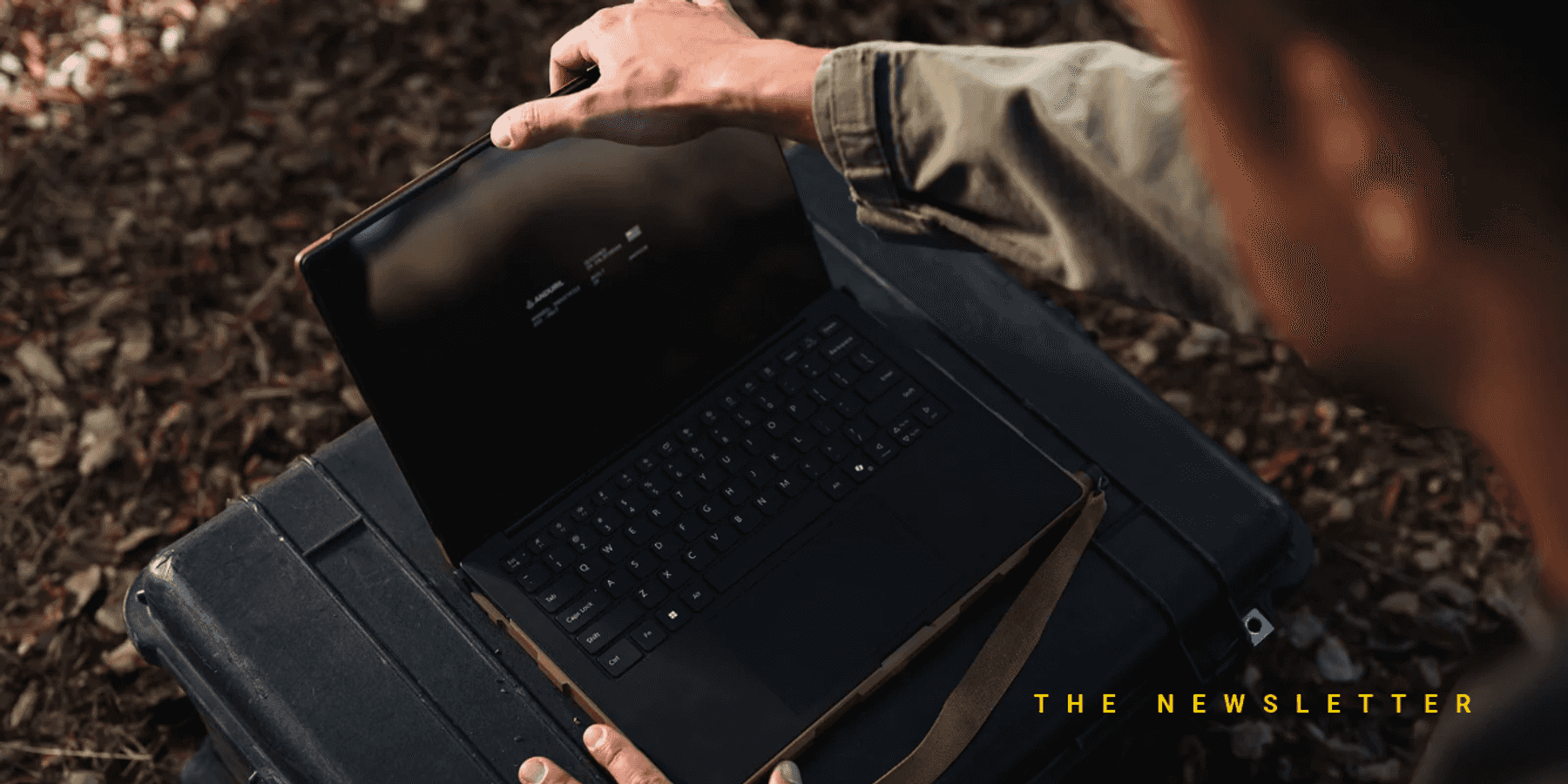
The Costa Mesa-based defense technology company announced this week that it is partnering with San Diego-based Qualcomm Technologies to launch BlueChip, a new line of computers designed in California and manufactured in the United States.

The first product will be a rugged laptop powered by Qualcomm’s Snapdragon X Series platform and built for customers in government, defense, public safety and other critical industries. Anduril has already produced working prototypes and plans to begin accepting orders in 2027.

At first glance, a laptop may seem like a modest addition to a company known for developing autonomous military systems. But BlueChip is less about entering the crowded consumer-electronics market and more about rebuilding the industrial foundation behind the machines Americans use every day.

The United States remains a leader in designing advanced technology, but much of the physical production required to turn those designs into finished computers has moved overseas. That includes not only semiconductor manufacturing, but also circuit boards, displays, batteries, enclosures and the network of specialized suppliers that connects them.

For most consumers, that dependency is largely invisible. For the government and military, it represents a potential vulnerability.

BlueChip is Anduril’s attempt to close that gap.

Components sourced from the United States and allied countries already account for more than 90% of the prototype laptop’s procurement cost. Circuit-board assembly is planned for Anduril’s Arsenal-1 facility in Ohio, while the company develops domestic production capabilities for enclosures, batteries and other hardware.

The goal is to gradually replace remaining foreign dependencies and create an end-to-end American computer supply chain that can support additional products beyond the first laptop.

That process requires more than moving an existing design into an American factory. Anduril is redesigning the computer around what domestic manufacturers can realistically produce at scale. The work includes selecting machinable American metals, adapting power systems to available battery technology and developing a bonding process for domestically made display glass.

In other words, Anduril is not simply assembling a laptop in America. It is working backward through the supply chain to make American assembly possible.

Qualcomm will supply the computing foundation. Its Snapdragon X platform will handle processing, graphics and on-device artificial intelligence, giving BlueChip users the ability to run certain AI models locally rather than sending sensitive information to the cloud.

That is particularly valuable for government and defense customers operating in secure environments, but it also reflects a broader shift in computing. As AI becomes embedded in everyday workflows, the location where information is processed may become nearly as important as the model doing the processing.

The partnership also reinforces Southern California’s growing role in the effort to rebuild American advanced manufacturing.

Anduril remains headquartered in Orange County, but its regional footprint is expanding. The company is investing $1B in a new campus spanning Long Beach and Lakewood that is expected to support approximately 5,500 jobs and include engineering, laboratory and prototype-manufacturing space.

Qualcomm, meanwhile, has spent decades building San Diego into a center for wireless technology and semiconductor design.

BlueChip brings those two Southern California strengths together: Anduril’s ability to move quickly from engineering concept to physical product and Qualcomm’s expertise in efficient, high-performance computing.

The first BlueChip laptop is not intended to compete for space in every backpack or coffee shop. Its early customers will likely be institutions that care deeply about security, reliability and control over their technology supply chains.

But the larger ambition reaches far beyond a single device.

If BlueChip succeeds, Anduril and Qualcomm will have created more than an American-made computer. They will have helped restore the suppliers, production knowledge and technical workforce required to build the next one.

For a company accustomed to tackling difficult national-security problems, the laptop may be one of Anduril’s most practical ideas yet.

Sometimes rebuilding an industry begins with reopening the machine.

More from this week’s LA startup and venture scene below.

🀝 Venture Deals

    LA Companies

    • StimCardio raised an oversubscribed $30M Series A led by Metis MedTech, with participation from Catalyst Health Ventures and other investors. The Los Angeles medical device company will use the funding to advance a pivotal study of Rhyvive, its investigational wrist-worn therapy designed to reduce recurring atrial fibrillation after catheter ablation, and prepare for an FDA submission. - learn more
    • Gardena-based Neuron Industries raised an oversubscribed $10M seed round co-led by FCVC and Obvious Ventures, with participation from Y Combinator, Thin Line Capital, Zee Prime Capital and Founder Factor. The company will use the funding to develop and launch its AI-powered industrial control platform, expand its product line and establish domestic production as it works to help engineers automate new factories and machinery more quickly. - learn more
    • Offe Market raised a $3M seed round led by Slauson & Co., bringing the off-price retail marketplace’s total funding to $4.3M. The company will use the capital to expand its commerce platform with AI-powered pricing and inventory tools, personalized recommendations and live shopping features designed to help brands sell excess merchandise without sacrificing control over presentation or pricing. - learn more
    • Loamy raised a $6M seed round led by Zeal Capital Partners, with participation from LA investors Slauson & Co., Supply Change Capital and Amplify.LA, bringing its total funding to $10M. The company will use the capital to expand its engineering and sales teams, advance its AI platform and enter additional food categories as it helps growers, packers and distributors reduce waste and prevent rejected shipments. - learn more

    LA Venture Funds
    • MaC Venture Capital co-led Rendezvous Robotics’ oversubscribed $20M seed round alongside Toyota Ventures, marking the space startup’s first priced financing. The company will use the funding to develop its next-generation modular spacecraft, expand its team and prepare for flight demonstrations of technology that allows spacecraft components to assemble and reconfigure autonomously in orbit. - learn more
    • BOLD Capital Partners participated in General Compute’s $100M Series A, which was co-led by Blackbird and Abstract. The company will use the funding to scale its AI inference cloud, which deploys specialized chips from companies including Cerebras, SambaNova and Positron AI to help customers run AI workloads faster without managing the underlying infrastructure. - learn more
    • Mantis Venture Capital participated in Vera Health’s $28.5M Series A, which was led by Threshold Ventures and brought the clinical AI company’s total funding to $32M. Vera will use the capital to strengthen its medical-evidence infrastructure, enter new healthcare markets and expand partnerships with medical societies, publishers and health systems. - learn more

    LA Exits

    • Breastfeeding platform Swehl was acquired by Willow Innovations alongside infant-feeding technology company Momtech, with financial terms undisclosed. Swehl’s educational resources and community programs will anchor Willow World, a new platform designed to expand Willow’s business beyond wearable breast pumps and support mothers across more of the postpartum journey. - learn more
    • SmartLess Mobile was acquired by Noble Mobile and will transition to the Noble brand as the companies combine their efforts to offer simpler, more affordable wireless service. Existing customers will retain their plans, prices, phone numbers and T-Mobile 5G coverage, while gaining the ability to use their data in Mexico and Canada at no additional cost; financial terms were not disclosed. - learn more

      Download the dot.LA App

      Your Bank Wants to Cancel Your Subscriptions

      πŸ”¦ Spotlight

      Hello, LA.

      Somewhere between the streaming service you still use and the free trial you forgot to cancel, recurring payments have become a surprisingly complicated part of modern financial life.

      Los Angeles-based ScribeUp believes your bank should help manage them.

      The fintech company raised a $13M Series A led by Curql, with participation from Mucker Capital and Service Ventures. The financing includes $10M in equity and a $3M venture debt facility, bringing ScribeUp new capital to expand its team, accelerate sales and further develop its AI-powered bill-management technology.

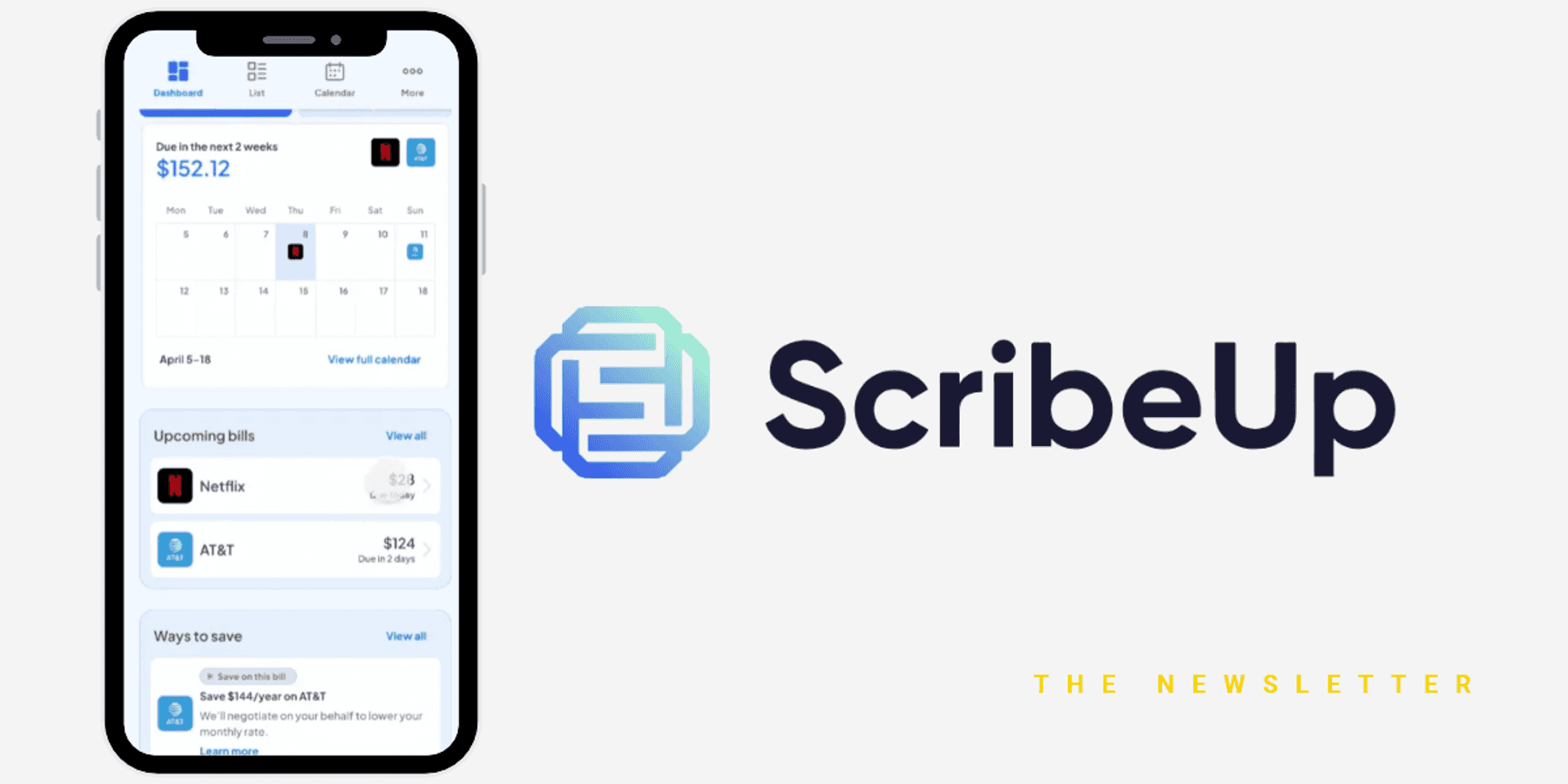
      The product is designed to live directly within the apps of banks, credit unions, fintechs and neobanks. Instead of simply showing customers that a recurring charge occurred, ScribeUp gives them tools to do something about it.

      That could mean canceling a forgotten subscription, changing a payment method, accessing an advance or exploring refinancing options for an outside loan, all without leaving the financial institution’s app.

      It sounds like a useful feature. It is also part of a much larger contest over who gets to manage the consumer’s financial life.

      For years, banks have held customers’ money while third-party apps have increasingly helped them understand and manage it. Budgeting platforms organize spending. Subscription services identify recurring charges. Fintech apps recommend ways to save, borrow or invest.

      Now AI assistants are beginning to combine those functions into a single interface capable of not only analyzing financial information, but acting on it.

      That creates a risk for traditional financial institutions. If consumers begin turning to an outside app whenever they need to cancel a service, manage a bill or make a financial decision, their bank could become little more than the infrastructure beneath someone else’s customer experience.

      ScribeUp offers banks a way to compete without building that technology themselves.

      Its platform combines recurring-payment information with the financial context a bank already has, including balances, cash flow and payment timing. That allows a financial institution to do more than flag an upcoming charge. It can potentially recommend and execute an action based on the customer’s broader financial position.

      ScribeUp says its technology is already used by more than 60 banks, credit unions, fintechs and neobanks. It can be added through an API, software development kit or embedded interface, allowing institutions to introduce bill-management features without creating the underlying infrastructure from scratch.

      The new funding will support more advanced AI capabilities that can take action across different billers. That distinction matters. The first generation of personal finance software helped people see where their money was going. The next generation wants permission to do something about it.

      For banks, the opportunity is straightforward: become more useful before another app takes their place.

      For consumers, the appeal may be even simpler. Most people do not want another financial dashboard. They want the unwanted charge to stop.

      The next battle in banking may not be over who holds your money.

      It may be over who gets to press cancel.

      More from this week’s LA startup and venture scene below.

      🀝 Venture Deals

        LA Companies

        • International Dance League raised a $15M Series A led by Elysian Park Ventures, with participation from Sony, KB Partners, APEX, Yamaha Music Innovations Fund and October Ventures. Following a debut season that sold out all six events and generated 2B views, IDL will use the funding to expand its tour, strengthen team and dancer operations, improve broadcast production and develop new fan experiences for 2027. - learn more
        • Santa Fe Springs-based DrizzleX raised a $6.8M Series A-2 led by Israel Investment Fund Group, with several of the water-management platform’s own customers also investing. The company will use the funding to expand sales, streamline hardware manufacturing, build partnerships and develop new products that help property owners detect leaks, reduce water use and lower operating costs. - learn more
        • POV Beauty raised an undisclosed Series A led by Silas Capital, with participation from RΓ‰DO Capital and existing investor Imaginary Ventures. The skin-prep brand will use the funding to build on its nationwide Sephora launch, expand its team and TikTok Shop presence, and develop more skincare-makeup hybrid products. - learn more

        LA Venture Funds
        • Chapter One participated in Warp Sciences’ $215M Series A, which was led by Lightspeed and included a large group of venture firms and angel investors. The company is building AI-powered, increasingly automated laboratories that will manufacture and test molecules for drug developers, aiming to accelerate preclinical research while expanding scientific infrastructure in the U.S. - learn more
        • Capital Group participated in Legora’s $550M Series E, which was led by Atreides Management and valued the legal AI company at $8.8B. Legora will use the funding to expand across the U.S. and international markets while developing new capabilities for its agentic operating system, which is used by more than 140,000 legal professionals. - learn more
        • Group 11 participated in CapitalOS’ $21.9M Series A, which was led by LGVP and included WEX Venture Capital, Great North Ventures and Night Capital. CapitalOS will use the funding to scale its infrastructure, which enables B2B software platforms to quickly offer financial products while outsourcing functions such as compliance, risk management and underwriting. - learn more
        • Starshot Capital participated in IMIO’s $12M funding round, which was led by Sofinnova Partners and included Chipotle’s Cultivate Next, Grow Together Salinas, Earth Foundry and Serra Ventures. The agricultural biotechnology company will use the capital to build a Chicago headquarters, laboratory and manufacturing facility for its freeze-dried microbial products, which are designed to improve soil health and crop yields. - learn more
        • SUM Ventures participated in Vectorial’s $3M seed round, which was co-led by Smilegate and SenseAI Ventures and included several investors connected to UC Berkeley and Stanford. The startup will use the funding to scale its AI-powered consumer research platform, which lets companies test products, marketing campaigns and AI agents against simulated audiences before launching them publicly. - learn more
        • Wave Function Ventures participated in Stellios Technologies’ oversubscribed $5M pre-seed round alongside Sofreh Capital, Cubit Capital, Mana Ventures, Atoms & Bits and other investors. The Austin-based company will use the funding to deliver its first high-power microwave systems, establish domestic research and manufacturing facilities, grow its team and advance technologies spanning directed energy, compact fusion and next-generation propulsion. - learn more
        • Upfront Ventures participated in Daytona’s $60M Series B, marking the Santa Monica firm’s third investment round with the company. Led by FirstMark Growth, the financing valued Daytona at $1B and will help the startup expand sales and engineering for its cloud infrastructure, which provides secure virtual computers where AI agents can execute tasks. - learn more
        • Core Innovation Capital participated in Delegance Brokerage’s $3.1M pre-seed round, which was led by Grit Capital Partners and included Gilgamesh Ventures and Outside VC. The AI-powered commercial insurance brokerage will use the funding to hire licensed brokers and engineers and expand partnerships as it promotes a flat 5% fee model in place of traditional commissions. - learn more
        • Core Innovation Capital participated in Prism Data’s $20M Series A, which was led by Story Ventures and included FINTOP Capital, Obvious Ventures, 1st & Main Growth Partners and Mana Ventures. Prism will use the funding to expand its cash-flow underwriting technology, AI infrastructure and data science team while growing across the U.S. and Canada and preparing for international expansion. - learn more

        LA Exits

        • Sanctuary has been acquired by WSG Brands, adding the contemporary women’s label to a portfolio that includes Von Dutch, Nasty Gal and Allbirds. The purchase price was not officially disclosed, though earlier documents placed it at $67M; WSG plans to expand Sanctuary internationally and into new categories, while founders Ken and Debra Polanco will remain involved. - learn more
        • SecureNet Solutions was acquired by CompassMSP, expanding the managed IT and cybersecurity provider’s presence on the West Coast. The deal gives SecureNet’s real estate, healthcare and professional services clients access to CompassMSP’s national cybersecurity, compliance and advisory resources while retaining their existing service team; financial terms were not disclosed. - learn more

          Download the dot.LA App

          Hello Sunshine Sold for More Than $900M. Now Reese Witherspoon Is Buying It Back.
          Image Source: Hello Sunshine

          πŸ”¦ Spotlight

          Hey there, LA.

          In Hollywood, every successful story eventually gets a sequel. This one brings Reese Witherspoon back to the company she built.

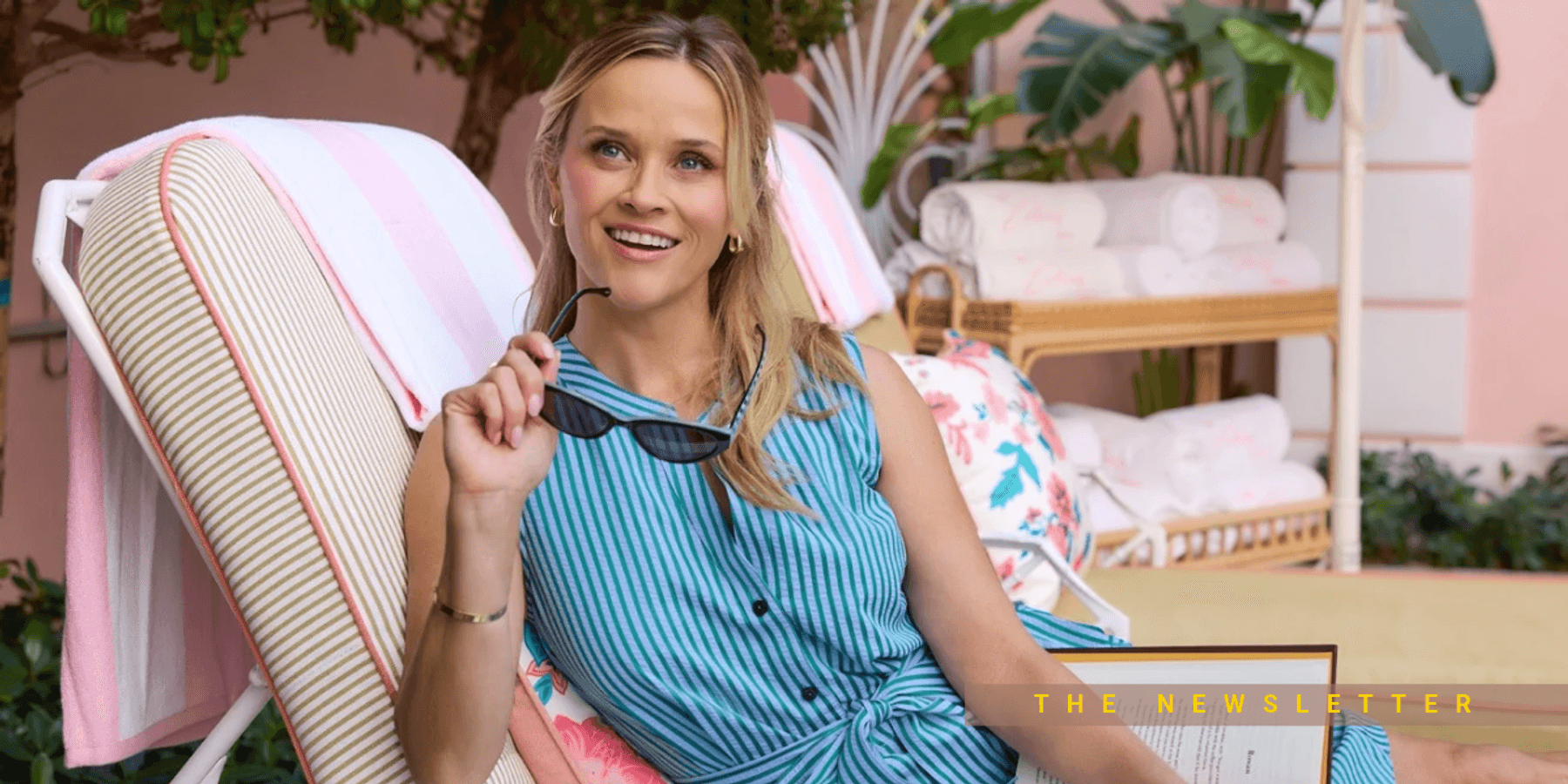
          Five years after selling control of Hello Sunshine in a deal worth more than $900M, Witherspoon is partnering with French production group Mediawan to buy back the Los Angeles media company.

          The reported purchase price is in the low-to-mid eight figures, significantly below Hello Sunshine’s valuation when Candle Media acquired a controlling stake in 2021.

          That difference tells a larger story than any single Hollywood transaction.

          Hello Sunshine was one of the most prominent acquisitions made during the streaming boom, when platforms were spending aggressively and investors placed enormous value on production companies with recognizable founders, established audiences and libraries of intellectual property.

          Witherspoon had built all three.

          Founded in 2016, Hello Sunshine developed its business around stories centered on women, producing projects including β€œBig Little Lies,” β€œThe Morning Show,” β€œLittle Fires Everywhere” and β€œDaisy Jones & The Six.” It also turned Reese’s Book Club into an influential audience and discovery platform that now reaches 6.2 million readers and drives approximately $900M in annual U.S. book sales, according to the company.

          By 2021, that combination of talent, intellectual property and direct audience access looked like the foundation of a next-generation media empire.

          Candle Media, backed by capital from Blackstone, acquired Hello Sunshine as part of a broader effort to assemble a portfolio of entertainment brands. The company also purchased businesses including Moonbug Entertainment, ATTN: and Faraway Road Productions.

          Then the streaming market changed.

          Entertainment companies became more disciplined about content spending. The race to accumulate subscribers gave way to pressure for profitability. Production budgets tightened, consolidation slowed and some of the valuations assigned during the streaming boom became difficult to maintain.

          Hello Sunshine’s return to founder-led ownership reflects how dramatically the media landscape has changed since 2021. It also gives Witherspoon an opportunity to regain greater influence over the company at a moment when its core assets may matter more than its former valuation suggests.

          Under the new ownership structure, Hello Sunshine plans to refocus on premium film and television, Reese’s Book Club and new storytelling and distribution formats. Mediawan brings an international production network, while Witherspoon brings something harder to manufacture: a trusted personal brand and an audience willing to follow her recommendations from books to screens.

          That relationship with consumers is increasingly valuable in a fragmented media market. Studios can finance productions. Streaming services can distribute them. Far fewer companies can reliably convince millions of people to care before a project is even released.

          For Los Angeles, the deal reflects the increasingly fluid boundary between entertainment company, consumer brand and technology-enabled audience platform. The most resilient media businesses may not be those producing the greatest volume of content, but those that own a direct relationship with a specific community.

          The first Hello Sunshine deal captured the optimism of the streaming era.

          The second may offer a more focused model for what comes next, with the company once again guided by the founder who understood its audience from the beginning.

          Hollywood loves a comeback story.

          This time, the company is making one too.

          LA Tech Week’s Final Stretch

          Still making the most of LA Tech Week? We have organized the remaining events by location to make planning the weekend a little easier:

          Event schedules may change, so confirm the latest details with the organizer before heading out.

          More from this week’s LA startup and venture scene below.

          🀝 Venture Deals

            LA Companies

            • Goodweek raised a $12M seed round led by Adara Ventures to expand its AI management platform for small and midsize businesses. The company brings tools such as ChatGPT, Claude, Gemini and Mistral into one governed workspace and will use the capital to accelerate sales and expand into Latin America and Asia. - learn more

            LA Venture Funds
            • Fika Ventures co-led Otter Health’s $8M seed round alongside Evidenced Capital, with participation from Slow Ventures, Metrodora, CoFound Partners, Patient Capital, SemperVirens and Layout Ventures. The startup will use the funding to scale its AI-powered platform, which helps healthcare payers and providers reduce unnecessary care and manage quality without relying as heavily on traditional prior authorization. - learn more
            • Nant Capital co-led Prolific Machines’ $50M Series B2 alongside Atoms & Bits, bringing the biotechnology company’s total funding to more than $100M. Prolific will use the capital to scale its light-controlled biomanufacturing platform, expand pharmaceutical and biotech programs and begin early work on tissue and organ fabrication. - learn more
            • Family Fund participated in Allara’s $30M funding round alongside new investors Camino Partners and Foreground Capital, while existing backers including Index Ventures and GV increased their commitments. The women’s healthcare company will use the capital to expand AI-enabled care, grow its provider and enterprise partnerships and advance research into hormonal, metabolic and reproductive conditions. - learn more
            • Vida Ventures participated in SoufflΓ© Therapeutics’ oversubscribed $135M Series B, which was led by Juvia Group. The biotech will use the funding to move three lead programs into clinical trials for muscular dystrophy, heart failure and muscle and metabolic disorders while advancing its broader pipeline of targeted RNA therapies. - learn more
            • FJOR participated in LightSprint’s $6.1M seed round, which was led by 645 Ventures. The AI software platform will use the funding to expand its enterprise product and grow its engineering and go-to-market teams as it helps employees across departments make changes to company codebases while keeping engineers in control. - learn more
            • Muse Capital participated in Collective X Health’s oversubscribed $3.2M pre-seed round, which was co-led by Council Capital and Anthemis Female Innovators Lab Fund. The women’s health intelligence startup will use the funding to expand its female-focused research and data platform, meet growing enterprise demand and support new research aimed at closing the women’s health data gap. - learn more
            • Act One Ventures participated in Intake AI’s $2.5M pre-seed round, which was led by Kapor Capital. The startup is building AI agents that automate clinical-trial setup and operations, helping research teams turn protocols into documents, search study materials and transfer approved forms into existing systems. - learn more
            • M13 participated in Ultra’s $62M financing, which included a $50M Series A led by Framework Ventures. The Brooklyn-based robotics startup will use the capital to expand deployment of its AI-powered warehouse robots, which handle packing, sorting and other fulfillment tasks and have already processed more than 500,000 orders. - learn more

            LA Exits

            • Farcaster is being acquired by Balaji Srinivasan’s Network School from Neynar, marking the decentralized social network’s second change in ownership this year. The deal includes Farcaster’s app, protocol repositories and related products, with its new owner planning to introduce a rules-based β€œsocial smart contract” governing full participation on the platform; financial terms were not disclosed. - learn more
            • Creator Authority has been acquired by Billion Dollar Boy Group, bringing the agency’s B2B influencer marketing expertise and LinkedIn specialization into BDB’s global creator business. The deal will help Creator Authority scale its work with enterprise brands while strengthening BDB’s presence on the U.S. West Coast and expanding its B2B creator marketing capabilities; financial terms were not disclosed. - learn more
            • Burbank-based CareerArc was acquired by AI hiring platform Humanly, with financial terms undisclosed. The deal combines CareerArc’s recruitment marketing and social recruiting tools with Humanly’s AI-powered candidate engagement, screening and interviewing platform, creating a more connected system for employers managing high-volume hiring. - learn more
            • Ethiqly was acquired by Carnegie Learning from Owl Ventures and the company’s management, with financial terms undisclosed. Carnegie Learning plans to integrate Ethiqly’s AI-powered writing platform into its literacy offerings, helping students improve their writing while giving teachers greater visibility into the drafting, revision and learning process. - learn more

              Download the dot.LA App

              RELATEDEDITOR'S PICKS
              Trending