
Meet the LA Startup That Lets People Talk to the Dead

Christian Hetrick

Christian Hetrick is dot.LA's Entertainment Tech Reporter. He was formerly a business reporter for the Philadelphia Inquirer and reported on New Jersey politics for the Observer and the Press of Atlantic City.

Meet the LA Startup That Lets People Talk to the Dead
Photo courtesy of StoryFile

A month after she died at the age of 87, Marina Helen Smith spoke at her own funeral.

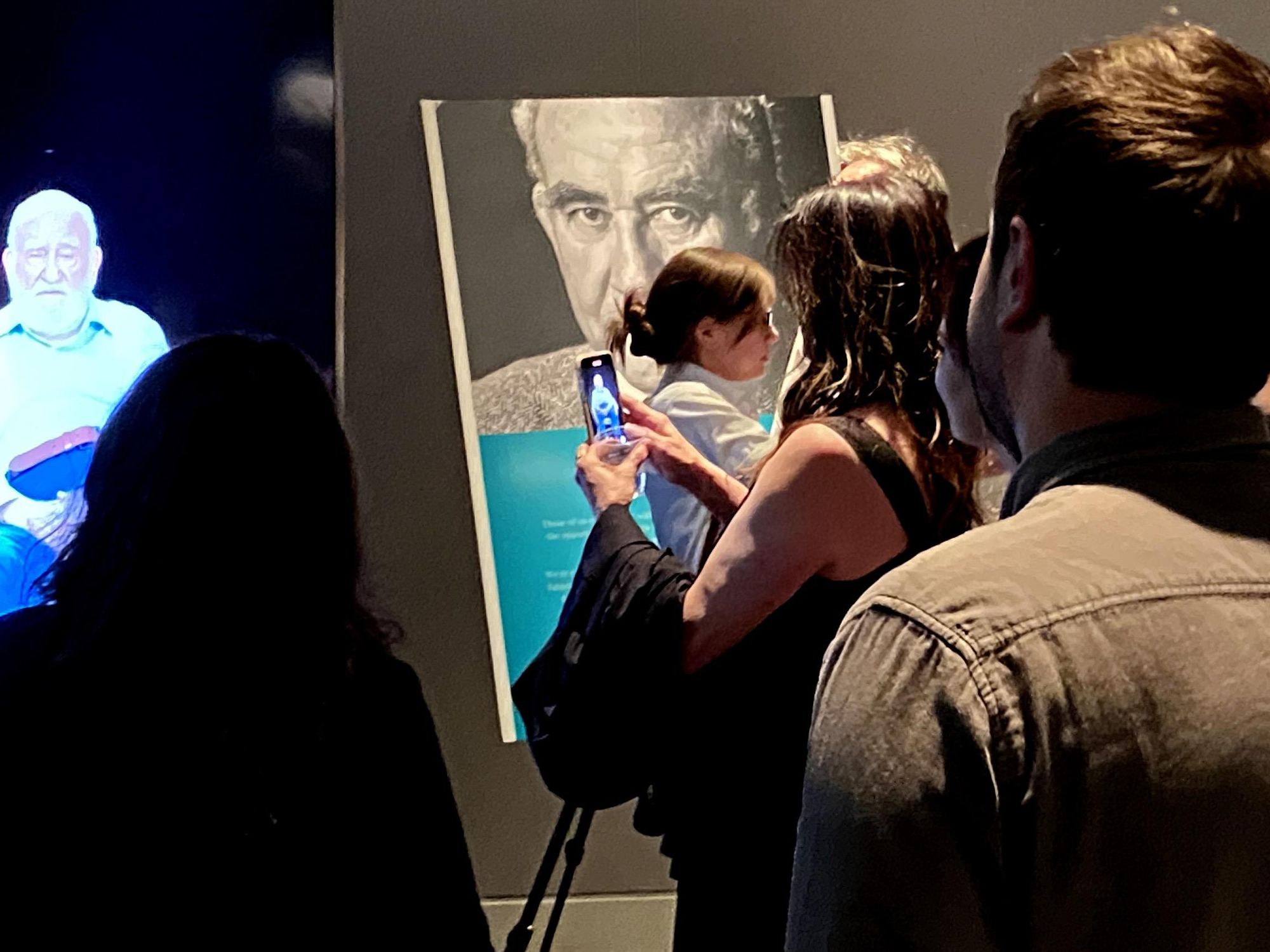
Smith, the co-founder of the U.K.’s National Holocaust Centre and Museum, addressed her friends and family last week through a prerecorded video. Yet Smith was able to answer some questions during the memorial service, too. After her son, Stephen Smith, asked what she’d say at her funeral, she delivered a brief speech about her life and spirituality. She also answered questions about loved ones who attended the ceremony, creating the illusion of a real-time conversation.


Smith’s interactive video was made using tech from her son’s startup, Los Angeles-based StoryFile. Launched in 2017, the company lets people create videos that can reply to viewers’ questions, using artificial intelligence (AI) to play relevant video clips as responses. Initially conceived as a way to preserve stories of Holocaust survivors and talk to other historical figures, StoryFile’s videos are now showing up at funerals, CEO Stephen Smith said. After losing his mother, Smith understands why.

“I don't find it in the least bit weird to bring up my mother's StoryFile and talk to her,” he told dot.LA. “It's strange to say that but it feels, actually, very natural.”

StoryFile is part of an emerging tech trend practically pulled from the plot of a sci-fi novel. Tech companies have made tools that let people talk to the dead, from digital memorials to chatbots impersonating the deceased. In addition to helping people mourn and remember loved ones, such programs can serve as educational tools. But experts warn similar tech has been deployed for nefarious purposes, like spreading misinformation.

In June, Amazon showed how its Alexa virtual assistant could read a bedtime story in a dead relative’s voice, based on a short audio recording of the deceased person. It’s unclear whether that capability will become an Alexa feature, as it remains in an “exploratory research” stage, a company spokesperson told dot.LA.

Microsoft has also shown an interest in virtually reviving the dead, patenting a chatbot that pulls data from a person’s social media posts. More recently, the software giant said it would restrict customer use of AI that can impersonate someone’s voice, noting the tech “has exciting potential” but could be used to “deceive listeners.”

Tech bringing the dead back to life has shown up in Hollywood, too, and not just as a storyline for Netflix’s “Black Mirror.” In 2019, Disney included late actress Carrie Fisher in a “Star Wars” film by combining real footage of her face with a completely digital character.

StoryFile’s videos aren’t that creepy. At least not yet. The 40-person startup doesn’t put words in anyone’s mouth or try to create new facial expressions like so-called “deepfake” videos. The StoryFile clips use only pre-recorded answers for a limited—but still long—list of possible questions. If you pose a question the subject doesn't have a recorded answer to, they’ll encourage you to ask something else.

That said, StoryFile’s Smith showed dot.LA demos of its more advanced “digital recreations,” which would let people talk to historical figures like Elvis and Albert Einstein, who obviously were unavailable for interviews. Smith believes such videos could potentially be educational, letting students of the future learn physics from a digital Einstein.

StoryFile co-founder and CEO Stephen Smith. Photo courtesy of StoryFile

The StoryFile idea can be traced to 2010 when Smith’s wife, Heather Maio-Smith, was creating a historical exhibit about Holocaust survivors. She wanted to create “engaging conversations” that would let people interview survivors rather than simply hearing a “linear” oral history, Stephen Smith said. They developed the interactive interviews through a partnership with the University of Southern California. Eventually, the Smiths launched StoryFile to capture stories from historical figures and everyday people. Heather serves as StoryFile’s chief visionary officer.

“How do you communicate best with the past? It's when you ask questions about the past,” Stephen Smith said. “It becomes a relationship with the past, not just that history that's told to you.”

StoryFile’s Conversa AI has been used to create interactive interviews with the still-living likes of actor William Shatner and, more recently, Clarence Jones, the personal counsel of Martin Luther King Jr. The company also has commercial clients using interactive video for customer service or employee training. StoryFiles popping up at funerals, however, was a total surprise, Smith said. Late actor Ed Asner’s memorial notably included such a video.

Other startups see a market opportunity in interactive digital memorials. El Cerrito-based HereAfter AI pairs user photos and audio interviews to similarly let family members talk to recordings of loved ones on their computers, smartphones or smart speakers. Cofounder and CEO James Vlahos got the idea after creating “Dadbot,” a chatbot that shared his father’s life story and personality when he was diagnosed with terminal lung cancer.
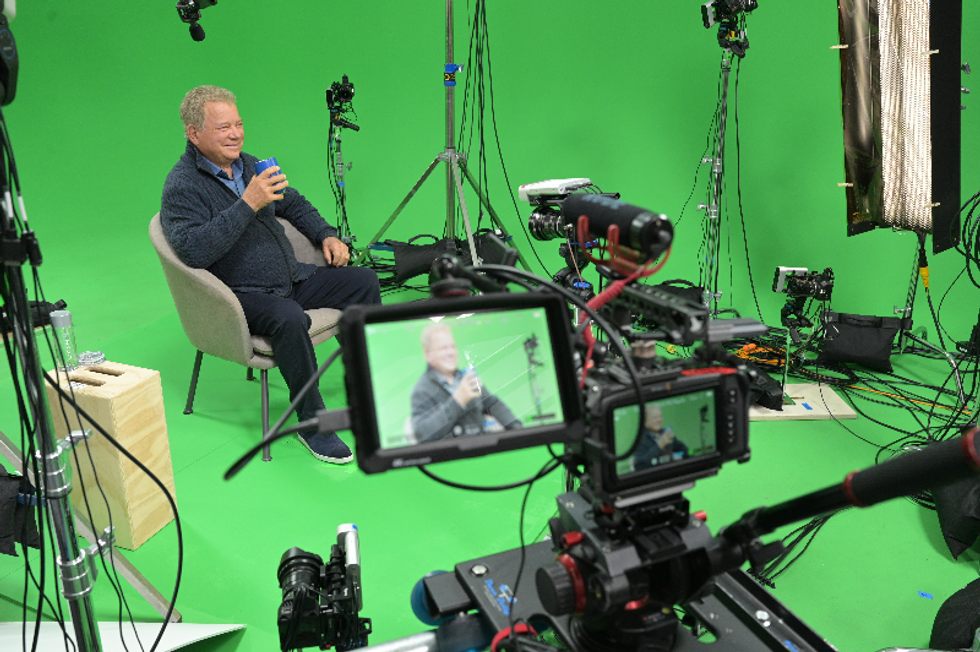
Actor William Shatner is interviewed for an interactive video inside StoryFile's L.A. studio.Photo courtesy of StoryFile

Some HereAfter AI customers have recorded interviews for up to 10 hours, Vlahos told dot.LA. “Once you get people rolling, talking about their lives, they have a lot to say,” he noted. The market for this kind of product is still relatively small, with only a handful of direct competitors, he said.

Like StoryFile, HereAfter AI doesn’t use its tech to generate answers to questions that weren’t asked during an interview. Vlahos called that a “sensitive area.” On one hand, letting AI form its own responses would make the chat experience more flexible and powerful. On the other, synthesizing what grandpa might have said starts “crossing that line,” Vlahos said.

“We might get it wrong, and that might be really hurtful to someone,” he said. “Or if nothing else, it might be kind of creepy.”

More advanced “deepfakes,” which use AI to create convincing video and audio hoaxes of someone’s likeness, have gained widespread attention and criticism. Recently, a fake clip of Ukrainian President Volodymyr Zelenskyy made it look like he surrendered to Russia. Fraudsters could deploy similar programs to steal someone’s identity, too, experts said. Unlike the living, dead people can’t correct the record if a video is bogus, creating a unique set of ethical and philosophical questions.

Legitimate commercial ventures deploying the tech make sure users know they’re not talking to a real or living person, said Arizona State University professor Subbarao Kambhampati, who teaches computer science. “But the real issue is, what if you don't know? And that can be very easily done,” he added. As such tech becomes more ubiquitous, Kambhampati predicts more people won’t trust their eyes and ears.

“I think in the longer term, we will get used to it. We will no longer just directly trust what we are hearing and seeing,” he said. “But it's the transition that's going to be tricky, because many people can be taken because we still tend to believe what we hear, what we see, so that skepticism has to increase.”

The tech could also be applied in the metaverse, a nascent vision for the internet where we might work, shop and socialize inside 3D virtual environments. Students may one day strap on virtual reality headsets and watch Abraham Lincoln deliver the Gettysburg Address—then ask the president some follow up questions.

“I think there's a lot of good that will come out of this,” said Majid Abai, founder and CEO of Seena AI, a software and app development firm in Los Angeles. “Now, not only can I see a video, but I can also put a headset on and meet up with a loved one in the metaverse.”

In January, Stephen Smith asked his mother scores of questions over two days to record her StoryFile. She spoke candidly about her upbringing in India and childhood difficulties transitioning to England. Smith said he learned new things about her past, such as when she had measles as a child and was put in quarantine for four months, seperated from her parents.

“I didn’t know that story. She never mentioned it,” Smith said. “Things that she'd [previously] not revealed were revealed. I was grateful for that information about her.”

Observable Space Raises $90M to Build Beyond Rockets

🔦 Spotlight

Hello Los Angeles,

Space infrastructure is having a week.

Los Angeles-based Observable Space closed a $90M Series A and announced a $94M U.S. Space Force contract to scale its optical sensing and laser communications platforms. The round was led by Lux Capital and co-led by Upfront Ventures, Detroit Venture Partners, Island Green Capital and RTX Ventures, with participation from BRV Capital, Fathom Fund and Venrex.

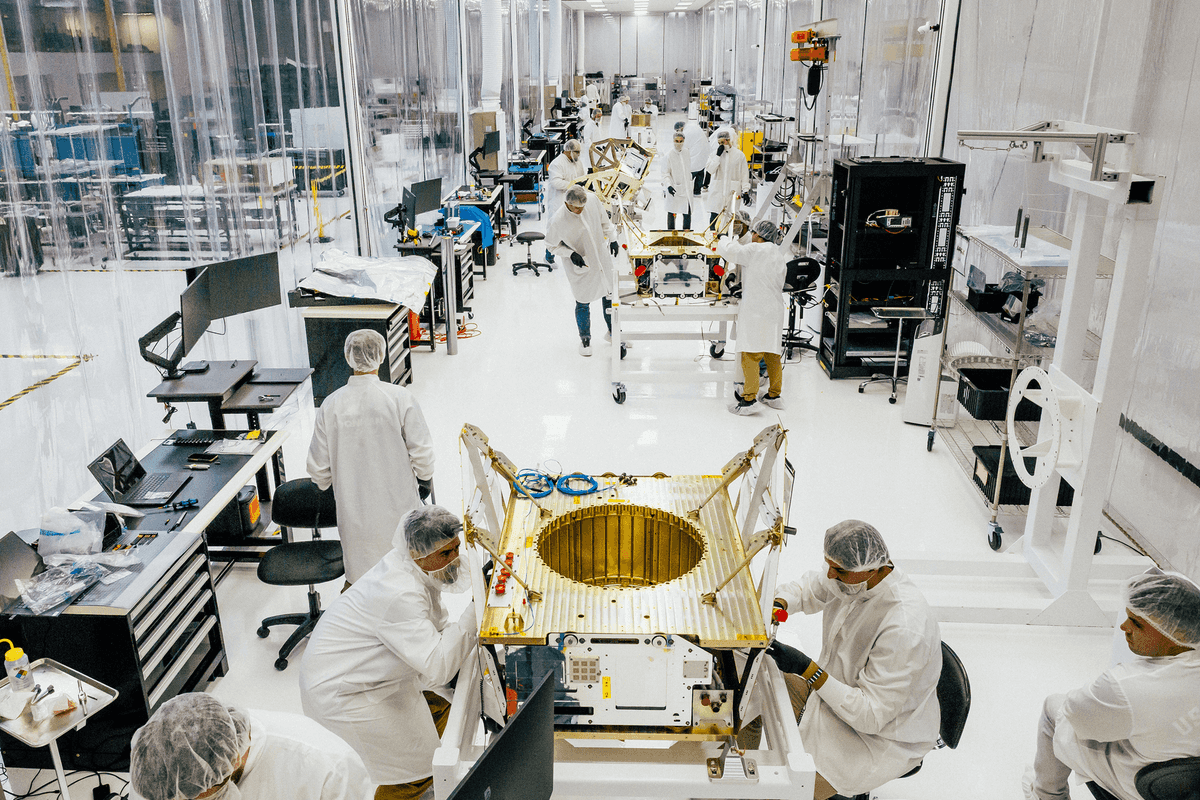
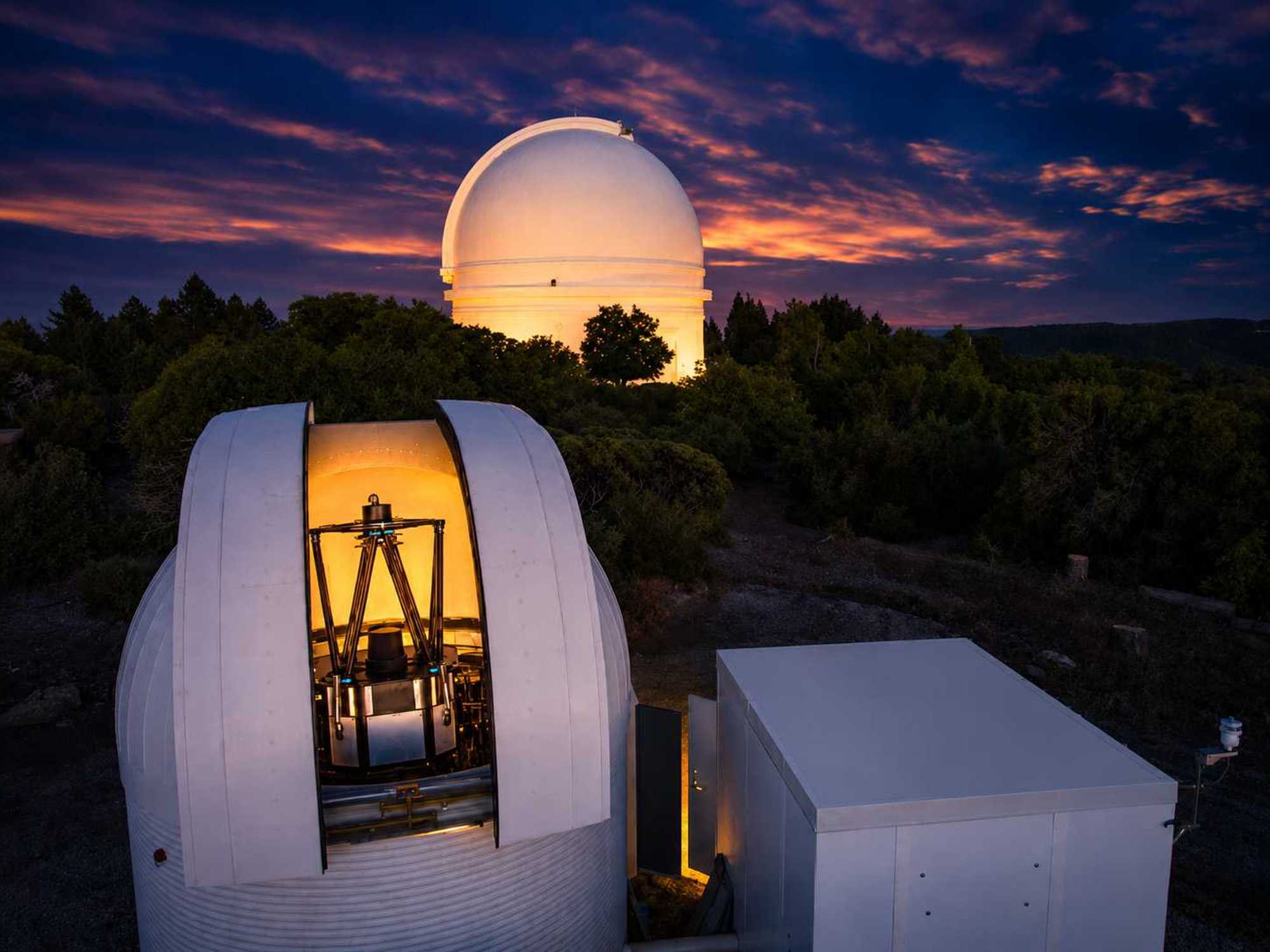
Observable Space is building advanced optical systems across three areas: laser communications ground stations, ground-based optical sensing and in-space payloads. In simpler terms, the company is working on the infrastructure that helps satellites and spacecraft see, track, navigate and communicate more effectively.

Image Source: Observable Space

The Space Force contract gives Observable Space an early $22M in task orders under a larger $94M award to deploy mobile, off-grid optical sensing stations for space domain awareness. These systems are designed to help track objects in orbit with more resilient, lower-cost and geographically distributed ground infrastructure.

That matters because space is getting more crowded, more commercial and more strategically important. Satellites are no longer just sitting quietly above us handling GPS, weather and communications. They are becoming part of a much larger network for national security, AI, connectivity and future space-based infrastructure.

Observable Space’s work sits in the less flashy, but increasingly critical layer of the space economy. Rockets may get the liftoff footage, but the next phase of space competition will also depend on who can track what is in orbit, move data quickly and keep communications reliable from space to ground.

The company says its platform has already executed 2.6M automated tasks, identified more than 20M targets and completed 84,000 hours of continuous orbital monitoring. It is also expanding manufacturing across Detroit and Los Angeles, with spacecraft, engineering and design labs based in LA.

For Southern California’s space ecosystem, Observable Space adds another signal that the region’s advantage is not just launch. It is the full stack around space: optics, software, sensing, communications, payloads and the infrastructure needed to make orbit more usable.

Now onto this week’s LA venture deals, fund announcements and acquisitions.

🤝 Venture Deals

    LA Companies

    • Fragrance brand ’ÔrÉ™bella closed a Series A growth equity investment led by Silas Capital, with participation from existing investor Celebrands, which incubated the brand. The funding will support global expansion, product innovation and retail growth as ’ÔrÉ™bella scales beyond its Ulta Beauty base into international markets including Douglas, Selfridges and Ulta Beauty Middle East. The company also named Anish Agarwal, formerly CEO of T3 Micro, as CEO. - learn more
    • Ember LifeSciences added new strategic investments from Amgen Ventures and TDF Ventures, bringing its total Series A funding to $27M. The company makes reusable, temperature-controlled cold chain technology for transporting medicines and vaccines, and recently announced full commercial availability of its Ember Cube 2, which provides real-time monitoring and cloud-based tracking for healthcare logistics. Financial terms of the new investments were not disclosed. - learn more
    • Iconic raised $6M to build its AI-enabled M&A advisory platform for small business owners. The company combines AI software with human advisors to help owners sell businesses that are often too small for traditional investment banks to support, especially those valued under $20M. Iconic is aiming to modernize the small-business sale process as millions of baby boomer-owned businesses prepare to change hands. - learn more

    LA Venture Funds
    • Capital Group participated in Anthropic’s $65B Series H, which was led by Altimeter Capital, Dragoneer, Greenoaks and Sequoia Capital, valuing the company at $965B post-money. Anthropic said the new funding will support continued AI safety research, expanded compute capacity and broader product development as demand for Claude grows across enterprise customers and developers. - learn more
    • WndrCo participated in Reactor’s $59M seed and Series A funding, which was led by Lightspeed Venture Partners with backing from Amplify Partners, Sky9 Capital, FPV Ventures and others. San Francisco-based Reactor is building a developer platform for real-time generative video and “world models,” giving developers SDK and API access to create interactive AI applications across media and entertainment, physical AI and robotics. The company was co-founded by former Apple Vision Pro technical leads Alberto Taiuti and Bryce Schmidtchen, and WndrCo founding partner Jeffrey Katzenberg will join as a board observer. - learn more
    • Upfront Ventures led Kubera Health’s $6.5M seed round, with participation from Company Ventures, Dria Ventures and SemperVirens. Kubera is building a contract-to-payment system of record for healthcare, helping providers translate complex payer contracts into auditable payment logic so they can better identify underpayments, reimbursement gaps and administrative inefficiencies. The funding will support product development and growth as the company works to modernize healthcare’s payment infrastructure. - learn more
    • Sound Ventures participated in Polsia’s $30M round, alongside True Ventures, Offline Ventures, Adjacent, Tekton Ventures, Drysdale Ventures, VaynerFund and angel investors. Polsia is building an AI operations platform designed to run company workflows across coding, research, sales, customer support, ads and investor diligence, with founder Ben Cera saying the company is approaching $10M in annual run rate with one founder and no employees. The round valued Polsia at $250M. - learn more
    • Blue Bear Capital participated in Lastwall’s $16M Series A extension, which was led by BDC Capital’s StrongNorth Fund, with additional backing from New Brunswick Innovation Foundation, Frostbite Capital, BlueWing Ventures and 18West. Fredericton-based Lastwall builds identity-first, quantum-resilient cybersecurity software for defense, government and critical infrastructure environments, with the funding going toward expanded deployment across North American municipal utilities, defense infrastructure and public sector cloud portals. - learn more
    • Upfront Ventures participated in Itera’s $12M seed round, alongside Costanoa Ventures and Colle Capital, as the deep tech company emerged from stealth with its real-time electronics prototyping platform. Itera has developed a fluid circuit board that uses glass and liquid metal to let engineers rewire and test real electronic designs in under a minute, aiming to cut traditional PCB prototyping cycles from weeks to days. The funding will support the launch and commercialization of its first product. - learn more
    • Rebel Fund participated in Didit’s $7.5M seed financing, alongside Y Combinator, Pioneer Fund, Orange Collective, Founders Future, Phosphor Capital, SaaSholic and angel investors including Tomer London and Taro Fukuyama. San Francisco-based Didit is building AI-native identity and fraud infrastructure for verifying people, businesses, wallets, transactions and AI agents, with the new funding going toward global go-to-market growth, product expansion and hiring across sales and customer success. - learn more
    • Fifth Wall participated in NavigateAI’s $25M seed round, which was led by Elad Gil and backed by investors including Khosla Ventures, Lennar, Tishman Speyer and Helix Electric. Founded by Opendoor co-founder Eric Wu, NavigateAI is building an AI coach for construction workers that helps answer job-site questions, troubleshoot issues and improve field productivity across construction teams. - learn more
    • Strong Ventures participated in K-Zone’s 6.3B won Series B, alongside TimeWorks Investment, BonAngels Venture Partners and Singapore-based Guardian Fund. K-Zone is building a global reverse logistics platform for returned, overstocked and obsolete inventory, using its REMEX platform and AI agents to automate buyer matching, deal proposals, sales workflows and market analysis as it expands further into the U.S. market. - learn more

    LA Exits

    • Comscore Movies, the box office data business used by studios and exhibitors to track theatrical performance, was acquired by Advaya Capital in a $70M cash deal. The business will be renamed Rentrak, reviving the brand Comscore acquired in 2016, and former Paramount domestic distribution chief Chris Aronson will join the board. - learn more

      Download the dot.LA App

      From Rocket Motors to Consumer AI

      🔦 Spotlight

      Happy Friday,

      This week, one company moved deeper into rocket propulsion while another pushed further into consumer AI. Different industries, different stakes, same underlying shift: technology is moving further into the infrastructure of defense and entertainment.

      In defense, Mach Industries acquired Exquadrum, a 24-year-old rocket and propulsion company based in Victorville. The deal was worth $50M in cash and equity and brings Exquadrum’s IP, facilities, business lines and 85 employees into Mach’s operation.

      Mach, based in Huntington Beach, has raised nearly $200M and is building autonomous aircraft and weapons systems. Exquadrum gives the company deeper control over solid rocket motors, propulsion testing and one of the more constrained parts of the defense supply chain. The company will now operate as Mach Energetics.

      For companies building unmanned systems, hypersonics and missile-defense technology, the hard parts are still very physical: propulsion, testing, manufacturing and production capacity. Mach’s deal shows how much of the defense tech race now depends on owning more of that stack.

      In entertainment, Paramount brought in former Google executive Barak Turovsky as EVP and Head of Consumer AI. In his LinkedIn post announcing the move, Turovsky said AI is beginning to reshape how consumers discover, engage with and experience content, especially across platforms like Paramount+ and Pluto TV.

      The hire comes as Paramount pushes deeper into AI, product and streaming technology under David Ellison. It also reflects a broader shift in Hollywood: studios are no longer just competing on content libraries. They are competing on discovery, personalization, engagement and the consumer experience around that content.

      The common thread is infrastructure. In defense, that means propulsion, testing and supply chain control. In entertainment, it means AI, product leadership and smarter consumer platforms. Both stories show how quickly traditional industries are becoming more technical, more integrated and more dependent on teams that can modernize the systems underneath them.

      Now onto this week’s LA venture deals, fund announcements and acquisitions.

      🤝 Venture Deals

        LA Companies

        • Clouted raised a $7M seed round led by Slow Ventures, with participation from Gold House Ventures, Weekend Fund, LINE-Yahoo’s Z VC, Gondor Capital, Iterative, AppWorks, Peak XV’s Surge and a16z Speedrun. The company is building a “Distribution Intelligence” platform that uses AI agents to help consumer and entertainment brands plan, execute and optimize viral marketing campaigns across UGC, clipping, fan pages, influencer seeding, paid ads and social platforms. Clouted says the new funding will support its AI infrastructure, creator network growth and expansion into gaming and streaming. - learn more
        • El Segundo-based Amca raised a $300M Series B led by Caffeinated Capital, with major participation from Lightspeed Venture Partners and continued backing from Andreessen Horowitz, Lux Capital, Construct Capital and House Capital, valuing the aerospace and defense manufacturer at more than $1B. The company builds critical aerospace and defense components by combining engineering, qualification testing, technical data and certified manufacturing into one platform, and plans to use the funding to expand its AI-powered RAPID system, acquire and build more factories nationwide and increase production capacity for major defense and aviation customers. - learn more
        • Kin Health raised a $9M seed round led by Maveron, with participation from Town Hall Ventures, Eniac Ventures, Flex Capital, Foundry Square Capital, Pear VC, The Family Fund and several individual investors, including GoodRx co-founders Doug Hirsch and Trevor Bezdek. The company is building a free AI-powered notetaker for healthcare visits that records appointments and turns them into plain-language summaries, next steps and shareable context for patients and caregivers. - learn more

        LA Venture Funds
        • Clocktower Technology Ventures participated in Robbin’s $8M seed round, which was co-led by Canary, Atlântico and Caravela, with additional backing from AB Seed, Norte Ventures and Tomorrow Capital. Brazil-based Robbin is building an AI-native B2B payments and credit platform that lets large industrial companies offer co-branded virtual cards and credit products to retailer networks, using Pix rails instead of traditional card networks. The company also structured a separate $100M FIDC credit facility with Augme, an XP Investimentos asset manager, to finance retailer purchases through the platform. - learn more
        • Upfront Ventures led CVRD Health’s $5M seed round, joined by Waterline Ventures and Distributed Ventures. CVRD helps government contractors manage employee benefits, fringe-dollar compliance and audit readiness under Service Contract Act and Davis-Bacon requirements, with the funding going toward platform development, compliance and member advocacy teams, and national expansion across federal contractors. - learn more
        • Sum VC participated in Hellbender’s $12.5M seed round, which was co-led by Magarac Venture Partners and Veredas Partners, with additional backing from Mana Ventures, Gaingels and the Active Angels Network. Pittsburgh-based Hellbender builds physical AI infrastructure and edge computer vision systems for autonomous and industrial applications, with the new funding going toward launching its on-edge AI camera line, expanding product and growth teams, and scaling domestic hardware manufacturing. - learn more
        • Rebel Ventures participated in Leadbay’s $4.2M seed round, alongside Y Combinator, Roosh Ventures, Inovexus Ventures, TS Ventures, Alumni Ventures, Bright Ventures, Transpose Platform, Deel Ventures and founders and executives from Deel, Gusto and Pennylane. San Francisco-based Leadbay is building an AI-powered sales intelligence platform that helps sales teams discover and qualify small and mid-sized businesses with little or no digital footprint, especially in data-scarce sectors like construction, hospitality, manufacturing, retail and B2B services. The funding will support its U.S. go-to-market expansion in San Francisco, AI research partnership with Sorbonne University and engineering growth. - learn more
        • Overture Ventures participated in Recheck’s $2M pre-seed round, alongside ReGen Ventures, Jetstream and MCJ. Recheck is a trust and compliance platform for residential solar that verifies sales reps, assigns portable Recheck IDs and has now launched Recheck Certified, a credential that combines ethical sales training, a code of conduct, background checks and ongoing monitoring to help installers and finance companies identify trustworthy sales professionals. Since launching, the company says it has verified more than 50,000 sales reps and 700 installers and dealers. - learn more
        • CIV co-led Calibre’s $3.3M pre-seed round alongside Vicus Ventures, with participation from I2BF Global Ventures, 9Yards Capital, Jigeum and angel investors including Nikesh Arora. London-based Calibre is building AI infrastructure for the testing, inspection and certification industry, helping automate certification workflows that still depend heavily on manual audits and document review across regulated sectors. - learn more

        LA Exits

        • 32 Flavors, the production company founded by Alex Baskin and known for unscripted franchises including Vanderpump Rules, The Real Housewives of Beverly Hills, The Real Housewives of Orange County and The Valley, was acquired by Sony Pictures Television, which took a majority stake in the company. Baskin will remain CEO, and the deal expands Sony’s premium nonfiction portfolio while keeping 32 Flavors’ existing leadership team in place. - learn more

          Download the dot.LA App

          Heaviside Raises $28M for Autonomous Precision Munitions

          🔦 Spotlight

          Hey Los Angeles,

          For years, Southern California’s defense tech story has largely been told through satellites, rockets, drones and software. This week, another category stepped into the frame: autonomous precision munitions.

          Los Angeles-based Heaviside Industries emerged from stealth with a $28M Series A led by Interlagos, with participation from Menlo Ventures, Flume Ventures, Cantos, Anorak Ventures and several individual defense and technology investors. The company, founded in 2024, is building autonomous precision munitions for U.S. and allied special operations and conventional forces.

          The round will help Heaviside accelerate development, production and delivery of its multi-domain munitions platforms, including its first aerial and underwater systems. According to the company, its products are designed to operate in jammed and GPS-denied environments, where legacy systems can degrade or fail.

          That detail matters. Modern warfare has been reshaped by unmanned systems, contested communications and the growing need for weapons that are not only precise, but affordable enough to be produced and deployed at scale. In other words, the defense tech race is not just about building more advanced systems. It is about building systems that can actually survive the battlefield they are designed for.

          Heaviside has been operating in stealth for more than two years and says it has built a team of more than 50 engineers and operators across Los Angeles and Oslo, Norway. The company also says it already has a roster of U.S. and allied customers, with the new funding going toward expanding production and accelerating deliveries domestically and abroad.

          For LA’s hard tech ecosystem, Heaviside adds to a growing defense-tech cluster that is less about splashy software and more about applied engineering. The company’s work sits at the intersection of autonomy, manufacturing and national security, where Southern California’s aerospace and robotics talent has become increasingly relevant.

          Now onto this week’s LA venture deals and fund announcements.


          🤝 Venture Deals

            LA Companies

            • Furientis emerged from stealth with a $5M pre-seed led by Silent Ventures, with participation from Bessemer Venture Partners, SV Angel and other investors. Founded in 2025, the defense technology startup is developing cost-effective, ship-based interceptor systems designed for scalable production, with the funding going toward initial production, expanded testing and hiring across engineering, manufacturing and operations. - learn more
            • Rogue raised a $2.5M pre-seed led by Science Inc., with participation from Uncommon VC, Simple Food Ventures and strategic investors, to accelerate its national retail and digital commerce strategy. Built by the team behind Dollar Shave Club and Liquid Death, Rogue makes high-protein chips and puffs with active probiotics, no seed oils and no artificial ingredients, and will launch in 2,800 Walmart stores nationwide in July. - learn more
            • Develo raised $14M led by Blueprint Equity, with participation from Villain Capital, Z21 Ventures and Bienville Capital, to grow its AI-native operating system for pediatric practices. The platform unifies clinical, billing and family engagement workflows beyond the traditional EMR, with the new capital going toward R&D and customer success as Develo expands across pediatric providers nationwide. - learn more
            LA Venture Funds
            • Kinship Ventures participated in Nectar Social’s $30M Series A, which was led by Menlo Ventures and its Anthology Fund, with participation from True Ventures and GV. Nectar Social is building an agentic social operating system for modern marketing, helping brands manage social intelligence, community engagement, creator workflows and conversational commerce across platforms like Meta, TikTok, LinkedIn, Reddit and X. The new funding will support engineering and applied AI hiring, deepen platform partnerships and expand Nectar Agent into more brand workflows. - learn more
            • Alexandria Venture Investments participated in CREATE Medicines’ $122M Series B, which was co-led by existing investors Newpath Partners, ARCH Venture Partners and Hatteras Venture Partners. The Cambridge-based biotech is developing in vivo CAR therapies for autoimmune disease and oncology using an mRNA-LNP platform that engineers immune cells directly inside the body, with the funding going toward advancing its CD19-targeted autoimmune program into the clinic, expanding its dual CAR CD19 x BCMA program and continuing work across its oncology pipeline. - learn more
            • Overture Ventures participated in GridCARE’s $64M Series A, which was led by Sutter Hill Ventures with backing from John Doerr, National Grid Partners, Future Energy Ventures, Emerson Collective, Stanford University and other existing investors. Redwood City-based GridCARE is building a physics-based AI platform that helps identify underused grid capacity and accelerate power delivery for AI data centers, compressing interconnection timelines from years to months. The company says it is already engaged in projects across more than a dozen markets representing more than 2 GW of new AI compute capacity. - learn more
            • Taste Tomorrow Ventures invested in Harken Sweets’ seed round, joining Selva and GRTSHT as the early-stage VC firm continues backing better-for-you snack brands. Founded by Katie Lefkowitz, Harken Sweets makes cleaner-label chocolate bars sweetened with whole-food dates instead of refined sugar or synthetic alternatives, and is already sold through retailers including Sprouts, Whole Foods, Kroger, Costco, Walmart, Albertsons and Wegmans. - learn more
            • Bonfire Ventures led Ranger AI’s $8.4M seed round, with participation from 25madison, Inovia Capital and Panache Ventures. Ranger AI is building an agentic revenue operations platform for industrial tendering, helping industrial, manufacturing and supply chain companies automate complex RFP, bid and project workflows. The company says its platform is already being used across more than 1,000 projects and can cut industrial tendering time by up to 50%. - learn more
            • Fika Ventures participated in Outmarket AI’s $17M Series A, which was led by Permanent Capital Ventures, with participation from SignalFire, TTV Capital, Dash Fund and senior insurance industry executives. Outmarket AI builds AI workflow software for insurance agencies and brokers, helping teams automate policy reviews, quote comparisons, renewals, coverage gap analysis, proposal building and other core workflows. The round brings the company’s total funding to $21.7M. - learn more
            • Wedbush Ventures participated in Secludy’s $4M seed round, which was led by Impression Ventures and also included LAUNCH, The Syndicate, Precursor Ventures, Hustle Fund, Script Capital, Mana Ventures and Chispa VC. San Francisco-based Secludy helps banks, payments firms and fintech companies safely use proprietary customer data to train and evaluate GenAI models by generating privacy-protected synthetic data, with the funding going toward hiring, go-to-market growth and expanding its platform across more enterprise AI workflows. - learn more
            • Sound Ventures led a new $17M funding round for Anomaly Insights, joined by Alumni Ventures and existing investors Link Ventures, Redesign Health and RRE Ventures. The New York-based company uses AI to help health systems analyze payer behavior, identify denials, underpayments and contract issues, and strengthen how providers engage with insurers across claims management and managed care negotiations. The new funding brings Anomaly’s total raised to $34M. - learn more
            • B Capital and UP.Partners participated in Havoc’s $100M Series A, backing the company’s push to scale its all-domain autonomous systems for defense operations. Havoc’s autonomy stack is designed to operate across air, sea and land platforms, and the new funding brings its total capital raised to nearly $200M as it expands deployment capacity, engineering and partnerships with defense manufacturers. - learn more
            • B Capital led Star Catcher’s oversubscribed $65M Series A, with the round co-led by Shield Capital and Cerberus Ventures. The Florida-based company is building what it calls the first power grid in space, using optical power beaming to deliver electricity on demand to satellites and other spacecraft, with the funding going toward orbital demonstrations, engineering and commercial expansion. The round brings Star Catcher’s total funding to $88M. - learn more
            • Interlagos participated in Cowboy Space Corporation’s $275M Series B, which was led by Index Ventures and valued the company at $2B. Formerly known as Aetherflux, the San Carlos-based company is building vertically integrated orbital infrastructure for the AI era, including low-Earth orbit satellites, purpose-built launch vehicles and in-orbit data centers designed to help meet rising demand for AI compute. - learn more

              Download the dot.LA App

              RELATEDEDITOR'S PICKS
              Trending