


Montgomery Summit Updates: Zynga Hunting Gaming Acquisitions; Moxie the Robot Looks to Partner with Schools

Pat Maio
Pat Maio has held various reporting and editorial management positions over the past 25 years, having specialized in business and government reporting. He has held reporting jobs with the San Diego Union-Tribune, Orange County Register, Dow Jones News and other newspapers in Ohio, West Virginia, Maryland and Washington, D.C.
Montgomery Summit Updates: Zynga Hunting Gaming Acquisitions; Moxie the Robot Looks to Partner with Schools
Photo by Joseph Ngabo on Unsplash

This year's Montgomery Summit – held online this year for the first time - features Eric Yuan, CEO & founder of Zoom, author Deepak Chopra, Darius Adamczyk, CEO of Honeywell, and Jim Whitehurst, president of IBM.

There will be about 100 hours of content available exclusive to those who have paid and registered, but, for the first time, 12 hours of plenary sessions will be free for anyone to stream on YouTube, opening panels to a much bigger audience around the world.

See the full agenda here. We'll be watching, and will keep you up to date with takeaways from the conference. Follow updates from the event below and check our Twitter account for more.

Day 2:

Day 1:


Video Game-Maker Zynga Is Hunting Acquisitions

Zynga Bernard Kim

Video game-maker Zynga's president, Bernard Kim, said the cash-rich company is on the hunt for acquisitions.

"We have a pretty healthy balance sheet," said Kim, pointing to the $1.5 billion on the books. "We're heavy in the hunt for acquisitions."

San Francisco-based Zynga, which has an office of 20 employees in Culver City, announced earlier this week that it had acquired Echtra Games Inc., a San Francisco-based video game developer. The terms of the deal were not disclosed.

The acquisition is the latest in a string of seven in the past five years, according to Kim. The Echtra purchase continues the company's strategy of growing through deals.

Last month, Zynga pushed further into PCs and consoles with the announcement of its "Star Wars: Hunters" game. The studio is working with developer NaturalMotion Games to release "Star Wars: Hunters" this year for Nintendo Switch, which is a handheld gaming console.

"I guess you can consider us as a consolidator, but it's not really like that. It's really just around expanding the family," said Kim, adding that Zynga has done three acquisitions in the past year during the pandemic.

Zynga has always been in the driver's seat in the video gaming world.

"A lot of companies had counted us out, the industry counted us out, and we sat in a proverbial engine room, and just grinded out questions and like just solved problems," Kim recalled of the game maker's tough times.

Back in 2013, Zynga laid off more than 500 employees — roughly a fifth of its workforce -- and closed offices in Dallas, New York and Los Angeles..

"It all starts snowballing, and we kind of had those moments like, 'Wow, we can't do anything right.' We won this award, —like, the worst company in America — two years in a row, but we emerged from that," he said. "We had these dark moments as a company and now things are kind of snowballing into this positive momentum story."

Kim didn't discuss any potential targets while speaking on a video gaming panel at Thursday's virtually held Montgomery Summit.

"You know, we aren't going to slow down. And that's the really exciting time when things start really moving in the right direction. It could be a really great moment to double down and have more fun."

Maker of Moxie Robot Looks to Raise $50M, Partner with Schools

Paolo Pirjanian, co-founder and CEO of Pasadena-based Embodied Inc

Paolo Pirjanian, co-founder and CEO of Pasadena-based Embodied Inc., disclosed plans on Thursday that his privately held robot maker business began talks this week to raise an additional $50 million in venture funding.

His company, which makes a robot companion to help kids learn, has raised a total of $44 million from investors including Amazon, Intel, Sony and Toyota.


Pirjanian, a former chief technology officer of iRobot Corp., a Bedford, Mass.-based technology company that designs and builds consumer robots, such as vacuum cleaners and mops, launched Embodied back in 2016.

Embodied's robot companion, called Moxie, can have conversations with kids to help them learn. It is designed to interact with kids and help with social, emotional and cognitive development, while parents connect via an app.

"It's a physical robot that interacts with children in the 5- to 10-year old range, that have been diagnosed with disorders like autism, anxiety, depression, ADHD, and so on," said Pirjanian.

ADHD, or attention deficit hyperactivity disorder, is a chronic condition including attention difficulty, hyperactivity, and impulsiveness.

Pirjanian said that his company plans to explore the use of Moxie with pediatric hospitals, or clinical care facilities for coping with pain and stress. Discussions also are underway with one of the nation's largest school districts to put Moxie in the classroom, Pirjanian said.

"The next big wave is going to be driven by social machine interfaces," said Pirjanian, who made the comments at a panel discussion on innovation in Southern California at the virtually held Montgomery Summit.

Thanks to Pandemic, Incoming Qualcomm CEO Sees 'Golden Era' for Telecom

Cristiano Amon, president and CEO-elect of Qualcomm Inc

Cristiano Amon, president and CEO-elect of Qualcomm Inc., a San Diego-based maker of chips and software for wireless technology, thinks we're entering a "new golden era of telecom," fueled partially by a coronavirus pandemic that could accelerate 5G rollouts.

"Telecom kept the world working," said Amon, who is expected to take the helm of Qualcomm in June.


"Without a 5G network, without a 5G infrastructure, none of this is possible. And especially as governments emerge from the pandemic, the importance of prioritizing crucial infrastructure that will be part of the future digital economy of many nations, it is very important for 5G's success," the executive said.

Amon made his comments Thursday at the virtually held Montgomery Summit tech conference.

In telecommunications, 5G is the fifth-generation technology standard for broadband cellular networks, which cellular phone companies began deploying worldwide in 2019. It is the planned successor to the 4G networks which provide connectivity to most current cellphones.

"It is indeed one of the largest opportunities we ever had," said Amon, who noted the resilience of the company's workforce to work remotely during the pandemic, and keep its business humming.

Amon, who climbed the ladder within Qualcomm's chip side of the business, noted that at the height of the pandemic that shut down large chunks of the world last year, roughly 90% of its own workers were at home connected computers on its far-flung tech empire.

"So, we were able to connect all of our labs and people," he said. "What would take the broader society, and I'm speaking from our experience in dealing with 3G or 4G [technology], sometimes it will take about five to 10 years to recognize the benefit and the potential technology that was accomplished in two quarters [of 2020]."

Anon also noted that Qualcomm Ventures, the investment arm of Qualcomm, continues to invest in technologies that transform industries.

"We just put our money where our mouth is, and we look in investing in areas that are going to benefit some of the technology transitions we're very focused on, or also create new industries," he said.

In total, Qualcomm Ventures has invested $1.5 billion and made 360 investments since its launch in 2000. Some of the investments include unicorns like San Jose-based video conferencing firm Zoom, San Francisco-based website security firm Cloudflare, China-based online chat firm Xiaomi and Fitbit, a San Francisco-based consumer electronics and fitness company.

Glitches: Audio Static Disrupts Cox Enterprise CEO Presentation

audio glitch

The Montgomery Summit, one of Southern California's most anticipated tech conferences, got a reminder on Thursday that going virtual isn't as simple as it sounds.

The audio for the fireside chat with Cox Enterprises CEO Alex Taylor went dead after 15 minutes into a half-hour presentation. Technicians attempted to deal with a loud static noise that interrupted the interview.


Several attendees commented on a message board that the static interference was so loud that the conversation was inaudible. Another poster noted that Apple earbuds worn by Tom Giles, Bloomberg executive editor of technology, could have been the culprit.

After the audio was turned off after about 15 minutes into the Taylor chat, operators of the website broadcasting the summit posted a note on the session.

"Due to an audio malfunction, we will share the interview between Alex Taylor and Tom Giles on The Montgomery Summit YouTube page after the conference," the statement read.

Before the audio went silent, Taylor had been discussing a broad number of topics, including Cox's move into cable – its biggest revenue generator – automotive services, and the importance of newspapers, although Cox has shed all of its paper properties.

"I still believe that a newspaper, for whatever the political slant of its editorial pages, is the best source of actual facts, because you have so many levels of editorial judgment going on in that process, and it's hard to get inaccuracies," Taylor observed.

'We Got Punched in the Face': How Peek.com Is Recovering From COVID

Peek.com

Ruzwana Bashir, co-founder and CEO of Peek.com, got off to a good start with her trip-booking company, which is backed by heavyweights Eric Schmidt of Google and Jack Dorsey of Twitter and Square.

A year ago, Peek.com was flying high with $1 billion in bookings. The service lets travelers and locals find and book activities online of via cell phones, including tours, wine tastings, kayaking, helicopter tours, ziplining, horseback riding and lessons of all sorts.

Then COVID-19 hit. Stay-at-home restrictions were imposed throughout the world and domestic travel came to a virtual halt as people sought safety from the pandemic.

"We got punched in the face," Bashir said. "It was a pretty scary time... We did a small layoff. We laid off 30% of our team."

Based in San Francisco, the eight-year-old company has raised roughly $50 million in venture capital funding. But it wasn't certain it would get through the hard times.

Then the summer came, and Peek began seeing a surge in bookings. People were tired of staying indoors and wanted to get out, Bashir explained.

"We are the backbone of these businesses," she added. "It took a level head to get through this, make tough changes. It took a lot of resilience and persistence to get through this."

With the federal government now saying that it could vaccinate all adults by the end of May, Peek.com's Bashir is beginning to see a resurgence in business bookings again this summer. "When we look at the travel space, there is a need," she said. "Campgrounds and RV parks are now even coming in and saying they need our software."

'We've Got to Be Paranoid': ​Zoom's Founder Offers Leadership Advice to Startup Execs

Zoom CEO Eric Yuan macbook pro displaying group of people Photo by Chris Montgomery on Unsplash

Eric Yuan, president and chairman of Silicon Valley-based Zoom Video Communications, took a break Wednesday from his company's highly touted video conferencing business to deliver some nut-and-bolt tips on executive success and leadership.

Answering questions from former Cisco chief John Chambers, who now runs San Jose-based JC2 Ventures, Yuan noted that his bedside reading has yielded profound success and helped him develop as a leader.

He cited two management and self-help books as key.

They are "Crossing the Chasm," a marketing book written by Geoffrey A. Moore that focuses on the specifics of marketing high tech products during the early start up period; and "Speed of Trust," written by Stephen M.R. Covey that serves as "a guide to business leaders, public figures and their organizations towards unprecedented productivity and satisfaction.

"I read Geoff's book twice," said Yuan, who agreed with Chambers' suggestion that anyone in a startup role should read the book.

But "Speed of Trust," said Yuan, gives startups like Zoom a strong foundation to build on. "At Zoom, a lot of [our employees] work from home, so how do you build trust? It's really hard."

In building a business, founders need to think about the company's "value," he said, as a key facet.

"It's hard to build trust. You need social interaction, but you do that with eye contact. Video is really hard."

Yuan said that building a company takes a lot of time speaking with customers, because they could change their buying decisions quickly. "We've got to be paranoid."

Yuan, who moved from China to the Silicon Valley in the late 1990s, founded Zoom in 2011.

Prior to Zoom, Yuan was corporate vice president of engineering at Cisco, where he was responsible for Cisco's collaboration software development. He was also one of the founding engineers and vice president of engineering at Webex, a video conferencing application.

"My story is pretty straightforward," Yuan said.

Yuan made his comments on the first day of the virtually held Montgomery Summit, one of Southern California's largest gatherings of tech investors and executives of the year.

San Jose-based Zoom, which just two days ago reported profits and revenues for its January quarter that beat Wall Street estimates, raised 2022 guidance to $3.77 billion in revenue, up from $3.53 billion.

Zoom became a household name as the COVID-19 pandemic forced lockdowns across the globe. A steep rise in coronavirus cases during and after the holidays intensified business restrictions and forced many workplaces to reconsider reopening in 2021.

Honeywell CEO Bullish on 2021, M&A Not Slowing Down
Germ

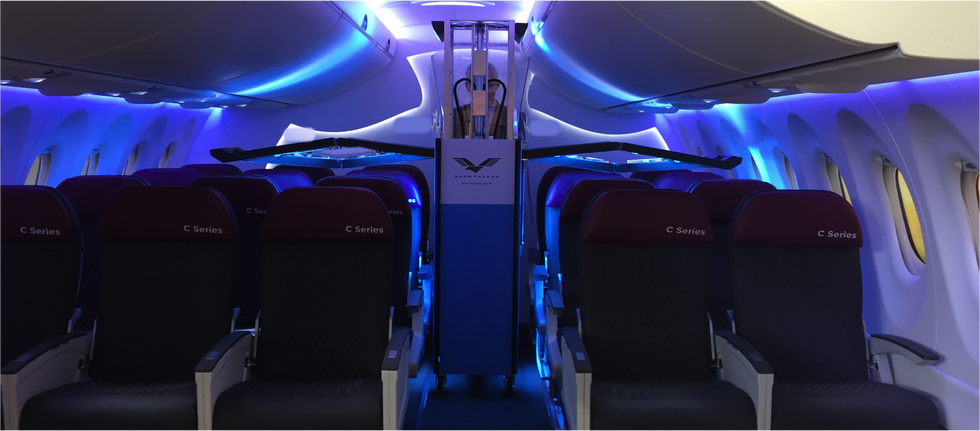
Honeywell inked a deal to produce Long Beach-based Dimer's GermFalcon last year.

The pandemic limited some of Honeywell's typical tire-kicking while cutting deals, but the global conglomerate still saw a flurry of recent acquisitions and its CEO Darius Adamczykis is optimistic about a resurgent economy in 2021.

"2021 will be a transitional year, and 2020 was a crisis year," he said.

Among the deals made last year, Honeywell inked a licensing partnership with Long Beach-based Dimer to produce a UV-C light machine, the GermFalcon, that sanitizes airplane cabinets.


"Conditions generally are positive," said Adamczyk, noting that the uptick in "normal" business is expected to swing back noticeably in the second half of the year, coincidentally timed to when Honeywell is expected to open a new corporate headquarters in North Carolina.

Adamczyk said one of his bigger concerns is whether there will be "enough capacity to handle the surge" in growth.

Notably, the $145-billion market-capitalization corporation has made a handful of acquisitions at a time when COVID-19 has limited some of the typical due diligence processes. In fact, M&A activity slowed somewhat last year – though not for Honeywell.

"Acquisitions are more difficult in this environment," he said. "You can't go to facilities and meet with people."

In the case of its Sparta Systems acquisition last month, said Adamczyk, "We knew so much about it. We did a comprehensive due diligence, but we had comfort in buying it."

In December, Honeywell agreed to pay $1.3 billion for New Jersey-based Sparta, an industrial software provider that specializes in life sciences. The deal was the largest acquisition engineered by Adamczyk since he took the helm nearly four years ago. The deal strengthens Honeywell's leadership in industrial automation, digital transformation solutions and enterprise performance management software.

Roughly a week before this deal, Honeywell acquired Sine Group, an Adelaide, Australia-based technology and "software as a service" – or SaaS company -- that provides visitor management, workplace and supply chain solutions that are readily accessible with mobile devices. Terms of the deal were not disclosed.

The company also snapped up several smaller companies last year, including the unit of Ballard Power Systems that makes fuel cells for drones.

"We are building organically, and building inorganically as well," Adamczyk said. "The more digital you are, the better you weather the storm."

Another long-term concern: "What I miss is the water cooler conversation."

Adamczyk said that Honeywell is trying to reach out with connectivity. "It's really important to stay connected."

Cybersecurity Spending Is Likely to Grow Amid High-Profile Hacks: Snyk CEO

Snyk

Photo by Markus Spiske on Unsplash

The headline-grabbing security breaches uncovered in the past year will likely lead to an acceleration of cybersecurity spending, said Peter McKay, CEO of London-based developer security company Snyk.

The lifecycle in cybersecurity spending is at a very early stage, McKay observed during the first day of the virtually held Montgomery Summit, one of Southern California's largest gatherings of tech investors and executives.


"We are maybe two outs in the (bottom of the) second inning," he said. "We are very early on. If talking security, and not thinking shifting left into security development, we'll walk away and come back to talk in six months. We know where they are in their journey," said McKay of the value of waiting for clients to catch up.

McKay cited two high-profile breaches as the catalyst for more cybersecurity spending: Austin-based SolarWinds, which develops security software to monitor databases, and China's Mintegral, which develops mobile operations system applications offered in the Apple app store.

In the Mintegral case, Snyk researchers identified malicious behavior in a software development kit that was present in more than 1,200 iOS mobile operation system applications offered in the Apple App Store.

Snyk estimated that the Mintegral attack – dubbed "SourMint" involved the 1,200 iOS apps that it estimates are downloaded about 300 million times every month. The concern was that the IOS software could harvest URLs accessed through the kit and steal highly sensitive information.

"Once we understood the exposure, we talked to Apple," McKay said. "We automate as much as you can to fix vulnerabilities."

In the other case, SolarWinds provides software to monitor many features of on-premises infrastructure, including network performance, log files, configuration data, storage and servers. SolarWinds sends out regular updates and patches. Hackers were able to infiltrate the update and "trojanize" the software — meaning when customers installed the updates, the malware just went along for the ride.

"This was a paradigm-shifting event," MacKay said. "It brought a lot of attention of building security features into the lifecycle and supply chain."

Snyk's work in the security developer field has been an evolutionary one since it was founded in 2015. Two years ago, SNYK began with technology companies, then financial ones, and then health care and the media fields.

"What you are seeing now are airline or packaging companies, or very low-tech companies, which are in the process of doing a transformation of their business in a secure way. We are bringing best practices to help them make this transformation."

'We Were All Quite Naive': How the Montgomery Summit Has Changed for 2021

Montgomery Summit 2020

When one of Southern California's largest gatherings of tech investors and executives of the year in Southern California begins Wednesday it will be held virtually, just like every other event is these days.

What a difference a year makes.

Last year's Montgomery Summit, also held during the first week of March, brought together hundreds of tech titans to the upscale Fairmont Miramar Hotel & Bungalows in Santa Monica, just as the seriousness of COVID was becoming abundantly clearer every day.

It was the last time many people saw each other in the flesh. Read more >>

- Ben Bergman

Not Every Robot Wants Your Job

🔦 Spotlight

Happy Friday Los Angeles,

When people talk about the robotics boom, the conversation usually turns to warehouses, defense, humanoids or automation.

But one Los Angeles company is building a very different kind of robot.

Tombot, a local companion robotics startup, closed a $7 million Series A3 round with participation from Caduceus Capital Partners, Wavemaker 360, the Lutheran Foundation for Long Term Living and Florida Community Health Network to scale production of Jennie, its robotic companion dog. The product is designed for older adults, people with dementia, children with autism and others who may benefit from the emotional comfort of a pet but cannot safely or practically care for a real animal.

It is a quieter kind of robotics story, but a revealing one.

The most common vision of the robotics future is built around productivity: robots that move boxes, patrol borders, assemble parts or perform repetitive tasks. Tombot is aiming at something more personal. Its bet is that robots will not only help people work faster, but also help them feel less alone.

That makes the company part of a broader shift in robotics, where the question is not just “What can a machine do?” but “What role can it play in someone’s daily life?”

The need is real. Aging populations, caregiver shortages and rising demand for dementia care are putting pressure on families and health systems. At the same time, many people who would benefit from animal companionship cannot manage feeding, walking, grooming, vet bills or the safety risks that come with a live pet.

Image Source: Tombot

Tombot’s answer is a robotic dog that behaves like a companion, not a gadget. Jennie is designed to respond to touch, voice and interaction, giving users some of the emotional benefits of pet ownership without the responsibilities of caring for a living animal.

Southern California’s robotics scene is often viewed through the lens of defense, drones, aerospace and manufacturing. Those categories are important. But LA also has deep advantages in design, storytelling, entertainment, consumer products and human-centered technology. A companion robot sits at the intersection of all of those things.

It has to work technically. But it also has to feel right. The movement, expression, texture and emotional cues matter. This is where robotics starts to look less like pure engineering and more like product design, character development and trust-building.

The broader robotics market is still difficult. Hardware is expensive. Manufacturing is hard. Consumer expectations are high. And companion robots have historically been a tricky category, with plenty of hype and uneven adoption.

But Tombot’s traction suggests there may be real demand for robots that solve emotional and caregiving problems, not just operational ones. The company says it has built a large waitlist as it moves toward commercialization, giving it a chance to test whether companion robotics can move from novelty to necessity.

The bigger takeaway is that LA’s robotics future may not fit into one box.

Some companies will build for the battlefield. Some will build for factories. Some will build for space. And some, like Tombot, will build for the living room, the care facility and the family trying to support someone they love.

The robotics boom is often framed as a story about replacing human labor.

This one is about supporting human care.

More from this week’s LA startup and venture scene below.

🤝 Venture Deals

    LA Companies

    • Cosm received a $100M strategic investment from Sony Pictures Entertainment, with Sony taking a minority stake as the lead investor in Cosm’s Series C financing round. Cosm operates immersive “Shared Reality” venues that use dome-shaped LED screens for live sports, concerts and entertainment experiences, and the funding will support venue expansion and new technology initiatives across sports and entertainment. Sony Pictures CEO Ravi Ahuja will join Cosm’s board as part of the deal. - learn more
    • Pasadena-based Sophia Space finalized a $7M SAFE financing round, bringing its total funding to $22M. The round included participation from EverGreen, The NVIDIA Alumni Investment Network, SparkLabs Group and other strategic investors, with the new capital going toward product development, engineering and commercial hiring, partnerships and deployment across government, commercial and international markets. Sophia Space is building AI-powered infrastructure and intelligent systems for the space economy, including autonomous computing capabilities for orbital and terrestrial environments. - learn more

    LA Venture Funds
    • Sound Ventures participated in Warp’s $60M Series B, which was led by Battery Ventures with additional backing from Peak XV and Y Combinator. Warp is building an AI-native employee management platform for payroll, benefits, compliance, onboarding, offboarding and workforce operations, with the new funding bringing its total raised to $85M. The company says the capital will support deeper AI agents, expanded tax and compliance infrastructure, a broader product suite and more customer support. - learn more
    • Mucker Capital participated in Zave’s ₹4.7 crore bridge round, which was led by Inflection Point Ventures. Zave is building an AI-native shopping assistant that helps consumers discover products, compare prices and make purchase decisions across Amazon, Flipkart and more than 5,000 brand websites. The company plans to use the funding to strengthen its AI product, improve platform reliability and scalability, and support continued user growth. - learn more
    • B Capital co-led Seltz’s $12.5M seed round alongside Speedinvest, with participation from Future Present, Italian Founders Fund, Arc Investors, United Ventures, Vento Ventures, Mango Capital, 2100 Ventures and Future Back Ventures. Seltz is building web search infrastructure for AI agents, designed for the way agents query the internet: running long, parallel searches, pulling full documents and accessing live web context. The company plans to use the funding to scale its index to tens of billions of documents and build out engineering, sales and marketing. - learn more
    • Clocktower Technology Ventures participated in Caplight’s $16M Series A, which was led by BlackRock and Fin Capital, with strategic participation from UBS Investment Bank. San Francisco-based Caplight is building data, trading and workflow infrastructure for private markets, including secondary market pricing, institutional trading, company and investor intelligence, and AI-powered venture deal sourcing. The company says the new funding will help expand its role in rebuilding the rails for venture capital as private markets become larger, more liquid and more complex. - learn more
    • MaC Venture Capital participated in Coval’s $28M Series A, which was led by Norwest with backing from Base10 Partners, Twilio Ventures, Y Combinator and others. San Francisco-based Coval builds simulation, evaluation and monitoring infrastructure for voice and chat AI agents, helping enterprises test and improve autonomous agents before and after deployment. The company works with more than 60 organizations, including Zoom and Deepgram. - learn more
    • B Capital participated in Cadence’s $100M Series C, which was led by Spark Capital with additional backing from Thrive Capital, General Catalyst, Coatue, Corewell Health Ventures, Memorial Hermann and Duke Health. Cadence is a clinical AI company automating chronic care for older adults through supervised AI agents that monitor patient vitals, surface risks and coordinate care between visits. The company now works with more than 20 health systems, treats over 100,000 active patients and will use the funding to expand across new health systems, advance its AI agents and grow value-based care models. - learn more
    • WndrCo participated in Partly’s $50M Series B, which was led by DST Global Partners. Partly is building AI-powered infrastructure for the auto repair industry, helping repairers, insurers and parts suppliers identify and source the right vehicle parts as cars become more complex. The new funding will support Partly’s push to bring frontier AI into repair workflows and reduce friction across the global replacement parts market. - learn more
    • Döpfner Capital participated in Stark Defence’s €500M funding round, which was backed by major investors including Sequoia Capital and Founders Fund and valued the German drone company at roughly €3.2B to €3.5B. Stark develops unmanned defense systems, including loitering munitions, and plans to use the funding to expand R&D and manufacturing capacity across Europe. The raise comes as European defense tech continues attracting significant investor interest amid rising military spending and demand for autonomous systems. - learn more
    • Smash Capital led Redo’s $81M Series B, with participation from existing investors Pelion Venture Partners and Cervin Ventures, valuing the commerce technology company at a reported $1.25B. Draper, Utah-based Redo started in returns and exchanges but has expanded into a broader post-purchase and AI-powered commerce platform covering order tracking, package protection, fulfillment, customer service, marketing and shopper engagement. The funding will support product development, AI initiatives and international expansion. - learn more
    • Wavemaker 360 Health participated in ChemT Biotechnology’s $4M seed round, which was led by Wavemaker Ventures with participation from co-investment partner SEEDS. Singapore-based ChemT has raised $5M total in 18 months and is building AI infrastructure for biomanufacturing, including its CelMo virtual cell platform, which helps manufacturers model and guide cell behavior to improve biologics production, scalability and cost. The funding will support expansion of ChemT’s AI and experimental infrastructure, advancement of its molecular products toward GMP standards and broader commercial partnerships. - learn more

    LA Exits

    • The New Bar, a Venice-born non-alcoholic beverage discovery platform, was acquired by The Zero Proof. The deal combines The New Bar’s hospitality, live events and cultural partnerships with The Zero Proof’s national e-commerce, owned brand portfolio and retail distribution platform. The New Bar’s leadership will join The Zero Proof, with founder Brianda Gonzalez becoming Vice President of Strategy and Partnerships. - learn more

      Download the dot.LA App

      Snap May Have Finally Found AR’s Moment

      🔦 Spotlight

      Hello Los Angeles,

      Snap has spent years trying to make augmented reality feel less like a demo and more like a daily habit. This week, it introduced its latest attempt.

      At Augmented World Expo, Santa Monica-based Snap unveiled SPECS, its new standalone augmented reality glasses. The device is designed to bring AI assistance, work tools, entertainment and shared experiences into the physical world without requiring a phone, puck or tether.

      The pitch is not simply “screens on your face.” Snap is trying to position SPECS as a different kind of computer: one that can understand what you are looking at, respond to your surroundings and make AI useful in the moment. That could mean directions placed where you need them, a virtual workspace that travels with you or AI assistance that sees the same context you do.

      The developer piece may be just as important as the hardware. Snap says developers have already built hundreds of Lenses for SPECS, and the company is rolling out new tools inside Lens Studio, including agentic development support through Claude Code, Codex and Cursor, a new Native Development Kit and a spatial benchmark for AR experiences.

      That matters because AR has always had a chicken-and-egg problem: impressive demos, but not enough everyday reasons to wear the device. Snap is trying to solve that by building not only the glasses, but the software, developer tools, operating system, computer vision stack and creative ecosystem around them.

      Specs

      SPECS are available for pre-order at $2,195, with a $200 refundable deposit, and are expected to ship this fall in the U.S., U.K. and France.

      For Snap, the bigger question is whether augmented reality can finally move from developer demos and futuristic keynote moments into something people actually want to use. SPECS are its latest answer, but the real test will be whether developers can build experiences useful enough to make the glasses feel less like a gadget and more like a habit.

      More from this week’s LA startup and venture scene below.

      🤝 Venture Deals

        LA Companies

        • Critical Energy raised $19M in seed funding co-led by Upfront Ventures and Susa Ventures, and also secured $3M in venture debt from Silicon Valley Bank, bringing its total early capital to $22M. Founded by SpaceX alum Spencer Jackson, the company is adapting rocket-engine-style turbomachinery for modular geothermal power plants and plans to use the funding to build its first 2.5 MW project. - learn more

        LA Venture Funds
        • Group 11 co-led Dream’s $260M funding round alongside Bicycle Capital, with participation from Antler, Bain Capital Ventures, Tru Arrow Partners and other investors. Dream builds sovereign AI and cyber defense technology for governments and critical infrastructure operators, with the new funding valuing the company at $3B and bringing total funding to $412M. The company plans to use the capital to expand its national cyber defense and AI platforms across Europe, the Middle East, Asia and the Americas. - learn more
        • Undeterred Ventures participated in Portal Biotechnologies’ oversubscribed $9M financing round, which was led by NFX with backing from existing investors including IA Ventures, Pear VC, IKJ Capital and TechU Ventures. Watertown-based Portal is building cell engineering infrastructure for drug discovery, AI data generation and cell therapy manufacturing, using its mechanoporation platform to deliver RNA, gene editors and other molecules into hard-to-transfect cells. The company also expanded its DARPA work through an Embedded Entrepreneur Initiative contract tied to point-of-care cell therapy manufacturing and says its platform has been adopted by more than 100 customer sites. - learn more
        • Clocktower Ventures participated in Trace Finance’s $32M Series A, which was led by CoinFund with backing from Coinbase Ventures, Haun Ventures, Jump Crypto, Valor Capital, Paxos, HOF Capital and others. Trace Finance is building regulated banking and stablecoin infrastructure for cross-border payments across Brazil, the U.S. and emerging markets, combining local payment rails, FX, compliance operations and stablecoin settlement. The company has processed more than $10B in institutional cross-border volume and will use the funding to expand product capabilities and grow across LatAm, APAC and other priority markets. - learn more
        • Alexandria Venture Investments participated in Vedana Therapeutics’ $46M Series A, which was co-led by Westlake BioPartners and Canaan Partners, with additional participation from Dawn Biopharma. Seattle-based Vedana is developing next-generation preventive migraine therapies, including antibody-based treatments targeting PACAP and CGRP pathways, with the funding going toward advancing its internally discovered portfolio of subcutaneously delivered antibodies. - learn more
        • Fulcrum Capital participated in HighGround’s $6.5M seed round, which was led by Next Frontier Capital with additional backing from Tandem Ventures and Context Ventures. HighGround is building an intelligence platform for defense and aerospace capital markets, helping investors, operators and advisors analyze government spending, procurement signals, deal risks and market demand. The funding will support expanded data coverage and deeper analytical models for defense-focused investment and business development workflows. - learn more
        • Bonfire Ventures participated in Vali Health’s $6M funding round, alongside Supernode, Comma Capital and healthcare industry veteran Jacquelyn Kung. San Francisco-based Vali Health is building responsible AI infrastructure for healthcare, helping providers and health systems evaluate, monitor and safely deploy AI tools across clinical and administrative workflows. - learn more
        • Clocktower Ventures participated in Karta’s $15M Series A, which was led by Galaxy Ventures, with additional backing from Canary and Illuminate Financial. Miami-based Karta is building a WhatsApp-first premium U.S. credit card for non-U.S. clients, helping global travelers with U.S. bank or brokerage accounts access dollar-denominated spending power without needing a traditional U.S. credit history. The company also secured a $125M credit facility from Community Investment Management, bringing its total new financing to $140M. - learn more
        • Alexandria Venture Investments participated in Triveni Bio’s $65M Series C, which was co-led by Ascenta Capital and Janus Henderson Investors, with significant participation from Deep Track Capital. Watertown-based Triveni is developing antibody treatments for immunological and inflammatory disorders, with the funding going toward expanding clinical development of TRIV-573, its bispecific antibody targeting atopic dermatitis, including a larger Phase 2 proof-of-concept study expected to begin later this year. - learn more
        • WndrCo participated in XDOF’s $70M funding round, alongside investors including Thrive Capital, Spark Capital, a16z and Lux Capital. XDOF is building robotics data infrastructure for AI labs, handling the unglamorous but critical work of collecting, labeling and organizing real-world robot training data. The company says it already works with about 20 customers, including several frontier AI labs. - learn more
        • Fika Ventures participated in SubBase’s $7M Series A, which was led by FINTOP and brings the company’s total funding to more than $15M. Ft. Lauderdale-based SubBase is a construction materials procurement platform that helps specialty trade contractors and self-performing general contractors manage pricing requests, orders, supplier communication, delivery tracking and invoice reconciliation in one system. The company plans to use the funding to expand product and engineering, deepen supplier integrations and build more AI-driven workflow and intelligence features. - learn more
        • Upfront Ventures participated in Bland’s $50M Series C, which was led by Dell Technologies Capital with additional participation from HubSpot Ventures, Archerman Capital and Tribeca Venture Partners. San Francisco-based Bland builds voice AI agents for complex phone, SMS and chat conversations, with a focus on longer, high-stakes workflows in regulated industries like healthcare and financial services. The round brings Bland’s total funding to more than $100M. - learn more
        • Impatient Ventures participated in Traysar’s $25M seed round, which was led by Silent Ventures and included backing from Lux Capital, Ora Global, NeverLift VC, Mana, New Vista, Entree Capital and angel investors. Traysar emerged from stealth at the 2026 Reindustrialize Summit as a subterranean defense tech company building autonomous “subterra” platforms designed to detect, penetrate and secure underground environments. The company says its technology is aimed at addressing underground military facilities and other hard-to-reach subsurface domains. - learn more
        • MaC Venture Capital participated in Swsh’s $4M seed round, which was led by Game Changers Ventures with additional backing from Stellation Capital, SignalFire and angel investors including Scooter Braun and Guy Oseary. Swsh is building an AI-powered fan engagement platform for live events, helping artists, teams and brands organize fan-captured photos and videos while turning that content into audience insights and first-party engagement data. - learn more
        • B Capital led SolarSquare Energy’s $53M Series C, backing the Mumbai-based residential rooftop solar company as investor interest grows in India’s home solar market. The round valued SolarSquare at roughly $450M–$500M and included participation from existing investors including Lightspeed, Lowercarbon Capital, Rainmatter by Zerodha and Good Capital. SolarSquare plans to use the funding to expand into new cities, strengthen its technology platform and scale operations. - learn more

        LA Exits

        • Mavida Health, a digital mental health company focused on women and families, was acquired by WPS Health Solutions. The deal expands WPS’ digital health capabilities with Mavida’s virtual therapy, medication management and specialized mental health support across fertility, pregnancy, postpartum, loss, parenting and menopause. Financial terms were not disclosed. - learn more
        • Vica, an AI video startup focused on helping small businesses create cinematic-quality marketing content, was acquired by Addi. The acquisition brings Vica’s AI video capabilities into Addi’s growth platform for Main Street businesses, which combines financial intelligence with marketing tools to help small businesses attract and retain customers. - learn more
        • GateMaker, a female-founded influencer marketing agency, was added to Residence, the Los Angeles-based global network of independent creative companies. The deal brings GateMaker’s creator economy expertise across paid, earned and owned influencer relationships into Residence’s broader creative network, which also includes companies like BUCK, OK COOL, Giant Ant, Part & Sum and Wild. - learn more
        • Gavel, an AI-native legal tech company used by legal professionals to draft, review and automate legal work in Microsoft Word and on the web, was acquired by Relativity. The deal will bring Gavel’s drafting, redlining and document automation tools into Relativity’s legal data intelligence platform, allowing work product created in RelativityOne and Relativity aiR to be edited in Microsoft Word while syncing back to the underlying matter data. Financial terms were not disclosed. - learn more

          Download the dot.LA App

          Evotrex Raises $30M to Electrify the RV
          Evotrex

          🔦 Spotlight

          Hello Los Angeles,

          The RV has not changed much in decades: tow it, park it, plug it in and hope the campground has enough power. Evotrex is betting the next version should act less like a trailer and more like a mobile energy system.

          Los Angeles-based Evotrex raised a $30M Series A, bringing its total funding to $46M, to accelerate production of its Evotrex-PG5 electric RV trailer. The round included participation from GSR United Capital, Forebright Concerto Capital, Unique Capital, Pegasus Capital, TTGG Ventures, ChunJia Capital, Thundersoft and other investors.

          The PG5 is designed as both an RV and a mobile power platform, combining onboard power generation, energy storage and intelligent energy management in one off-grid trailer. In other words, Evotrex is not just selling a place to sleep outdoors. It is building a rolling power system for camping, remote work, events, mobile businesses and backup energy.

          The timing lines up with a few bigger trends at once: EV adoption, off-grid travel, distributed energy and consumers treating vehicles as extensions of the home. That puts Evotrex at the intersection of several hard categories: vehicles, energy storage, consumer hardware and outdoor lifestyle.

          The company plans to use the funding for final product development, automotive-standard testing and validation, and production preparation ahead of planned customer deliveries in 2027. Starting in Q4 2026, Evotrex expects to begin testing across towing, range, braking, lateral stability, structural durability, water exposure and regulatory compliance.

          That testing phase matters. It is one thing to create a sleek prototype. It is another to build something that can be towed, powered, lived in and trusted far from a charging station or service center.

          Evotrex says roughly 90% of its order book is for the fully loaded Premium trim, priced at $159,990, which it plans to prioritize for initial deliveries. That suggests early buyers are treating the PG5 less like a basic camper and more like a high-end mobile living product.

          Now Evotrex has to prove the hardest thing in hardware: that the product works as well on the road as it does in the renderings.

          More from this week’s LA startup and venture scene below.

          🤝 Venture Deals

            LA Companies

            • Poetic raised a $50M Series A led by Kleiner Perkins to scale its enterprise AI automation platform. Formerly known as Forge, the company builds software that “learns like AI but runs like code,” helping automate complex, high-stakes business processes across areas like financial services, insurance, healthcare and other regulated industries. The funding will support product development, hiring and broader customer deployment. - learn more
            • Leaf Agriculture raised a $13M Series B led by Leaps by Bayer and a group of industry strategic investors. The agtech company helps agriculture businesses clean, structure and manage farm data from machinery, soil labs, weather stations, satellites and farm management systems so they can build AI tools and analytics on top of it. The funding will support Leaf’s push to become a core data infrastructure layer for agribusiness.. - learn more

            LA Venture Funds
            • UP.Partners participated in Coram AI’s $35M Series B, which was co-led by Ansa Capital and Battery Ventures, with additional backing from 8VC and Mosaic Ventures. Sunnyvale-based Coram AI turns existing security infrastructure, including cameras, badge readers, visitor logs and emergency systems, into an AI-powered physical security platform that helps organizations detect incidents, investigate footage and respond faster. The company has now raised $66M total and is deployed across more than 1,500 sites in North America. - learn more
            • Smash Capital participated in Digital Asset’s $355M funding round, which was led by a16z crypto and included backing from major financial institutions and investors including ADIA, Apollo Funds, BNP Paribas, Citadel Securities, Coinbase Ventures, HSBC, Polychain, SoFi, Tradeweb and others. Digital Asset is the creator of Canton, a public layer-one blockchain built for regulated financial markets, and will use the funding to expand Canton’s ecosystem across tokenization, settlement, payments, collateral mobility and other institutional finance workflows. - learn more
            • Alexandria Venture Investments participated in SonoThera’s oversubscribed $125M Series B, which was led by Vida Ventures and included backing from ARK Invest, CureDuchenne Ventures, Leaps by Bayer, Otsuka Pharmaceutical, UCB Ventures, Vivo Capital, ARCH Venture Partners, RA Capital and others. SonoThera is developing ultrasound-mediated, nonviral genetic medicines designed to deliver DNA and RNA payloads without traditional viral vectors, with the funding going toward advancing its lead programs in Duchenne muscular dystrophy and autosomal dominant polycystic kidney disease into the clinic. - learn more
            • Wavemaker 360 participated in Lium’s $5.5M seed round, alongside SJF Ventures, Reach Capital and GC&H Investments. Formerly known as Astromind, Dallas-based Lium is building an “agentic harness” that helps large language models work with complex scientific and industrial datasets, including satellite imagery, seismic surveys and electromagnetic spectrum analysis. The platform is designed to make messy, non-text data easier for scientists, engineers and industrial teams to query and analyze with AI. - learn more
            • Riot Ventures participated in Endurance Energy’s $54M Series A, which was led by Founders Fund with additional backing from Ascend, Construct Capital, Felicis Ventures, First Round Capital, Point72 Ventures and Voyager Ventures. Founded by former SpaceX engineer Andrew Redd, Endurance is developing subsea geothermal power plants designed to tap volcanic heat deep in the ocean and provide 24/7 clean energy for rising demand from AI data centers, EVs and heavy industry. The funding will support development of its power plant plans as the company grows its team. - learn more
            • Wavemaker 360 participated in 01Health’s $15M Series A, which was led by Gresham House Ventures, with follow-on backing from Balderton Capital and Eka Ventures. 01Health is building a healthtech platform that brings specialist care into local clinics through clinical protocols, specialist oversight, AI tools, patient communication and monitoring systems, with the funding supporting its UK rollout and U.S. market expansion. - learn more
            • Calibrate Ventures led Flux’s $5M funding round, with participation from existing investors True Ventures and Glasswing Ventures. Boston-based Flux is building a code-first engineering intelligence platform that analyzes code changes to give engineering leaders visibility into quality, security, technical debt and team dynamics as AI reshapes software development. The funding will support product development and go-to-market growth. - learn more
            • Village Global led MNX’s $6.4M pre-seed round, with participation from Finality Capital Partners, Cambrian, North Island Ventures, Relay Digital and angel investors. MNX is building a MegaETH-based decentralized futures exchange for the AI economy, with planned markets tied to AI company valuations, GPU compute prices, electricity costs, AI benchmarks and prediction markets. The company was valued at $40M in the round and plans to launch mainnet this summer. - learn more
            • Mantis Venture Capital participated in Sandstone’s $30M Series A, which was led by Lightspeed Venture Partners with additional backing from SV Angel, Operator Partners, Kearny Jackson, Daybreak Ventures and Litquidity Ventures. Sandstone is building AI-powered workflow automation for in-house legal teams, helping companies manage legal requests from tools like Slack, email and Jira while automating intake, triage, drafting, review and analysis. The round brings Sandstone’s total funding to $40M. - learn more
            • WndrCo participated in Idilio’s $5.5M seed round, alongside a16z Speedrun, Goodwater Capital, Precursor Ventures and other investors. Idilio is building an AI-powered microdrama platform for Spanish- and Portuguese-speaking audiences, producing short-form drama series at the intersection of telenovelas and vertical mobile video. The funding will support platform development, expanded content offerings and the launch of its Idilio Creators program. - learn more
            • Mantis Venture Capital and Village Global participated in Pogo’s $32M in funding to date, alongside investors including Josh Buckley’s Buckley Ventures, 20VC, Lenny Rachitsky and the founders of Honey. Pogo is launching an AI-powered consumer research platform built around purchase-verified buyers, helping brands run surveys, AI-moderated interviews and behavioral research using verified transaction, receipt, app usage and location data from its opted-in consumer network. The company says its app has more than 3M users and visibility into more than $470B in transaction value. - learn more
            • Mantis Venture Capital participated in EDGE Markets’ $29.2M Series A, which was led by CoinFund with backing from Indicator Ventures, Stepstone Group and Bullpen Capital. EDGE Markets builds financial infrastructure for gaming, crypto and prediction markets, and will use the funding to launch EDGE Pro, a banking platform for market makers, and EDGE Connect, a purpose-built payment rail for regulated gaming and prediction market operators. - learn more
            • MTech Capital participated in Finovox’s €8.2M Series A, which was led by TX Ventures and included backing from Auriga Cyber Ventures II, Start Ventures, Force Over Mass and FDJ UNITED Ventures. Paris-based Finovox builds AI-powered document fraud detection software for financial services, insurance and other regulated industries, and will use the funding to expand across Europe, strengthen its technology and grow its team. The company says it now serves more than 70 organizations across 15 countries. - learn more

            LA Exits

            • RiskFront AI was acquired by K2 Integrity, bringing its agentic AI platform for financial crime compliance and risk operations into K2’s broader risk, compliance, investigations and monitoring business. RiskFront AI’s platform, Airos, automates research, transaction analysis and document processing to reduce manual work across financial crime and compliance workflows. Financial terms were not disclosed. - learn more
            • LevPro was acquired by Octus, bringing its front-office software for CLO, broadly syndicated loan and private credit managers into Octus’ credit intelligence platform. LevPro will join Sky Road to help create an integrated AI-powered platform spanning market intelligence, investment analytics, trade workflows, portfolio management and monitoring. Financial terms were not disclosed. - learn more

              Download the dot.LA App

              RELATEDEDITOR'S PICKS
              Trending