


How Dollar Shave Club, eSalon Built a 'Billion Dollar Brand'

Lawrence Ingrassia

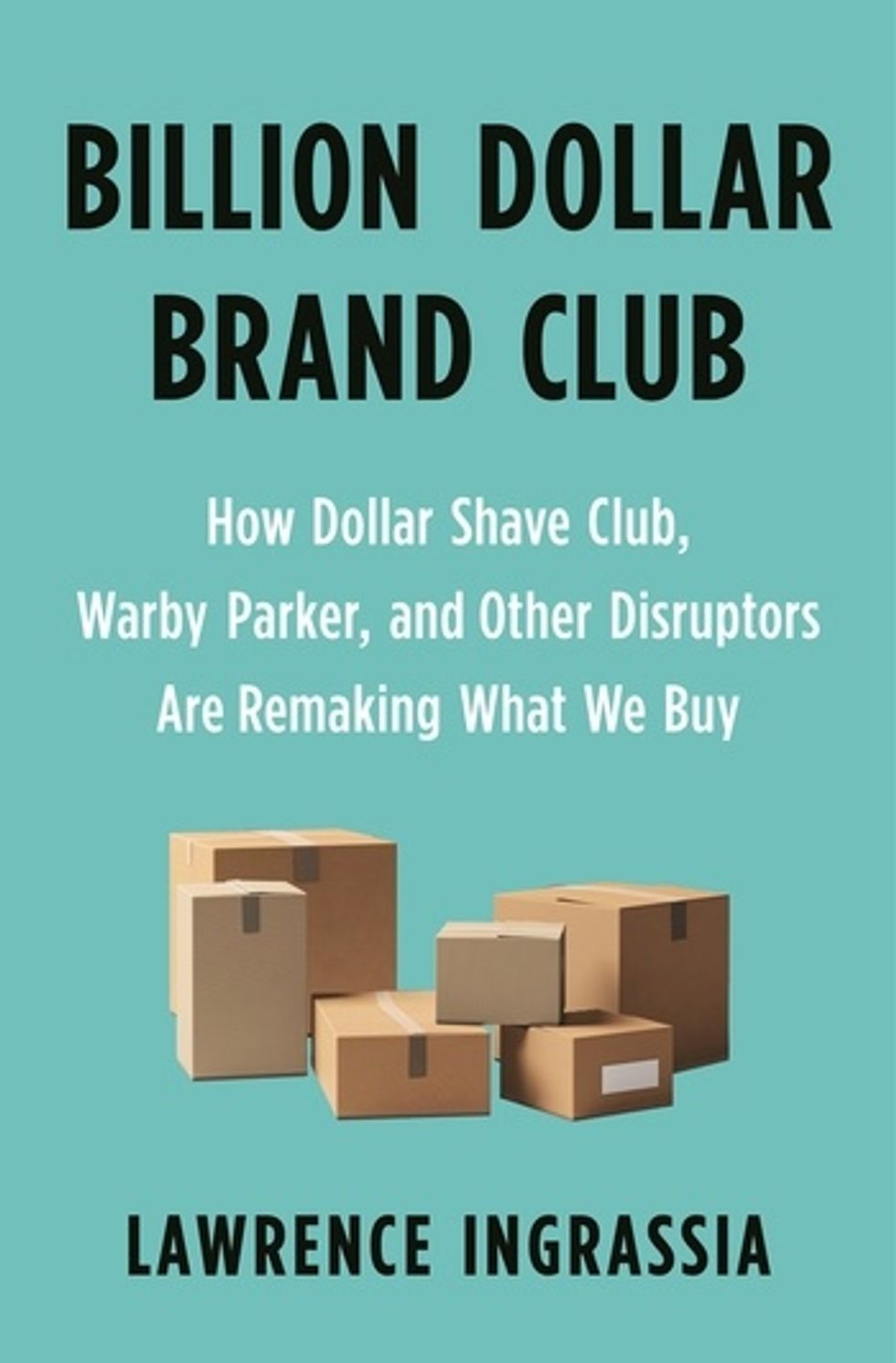
Lawrence Ingrassia is an award-wining journalist and the author of " Billion Dollar Brand Club."

How Dollar Shave Club, eSalon Built a 'Billion Dollar Brand'
  • Relying on analytics, the founders of eSalon who knew nothing about hair dye, built a trendsetting personalized hair color brand that did $30 million in sales
  • The e-commerce brand uses individual data, machine-learning algorithms and predictive analytics to create formulas that keeps customers coming back
  • The Takeaway: Retail is being upended by direct-to-consumer companies that can acquire key metrics to customize products and retain shoppers

In recent years, you no doubt have seen a growing number of new brands pop up everywhere you go online – and you've probably bought some. Where did they come from? Who are the entrepreneurs behind them? Why did they think they could take on long-dominant brands?

This is an excerpt from " Billion Dollar Brand Club," authored by award-wining journalist Lawrence Ingrassia and published on January 28 by Henry Holt and Company.

The book explores how an unlikely band of entrepreneurs launched a business revolution in the way new brands are created and sold online. One of the most successful direct-to-consumer brands, Dollar Shave Club, was founded in Los Angeles and got its initial seed funding from Science Inc. in Santa Monica. This excerpt from Chapter 6, "The Algorithm is Always Right," tells the story behind eSalon, based in El Segundo, and how it tapped data analytics to create customized hair coloring.

The customer, a woman in her mid-to-late forties, knows what she wants when she logs onto eSalon.com to order its customized hair coloring for the first time: dye to match her natural blonde color – and cover up her grays – with the lightest blonde shade it offers. As she clicks through a series of about a dozen questions, the algorithm inside eSalon's computers starts churning away. Without anyone from the company having met or even talked to her, it will understand her hair coloring better than she does by the time she finishes answering the questionnaire.

How long is your hair? it asks. How much gray do you have? How straight or curly is your hair? How thick is your hair? What is your ethnicity? What color are your eyes? What is your natural hair color? What is the closest shade to your natural color? Would you like to maintain your current color?

To help her, the questionnaire shows thirty-one photos of different shades of blonde, with very small gradations from lighter to darker colors. At the end, she selects the lightest blonde color eSalon offers, just as she intended. But that's not exactly what she will receive.

eSalon has collected data from more than five million people. Based on this woman's answers, it knows the best color formulation to achieve the blonde look she wants, regardless of what she thinks. eSalon's computers have learned from crunching the data that many first-time customers who fit her profile and order the lightest blonde dye have been disappointed; they felt their hair came out looking too blonde – too "hot" in hair coloring jargon. The numbers show that eSalon has a higher reorder rate from customers who asked for a slightly darker color for their next order, so that their hair wouldn't come out looking quite so light.

Knowing all of this, eSalon automatically sends the customer – without telling her – a formulation that has 98 percent of its lightest blonde share with 2 percent blue added to soften the color, or cool it, rather than 100 percent blonde. "After seeing this data, we adjusted our algorithm so that new customers who are a natural pure blonde and want to keep that look automatically get that little bit of blue added," explains Tom MacNeil, eSalon's chief technology officer. "They're happier with the result, even though they're asking for the blondest of blonde that we have."

For eSalon, and almost all direct-to-consumer brands, data is the coin of the realm. The data they collect directly from each customer provides a significant advantage over bigger, long-established brands. Clairol doesn't have this data, because the customers they deal with directly are retailers. The people who use the product are largely anonymous to Clairol; they walk into a drugstore, pick a box of hair coloring off the shelf, pay for it, and walk out.

eSalon's shelf is its website, and it collects information about each customer who walks through its digital door and answers its questionnaire. The longer a woman remains a customer, the more eSalon knows about her – and not just her. eSalon aggregates all of that individual data and uses machine-learning algorithms and predictive analysis to inform virtually everything it does: from adjusting its product formulations to introducing new products (like color for highlighting hair) to testing seemingly insignificant word changes on its web pages. "In the end, we're a tech company selling a beauty product," says Tamim Mourad, one of eSalon's co-founders.

Data mining is critical to the biggest challenges facing all direct-to-consumer brands: holding down the cost of attracting customers and keeping them after a purchase or two. Using the data it has gathered, eSalon has improved its retention rate from below 50 percent to about 70 percent on its customers' initial orders. One of the key metrics, especially for subscription companies, like eSalon, Dollar Shave Club, and Hubble, is a customer's lifetime value, or how much she will spend over time. The cost of acquiring customers can be offset only if a lot of them become repeat customers who buy month after month or, even better, year after year. "It's all about retention, because nobody makes money on the first order," explains Francisco Gimenez, another co-founder.

Businesses have used predictive analytics for the past couple of decades, but the growing power of computers, along with the ability of online brands to gather huge amounts of data, has made machine learning central to their success.

Tamim Mourad and several of his colleagues at eSalon discovered from experience the importance of technology to a startup. In 1998, before the direct-to-consumer brand revolution began (indeed, before many of the entrepreneurs behind many of these startups had graduated from college or even high school), they started an internet company, while they were in their twenties. The company, PriceGrabber, was one of the original online price comparison sites. In 2005, Experian bought the company for $485 million – yielding a huge gain on the founders' total investment of $1.5 million.

After taking a couple of years off, the PriceGrabber founders began brainstorming about starting another business.

In the fall of 2008, Mourad and his wife were having dinner with a couple who owned a beauty salon in Beverly Hills. The other woman, who was a hair colorist, tossed out a business idea. "She said that women who color their hair at home don't do it well, because there is a dearth of information," Mourad says. What about starting a web site that explained how to dye your own hair? He didn't see a way to make money from that. But he asked her, "Is it possible to formulate color for someone sight unseen, and mail them something they apply at home? If that works well, then you're delivering a product that is better than the standard hair coloring in a box at drugstore, that would approximate what someone could get at a hair salon. If you could do that, you could charge a price that was a premium. There's a business model."

He went back to his former PriceGrabber colleagues, all men who knew nothing about hair coloring. But the more they thought about the idea, the more they liked it.

It was a business ready for disruption, they decided. Off-the-shelf packaged brands were fine, but most offered only around fifty pre-mixed shades. "Many people who color their own hair at home in general are not happy, because the results are mixed," Francisco Gimenez notes. "But it is affordable, which is why they do it. At the high end, salons charge on average around $60 for base color, though it can go as low as $45 in some cities and is more like $100 or $150 in bigger metro areas."

The PriceGrabber guys concluded there could be an opening for a new brand priced about $25. In today's global marketplace, it would be easy to find suppliers to sell them professional-grade ingredients that go into hair coloring formulations – dyes, modifiers (to stabilize color tones), vitamins (to moisturize the hair), antioxidants, hydrogen peroxide (to remove the old color and activate the new dye), among others. The biggest challenge would be to figure out how to combine all these ingredients to mimic what a stylist does in customizing color for each woman who comes into a salon. "Can you formulate hair coloring for someone sight unseen?" Mourad says. "We had to figure out how to test that idea."

They first did a proof-of-concept test to see if women might be interested in buying customized color online. They created a rudimentary web site and then hand-mixed colors for about fifty women who had signed up, submitted a photo, and said what color they wanted. Then the women were asked if they liked the color better than the results they got with a do-it-yourself kit at a drug store. "We recruited people who were willing to put this product on their hair, with no idea who we really are. The results were positive enough for us to say we have something," he recalls.

The next step: tapping their knowledge of tech and data science to figure out how to replicate color customization on sale, for fifty thousand women, not just fifty. "We wanted to do something that was really innovative, not bullshit innovative," Mourad says.

Omar Mourad, Tamim's younger brother and another of PriceGrabber's co-founders, read everything he could about dyeing hair. "I didn't have any tangible color experience applying it on any person's hair. But I became a theoretical expert," Omar says.

Over the next several months, he and Gimenez took the lead in translating the rules of hair coloring into software that would determine the right customized mix to get the desired color. That can depend on a numerous variables: a woman's natural color, her current dyed color, how recently she dyed her hair, how much gray hair needs to be covered up, the texture and length of her hair. "You basically look at all of the combinations, and then build out a matrix for how to formulate," Omar explains. Using that knowledge, the team developed a questionnaire that included queries a stylist would ask a first-time customer. The questions themselves aren't rocket science. The rocket science happens when hundreds of thousands or millions of people answer the questionnaires, enabling you to gather more and more data to analyze.

The final step was to automate the formulation. In September 2010, the product was launched. As with an apprentice stylist, eSalon's formulations improved over time as the company got more customers and was able to gather more information. As of 2018, eSalon had dispensed 165,000 different formulations. That's out of a total, it calculates, of 2.2 octooctogintillion pigment variations (that would be 22 followed by 266 zeroes).

In 2019, rival L'Oreal introduced a new brand, Color&Co, that copied key features of eSalon, including an online quiz or a consultation with a colorist to help determine the "a unique custom-blend [color] made only for you." With competition ratcheting up, eSalon – with sales still a modest $30 million a year – agreed to sell a 51 percent stake to the German multinational Henkel. It cited the growing trend toward personalization and eSalon's "valuable customer insights" as reasons for its investment.

Lawrence Ingrassia's "Billion Dollar Brand Club" goes on sale January 28. He is a former business editor of the New York Times and managing editor of The Los Angeles Times.

💘Zeitview’s New Valentine : Catching Methane Leaks

🔦 Spotlight

Hello Los Angeles, happy Friday and happy Valentine’s Day weekend.

While the rest of us are debating flowers vs. gifts vs. reservations, LA’s infrastructure nerds are out here celebrating a different kind of romance: finding leaks before they ghost your entire operation.

Zeitview just made methane a first-class feature

Zeitview has acquired Insight M, folding high-frequency aerial methane detection into its broader “see it, measure it, fix it” play for critical infrastructure. The combined offering pairs methane monitoring with Zeitview’s predictive asset-health and inspection workflows, so operators can spot emissions faster, prioritize repairs, and tie results back to ROI instead of vibes.

What Zeitview actually does, beyond the buzzwords

If you haven’t been tracking them, Zeitview is essentially the operating layer for inspecting big, physical assets using drones, aircraft, and computer vision. They can analyze imagery you already have or capture fresh data, then turn it into inspection reports and analytics through their Asset Insights platform.

Zeitview was previously known as DroneBase and rebranded after raising an expansion round, signaling a broader push beyond “drones” into enterprise-grade infrastructure intelligence across energy and other asset-heavy industries.

Why Insight M fits, and why this isn’t just “climate tech”

Methane is the rare climate problem that also hits the P&L, because a leak is both emissions and lost product. Insight M has built credibility around methane monitoring that’s meant to be operational, not just observational, and that plugs neatly into Zeitview’s inspection footprint.

Put together, this looks less like a single acquisition and more like a workflow upgrade: one system that finds a problem, quantifies it, routes it to the right team, and proves it was fixed. The least romantic Valentine’s message of all, maybe, but also the most adult: “I noticed something small, and I handled it before it became expensive.”

Keep scrolling for the latest LA venture rounds, fund news and acquisitions.

🤝 Venture Deals

      LA Companies


      • HAWKs (Hiking Adventures With Kids), a nature-based children’s enrichment brand founded in Los Angeles, secured a strategic investment from Post Investment Group to accelerate its nationwide franchise expansion. The company plans to scale its mobile, outdoor-program model (after-school adventures, camps, and weekend sessions) by opening franchise territories across the U.S. while using Post’s franchising platform to build the operational infrastructure and support system for new operators. - learn more

                  LA Venture Funds

                  • Allomer Capital Group participated in TRUCE Software’s newly closed Series B, a round led by Yttrium with additional backing from New Amsterdam Growth Capital. The company did not disclose the amount, but says it will use the funding to scale go-to-market for two mobile-first product suites: an AI video telematics platform for commercial fleets that runs on standard smartphones, and TRUCE Family, a software approach to limiting student phone distractions in K–12 schools. - learn more
                  • Wonder Ventures participated in The Biological Computing Company’s $25M seed round, which was led by Primary Venture Partners alongside Builders VC, Refactor Capital, E1 Ventures, Proximity, and Tusk Ventures. The startup is commercializing “biological compute,” connecting living neurons to modern AI systems to make certain tasks dramatically more energy-efficient, and says its first product shows a 23x retained improvement in video model efficiency while also helping discover new AI architectures. - learn more
                  • Bonfire Ventures co-led Santé’s $7.6M seed round, with backing from Operator Collective, Y Combinator, and Veridical Ventures. Santé is building an AI- and fintech-driven operating system for wine and liquor retailers that brings POS, inventory, e-commerce, delivery orders, and invoice workflows into one platform to replace a lot of manual, fragmented processes. - learn more
                  • B Capital co-led Apptronik’s initial 2025 Series A and participated again in the company’s new $520M Series A extension, bringing the total Series A to $935M+ (nearly $1B raised overall). The company says it will use the fresh capital to ramp production and deployments of its Apollo humanoid robots and invest in facilities for robot training and data collection, with the extension also bringing in new backers like AT&T Ventures, John Deere, and Qatar Investment Authority alongside repeat investors including Google and Mercedes-Benz. - learn more
                  • WndrCo participated in Inertia Enterprises’s new $450M Series A, a round led by Bessemer Venture Partners with additional investors including GV, Modern Capital, and Threshold Ventures. The company says it will use the milestone-based financing to commercialize laser-based fusion built on physics proven at the National Ignition Facility at Lawrence Livermore National Laboratory, including building its “Thunderwall” high-power laser system and scaling a production line to mass-manufacture fusion fuel targets. - learn more
                  • Riot Ventures participated as a returning investor in Integrate’s $17M Series A, which was led by FPV Ventures with participation from Fuse VC and Rsquared VC. Integrate is pitching an ultra-secure project management platform built for classified, multi-organization programs, and says it has become a requirement for certain U.S. Space Force launch efforts. The company plans to use the new funding to ship additional capabilities for government customers and scale go-to-market across the defense tech sector. - learn more
                  • MANTIS Ventures participated in Project Omega’s $12M oversubscribed seed round, which was led by Starship Ventures alongside Buckley Ventures, Decisive Point, Slow Ventures, and others. Project Omega is emerging from stealth to build an end-to-end nuclear fuel recycling capability in the U.S., aiming to turn spent nuclear fuel into long-duration power sources and critical materials, with early lab demonstrations underway and an ARPA-E partnership to validate a commercially viable recycling pathway. - learn more
                  • Plus Capital participated in Garner Health’s $118M round, which was led by Khosla Ventures with additional backing from Founders Fund and existing investors including Maverick Ventures and Thrive Capital, valuing the company at $1.35B. Garner says it helps employers steer members to high-quality doctors using its “Smart Match” provider recommendations and a reimbursement-style incentive called “Garner Rewards,” and it will use the funding to expand its offerings, grow its care team, and scale partnerships with payers and health systems. - learn more
                  • Emerging Ventures co-led Taiv’s $13M Series A+ alongside IDC Ventures, with continued support from investors including Y Combinator and Garage Capital. Taiv says it will use the funding to scale its “Business TV” platform, which uses AI to detect and swap TV commercials in venues like bars and restaurants with more relevant ads and on-screen content, as it expands across major North American markets. - learn more

                            LA Exits

                            • Mattel163 is being acquired by Mattel, which is buying out NetEase’s remaining 50% stake and valuing the mobile games studio at $318M. The deal gives Mattel full ownership and control of the team behind its IP driven mobile titles, strengthening its in-house publishing and user acquisition capabilities as it expands its digital games business. - learn more
                            • DJ Mex Corp. is set to be acquired in part by Marwynn Holdings, which signed a non-binding letter of intent to purchase a 51% stake in the U.S.-based e-waste sourcing and logistics company. The deal would bring DJ Mex into Marwynn’s EcoLoopX platform to expand its asset-light “reverse supply chain” services for recyclable materials, though it’s still subject to due diligence and final agreements. - learn more

                                                    Download the dot.LA App

                                                    Skyryse Raised $300M+ to Do What Most Startups Can’t

                                                    🔦 Spotlight

                                                    Hello Los Angeles

                                                    LA just minted another aviation unicorn, and it is not because someone built a prettier helicopter demo. It's because Skyryse is trying to do the rarest thing in tech: turn software into something regulators will sign their name to, and that pilots will trust when conditions are at their worst.

                                                    El Segundo’s newest unicorn is simplifying the cockpit

                                                    Skyryse raised $300M+ in a Series C at a $1.15B valuation. The round was led by Autopilot Ventures and returning investor Fidelity Management & Research Company, with participation from Qatar Investment Authority, ArrowMark Partners, Atreides, BAM Elevate, Baron Capital Group, Durable Capital Partners, Positive Sum, Rokos (RCM Private Markets Fund), and Woodline Partners, among others.

                                                    Image Source: Skyryse

                                                    The pitch is bold and deceptively simple. Skyryse is building a “universal operating system for flight,” SkyOS, designed to replace the cockpit’s maze of mechanical controls with a computer-driven system that makes routine flight easier and emergency situations more manageable. The bigger claim is standardization: if you can make the interface and controls feel consistent across aircraft, you reduce training friction, lower pilot workload, and create fewer opportunities for human error when the stakes spike.

                                                    The real work starts after the press release

                                                    Skyryse says the funding will be used to accelerate FAA certification and scale SkyOS across additional aircraft platforms, including the Black Hawk. That is the hard part, and also the part most startups never reach. Aviation is where software has to prove itself in edge cases, repeatedly, with zero tolerance for surprises, because “mostly works” is another way of saying “eventually fails.”

                                                    The bet hiding inside the headlines

                                                    If Skyryse clears certification and can port SkyOS across aircraft types the way software ports across devices, it could unlock a new category of safety automation for fleets that cannot afford downtime, confusion, or long training cycles. Emergency response, defense modernization, and industrial aviation are all markets where reliability is the product, and simplicity is the differentiator. In a world obsessed with shipping faster, Skyryse is playing a different game: getting permission to ship at all.

                                                    Keep scrolling for the latest LA venture rounds, fund news and acquisitions.

                                                    🤝 Venture Deals

                                                        LA Companies

                                                        • Accrual announced it has raised $75M in new funding led by General Catalyst, with participation from Go Global Ventures, Pruven Capital, Edward Jones Ventures, and a group of founders and industry executives. The company says the raise supports its official launch and continued buildout, alongside early partner firms, investors, and advisors. - learn more
                                                        • Morpheus Space secured a $15M strategic investment led by Alpine Space Ventures and the European Investment Fund, with continued support from existing investors, to fuel its next phase of growth. The company says it will use the capital to expand mass-production capacity and its team at its Dresden “Reloaded” facility, helping industrialize its GO-2 electric propulsion systems and meet rising demand from large satellite constellations. - learn more
                                                        • Machina Labs raised a $124M Series C to build its first large-scale “Intelligent Factory,” a U.S.-based production site aimed at rapidly manufacturing complex metal structures for defense, aerospace, and advanced mobility. The company says the funding, backed by investors including Woven Capital, Lockheed Martin Ventures, Balerion Space Ventures, and Strategic Development Fund, will help it scale its AI-and-robotics “software-defined” manufacturing approach from breakthrough tech into high-throughput production infrastructure. - learn more
                                                        • Midi Health raised a $100M Series D led by Goodwater Capital, with new investors Foresite Capital and Serena Ventures joining and existing backers including GV, Emerson Collective, and others returning, valuing the company at over $1B. The women’s telehealth provider says it will use the funding to scale beyond menopause care into a broader, AI-enabled women’s health platform, expanding access and using AI to personalize care and streamline clinical operations. - learn more
                                                        • Mitra EV raised $27M in financing, combining equity led by Ultra Capital with a credit facility from S2G Investments, to expand its “no upfront capital” fleet electrification model. The Los Angeles-based company says it will use the money to grow its shared charging network, roll out additional fleet solutions, and expand into new markets, positioning itself as a fully managed package that bundles EV leasing, overnight charging, and access to shared fast-charging hubs. - learn more
                                                        • Plug raised a $20M Series A to scale its EV-first marketplace, following $60M in used EV sales since launching in 2024. The round was led by Lightspeed with participation from Galvanize and existing investors including Autotech Ventures, Leap Forward Ventures, and Renn Global, as Plug positions itself as infrastructure for the coming wave of off-lease EV inventory with EV-native pricing, battery health insights, and faster dealer transactions. - learn more
                                                        • Breezy, a Los Angeles-based AI operating system for residential real estate professionals, raised an oversubscribed $10M pre-seed round led by Ribbit Capital, with participation from Fifth Wall, DST Global, Liquid 2 Ventures, O.G. Venture Partners, and others. The company says it will use the funding to strengthen its product and data platform, grow engineering and design, invest in security, and prepare for broader U.S. and international rollout. - learn more

                                                                  LA Venture Funds

                                                                  • Upfront Ventures participated in Daytona’s $24M Series A, a round led by FirstMark Capital with participation from Pace Capital and existing investors E2VC and Darkmode, plus strategic checks from Datadog and Figma Ventures. Daytona is building “composable computers” for AI agents, essentially programmatic, stateful sandboxes that can be spun up, paused, and snapshotted on demand so agents can safely run code and explore many paths in parallel at scale. - learn more
                                                                  • Second Sight Ventures participated in Willie’s Remedy+’s $15M Series A, a round led by Left Lane Capital to fuel national retail expansion and continued product development for its hemp-derived THC beverages positioned as an alcohol alternative. The company says it has already sold 400,000+ bottles in under a year and claims the top spot for online THC beverage sales as it gears up for broader distribution in 2026. - learn more
                                                                  • Navitas Capital led Cadastral’s $9.5M funding round, with participation from JLL Spark Global Ventures, AvalonBay, Equity Residential, and 1Sharpe. Cadastral says it will use the capital to accelerate product development and expand go-to-market for its vertical AI platform, positioning the product as an “AI analyst in a box” that automates core commercial real estate workflows like underwriting and due diligence. - learn more
                                                                  • B Capital participated in Lunar Energy’s $232M raise, which the company disclosed as two rounds: a $102M Series D led by B Capital and Prelude Ventures, and a previously unannounced $130M Series C led by Activate Capital. The startup says it will use the capital to rapidly scale home-battery manufacturing and deployments, turning those distributed systems into a grid-supporting virtual power plant as electricity demand surges. - learn more
                                                                  • B Capital participated in Goodfire’s $150M Series B at a $1.25B valuation, a round that also included investors like Juniper Ventures, DFJ Growth, Salesforce Ventures, Menlo Ventures, Lightspeed, South Park Commons, Wing, and Eric Schmidt. Goodfire says it will use the funding to scale its interpretability-driven “model design environment,” aimed at helping teams understand, debug, and deliberately shape how AI models behave in high-stakes settings. - learn more
                                                                  • Helena participated in Positron AI’s oversubscribed $230M Series B at a post-money valuation above $1B, alongside strategic investors including Qatar Investment Authority and Arm. The round was co-led by ARENA Private Wealth, Jump Trading, and Unless, and the company says it will use the capital to scale energy-efficient AI inference now and accelerate its next-generation “Asimov” silicon roadmap. - learn more
                                                                  • Smash Capital participated in ElevenLabs’ $500M Series D, which values the company at $11B as it scales its voice and conversational AI products for enterprise use. The round was led by Sequoia Capital with support from existing backers like Andreessen Horowitz and ICONIQ Capital, plus additional participation including Lightspeed Venture Partners. - learn more
                                                                  • MTech Capital participated in Pasito’s $21M Series A, a round led by Insight Partners with additional participation from Y Combinator. Pasito says it’s building an AI-native workspace for group health, life, and retirement benefits that turns messy, unstructured plan and census data into a unified layer so carriers and brokers can automate workflows end-to-end, from quoting and enrollment to support and claims. - learn more
                                                                  • Rebel Fund participated in Ruvo’s $4.6M seed round, led by 1confirmation with participation from Coinbase Ventures and others, as the Y Combinator-backed fintech expands its cross-border payments infrastructure between Brazil and the U.S. Ruvo says it operates like a U.S. dollar account for Brazilians, combining Pix, stablecoins, ACH/wire transfers, and a Visa card in one app to speed up remittances by reducing intermediaries. - learn more
                                                                  • Rainfall Ventures participated in a seed funding round for Deft Robotics alongside Spring Camp, backing the company’s push to build AI-driven automation tools for manufacturers. The round amount wasn’t disclosed in the announcement, but the funding is positioned to help Deft scale product development and customer deployments in industrial settings. - learn more
                                                                  • Trousdale Ventures participated in CesiumAstro’s Series C by leading the $270M equity portion of a $470M total growth-capital raise, alongside investors including Woven Capital, Janus Henderson Investors, and Airbus Ventures. CesiumAstro says the broader financing also includes $200M from Export-Import Bank of the United States and J.P. Morgan, and will fund a major U.S. scale-up including a new 270,000-square-foot HQ and expanded manufacturing to accelerate deployment of its software-defined, AI-enabled space communications platforms. - learn more
                                                                  • Mucker Capital participated in Linq’s $20M Series A, which was led by TQ Ventures to help the company become infrastructure for AI assistants that run directly inside messaging apps. Linq’s platform lets developers and businesses deploy assistants through channels like iMessage, RCS, and SMS, and the company says the funding will go toward expanding the team, building a go-to-market motion, and continuing to develop the product. - learn more
                                                                  • Sound Ventures participated in Day AI’s $20M Series A, which was led by Sequoia Capital with additional participation from Greenoaks, Conviction, and Permanent Capital. Day AI says the funding will help scale its AI-native CRM platform and support its move into general availability, positioning “CRMx” as a faster, context-driven alternative to legacy systems that turn simple questions into slow projects. - learn more
                                                                  • Chaac Ventures participated in Arbor’s $6.3M seed round, which was led by 645 Ventures with additional backing from Next Play Ventures, Comma Capital, and angel investors. Arbor is building an AI interview and research platform that captures frontline employee and customer conversations and turns that qualitative “ground truth” into structured operational intelligence leaders can act on quickly, without slow surveys or pricey consultants. - learn more
                                                                  • B Capital participated in When’s $10.2M Series A, a round co-led by ManchesterStory and 7wire, with new investor Mairs & Power Venture Capital and returning backers Enfield Capital Partners, TTV Capital, and Alumni Ventures. When says it helps employers and departing or transitioning employees navigate health coverage changes by steering people to more affordable alternatives to COBRA through an AI-powered marketplace and targeted reimbursements, with the new capital going toward team growth and expanding into more transition scenarios like Medicare eligibility and early retirements. - learn more

                                                                                          Download the dot.LA App

                                                                                          $100M and a Space Force Deal: Northwood’s One-Two Punch

                                                                                          🔦 Spotlight

                                                                                          Hello Los Angeles

                                                                                          The most underrated part of the space boom isn’t what gets launched, it’s what happens after. A satellite can be flawless in orbit and still be functionally useless if you can’t talk to it fast, often, and reliably, especially when something breaks.

                                                                                          Torrance is proving the next space race is won on the ground

                                                                                          Northwood Space, operating out of a 35,000-square-foot facility in Torrance, just landed a rare one-two punch: a $100M Series B and a roughly $49.8M U.S. Space Force contract tied to upgrades for the Satellite Control Network, the system that supports launches, early operations, tracking and control, and emergency support when satellites go sideways. The Series B was led by Washington Harbour Partners, co-led by Andreessen Horowitz, and included participation from Alpine Space Ventures, Founders Fund, StepStone, Balerion, Fulcrum, Pax, 137 Ventures, and others.

                                                                                          Image Source: Northwood Space

                                                                                          What’s intriguing here isn’t just the dollars, it’s the thesis. Northwood is arguing that the next wave of space companies won’t be constrained by rockets, but by operations and connectivity, meaning the ground layer becomes the strategic choke point. Their approach combines vertically integrated ground infrastructure with phased-array systems (“Portal”) that can steer multiple beams electronically and support missions across LEO, MEO, and GEO, aiming to make ground access feel less like bespoke aerospace procurement and more like scalable infrastructure.

                                                                                          Why this matters right now

                                                                                          In a market where “space” headlines often center on what’s above the atmosphere, this week’s signal is that the decisive advantage may live down here. If Northwood can make satellite communications more frequent, more flexible, and easier to scale, it doesn’t just help one mission, it changes the economics of operating entire fleets.

                                                                                          Scroll on for the latest LA venture rounds, fund news and acquisitions.

                                                                                          🤝 Venture Deals

                                                                                              LA Companies


                                                                                              • Origin, a pelvic floor physical therapy and women’s musculoskeletal care provider, raised a Series B led by SJF Ventures with participation from Blue Venture Fund and Gratitude Railroad, plus financing from California’s IBank and several angel investors. The company says it will use the funding to expand access to its hybrid model of in-person clinics and nationwide virtual care, and to invest in AI-enabled clinical tools, clinician training through Origin University, and additional clinical research. - learn more
                                                                                              • OpenDrives announced new funding led by IAG Capital Partners to support growth of its software platform for video data management used by media, sports, and enterprise teams. Alongside the investment, the company named longtime COO Trevor Morgan as CEO as it continues shifting from a hardware-first business to a software-focused platform. - learn more

                                                                                                        LA Venture Funds

                                                                                                        • MANTIS Venture Capital participated in Rogo’s $75M Series C, a round led by Sequoia that values the AI “agent” platform at about $750M. The company says it will use the new funding to scale its AI system for investment-banking workflows and accelerate its European expansion, including opening its first international office in London. - learn more
                                                                                                        • B Capital led PaleBlueDot AI’s $150M Series B, pushing the AI compute platform’s valuation to over $1B. The company says it will use the funding to deepen its core tech and platform engineering, expand go-to-market, and scale across North America and Asia to meet rising enterprise demand for cost-efficient AI infrastructure. - learn more
                                                                                                        • Rebel Fund participated in Modelence’s seed round, which raised $3M and was led by Y Combinator alongside other investors. Modelence is building an all-in-one TypeScript toolkit that bundles essentials like auth, databases, hosting, and LLM observability to reduce the “stitching things together” headaches that come with vibe-coding and modern app infrastructure. - learn more
                                                                                                        • Alexandria Venture Investments participated in TRexBio’s oversubscribed $50M financing alongside several new investors and existing backers. The company says it will use the funds to advance TRB-061, its TNFR2 agonist designed to selectively activate regulatory T cells, in an ongoing Phase 1a/b study for atopic dermatitis, and to move preclinical programs TRB-071 and TRB-081 toward the clinic. - learn more
                                                                                                        • Bonfire Ventures led Risotto’s $10M seed round to help the startup bring AI into help desk workflows and make ticketing systems easier to use. Risotto aims to autonomously resolve support tickets by sitting between tools like Jira and a company’s internal systems, using an AI layer designed to keep model outputs reliable and controlled. - learn more
                                                                                                        • Calibrate Ventures participated as a returning investor in Grid Aero’s $20M Series A, which was co-led by Bison Ventures and Geodesic Capital. The aerospace and defense startup says it will use the funding to move its Lifter Lite autonomous aircraft from testing into operational deployments, supporting major exercises and early customer use cases as it scales long-range, low-cost autonomous airlift for contested environments. - learn more

                                                                                                                LA Exits

                                                                                                                • Bridg is being acquired by PAR Technology (from Cardlytics) in a deal valued at $27.5M in PAR stock, with the price potentially adjusting up to $30M, and it’s expected to close in Q1 2026. PAR plans to integrate Bridg’s identity-resolution capabilities so restaurants and retailers can unify loyalty and non-loyalty purchase data, recognize previously anonymous customers, and run and measure marketing more effectively. - learn more
                                                                                                                • Assembly, an employee recognition and rewards platform founded in 2018 and used by 500+ organizations, is being acquired by talent-management provider Quantum Workplace. The deal adds built-in rewards to Quantum Workplace’s suite and is intended to connect recognition data with engagement, performance, development, and retention insights so leaders can better spot impact, reinforce values, and invest in keeping top talent. - learn more

                                                                                                                                      Download the dot.LA App

                                                                                                                                      RELATEDEDITOR'S PICKS
                                                                                                                                      Trending