


Get in the KNOW
on LA Startups & Tech
X
Design, Bitches
Looking to Build a Granny Flat in Your Backyard? Meet the Firms and Designs Pre-Approved in LA
Sarah Favot
Favot is an award-winning journalist and adjunct instructor at USC's Annenberg School for Communication and Journalism. She previously was an investigative and data reporter at national education news site The 74 and local news site LA School Report. She's also worked at the Los Angeles Daily News. She was a Livingston Award finalist in 2011 and holds a Master's degree in journalism from Boston University and BA from the University of Windsor in Ontario, Canada.
Adding a backyard home in Los Angeles is now nearly as easy as buying a barbecue.
Homeowners who for years have wanted to build a granny flat in their backyard, but dreaded the red tape, can now choose from 20 pre-designed homes that the city has already approved for use.
The shift, made official last week, will speed up a weeks-long process and bring more badly needed units to an overpriced market. It also has the potential to elevate the 14 startups and firms building the next generation of homes.
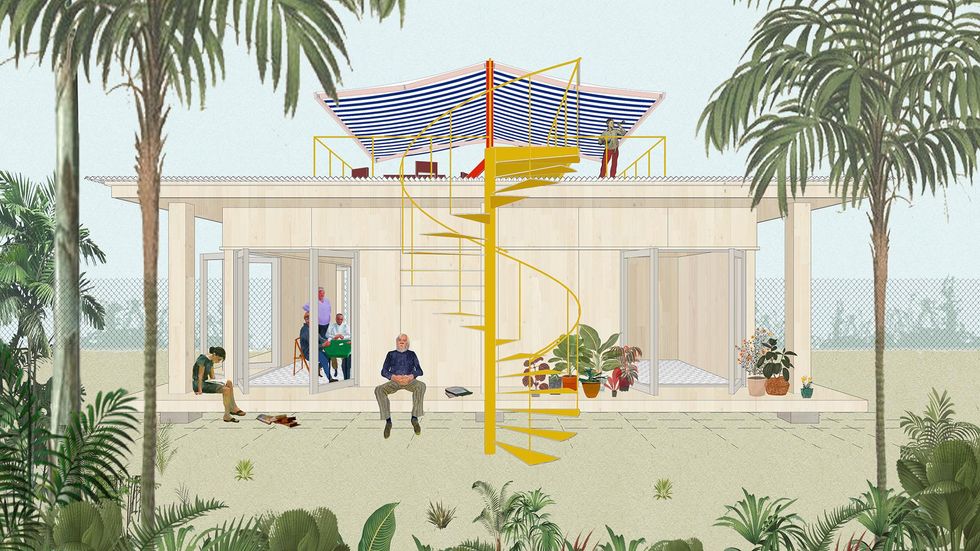
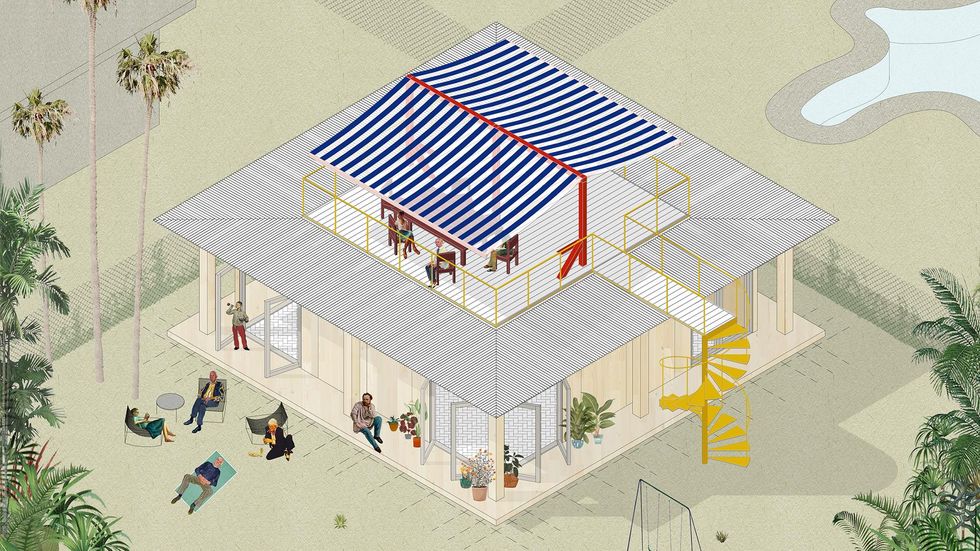
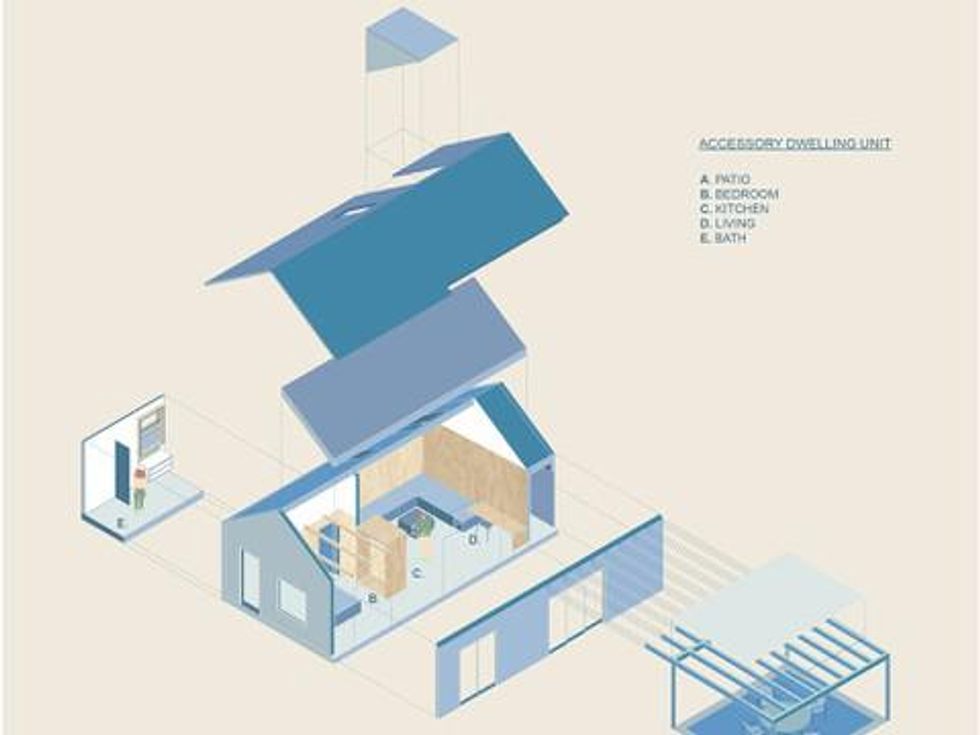
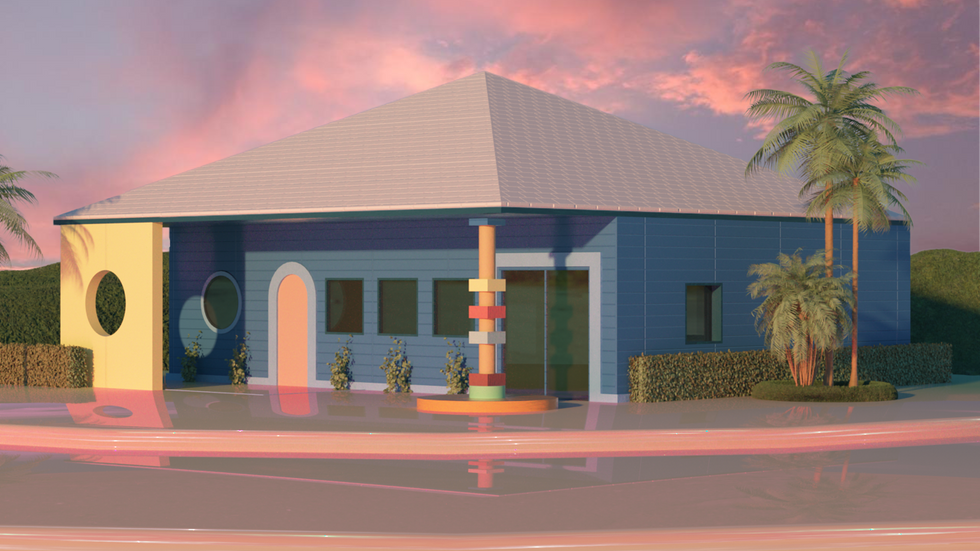
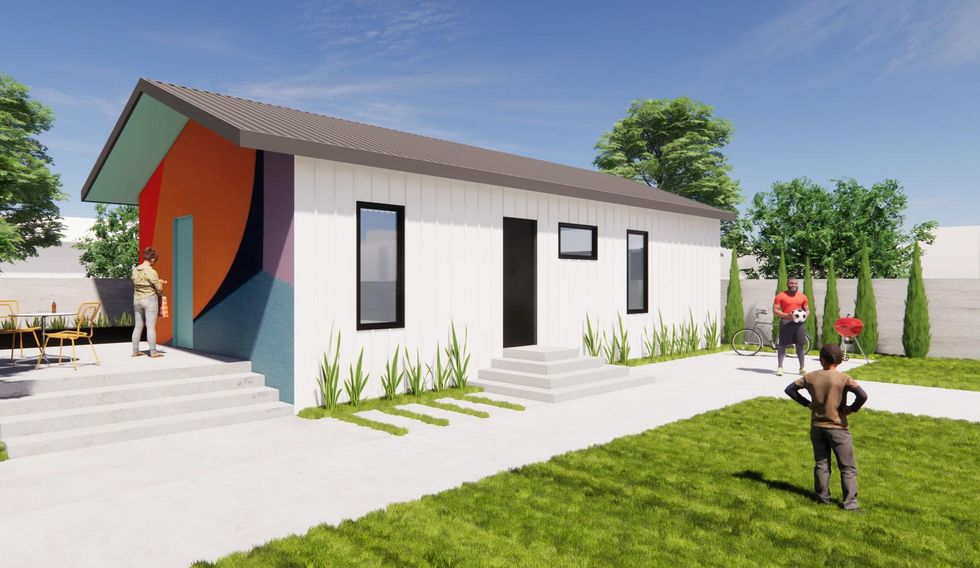
The designs for the stand-alone residences range from a 200-square-foot studio to a 1,200-square foot, two-story, two-bedroom unit. And many of the homes are filled with design flourishes, reflecting the diverse architecture of the city, from a house in the silhouette of a flower to one with a spiral outdoor staircase leading to the roof.
It's no surprise. The program was spearheaded by Christopher Hawthorne, a former architecture critic at the Los Angeles Times and now the city's chief design officer.
The firms are primarily local and startup architecture and design firms, while others are well-known with a history of building granny flats, also know as accessory dwelling units, or ADUs.
The standard plans avoid the Los Angeles Department of Building and Safety's typical four-to six-week review process and can allow approvals to be completed in as quickly as one day.
Some aspects of the plans can be modified to fit a homeowner's preferences. Eight other designs are pending approval.
Mayor Eric Garcetti believes by adding more such units, the city can diversify its housing supply and tackle the housing crisis. Recent state legislation made it easier to build the small homes on the lot of single-family residences. Since then, ADUs have made up nearly a quarter of Los Angeles' newly permitted housing units.
Because construction costs are relatively low for the granny flats – the pre-approved homes start at $144,000 and can go beyond $300,000 – the housing is generally more affordable. The median home price in L.A. County in January was $690,000.
Here's a quick look at the designs approved so far:
Abodu
Abodu
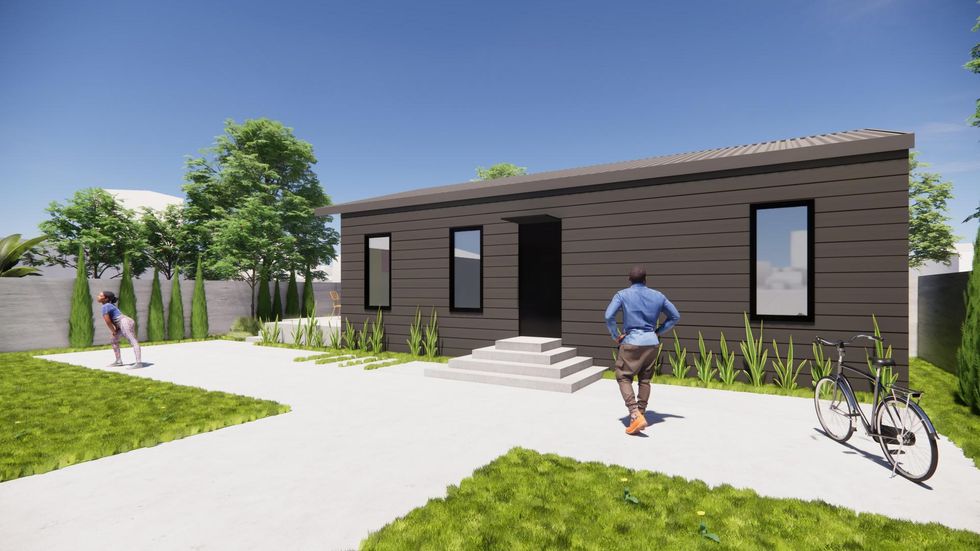
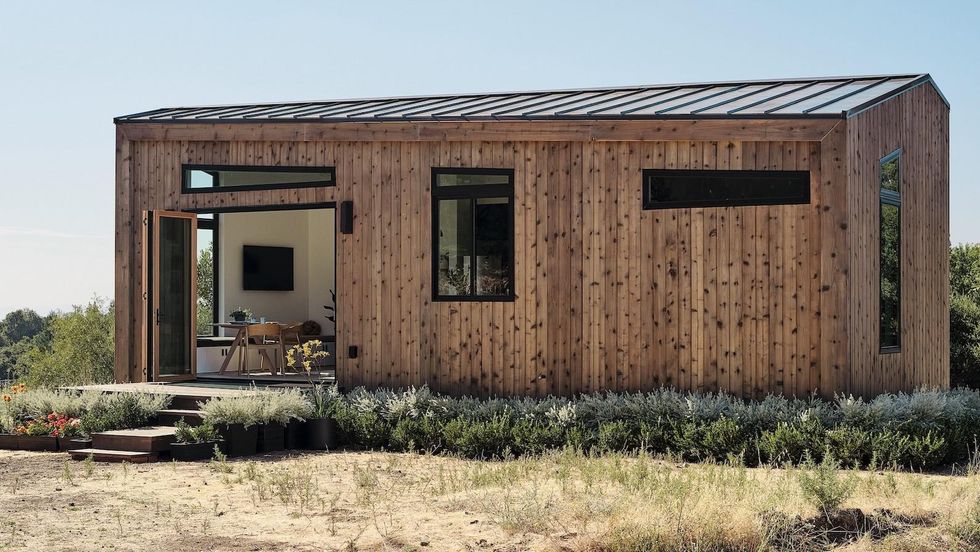
Abodu, based in Redwood City in the Bay Area, exclusively designs backyard homes. In 2019, it worked with the city of San Jose on a program similar to the one Los Angeles is undertaking.
In October, it closed a seed funding round of $3.5 million led by Initialized Capital.
It has been approved for a one-story 340-square-foot studio, a one-story one-bedroom at 500 square feet, and a one-story, 610-square-foot two-bedroom.
The pricing for the studio is $189,900, while the one-bedroom costs $199,900 and the two-bedroom is $259,900.
Amunátegui Valdés Architects
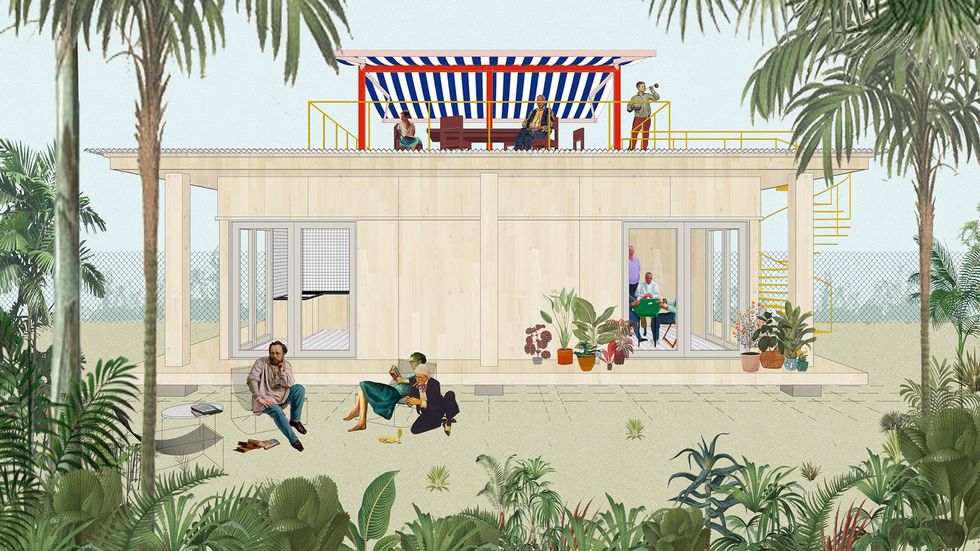
Led by Cristobal Amunátegui and Alejandro Valdés, the firm was founded in 2011 and has offices in Los Angeles and Santiago, Chile. Amunátegui is an assistant professor at the Department of Architecture and Urban Design at UCLA.
The firm designs work in various scales and mediums, including buildings, furniture and exhibitions.
Its one-story, two-bedroom with a covered roof deck 934-square-foot unit is pending approval from the city.


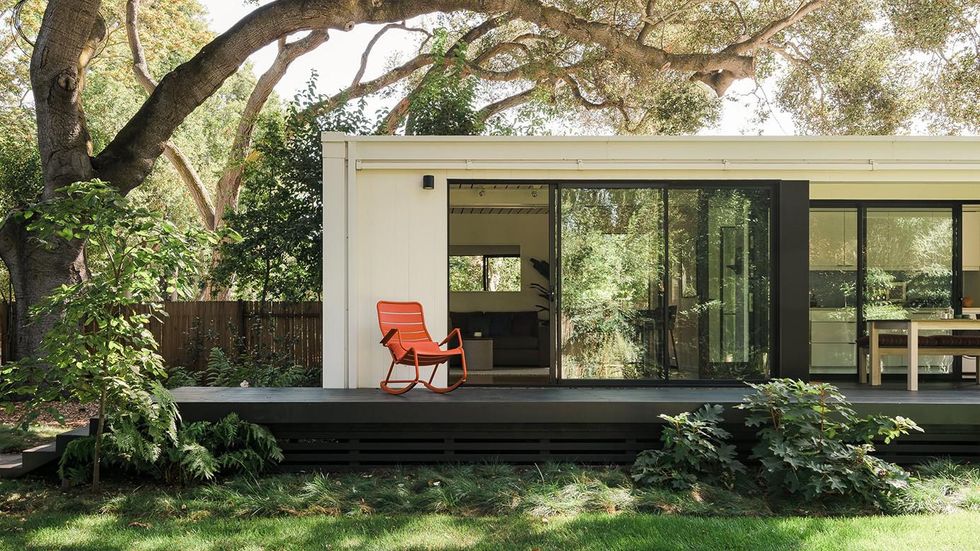
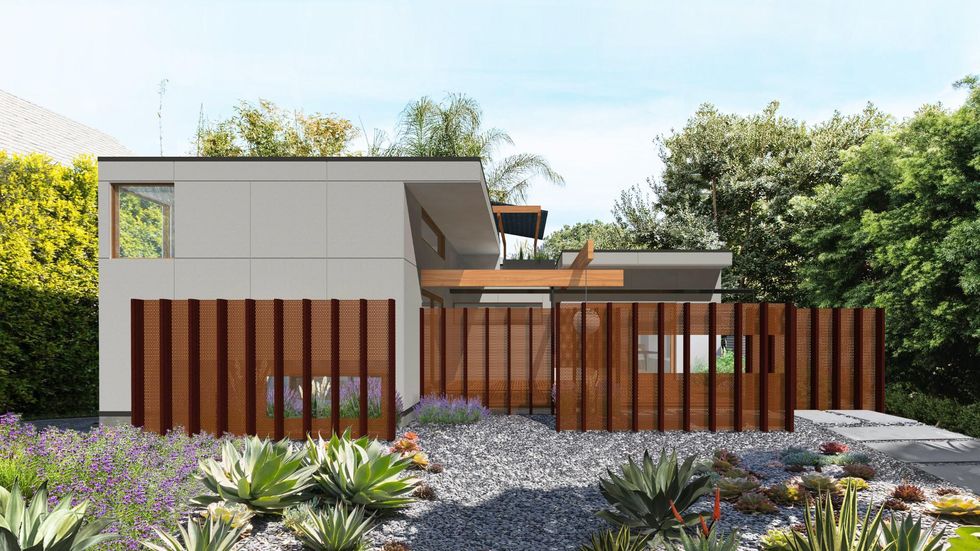
Connect Homes
Connect Homes has a 100,000-square foot factory in San Bernardino and an architecture studio in Downtown L.A.
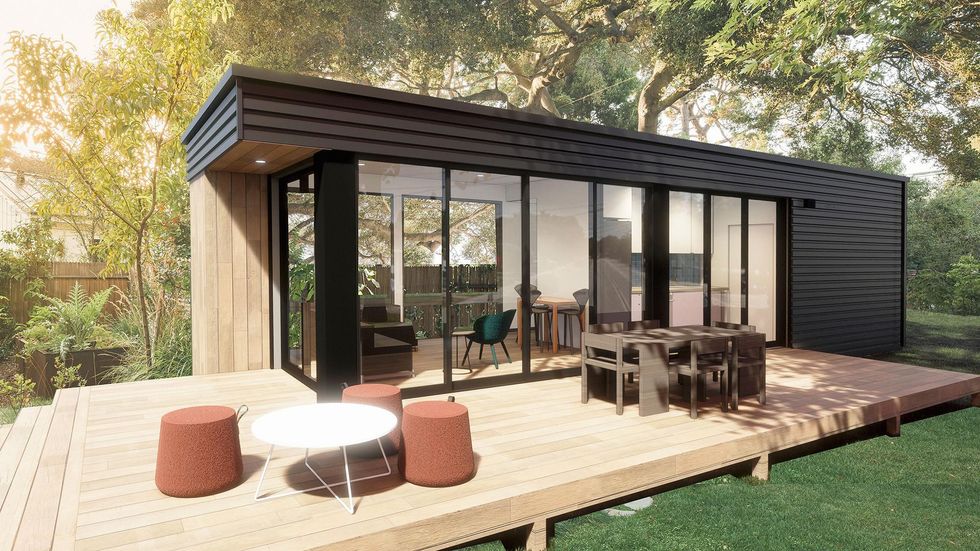
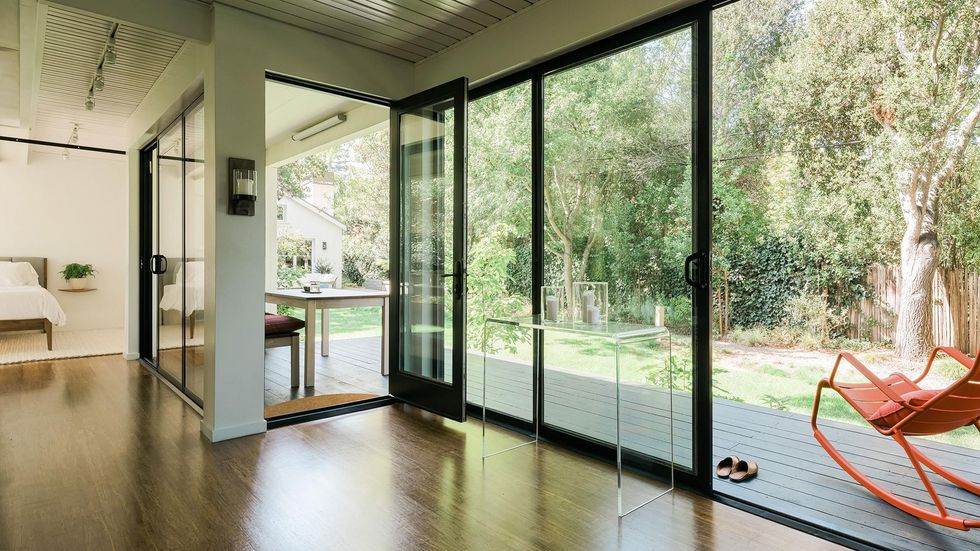
It specializes in glass and steel homes and has completed 80 homes in California. Its designs have an aesthetic of mid-century modern California residential architecture.
It has two one-bedroom models pre-approved by the city, one is 460 square feet, which costs $144,500 with a total average project cost of $205,000. The other is 640 square feet, which costs $195,200 with a total project cost of $280,000.


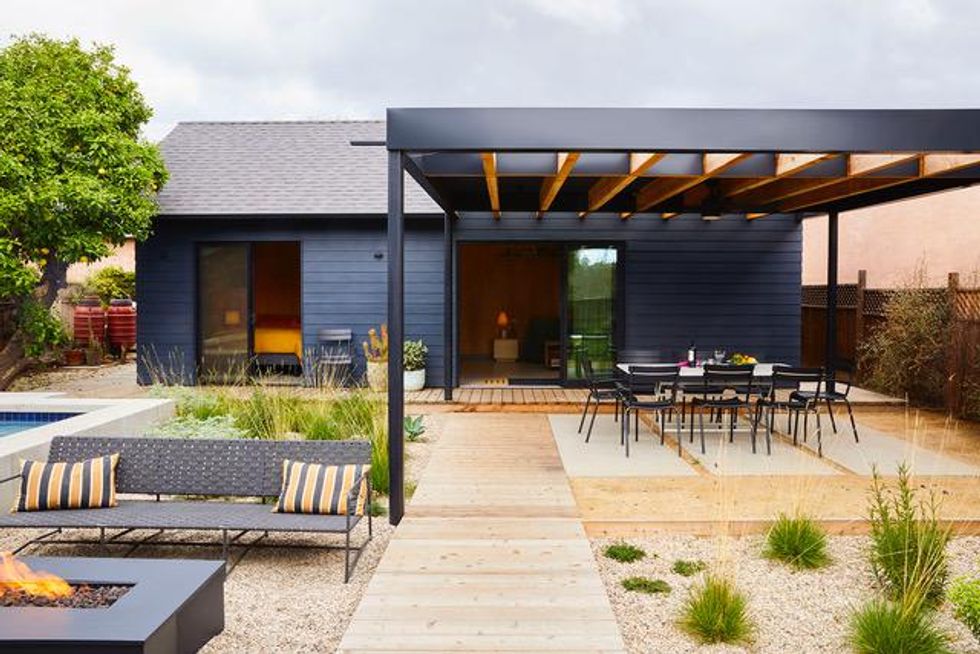
Design, Bitches
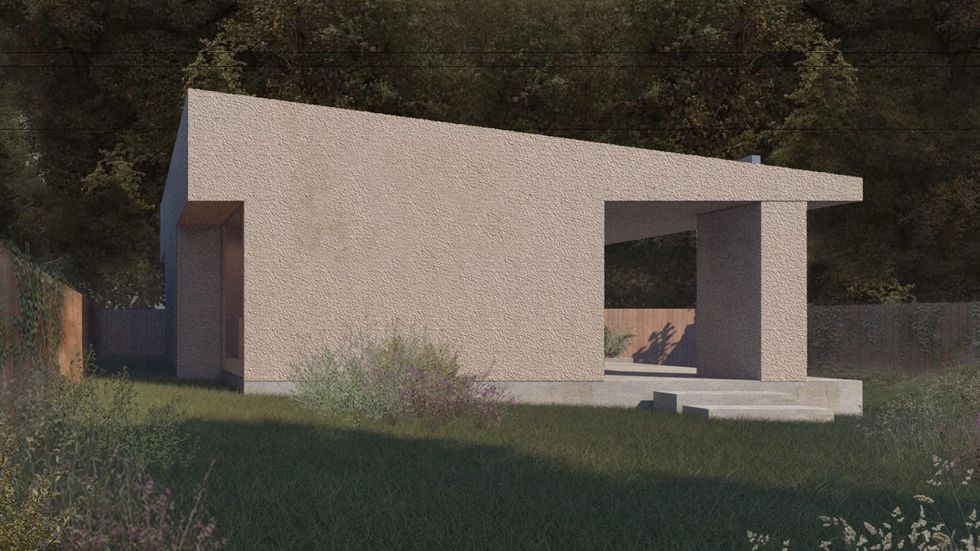
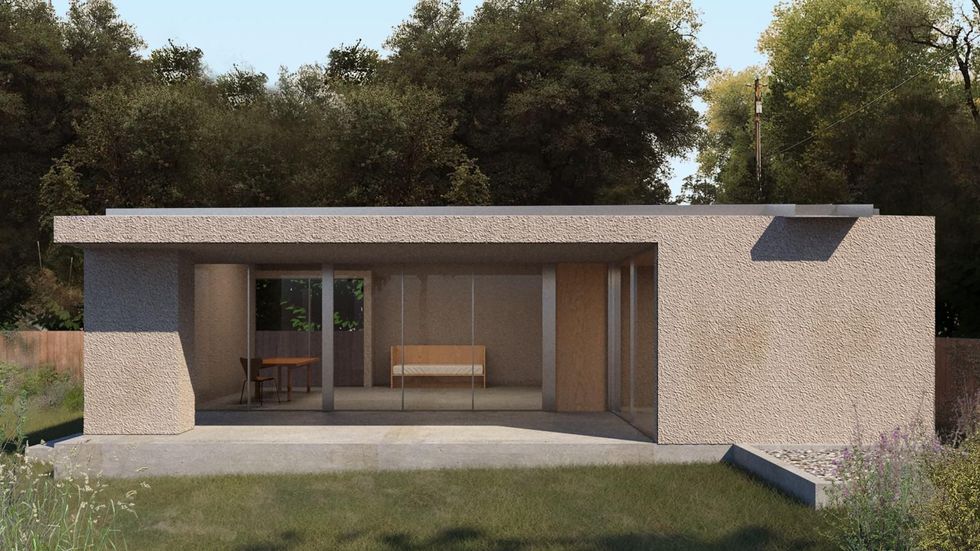
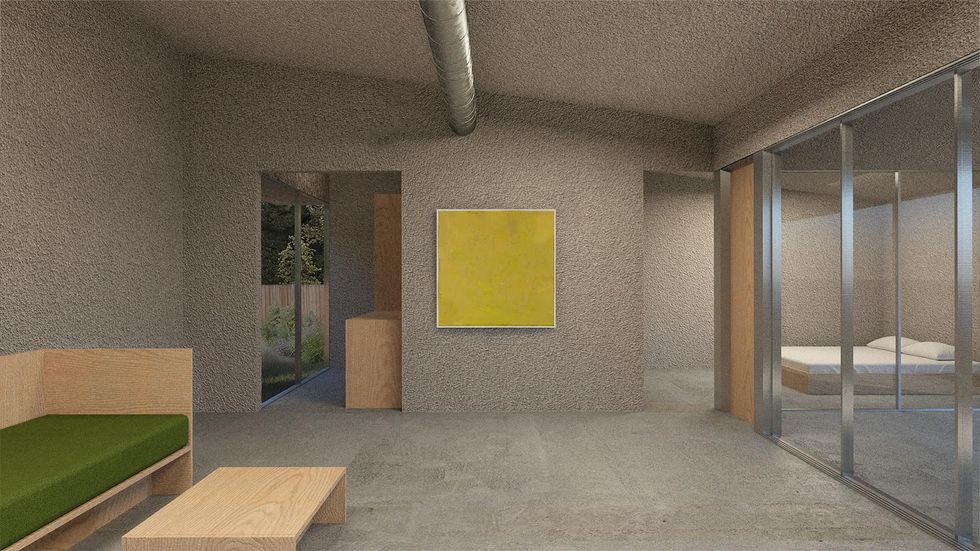
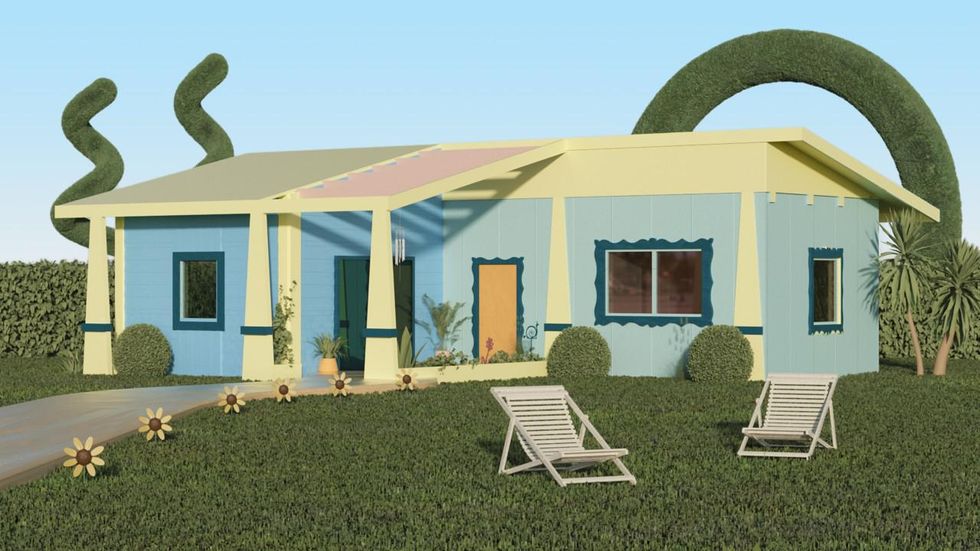
The Los Angeles-based architectural firm founded in 2010 describes itself as having a "bold and irreverent vision." Its projects include urban infill ground-up offices to single-family homes, adaptive re-use of derelict commercial buildings and renovations of historic landmarks.
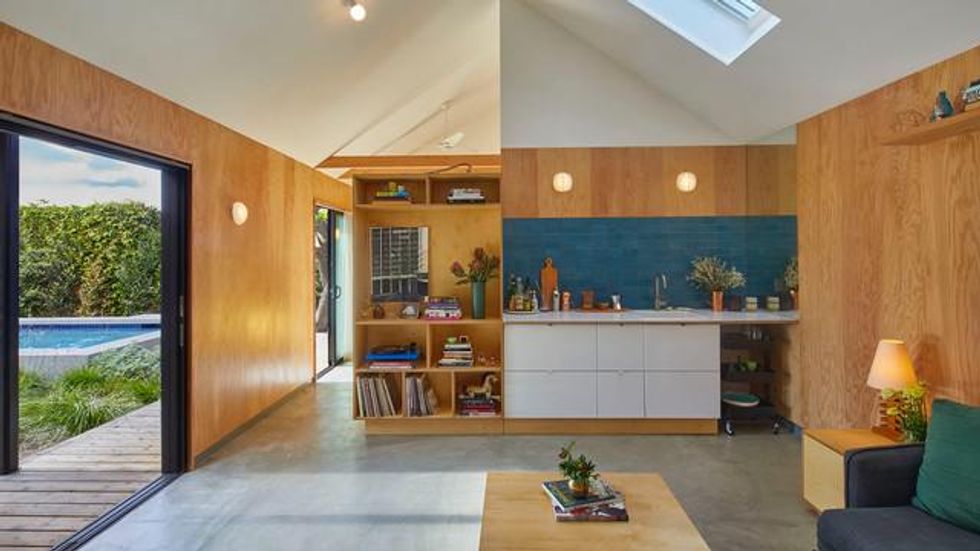
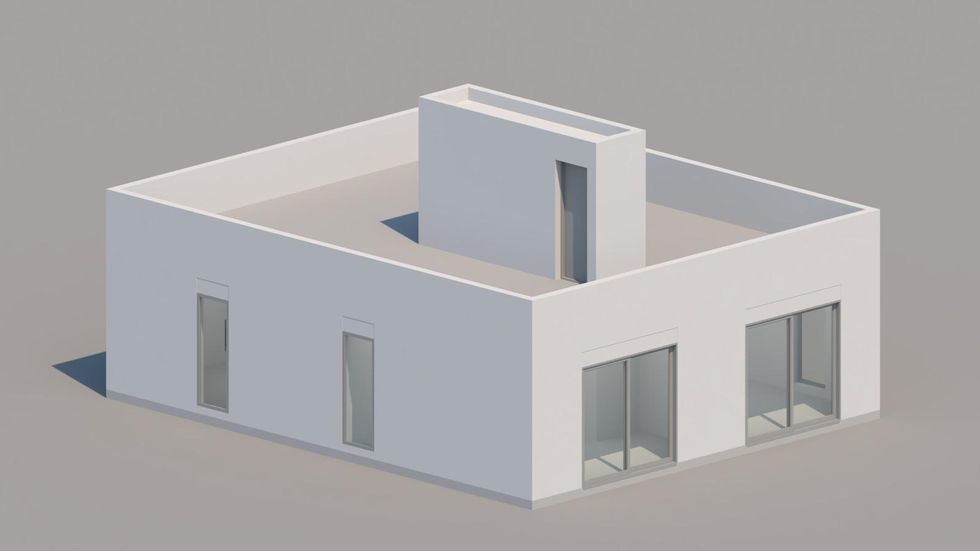
Its pre-approved design, named "Midnight Room," is a guest house/ studio. Its bedroom can be left open for a loft feel or enclosed as a separate room. The design is a one-story, one-bedroom at 454 square feet.


Escher GuneWardena Architecture
Founded in Los Angeles in 1996, Escher GuneWardena Architecture has received international recognition and has collaborated with contemporary artists, worked on historical preservation projects and more.
The company has been approved for two different one-story, one- or two-bedroom units, one at 532 square feet with an estimated cost of $200,000 and another at 784 square feet with an estimated cost of $300,000. The firm noted the costs depend on site conditions and do not include soft costs. Those could add 10% to 12% to the total construction costs.


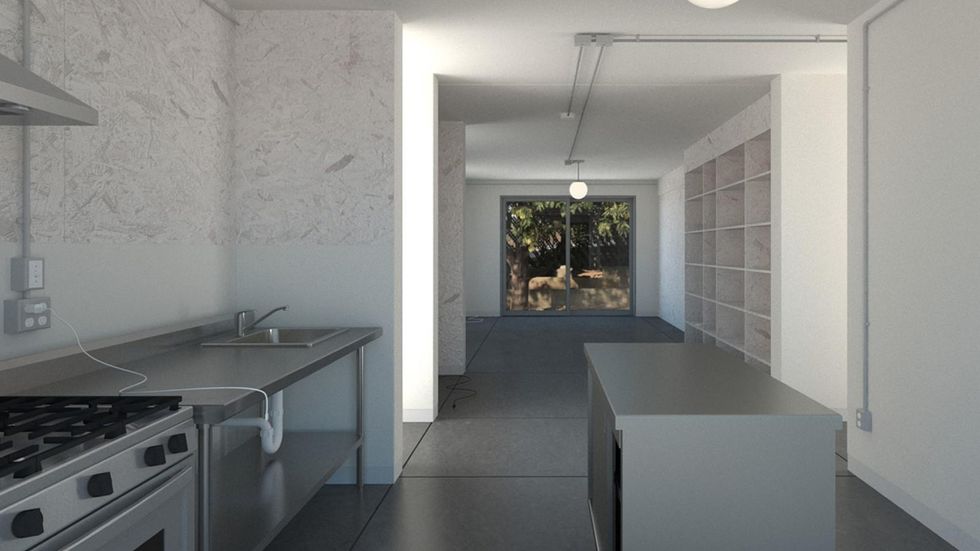
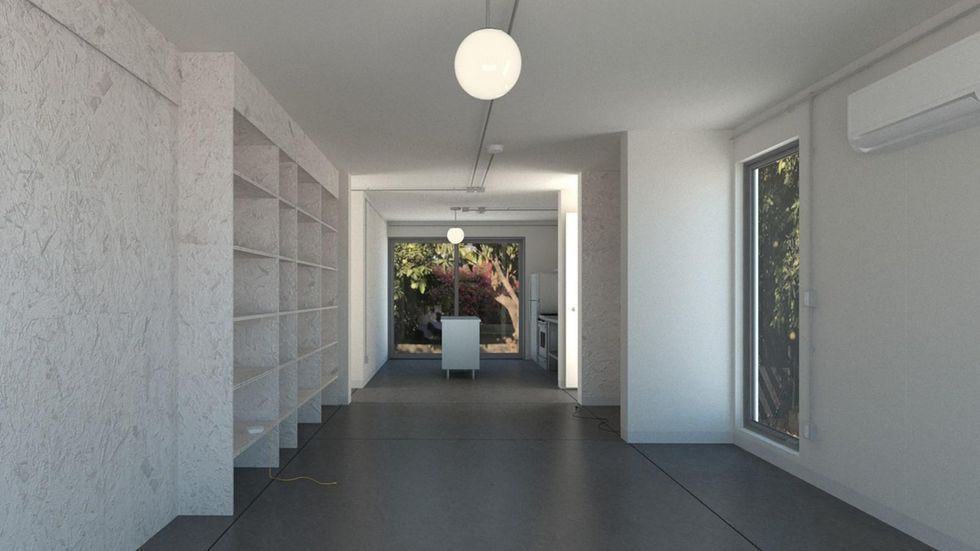
First Office
First Office is an architecture firm based in Downtown Los Angeles. Its approved ADUs will be built using prefabricated structural insulated panels, which allow for expedited construction schedules and high environmental ratings.
The interior finishes include concrete floors, stainless steel counters and an occasional element of conduit.
There are five options:
- A one-story studio, 309 to 589 square feet
- A one-story one-bedroom, 534 to 794 square feet
- And a one-story two-bedroom, 1,200 square feet


Fung + Blatt Architects

Fung + Blatt Architects is a Los Angeles-based firm founded in 1990.
The city has approved its 795-square-foot, one-story, one-bedroom unit with a roof deck. It estimates the construction cost to be $240,000 to $300,000, excluding landscape, site work and the solar array. Homeowners can also expect other additional costs.
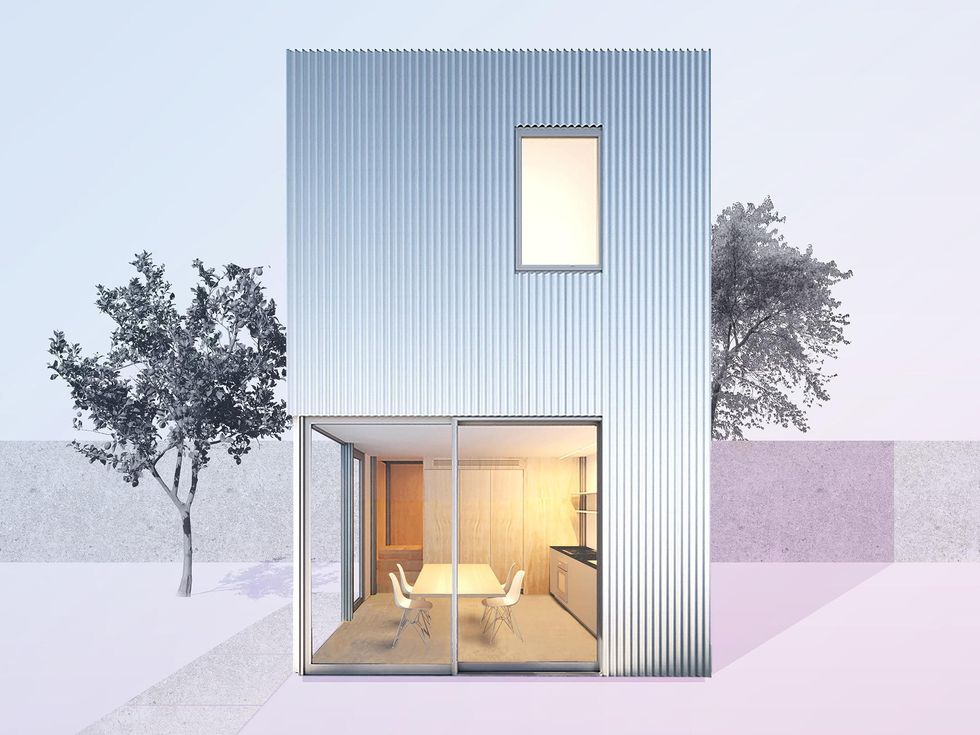
Taalman Architecture/ IT House Inc.
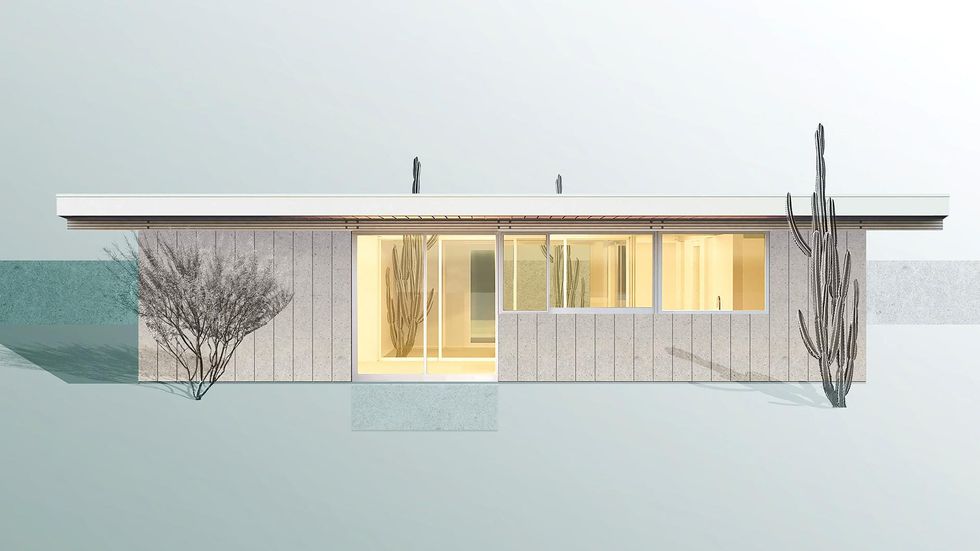
The design team behind "IT House" is Los Angeles-based studio Taalman Architecture. Over the past 15 years, IT House has built more than 20 homes throughout California and the U.S.
The IT House ADU standard plans include the tower, bar, box, cube, pod and court.
The city has approved four options, including:
- A two-story including mechanical room, 660 square feet
- A two-story including mechanical room, 430 square feet
- A one-story studio, 200 square feet
- A one-story including mechanical room, 700 square feet
The firm also has another two projects pending approval: a 360-square-foot one-story studio and a one-story, three-bedroom at 1,149 square feet.


LA Más
LA Más is a nonprofit based in Northeast Los Angeles that designs and builds initiatives promoting neighborhood resilience and elevating the agency of working-class communities of color. Homeowners who are considering their design must commit to renting to Section 8 tenants.
The city has approved two of LA Más' designs: a one-story, one-bedroom, 528 square feet unit and a one-story, two-bedroom, 768 square feet unit. The firm has another design for a one-story studio pending approval. That design would be the first 3D-printed ADU design in the city's program.


Jennifer Bonner/MALL

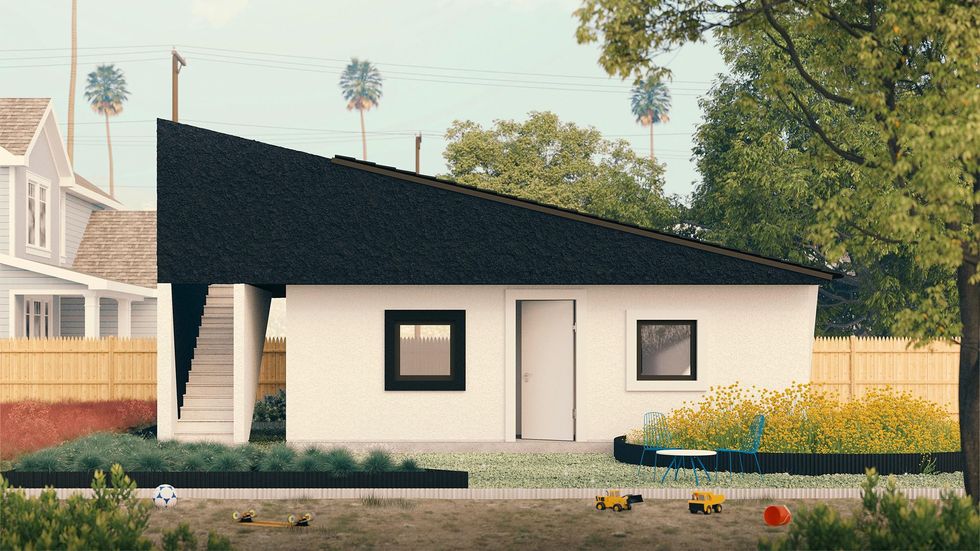
Massachusetts-based Jennifer Bonner/MALL designed a "Lean-to ADU" project, reinterpreting the stucco box and exaggerated false front, both Los Angeles architectural mainstays.
The design has been approved for a 525-square-foot one-story, one-bedroom unit with a 125-square-foot roof deck.
sekou cooke STUDIO
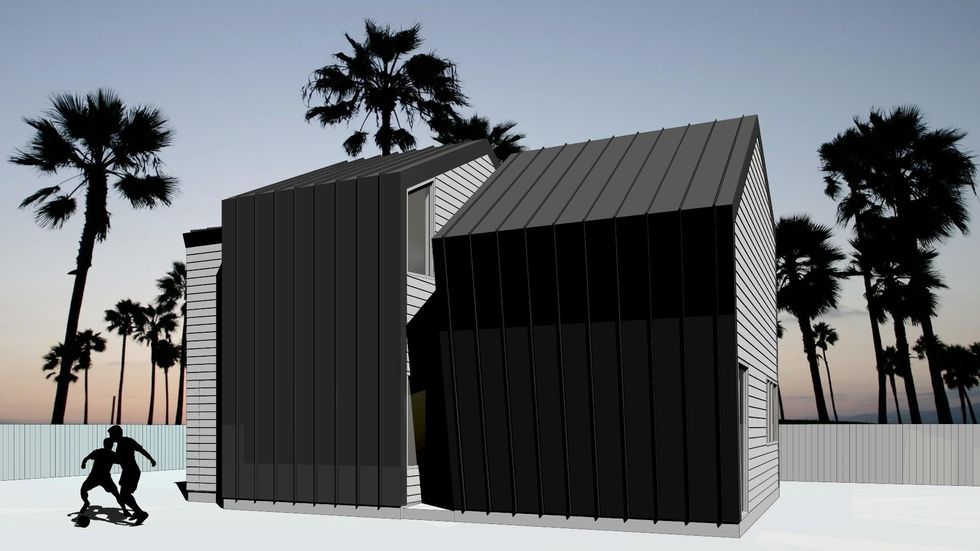
New York-based sekou cooke STUDIO is the sole Black-owned architectural firm on the project.
"The twisted forms of this ADU recalls the spin and scratch of a DJ's records" from the early 90s, the firm said.
Its design, still pending approval, is for a 1,200-square-foot, two bedroom and two bathroom can be adapted to a smaller one-bedroom unit or to include an additional half bath.
SO-IL

New York-based SO-IL was founded in 2008. It has completed projects in Leon, Seoul, Lisbon and Brooklyn.
Its one-story, one-bedroom 693-square-foot unit is pending approval. It is estimated the construction cost will be between $200,000 and $250,000.
WELCOME PROJECTS
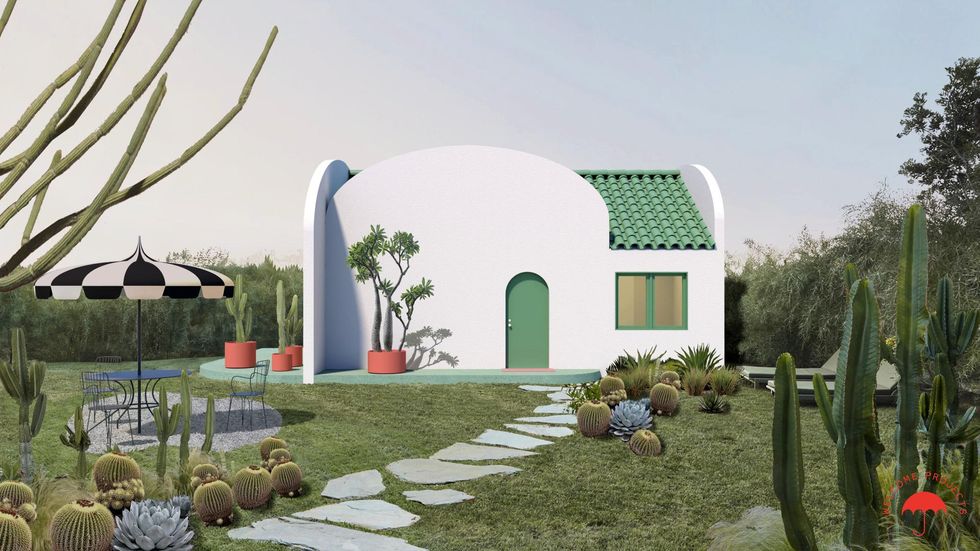
Los Angeles-based Welcome Projects has worked on projects ranging from buildings, houses and interiors to handbags, games and toys.
Its ADU is nicknamed The Breadbox "for its curved topped walls and slight resemblance to that vintage counter accessory."
It has been approved for a one-story, one-bedroom 560-square-foot unit.
wHY Architecture
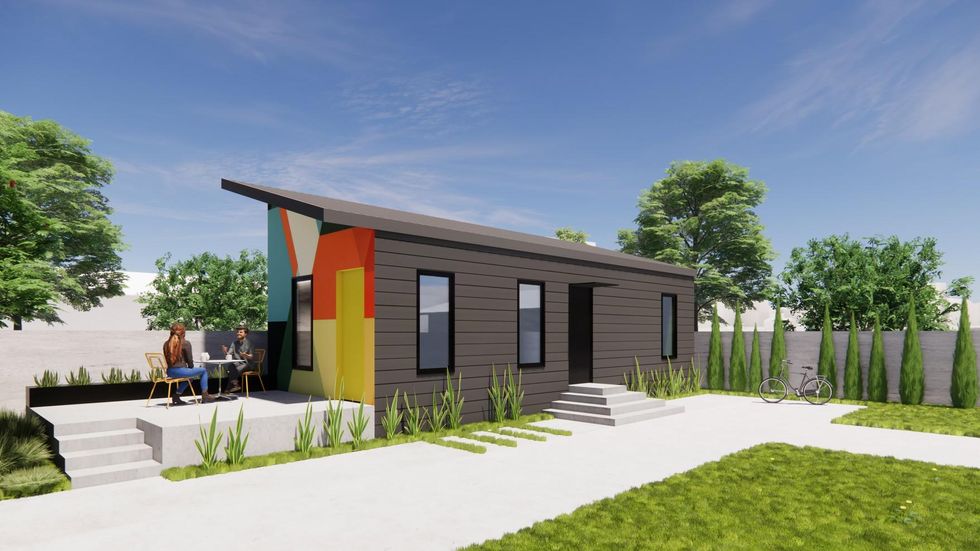
Founded in 2004, wHY is based in Los Angeles and New York City. It has taken on a landmark affordable housing and historic renovation initiative in Watts.
Its one-story, one- or two-bedroom 480 to 800-square-foot unit is pending approval.


Firms that want to participate in the program can learn more here . Angelenos interested in building a standard ADU plan can learn more the approved projects here.
From Your Site Articles
- United Dwelling Raises $10M to Address the Housing Shortage ... ›
- Plant Prefab Raises An Additional $30 Million - dot.LA ›
- How 3D Printing Could Help Tackle Homelessness in LA - dot.LA ›
- New Bills, New Startups Address Housing in California - dot.LA ›
- LA's ADU Culture Still Faces Financial Barriers - dot.LA ›
- What Will Take To Make Modular Homes Mainstream? - dot.LA ›
Related Articles Around the Web

Sarah Favot
Favot is an award-winning journalist and adjunct instructor at USC's Annenberg School for Communication and Journalism. She previously was an investigative and data reporter at national education news site The 74 and local news site LA School Report. She's also worked at the Los Angeles Daily News. She was a Livingston Award finalist in 2011 and holds a Master's degree in journalism from Boston University and BA from the University of Windsor in Ontario, Canada.
Revel’s Afterburner Round: $150M for Hard Tech Infrastructure
09:13 AM | February 27, 2026
🔦 Spotlight
Hello Los Angeles,
This week’s biggest hard tech funding headline belongs to Revel, which just raised a $150M Series B to modernize the software layer behind hardware test and control. The round was led by Index Ventures, with major participation from Redpoint Ventures and returning investors Thrive Capital, Felicis, and Abstract Ventures, plus angel participation including Figma CEO Dylan Field.

Revel’s pitch is simple: rockets, advanced energy, robotics, and defense systems have evolved fast, but the tooling that tests and commands them is still stuck in the past. The company says its platform can cut test stand setup time from 14 days to about 8 hours, and that teams go from testing every other day to multiple tests per day. One customer, Impulse Space, reportedly runs 80+ instances of RevelTest, and Revel claims every pilot it has run has converted into a paying customer.
What makes this more than “just another big round” is where Revel is aiming next: expanding from test stands into industrial control across critical infrastructure, including nuclear facilities, power stations, refineries, water treatment, data centers, and biomedical manufacturing. Their platform includes live telemetry and safe command execution, and even a purpose built language, RevelCode, designed for deterministic, debuggable control in high consequence environments. In other words, if LA is becoming a capital of hard tech, Revel is trying to become the control room software those companies standardize on.Keep scrolling for the latest LA venture rounds, fund news and acquisitions.
🤝 Venture Deals
LA Companies
- Third Way Health raised an oversubscribed $15M Series A led by Health Velocity Capital to scale its AI-enabled hybrid human and automation front-office operations for medical practices. The company says it will use the funding to accelerate customer growth, expand operations, and deepen its AI and automation roadmap, building on its claim of supporting practices serving 5M+ patients annually. - learn more
- Inhouse raised $5M in seed funding to grow its AI legal platform that helps small and midsize businesses generate contracts, get answers to complex legal questions, and bring in attorneys when needed. The round included backing from Run Ventures, Royal Street Ventures, Switch, and LegalZoom cofounder and former CEO Brian Liu, and the company says it will use the new capital to expand its AI agent capabilities and increase automation across contract lifecycle management, compliance, and proactive risk management. - learn more
- Subject raised a $28M growth investment led by Vistara Growth, with participation from new backers NextEquity Partners, Green Street Impact Partners, and Outcomes Collective, plus existing investors including Kleiner Perkins and others. The company says it will use the funding to accelerate development of its AI-powered K–12 curriculum and online learning platform, expand accredited course offerings, and scale adoption with more districts and educators worldwide. - learn more
- Mogul raised $5M in a round led by the Yamaha Music Innovations Fund, with participation from Urban Innovation Fund, Mindset Ventures, Fairway Capital Partners, and renewed support from Amplify LA and Wonder Ventures. The royalty management platform says it will use the funding to expand services for artists and their teams, building on traction like processing over $1.5B in royalties and launching its new Catalog Valuation Center to help creators understand the value of their catalogs. - learn more
- Handl Health raised a $14.2M Series A led by Arthur Ventures, with follow-on investment from Syndra Capital Partners, an additional strategic investor, and increased participation from existing backers Mucker Capital, Riverfront Ventures, Digital Health Venture Partners, and Boutique Venture Partners. The company says it will use the new capital to expand its platform and deliver deeper analytics that help employers and benefits decision-makers design lower-cost health plans with more predictable pricing and better care outcomes. - learn more
- Skorppio launched a self-serve, on-premise high-performance computer rental platform that lets AI teams, VFX studios, researchers, and schools rent enterprise-grade systems without buying hardware or locking into the cloud. The company says its fleet includes everything from performance laptops to DGX-class AI systems and GPU servers, supported through a PNY Pro partnership that makes NVIDIA Blackwell GPUs available, plus curated “KIT” bundles designed for specific workflows. - learn more
LA Venture Funds
- B Capital participated in Gushwork’s $9M seed round, backing the startup’s bet that “AI search” will become a major new channel for B2B lead generation. The round was co-led by Susquehanna International Group and Lightspeed, and Gushwork says it’s helping businesses show up in answers from tools like ChatGPT, Gemini, and Perplexity using automated marketing agents that generate search optimized content and backlinks. - learn more
- UP.Partners participated in BeyondMath’s $18.5M seed round, backing the company as it scales its “generative physics” approach to faster engineering-grade simulation. The raise included a $10M seed extension led by Cambridge Innovation Capital, with additional participation from Insight Partners and InMotion Ventures. - learn more
- MANTIS Venture Capital participated in SolveAI’s $50M funding round, backing the company as it launches a platform that lets employees build enterprise applications using natural language instead of code. The raise included a $45M Series A led by GV plus a previously undisclosed $5M pre-seed led by Accel, with additional participation from Northzone, NeverLift, and angels including Mike LoSapio, Pushmeet Kohli, and Olivier Godement. - learn more
- Fabric VC participated in Kash’s $2M pre-seed round, backing the startup as it embeds prediction markets directly into social media starting with X. Kash says users can turn posts into live, tradable markets through its @kash_bot, letting people express conviction on real-world outcomes inside the feed rather than in separate apps. The round also included investors such as Big Brain Holdings, Spartan Group, Coinbase Ventures, Kosmos Ventures, Halo Capital, MoonRock Capital, and Polaris Fund. - learn more
- M13 led LuminosAI’s latest funding round as the company launched Lighthouse, a new feature it says can automatically test generative and agentic AI systems for concrete legal liability. LuminosAI says the new capital will help it accelerate growth and expand its team to support a growing customer base, with participation from investors including Bloomberg Beta, Hawktail, AME Cloud Ventures, Crosscourt, Octave, Great Oaks, Fundrise, and others. - learn more
LA Exits
- Niagen Bioscience has sold its ChromaDex Reference Standards business to LGC in an all-cash transaction that closed on Feb. 24, 2026, as the company sharpens its focus on its core longevity strategy. Niagen says the divestiture helps it fully exit non-core operations and concentrate resources on NAD+ science, intellectual property, and commercial growth around its Niagen solutions, while LGC adds the standards portfolio to deepen its reference materials offering for pharma and lab customers. - learn more
- Mutiny has been acquired by LA-based investment firm Shamrock Capital, which says the deal will help Mutiny accelerate growth and strengthen its position as a leading gaming-focused creative agency. Founded in 2021 and previously incubated within Trailer Park Group, Mutiny works with publishers and brands on research-driven, player-first creative, social, and community campaigns. Shamrock says Mutiny will continue scaling as a standalone business, with support that could include strategic acquisitions. - learn more
- Vestigo Aerospace has been acquired by Applied Aerospace & Defense, bringing Vestigo’s Spinnaker deorbit drag-sail product line into Applied’s portfolio. Applied says Spinnaker helps satellite and launch-vehicle operators meet tightening orbital debris rules by providing a lightweight, cost-effective way to deorbit objects in low Earth orbit, and Vestigo founder and CEO Dr. David Spencer will join Applied as VP of Deployable Systems. - learn more
Read moreShow less
Meet the 24-Year-Old Trying to Disrupt the Intellectual Property Industry
05:30 AM | July 06, 2020
Nate Cavanaugh has a penchant for prophecy. The 24-year-old founder of Venice-based Brainbase wrote a letter to his future self when he was 13 in which he presciently asked, "Do you still want to start your own computer company?" At 18, in a high school assignment describing his role model, he chose Mark Zuckerberg, and proclaimed that "I, too, plan on starting my own technology company in college... (and) plan to drop out of college once I can comfortably support myself."
According to plan, he enrolled at Indiana University and promptly founded Guuf, an esports tournament platform, before leaving school and selling the company shortly thereafter. Inspired by a talk on the problem of patent trolls from Union Square Ventures' co-founder Fred Wilson and a blog post on the subject by Elon Musk, at 19 Cavanaugh formed Brainbase, a technology company meant to simplify and streamline the management of intellectual property (for example, trademarks, patents, copyright).
Five years later, the company has around 40 employees and its customers include BuzzFeed, the Vincent Van Gogh Museum, and Sanrio (of Hello Kitty and friends fame). Its flagship product is called Assist, which includes a dashboard for tracking royalty payments and schedules; analytical tools for comparing IP asset performance by property, territory, partner, category and distribution channel; automated invoice generation and contract management; and artificial intelligence tools to identify potential opportunities for exploiting IP.
Now, fresh off an $8 million Series A led by Bessemer Ventures with participation from L.A.-based Struck Capital, Alpha Edison, Bonfire Ventures, and Tera Ventures, Brainbase is expanding its product suite with a marketplace to facilitate IP-oriented transactions and a tool to enable IP filing and renewal. In a statement about the investment, Kent Bennett of Bessemer described Brainbase as bringing "the archaic, paper-shuffling world of IP management into the 21st century."

Cavanaugh has long been interested in business and tech. His dad is a serial entrepreneur himself whose current venture, Ready Nutrition, recently signed brand partnerships with NBA superstar Giannis Antetokounmpo and L.A. Rams pro-bowler Aaron Donald. As a 10-year-old kid he remembers marveling at videos of Steve Jobs, which he often rewatches now that he, too, runs a business. "The reality is it's in my genes," he says.
dot.LA caught up with Cavanaugh to ask about his journey so far and what motivates him to keep going, sometimes in the face of skepticism around his youth. His latest prediction? He says the next stage for Brainbase is going to be hard, but he's up for the challenge.
dot.LA: Tell me about your background and how that led to the company you sold after dropping out of college.
I'm originally from Pittsburgh and I grew up in an entrepreneurial family. My dad had been starting companies since I was born, so I was essentially interning at startups from the time I was eight years old. In my junior year of high school I started a website design and services business, and I was making enough money from it that I didn't want or need to go to college.
But I went to Indiana, largely because of Mark Cuban – he's from Pittsburgh, too, and he went there. I knew I didn't want to finish, but I don't think I had the risk tolerance to just not go; I wasn't ready to be a full-time founder yet. I didn't want to keep doing my website business so I decided I'd go, and try to start a startup with the intention of leaving early.
I'd been interested in gaming and esports, and as I kept learning about venture capital I thought a services business would be interesting. There was a company called Major League Gaming that was doing well at the time and my freshman year I formed a company that was basically a platform to facilitate esports tournaments. That was really before esports took off and frankly I think we sold it a bit too early.

Nate Cavanaugh is the founder of Brainbase
You're now on your third company and you raised over $12 million before turning 24. Have you had any pushback along the way because of your age?
Of course. There's a lot of negative press about young founders who aren't ready to run companies at scale. Until you sign that first set of impressive customers or raise money, you get doubted. I was 21 when Brainbase first raised VC funding and I didn't have traditional domain expertise in intellectual property. I was basically self-taught, and there were a lot of people that questioned our story.
What kept you going?
I'm extremely competitive. When I commit to something I have a will to succeed. And dropping out of college to start something makes you want it to succeed extra badly and do whatever it takes to make it work.
What would you consider some of your biggest personal achievements so far?
I'm a big believer that raising money is not necessarily a successful milestone – you need a strong outcome from that, so there's still a lot of work to do. But the fact that we were able to get a round done with Bessemer during COVID-19 was certainly not easy and I'm proud of that. We also recently did a deal with a big university for trademark licensing; I applied there for undergrad and was denied, so getting rejected and then getting them as a customer is kind of a a funny accomplishment.
And the customers we've been able to get, like Sanrio; they're one of the biggest licensors in the world and we got them as a customer within 12 months of starting.
Also one of our first investors was the founder of Duolingo, a unicorn, and they're from Pittsburgh, so I was proud of that too.
How did your dad's business experience impact you?
He had two businesses when I was growing up that got up to a fairly impressive scale, and then he wound them both down to start Ready Nutrition when I was in high school. So he was starting a clean-slate startup when I was a junior. I saw that grow from a one-person business to making nine figures in revenue. I worked as an unpaid intern and I saw how he ran meetings, interacted with employees, how he closed deals. That gave me a lot of valuable experience early on. It's one thing I don't talk about too much when I'm fundraising – as a founder you want your merits to live separately from that – but I was fortunate to be able to grow up with that.
How has your relationship with your dad evolved as you've had your own success?
We have an interesting dynamic. My family is still in Pittsburgh – when he and I talk it's almost all about work; it's the nature of our relationship. It's interesting to be able to talk about different ways we've done things. His business is bootstrapped, whereas we just closed a Series A. It's been really cool to be able to bring my experience with tech, VC and startups and to hear about his side of things in consumer goods. It's fun to be able to talk about and learn from the challenges he and I are going through.
Who else do you consider your role models?
Of the people in my network, I spend a fair amount of time with Adam Struck, the founder of Struck Capital; he's been a helpful mentor and is on our Board. Severin Hacker (co-founder and CTO at Duolingo) and Kent Bennett (Partner at Bessemer Ventures) have also been helpful. It's been great being able to go to them for function-specific questions.
I've been a fan of Steve Jobs and how elegantly Apple markets their products. I still go back and watch his interviews with Kara Swisher. I'd watch those when I was 10 years old.
I also admire Ben Horowitz; his book The Hard Thing About Hard Things is excellent. Andy Grove (former CEO of Intel), too. And I'm also interested in Peter Thiel, who often provides a contrarian view compared to the mainstream tech narrative.
What's your impression of the L.A. tech scene?
I've been really impressed, on a couple of levels. There's sufficient seed-stage capital from funders and the Series A market is maturing. I still think for Series B and beyond most founders think you need to go to NYC or San Francisco to raise, or at least to make the process competitive. And from a recruiting standpoint, there are so many impressive companies here and the region has a ton of engineering talent. So from the capital and recruiting standpoint it's only maturing and I expect that'll keep growing.
This interview has been edited for clarity and brevity.
---
Sam Blake primarily covers entertainment and media for dot.LA. Find him on Twitter @hisamblake and email him at samblake@dot.LAFrom Your Site Articles
- Headspace Adds Former Quickbook Exec as Audience Grows - dot.LA ›
- Bonfire Ventures Raises $100M Fund II - dot.LA ›
- Brainbase Launches Two New Trademark Tracking Products - dot.LA ›
- Meta Software Moves Its Data SaaS Operations to LA - dot.LA ›
- Will AI Kill the Student Essay? These Professors Say 'No' - dot.LA ›
Related Articles Around the Web
Read moreShow less
Sam Blake
Sam primarily covers entertainment and media for dot.LA. Previously he was Marjorie Deane Fellow at The Economist, where he wrote for the business and finance sections of the print edition. He has also worked at the XPRIZE Foundation, U.S. Government Accountability Office, KCRW, and MLB Advanced Media (now Disney Streaming Services). He holds an MBA from UCLA Anderson, an MPP from UCLA Luskin and a BA in History from University of Michigan. Email him at samblake@dot.LA and find him on Twitter @hisamblake
https://twitter.com/hisamblake
samblake@dot.la
RELATEDTRENDING
LA TECH JOBS