
Downturn at LA’s Ports Could Imperil Clean Tech Startups

Lon Harris
Lon Harris is a contributor to dot.LA. His work has also appeared on ScreenJunkies, RottenTomatoes and Inside Streaming.
cargo ship on the ocean
Photo by Chris Pagan on Unsplash

This is the web version of dot.LA’s weekly newsletter. Sign up to get the latest news on Southern California’s tech, startup and venture capital scene.

For the most part, the “supply chain issues” that dominated headlines during the early days of the COVID pandemic and lockdown have started to ease. Major corporations have had time to adjust their schedules and routes to a new pandemic-era reality, and a still-slow Chinese economy continues shipping less overall freight to the rest of the world, freeing up bottlenecks and getting global commerce slowly flowing again.

While this is good news for consumers still desperately trying to get their hands on a PlayStation 5, not all of the news has been so positive, specifically for companies and workers tied to the local ports of Los Angeles and Long Beach.

As part of this global readjustment of the supply chain, and facing lengthy trucking and warehouse backlogs upon arriving in Southern California, many U.S. retailers and manufacturers figured out new shipping workarounds that moved business away from the region altogether. Ports on the East and Gulf Coasts have been steadily inheriting new business while the Los Angeles market loses out, and these trends seem unlikely to reverse even as China’s economy gears back up and shipping volume starts to approach pre-pandemic levels.

Exacerbating concerns about moving cargo through Southern California is the ongoing labor dispute between West Coast dockworkers and their employers. Though officials from both sides of the negotiating table have assured the press that they can reach a new contract without disrupting port operations, the situation has led to anxiety throughout the industry, and prompted some companies to begin diverting some freight around the West Coast, just in case. (The last time dockworkers and their employers had to work out a new contract – in 2014 and 2015 – it led to nine months of delays; the Obama administration ultimately intervened and forced through a new deal.)

While the Los Angeles and Long Beach ports combine to handle around 40% of U.S. imports from Asia – valued at around $469 billion a year – the actual amount of goods coming through has been dropping steadily. At various times over the past year, New York and New Jersey have briefly claimed the top spot as America’s busiest. With some retailers and manufacturers already investing in new facilities and processes at other locations across the country, it’s looking more and more like the changes may be permanent. One analysis by a New York investment firm predicted that West Coast ports could lose up to 10% of their overall cargo to destinations on the Atlantic coast.

On the most basic and immediate level, this has a direct impact on the local labor force. 175,000 Southern California residents are employed at the ports themselves or in directly related businesses. But a permanent downturn in local shipping would have far more significant and far-reaching ripple effects.

For example, the tremendous amount of freight coming into Southern California through the ports led to an explosion in the wider logistics sector, filling the Inland Empire with warehouses and fulfillment centers. Trucking has also remained a steady source of income for tens of thousands of local residents. Though the shipping backlog briefly meant a surplus of jobs for many of these workers, a permanent shift in cargo volume could force many to seek work in other markets.

Los Angeles’ predominance as a shipping hub has also led a number of technology companies and startups to cluster around the ports. An overall drop in traffic and revenue there could have devastating effects on a number of these efforts as well. San Pedro accelerator Braid Theory focuses specifically on the “blue economy” and ocean-related industries, working with startups in niche areas like port logistics, aquaculture and energy; less freight and traffic moving through the port could mean fewer potential partners and avenues for collaboration. Digital platform Dray Alliance builds solutions to make the movement of cargo from shipping containers to nearby warehouses more orderly and systematic. Their business naturally relies on a steady flow of freight coming in from foreign destinations to Los Angeles and Long Beach.

Gene Seroka, executive director of the Port of Los Angeles, remains confident that some of the traffic currently headed toward the East Coast will ultimately return to Southern California. To his view, skittishness about a possible strike or labor-related disruption to the ports has been driving a lot of these macro-level changes. He noted to Bloomberg in October that 2022 remained on track to be the Port of Los Angeles’s second busiest year. So theoretically, a resolution to the labor dispute, coupled with a permanent easing on the local backlog and related bottlenecks, could restore L.A.’s reputation as the nation’s #1 place to send your container ships.

Plus we still have the best tacos. - Lon Harris

Here's What Happened In LA's Entertainment Tech World This Week 🍿

A digital art show in L.A. merged auction with ecommerce.

Amazon’s new virtual studio aims to cut production costs.

Trump and the art of the poorly-timed celebrity NFT.

Social Media 📱

ChatGPT is all the rage, but will it cause more cheating in schools?

The latest Ticketmaster fiasco fuels more antitrust questions.

Influencers target Discord and Twitter in pump and dump scheme.

Influencers are outsmarting TikTok’s algorithm.

Clean Tech  ♻️

PG&E’s new pilot program will pay EV owners to send electricity to the grid.

CPUC votes to change compensation for rooftop solar energy.

Vinfast cars are coming to the U.S., but not as planned.

Space 🚀

Why SpaceX has a growing monopoly on government contracts.

We’ve accomplished nuclear fusion ignition, now what?

Listen Up 🎧

LA Venture: Crush Ventures’ Andrew Kahn on finding music tech’s next big thing.

Office Hours: Julia Boorstin on how female founders thrive.

Also...

Robots have made their way to California nursing homes.

FCTRY LAb raises $6M to continue expansion.

ChatGPT is all the rage, but will it cause more cheating in schools?

Get caught up on this week's career moves in L.A.'s tech world with our weekly roundup.

And check out our weekly 'Raises' roundup of the L.A. VC scene.

Apex Hits $2.3B Valuation as Satellite Demand Grows

🔦 Spotlight

Happy Friday LA,

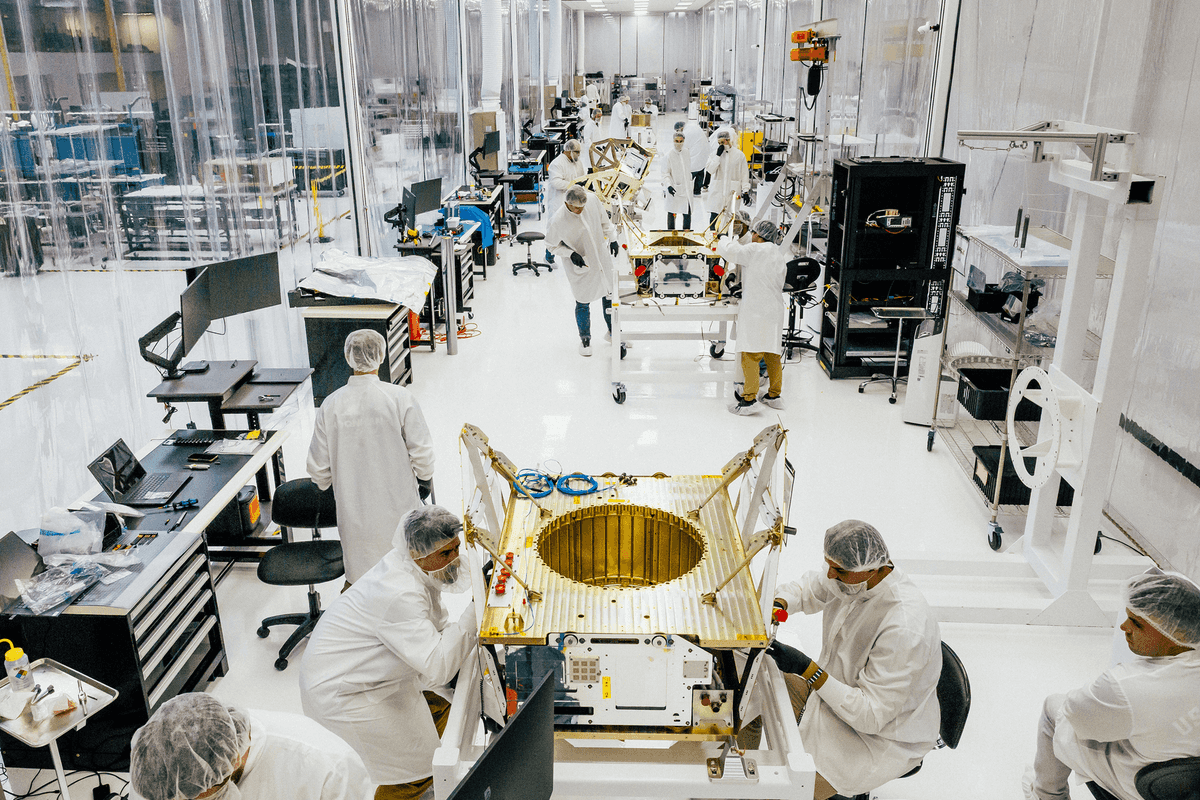
The space economy does not just need more rockets. It needs more spacecraft that can be built quickly, reliably and at scale.

Los Angeles-based Apex announced more than $200M in new growth funding, nearly doubling its valuation to $2.3B just months after crossing the $1B mark. The round was led by Glade Brook Capital Partners and co-led by Washington Harbour Partners, with support from new and existing investors.

Apex builds productized, configurable satellite bus platforms for commercial and government customers. In simpler terms, it manufactures the core spacecraft infrastructure that carries payloads for missions ranging from remote sensing and communications to in-space power generation and national security architectures.

The company is using the funding to expand its high-rate satellite manufacturing campus, vertically integrate more key subsystems and manufacture platforms ahead of customer demand. That last part is important: Apex is betting that satellite production needs to look less like one-off aerospace engineering and more like scalable, repeatable manufacturing.

The timing makes sense. Launch has gotten faster and more available, but spacecraft production remains one of the industry’s biggest constraints. If proliferated constellations are going to become central to commercial and national security missions, the market needs suppliers that can build reliable satellites at industrial scale.

Image Source: Apex

Apex says its Factory One facility in Los Angeles can produce more than 200 satellites per year at peak production. The company is also expanding the campus with an additional 30,000 square feet of space and has grown to more than 350 employees, more than doubling its team over the past year.

The company is also moving deeper into defense. Apex recently announced a collaboration with Northrop Grumman tied to scalable space-based interceptor capabilities for the U.S. Space Force, and its Nova 1 platform is expected to host Project Shadow, a commercially led on-orbit demonstration for space-based interceptor technology.

That is the business Apex is trying to build: not custom spacecraft one mission at a time, but a repeatable satellite manufacturing operation that can keep pace with demand from commercial and government customers. If it works, Apex becomes less of a traditional aerospace contractor and more of a spacecraft production line for the proliferated constellation era.

Now onto this week’s LA venture deals, fund announcements and acquisitions.

🤝 Venture Deals

    LA Companies

    • Alfred, a Hawthorne-based stealth startup building software for robots, cars and other physical AI systems, is backed by investors including Chapter One, Khosla Ventures, SV Angel and Sam Altman’s Hydrazine Capital. Co-founded by former Tesla designer Ankit Ukil and former Meta engineer Dömötör Gulyas, the company is reportedly seeking funding at a $40M valuation as it develops tools to help robotics and automotive teams shorten R&D cycles and accelerate manufacturing. - learn more
    • California Naturals closed a Series B funding round led by Align Ventures to support continued growth across major retailers including Target, Ulta Beauty and CVS. The clean personal care brand also named Hayden Hiatt as CEO as it expands its hair, body and everyday essentials business. - learn more
    • Redondo Beach-based Impulse Space raised a $500M Series D co-led by 137 Ventures and BANNER VC, bringing the company’s total funding to more than $1B. Founded by SpaceX alum Tom Mueller, Impulse is building in-space mobility infrastructure, including spacecraft and propulsion systems that help satellites and payloads move after launch. The new funding will support hiring and manufacturing growth as the company scales to meet demand across commercial, civil and government space missions. - learn more
    • Just Women’s Sports closed a new seven-figure investment round led by Bolt Ventures, with returning investors including Starry Eyed Tomorrow, Rise of the Rest Seed Fund, Blue Pool Capital and OVO Fund. The women’s sports media company, founded by Haley Rosen, plans to use the capital to expand news and content operations, grow its team and invest in athlete-led programming. - learn more
    • GammaTime, a microdrama streaming app, received a minority investment from Versant Media Group as part of its Series A round. The company produces short-form, mobile-first scripted series and will work with Versant to develop original projects using select entertainment IP and creative resources from the media company. Financial terms were not disclosed. - learn more

    LA Venture Funds
    • Pinegrove Venture Partners participated in Ramp’s $750M Series F, which valued the fintech company at $44B. Ramp’s financial operations platform has expanded beyond corporate cards and expense management into payments, procurement, vendor management, accounting automation and AI-powered spend management. The company said its total purchase volume grew roughly 170% year-over-year in March 2026. - learn more
    • Alpha Edison participated in Oxford Quantum Circuits’ $350M Series C, which was led by Bullhound Capital and included backing from the British Business Bank, COFIDES, Fulcrum Asset Management, Pentland Ventures, Oxford Science Enterprises, Chevron Technology Ventures and others. The U.K.-based company builds and operates superconducting quantum computers for enterprise, government and research customers, with the funding going toward international expansion and continued development of its quantum computing roadmap. The round is described as Europe’s largest private funding round for a quantum computing company. - learn more
    • Patron participated in Board’s $20M Series A, which was led by Union Square Ventures, with additional backing from Raine Ventures, Lerer Hippeau, Expa, 25madison, Red & Blue Ventures, Day One Ventures and others. New York-based Board is building a face-to-face gaming console and AI-powered creator platform that lets people play and make tabletop-style games together, with the funding going toward its upcoming Board Studio creation tools and broader expansion beyond hardware. - learn more
    • Pinegrove Venture Partners participated in Layup Parts’ $42M Series A, which was led by Marlinspike, with backing from Cerberus Ventures and existing investors Founders Fund, Lux Capital and Haystack. Huntington Beach-based Layup Parts is building a software-driven manufacturing platform for custom composite parts, aiming to make carbon-fiber and fiberglass components faster, easier and cheaper to source. The company plans to use the funding to grow its team, expand capacity and move into a larger facility as demand grows across aerospace, defense and other advanced manufacturing markets. - learn more
    • Overture Ventures participated in Atana Elements’ $27.5M seed round, which was led by Lowercarbon Capital with backing from Borusan Ventures, Earthshot Ventures, Redwoods Climate Capital, Sunna Ventures, Verve Ventures, Volta Energy Technologies, WovenEarth and others. Atana uses AI, machine learning and oil-and-gas-style subsurface expertise to identify and develop flowing critical mineral systems, including lithium brines, hydrogen, helium and emerging copper and uranium extraction opportunities. The company says it has already secured positions estimated to contain more than 100M tonnes of Lithium Carbonate Equivalent across the EU and Americas. - learn more
    • Bedrock Capital participated in Mach Industries’ $300M Series C, which was led by Infinite Capital and Ribbit Capital and valued the Huntington Beach defense tech company at $1.8B. Mach builds advanced unmanned defense systems, including platforms for strike, surveillance and counter-drone use, and plans to use the funding to expand manufacturing, advance second-generation systems and grow its Forge manufacturing network. The round comes shortly after Mach acquired Exquadrum, now Mach Energetics, to strengthen its propulsion and vertically integrated production capabilities. - learn more
    • Strong Ventures participated in Unastella’s $24M Series B, which was led by Altos Ventures and also included Korea Development Bank, Hana Ventures and others. The Seoul-based rocket company is developing launch vehicles and engines for small satellite launch services, with a longer-term goal of crewed suborbital spaceflight. Unastella has now raised $44M total and plans to use its upcoming UNA EXPRESS-II launch to further validate its technology and commercial roadmap. - learn more
    • Connect Ventures co-led Sekai’s $20M Series A alongside Khosla Ventures, with participation from a16z Speedrun, Mayfield, A, MVP Ventures, 359 Capital, Parable VC* and 645 Ventures. Sekai is building an AI-powered platform that lets users create, remix and share mini apps through text prompts, with the new funding going toward expanding its engineering and product teams. The company has raised $26M across its seed and Series A rounds. - learn more
    • Shamrock Capital Advisors participated in a strategic growth investment in CardsHQ, alongside EnOne Ventures, bringing CardsHQ and Sports Card Investor together under one company. The combined platform will operate as CardsHQ and span sports cards, trading card games, retail, e-commerce, live breaking, content, data and technology, including Sports Card Investor’s media network and the Market Movers pricing and collection tracking platform. The funding will support new retail locations, expanded live events, broader inventory and further development of collector-facing tools. - learn more

    LA Exits

    • Catalina Capital Group, a fee-only RIA based in Torrance, was acquired by CW Advisors, giving the Boston-based wealth management firm its first Southern California office. Catalina brings about $655M in assets under management, and the deal expands CW Advisors’ national footprint to 24 offices and more than $16B in client assets. Financial terms were not disclosed. - learn more
    • adMixt, a performance marketing agency known for its proprietary technology and expertise across Meta, Google, TikTok and other digital platforms, was acquired by Interluxe Group. The deal expands Interluxe’s luxury marketing platform by adding paid search, paid social, performance creative, API integrations and advanced analytics capabilities for premium lifestyle and luxury brands. Financial terms were not disclosed. - learn more

      Download the dot.LA App

      Observable Space Raises $90M to Build Beyond Rockets

      🔦 Spotlight

      Hello Los Angeles,

      Space infrastructure is having a week.

      Los Angeles-based Observable Space closed a $90M Series A and announced a $94M U.S. Space Force contract to scale its optical sensing and laser communications platforms. The round was led by Lux Capital and co-led by Upfront Ventures, Detroit Venture Partners, Island Green Capital and RTX Ventures, with participation from BRV Capital, Fathom Fund and Venrex.

      Observable Space is building advanced optical systems across three areas: laser communications ground stations, ground-based optical sensing and in-space payloads. In simpler terms, the company is working on the infrastructure that helps satellites and spacecraft see, track, navigate and communicate more effectively.

      Image Source: Observable Space

      The Space Force contract gives Observable Space an early $22M in task orders under a larger $94M award to deploy mobile, off-grid optical sensing stations for space domain awareness. These systems are designed to help track objects in orbit with more resilient, lower-cost and geographically distributed ground infrastructure.

      That matters because space is getting more crowded, more commercial and more strategically important. Satellites are no longer just sitting quietly above us handling GPS, weather and communications. They are becoming part of a much larger network for national security, AI, connectivity and future space-based infrastructure.

      Observable Space’s work sits in the less flashy, but increasingly critical layer of the space economy. Rockets may get the liftoff footage, but the next phase of space competition will also depend on who can track what is in orbit, move data quickly and keep communications reliable from space to ground.

      The company says its platform has already executed 2.6M automated tasks, identified more than 20M targets and completed 84,000 hours of continuous orbital monitoring. It is also expanding manufacturing across Detroit and Los Angeles, with spacecraft, engineering and design labs based in LA.

      For Southern California’s space ecosystem, Observable Space adds another signal that the region’s advantage is not just launch. It is the full stack around space: optics, software, sensing, communications, payloads and the infrastructure needed to make orbit more usable.

      Now onto this week’s LA venture deals, fund announcements and acquisitions.

      🤝 Venture Deals

        LA Companies

        • Fragrance brand ’Ôrəbella closed a Series A growth equity investment led by Silas Capital, with participation from existing investor Celebrands, which incubated the brand. The funding will support global expansion, product innovation and retail growth as ’Ôrəbella scales beyond its Ulta Beauty base into international markets including Douglas, Selfridges and Ulta Beauty Middle East. The company also named Anish Agarwal, formerly CEO of T3 Micro, as CEO. - learn more
        • Ember LifeSciences added new strategic investments from Amgen Ventures and TDF Ventures, bringing its total Series A funding to $27M. The company makes reusable, temperature-controlled cold chain technology for transporting medicines and vaccines, and recently announced full commercial availability of its Ember Cube 2, which provides real-time monitoring and cloud-based tracking for healthcare logistics. Financial terms of the new investments were not disclosed. - learn more
        • Iconic raised $6M to build its AI-enabled M&A advisory platform for small business owners. The company combines AI software with human advisors to help owners sell businesses that are often too small for traditional investment banks to support, especially those valued under $20M. Iconic is aiming to modernize the small-business sale process as millions of baby boomer-owned businesses prepare to change hands. - learn more

        LA Venture Funds
        • Capital Group participated in Anthropic’s $65B Series H, which was led by Altimeter Capital, Dragoneer, Greenoaks and Sequoia Capital, valuing the company at $965B post-money. Anthropic said the new funding will support continued AI safety research, expanded compute capacity and broader product development as demand for Claude grows across enterprise customers and developers. - learn more
        • WndrCo participated in Reactor’s $59M seed and Series A funding, which was led by Lightspeed Venture Partners with backing from Amplify Partners, Sky9 Capital, FPV Ventures and others. San Francisco-based Reactor is building a developer platform for real-time generative video and “world models,” giving developers SDK and API access to create interactive AI applications across media and entertainment, physical AI and robotics. The company was co-founded by former Apple Vision Pro technical leads Alberto Taiuti and Bryce Schmidtchen, and WndrCo founding partner Jeffrey Katzenberg will join as a board observer. - learn more
        • Upfront Ventures led Kubera Health’s $6.5M seed round, with participation from Company Ventures, Dria Ventures and SemperVirens. Kubera is building a contract-to-payment system of record for healthcare, helping providers translate complex payer contracts into auditable payment logic so they can better identify underpayments, reimbursement gaps and administrative inefficiencies. The funding will support product development and growth as the company works to modernize healthcare’s payment infrastructure. - learn more
        • Sound Ventures participated in Polsia’s $30M round, alongside True Ventures, Offline Ventures, Adjacent, Tekton Ventures, Drysdale Ventures, VaynerFund and angel investors. Polsia is building an AI operations platform designed to run company workflows across coding, research, sales, customer support, ads and investor diligence, with founder Ben Cera saying the company is approaching $10M in annual run rate with one founder and no employees. The round valued Polsia at $250M. - learn more
        • Blue Bear Capital participated in Lastwall’s $16M Series A extension, which was led by BDC Capital’s StrongNorth Fund, with additional backing from New Brunswick Innovation Foundation, Frostbite Capital, BlueWing Ventures and 18West. Fredericton-based Lastwall builds identity-first, quantum-resilient cybersecurity software for defense, government and critical infrastructure environments, with the funding going toward expanded deployment across North American municipal utilities, defense infrastructure and public sector cloud portals. - learn more
        • Upfront Ventures participated in Itera’s $12M seed round, alongside Costanoa Ventures and Colle Capital, as the deep tech company emerged from stealth with its real-time electronics prototyping platform. Itera has developed a fluid circuit board that uses glass and liquid metal to let engineers rewire and test real electronic designs in under a minute, aiming to cut traditional PCB prototyping cycles from weeks to days. The funding will support the launch and commercialization of its first product. - learn more
        • Rebel Fund participated in Didit’s $7.5M seed financing, alongside Y Combinator, Pioneer Fund, Orange Collective, Founders Future, Phosphor Capital, SaaSholic and angel investors including Tomer London and Taro Fukuyama. San Francisco-based Didit is building AI-native identity and fraud infrastructure for verifying people, businesses, wallets, transactions and AI agents, with the new funding going toward global go-to-market growth, product expansion and hiring across sales and customer success. - learn more
        • Fifth Wall participated in NavigateAI’s $25M seed round, which was led by Elad Gil and backed by investors including Khosla Ventures, Lennar, Tishman Speyer and Helix Electric. Founded by Opendoor co-founder Eric Wu, NavigateAI is building an AI coach for construction workers that helps answer job-site questions, troubleshoot issues and improve field productivity across construction teams. - learn more
        • Strong Ventures participated in K-Zone’s 6.3B won Series B, alongside TimeWorks Investment, BonAngels Venture Partners and Singapore-based Guardian Fund. K-Zone is building a global reverse logistics platform for returned, overstocked and obsolete inventory, using its REMEX platform and AI agents to automate buyer matching, deal proposals, sales workflows and market analysis as it expands further into the U.S. market. - learn more

        LA Exits

        • Comscore Movies, the box office data business used by studios and exhibitors to track theatrical performance, was acquired by Advaya Capital in a $70M cash deal. The business will be renamed Rentrak, reviving the brand Comscore acquired in 2016, and former Paramount domestic distribution chief Chris Aronson will join the board. - learn more

          Download the dot.LA App

          From Rocket Motors to Consumer AI

          🔦 Spotlight

          Happy Friday,

          This week, one company moved deeper into rocket propulsion while another pushed further into consumer AI. Different industries, different stakes, same underlying shift: technology is moving further into the infrastructure of defense and entertainment.

          In defense, Mach Industries acquired Exquadrum, a 24-year-old rocket and propulsion company based in Victorville. The deal was worth $50M in cash and equity and brings Exquadrum’s IP, facilities, business lines and 85 employees into Mach’s operation.

          Mach, based in Huntington Beach, has raised nearly $200M and is building autonomous aircraft and weapons systems. Exquadrum gives the company deeper control over solid rocket motors, propulsion testing and one of the more constrained parts of the defense supply chain. The company will now operate as Mach Energetics.

          For companies building unmanned systems, hypersonics and missile-defense technology, the hard parts are still very physical: propulsion, testing, manufacturing and production capacity. Mach’s deal shows how much of the defense tech race now depends on owning more of that stack.

          In entertainment, Paramount brought in former Google executive Barak Turovsky as EVP and Head of Consumer AI. In his LinkedIn post announcing the move, Turovsky said AI is beginning to reshape how consumers discover, engage with and experience content, especially across platforms like Paramount+ and Pluto TV.

          The hire comes as Paramount pushes deeper into AI, product and streaming technology under David Ellison. It also reflects a broader shift in Hollywood: studios are no longer just competing on content libraries. They are competing on discovery, personalization, engagement and the consumer experience around that content.

          The common thread is infrastructure. In defense, that means propulsion, testing and supply chain control. In entertainment, it means AI, product leadership and smarter consumer platforms. Both stories show how quickly traditional industries are becoming more technical, more integrated and more dependent on teams that can modernize the systems underneath them.

          Now onto this week’s LA venture deals, fund announcements and acquisitions.

          🤝 Venture Deals

            LA Companies

            • Clouted raised a $7M seed round led by Slow Ventures, with participation from Gold House Ventures, Weekend Fund, LINE-Yahoo’s Z VC, Gondor Capital, Iterative, AppWorks, Peak XV’s Surge and a16z Speedrun. The company is building a “Distribution Intelligence” platform that uses AI agents to help consumer and entertainment brands plan, execute and optimize viral marketing campaigns across UGC, clipping, fan pages, influencer seeding, paid ads and social platforms. Clouted says the new funding will support its AI infrastructure, creator network growth and expansion into gaming and streaming. - learn more
            • El Segundo-based Amca raised a $300M Series B led by Caffeinated Capital, with major participation from Lightspeed Venture Partners and continued backing from Andreessen Horowitz, Lux Capital, Construct Capital and House Capital, valuing the aerospace and defense manufacturer at more than $1B. The company builds critical aerospace and defense components by combining engineering, qualification testing, technical data and certified manufacturing into one platform, and plans to use the funding to expand its AI-powered RAPID system, acquire and build more factories nationwide and increase production capacity for major defense and aviation customers. - learn more
            • Kin Health raised a $9M seed round led by Maveron, with participation from Town Hall Ventures, Eniac Ventures, Flex Capital, Foundry Square Capital, Pear VC, The Family Fund and several individual investors, including GoodRx co-founders Doug Hirsch and Trevor Bezdek. The company is building a free AI-powered notetaker for healthcare visits that records appointments and turns them into plain-language summaries, next steps and shareable context for patients and caregivers. - learn more

            LA Venture Funds
            • Clocktower Technology Ventures participated in Robbin’s $8M seed round, which was co-led by Canary, Atlântico and Caravela, with additional backing from AB Seed, Norte Ventures and Tomorrow Capital. Brazil-based Robbin is building an AI-native B2B payments and credit platform that lets large industrial companies offer co-branded virtual cards and credit products to retailer networks, using Pix rails instead of traditional card networks. The company also structured a separate $100M FIDC credit facility with Augme, an XP Investimentos asset manager, to finance retailer purchases through the platform. - learn more
            • Upfront Ventures led CVRD Health’s $5M seed round, joined by Waterline Ventures and Distributed Ventures. CVRD helps government contractors manage employee benefits, fringe-dollar compliance and audit readiness under Service Contract Act and Davis-Bacon requirements, with the funding going toward platform development, compliance and member advocacy teams, and national expansion across federal contractors. - learn more
            • Sum VC participated in Hellbender’s $12.5M seed round, which was co-led by Magarac Venture Partners and Veredas Partners, with additional backing from Mana Ventures, Gaingels and the Active Angels Network. Pittsburgh-based Hellbender builds physical AI infrastructure and edge computer vision systems for autonomous and industrial applications, with the new funding going toward launching its on-edge AI camera line, expanding product and growth teams, and scaling domestic hardware manufacturing. - learn more
            • Rebel Ventures participated in Leadbay’s $4.2M seed round, alongside Y Combinator, Roosh Ventures, Inovexus Ventures, TS Ventures, Alumni Ventures, Bright Ventures, Transpose Platform, Deel Ventures and founders and executives from Deel, Gusto and Pennylane. San Francisco-based Leadbay is building an AI-powered sales intelligence platform that helps sales teams discover and qualify small and mid-sized businesses with little or no digital footprint, especially in data-scarce sectors like construction, hospitality, manufacturing, retail and B2B services. The funding will support its U.S. go-to-market expansion in San Francisco, AI research partnership with Sorbonne University and engineering growth. - learn more
            • Overture Ventures participated in Recheck’s $2M pre-seed round, alongside ReGen Ventures, Jetstream and MCJ. Recheck is a trust and compliance platform for residential solar that verifies sales reps, assigns portable Recheck IDs and has now launched Recheck Certified, a credential that combines ethical sales training, a code of conduct, background checks and ongoing monitoring to help installers and finance companies identify trustworthy sales professionals. Since launching, the company says it has verified more than 50,000 sales reps and 700 installers and dealers. - learn more
            • CIV co-led Calibre’s $3.3M pre-seed round alongside Vicus Ventures, with participation from I2BF Global Ventures, 9Yards Capital, Jigeum and angel investors including Nikesh Arora. London-based Calibre is building AI infrastructure for the testing, inspection and certification industry, helping automate certification workflows that still depend heavily on manual audits and document review across regulated sectors. - learn more

            LA Exits

            • 32 Flavors, the production company founded by Alex Baskin and known for unscripted franchises including Vanderpump Rules, The Real Housewives of Beverly Hills, The Real Housewives of Orange County and The Valley, was acquired by Sony Pictures Television, which took a majority stake in the company. Baskin will remain CEO, and the deal expands Sony’s premium nonfiction portfolio while keeping 32 Flavors’ existing leadership team in place. - learn more

              Download the dot.LA App

              RELATEDEDITOR'S PICKS
              Trending