

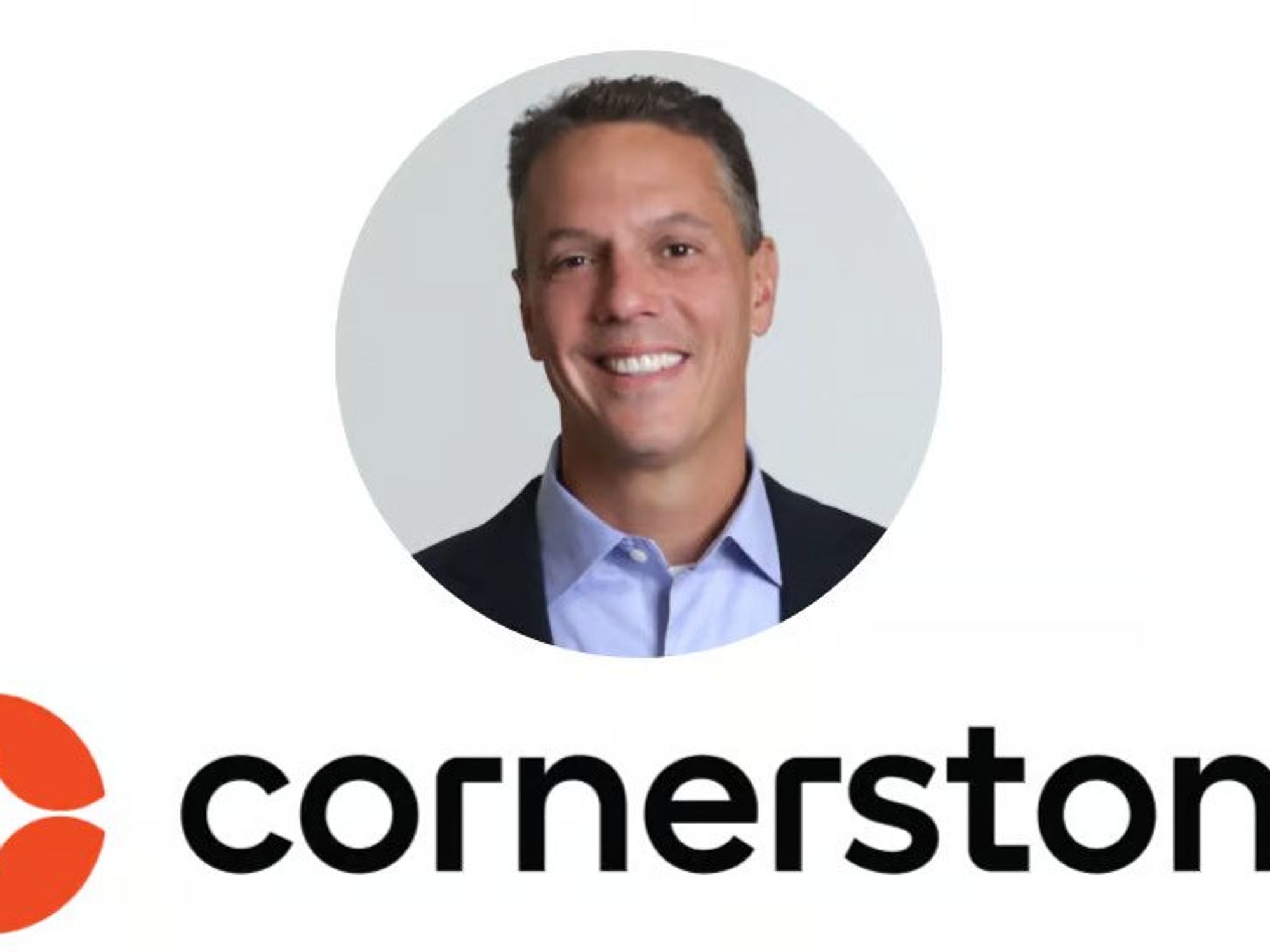
Adam Miller's First Act

Wil Chockley
WIl Chockley is a partner at 75 & Sunny, where he evaluates potential investment opportunities across sectors and works with founders to build their strategy and execute on their vision.
Adam Miller's First Act

If you don’t know Adam Miller, he is almost certainly the most important person in LA tech you’ve never heard of. If you know Adam, congrats! You’re a lucky individual. Read on anyway because I’m sure you’ll learn something new about one of the godfathers of tech in Los Angeles.

Given all the interesting things Adam has done and is doing, we’re going to be telling his story in two parts. Today’s edition discusses Adam’s first act, covering his early days through the eventual IPO and $5.2B sale of his company, Santa Monica-based HR tech juggernaut Cornerstone OnDemand. Next week you’ll read about Adam’s second act - how he’s taken the learnings from Cornerstone and used them to build an ecosystem of tech startups and nonprofit organizations bettering LA and the world.

Let’s get going.

_______________

👦 Early Life

Adam grew up in northern New Jersey, and, like a number of other successful entrepreneurs, was a late bloomer. Adam was a self-described “follower” until later in high school, when he came out of his shell. One clue that Adam might not be exactly like the other kids emerged when a beloved teacher and the principal of his high school both came under fire from the school board. Adam, a student at the time, led the defense of the embattled educators, organizing the student body to protest and successfully presenting to the school board to protect the teachers. Adam went on to graduate high school as student body president, editor of the school newspaper, and a varsity athlete.

As has become a theme in Adam’s life, he didn’t rest on his laurels. Moving onwards and upwards to the University of Pennsylvania, Adam prepped to become a lawyer. He studied history and business and got his start in homeless advocacy (more to come on that in our next piece on Adam’s second act).

👨🎓 Education

The summer before senior year, Adam took a class at UCLA and got a job as a bar manager at a restaurant in Westwood. Adam so impressed the general manager of the LA restaurant that the GM asked Adam to join him as his business partner in buying a new restaurant with him right out of college. He must have been a pretty good bar manager, right? The only problem was that Adam had already planned his life out and was going to be a lawyer. He was admitted to UCLA Law School for the upcoming year and was right on track. So of course, Adam said yes to both law school and the restaurant. If that wasn’t already doing enough to kill the average person, he then decided he wanted more formal business training as well, so he got an MBA from UCLA at the same time.

📈 Cornerstone

After finishing grad school and exiting the restaurant, Adam moved to New York to “keep learning about business” by working in investment banking for a couple years. At that time (the late 90’s), the dotcom boom was booming, and Adam had an idea to bring education via the Internet to people who couldn’t normally get it. Adam left his banking job and founded CyberU with a plan to provide an online direct-to-consumer continuing education platform for adults.

The timing was terrible. Adam started the company in 1999, and the dotcom bubble burst less than a year later. Funding for startups dried up, so the company had to keep costs minimal and generate revenue as fast as possible.

Startup funding plummeted just as CyberU was getting off the ground

CyberU wasn’t cutting it, so the company pivoted from a B2C model to a B2B model, shifting the target customer from individuals to some of the largest (and deepest-pocketed) companies at the time, including Washington Mutual, Smith Barney and Aon. The good news was CyberU, rebranded as Cornerstone OnDemand, quickly found product-market fit in the enterprise. Cornerstone was one of the first and, at that time, only companies to leverage the Internet to create an enterprise Learning Management System. The company delivered the classes and learning platform over the web, which often confused clients who expected all their software to live behind enterprise firewalls. Of course, today we call what Cornerstone did Software-as-a-Service.

From there, it took 6 more years, investments from family and friends, credit card debt, and money from a loan shark to keep the lights on before Adam raised his first venture capital round from Bessemer Venture Partners in 2007. Cornerstone raised more money in 2009 from Meritech Capital before going public with Goldman Sachs in 2011. From inception to IPO, the company only burned $11m, less than the average Series A round today.

Adam continued to lead Cornerstone as CEO after the company went public. Along with product diversification and multinational expansion, he navigated direct competition with Oracle and SAP, financial market volatility, activist attacks, and the challenge of integrating a massive acquisition during a global pandemic.

Then in mid-2020, after two decades at the helm, Adam transitioned into an Executive Chairman position and oversaw the 2021 acquisition of the business by Clearlake Capital for $5.2B.

Cornerstone’s broad product catalog today

At the time of the acquisition, Cornerstone had over 3,000 employees with offices in 25 countries, had helped develop over 75 million customer employees, and had delivered over a billion online classes. Today, the company retains its core learning management functionality and has built broader human capital management, talent management, and performance management software, along with a multitude of other solutions.

So what is Adam doing in “retirement?” More than most of us do in a lifetime. From co-founding and serving as CEO of a new tech startup to venture investing to combatting homelessness in LA to incubating and launching MORE startups, Adam is busier than ever.

Next week, we’ll cover all Adam’s new ventures in his second act.

Match Goes Niche With $100M Move

🔦 Spotlight

Hello Los Angeles,

It’s May, and LA is about to have one of its more important weeks.

The Milken Institute Global Conference 2026 returns to Beverly Hills next week, bringing together thousands of investors, operators, policymakers, and executives. It’s one of the few places where public markets, private capital, and tech actually overlap in the same rooms, and where you can usually get an early read on what capital is leaning into before it fully shows up in the data.

This year, one theme is already starting to surface. Platforms are getting more specific, not more broad.

This week’s news is a good example.

Match Group is investing $100 million into Sniffies, a fast-growing, location-based platform built for gay, bi, trans, and queer men. It’s a notable move for a company best known for mainstream dating apps like Tinder and Hinge, and it signals a deeper push into more niche, community-driven platforms.

Sniffies operates very differently from traditional dating apps. It’s more real-time, more map-based, and more focused on immediacy than long-term matching. In other words, it’s built around behavior, not profiles.

And that’s what makes the investment interesting.

For years, the dominant strategy in consumer platforms was scale, build one product that works for everyone. But what we’re seeing now is the opposite. The platforms that are gaining traction tend to be the ones that understand a specific audience deeply and build for how that group actually behaves.

Match leaning into that shift isn’t just about expanding its portfolio. It’s a recognition that growth is coming from focus.

And in a city like Los Angeles, that’s usually where things start.

Below are this week’s venture deals and fund announcements across LA 👇


🤝 Venture Deals

    LA Companies

    • Illuminant Surgical raised an $8.4M seed round to accelerate the rollout of its real-time anatomical projection platform, which aims to give surgeons enhanced visibility during procedures. The company’s “Skylight” system is designed to project internal imaging directly onto the patient, improving precision and reducing risk, and the funding will support product development and early commercialization efforts. - learn more
    • Jupid raised $840K in early funding to support its AI-native accounting platform, which is designed to automate bookkeeping, tax filing, and compliance for small businesses directly within banking platforms. The company is building what it describes as an embedded “AI accountant” that integrates with financial institutions to streamline operations for entrepreneurs, and plans to use the funding to expand partnerships and accelerate product development as demand grows for automated financial tools. - learn more
    • Lumicup raised a $4.38M Series A to expand its product line and scale manufacturing as it looks to meet growing demand for its consumer health and wellness products. The company plans to use the funding to increase production capacity, invest in new product development, and strengthen its distribution as it continues to grow its footprint in the market. - learn more
    • Counterpart raised a $50M Series C to expand its AI-driven “agentic insurance” platform, which helps small businesses manage growing legal and employment risks tied to AI adoption. The round was led by Valor Equity Partners with participation from existing investor Vy Capital, bringing the company’s total funding to $106M, and the capital will be used to launch new insurance products, expand risk management capabilities, and scale its underwriting platform. - learn more
    • Nervonik raised a $52.5M Series B to advance its next-generation peripheral nerve stimulation technology, which aims to deliver more precise, personalized treatment for chronic pain. The round was led by Amzak Health with participation from Elevage Medical Technologies, U.S. Venture Partners, Lumira Ventures, Foothill Ventures, and Shangbay Capital, and the company plans to use the funding to accelerate clinical programs and move toward commercialization. - learn more
    • LighthouseAI raised an $8M Series A to expand its AI-powered platform that helps pharmaceutical companies manage state licensing and regulatory compliance. The round was led by Boxcars Ventures with participation from TGVP and existing investors, and the company plans to use the funding to enhance product development, improve service delivery, and support continued growth as it scales across the pharma supply chain. - learn more

    LA Venture Funds
    • MANTIS Venture Capital participated in Rogo’s $75M Series C, backing the AI platform as it builds autonomous financial agents designed to streamline complex workflows for banks and investment firms. The round was led by Sequoia Capital and included a mix of major financial institutions and venture firms, signaling strong demand for AI tools that can augment decision-making across high-stakes finance. - learn more
    • M13 participated in Chord’s $7M funding round, backing the AI commerce platform as it builds a “context layer” designed to unify fragmented data, tools, and workflows for retail brands. The round was led by Equal Ventures with participation from Chingona Ventures and CEAS Investments, and the company aims to help operators move beyond dashboards toward systems that can make real-time decisions and automate actions across the business. - learn more
    • Fika Ventures participated in Lumian’s funding round, backing the startup as it launches an AI-native Amazon agency designed to automate and optimize how brands operate on the marketplace. The company is focused on replacing traditional agency workflows with AI-driven systems that can manage everything from advertising to operations in real time, reflecting a broader shift toward automation in e-commerce. - learn more
    • Riot Ventures co-led True Anomaly’s $650M Series D, backing the defense space startup as it scales spacecraft, software, and autonomous systems designed for national security missions in orbit. The round values the company at around $2.2 billion and brings total funding to over $1 billion since its 2022 founding, and the company plans to use the capital to accelerate mission deployments, expand manufacturing, and grow its workforce as demand increases for space-based defense capabilities. - learn more
    • Clocktower Technology Ventures participated in Clarasight’s $11.5M Series A, backing the AI-powered travel and expense platform as it works to unify fragmented enterprise data into a single system. The round was led by AlleyCorp with participation from several travel and fintech-focused investors, and the company plans to use the funding to expand product development and scale go-to-market efforts as demand grows for AI-driven efficiency in corporate travel. - learn more
    • Halogen Ventures and Mucker Capital participated in SkyfireAI’s $11M seed round, backing the startup as it builds an AI-native platform for coordinating autonomous, multi-drone operations. The company’s software is designed for public safety and defense use cases, helping teams deploy and manage fleets of drones with greater speed and efficiency without increasing staffing, and it plans to use the funding to accelerate product development, expand its team, and scale deployments with government and mission-critical customers as demand grows for autonomous drone systems. - learn more
    • Matter Venture Partners led OpenLight’s $50M Series A-1, with participation from Acclimate Ventures, Catapult Ventures, and existing investors, backing the photonics company as it scales its next-generation chip platform for AI infrastructure. The funding brings total capital raised to $84M and will be used to accelerate global deployment of its silicon photonics technology across data centers, telecom, and other high-bandwidth applications. - learn more
    • Alexandria Venture Investments participated in Fathom Therapeutics’ $47M Series A, backing the biotech startup as it applies quantum chemistry and AI to design next-generation small molecule drugs. The oversubscribed round was led by Sutter Hill Ventures with participation from Chemistry and other investors, and the company plans to advance its platform, which simulates protein behavior inside living cells to accelerate drug discovery. - learn more

      Download the dot.LA App

      Netflix Doubles Down on LA

      🔦 Spotlight

      Hey Los Angeles.

      Goodbye Coachella, hello Stagecoach. The desert doesn’t stay quiet for long, and neither does LA’s entertainment machine.

      This week, that momentum showed up in a more permanent way.

      Netflix is expanding its footprint in Los Angeles with a major move to take over and invest in Radford Studio Center, a historic production lot in Studio City. The company is planning a long-term transformation of the site, with upgrades to soundstages, production offices, and infrastructure designed to support the next generation of film and television production.

      It’s a notable shift in a moment when production has been under pressure in California, with studios increasingly looking outside the state for cost advantages. Netflix going deeper in LA, and specifically into a legacy studio lot, signals a different kind of commitment. Not just to content, but to where that content actually gets made.

      And it comes at a time when the streaming wars have matured. Growth is harder, budgets are tighter, and the focus has shifted from scale at all costs to efficiency and control. Owning or operating more of the production environment gives Netflix tighter control over timelines, costs, and output.

      For Los Angeles, it’s a reminder of what still anchors the city. Even as AI, defense tech, and infrastructure startups continue to rise, entertainment remains one of the few industries where LA isn’t just competitive, it’s foundational.

      Different headlines each week, but a consistent theme underneath them. Whether it’s power, autonomy, or content, the companies that matter are investing in the layers they don’t want to outsource.

      And in this case, that layer is Hollywood itself.

      Below are this week’s venture deals, fund announcements, and acquisitions across LA 👇


      🤝 Venture Deals

        LA Venture Funds

        • UP Partners and Calm Ventures participated in Reliable Robotics’ $160M funding round, backing the autonomous aviation company as it advances pilotless flight technology for cargo and passenger aircraft. The round included a mix of new and existing investors, and the company plans to use the capital to accelerate certification efforts and expand deployment of its autonomous systems across commercial aviation. - learn more
        • Blue Heron Ventures participated in Tava Health’s $40M Series C, backing the company as it expands its tech-enabled mental health platform into a more integrated, full-stack system for providers, employers, and health plans. The round was led by Centana Growth Partners with participation from existing investors, and the company plans to use the funding to roll out new AI-powered tools and broaden access to care while reducing administrative friction across the system. - learn more
        • Vamos Ventures participated in Zócalo Health’s $15M Series A, backing the company as it scales its tech-enabled, community-based primary care model focused on high-need and underserved populations. The round was led by .406 Ventures with participation from existing and new investors, and the company plans to use the funding to expand its clinics and deepen partnerships with Medicaid programs as demand for accessible care grows. - learn more

        LA Exits
        • Studio71 has been acquired by Fixated as part of a broader deal in which German media company ProSiebenSat.1 sold its North American creator business, giving Fixated a large-scale network of creators and podcast operations and significantly expanding its footprint as it continues an aggressive roll-up strategy in the creator economy. The move signals continued consolidation in the space, with Fixated building a more vertically integrated platform across talent management, content production, and distribution. - learn more
        • Bonsai Health has been acquired by ModMed, bringing its AI-powered patient engagement platform into a broader healthcare software ecosystem. The deal is aimed at integrating Bonsai’s “agentic AI” capabilities into ModMed’s platform to automate patient outreach, fill care gaps, and improve scheduling across a network of nearly 50,000 providers. - learn more

          Download the dot.LA App

          A $26M Push Into Power in LA

          🔦 Spotlight

          Hello, Los Angeles.

          Coachella Weekend 2 is here, which usually means LA is either heading back to the desert or happily staying put this time around. Back in the city, the focus this week is less about music infrastructure and more about something far more critical, power.

          That’s where this week’s news comes in.

          Critical Loop, a Los Angeles-based energy startup, raised a $26 million Series A to tackle one of the least talked about bottlenecks in tech right now, grid interconnection. In simple terms, it’s the process of getting power to where it’s needed, and increasingly, that process is too slow to keep up.

          Critical Loop is building modular microgrid systems that can be deployed in days instead of years, giving industrial operators, data centers, and other energy-heavy users faster access to power without waiting on traditional grid upgrades. The round was led by Conifer Infrastructure Partners and Hanover, with participation from Better Ventures, Climate Capital, Adapt Nation Capital, and Cyrus Ventures.

          The timing here matters. Between AI infrastructure demands, electrification, and a broader push toward domestic energy resilience, power is quickly becoming a gating factor for growth. You can build the data center, the factory, or the next big thing, but none of it works if you can’t turn it on.

          That’s what makes companies like Critical Loop worth watching. They’re not building the flashiest part of the stack, but they’re solving for the piece everything else depends on.

          And in a city that knows a thing or two about scaling ambition quickly, that might be the most important layer of all.

          Below are this week’s fund announcements across LA 👇


          🤝 Venture Deals

          LA Venture Funds

          • Anthos Capital participated in Wealth.com’s $65M Series B, backing the AI-powered estate and tax planning platform as it scales across financial institutions. The oversubscribed round included new investors like Titanium Ventures and Pruven Capital alongside existing backers, and the company plans to use the funding to expand product development, pursue acquisitions, and grow its enterprise footprint as demand rises for AI-driven wealth management solutions. - learn more
          • Anamika Ventures participated in Sage Haven’s $3M pre-seed round, backing the AI-powered messaging and calling app designed to create a safer communication environment for kids. The round was led by Anamika Ventures alongside Fabric Ventures and a group of early-stage investors, as the company launches a platform focused on preventing cyberbullying through real-time AI moderation and parent oversight tools. - learn more
          • MANTIS Venture Capital participated in Factory’s $150M Series C, backing the AI startup as it builds autonomous software engineering systems for enterprise teams. The round was led by Khosla Ventures and included firms like Sequoia Capital, Blackstone, Insight Partners, and NEA, valuing the company at $1.5 billion. Factory plans to use the funding to invest further in product development and global expansion as demand grows for AI-driven tools that can automate large portions of the software development process. - learn more
          • Rebel Fund participated in Uplane’s $4.5M seed round, backing the AI startup as it looks to replace traditional marketing agencies with a platform that automates ad creation, testing, and budget optimization. The round was led by Play Ventures with participation from Y Combinator, 20VC, and Multimodal Ventures, and the company says its technology can improve return on ad spend by automating performance marketing workflows. - learn more
          • Alexandria Venture Investments and Presight Capital participated in Alloy Therapeutics’ $40M Series E, backing the biotech infrastructure company as it scales its AI-powered platform for drug discovery and development. The round included a mix of new investors like 8VC and JIC Venture Growth Investments alongside returning backers, valuing the company at $1 billion and underscoring continued interest in platforms that combine AI, data, and lab services across the biopharma lifecycle. - learn more
          • Finality Capital Partners participated in HYFIX’s $15M seed round, backing the semiconductor startup as it builds American-made chips designed to power drones and autonomous robots. The round was led by Craft Ventures with participation from Catapult Ventures, Multicoin Capital, and Sky Dayton, and the company is developing an integrated system-on-a-chip to replace fragmented hardware stacks and reduce reliance on foreign components. - learn more
          • Rainfall Ventures participated in Stendr’s $5.4M pre-seed round, backing the Norwegian defense tech startup as it builds an AI-native platform for drone detection and counter-drone operations. The round was co-led by Rainfall alongside ACME Capital and Skyfall, with additional participation from Antler, StartupLab, and other early-stage investors, and the company plans to use the funding to accelerate development of its multi-sensor technology and expand engineering capabilities. - learn more
          • Slauson & Co. participated in Slate Auto’s $650M funding round, backing the EV startup as it works to bring a lower-cost electric pickup truck to market. The round was led by TWG Global and comes as the Bezos-backed company prepares to begin production, targeting a more affordable segment of the EV market with a customizable truck expected to launch later this year. - learn more
          • Navitas Capital co-led Primepoint’s $10M seed round, backing the AI startup as it builds a platform that reads and connects complex construction drawings to streamline project workflows. The round also included investors like Penny Jar Capital, NextView Ventures, GS Futures, and Aglaé Ventures, and the company plans to use the funding to expand its platform and grow adoption among large commercial contractors. - learn more
          • Alexandria Venture Investments participated in Neomorph’s $100M Series B, backing the biotech company as it advances its molecular glue degrader platform targeting previously undruggable diseases. The round was led by Deerfield Management with participation from Regeneron Ventures, Longwood Fund, and Binney Street Capital, and the company plans to use the funding to support ongoing clinical trials and expand its broader drug development pipeline. - learn more

          Download the dot.LA App

          RELATEDEDITOR'S PICKS
          Trending