

Pour It Up: Beverage Brands Cash in on LA's Sobriety Trend

Andria Moore

Andria is the Social and Engagement Editor for dot.LA. She previously covered internet trends and pop culture for BuzzFeed, and has written for Insider, The Washington Post and the Motion Picture Association. She obtained her bachelor's in journalism from Auburn University and an M.S. in digital audience strategy from Arizona State University. In her free time, Andria can be found roaming LA's incredible food scene or lounging at the beach.
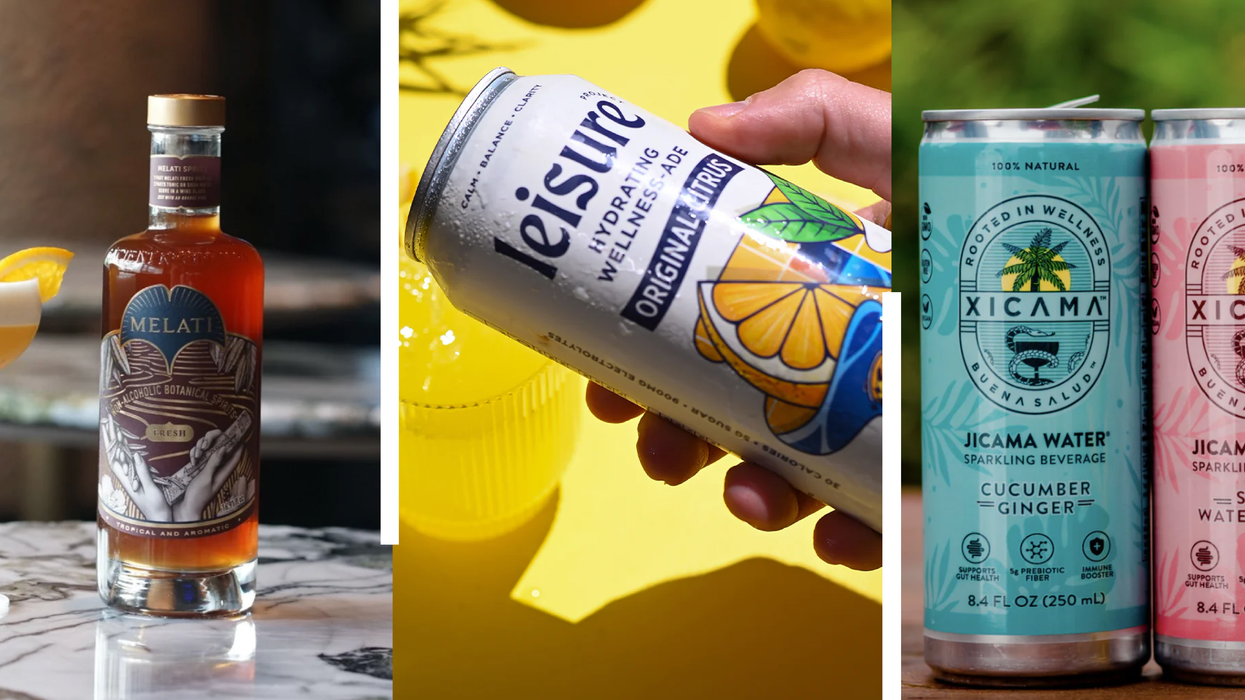

Pour It Up: Beverage Brands Cash in on LA's Sobriety Trend
Melati, Leisure Project, XICAMA

This is the web version of dot.LA’s weekly newsletter. Sign up to get the latest news on Southern California’s tech, startup and venture capital scene.

The drink to impress mentality has permeated tech and startup culture for nearly a decade. But with the rise in popularity of brands like Olipop and Liquid Death, that’s all about to change.


Meagan Loyst, the 26-year-old founder of Gen Z VCs, a global collective of young investors, students, entrepreneurs and founders said there has been a noticeable shift in how she and her peers interact with alcohol, especially in professional settings.

“If you think about Gen Z, we’re max 26 years old,” Loyst said. “Even the people that can drink alcohol are choosing not to.”

To her point, in 2018, Insider reported that Gen Z drink alcohol about 20% less than millennials did at their age, and millennials already less than boomers. According to the BBC, part of the shift in Gen Z’s sober preference is that 41% associate alcohol with anxiety, abuse and vulnerability. But the shift in preference toward non-alcoholic beverages isn’t merely a tendency amongst Gen Z, but large portions of L.A.’s tech scene.

While hosting various events across Los Angeles, Loyst has also noticed an increased demand for non-alcoholic beverage options among attendees.

“I think part of it is wellness, just feeling good,” she explained. “Alcohol doesn’t always make you feel good. And I think for optimal performance — both for your brain and even your gut health — I know that for me to operate on a Thursday night at a happy hour, if I have one or two glasses of champagne I won’t be productive for one or two hours.”

Here are three L.A. startups looking to capitalize on the sober moment in SoCal.

Melati

Upon first glance, Melati’s rustic color palette and elegant branding style are reminiscent of a bottle of high-end booze. That couldn’t be further from the truth. Melati, a non-alcoholic botanical spirit, is a plant-based alternative to alcohol.

“Instead of doing dealcoholizing or extracting an ethanol, I wanted to make something that was super inclusive for everyone who wasn't drinking,” said 30-year-old Melati Founder Lorin Winata. “So I do a cold extraction in water for six weeks.”

Winata is Indonesian and grew up in Singapore. “Throughout Asia, we have tonic drink remedies that have been used for centuries to kind of be more preventative medicine than curative,” she explained. “So Melati drinks are a blend of 20 ingredients for the fresh flavor and then 25 Ingredients for the classic, of these Asian botanicals used in tonic drink remedies.”

Before Melati, Winata worked in venture capital helping startups grow from an early stage, and was constantly attending happy hours, dinners, events — all of which included alcohol.

“I didn't used to drink in work situations, just with traveling one to three times a week, not sleeping much, trying to get my workout in, and also just trying to attend every single work event and happy hour that’s needed in my career,” she said. “Alcohol just didn’t serve that purpose.”

Which is why creating a drink that was both delicious and could fit into the drinking culture of the tech world was important to Winata.

“I wanted something else that still had the complexity of flavor,” she said. “And that still, you know, gave me that same experience and gave me that glass in my hand.”

Leisure Project

Like many people, 29-year-old Steve Michaelsen was sitting at his parents house in the early days of COVID, bored out of his mind and realizing he was having a difficult time focusing on work.

“I mentally just like, wasn't there a lot of the time,” he said. “And I started to realize, ‘Oh, s**t, I haven't had water today.’ I was dehydrated all the time and it was leaving me irritable, constant headaches, and unfocused.”

After discovering his brother had a similar issue, they began to shop around for products to help keep them hydrated.

“There's liquid IPs that are essentially Gatorade, there's Pedialytes, there's electrolytes, there's all these powders, but there isn't a lifestyle hydration drink that just helps you feel good,” he said.

As a former digital brand manager at Nike, it didn’t take long for Michaelsen to form a plan of action. In 2022, with the help of his brother and co-founder Alex, they launched Leisure Project, a non alcoholic, “hydration drink that has a unique electrolyte complex compared to legacy brands that are primarily sugar and sodium," Michaelsen explained. "We over index on electrolytes that have benefits for both mind and body like magnesium, potassium, chlorides and trace minerals, with only a small amount of sodium. We also infuse functional ingredients like L-Theanine and Ashwaganda that are known to help lift your mood."

The brothers positioned Leisure Project to be a modern vitamin enhanced water beverage. But Michaelsen said, “a lot of people during dry January were buying us and putting us in a wine glass and drinking it like an alcohol replacement.”

Michaelsen thinks the success of Leisure Project can be attributed largely to Gen Z’s sobering, but also the cultural shift of there being “less pressure” to drink in public settings.

“Brands that are winning are the ones that are saying, ‘We're here to help you feel good,’” he said.

XICAMA

Mona Sharma was working in luxury cosmetics before two heart surgeries as a result from anxiety and lack of sleep led her to rethink her life. “I could see my heart on the monitor and the doctor said, ‘You might have to wear a pacemaker for the rest of your life,’” the 41-year-old Sharma recounted.

That reality check propelled Sharma back into her Ayurvedic roots — a large part of which included regularly incorporating jicama into her diet.

“The model in my house growing up was food is medicine,” she said. “So knowing this when I started working with my clients, I started using Jicama.”

But it wasn’t until her husband randomly suggested one afternoon that jicama might taste good in a drink that her entrepreneurial journey began.

“By chance we partnered with these world famous mixologists [Barlab] who made us these three flavors— this is not even knowing we were going to start a beverage brand — and a couple weeks later they called us and said, ‘Hey do you guys want to be an official beverage of Coachella?’” she said.

They ended up with record-breaking sales at Coachella in 2019 and would have taken their brand into hospitality if not for COVID.

Despite that hiccup, XICAMA has still found success.

“Especially in California, there is a bigger trend to enjoy a non-alcoholic drink, but something that’s still delicious,” she said. “So you don’t really feel like you’re missing out on the act of fun or enjoyment.”

Subscribe to our newsletter to catch every headline.

Inside Tinder’s 380-Matches-Per-Second Sunday

🔦 Spotlight

Happy New Year, Los Angeles. 💘

If you want a clear read on how people actually behave when the calendar flips, you do not need a survey. You need Tinder’s Dating Sunday data. The numbers below are from January 2025, compared with 2024, and they show a pattern the app sees every year when millions of people log in and take their love life off pause.

🔥 Tinder’s Annual Traffic Spike, By The Numbers

On Dating Sunday, the first Sunday of the year, Tinder hit its biggest activity spike on the calendar. Compared with the app’s typical daily averages for that year, and trends versus the prior year:

📈 Swipes were nearly 13% higher

💬 Messages were nearly 10% higher

❤️ Likes were over 10% higher

🗣️ Users had almost 7% more conversations

🤝 Matches climbed to about 380 matches per second, roughly a 10% lift compared to the rest of the year

Across Peak Season, from January 1 through February 14, Tinder saw on the order of 10 million more messages per day and roughly 40 million additional likes than its non peak baseline.

The figures are from last January, but the shape of this curve is remarkably consistent year after year, which is why they are a solid proxy for what is happening again at the start of 2026.

⚡ Not Just More Use, Different Use

What makes the Dating Sunday data more interesting than a simple “usage went up” story is how behavior shifted compared with the same day the year before.

Users replied about 2 hours and 25 minutes faster on average while also sending more messages, more likes and starting more conversations. That looks less like background swiping and more like a concentrated intent spike, people coming back to the app with a clear goal and actually engaging.

From a product and infrastructure perspective, that turns this one Sunday into a full stack exercise. Ranking, recommendations, notifications, trust and safety and core scale all get hammered at once, with high signal data flooding the system over a short window. Most apps only see that kind of behavior during a one off viral moment or a big launch. Tinder sees it every January.

📊 What The Surge Actually Signals

There is plenty of talk about people being tired of apps. The behavior here tells a more nuanced story.

When the calendar flipped last year, people reopened Tinder, used it more, started more conversations and replied faster than they had the year before. That does not look like a category that has lost its grip on users. It looks like a mature consumer network that can still generate predictable, measurable spikes of attention and intent on cue.

If those patterns hold, the first few weeks of 2026 once again look less like a slow reset and more like a live load test for an LA built product at global scale.

Now keep scrolling for this week’s LA venture deals, fund announcements and acquisitions.

🤝 Venture Deals

      LA Companies

      • Cambium, an El Segundo based advanced materials startup, raised a $100M Series B led by 8VC. The company uses AI, chemical informatics and high-performance computing to design new polymers and composites for defense, aerospace and other high-performance sectors, and will use the funding to accelerate its product pipeline and scale manufacturing capacity across the U.S. and Europe following its acquisition of SHD. - learn more

            LA Venture Funds

            • Plus Capital joined Pomelo Care’s $92M Series C, backing the New York based virtual care company at a $1.7B valuation alongside lead investor Stripes, Andreessen Horowitz, Atomico, BoxGroup and SV Angel. Pomelo, which already covers about 25 million lives and nearly 7% of U.S. births, will use the funding to take its proven, outcomes-driven maternity model and expand it across women’s and children’s health more broadly, from reproductive care and pediatrics through hormonal health, perimenopause and menopause. - learn more
            • Kittyhawk Frontier is leading a $2M seed round in Denver based encoord, joining new and existing investors to back the company’s grid-planning software platform. encoord’s flagship product, SAInt, is designed to give utilities, developers, data centers and grid operators an integrated financial and operational view of the power system, helping cut interconnection timelines by up to five years and optimize capital planning. The new capital will go toward expanding the team, advancing the platform and scaling into key markets as demand for smarter, electrification-ready grid planning tools accelerates. - learn more
            • Alexandria Real Estate Equities participated in Mediar Therapeutics’ oversubscribed $76M Series B, joining new investors like Longwood Fund and Asahi Kasei Pharma Ventures in a round co-led by Amplitude Ventures and ICG. The Boston-based biotech will use the funding to advance its first-in-class fibrosis portfolio, including MTX-474, now in a global Phase 2a trial for systemic sclerosis, and MTX-439, which is moving into Phase 1 studies for fibrosis associated with chronic kidney disease, alongside its partnered MTX-463 program with Eli Lilly. - learn more
            • GordonMD Global Investments joined Soley Therapeutics’ $200M Series C, backing the South San Francisco based biotech as it advances its AI-enabled cell stress sensing platform and oncology pipeline. The round, led by Surveyor Capital with participation from new and existing investors, will fund IND-enabling work and early clinical trials for Soley’s lead acute myeloid leukemia (AML) program and a second solid-tumor asset, while also expanding non-oncology programs in neurodegenerative and metabolic diseases and scaling the platform. - learn more

                LA Exits

                • CareRev is being acquired by IntelyCare, which is combining its post-acute healthcare staffing platform with CareRev’s on-demand workforce marketplace for acute care. The deal creates one of the more comprehensive clinical labor platforms in the market, spanning clinician-facing job boards, internal resource pool tools, contingent labor and recruiter solutions to help health systems manage permanent and flexible staff in one place. Both brands will continue operating under their existing names while integrating offerings for hospitals, health systems and clinicians. - learn more

                                    Download the dot.LA App

                                    LA Is Betting on Nukes, Netflix and Next-Gen Attention

                                    🔦 Spotlight

                                    Hey Los Angeles.

                                    If you were looking for a quiet week, this was not it. LA is backing a portable nuclear reactor, Netflix just took a big step closer to owning Warner Bros. Discovery’s future, and Snapchat is basically handing the city a mirror and saying, “Here is what you did with your attention all year.”

                                    Let’s dive in.

                                    Radiant’s microreactors and LA’s new nuclear moment

                                    Radiant Nuclear raised more than $300M in a Series D round to build Kaleidos, a one megawatt portable nuclear microreactor that is designed to roll off a factory line, ship in a standard container and replace diesel generators at remote sites, military bases and disaster zones. The new capital will fund a full scale test at Idaho National Lab and the build out of Radiant’s R 50 factory in Oak Ridge, Tennessee, which aims to produce up to 50 reactors a year starting later this decade.

                                    For LA’s climate and infrastructure ecosystem, this is a big tell. The city that got rich on pipelines of content is now funding pipelines of electrons, betting that small, modular nuclear can be part of the grid story that powers everything from data centers to defense. It is a very different flavor of LA tech, but the pattern is familiar: take a frontier technology, wrap it in product thinking and try to make it feel as boring and reliable as a utility bill.

                                    Netflix and Warner Bros. Discovery: one step closer

                                    On the media front, Netflix just received an official recommendation from Warner Bros. Discovery’s board to proceed with the planned acquisition of WBD’s studios and streaming business. The board reaffirmed that the Netflix deal, which would fold Warner Bros. film and TV, HBO and HBO Max into Netflix, is in the best interest of shareholders, even as competing ideas swirl around what to do with the company.

                                    Practically, this does not mean the deal is done. It means the process has moved from “big idea in a press release” into the slower, more serious phase of shareholder approvals and regulatory review. For Los Angeles, every incremental step like this reinforces the likely end state: a world where a handful of global platforms control not just distribution but also the studios and libraries that defined Hollywood’s last century.

                                    Snapchat’s 2025 Recap and the attention economy in our backyard

                                    Then there is Snapchat, which used its 2025 Recap to show off what its mostly Gen Z and Gen Alpha users actually did on the app this year. The company is leaning into personalized “year in review” stories that highlight top chats, memories, maps moments and creator content, while quietly reminding brands and investors that Snap still owns a very specific slice of youth attention that is hard to find anywhere else.

                                    For LA, Snapchat’s recap is more than a cute end of year product. It is a reminder that some of the most important social infrastructure for the next generation is being built and iterated a short drive from Santa Monica Boulevard. While the grown ups argue about nuclear reactors and studio mergers, Snap is training the next wave of consumers how to communicate, create and remember their lives on a platform that barely existed fifteen years ago.

                                    Taken together, this week says a lot about what “LA tech” means in 2025. On one end, you have Radiant trying to change how we power the physical world. On the other, Netflix and Snapchat are fighting over how we package and monetize the stories that live in our heads. Somewhere in the middle are the founders, investors and operators here who see all of this as raw material.Now keep scrolling for this week’s LA venture deals, fund announcements and acquisitions.

                                    🤝 Venture Deals

                                        LA Companies

                                        • Fixated secured a $50M strategic investment from Eldridge Industries to fuel what it calls the “next era of creator-led empires.” The company says the capital will help it expand its capabilities and partnerships that support creators in building and scaling their own brands and businesses beyond traditional sponsorship deals. - learn more
                                        • Vital Lyfe raised $24M in financing, including more than $18M in seed funding, in a round led by Interlagos and General Catalyst with participation from Generational Partners, Cantos, Space.VC and Also Capital. The Hawthorne based startup, founded by former SpaceX engineers, will use the capital to ramp manufacturing of its portable, autonomous “water making” systems, expand early deployments with partners like maritime operators and NGOs, and prepare for its first consumer ready products in 2026. - learn more
                                        • Molly Sims’ YSE Beauty closed a $15M Series A growth equity round led by Silas Capital, with participation from L Catterton and existing backers Willow Growth Partners and Halogen Ventures. The clinically tested skincare brand, which targets women 35+ and recently rolled out nationally at Sephora, will use the funding to fuel product development, expand across Sephora doors in the U.S., and grow its direct-to-consumer e-commerce business. - learn more
                                        • Ember LifeSciences raised a $16.5M Series A led by Sea Court Capital, with participation from Cardinal Health, Carrier Ventures and other strategic investors including former U.S. Secretary of State Mike Pompeo. The Los Angeles based cold chain tech company will use the funding to launch its next generation Ember Cube 2 shipping system and expand globally, helping pharma and healthcare customers cut temperature related losses and waste in medicine distribution. - learn more
                                        • Strada, a Los Angeles–based media collaboration startup, received a strategic investment from Other World Computing (OWC) to accelerate its product roadmap. The company’s peer-to-peer platform lets video pros access, share and review large files directly from local drives anywhere in the world, without uploading to the cloud. The partnership will also include co-marketing efforts, joint NAB 2026 presence, and bundled offerings that pair Strada’s software with OWC’s storage and workflow hardware. - learn more

                                            LA Venture Funds

                                            • Calibrate Ventures participated in Manifold’s Series B round, backing the company as it scales its AI technology platform. Manifold plans to use the new capital to accelerate product development, deepen its capabilities for enterprise customers, and grow its team to support broader commercial rollout. - learn more
                                            • SmartGateVC participated in NeuraWorx’s oversubscribed seed round, which was led by Nexus NeuroTech to back the company’s neurotechnology based therapies for central nervous system (CNS) disorders. NeuraWorx plans to use the capital to advance its R&D and early clinical work, build out its technology and product pipeline, and expand its team as it moves toward bringing new CNS treatments to market. - learn more
                                            • Kinship Ventures participated in Lovable’s $330M Series B, which values the Stockholm based “vibe coding” platform at $6.6B in a round co-led by CapitalG and Menlo Ventures’ Anthology fund. The company lets non developers build full stack software from natural language prompts, and says it will use the new capital to scale its AI native platform globally, deepen enterprise features and integrations, and support a fast growing base of business users building production apps on Lovable. - learn more
                                            • B Capital participated in MoEngage’s $180M Series F follow-on, which brings the customer engagement platform’s total Series F raise to $280M. The round was led by ChrysCapital and Dragon Funds, with Schroders Capital and TR Capital also joining, and will be used to accelerate MoEngage’s Merlin AI product roadmap, expand go-to-market teams across North America and EMEA, and pursue strategic acquisitions while also funding an employee and early-investor liquidity program. - learn more
                                            • O'Neil Strategic Capital led HEN Technologies’ $22M financing, which combines a $20M oversubscribed Series A with $2M in venture debt, to build what the company calls the industry’s first operating system for fire defense. The Hayward based startup will use the capital to scale its IoT enabled hardware and Fluid IQ predictive AI platform, capture a comprehensive operational fire dataset, and expand global deployments with distributors and agencies as it aims to make fire suppression faster, more efficient and data driven. - learn more
                                            • Core Innovation Capital participated in Transparency Analytics’ second funding round, backing the company alongside lead investor Deciens Capital, Allianz Life Ventures, Mouro Capital, FJ Labs and SUM Ventures. Transparency Analytics, which provides quantitative, tech enabled credit ratings and benchmarking for private credit, will use the funding to scale its platform, refine go to market strategy and build out products like its private credit index as the asset class grows. - learn more
                                            • Upfront Ventures participated in Nanit’s $50M growth round, which was led by Springcoast Partners with support from JVP. The company will use the funding to expand its AI powered Parenting Intelligence System and related tools that give parents real time, personalized insight into a baby’s sleep, health and development between pediatric visits. - learn more
                                            • Integrity Growth Partners fully funded Fluency’s $40M Series A, coming in as the company’s first major institutional investor. Fluency, a “digital advertising operating system,” centralizes and automates paid media across Google, Meta, TikTok, programmatic and more, already powering nearly $3B in annual ad spend and over 250,000 monthly campaigns. The company plans to use the capital to enhance its automation and agentic AI capabilities, expand integrations with publishers and tech partners, and grow its team. - learn more
                                            • JAM Fund joined Last Energy’s oversubscribed $100M+ Series C, backing the advanced nuclear startup as it pushes to commercialize its factory built microreactors. The round was led by Astera Institute with investors including Gigafund, The Haskell Company, AE Ventures, Ultranative, Galaxy Interactive and Woori Technology. Last Energy plans to use the capital to complete its PWR-5 pilot reactor under the U.S. DOE’s Reactor Pilot Program, ramp manufacturing in Texas, and advance its larger PWR-20 units toward commercial deployment in the U.S. and U.K. - learn more

                                              LA Exits

                                              • NextWave is being acquired by Pattern, bringing the TikTok-focused commerce agency under Pattern’s umbrella to strengthen its TikTok Shop and creator-led commerce capabilities. The deal folds NextWave’s expertise in TikTok Shop strategy, operations and creator partnerships into Pattern’s broader ecommerce platform, giving brands a single partner to manage marketplace, DTC and social shopping channels. - learn more
                                              • Ubiquitous is being acquired by Humanz as part of Humanz’s broader push to build a next-gen, data driven creator economy platform alongside its recently announced $15M funding round. The deal folds Ubiquitous’ creator marketing and TikTok/native social expertise into Humanz’s influencer analytics and campaign tooling, giving brands a more end-to-end partner for strategy, creator management and performance measurement across major social channels. - learn more
                                              • Silver Tribe Media is being acquired by TPG-backed Initial Group, which is folding the company into its broader sports and entertainment platform. The deal brings Silver Tribe’s storytelling, production and athlete brand work under Initial Group’s umbrella, giving it more capital and distribution while expanding Initial’s in-house content capabilities around teams, athletes and sponsors. - learn more
                                              • Duffl, the YC-backed campus delivery startup, is being acquired by Rev Delivery, bringing its “10M campus delivery pioneer” operation under Rev’s umbrella. The acquisition folds Duffl’s college-focused, ultra-fast delivery network and playbook into Rev’s hyper-growth delivery operators, with the goal of scaling on-demand service across more campuses and strengthening Rev’s position in student-centered last-mile logistics. - learn more

                                                                Download the dot.LA App

                                                                Disney Picks AI, Paramount Picks a Fight

                                                                🔦 Spotlight

                                                                Happy Friday, Los Angeles.

                                                                If last week felt like Netflix bought the script for Hollywood’s future, this week Disney and Paramount walked in with rewrites. One is handing its most valuable characters to an AI model. The other is trying to yank Warner Bros. away from Netflix with an all cash offer. Underneath both headlines is the same fight over who really owns the audience.

                                                                Disney, OpenAI and the AI powered vault

                                                                The Walt Disney Company struck a multiyear agreement with OpenAI that turns Sora into a kind of licensed imagination engine for more than 200 characters across Disney, Marvel, Pixar and Star Wars. Fans will be able to generate short, Sora made videos and images featuring Mickey, Moana, Darth Vader and others, with Disney curating select clips onto Disney Plus, while ChatGPT also rolls out inside the company.

                                                                For a studio that has spent years guarding its IP with lawyers, this is a big tone shift. Disney is telling the next generation of fans that playing with the characters happens through an AI model, not just a camera or sketchbook. That could create new formats and jobs, but it also blurs the line between human made and machine made work and puts fresh pressure on ongoing union conversations about training data, credits and compensation.

                                                                Paramount crashes the Netflix and Warner Bros. story arc

                                                                On the deal side, Warner Bros. Discovery is suddenly the lead in a love triangle. After Netflix announced plans to buy WBD’s studios and streaming business for a mix of cash and stock, Paramount Skydance came in with a hostile, all cash tender offer at 30 dollars per share for the entire company, including linear networks like CNN, TNT Sports and Discovery.

                                                                So WBD investors are looking at two very different futures. A Netflix deal would bolt Warner’s IP and production engine onto the world’s largest streaming platform and strip away cable. A Paramount deal would fuse two legacy Hollywood houses and keep more of the old bundle intact. For creators and crews in LA, both paths point to the same reality: fewer, bigger buyers with more control over what gets made, how it is distributed and who gets paid.

                                                                Taken together, Disney’s OpenAI partnership and the escalating fight over Warner Bros. are not just AI news or M&A news. They are signals that the next version of Hollywood will be built by a tight circle of platforms that own the IP, the channels and now the models that sit between creators and audiences.

                                                                Now keep scrolling for this week’s LA venture deals, fund announcements and acquisitions.

                                                                🤝 Venture Deals

                                                                    LA Companies

                                                                    • K2 Space, a Torrance-based startup building large, high-power satellite platforms, raised a $250M Series C at a $3B valuation in a round led by Redpoint with participation from T. Rowe Price–advised accounts, Hedosophia, Altimeter, Lightspeed and Alpine Space Ventures. The company says the funding will accelerate deployment of its next generation “heavy-lift era” spacecraft, built to deliver far more power and capability than typical smallsats and to support missions across LEO, MEO and GEO for commercial and U.S. government customers, where it already has over $500M in signed contracts. - learn more
                                                                    • Stic raised a $10M bridge round led by Accretion Capital, bringing the Los Angeles based out of home adtech startup’s valuation to $200M. The company, which turns everyday drivers into mobile ad inventory for brands, plans to use the funding to expand across more than 30 U.S. states and Canada, deepen relationships with national advertisers and agencies, and strengthen its operations in new markets. - learn more
                                                                    • Machina Labs secured a strategic investment and initial partnership agreement from Abu Dhabi’s Strategic Development Fund, the investment arm of EDGE Group, as part of a plan to deploy its AI driven robotic manufacturing technology in the UAE. The deal includes an initial capital infusion with potential funding of up to AED 125 million as the parties explore a joint venture to produce advanced metal structures for sectors like aerospace, defense, and mobility. Machina Labs’ software defined RoboCraftsman platform will anchor the collaboration, enabling rapid, flexible production of complex metal components closer to regional demand. - learn more
                                                                    • AnySignal raised a $24M Series A led by Upfront Ventures, with participation from Also Capital, BlueYard Capital, Balerion Space Ventures, First In Ventures and other strategic backers. The Los Angeles based company plans to use the funding to scale production of its space communications and RF systems, expand its national security product lines, and build a new LA area facility that brings everything from algorithm design to high rate manufacturing under one roof. - learn more
                                                                    • Saviynt raised a $700M Series B growth round at an approximately $3B valuation, in a financing led by KKR with participation from Sixth Street Growth, Ten Eleven, and existing backer Carrick Capital Partners. The Los Angeles based identity security company says it will use the capital to accelerate product development and integrations as enterprises lean on its AI powered platform to govern human, machine, and AI agent identities across applications, data, and infrastructure. - learn more
                                                                    • Haven Energy raised $40M in new funding to accelerate its push into distributed residential power, combining an equity round led by Giant Ventures with a debt facility from Turtle Hill and additional backing from investors including the California Infrastructure Bank, Carnrite Ventures, Chaac Ventures, Comcast Ventures, and Lerer Hippeau. The Los Angeles based company plans to use the capital to deepen partnerships with utilities and community choice aggregators, expand its solar plus battery leasing model and Channel Partner Program for local installers, and scale one of the nation’s largest residential virtual power plant networks, building on more than 10 MW installed and over 50 MW in development for 2026. - learn more
                                                                    • Diald AI raised $3.75M in funding to expand its AI powered real estate due diligence and underwriting platform for investors and lenders. The company says it will use the capital to deepen its data coverage, enhance underwriting automation, and grow its customer base of institutional and private real estate investors looking to analyze deals faster and with more consistency across markets. - learn more
                                                                    • Hot Smart Rich, Maggie Sellers Reum’s fast growing “female ambition” media brand, has secured a seven figure strategic investment from Steven Bartlett’s media and investment company FlightStory. The partnership aims to turn HSR into a transatlantic platform that connects culture, content, capital, and community, with ambitions to 10x revenue and headcount across production, marketing, product, ecommerce, and membership. In under a year, Hot Smart Rich has already built a cult following with around 1.8M downloads and roughly 500,000 audience members by blending money and business talk with an intimate, group chat tone. - learn more

                                                                      LA Venture Funds

                                                                      • Mucker Capital backed Orion Sleep’s $18M seed round, joining investors including Browder Capital and Second Sight to support the launch of the company’s AI powered Smart Cover. The startup’s mattress cover fits over any standard bed, uses built in sensors to track heart rate, breathing and sleep stages, and automatically heats or cools each side of the bed to optimize deep and REM sleep. Orion says the funding will help scale production and commercialization of its system, which starts at $2,295 and is designed as a more accessible alternative to fully replacing a mattress. - learn more
                                                                      • B Capital led Fervo Energy’s oversubscribed $462M Series E, backing the Houston based company’s push to make next generation geothermal a core source of always on, carbon free power. Fervo says the round will accelerate buildout of its flagship Cape Station project in Utah, expected to reach 500 MW by 2028, and support early development of additional plants as rising AI and electrification demand strain the grid. - learn more
                                                                      • Trousdale Ventures joined Vatn Systems’ $60M Series A, a round led by BVVC that the Rhode Island based defense tech company says is one of the largest financings in the autonomous underwater vehicle space. Vatn plans to use the capital to expand its team, accelerate R&D, and scale manufacturing of its Skelmir AUV platforms and INStinct navigation system as it deepens work with the U.S. Navy and Marine Corps and grows its international customer base. - learn more
                                                                      • Morpheus Ventures participated in Nu Quantum’s $60M Series A, an oversubscribed round led by National Grid Partners with Gresham House Ventures also joining to back the company’s distributed quantum networking platform. Nu Quantum says it will use the capital to accelerate its “Entanglement Fabric” roadmap, scale its team, and expand globally as it connects multiple quantum processors into a modular, fault tolerant “quantum datacenter” architecture. - learn more
                                                                      • Morpheus Ventures joined Fresco’s €15M Series C round, backing the company’s push to power AI driven cooking experiences across a growing network of connected kitchen appliances. The round, which also included new and existing investors like Middleby, ACT Venture Capital, AE Ventures and Alsop Louie Partners, will help Fresco scale its AI Cooking Companion and KitchenOS platform globally, integrate more OEM partners, and deliver personalized, cross brand cooking guidance to home cooks. - learn more
                                                                      • Rainfall Ventures participated in Zed’s $16.5M Series A, a round led by Accel that brings the company’s total funding to $22.5M. The husband and wife founded fintech, is building a digital bank for young professionals across Asia, and plans to use the new capital to expand its APAC footprint, grow its team in San Francisco and Manila, and deepen its AI driven underwriting and credit products for this demographic. - learn more
                                                                      • GroundForce Capital invested in RTZN Brands, the company behind Righteous Felon, to help scale its cleaner, craft-first jerky and meat snack portfolio. The funding follows a year of triple digit sales growth and expanding national distribution, and will support broader retail rollout, deeper club and grocery partnerships, and new high protein, clean ingredient products as Righteous Felon pushes to become a defining brand in the better for you meat snack category. - learn more
                                                                      • Amplify.la participated in Pryzm’s $12.2M seed round, which was led by Andreessen Horowitz’s American Dynamism fund with additional backing from XYZ Venture Capital and Forum Ventures. Pryzm is building an AI powered operating system for federal procurement that helps government agencies discover, evaluate, and acquire emerging technology faster, while giving contractors a unified view of opportunities and capture workflows. The company plans to use the funding to scale its platform across more defense and civilian agencies and grow its team in key hubs like Washington, D.C., Boston, and New York. - learn more
                                                                      • Saban Ventures joined Lin Health’s $11M oversubscribed Series A, backing the company’s virtual, neuroscience based chronic pain recovery platform alongside lead investor Proofpoint Capital and other new and existing backers. Lin Health plans to use the funding to advance product innovation, strengthen partnerships with major health systems and payers, and expand nationwide access to its non opioid, physician led and coach supported programs for conditions like migraines, IBS, and back and joint pain. - learn more

                                                                      LA Exits

                                                                      • tvScientific is being acquired by Pinterest, which has entered into a definitive agreement to buy the connected TV performance advertising platform as it pushes deeper into CTV. Pinterest plans to integrate tvScientific’s outcome based CTV buying, automation and attribution tools into its Performance+ and other AI powered ad products, giving advertisers a clearer view of how connected TV contributes to performance campaigns. The deal, which is subject to regulatory review and expected to close in the first half of 2026, will see tvScientific continue operating under its own brand while tapping Pinterest’s intent rich audience data across 600 million monthly users. - learn more
                                                                      • VuePlanner has been acquired by Cadent, which is folding the YouTube ad planning and measurement startup into its predictive advertising platform to strengthen what it calls a “Total Video” strategy across linear TV, CTV, and YouTube. The deal gives Cadent’s clients access to VuePlanner’s AI and expert curated tools for contextual targeting, quality scoring, and independent measurement on YouTube, so advertisers can plan and activate campaigns across premium creator content and traditional TV from a single, end to end workflow. - learn more
                                                                      • Cinapse is being acquired by Wrapbook and will join the film and TV payroll and production accounting platform to create a more “connected back office” that links scheduling, payroll, and accounts payable in one system. The deal brings Cinapse’s modern, cloud based scheduling tools and track record across more than $6 billion in productions into Wrapbook’s financial infrastructure, with the goal of giving producers, ADs, and studios a unified way to plan shoots and track every dollar from schedule to spend. - learn more

                                                                                      Download the dot.LA App

                                                                                      RELATEDEDITOR'S PICKS
                                                                                      LA TECH JOBS
                                                                                      interchangeLA
                                                                                      Trending